Deer Management - Our work across the country - National picture
Our deer-related work takes place at a variety of scales, from strategic and country-wide to very localised and site-specific. Some aspects are carried out at a variety of scales. Here, we highlight some of the key areas of work being progressed at national scale.
The Natural Environment (Scotland) Act 2026
The Natural Environment (Scotland) Act 2026 came into being on 12 March 2026. Amongst other aspects, the Act contains provisions which modify the Deer Act 1996 and which have implications for deer management in Scotland.
We are now working on the delivery of new legislative requirements, such as revision of the Deer Code, and developing associated policy.
Deer management incentive scheme pilots
NatureScot is running two deer management incentive scheme pilot projects. First trialled in 2024-25, they are running for a second year in 2025-26 and have a combined budget of £210K. One project covering 1599 km2 (an increase in area from the previous year) is in the Central Belt (and is for roe and red deer), and the other project, South Loch Ness (covering 527km2) encompasses land on the south side of the Great Glen (and is for sika deer). The project incentivises deer managers to harvest more deer (in particular female and juvenile deer) in addition to those they would normally take). Data about the deer taken is collected via NatureScot’s Deer App.
Payment rates are based on £70 per adult female and £35 per juvenile and on a minimum harvest of five deer per km2 for South Loch Ness and four deer per km2 for the Central Belt.
You can find further information on the Deer Management incentive schemes.
We are also supporting two further incentive Schemes running in each National Park. These are administered by the National Park authorities but funded with money from NatureScot and the Scottish Government. The Cairngorms National Park Authority scheme is focused on South Grampian and West Grampian Deer Management Groups (DMGs) areas (totaling 245 km2) and is aimed at red deer females and juveniles and based on delivery of 1400 females for each DMG area at a payment rate of £100 per female/juvenile. The scheme was launched in October 2025 and is being promoted at DMGs and targeted at higher density areas. Data will be verified by game dealer receipts and data recorded via the Deer App.
The Loch Lomond and the Trossachs National Park Authority scheme covers 186 km2 and is for female and juvenile red, fallow, sika and roe deer. It is based on a minimum cull rate of three deer per km2 with a payment rate of £100 per female/juvenile. The scheme was launched in October 2025 and is targeted at key DMG areas with higher deer densities. All data is recorded via NatureScot’s Deer App.
Scottish venison and associated infrastructure
We are working with the Scottish Agricultural Organisation Society (SAOS), Lowland Deer Network Scotland and Scottish Venison as part of ‘The Low Ground Venison Supply Chain Pilot’. This collaborative project is supporting lowland deer managers to improve infrastructure, increase capacity and bring more locally-harvested venison to market.
The scheme supports increasing processing capacity and improvements to supply chain. Applicants can receive up to 50% funding towards the cost of carcass handling and chilling infrastructure.
This pilot was developed in response to sector feedback and we will assess how this support is helping to increase the numbers of deer managed and improve facilities and to assist in identifying other barriers.
The third round of the Project was launched at the Royal Highland Show at Ingliston on 18 June 2026 with an accompanying press release.
Deer vehicle collisions
NatureScot and Transport Scotland are working in partnership to collate and analyse data relating to deer vehicle collisions (DVCs) across Scotland, with a particular focus on the trunk road network, and to investigate mitigation options. This work is helping to identify higher-risk areas which could be a focus for possible mitigation measures.
The latest national findings from the project have been published along with reports investigating several specific locations.
Each spring we run a national public awareness exercise with Transport Scotland, utilising variable message signs to display a message advising drivers of the increased risk of deer on the road at that time of year. In spring, roe deer are particularly vulnerable to DVCs. In autumn, a smaller-scale exercise is undertaken at locations where red deer DVCs are more numerous.
More information can be found on the Deer vehicle collisions web page.
Wild Deer Best Practice
Wild Deer Best Practice (WDBP) is funded and project managed by NatureScot in conjunction with a stakeholder Steering Group which helped to create and develop guidance. WDBP launched a new website in July 2025 (with a new web address https://bestpracticeguides.scot/). Here you can find over 90 Best Practice Guides along with the Statutory Deer Guides produced by NatureScot. All of the guidance is available for download and printing. WDBP is currently reviewing and republishing the full collection and aims to have this completed in 2026. WDBP has also been delivering Best Practice events over the past few years on both deer and feral pig related topics. In 2025, 28 such events were held with nearly 300 participants. A more extensive programme of events is planned for 2026 including: Deer Management in Forestry Design, Feral Pig Control, Estimating Deer Populations, Lardering & Carcass Inspections, and Habitat Impact Assessments to name a few. There is also work currently in progress to develop a collection of Best Practice educational posters.
The Deer App
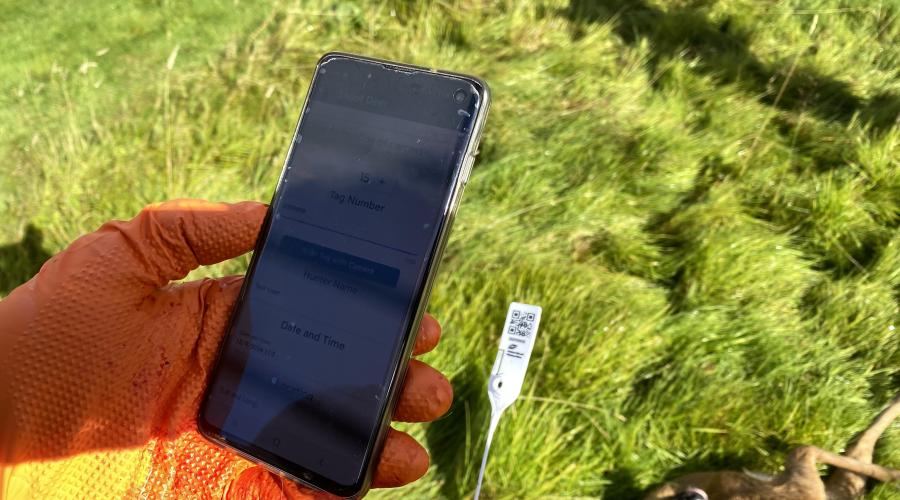
NatureScot is developing a ‘Deer App.’ for mobile devices. The app aims to improve the quality and quantity of information received as part of statutory cull returns, improve venison traceability from the point of cull, reduce the admin burden for practitioners and assist with relevant deer management planning.
The app is currently being trialed within the deer management pilot incentive schemes, where it functions as an auditing tool and means of verifying culls before payments are issued, and with a small number of deer managers out with the pilot schemes. However, in due course we intend to roll the app out to a wider audience and, eventually, achieve national coverage.
Deer Online Services
Through our Deer Online Services (DOS) portal, deer managers can apply for and renew licences online for controlling deer. Deer controllers can also apply for and renew their ‘Fit and Competent’ status through DOS. The system simplifies and streamlines the previous manual processes and is more efficient for both applicants and staff. We are continuing to work on developments to DOS in 2026 to improve its functionality.
Deer population model
NatureScot, in conjunction with the University of St Andrews has developed a modelling tool to help land managers with their deer management planning.
Deer censusing
In addition to our 2025 – 2026 count program, which was undertaken by Helicopter and Drone, we commissioned a project focusing on comparing a range of both direct and indirect deer census methodologies with a view to improving our understanding of the varying degrees of robustness and veracity of their data outputs. The final report is due to be published this summer.
Deer data
We collate and provide information on the number of red deer counted per annum, all deer species culled per annum, and authorisations issued per annum. The data is currently presented as a series of (in some cases lengthy) tables on our Deer Management Incentive Scheme pilots web page. However, we are looking at improving and shortening this presentation, for example presenting cull data from 2015/2016, as part of wider work to improve the visibility of the work that we are doing and the data we are collating.
There is information for:
- Annual red deer counts.
- Annual reported cull returns from 1996-1997 season to present.
- The proportion of deer taken out of season, broken down by species.
- The reported mortality information by species and sex.
- Number of specific authorisations issued per yearly period
- Number of specific authorisations issued for Night Shooting – s18(2)
- Number of specific authorisations issued for Out of Season – s5(6)
- Number of specific authorisations issued for Female deer– s5(6)
Regulatory action
We are advocates for the voluntary approach to deer management and provide advice and support to deer managers to help them collaborate to deliver their deer management aims. However, if the voluntary approach is failing to deliver the required management, we can intervene with regulation, using our powers under the Deer (Scotland) Act 1996 as amended to bring about changes in deer management.
The key methods of intervention are through Section 6a, Section 7, Section 8, and Section 10 of the 1996 Act.
Regulatory action is currently in place or being considered/ reviewed for the following areas/ Deer Management Groups (DMGs) (see under the ‘localisedl areas’ section for more information):
Section 6
- North Ross DMG
- Glenartney DMG
- West Cowal
Section 7
- Caenlochan (S7)
Section 8
- Loch Choire Estate
We are also monitoring the situation with several other Deer Management Groups or Areas (see the localised areas section for more information):
- Northern DMG
- West Grampian DMG
- South Ross DMG
- Glenelg DMG
- Blackmount DMG
- East Loch Shiel DMG
- Morvern DMG
- Moidart DMG
- Balquhidder DMG
- South Islay
Priority areas
Recognising the important role deer management plays in helping address the climate and nature crises, we have identified ‘Deer Management Priority Areas’ across Scotland. Details about this and a recent map of the priority areas can be found on our Deer Management Priority Areas page. However, this is an on-going piece of work with the priority areas evolving in response to new information.
We have also been working with Forestry and Land Scotland, SEPA, Scottish Forestry and Scottish Water to deliver Scottish Biodiversity Strategy action 2.1, to prioritise landscape scale nature restoration projects across Scotland and to identify exemplar projects and Areas of Focus. More detail can be found on a dedicated website page.
Landscape scale partnerships
We are contributing to several partnerships involved in delivering landscape scale projects that are proactively managing deer for public benefits. For example, we are working with:
Local Authorities
We are providing advice and support to those Local Authorities engaging in deer management activity within their authority area.
Proactive work with the private sector and Non-Governmental organisations (NGOs)
We are working closely with landowners and land and deer managers and a variety of organisations in the private and environmental NGO sectors to manage deer impacts and deliver public benefits. For example, we are working with:
- The Deer Management Round Table
- The Association of Deer Management Groups
- Lowland Deer Network Scotland
- Common Ground Forum
- Common Ground Foresty Group
- Strategic Deer Board Operational Delivery Workstream
- NatureScot’s Scientific Advisory Committee (deer sub-group)
- Wild Deer Best Practice Steering Group
Find out more
Last updated: