Menu
NatureScot Logo NatureScot Logo
Close navigation
  • Home
  • About NatureScot
  • Climate change
  • Enjoying the outdoors
  • Funding and Projects
  • Gaelic
  • Information hub
  • Landforms and geology
  • Landscapes and habitats
  • Plants, animals and fungi
  • Professional advice
  • Scotland's Biodiversity

Scotland's Beaver Strategy 2022-2045

https://www.nature.scot/doc/scotlands-beaver-strategy-2022-2045
Breadcrumb navigation
  • Professional advice Professional advice
    • About NatureScot
    • Climate change
    • Enjoying the outdoors
    • Funding and Projects
    • Gaelic
    • Information hub
    • Landforms and geology
    • Landscapes and habitats
    • Plants, animals and fungi
    • Scotland's Biodiversity
  • Protected areas and species Protected areas and species
    • Planning and development
    • Land and sea management
    • Placemaking and Green Infrastructure
    • Contributing to a healthier Scotland
    • Social and economic benefits of nature
    • Young People - Learning Outdoors and Developing Skills
    • Landscape
  • Protected species Protected species
    • 30 by 30 and Nature Networks
    • Protected areas
    • Licensing
    • Priority marine features in Scotland's seas
    • Safeguards beyond protected areas
  • Protected species A-Z guide Protected species A-Z guide
    • Wildlife crime
    • Your responsibilities
    • Reintroducing native species
    • Scottish Invasive Species Initiative
    • Invasive non-native species
    • LIFE Nature and Biodiversity projects
    • Legal framework
    • Species at risk
  • Beaver Beaver
    • Amphibians and reptiles
    • Badgers
    • Bats
    • Birds
    • Deer
    • Dolphins, whales and porpoises
    • Fish
    • Hares
    • Invertebrates
    • Otters
    • Pine martens
    • Plants and fungi
    • Red squirrels
    • Seals
    • Shrews
    • Water voles
    • Wildcats
  • Scotland's Beaver Strategy 2022-2045 Scotland's Beaver Strategy 2022-2045
    • Understanding the Ecosystem Engineer
    • 10th International Beaver Symposium
    • Beaver Mitigation Scheme
    • Beaver information and resources from Scotland and beyond
    • Beaver Salmonid Working Group
    • Key reports on beavers in Scotland
    • Scottish Beaver Trial
    • Tayside Beaver Study Group
    • Translocation of beavers in Scotland
    • Protected species: beavers
    • Beavers in Scotland report
    • Scottish Beaver Advisory Group
    • Management Framework for Beavers in Scotland
    • Beaver news and blogs

The development of Scotland’s Beaver Strategy 2022-2045 involved more than 50 stakeholder organisations, representing one of the most ambitious and forward-looking approaches to managing and conserving a species carried out in Britain.

The strategy will steer wider efforts to identify and actively expand the population to new catchments, alongside appropriate management and mitigation, following the Scottish Government’s change in policy in November 2021 to encourage wider beaver restoration.

It sets out plans to empower and support communities to maximise the environmental and wider benefits of beavers, while minimising negative impacts through effective management and mitigation.

The strategy highlights the need for ongoing research and monitoring of the beaver population and its effects. This will  inform and improve management as the population expands, using existing and new techniques and technologies. It  will also help identify how people, and ecosystems, can most benefit from the presence of beavers.

The strategy was developed collaboratively under a process designed and facilitated by the International Union for Conservation of Nature (IUCN) Conservation Planning Specialist Group (CPSG). NatureScot is making the document available on its website on behalf of the strategy’s Organising Team, the stakeholders and the Scottish Beaver Advisory Group, the governance group established to take this strategy forward.

There are two publications available to download - the main strategy document, and an associated implementation plan.

Published: September 2022

These PDFs are not fully accessible. Parts of the documents may not be accessible to screen reader software and may use colour to convey information. These do not meet the full WCAG 2.1 success criterion. However, should any users require an accessible version please contact us and this can be arranged.

Document downloads

Scotland's Beaver Strategy 2022-2045

pdf,

Scotland's Beaver Strategy - 2022-2045: Part 2 - implementation plan

pdf,

Feedback
  • Facebook
  • Whatsapp
  • Email

You may also be interested in

2 beavers on a riverbank eating some vegetation. There are logs in front of them.

Beavers in Scotland

Visit our beavers in Scotland landing page to navigate to all beaver related advice and resources.

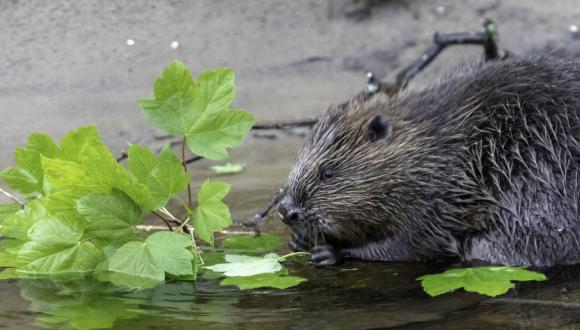
Beaver eating sycamore on a riverbank

Beavers in Scotland report

Our Beavers in Scotland report is one of the most thorough assessments ever done for a species reintroduction proposal.

12 Apr, 2017

News and Blogs

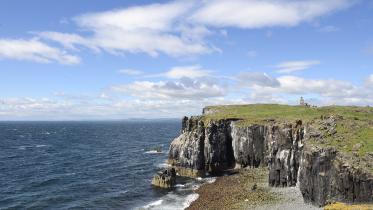
A coastal landscape of the Isle of May captured from an elevated perspective looking down at the sea and cliffs. On the left dark-rugged  asalt rock columns and cliffs meet the deep blue ocean with white surf crashing against the base. A small pebble beach or rocky shoreline is visible near the cliffs, blending into green moss or algae. The top half of the cliff face is covered in a vibrant green grassy plateau that extends in the distance. In the far background, a faint structure resembling a lighthouse.

Jewel of the Forth celebrations

The Isle of May is celebrating a huge milestone this month, marking 70 years as a National Nature Reserve (NNR)

News - 30 June
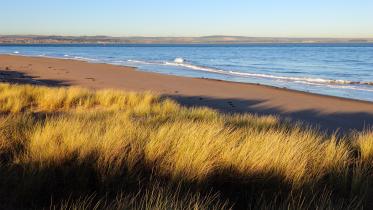
Marram grass growing on the sand dunes at Tentsmuir NNR.

Tentsmuir NNR holiday fun

Come and join us at our open day with a host of fun activities for all ages.

Event - 14 July
News release

Agreement for better nature and more secure food in Scotland

Strengthening the link between nature and sustainable farming in Scotland.

News - 19 June
Interpreting Ayrshire's Coast web page

A guided walk at Forvie NNR

Join us to find out which plants they used before supermarkets and pharmacies and try some wild foods.

Event - 15 July
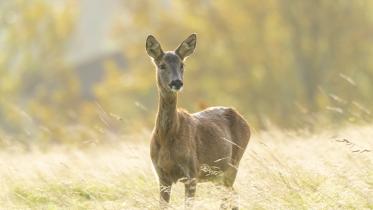
Roe deer (Capreolus capreolus)

New funds for venison supply chain

The third round of the Low Ground Venison Supply Chain Project was launched today (18 June) at the Royal Highland Show at Ingliston.

News - 18 June

The big butterfly count at Forvie NNR

Join in the biggest butterfly survey in the world and help take the pulse of nature. 

Event - 17 July

View all news

View all events

Back to top Back to top

Quick Links

  • What we do
  • FAQs
  • Contact us
  • Our work
  • Licensing
  • Careers
  • Gaelic
  • Events
  • Sitemap
  • Publications & Documents
  • Board and Committees
  • NatureScot data services
  • Freedom of Information
  • LinkedIn
  • Facebook
  • Instagram
  • YouTube
  • Wordpress
  • Flickr


© NatureScot 2025

  • Privacy policy
  • Cookie policy
  • Accessibility
  • Copyright
  • Links policy
  • Feedback