Scottish Invasive Species Initiative
A partnership project tackling invasive non-native species alongside rivers and water courses in northern Scotland.
The Scottish Invasive Species Initiative currently has 6 exciting opportunities to join our team as a Seasonal Project Officer based across various locations within our project area. Find out more using the link below.
The Scottish Invasive Species Initiative (SISI) project is led by NatureScot and funded by the National Lottery Heritage Fund and NatureScot (2017-2023) and the Scottish Government’s Nature Restoration Fund, managed by NatureScot (2023-2026), with in-kind support from project partners and volunteers.
SISI hosted a conference to mark the end of the first phase of the project in September 2023. For information on the speakers and presentations please visit SISI Project Conference on the SISI website.
Funding for the 2017 – 2023 project was provided by the National Lottery Heritage Fund (£1.59M) and NatureScot (£0.5M) with in-kind funding from project partners and volunteer time (£1.25M). The total project value was £3.34M.
Funding for the 2023 – 2026 project is provided by the Scottish Government’s Nature Restoration Fund (£2.08M), managed by NatureScot, with in-kind funding from project partners and volunteer time (£0.8M). The total project value is £2.9M.
The project area is vast, some 29,500km2 - over a third of Scotland and almost one and half times the size of Wales - and encompasses Perthshire, Angus, Aberdeenshire, Moray and Highland. View a map of the project area.
NatureScot leads the project partnership of ten fishery trusts / boards and the University of Aberdeen.
Invasive non-native species (INNS) can be responsible for the decline of native species, increases in bank erosion and flood risk and impact on recreational activities in freshwater and riparian areas. Therefore it is important we take coordinated action now.
The target and priority invasive species
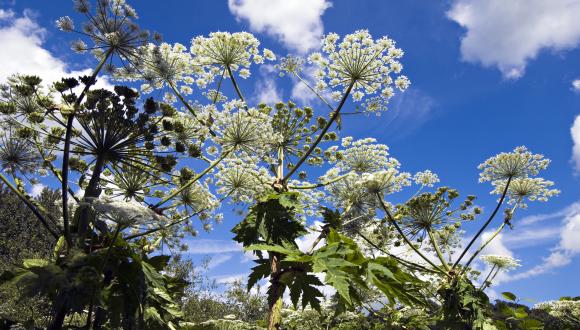
The target species for the SISI project are Giant hogweed, Japanese knotweed, Himalayan balsam, American skunk cabbage, White butterbur and the American mink.
We support, train and equip volunteers with the skills and equipment they need to control invasive species locally by and in communities. We hope that local community control of invasive species will continue after our project ends in October 2021 - a sustainable long-term solution to control.
SISI work is covering five main areas of activity
- Invasive plant control - with the help of volunteers, we are removing and treating Himalayan balsam, Giant hogweed, Japanese knotweed, American skunk cabbage and White butterbur.
- American mink control - we are building on previous projects by monitoring and trapping to remove mink with the help of a large and dedicated network of volunteers.
- Creating a volunteer network - we are investing time and support in building a network of enthusiastic volunteers, providing them with skills, training and qualifications (at no cost).
- Raising awareness of invasive species - through education programmes for schools and community groups we are helping people to discover the importance of the river environment and the impacts of invasive species.
- Promoting biosecurity we promote good biosecurity practice to prevent the spread of invasive species.
Find out more
If you are interested in getting involved have a look at the volunteering pages on our website, or get in touch with any other member of the project team – they will be keen to help you.
Or you can email us at [email protected] to get the ball rolling.
Contacts
Scottish Invasive Species Initiative
Last updated: