Peatland ACTION case study: What’s the connection between peatland restoration and developing new careers?
What’s the connection between peatland restoration and developing new careers?
The answer lies in an innovative mentoring scheme for early years peatland practitioners.
About Bellybought Hill
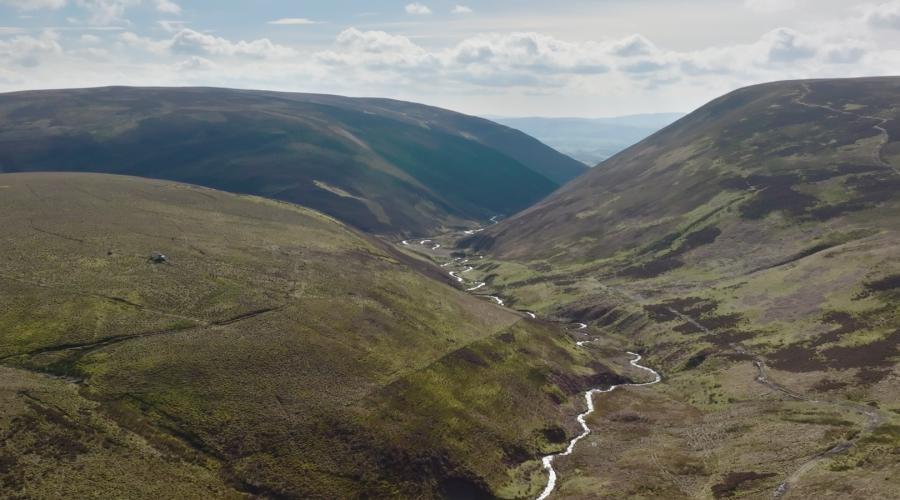
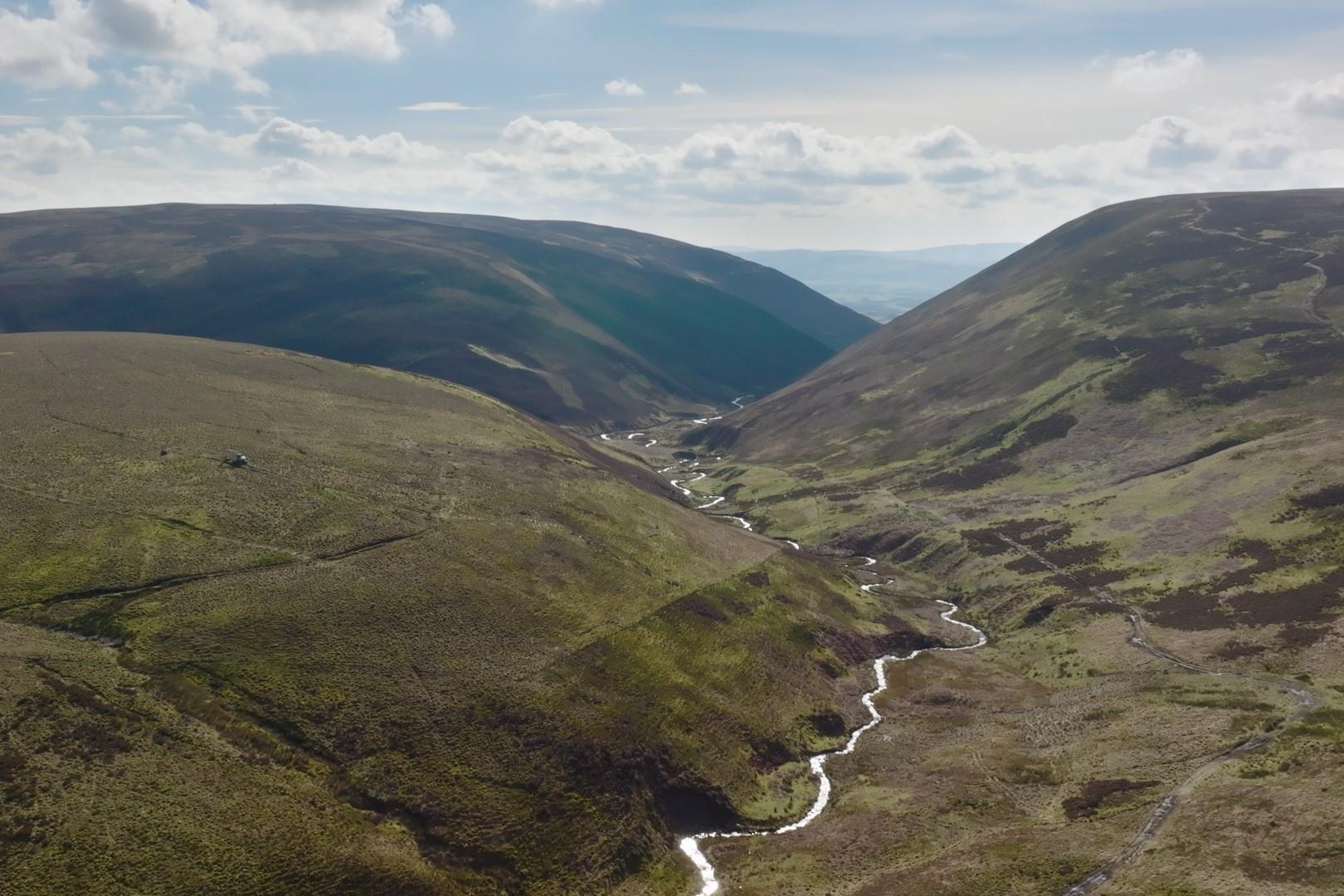
This case study looks at the peatland restoration carried out at Bellybought Hill in Dumfries & Galloway, part of the Buccleuch Group, in 2024. The work formed part of a multi-year, multi-site programme of restoration work planned on the estate, which has also included an innovative mentoring scheme for early career peatland restoration practitioners.
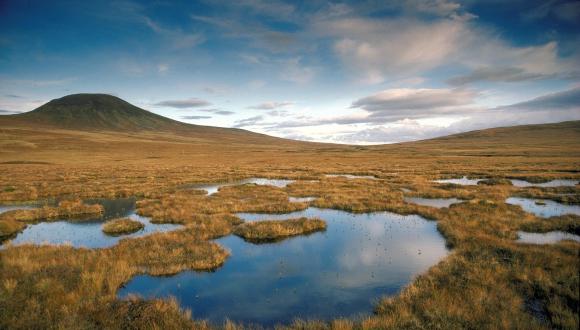
The peatland restoration work on 85ha of Bellybought Hill in 2024 was the third phase of work on part of the Buccleuch Group’s estate, and part of an overarching multi-year plan to restore peatlands across the whole of its land. Though the peat here was not the most eroded, it was one of the most heavily drained and driest sites, and this was thought to be having a significant impact on the area’s biodiversity. By raising the water table again on the hill the landowner hopes to reinvigorate the land and bring back the waders, grouse and other wildlife that are found on the wetter parts of its estate. Buccleuch Group has also used the restoration works in this area for an innovative mentoring scheme with the Crichton Carbon Centre to give early-career peatland restoration practitioners hands-on experience of designing and managing projects on site.
A short film about peatland restoration at Bellybought Hill, on the Buccleuch Queensberry Estate, part of a wider programme of work spanning several years. ©NatureScot Peatland ACTION / Swift Films
Duration
02:57
Peatland restoration at Bellybought Hill
The peatland restoration work on Bellybought Hill, in Dumfries & Galloway, began in early 2024, and covered 85ha. It was part of a wider programme of peatland restoration across all Buccleuch Group’s Scottish estates. This followed an in-depth ‘boots-on-the-ground’ survey of all its deep peat areas. Since then it has developed an operational plan for the next five to ten years, of which Bellybought Hill was the third phase.
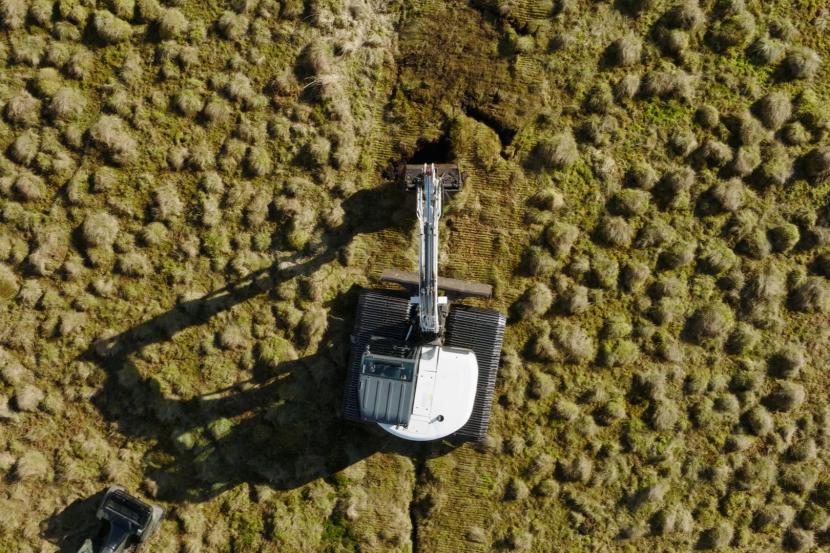
Overhead view of a machine operator carrying out peatland restoration work at Bellybought Hill, part of the Buccleuch Estate. ©NatureScot Peatland ACTION/Swift Films
Bellybought Hill followed two phases of work that were focussed in the Lowther Hills. The first restored around 150ha in South Lanarkshire, while the second returned to the same area to complete work on a further 44ha that had proved impossible to do in the first phase because of adverse weather.
The Estate worked with the team at the Crichton Carbon Centre (CCC), which is partly funded by Peatland ACTION, to identify the best site for the third phase. Bellybought Hill was chosen not because the peat there was the most eroded, but because it was some of the driest. This was thought to be having a major impact on the area’s biodiversity, with a noticeable lack of grouse, waders and other ground nesting, insect eating birds higher up the hill. Experience from the previous phases of work had shown that raising the water table and holding back the water had a positive impact on these birds, by improving water availability and habitat, and by allowing far greater numbers of the invertebrates they feed on to breed and survive thanks to the wetter conditions.
The main restoration techniques used by contractors DC Restoration Contracts were wave damming and zippering of the drains and reprofiling and damming of the gullies. Having seen the success of these techniques in the Cairngorms and the Loch Lomond and the Trossachs National Parks, Crichton Carbon Centre was keen to try them on the distinctive Dumfries and Galloway peatlands, which tend to be much drier than many other sites that have used this technique further north. Just days after the work was completed there was evidence of the site getting wetter again, which Buccleuch Group views as a significant step forward.
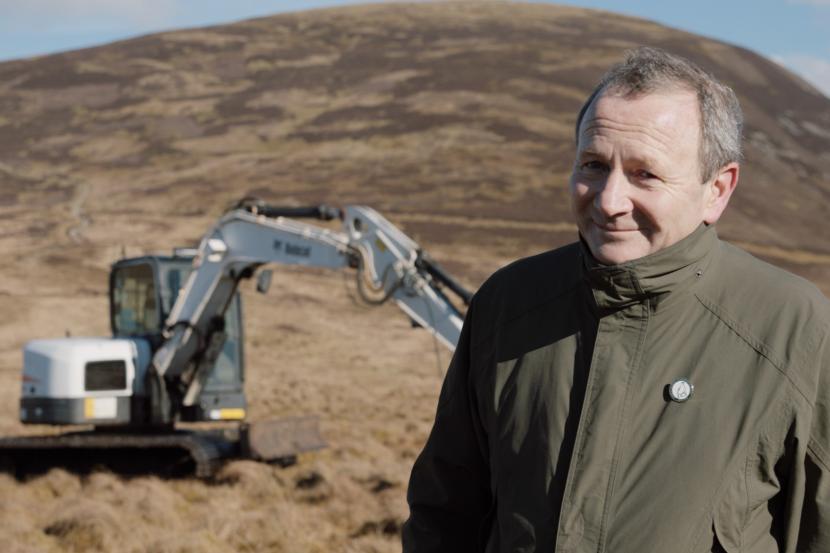
Adrian Dolby, Head of Agriculture, who is managing the peatland restoration programme for Buccleuch Group ©NatureScot Peatland ACTION/Swift Films
Mentoring scheme
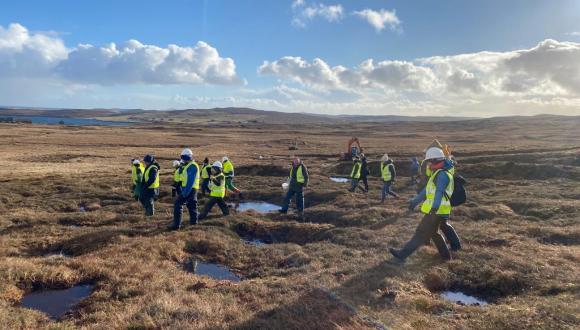
Working with the Crichton Carbon Centre the Buccleuch Group has opened up its restoration programme to those wanting hands-on experience of peatland restoration and designing. Through the previous phase of work, on a complex area of erosion, eight participants learned how to carry out some of the more common techniques to stabilise areas of erosion and support the regrowth of the vegetation. This work helped everyone understand how dynamic peatland systems are, how you need to be reactive to condition changes, which can be extreme in these environments, and the importance of good designs to be able to meet these challenges.
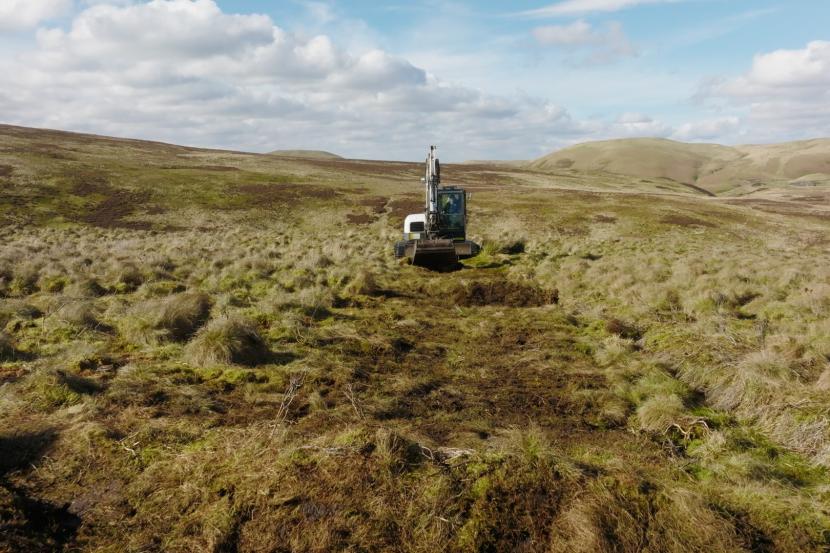
One of the diggers at work on site. ©NatureScot Peatland ACTION/Swift Films
Bellybought Hill reatland restoration - Challenges
One of the challenges of this site was the drier nature of the peat, the grassier vegetation and more variable peat depth. Having seen the success of the wave dams and zippering technique, and this being a relatively small restoration, it offered a good opportunity to trial the technique in this area. This required the machine operators to work with the site and refine their approach across it.
Bellybought Hill reatland restoration - Successful outcomes
While it is still early days, the signs are good at Bellybought Hill, with the drain lines infilled and holding the water table higher for longer through the drier spring and summer months.
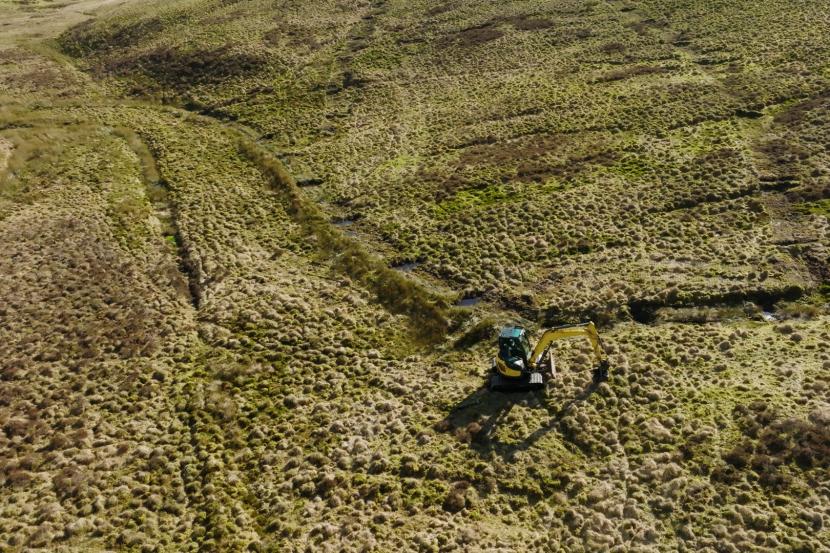
The wave damming and zippering technique used on Bellybought Hill shows up as a distinctive pattern in the peat. ©NatureScot Peatland ACTION/Swift Films
Buccleuch Group’s onsite staff have reported seeing more ground nesting birds at the previous two restoration sites, as well as hen harrier and merlin, and the Buccleuch Group is optimistic results will be the same here. In addition the staff reported better livestock health, with fewer lambs lost in drains and gullies, and improved grouse survival rates. Invertebrate numbers increased - providing the essential food for young chicks, including red grouse.
Finally, following the success of the mentoring scheme and the wave damming and zippering trial at Bellybought, this work has helped inform contractors, designers and the Group, and further establish the skills and approaches necessary for carrying out peatland restoration in the south of Scotland.
For further information, or to get involved with Peatland ACTION
We want to build on our restoration efforts to create a healthier peatland landscape for people and nature.
- We offer funding for suitable peatland restoration projects across Scotland
- We offer, where appropriate, multi-year funding
- We fund up to 100% of the capital costs
- We fund much of the pre-application work, for example, peat depth surveys and feasibility studies
- We have officers who can help design your project, offer advice on restoration management and assist you to complete your application and supporting information.
Peatland ACTION case studies: We demonstrate links between peat condition and: fisheries; grouse; carbon storage; wildlife; landscapes; human history; and so much more.
If you would like to contribute to the on-going work of Peatland ACTION please contact [email protected].
For further information: www.nature.scot/peatlandaction