Adder
Scotland’s only native snake is also our most notorious reptile, as it’s the only venomous one.
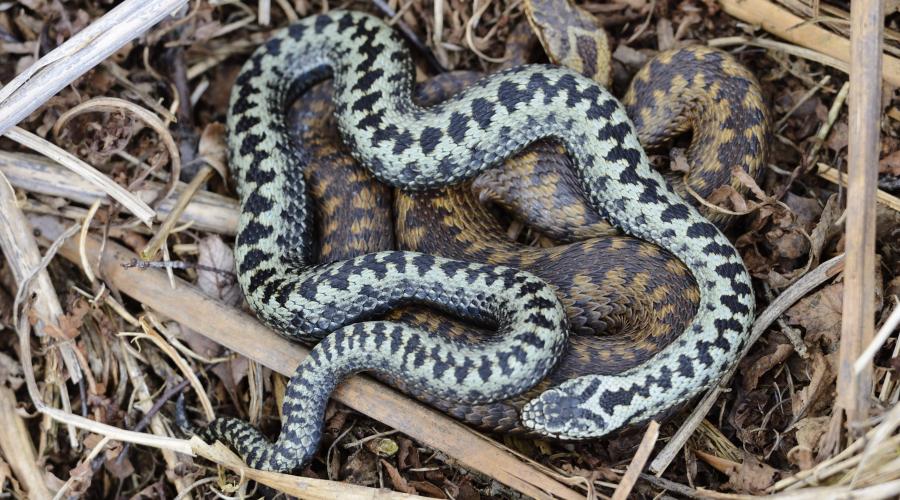
Adder - ©ARC Trust/Chris Dresh
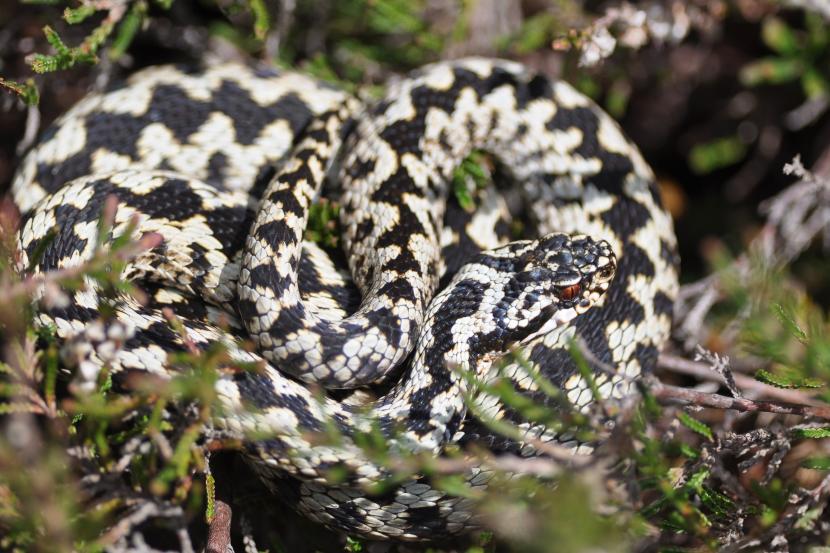
Our only native snake is the Adder (Vipera berus).
Adders put on an impressive display in the breeding season, although humans don’t often see it. The ‘dance of the adders’ is a form of a wrestling match between males competing for a mate.
In this display, two adders twist around each other, rising higher and higher, with each trying to force the other to the ground. The dominant animal wins the female and has the opportunity to breed with her.
While it is true that adders are venomous, these beautiful animals are generally elusive and rarely bite humans. An adder’s preferred method of defence is to hide away in the undergrowth.
Bites, including to livestock and pets, are largely due to disturbance, and so it is recommended that adders are left alone and only dealt with by experienced herpetologists. If you find one in the wild, let it move away quietly of its own accord.
However, if a bite does occur, the most common symptoms are swelling and discomfort. Medical assistance should still be sought out as soon as possible, as allergic reactions are possible.
Amorous adders
Click for a full description
Duration
01:29
Adders (Vipera berus) mating at the Muir of Dinnet National Nature Reserve.
Protection of adders
Find out about protected species of amphibian and reptile.
Report a sighting
You can report any sighting of an amphibian or reptile to the Record Pool.
Alternatively, find out about taking part in the National Amphibian and Reptile Recording Scheme.
As well as adder sightings, grass snake sightings are sometimes reported. These are probably escaped pets or they have been transported here accidentally. So far, we have no proof that grass snakes live here permanently and breed here in the long term.
Scottish Adder Survey
We have recently published our Research Report 1376 - Status of the adder in Scotland (2022-24) - re-survey and comparison with the 1994 study. This report outlines a collaborative partnership between NatureScot, the Amphibian and Reptile Conservation Trust (ARC), and Amphibian and Reptile Groups of the UK (ARG UK), and aimed to re-assess the status of the adder in Scotland 30 years after the first assessment was carried out, and compare the results. This was carried out through a combination of a nationwide questionnaire and site surveys, and also took into account previous records of adders across Scotland.
Find out more
- Read our guidance for planners and developers on protected animals.
- Read our latest news release Farmers and land managers urged to share adder sightings (22 March 2023)
- For legislation that protects our reptiles and amphibians, see Protected Species: amphibians and reptiles
How can you help?
Reptiles and amphibians are both threatened groups, so it is important that we make space for these important creatures where we can. Here are some tips for ways that you could help:
- You could consider the addition of a pond to your garden to create more habitat, or encourage the growth of bug friendly plants to ensure a plentiful food supply.
- Using non-toxic methods of pest management will prevent reptiles from consuming prey that are contaminated with poison.
- Ensure that green spaces are preserved and kept as wild as possible.
- Record any reptile or amphibian sightings to the Record Pool and the NBN atlas.
- Get involved with your local amphibian and reptile group. There may even be opportunities for you to help with monitoring and surveying, or even trips to local sites!
- Help raise awareness about reptile and amphibian conservation within your school or workplace.
Last updated: