Scottish Biodiversity List
Discover which species and habitats in Scotland are considered of most importance for biodiversity conservation.
The Scottish Biodiversity List provides a short, targeted list of species and habitats to support Ministers, organisations, and communities to prioritise resources and action to help halt and reverse nature loss in Scotland.
The Scottish Biodiversity List (SBL) accompanies and supports the Scottish Biodiversity Strategy to 2045 and Delivery Plan by identifying species and habitats across land, freshwater, and seas that are of ‘principal importance for furthering the conservation of biodiversity’ that every public body must have regard to as part of their biodiversity duty under the Nature Conservation (Scotland) Act 2004.
All biodiversity is important, but by focusing our efforts on the plants, animals and habitats which need conservation action now, we can help restore Scotland’s nature back to a healthy, thriving state, able to adapt to the impacts of climate change and support Scotland’s communities.
The Scottish Biodiversity List
Using the Scottish Biodiversity List
The SBL signposts users to species of principle importance to Scotland. The list has 276 species/species aggregations and 82 habitats developed through engagement with a number of experts and stakeholders and selected following a set of criteria.
The primary purpose of the list is to support delivery of the Biodiversity Duty and to help public bodies, other organisations, people, and communities to identify priorities and inform actions relevant to restoring and regenerating biodiversity. In this way, the list will contribute to delivering the Scottish Biodiversity Strategy’s Outcomes and Scotland’s contribution to the UN Convention on Biological Diversity’s Global Biodiversity Framework.
While the principal users are Public Bodies, including Local Authorities, in exercising their function as part of their Biodiversity Duty, anyone can use the SBL as a tool to inform decision-making and aid in prioritising biodiversity action, whether that be land managers, developers, ecologists, Local Biodiversity Action Plan partners, eNGOs, or funders.
Use’s may include, but are not limited to;
- Local Authorities may use the SBL to select local priorities for Local Biodiversity Action Plans, which may be recognised as additional material considerations in the planning process.
- Habitats and Species on the SBL considered as key natural heritage interests when assessing impacts of development in relation to “National Interest”.
- Those working on nature restoration and conservation may wish to consult the SBL to inform their decision-making in which species and habitats they wish to manage for.
While the SBL is a useful policy tool, inclusion on the SBL does not give the habitat or species statutory protection. Protection is provided by applying legislation for protected species and protected areas and policy protection for Priority Marine Features.
Similarly, not featuring on the list does not mean that international obligations are diminished. Nor does it necessarily exclude any action (such as research and survey) to fill knowledge gaps or reduce impacts on habitats and species that are less common.
Using the List of data deficient habitats and species
Some habitats and species were not recommended for inclusion on the SBL due to a lack of data - and so have been identified as data deficient. To help ensure research and surveys on these species is not deprioritised, and prevent the continuation of insufficient evidence to complete future assessments, a list of research priorities for species which need further research and evidence to better understand what conservation action has been developed.
Data deficient habitats and species in support of the Scottish Biodiversity List
Creating the Scottish Biodiversity List
Following the publication of Scotland’s Biodiversity Strategy, Scottish Government commissioned NatureScot to revise the SBL with the aim of including terrestrial, freshwater and marine habitats and species that would provide a basis for more targeted and impactful conservation action and help deliver on the Scottish Biodiversity Strategy Vision to restore and regenerate biodiversity by 2045. The list now includes 272 species, 4 aggregations of species, and 82 habitats.
With input from partners, stakeholders and experts (including the SBS Programme Advisory Group and NatureScot’s Scientific Advisory Committee), NatureScot is pleased to have led the revision of the new Scottish Biodiversity List.
The selection process involved many stakeholders across the marine, terrestrial and freshwater environment including many with knowledge and understanding of data, taxonomy, and conservation management including from organisations such as SE Link, RSPB Scotland, the Scottish Wildlife Trust, the Scottish Crofting Federation, Scottish Land & Estates and Fisheries Management Scotland, among others.
Engagement continues with stakeholders and users of the list to understand it’s various uses. If you are a user of the SBL and have feedback or needs for improvement, please do let us know at [email protected].
Other lists of species and habitats
There are a number of lists of species and habitats which provide different information and therefore have different functions. Make sure the lists you are using meets the your specific needs. Below are a number of other lists which work alongside the SBL;
- Data deficient habitats and species in support of the Scottish Biodiversity List – During the development of the Scottish Biodiversity List a number of habitats and species were identified as data deficient and require further research to understand more clearly their impact to Scotland’s biodiversity.
- Species at Risk – Species at Risk provides a central site for information on Scotland’s most vulnerable species. The database contains all species in Scotland that have a formally endorsed IUCN GB red list assessment, a Birds of Conservation Concern (BoCC) assessment, or are identified as a Priority Marine Feature.
- Priority Marine Features - Priority Marine Features are a prioritised list of habitats and species of conservation importance, which help to focus action and to achieve our vision for sustaining Scotland’s seas.
- Big Biodiversity Layer – The Big Biodiversity Layers provides spatial data on the following types of biodiversity value;
- Rare, threatened and endangered species and habitats
- Near Natural or Recovering Ecosystems That Are Under-Represented in Protected Area Networks
- Areas with a high level of ecological integrity or intactness, including areas under restoration
- Significant populations of range-restricted ecosystems or species
- Important species aggregations and life stages, such as feeding, moulting, breeding, spawning, and migration
- Areas of importance for ecological connectivity
- Red lists in Great Britian - Red lists are a globally recognised way of identifying the threat of extinction to species, using the internationally accepted Red List guidelines developed by the International Union for Conservation of Nature (IUCN).
- NBN Atlas – The NBN Atlas brings together multiple sources of information about UK species and habitats, and allows users to interrogate, combine, and analyse these data in a single location.
- Other taxon lists
More information on the Scottish Biodiversity List
Methodology - How was the SBL revised?
Following feedback from users and stakeholders on the difficulties using previous SBL iterations, the focus of this list was on action, rather than just protection, to help prioritise resource and conservation action to restore and regenerate nature.
Identifying and selecting terrestrial and freshwater species and habitats were treated differently to marine habitats and species and aggregations were used for groups of species which have very similar conservation requirements.
Terrestrial and freshwater
In order to identify terrestrial and freshwater habitats and species for inclusion on the SBL a methodology was adapted from Klimisch Scoring, a systematic methodology for assessing the reliability of toxicological studies.
Habitats and species were nominated for prioritisation using eligibility criteria and selection criteria. This set of criteria was developed in collaboration with NatureScot’s Scientific Advisory Committee and internal experts, to ensure they were fit for purpose.
To be eligible for nomination, a habitat or species must not be data deficient, and the species must require specific action that cannot be achieved wholly through habitat management or habitat restoration. The selection criteria used are:
- International responsibility
- A species or habitat named within the Scottish Biodiversity Strategy, supporting policy document or current draft policy document
- Justification for priority action in the short term (12 years)
- Targeted action is feasible. Methods and skills to address conservation action are available. Monitoring skills and methods are feasible
- A keystone species or habitat supporting an important assemblage of species
NatureScot habitats and species advisors were asked to nominate habitats and species which should be the highest priority for conservation. This initial list was then expanded and amended by experts working for Government agencies and in the environmental non-government sector.
For each of the five selection criteria four numerical categories were defined, where the lowest score ranks as a greater conservation priority. Expert opinion was then used to identify which of the categories best applied to each habitat and species, including named aggregations of species.
For example, under the criterion on international responsibility, an endemic species would be assessed as “1”, the highest priority for conservation. A species listed in international or domestic legislation would be assessed as a “2”. A species not listed in legislation, but for which Scotland is considered to host an internationally important population would be assessed as a “3”. Remaining species were allocated a “4”.
The scores for all five criteria were added together for each nominated habitat and species (species aggregation). Expert opinion was then used to select a threshold score. Habitats and species were included on the SBL if they met the threshold score or had a lower combined score than the threshold score.
Marine
In collaboration with Scottish Government, it was agreed that the revised SBL for marine habitats and species would be aligned with the Priority Marine Feature (PMF) list. Adopted in 2014, the PMF list provides an important mechanism for focussing conservation action in Scotland’s seas.
Marine species and habitats were selected by applying the current Priority Marine Features criteria. This means all marine habitats and species on the SBL have passed assessment against the PMF criteria as set out in Howson et al (2012) and[EP1] Joint Nature Conservation Committee (2012). The criteria cover elements such as the importance of Scottish waters to the species or habitat, whether it is in decline or at threat of decline, and its functional importance, such as a key prey or predator species, or a habitat that creates structure or increases biodiversity.
A review of Priority Marine Features is planned for the National Marine Plan 2 consultation. The Scottish Biodiversity List will be amended, if required, then.
Why is the list being reduced from more than 2,000 to less than 500 species and habitats?
The previous list was long and needed significant specialist knowledge to apply. For example, it contained 240 species of single-celled algae which need a microscope to identify. It also gave conflicting messages; of the almost 2,000 terrestrial species listed, only 626 needed conservation action.
The revised list has been developed from scratch. It is shorter and more targeted; focusing on the species and habitats that need conservation support now, and where people can do something to help them. It helps to prioritise resources and action towards the plants, animals and habitats that can help restore and regenerate Scotland’s nature.
Many of the species that do not appear on the revised list are plants, lichens, fungi, mosses, algae and moulds (reduced from 1,415 species to 80). However, two thirds of the species added are from these groups.
The revised list has 62 new species and habitats that didn’t feature in the previous list. This includes flowering plants such as aspen and mountain willow, insects such as the white-faced darter dragonfly and fungi such as the bog waxcap and wooly tooth.
Does the Scottish Biodiversity List include species or habitats that are endangered or rare?
The focus of the list is to support public bodies to carry out their biodiversity duty effectively. The list does include some endangered species, but it is not a list of the rarest species in Scotland. Please explore the other signposted lists above for lists of species and habitats based on their conservation status.
What changes have been made to the Scottish Biodiversity List for marine habitats and species?
Changes include additions and removals of habitats and species, as well as habitat and species names changes so that the list better aligns with the Priority Marine Feature list. The Scottish Biodiversity List continues to include marine birds.
To help with prioritising action, many of the marine species that are part of a marine habitat, or associated with it, are not listed separately, as conservation action is more usefully focussed on the habitat. For example, conservation action for the habitat native oyster beds will automatically provide conservation action for the native oyster species, alongside any other species present.
What are partners saying about the revised list?
Here are some comments we’ve received on the revised list:
Jo Pike, CEO Scottish Wildlife Trust said:
“All wildlife is important, but we welcome the publication of the updated Scottish Biodiversity List as a way of identifying species and habitats that are most in need of support. As evidenced by the Scottish Government’s pledge to protect 30% of Scotland’s land and sea for nature by 2030, we have no time to waste in scaling up action for our threatened species and habitats. A healthy natural environment is our life support system, so we hope the Scottish Biodiversity List will drive Government policy across sectors and empower land managers to give biodiversity a much-needed boost.”
Deborah Long, CEO Scottish Environment LINK said:
“LINK and our members have been pleased to work alongside NatureScot to revise and update the Scottish Biodiversity List, which identifies those species and habitats most urgently in need of action in today's nature crisis. With an agreed list of threatened species and habitats, Scotland is better equipped to slow and halt the loss of species by 2030 and connect, restore and build the resilience of our unique and precious nature by 2045, exactly as set out in Scotland's Biodiversity Strategy.”
Anne McCall, Director RSPB Scotland said:
“Scotland is one of the most nature depleted countries on earth, and our native wildlife species remain, on average, in decline. The Scottish Biodiversity List identifies the species and habitats most in need of conservation action to halt declines, restore populations and build resilience to future challenges. It should and will become a key touchstone for the whole sector and, working alongside wider Ecosystem Restoration initiatives, be a key guide for the delivery of our shared vision for thriving Scottish biodiversity. We thank NatureScot for taking a collaborative approach to its development, and involving stakeholders, like RSPB Scotland, who will be central to delivery and achieving that vision.”
If a species no longer appears on the Scottish Biodiversity List, does that mean that we will no longer receive funding to conserve the species?
Not necessarily. We revised the Scottish Biodiversity List to more closely reflect the aims of the Scottish Biodiversity Strategy and its delivery plan. There are some habitats or species that need further research or survey to help us understand what conservation action is needed and we recognise the importance of this work.
Projects that increase understanding of a species or habitat not currently on the list could still receive funding support. Engagement with funds/funders is underway to make sure they have a good understanding of how to use the list.
Why are some species, like gulls, on the list and others, like ospreys and red kites, not?
The Scottish Biodiversity List is not a list of the rarest or most iconic species and habitats, and it does not give any additional protection. It is a list of the species and habitats that need conservation action now.
Gulls are facing serious declines of between 44 and 75%, so it’s important we act now to restore their populations. Ospreys and red kites, although important for nature, are not facing declines and are in fact steadily growing in numbers, so they are not currently a priority for conservation action.
Some species, such as native oysters, do not appear on the list, but the habitat they are part of does, such as native oyster beds. This means that we believe conservation action is best focused on the habitat that supports the species, rather than the plants and animals that live in that habitat.
Were the public invited to vote on the animals, plants and habitats they think are most important, as they were previously in 2006?
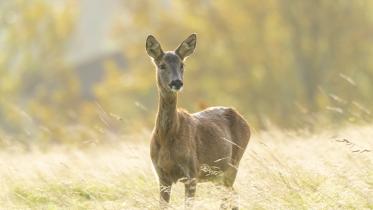
No. The previous list contained animals suggested by the public, such as roe deer, badger and robin, without any specific conservation actions being required for them. These species were included for being iconic, native and widespread, therefore useful in raising awareness of biodiversity among the Scottish public. The revised list does not have this function; it focuses purely on the animals, plants and habitats that need conservation action to support nature recovery in Scotland.
When does the SBL get revised or updated?
Scottish Ministers must from time-to-time review the list and publish any revisions. The first SBL was published in 2005 with revisions in 2007 and 2012. The latest revision was conducted in 2025, after the publication of the most recent Scottish Biodiversity Strategy and Delivery Plan.
Last updated: