Peatland ACTION - Peatland restoration and mountain hare
Guidance for operators / contractors on undertaking sweep searches for mountain hare
Introduction
When undertaking restoration work on Scotland’s peatland habitats, all parties involved must ensure that they work within the constraints of the law.
Our guidance for operators / contractors on undertaking sweep searches for mountain hare provides detailed information on how to conduct sweep searches for mountain hares during the breeding season (01 March to 31 October inclusive) and is a complement document to NatureScot’s standing advice for planning consultations relating to mountain hare.
What the law says
Mountain hare are protected under Schedule 5 of the Wildlife and Countryside Act 1981 (as amended). It is an offence to intentionally or recklessly:
- kill, injure or take a mountain hare;
- disturb a mountain hare in its place of shelter;
- damage, destroy or obstruct access to a mountain hare’s place of shelter.
What do operators and contractors need to do to comply with the law?
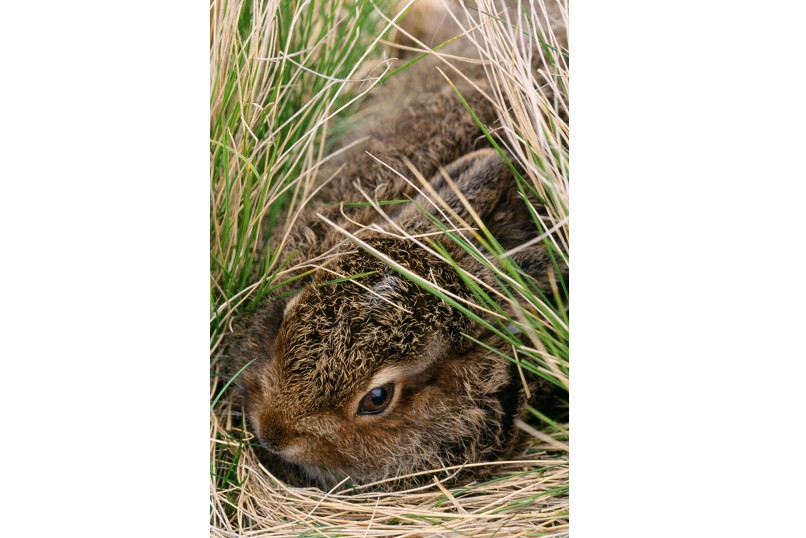
Peatland restoration projects must avoid any mortalities or injuries to mountain hares. The mountain hare is protected all year round, but the greatest risk of mortality or injury from restoration work is to young hares (leverets) during the breeding season as they may be unable or reluctant to move away from moving vehicles and machinery. The risk of harming well-grown young and adult hares is considered very low, even when they are flushed at a short distance, due to their agility. For this reason, there is a general presumption against carrying out work on sites which support mountain hare during the breeding season which is from 01 March-31 October inclusive and will be referred to hereinafter as the “breeding season”.
However, if restoration work cannot be avoided when hares are breeding, it will be necessary to undertake measures to minimise the risk of harm to young hares and minimise the risk to operators of committing an offence. Our recommended approach to mitigation is to undertake daily sweep searches for mountain hare prior to works commencing on site each day. This document provides detailed guidance for operators and contractors on how to conduct sweep searches as a complement document to NatureScot’s standing guidance on mountain hare.
Conducting sweep searches for mountain hare during breeding season (01 March to 31 October inclusive)
Mountain hare sweep search methodology.
How do I know if I need to undertake sweep searches for mountain hare?
Sweep searches should routinely be carried in areas where mountain hares are most likely to be encountered. To determine if you are likely to encounter mountain hare on your restoration site refer to map of mountain hare distribution in Scotland. Whilst this map shows the broad pattern of mountain hare distribution across Scotland, it does not provide detailed information for individual sites, so you would need further information to determine if mountain hares are likely to be present on your restoration site.
Asking the landowner/land manager and project agent or ecologist if mountain hares are present on the site and a walkover of the site to look for mountain hare droppings will confirm whether mountain hares are present. If mountain hares are present on site, and works are to be undertaken during breeding season, sweep searches should be undertaken prior to works commencing each day. Sweep searches can be undertaken by suitable personnel which includes, but not limited to, a suitable ecologist, Ecological Clerk of Works (ECoW), machine operators and agents who have been trained in using this guidance i.e. they have been walked through an example sweep search in the field by a suitable ecologist ahead of undertaking their own sweep searches.
Identify areas of vegetation which are suitable for mountain hare shelters
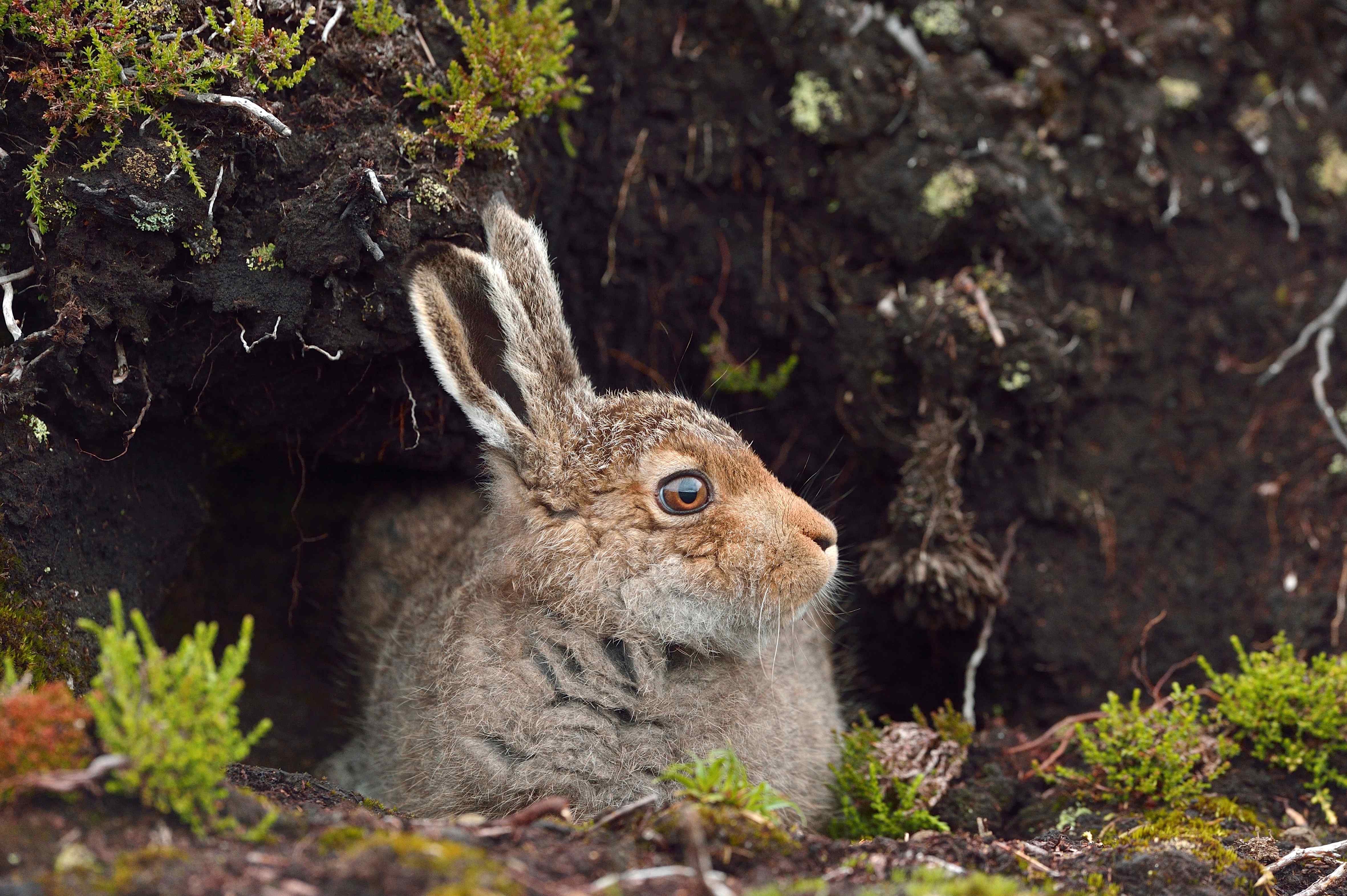
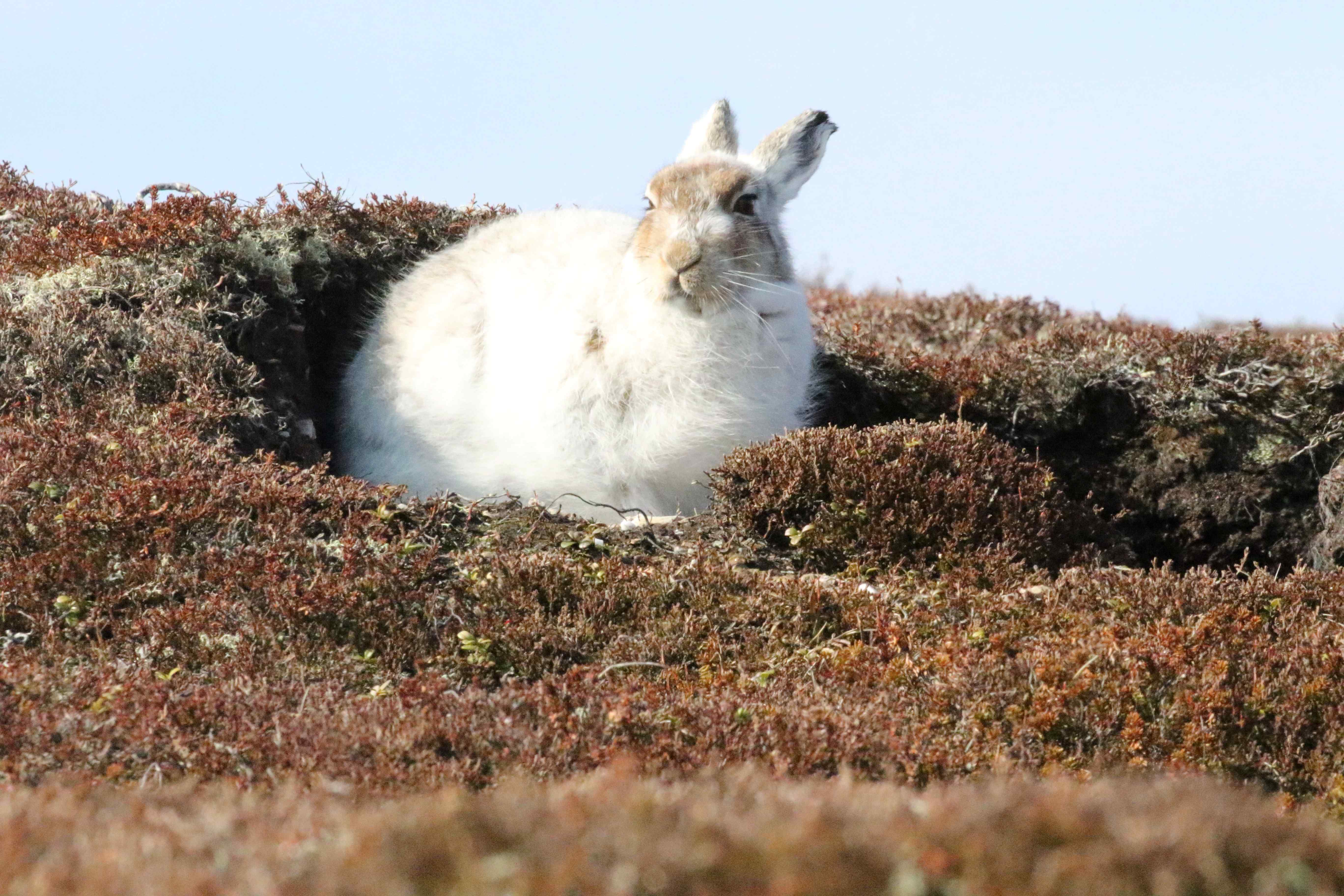
Mountain hares have a variety of different types of shelter which include depressions and hollows in vegetation which are known as ‘forms’, rock piles, peat scrapes, snow seats, snow scrapes and burrows. Mountain hare forms are typically found in tall heather (usually >20cm) which provides a hare with sufficient cover and protection from the weather and predators. Forms can also be found in other vegetation types: for example, young hares may shelter in stands of soft rush. Areas of short and sparse vegetation cover can provide good feeding areas for mountain hare (and you may find lots of droppings in these areas) but are generally unsuitable for a hare form because it will not provide sufficient cover and protection. Burrows (e.g. in peat hags) are generally formed of a single tunnel which extends for 1-2m and are therefore quite different from rabbit warrens.
It may, therefore, be possible to avoid working (including siting of any access tracks) in areas of vegetation that are suitable for mountain hare shelters during the breeding season when dependent young may be present.
How to undertake a pre-works sweep search for mountain hare
During the breeding season, a pre-works sweep search to detect leverets sitting tight in shelters must take place in all suitable vegetation that will be affected by the restoration operations immediately ahead of the machinery coming on site and prior to works commencing each day using the following method:
- The searcher should walk a defined line (or “track”) in the area to be worked that day, carefully looking for any leverets hidden in the vegetation. Because of the difficulty in locating leverets by eye we recommend that a sweep search is undertaken both by eye and using a thermal imager to increase the likelihood of locating leverets.
- The searcher should then repeat the above search by walking back along a parallel line. This is called a parallel track search (Fig. 1).
- The parallel track search method should be repeated until the total area to be worked that day has been thoroughly searched.
- Hares, especially leverets, might still be missed using this method of searching, so it is important to remain vigilant when operating vehicles and machinery. If a hare is flushed at any time during works, a thorough search of that area must be undertaken to locate the shelter, even if the area had been searched earlier that day.
- The mitigation requirement for conducting sweep searches during breeding season must remain in place until all works are completed and all vehicles and machines have been moved off-site.
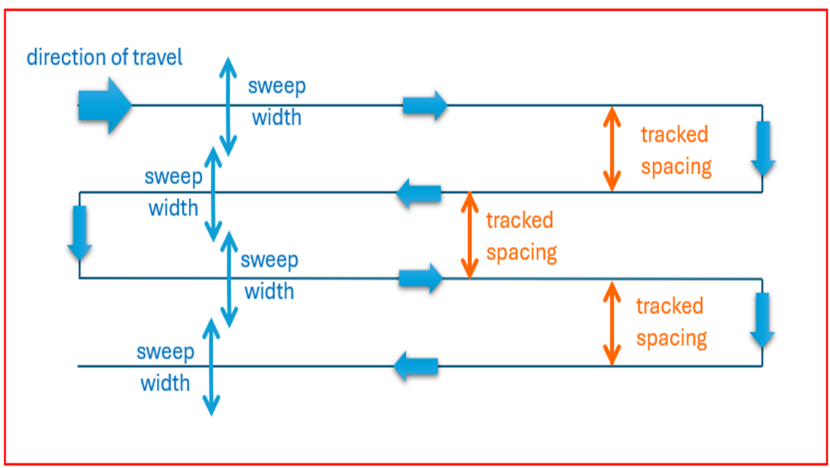
Figure 1. Parallel track search for mountain hare
Click for a full description
Figure 1. A diagram to show how to undertake a parallel track search for mountain hare. Sweep width is the distance either side of the searcher. It is how far the searcher(s) will look either side of them when walking along a defined line (“track”) to search for leverets. The sweep width should be appropriate to your area of view either side of the line which ensures you can thoroughly search all suitable vegetation for leverets and should be no wider than arm’s length either side of the searcher. Track spacing is the distance between each line (“track”) that a searcher(s) will walk and is equal to the sweep width.
Mark and apply an exclusion buffer to mountain hare shelters
If a mountain hare shelter is found during the sweep search (and at any time of year) it must be clearly marked using a clear marker(s) which does not allow avian predators to perch e.g. bamboo cane(s) painted orange at the tip or marked with biodegradable coloured flagging tape.
If leverets are present or if you are unable to see the full extent of the shelter to see if leverets are present, a 10m exclusion buffer should be applied and no works are permitted in this buffer zone. If you can confidently confirm that leverets are not present in a shelter, then there is no minimum size requirement for the buffer around the shelter, but the buffer must be sufficiently large enough to ensure the shelter is fully protected and will not be obstructed, damaged or destroyed by the work. This mitigation would avoid the need for a licence.
A licence would be required if it was necessary to disturb a hare in a shelter (i.e. move leverets); and/or to obstruct access to or damage or destroy a mountain hare shelter at any time of year.
Record keeping
You should keep a record of all your searches and results including: the date and area searched, the location of all shelters including the number of leverets (if present) and buffer zones. This is important record keeping and may be required upon request by a Peatland ACTION project officer or an officer from Police Scotland.
The results of all sweep searches undertaken for Peatland ACTION projects must be uploaded to the National Biodiversity Network Gateway (NBN) in accordance with the grant conditions.
About this guidance
If you have any questions about this guidance, please contact [email protected]
This guidance will be updated to include photos of mountain hare shelters in peatland habitats to help with identification, so please check the website again for that update in the future.
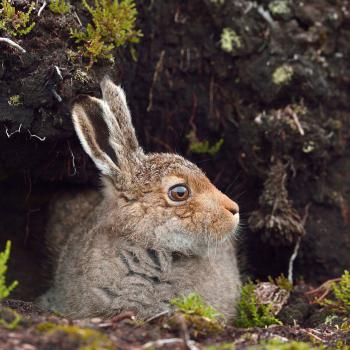
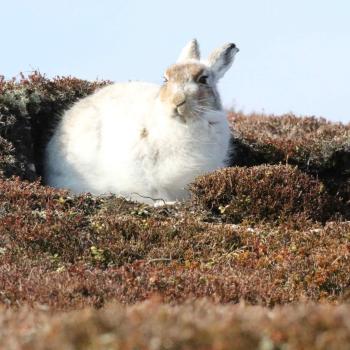
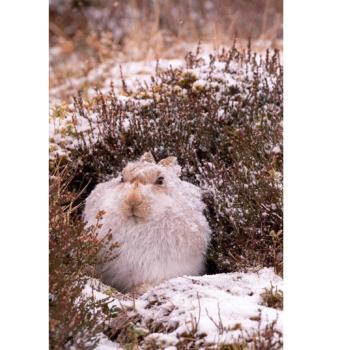
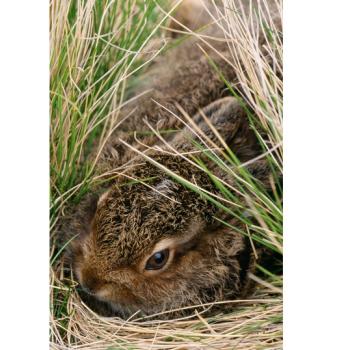
Images of mountain hare
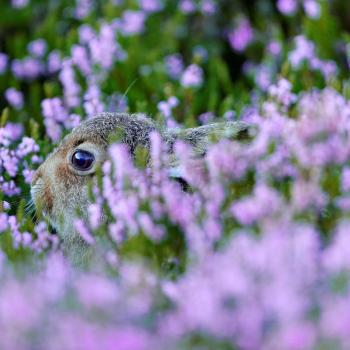
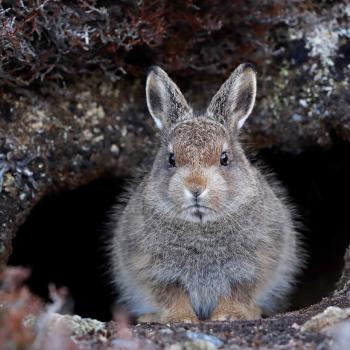
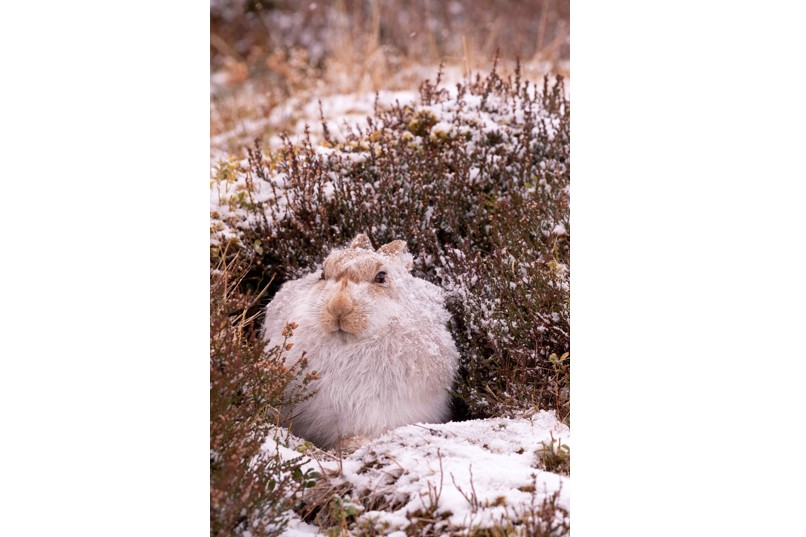
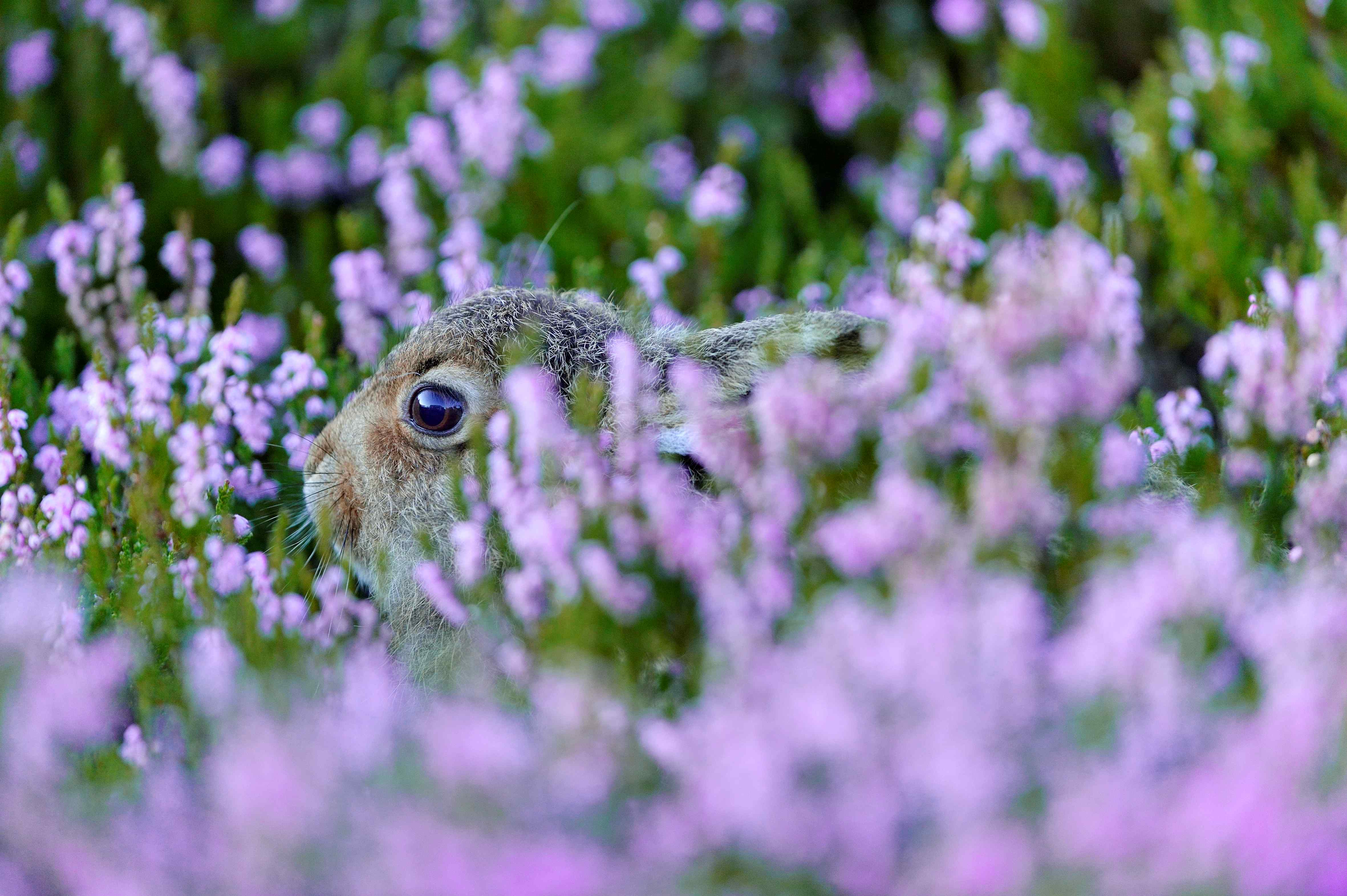
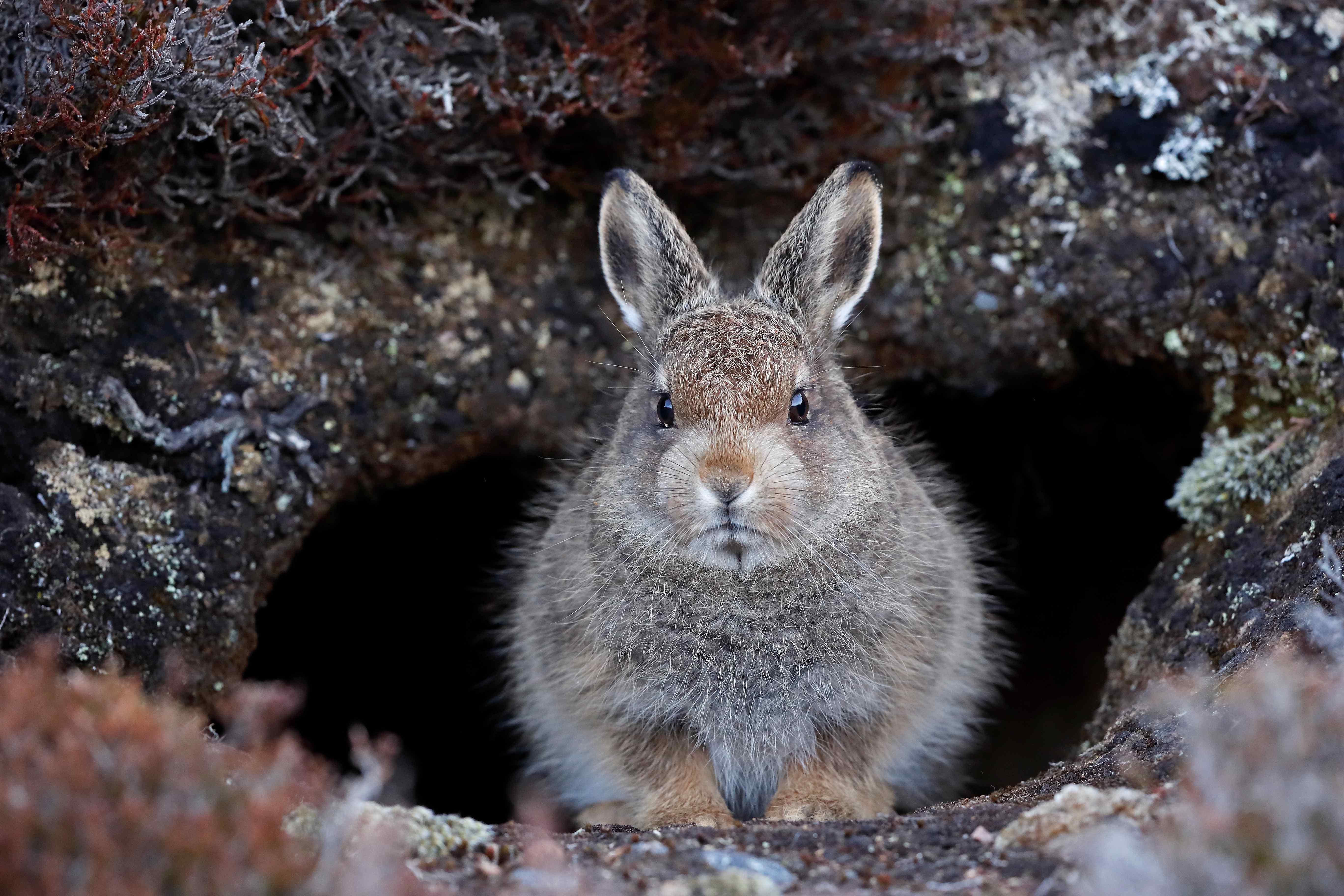
Mountain hares

Last updated: