Genetic Scorecard Indicator - Harbour porpoise
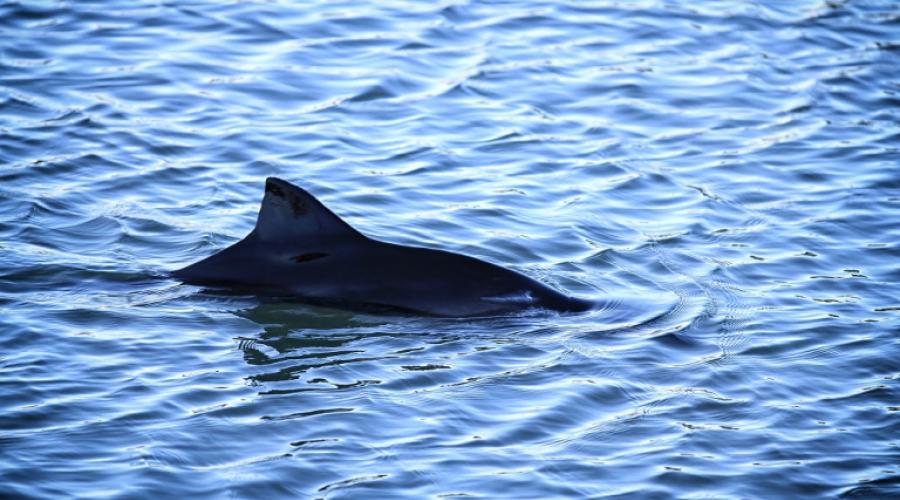
Harbour porpoise (Phocoena phocoena)

IUCN Category:
- Great Britain: Not assessed (indicated above)
- Europe: Vulnerable
- Global: Least concern

Genetic Health Status:
- Scottish Risk: Moderate (indicated above)
- UK Risk: Moderate
- Scottish Mitigation status: Partially effective
- UK Mitigation status: Partially effective
Background
The harbour porpoise (Phocoena phocoena) is found in cold temperate to sub-polar waters of the Northern Hemisphere but is largely absent from the Mediterranean (Braulik et al., 2023). One of the most abundant cetaceans in northeast Atlantic waters, the species is usually found in continental shelf waters, although they occasionally travel over deeper offshore waters (Hammond et al., 2021; Gillis et al., 2023). In UK waters, the status of harbour porpoise is unfavourable and generally considered to be declining. Harbour porpoises are opportunistic piscivore predators, with their diet varying according to prey availability (Murphy et al., 2019; Lambert, 2020; Pierce et al., 2022).
The lifespan of harbour porpoises varies between populations and geographic areas, although not between sexes (IMR/NAMMCO, 2019). The average lifespan is 8-13 years (Lockyer, 2003), with females reaching sexual maturity at 4 years old (IJsseldijk et al., 2021a). Reproductive rate varies geographically from annual to every 3 years depending on maternal nutritional status (Murphy et al., 2020; IJsseldijk et al., 2021b).
There are four main genetic lineages: Black Sea, Iberia-Mauritania, West Greenland, and Northeast Atlantic (Fontaine et al., 2010, 2014, 2017; Chehida et al., 2021; Autenrieth et al., 2024). Across the North Atlantic, population differentiation follows an isolation-by-distance pattern (Autenrieth et al., 2024), with separate subpopulations identified in the Baltic Sea and Belt Seas (Celemín et al., 2023).
Current Threats
Harbour porpoises experience a range of human pressures, the most significant of which is fisheries bycatch (Coram & Northridge, 2018; Calderan & Leaper, 2019; Pinn et al., 2021; Pinn, 2023; Irvine et al., 2024). Other pressures include underwater noise (e.g. as generated by shipping, pile driving, seismic surveys, detonation of explosives and acoustic deterrent devices) (Todd et al., 2009; Bailey et al., 2010; Brandt et al., 2011; Dähne et al., 2013; Dähne et al., 2017; Stone et al., 2017; Wisniewska et al., 2018; Roberts et al., 2019), pollution (particularly persistent organic pollutants such as polychlorinated biphenyls) (Jepson et al., 2005; Murphy et al., 2015; Williams et al., 2020), collision risks (IAMMWG, Camphuysen & Siemensma, 2015), prey depletion (caused by fishing) (Santos & Pierce, 2003; Santos et al., 2004; IMR/NAMMCO 2019), marine debris (Unger et al., 2017) and climate change (Heide-Jørgensen et al., 2011).
Contribution of Scottish/UK population to total species diversity
Harbour porpoises in UK waters are part of a genetic continuum, characterized by a weak genetic structure, in which geographically proximate individuals are genetically more similar (Fontaine et al., 2007, 2014/ 2017; Morin et al., 2021). Marginal and atypical environments are thought to have led to some genetic differentiation (Celemín et al., 2023; Autenrieth et al., 2024), with recognition of northern and southern ecotypes (Fontaine et al., 2017; Morin et al., 2021).
Genetic risks
Diversity loss: population declines
Significant concerns have been raised regarding the impact of fisheries bycatch in UK waters of the southwest (Pinn, 2023) which may have impacted the genetic diversity of the southern ecotype.
Global Biodiversity Framework Indicators
Population definitions:
Populations are defined by geographic boundaries. The species is continually distributed throughout continental shelf waters and is highly mobile, although some site philopatry has been attributed to adult females.
Ne500: The proportion of populations that have an effective population size of more than 500.
- Proportion of populations with Ne > 500 in Scotland = 2/2
- Proportion of populations with Ne > 500 in UK = 3/3
PM: Proportion of populations that existed in 2000 that still exist in 2025.
- Proportion of populations maintained in Scotland = 2/2
- Proportion of populations maintained in UK = 3/3
Diversity loss: functional variation
Functional variation
The two recognised ecotypes of the Northeast Atlantic are separated by body size and feeding ecology. Animals in Scottish waters are of the northern ecotype (Fontaine et al., 2017). The environmental changes linked to climate change may see an expansion of the southern ecotype into Scottish waters and a corresponding reduction in the occurrence of the northern ecotype.
Divergent lineages
The harbour porpoise found in UK waters are part of the Northeast Atlantic population, with differentiation occurring through isolation-by-distance pattern (Autenrieth et al., 2024).
Hybridisation/Introgression
There are no records of harbour porpoise hybridisation in UK waters. Elsewhere, hybrids have been recorded between harbour porpoise and Dall’s porpoise (Phocoenoides dalli; Willis et al., 2004; Crossman et al., 2014).
Low turnover - constraints on adaptive opportunities
The generation time for harbour porpoise in European waters is 5–7 years (Lockyer, 2003; Tolley & Rosel, 2006) and females reach sexual maturity at 4 years of age (IJsseldijk et al., 2021a). Reproductive rates vary geographically and depend on maternal nutritional status, varying from annual to every 2-3 years (Murphy et al., 2015, 2020; IJsseldijk et al., 2021b). Calves are dependent on their mother for up to 10 months (Lockyer, 2003). These low reproductive rates may limit adaptive opportunities.
Cumulative Risk Summary
Overall Genetic Health Status
Scotland
- Risk: Moderate
- Mitigation: Partially effective
(Some measures in place but limited impacts for bycatch reduction).
Great Britain/UK
- Risk: Moderate
- Mitigation: Partially effective
(Some measures in place but limited impacts for bycatch reduction).
Although widespread, declines are occurring in the Celtic and Irish Seas. Efforts to reduce the impact of bycatch on the NE Atlantic population are only partially effective. Combined with low recovery rates, these impacts may influence the genetic diversity.
Overall Genetic Health status explanation
Although widespread, with all populations considered to be above Ne500, the conservation status of harbour porpoise in UK waters has been declining due to the impacts of bycatch and legacy pollutants such as PCBs. Combined with low recovery rates, it is likely that these impacts could lead to a decline in genetic diversity.
In situ genetic threat level
In situ genetic threat level
- In situ Risk for Scotland: Moderate
- In situ Risk for UK: Moderate
Although widespread, declines in the Celtic and Irish Seas and the impact of bycatch on the NE Atlantic population combined with low recovery rates, these impacts will influence the genetic diversity.
Confidence in in situ threat level
- Confidence score for Scotland: Medium
- Confidence score for UK: Medium
There is extensive data regarding biology, population differentiation and genetic studies.
Ex situ representation
Harbour porpoises are not kept in captivity in the UK. They can, however, be found in captivity in Europe and other parts of the world.
Current conservation actions
Harbour porpoises are listed as an OSPAR Threatened and Declining species and as a European Protected Species. In the UK, harbour porpoise receive protection under the Wildlife and Countryside Act. It is an offence to intentionally or recklessly kill, injure or take harbour porpoise, or to possess or sell harbour porpoise.
Harbour porpoises are also recognised as a priority marine feature (PMF) in Scotland’s seas, which means that National Marine Plan including General Policy GEN 9b applies. This ensures that development and use of the marine environment does not have a significant effect on their national status.
Seven Special Areas of Conservation (SAC) have been designated with harbour porpoise as a qualifying feature. A further 33 SACs list the species as a non-qualifying feature. Human activities with the potential to have adverse effects on protected sites, such as construction and dredging, are managed through a licensing and consents process.
The UK has several voluntary wildlife watching guidelines/codes of conduct which are publicly available however, while these are endorsed by the UK government and devolved administrations, there is no mandatory requirement for operators or individuals to adopt the guidelines.
The UK Cetacean Conservation Strategy, published in 2025, is intended to support decision making and identify actions necessary to maintain or improve the conservation status of cetaceans in UK waters.
Defra and the Scottish Government fund national strandings schemes for cetaceans which aim to: collate, analyse and report data for all cetacean strandings around the coast of the UK; determine the causes of death (both natural and anthropogenic) in stranded cetaceans, including bycatch and physical trauma and; undertake surveillance on the incidence of disease in stranded cetaceans in order to identify any substantial new threats to their conservation status.
The Scottish Biodiversity Strategy to 2045, the Scottish Biodiversity Duty and UK Marine Strategy Good Environmental Status provide further drivers to ensure biological diversity is restored, and ecosystems on which harbour porpoise rely are safeguarded.
| Ex situ | Translocation | Habitat management | Legal protection of habitat or species | Regulation of exploitation | Control of INNS/pests/pathogens |
|---|---|---|---|---|---|
| - | - | X | X | - | - |
Population assessment/monitoring
Population
Demographic
N pops assessed/monitored in Scotland = 2/2
In addition to international NE Atlantic European waters (see GB/UK), additional sightings surveys are undertaken on an annual basis on Scottish west coast. Acoustic monitoring is undertaken on an ongoing basis through Scottish waters.
N pops assessed/monitored in UK = 3/3
NE Atlantic European waters are surveyed every six years through the international SCANS and Irish ObSERVE line transect surveys (e.g. Rogan et al., 2018; Hammond et al., 2021; Gilles et al., 2023, 2025).
Genetic
N pops assessed/monitored in Scotland = 0/2 (ad hoc and rare).
N pops assessed/monitored in UK = 0/3 (ad hoc and rare).
Further research
Ensure population monitoring is maintained at the national and international levels.
References
Autenrieth, M., Havenstein, K., De Cahsan, B., Canitz, J., Benke, H., Roos, A., Pampoulie, C., Sigurðsson, G.M., Siebert, U., Olsen, M.T. and Biard, V. (2024). Genome-wide analysis of the harbour porpoise (Phocoena phocoena) indicates isolation-by-distance across the North Atlantic and potential local adaptation in adjacent waters. Conservation genetics, 25(2): 563-584.
Bailey, H., B. Senior, D. Simmons, J. Rusin, G. Picken, and P. M. Thompson (2010). Assessing underwater noise levels during pile-driving at an offshore windfarm and its potential effects on marine mammals. Marine Pollution Bulletin, 60: 888-897.
Braulik, G.T., Minton , G., Amano, M. & Bjørge, A. (2023). Phocoena phocoena (amended version of 2020 assessment). The IUCN Red List of Threatened Species 2023: e.T17027A247632759.
Brandt, M. J., Diederichs, A., Betke, K., & Nehls, G. (2011). Responses of harbour porpoises to pile driving at the Horns Rev II offshore wind farm in the Danish North Sea. Marine Ecology Progress Series, 421: 205-216.
Calderan, S., and R. Leaper. 2019. Review of Harbour Porpoise bycatch in UK Waters and Recommendations for Management. A WWF Report.
Celemín, E., Autenrieth, M., Roos, A., Pawliczka, I., Quintela, M., Lindstrøm, U., Benke, H., Siebert, U., Lockyer, C., Berggren, P., Özturk, A. A., Özturk, B., Lesage, V., & Tiedemann, R. (2025). Evolutionary history and seascape genomics of Harbour porpoises (Phocoena phocoena) across environmental gradients in the North Atlantic and adjacent waters. Molecular Ecology Resources, 25, e13860.
Chehida, Y. B., R. Loughnane, J. Thumloup, K. Kaschner, C. Garilao, P. E. Rosel, and M. C. Fontaine (2021). No leading-edge effect in North Atlantic harbor porpoises: Evolutionary and conservation implications. Evolutionary Applications, 14:1588-1611.
Coram, A., and S. Northridge. 2018. Bycatch and Mitigation Approaches for Harbour Porpoise Special Areas of Conservation. Defra Contract C5784AD/ME6014.
Crossman, C. A., Barrett-Lennard, L. G., & Taylor, E. B. (2014). Population structure and intergeneric hybridization in harbour porpoises Phocoena phocoena in British Columbia, Canada. Endangered Species Research, 26, 1-12.
Dähne, M., Gilles, A., Lucke, K., Peschko, V., Adler, S., Krügel, K., Sundermeyer, J. and Siebert, U. (2013). Effects of pile-driving on harbour porpoises (Phocoena phocoena) at the first offshore wind farm in Germany. Environmental Research Letters, 8(2), p.025002.
Dähne, M., J. Tougaard, J. Carstensen, A. Rose, and J. Nabe-Nielsen (2017). Bubble curtains attenuate noise from offshore wind farm construction and reduce temporary habitat loss for harbour porpoises. Marine Ecology Progress Series, 580: 221-237.
Fontaine, M.C., Baird, S.J., Piry, S., Ray, N., Tolley, K.A., Duke, S., Birkun Jr, A., Ferreira, M., Jauniaux, T., Llavona, A. and Öztürk, B. (2007). Rise of oceanographic barriers in continuous populations of a cetacean: the genetic structure of harbour porpoises in Old World waters. BMC Bioogy, 5, 30.
Fontaine, M. C., K. Roland, I. Calves, F. Austerlitz, F. P. Palstra, K. A. Tolley, S. Ryan, M. Ferreira, T. Jauniaux, A. Llavona, B. Öztürk, A. A. Öztürk, V. Ridoux, E. Rogan, M. Sequeira, U. Siebert, G. A. Vikingsson, A. Borrell, J. R. Michaux, and A. Aguilar (2014). Postglacial climate changes and rise of three ecotypes of harbour porpoises, Phocoena phocoena, in western Palearctic waters. Molecular Ecology, 23: 3306-3321.
Fontaine, M.C., Thatcher, O., Ray, N., Piry, S., Brownlow, A., Davison, N.J., Jepson, P., Deaville, R. and Goodman, S.J. (2017). Mixing of porpoise ecotypes in southwestern UK waters revealed by genetic profiling. Royal Society open science, 4(3).
Fontaine, M.C., Tolley, K.A., Michaux, J.R., Birkun, A., Ferreira, M., Jauniaux, T., Llavona, Á., Öztürk, B., Öztürk, A.A., Ridoux, V. and Rogan, E. (2010). Genetic and historic evidence for climate-driven population fragmentation in a top cetacean predator: the harbour porpoises in European water. Proceedings of the Royal Society B: Biological Sciences, 277(1695): 2829-2837.
Geelhoed, S.C.V., Authier, M., Pigeault, R., Gilles, A. 2022. Abundance and Distribution of Cetaceans. In: OSPAR, 2023: The 2023 Quality Status Report for the Northeast Atlantic. OSPAR Commission, London.
Gilles, A., Authier, M., Ramirez-Martinez, N., Araújo, H., Blanchard, A., Carlström, J., Eira, C., Dorémus, G., Fernández-Maldonado, C., Geelhoed, S.C.V. and Kyhn, L. (2023). Estimates of cetacean abundance in European Atlantic waters in summer 2022 from the SCANS-IV aerial and shipboard surveys. Final report published 29 September 2023. 64 pp.
Gilles, A., Authier, M., Pigeault, R., Ramirez, N., Benoit, V., Carlström, J., Eira, C., Geelhoed, S., Laran, S., Sequeira, M. and Sveegaard, S. (2025). Spatial models of cetacean density in European Atlantic waters based on SCANS-IV summer 2022 survey data.
Hammond, P.S., Lacey, C., Gilles, A., Viquerat, S., Börjesson, P., Herr, H., Macleod, K., Ridoux, V., Santos, M.B., Scheidat, M., Teilmann, J., Vingada, J., Øien, N. (2021). Estimates of cetacean abundance in European Atlantic waters in summer 2016 from the SCANS-III aerial and shipboard surveys.
Hammond, P.S., Lacey, C., Gilles, A., Viquerat, S., Börjesson, P., Herr, H., Macleod, K., Ridoux, V., Santos, M.B., Scheidat, M., Teilmann, J., Vingada, J., Øien, N. (2021). Harbour porpoises respond to climate change. Ecology and Evolution, 1: 579-585.
IAMMWG, Camphuysen, C.J. & Siemensma, M.L. (2015). A Conservation Literature Review for the Harbour Porpoise (Phocoena phocoena). JNCC Report No. 566, Peterborough. 96pp.
IJsseldijk, L.L., Camphuysen, K.C., Keijl, G.O., Troost, G. and Aarts, G. (2021). Predicting Harbor Porpoise Strandings Based on Near-Shore Sightings Indicates Elevated Temporal Mortality Rates. Frontiers in Marine Science, 8.
IJsseldijk, L.L., Hessing, S., Mairo, A., Ten Doeschate, M.T., Treep, J., van den Broek, J., Keijl, G.O., Siebert, U., Heesterbeek, H., Gröne, A. and Leopold, M.F. (2021). Nutritional status and prey energy density govern reproductive success in a small cetacean. Scientific Reports, 11, 19201.
North Atlantic Marine Mammal Commission & Norwegian Institute of Marine Research, 2019. Report of the Joint IMR/NAMMCO International Workshop on the Status of Harbour Porpoises in the North Atlantic. Tromsø, December 3rd – 7th 2018.
Irvine, H., Pinn, E., Smith, I. and Lart, W. (2024), Harbour Porpoise Bycatch: Determining Spatial Distribution of Risk to Inform Management Measures. Aquatic Conservation: Marine and Freshwater Ecosystems, 34, e70003.
Jepson, P. D., P. M. Bennett, R. Deaville, C. R. Allchin, J. R. Baker, and R. J. Law. 2005. Relationships between polychlorinated biphenyls and health status in harbour porpoises (Phocoena phocoena) stranded in the United Kingdom. Environmental Toxicology and Chemistry, 24, 238-248.
Lambert, E. 2020. The Feeding Ecology of the Harbour Porpoise Phocoena Phocoena L. in a Changing Environment. MSc Thesis. University of Antwerp/Ghent University/Free University of Brussels (VUB): Antwerp/Ghent/Brussels. 71 pp
Lockyer, C. 2003. Harbour porpoises in the North Atlantic: biological parameters. Pages 71-91 in T. Haug, G. Desportes, G. A. Vikingsson, and L. Witting, editors. Harbour porpoises in the North Atlantic. Nammco Scientific Publications Volume 5. The North Atlantic Marine Mammal Commission, Tromso.
Morin, P.A., Forester, B.R., Forney, K.A., Crossman, C.A., Hancock-Hanser, B.L., Robertson, K.M., Barrett-Lennard, L.G., Baird, R.W., Calambokidis, J., Gearin, P., Hanson, M.B., Schumacher, C., Harkins, T., Fontaine, M.C., Taylor, B.L. and Parsons, K.M. (2021). Population structure in a continuously distributed coastal marine species, the harbor porpoise, based on microhaplotypes derived from poor‐quality samples. Molecular Ecology, 30(6), 1457–1476.
Murphy, S., Barber, J.L., Learmonth, J.A., Read, F.L., Deaville, R., Perkins, M.W., Brownlow, A., Davison, N., Penrose, R., Pierce, G.J. and Law, R.J. (2015). Reproductive failure in UK harbour porpoises Phocoena phocoena: Legacy of pollutant exposure? PLoS ONE 10, e0131085.
Murphy, S., Petitguyot, M.A., Jepson, P.D., Deaville, R., Lockyer, C., Barnett, J., Perkins, M., Penrose, R., Davison, N.J. and Minto, C. (2020). Spatio-Temporal Variability of Harbor Porpoise Life History Parameters in the North-East Atlantic. Frontiers in Marine Science, 7.
Murphy, S., Tougaard, J., Evans, P. G. H., Caurant, F., and Hammond, P. (2019). Area Status Report North Sea. Annex 8. Report of Joint IMR/NAMMCO International Workshop on the Status of Harbour Porpoises in the North Atlantic. Tromsø, Norway. North Atlantic Marine Mammal Commission and the Norwegian Institute of Marine Research.
Pierce, G.J., Brownlow, A., Evans, P.G., IJsseldijk, L., Kamińska, K., Kessler, L., Murphy, S., Pinn, E., Ridoux, V., Simmonds, M.P. and Spitz, J. (2022). Report of the ASCOBANS Resource Depletion Working Group (August 2022). Report to the 27th Meeting of the Advisory Committee, Online 28-30 September 2022. ASCOBANS/AC27/Doc.2.2.
Pinn, E.H., 2023. Porpoises, bycatch and the pinger conundrum. Aquatic Conservation: Marine and Freshwater Ecosystems, 33, 1360–1368.
Pinn, E. H., K. Macleod, and M. L. Tasker. 2021. Conservation of transnational species: The tensions between legal requirements and best scientific evidence. Aquatic Conservation: Marine and Freshwater Ecosystems, 31, 3291-3310.
Roberts, L., Collier, S., Law, S. and Gaion, A. (2019). The impact of marine vessels on the presence and behaviour of harbour porpoise (Phocoena phocoena) in the waters off Berry Head, Brixham (South West England). Ocean & Coastal Management, 179:104860.
Rogan, E., Breen, P., Mackey, M., Cañadas, A., Scheidat, M., Geelhoed, S.C.V. and Jessopp, M. (2018). Aerial surveys of cetaceans and seabirds in Irish waters: Occurrence, distribution and abundance in 2015-2017.
Santos, M.B. and Pierce, G.J. (2003). The diet of harbour porpoise (Phocoena phocoena) in the northeast Atlantic: a review. Oceanography and marine biology: 363-369.
Santos, M.B., Pierce, G.J., Learmonth, J.A., Reid, R.J., Ross, H.M., Patterson, I.A.P., Reid, D.G. and Beare, D. (2004). Variability in the diet of harbor porpoises (Phocoena phocoena) in Scottish waters 1992–2003. Marine Mammal Science, 20(1): 1-27.
Stone, C., Hall, K., Mendes, S. and Tasker, M. (2017). The effects of seismic operations in UK waters: analysis of Marine Mammal Observer data. J. Cetacean Res. Manage., 16: 71-85.
Todd, V.L., Pearse, W.D., Tregenza, N.C., Lepper, P.A. and Todd, I.B. (2009). Diel echolocation activity of harbour porpoises (Phocoena phocoena) around North Sea offshore gas installations. ICES Journal of Marine Science, 66(4): 734-745.
Unger, B., Herr, H., Benke, H., Böhmert, M., Burkhardt-Holm, P., Dähne, M., Hillmann, M., Wolff-Schmidt, K., Wohlsein, P. and Siebert, U. (2017). Marine debris in harbour porpoises and seals from German waters. Marine Environmental Research, 130: 77-84.
Williams, R., Doeschate, M.T., Curnick, D.J., Brownlow, A., Barber, J.L., Davison, N.J., Deaville, R., Perkins, M., Jepson, P.D. and Jobling, S. (2020). Levels of polychlorinated biphenyls are still associated with toxic effects in harbor porpoises (Phocoena phocoena) despite having fallen below proposed toxicity thresholds. Environmental science & technology, 54(4): 2277-2286.
Willis, P.M., Crespi, B.J., Dill, L.M., Baird, R.W. and Hanson, M.B. (2004). Natural hybridization between Dall's porpoises (Phocoenoides dalli) and harbour porpoises (Phocoena phocoena). Canadian journal of zoology, 82(5):828-834.
Wisniewska, D.M., Johnson, M., Teilmann, J., Siebert, U., Galatius, A., Dietz, R. and Madsen, P.T. (2018). High rates of vessel noise disrupt foraging in wild harbour porpoises (Phocoena phocoena). Proceedings of the Royal Society B: Biological Sciences, 285.
Assessors: Emma-Louise Smith (University of Edinburgh) and Eunice Pinn (NatureScot).
Reviewer: Emily Humble (University of Edinburgh).
Last updated: