Menu
NatureScot Logo NatureScot Logo
Close navigation
  • Home
  • About NatureScot
  • Climate change
  • Enjoying the outdoors
  • Funding and Projects
  • Gaelic
  • Information hub
  • Landforms and geology
  • Landscapes and habitats
  • Plants, animals and fungi
  • Professional advice
  • Scotland's Biodiversity

Knockan Crag NNR - visiting the reserve leaflet

https://www.nature.scot/visit-knockan-crag-nnr-tadhail-creag-chnocain-tearmann-nadair-naiseanta
Breadcrumb navigation
  • Enjoying the outdoors Enjoying the outdoors
    • About NatureScot
    • Climate change
    • Funding and Projects
    • Gaelic
    • Information hub
    • Landforms and geology
    • Landscapes and habitats
    • Plants, animals and fungi
    • Professional advice
    • Scotland's Biodiversity
  • Visit our nature reserves Visit our nature reserves
    • ​Your access rights
    • Communities and landscape
    • What to see in your area
    • Get active outdoors
    • Routes to explore
    • Under the sea
    • Find a country park
    • Discover your Local Nature Reserve
    • Explore a regional park
    • Discover our National Parks
    • Explore Scotland
    • Visit a geopark
    • Events
  • Knockan Crag NNR Knockan Crag NNR
    • Abernethy NNR
    • Ariundle Oakwood NNR
    • Beinn Eighe and Loch Maree Islands NNR
    • Ben Wyvis NNR
    • Blawhorn Moss NNR
    • Caerlaverock NNR
    • Cairnsmore of Fleet NNR
    • Clyde Valley Woodlands NNR
    • Corrie Fee NNR
    • Craigellachie NNR
    • Creag Meagaidh NNR
    • Flanders Moss NNR
    • Forvie NNR
    • Glasdrum Wood NNR
    • Glen Roy NNR
    • Hermaness NNR
    • Invereshie and Inshriach NNR
    • Isle of May NNR
    • Loch Fleet NNR
    • Loch Leven NNR
    • Loch Lomond NNR
    • Moine Mhor NNR
    • Muir of Dinnet NNR
    • Noss NNR
    • Rum NNR
    • St Cyrus NNR
    • Taynish NNR
    • Tentsmuir NNR
    • Achanarras Quarry Nature Reserve
    • Claish Moss Nature Reserve
    • Cragbank Wood Nature Reserve
    • Keen of Hamar Nature Reserve
    • Kirkconnell Flow Nature Reserve
  • Knockan Crag NNR - Visiting the reserve Knockan Crag NNR - Visiting the reserve
    • Knockan Crag NNR - About the reserve
  • Knockan Crag NNR - visiting the reserve leaflet Knockan Crag NNR - visiting the reserve leaflet

Welcome to Knockan Crag National Nature Reserve

Step on three billion years of history, bridge 500 million years with your bare hands and dig into deep time. The landscape around Knockan Crag reveals some of the world’s oldest rocks as well as evidence of the huge upheavals, collisions and pressures that have shaped the land we call Scotland. You can see the clue that allowed one of the world’s greatest geological mysteries to be solved.

Travel into deep time

At Knockan Crag you view a landscape so old that it is almost impossible to imagine. Think of the history of the planet as a 24 hour clock. Modern humans first inhabited it at 23:59:59, just one second in deep time.

The crags and glittering pools known as ‘cnoc and lochan’ expose some of the world’s oldest rocks. Bog and heather overlie seabed muds, a billion years old. The bedrock of the mountains is sediment dumped by ancient rivers while the whitish rocks on some summits were formed from sand in tropical seas when Scotland lay south of the Equator. Over millions of years, ice, weather and erosion have shaped the rocks into the landscape you experience today.
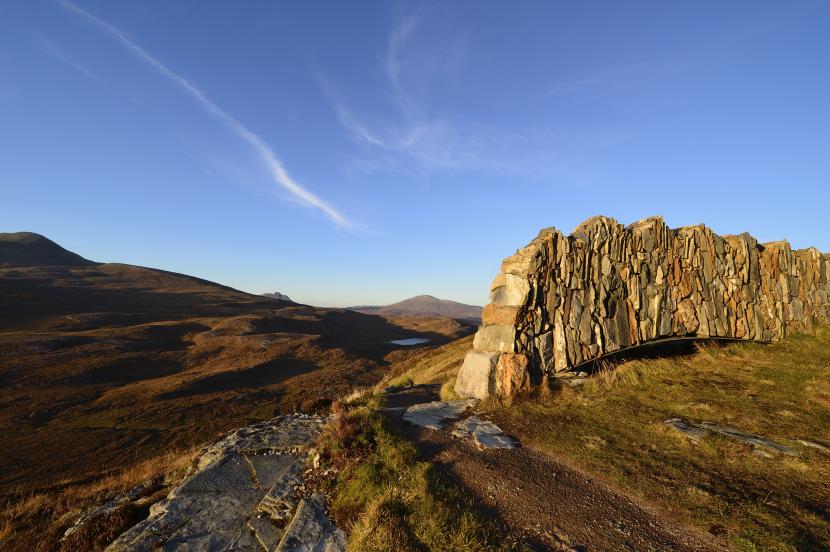
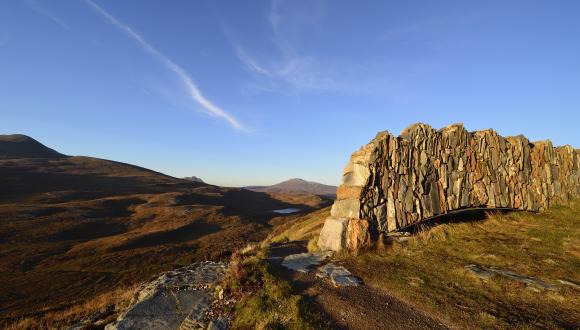
A rock arch on the crag top trail at Knockan Crag NNR.

Up close and puzzling

At the Puzzle Wall layers of rock reveal one of Earth’s great upheavals. The bottom layers show traces of marine creatures which lived beside tropical seas. Above is a layer of lime rich mud. On top is the puzzling layer, laid down nearly half a billion years earlier, when Scotland was part of the same continent as North America. The closing of a huge ocean led to the collision of two continents and the birth of the landmass that is present-day Britain. The force of the collision thrust up these older rocks to make them top of the pile.

Reading the riddle of the rocks

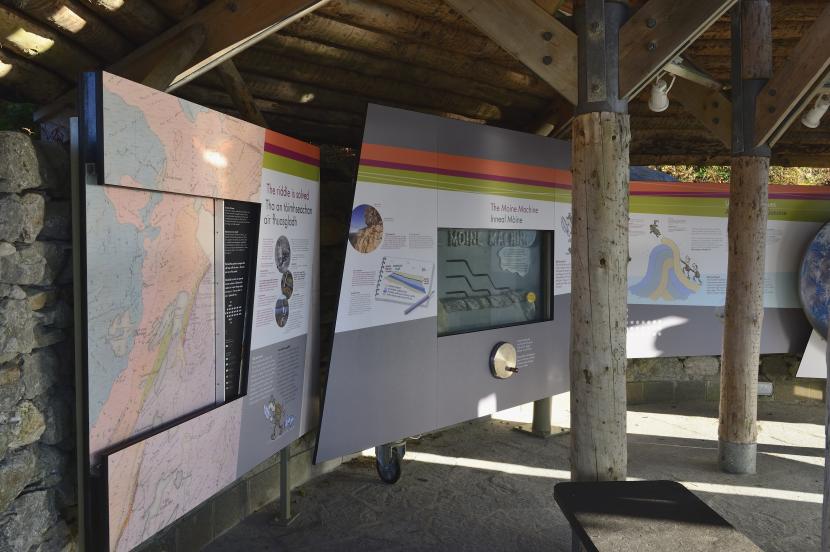
After years of debate, two brilliant geologists solved the puzzle of how older rocks can lie on top of younger rocks. By mapping the folds, thrusts and contours of the landscape here in 1882, they discovered that Earth’s enormous forces could move rocks sideways. The older rocks had been pushed up and over younger rocks in a process called thrust. At the Rock Room, you can meet those remarkable geologists, Peach and Horne, discover how continents collided and try out your skills as a rock detective.
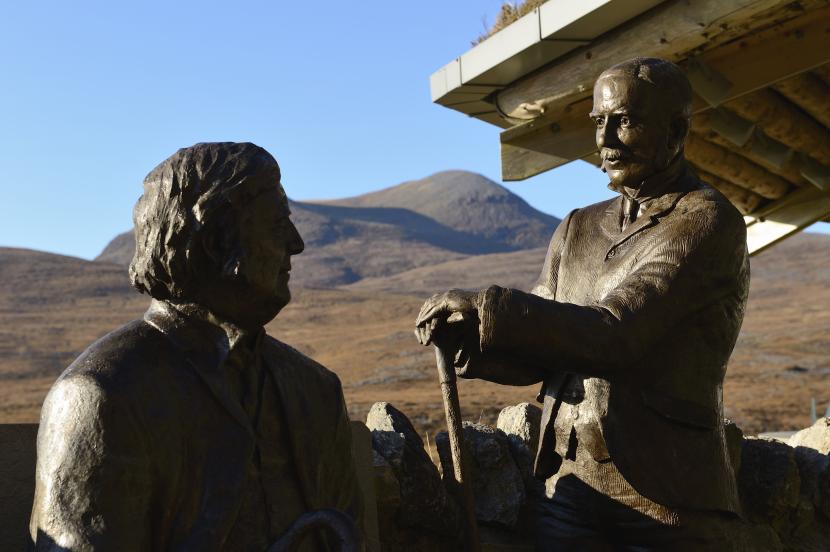
Sculptures of Geologists Peach & Horne by Alan Herriot
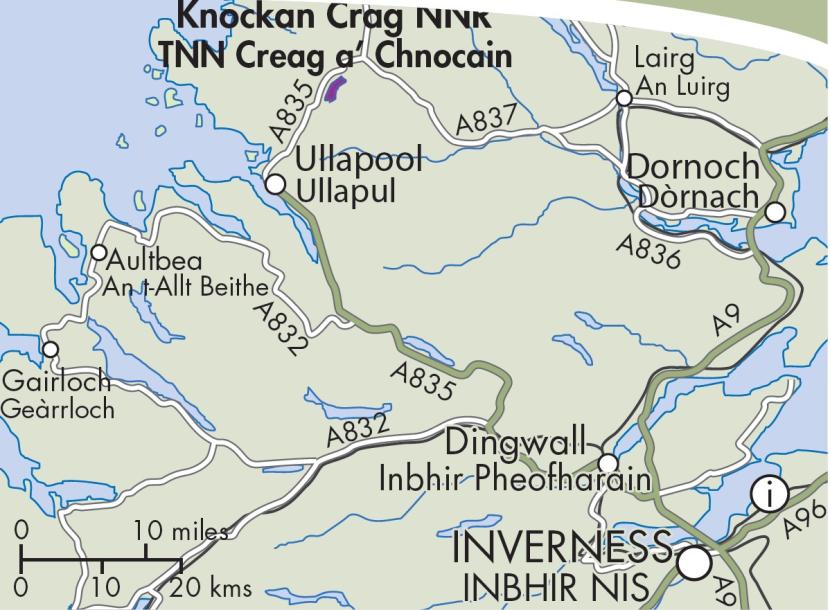
Finding the reserve map
Getting there
Click for a full description

Knockan Crag is 13 miles (21 km) north of Ullapool on the A835. The unmanned Rock Room visitor centre is open at all times. Bring suitable footwear, weatherwear, food and drink.

Find out more

  • Support this NNR at nature.scot/donate-nnr
  • Follow @ ScotlandsNNRs on social media
  • For more information please contact 01463 701600 or email [email protected]

Scottish Outdoor Access Code Logo and text Enjoy Scotland's outdoors responsibly

Walk back into deep time

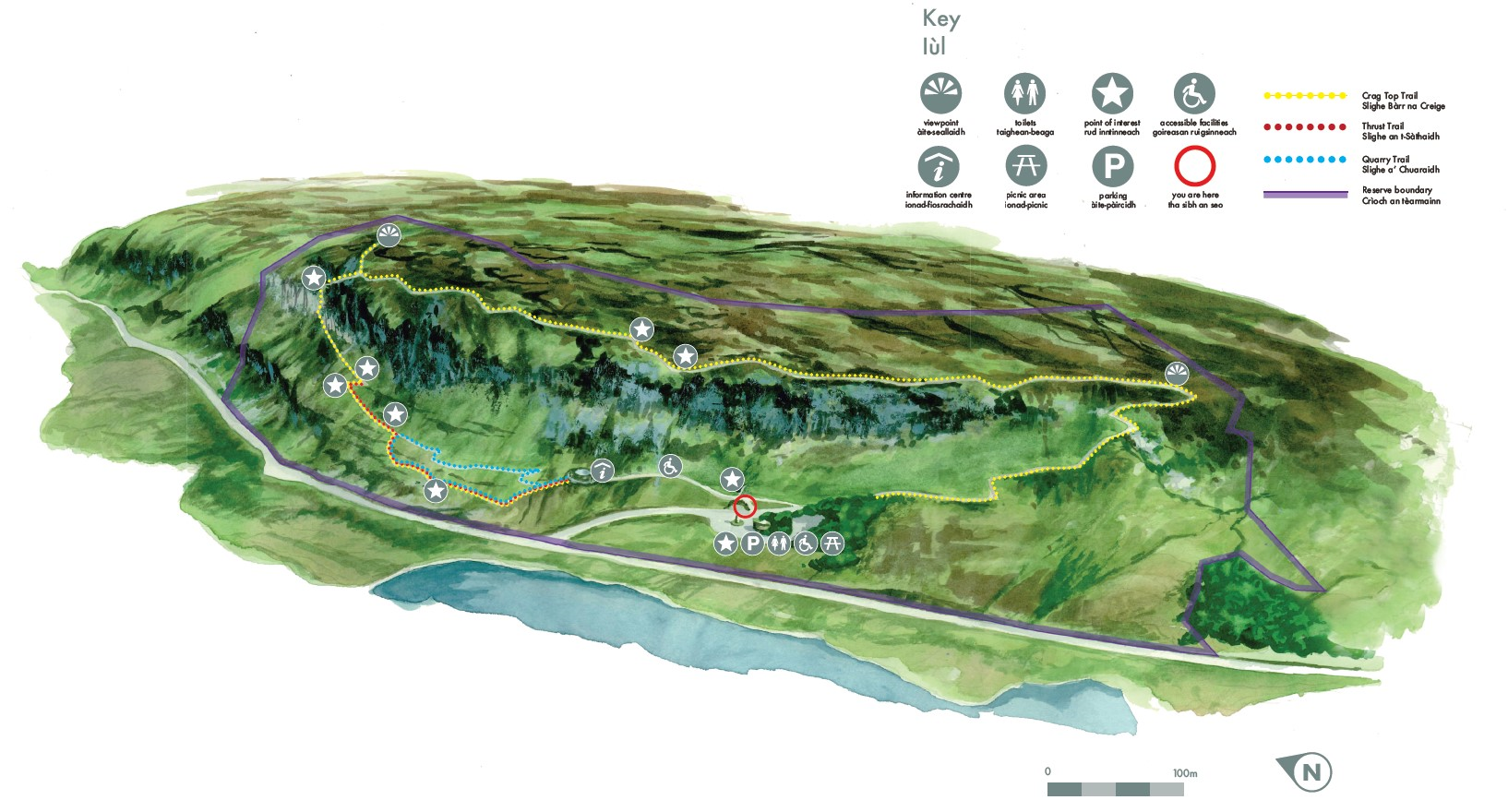
From the Rock Room three trails take you to the features that make Knockan Crag special. The Crag Top Trail rewards you with an eagle’s eye view of deep time on this circular route with a few steep climbs past the Moine Thrust. About one hour.

The Thrust Trail takes you to the spot where Peach and Horne solved the mystery. 30 minutes. The Quarry Trail is an easier option avoiding the climb to the Thrust. 20 minutes.
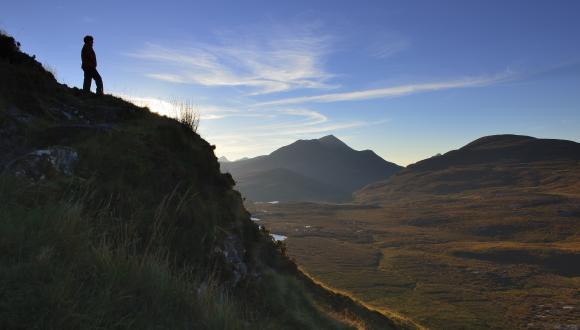
Visitor enjoying the view from Knockan Crag

An inspiring landscape

On the trails you will discover how artists and poets have interpreted this ancient landscape.

‘Something to do with time has all to do.
With shape and size …’

Stop, look and listen

You may meet other visitors on the trails. In summer, song thrush, stonechat and meadow pipit serenade walkers and ravens and nesting kestrels haunt the cliffs. Frogs shelter in damp hollows and lizards sunbathe close to the paths while eagles and buzzards circle the mountains.
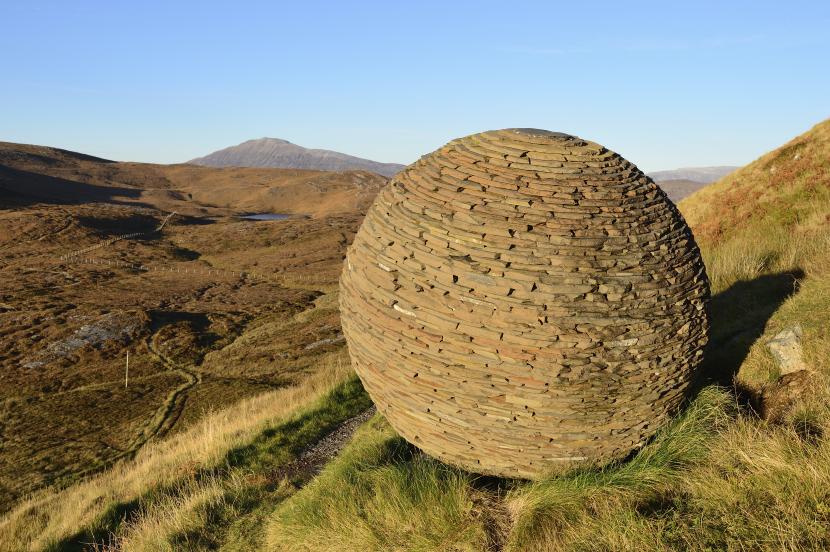
Rock sculpture beside the trail

Travel the Rock Route

Look out for the Rock Route panels on your journey through Scotland’s first Geopark.

Reserve map
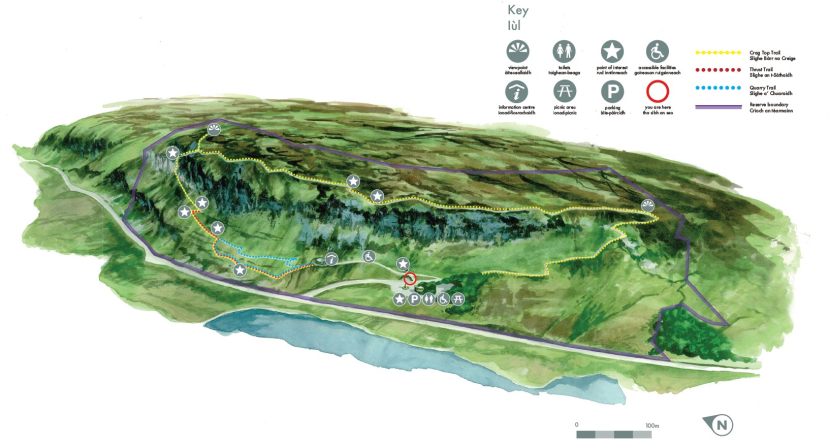
Knockan Crag National Nature Reserve map

Enlarge this map

Find out more on

  • Visiting the reserve
  • About the reserve
  • Visit more of our nature reserves
Geological interpretation at the rock room, Knockan Crag NNR.
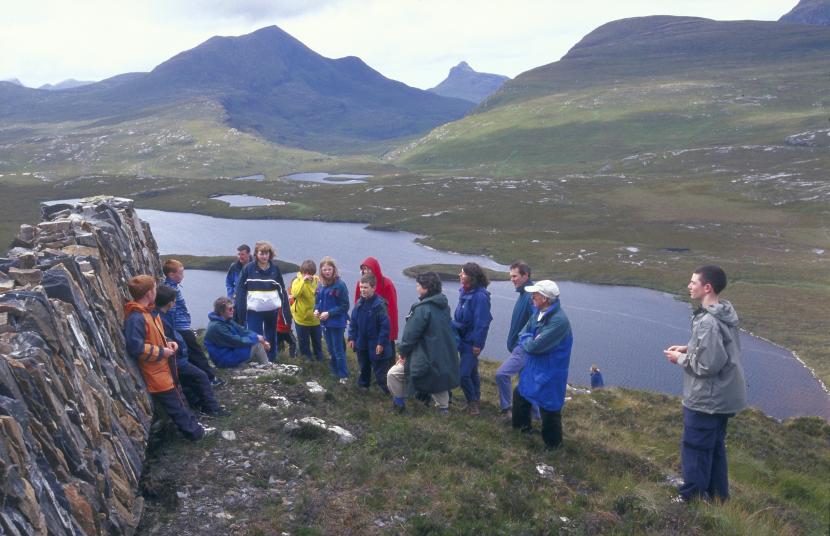
Guided walk at Knockan Crag NNR. North Highland Area.
Feedback
  • Facebook
  • Whatsapp
  • Email

You may also be interested in

A rock arch on the crag top trail at Knockan Crag NNR. ©Lorne Gill/SNH. For information on reproduction rights contact the Scottish Natural Heritage Image Library on Tel. 01738 444177 or www.nature.scot

Knockan Crag NNR - About the reserve

Learn more about the landscape at Knockan Crag and how we manage the reserve and its protected areas.

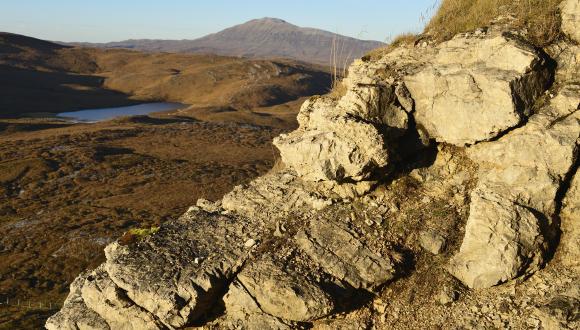
Limestone outcrop at Knockan Crag NNR. ©Lorne Gill/SNH. For information on reproduction rights contact the Scottish Natural Heritage Image Library on Tel. 01738 444177 or www.nature.scot

Knockan Crag NNR - Visiting the reserve

Visit Knockan Crag to discover three billion years of geological history – preserved in rocks you can touch with your fingertips!

News and Blogs

News release

Agreement for better nature and more secure food in Scotland

Strengthening the link between nature and sustainable farming in Scotland.

News - 19 June
Oysters being thrown into the water off a fishing boat by two volunteers

Successes of Restoration Forth

More than 60,000 oysters return to their natural home in the Firth of Forth.

Blog - 29 June
Roe deer (Capreolus capreolus)

New funds for venison supply chain

The third round of the Low Ground Venison Supply Chain Project was launched today (18 June) at the Royal Highland Show at Ingliston.

News - 18 June
Harris Isle of Rum National Nature Reserve.

Manxie & rhoddy conservation on Rum

Northern National Nature Reserve staff recently visited the island to perform essential conservation and wildlife protection work. 

Blog - 24 June
Image taken from above showing a person planting potatoes on a strip of soil in a section of machair.

Crofters invited to share stories

Crofters in the Outer Hebrides are being sought for a new study exploring island crofting life, nature, and personal wellbeing.

News - 12 June
People surveying a beach. A woman at the front holding a pen and clipboard with  multiple people standing behind investigating findings discovered on the beach. The background shows an expansive sandy beach.

With a Little Help From our Friends

An announcement that celebrates nature-based volunteering and citizen science

Blog - 6 June

View all news

View all blogs

Back to top Back to top

Quick Links

  • What we do
  • FAQs
  • Contact us
  • Our work
  • Licensing
  • Careers
  • Gaelic
  • Events
  • Sitemap
  • Publications & Documents
  • Board and Committees
  • NatureScot data services
  • Freedom of Information
  • LinkedIn
  • Facebook
  • Instagram
  • YouTube
  • Wordpress
  • Flickr


© NatureScot 2025

  • Privacy policy
  • Cookie policy
  • Accessibility
  • Copyright
  • Links policy
  • Feedback