Future-Proofing Caerlaverock: Wilder, Wetter, Working Together
Join us at the Solway Coast to explore how collaboration is creating climate resilience on Scotland's dynamic coastline.
David Pickett from the Wildfowl and Wetlands Trust (WWT) Caerlaverock Wetland Centre and Anna Austin from Caerlaverock Estate share how they're reconnecting fragmented landscapes. With backing from the Scottish Government's Nature Restoration Fund, they're turning drains into wetlands, pastures into corridors, and local ambition into climate-ready results.
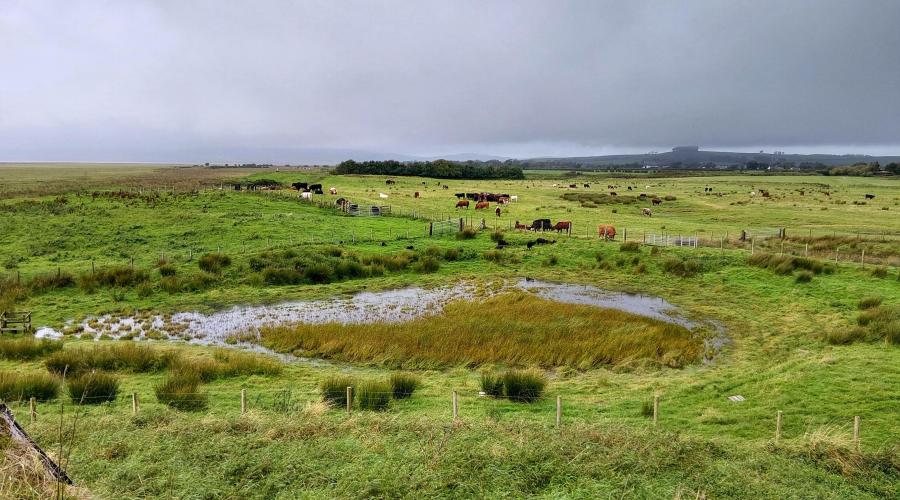
Discover the practical side of restoration: cutting drains, looping burns, and carving ponds that invite lapwing, teal, and golden plover to return. Learn how grasslands and hedgerows weave through productive farms, connecting peatland, saltmarsh, and meadows into resilient networks.
Partnership drives this transformation. Neighbouring landowners work together to create thriving habitats where vulnerable species, such as natterjack toads, can flourish as the climate changes. From winter skies crowded with barnacle geese to summer meadows alive with dragonflies, this is nature restoration that works for people and place.
Ready to connect habitats in your area? Listen for tips on creating wildlife corridors and building partnerships that benefit both nature and communities.
Information:
WWT Caerlaverock Wetland Centre
Transcript:
00:00:05 Kirstin
Welcome to make space for nature from NatureScot, the podcast celebrating Scotland's nature, landscapes and wildlife. I'm Kirstin Guthrie, and today Claire Gordon and I are heading to the beautiful Solway coast in SW Scotland to explore the incredible transformation taking place there.
We are joined by David Pickett from the Wildlife and Wetlands Trust Caerlaverock Wetland Centre and Anna Austin from Caerlaverock Estate. With backing from the Scottish Government's Nature Restoration Fund they've been bringing back habitats that have disappeared over the years, carefully restoring and reconnecting the land.
And what's brilliant is how neighbouring landowners are working together to enhance wetlands, salt marsh and grasslands. The result? A thriving network where vulnerable species like wading birds and natterjack toads can flourish and adapt as our climate changes.
So we're down here in Caerlaverock and we're meeting with David and Anna today. So both of you welcome to the podcast could you please introduce yourselves and tell us what you do? I'll start with you, David.
00:01:02 David
Hi, I'm Dave Pickett. I'm the site manager for WWT Caerlaverock.
00:01:08 Anna
Hi, I'm Anna Austin and I'm the estate manager for Caerlaverock Estate.
Lovely. Thank you. So it's great to meet you both. So, Anna, can you start off by telling us just about some of the challenges facing this Solway coast and why nature needs our help here?
Yeah, I mean I think you know this all close is quite a diverse and expansive area and there's a lot going on here.
00:01:29 Anna
I think here in the Caerlaverock area in particular, we've got a convergence of several freshwater sources with the Solway, which kind of makes for quite an unusual I guess backdrop to what we're doing, means the environment is very dynamic.
So for example, the way that the channel changes shape over time, that changes the shape of our coastline and that can have an impact on the habitat that we have here. So coastal squeeze can lead to habitat fragmentation and that coupled with the risk of rising sea levels in the area as a result of climate change means that we have a bit of a focus on providing future habitat for their inland.
00:02:11 Claire
So you're both leading on projects that are responding to some of these challenges. David, can you tell us how wild or wetter Caerlaverock came about and what seeming to achieve?
00:02:21 David
You know, well it it came about because it was sort of a number of things coming together. We had some land that WWT owned that was previously farmed by tenant farmers, and that's been brought back into management directly by WWT. So it gave us a bit of a blank sheet of paper to decide what we wanted to do.
00:02:41 David
And by looking at the map of Caerlaverock we can see we've got some real biodiversity hotspots, as the local mosses to the north, the Solway estuary, the salt marsh but a lot of those habitats are fragmented and separated and what we wanted to do was to try and join them up. It's all about trying to link those things together because once they're linked then they actually have a bigger biodiversity carrying capacity. The more you can join up together, the more biodiversity you can get in there.
00:03:13 Claire
And this project links closely with the work of your neighbour Caerlaverock. Meet Anna. Could you tell us a bit more about the partnership approach you're taking to link Caerlaverock?
00:03:22 Anna
Yes, sure. So link Caerlaverock was a project that Caerlaverock estate carried out on our own home farmland and its purpose really was to link up the work that was being done by the partners on the estate. So world file and wetlands Trust and the nature reserve managed by NatureScot and just I guess recognising that there's a role to be played by private land holders in contributing to wider restoration efforts. We all share the same visions and ambitions for nature in the area. But we're coming at it from different perspectives and we've got different priorities. So the estate for example is a business that's made-up of a collection of productive farms and tourism hospitality businesses. So our focus is on continuing to farm and to do those things in an efficient and sustainable way, but playing a part in the development of the landscape, scale nature efforts that David's talked about.
So as a result of link Caerlaverock, which as I said was carried out on the estates home farmland, we've motivated our tenants and some neighbouring land holders to get involved with what we've been doing. And as a result of that, we formed towards the end of last year the collaborate cluster, which is really the estate coming together with its tenants and labouring land. Builders. So we're now working together on the development of a much larger project across the whole estate area which will hopefully, if we can get funding to deliver that from next year, and we'll connect up really at a big scale, you know the pieces that Dave was talking about taking us into the forests and land Scotland's Peatland restoration project at lock them off and starting really to show that you know how we can contribute to this really, truly landscape. Real change.
00:05:09 Kirstin
Brilliant. It's fascinating to hear about all that. The partnership working that's going on and hopefully you know that will continue even wider as you say. And David, you know, let's dig a bit deeper into the to the work that's being done to transform the landscape here. I mean, we can, we're standing out here and we can see vast areas of wetlands and ponds. But you know, all wasn't always this way. So what's been done to create this rich network of habitats?
00:05:31 David
Yeah, a lot of the farmland around here originally was managed to support the barnacle geese and provide good feeding areas for barnacle geese, which are the special rare goose that spends its winter here. And that was the main reason why the reserve was set up. But the barnacle, the barnacle geese that are on the Solway, it's a huge conservation success and the population has gone from about 400 individuals to over 40,000 Individuals, they now spread across the whole landscape, so we don't need to manage our reserve just for barnacle geese. So what we're looking at really is to try and maximise the biodiversity on the site. So we are still managing some patches of areas for barnacle geese, but there's a lot of areas where we want to actually hold other sorts of wildlife as well. And to do that, the water is the key. Now in the past this land lies very wet and we get a lot of rain here, which is one of the reasons why the geese like it because we get lots of grass here in the winter, but all the work in the past went to get the water off the land as fast as possible. So streams were canalised and straightened, huge amounts of drainage were put into the land. All to drain that water down and get it off so that you could farm on the land, what we find that if you add water, you add wildlife. So we're doing all we can to hold on to that water as it flows across our land, slow it down, make it available for wildlife. So to do that, we went in, we've been cutting all of the subsurface drains, we've been diverting water out of some of the canalised streams. Putting it into big loops and into more pools and then putting it back into the channel and then creating lots of scrapes and ponds so that when the water table comes up to the surface, it's made available for the wildlife and by doing that you have all of these wetland areas created, all in amongst some of the goose pastures. So you sort of get the best of both worlds.
00:07:36 Kirstin
And you know, that's a huge amount of work. And you've talked about the, you know, the number, the huge number of barnacle geese you get here and can you tell us about some of the other wildlife that's returning to Caerlaverock?
00:07:46 David
Yeah. I mean what we're finding with all these pools that we're creating, we've got really good numbers of wintering birds coming here, so species like lapwing, golden plover, teal, shoveler are all using those new ponds, but we're also targeting some of our rarer species here as well. So, for instance, natterjack toads, Caerlaverock is the northernmost site in the UK of where natterjack toads breed, the north Solway coast is the only place in Scotland where they breed and but the population on Caerlaverock had been dropping. So we've been putting in a large number of ponds suitable for natterjacks, which are small ponds, shallow and then creating areas around those ponds that are suitable habitat for natterjack feeding areas and refuge areas as well. So we're it's a mixture of targeting that sort of the wider more general sorts of wildlife, but also some of the key species associated with the area.
00:08:51 Kirstin
Wow. That's fascinating. I'd love to see a natterjack, would have certainly never seen one. Have you seen one Claire?
00:09:10 Claire
No, unfortunately not. But I would love to see one. OK, so as well as wetlands and ponds like here at WWT Caerlaverock. It's also creating different habitats, so grasslands, wildflower meadows, woodlands. Anna, can you explain a little bit more about the thinking behind the various different habitats enhancements that you're making?
00:09:17 Anna
Yeah. I mean, for us, I guess it's really about taking a whole ecosystem approach to habitat restoration. We’ve added back some species, rich grassland, which encourages pollinators.
And in turn, I guess as a food source for other species coming around the ponds, wetlands. But we've also created a series of wildlife corridors and the idea behind those really is that they're linking up more densely packed areas of habitat with each other and allowing kind of passage of wildlife across our agricultural land, I guess it's just back to that point about, you know, trying to strike that balance between farming with nature and so the wildlife corridors are a really neat way of doing that.
And so we've been creating the corridors they’re 6 metre wide, double fenced lanes planted up with species rich hedgerow blackthorn. Things like that. Hawthorne and in some cases, we've been putting in some native trees and amongst the corridors as well, where that's appropriate you know, given the species and things and area. So yeah, as I say it's a really key part I think of being able to strike the balance between farming with nature because we have got some spots across the state where there will be more opportunity to develop habitat than others. And so you know we can focus on wet areas. We can do that and we can really focus heavily on and we have one through the link Caerlaverock project on creating ponds in some quiet kind of wet areas. But you know as we move further into the Caerlaverock cluster project, which is called working with nature, it's much more about recognising that in some places the value that can be added to nature is in the form of a wildlife corridor connecting A to B and so yeah that's I guess how we've been approaching it.
00:11:10 Claire
That's brilliant. That's great to hear about that transition through the different habitats and all for the wildlife, the benefit of the wildlife.
00:11:19 Kirstin
Yeah, sure. So you know, you did, you've kind of touched on the kind of longer term aspirations, but you know it's clear that this work is, it's not just about now and all the work that's going on now is about creating a lasting change that's going to help wildlife thrive long into the future. So can you give us a bit more about the kind of long-term aspirations for the area?
00:11:37 Anna
Yeah. I mean I think trying to position Caerlaverock as an example of truly landscape scale biodiversity work, that is, you know that is a real example of how different organisations with diverse land uses and interests can come together to achieve, you know, like a really connected and habitat and you know to use nature based solutions to help tackle environmental pressures and community challenges as well. You know we're looking at how we can use nature-based solutions to try and help flood risk in our local villages and things like that as well. So it's really about trying to create a place where nature and people thrive and support each other in that.
00:12:23 Kirstin
OK, great. Thanks, Anna. And David, what about the long term plans that, that, that you know and you're thinking of as well?
00:12:30 David
Well, where we're standing here, this is it may not look it, but it's a really dynamic landscape and it's changed a lot. Though if you go back 300 years, this would have been salt marsh, but it's become reclaimed land. It's then been farmed, but it's now going back to nature. But with rising sea levels. Some of this is under threat and it's likely to go back to salt marsh in the future. One of the things that's under threat with those rising sea levels is the places where the natterjack toads hibernate. So what we're doing is we're building through the project more hibernaculum areas, places where the natterjack can spend the winter inland so that as the sea levels rise, they've got places to move. The population can move inland and still use the wetlands that we've got on site.
00:13:21 Kirstin
That's fascinating. So you're almost future proofing it for, for the toads and other wildlife.
00:13:26 Claire
That's right, yeah.
Now we know that funding's obviously vital for getting nature restoration projects off the ground and both your projects have benefited with some support from the Scottish Government’s Nature Restoration Fund. Is there any advice that you would give to people who are looking to develop their own nature restoration projects? I'll come to you first, David.
00:13:44 David
Well, I would say look to work in partnership. The all of the work that we do here at WWT Caerlaverock is done in partnerships. Partly, you know, we work closely with the Caerlaverock Estate and NatureScot, who manage their NNR on either side of us, but also when it comes to delivering the work on the ground, we've been really lucky to work with some excellent contractors and a large amount of our work is done. The big work is done through with contractors who all of them have come within an hours radius of the site which is really good because it means that a lot of the money that's come through the grant has then gone into the local economy. So it's a really fine example of showing that nature can contribute to jobs and the and money in the area. So that's been really good. But also what the grant has enabled us to do is get some of our land set up better to manage for conservation. But a lot of our conservation management is done in partnerships with local farmers. So we have 4 different graziers who help us manage the site and we benefit from their farming knowledge and their stock, and they benefit from having additional grazing on the land. And so again, it's a really good partnership work. That shows, I mean we're managing for nature, but we're using agriculture to manage for that. And so by working in partnership with all of these different people, we're not just focused within our boundary of our site. You know, we're looking out to the wider area, the wider landscape. So that would be my tip.
00:15:24 Claire
That's great. So the more the merrier essentially is the message there. And Anna, can I come to you on that question.
00:15:29 Anna
Yeah. And I think I guess my tip would really go to people who are, yeah, I guess land holders, not necessarily from a kind of nature based organisation. My I guess my tip would be to really spend time building plans from the ground up and be led by the land use because you know nature restoration work has to go hand in hand with other desired land uses and it's all about achieving that balance and I think really that thinking needs to be done early in in thinking about what a project should look like you know to make sure that the project is is both, I guess robust and could withstand scrutiny. So in our case, for example, we're really promoting the concept of farmer led ecologists backed design in habitat restoration, and that just ensures that we have the engagement of the farmers, but also that the success of the project is assured from a biodiversity perspective too. So yeah, I think in going in for these kind of funds do that and early and be clear, so that the project can withstand a bit of scrutiny.
00:16:36 Claire
So do your planning and get the best of both worlds, but in terms of expertise.
00:16:40 Kirstin
Great, good to hear. And you know we're standing here out in the outdoors. It's absolutely stunning and there is a little bit of rain in the air, but that's not stopping us. We can certainly hear quite a lot of birds in the background. And there's some amazing hides that you can use to have a look out onto the into the wetlands here and, you know, and if anyone wants to visit the area, which I'm sure they do, what are the seasonal highlights they can see at different times of the year? Anne, we'll start with you.
00:17:04 Anna
Yeah, yeah. I mean, I think probably migratory geese population is a big a seasonal highlight and a good reason to visit Caerlaverock through the winter months. I'm sure David can say a lot more than about that than I can, summer months are a good time to visit too though because there's a lot of activities to see on the ponds and in the meadows and corridors at that time of year too. So really I think we're a year-round destination.
00:17:25 Kirstin
Excellent. And I'm sorry, there's a bit of background noise, but there's a bit of building work going on, but we can't, we can't help that amongst the lovely, the lovely sounds of the birds. But that's just a temporary noise of building work just now. But I'll pass over to David.
00:17:45 David
Caerlaverock at that time of year is absolutely spectacular. There's a huge number of birds that spend the winter here and you get this amazing bird scape with just birds in the sky as far as you can see. And here on site we've got some really great hides, nice comfortable hides and can give you a warm welcome so you get a really good-natured connection here.
But then when we get into the summer, it's a very different sort of experience and it's all about getting up close and personal. So there's wildflower meadows, there's dragonflies, butterflies, all sorts of things, the small stuff really that can make a visit here absolutely spectacular as well.
00:18:22 Kirstin
Sounds wonderful. And I know that there's lots of events go on as well. So we'll certainly add them into our our links at the bottom of the podcast information. So I'll pass over to Claire for for the last question.
00:18:34 Claire
So we always like to ask our guests for their top tips on making space for nature as, as is the name of the podcast. So could you tell us what's maybe one simple thing that our listeners could do, whether it's in the garden, the local area or their daily routine that could make a real difference to our nature and climate, no matter how big or small? So Anna?
00:18:55 Anna
Yeah. I mean, I think I'm, I guess thinking about it slightly differently. I think my kind of suggestion would be to and I guess this is from a landlord perspective, is engage with landholders because I think you know we're in a state that's very proud to have a good relationship with the community and we learn a lot from them. Their reviews and suggestions help inform our plans in quite a big way. There's things that we can do through some of the nature-based work that we are planning to improve, infrastructure challenges for the community. So I would say, you know, engage with landholders and have informal chats and raise just through conversation and discussion, you know things that you would like to see or issues that are being faced because I think it's through those you know, quite often small kind of quick conversations that you can have that you know ideas are sparked and you can actually influence quite a big change by having those conversations. So yeah, it's maybe less about what's in your garden, more about who you know the things to do.
00:19:50 Claire
When you're right about and talk to your neighbours, absolutely and David?
00:19:55 David
For me it's just add water. If you know if you're at home and in your garden, you can add in wildlife by creating some sort of wet thing so it can be a mini pond. I've seen really good little ponds made out of washing up bowls, but you can also tap into all the water that comes down, your down pipes off your gutter.
And if you put a diverter in and divert that into a trough and then put the water back into the into the drain system, you can create a wetland that way. So and you can become slightly obsessed with them once you set them up and the wildlife starts to come in, then you'll find yourself actually checking them and looking at them almost on a daily basis. So there's great rewards by setting up something like that in your garden.
00:20:45 Claire
Fantastic. Thank you both very much. That's been excellent speaking to you today. Thank you.
00:20:50 Kirstin
Thanks for listening. For more ways to connect with and help protect Scotland's natural world go to nature dot scot.
Last updated: