Transport Corridors and Pollinators
Published 2023
Pollinator friendly rail network
Safety comes first across our transport network, however there are many opportunities to merge conservation with nature-friendly management practices.
Our rail network is increasingly celebrated for its value to our pollinators. It offers a variety of habitats and connectivity. Projects such as the ‘Adopt a Station’ project focusses on enhancing biodiversity around stations, and when linked to local nature projects can be a boon for pollinator populations.
Features such as embankments and cuttings often provide continuation of adjacent habitat. They can provide shaded and damp areas, and potentially provide some of the features of bare ground which help certain species of pollinator.
Low woody growth, at a safe distance from a railway line, can be really helpful for pollinators. Trees such as willows provide crucial early pollen and nectar sources in spring as bees and hoverflies start to emerge. Species including hawthorn, blackthorn, bramble, ivy and honeysuckle provide nectar and pollen sources for pollinators from spring through summer, and berries in autumn for birds and small mammals.
Disused railway lines are also wildlife havens, many provide food and shelter for pollinators, and allow close contact with nature in the same way that canal towpaths do for walkers and cyclists.
Bonnie Dundee community group has used the area alongside a railway to good effect for pollinators. They have created a local nature reserve where wildflowers are allowed to regenerate and the area is a haven for wildlife.
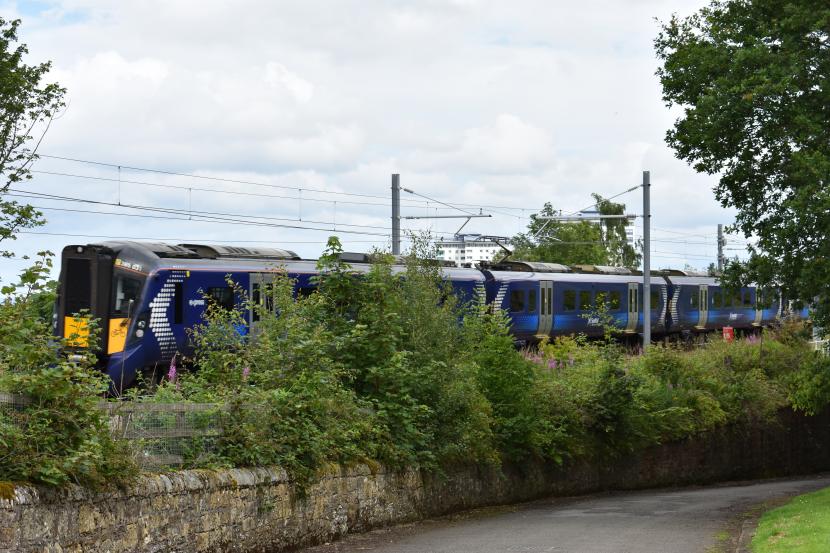
Railway line near Falkirk
Managing our roadside verges for pollinators
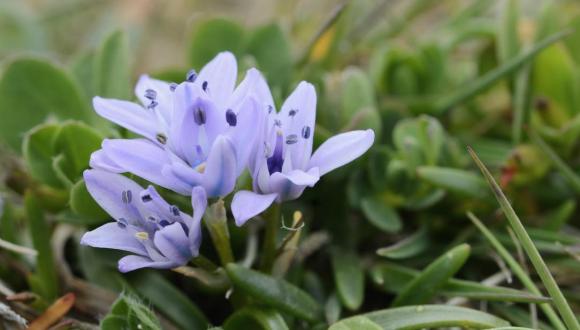
Roadside verges and roundabouts have been increasingly identified as good spots for pollinator-friendly actions. Reduced mowing, sowing wildflower seeds and planting pollinator-friendly bulbs are positive actions which can be taken without compromising visibility or safety.
Plantlife has identified many of the actions that can be taken to transform our roadside verges into wildlife havens in their excellent ‘Managing grassland road verges’ booklet. Simply by cutting verges less, and later in the year, and removing the arisings can see huge benefits for pollinators.
On our rural road network hedges, walls and fence lines can benefit pollinators. Hedges can be managed to provide sources of nectar, pollen and nesting. For example, bumble bees often nest in disused small mammal burrows and these can often be found along hedgerows and banks. Fence lines with tussocky grass along the base, which may have disused small mammal nests, can provide important nesting for bumble bees and solitary bees. Walls with cavities can provide nesting opportunities for some solitary bees.
Our canal network
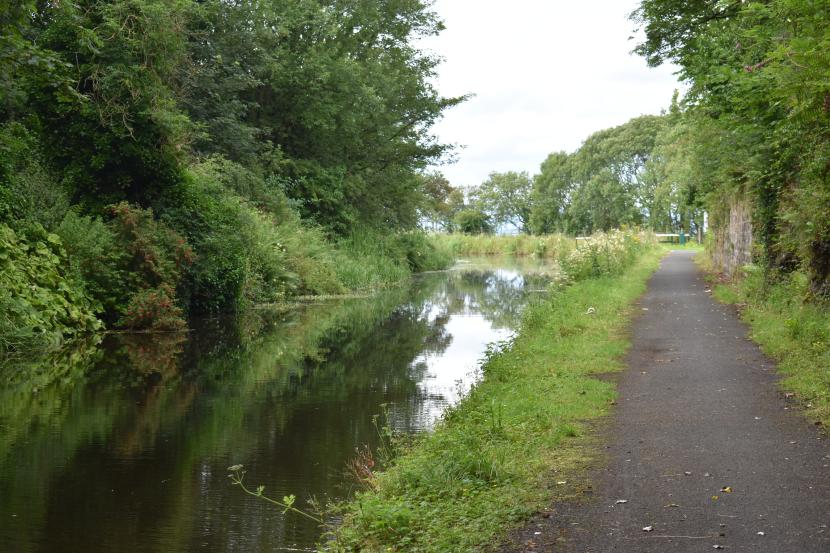
Scotland has 137 miles of canal which gives it a significant opportunity to deliver environmental benefits. As linear features they are ideally placed to provide living connections between habitats. These waterways are often fringed with opportunity for pollinators which benefit from towpath grasslands, adjacent hedgerows, woodland, scrub and fringe vegetation.
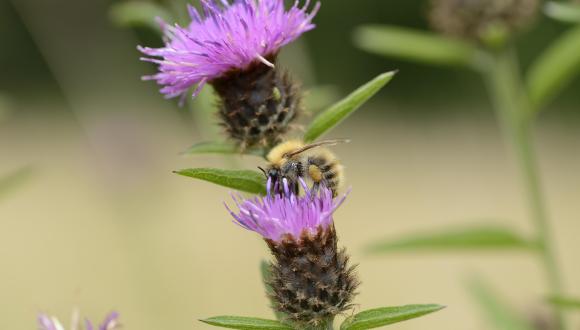
Grassland habitats can provide nectar sources for pollinators, from spring to autumn depending on the species within them. And, if left uncut in places, can provide potential nesting habitat for bumblebees.
Along the Forth & Clyde Canal over 300 species of plant have been recorded. Wildlife surveys carried out along the canal network frequently note pollinators such as bumblebees, moths and butterflies.
Canal and towpath
Pollinator needs
- Pollinators need habitats which provide forage, breeding and hibernation sites.
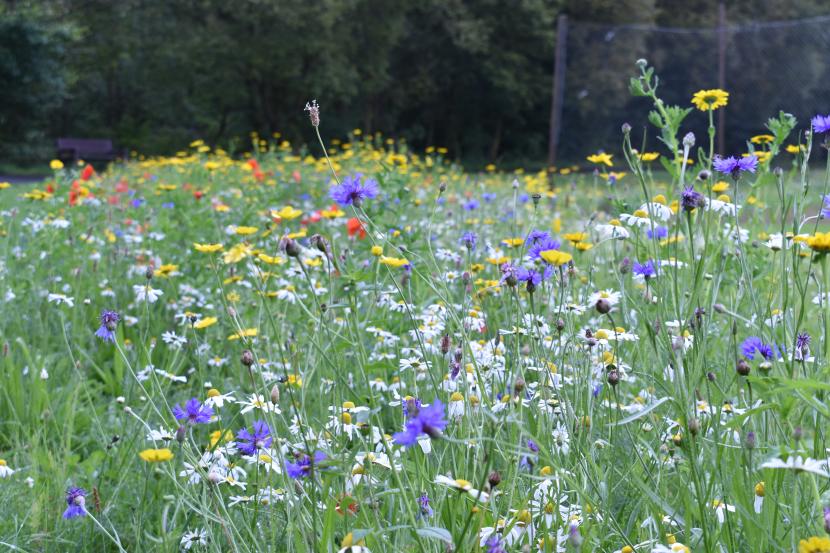
- They need flowers to feed on from early Spring to late autumn. Early flowering trees in Spring are recognised to be a really important nectar source for emerging bumble bees.
- In addition to food requirements, pollinating insects need the right sort of habitat to complete their life cycle. Bees in particular need suitable places to build their nests, which may be bare ground (mining bees and many bumble bees), in dense vegetation (carder bumble bees) or in holes in logs, plant stems, or man-made insect homes (mason and leaf cutter bees).
- Individual pollinators need their food, breeding and hibernation sites fairly close together so diversity of habitats can be important too.
Flower meadow
Bare ground
Areas of bare earth are important for some species of bees - the majority of British solitary bee species for example nest in the ground; and many solitary wasps may make their nest tunnels in the soil.
Partnership working
Perth Station Garden Club run a wildlife garden at Perth Station with the aim of nurturing nature. It includes a living roof, orchard, small wildflower meadow, and it uses a ‘safe’ triangle of land which doesn’t impinge on the infrastructure of the lines or working of the station.
Transport corridors & pollinators
Much of Scotland features transport corridors. Our railways, canals and road network are familiar sights to many of us. Clearly, they allow us to move around the country more easily, but they also have the potential to be a fantastic resource for our pollinators. If managed in a pollinator-friendly way this web of transport routes can offer connectivity and increased habitat for our insects.
Our pollinators help to maintain healthy plant populations and shape the nature and landscapes we all enjoy and benefit from. However, they are under pressure and creating and managing habitat for their benefit is one of the key things we can do to help them.
We have lots of information on how to help pollinators on our website.
Follow us on twitter/X @ScotPollinators.
And read our regular blogs at Scottishpollinators.