Taynish Art Trail 2026: 'The Seasons'
Welcome to the 2026 Taynish Art Trail: 'The Seasons'
Open: 29th June to 2nd October 2026.
NatureScot would like to express its sincere appreciation to the Artmap Argyll artists and friends who have participated in the Taynish Art Trail 2026.
This year all artists have created works celebrating this years theme 'The Seasons'. Taynish National Nature Reserve is a magical place to experience the changing of the seasons. The change from winter to spring in an Oak woodland is one of the most impressive spectacles in the world. The way our natural world changes through the year is a beautiful, amazing thing for us to experience. So we thought it only fitting we focus our trail on the seasons as a way to celebrate them!
If you would like further information or find out how to purchase any of the artworks on display please contact the artists directly via their webpages or contact Artmap at [email protected].
For more information on the art trail please contact [email protected]
Find us on Instagram or Facebook for more reserve news and updates: @taynishnnr and #taynishnnr
Helen Butler
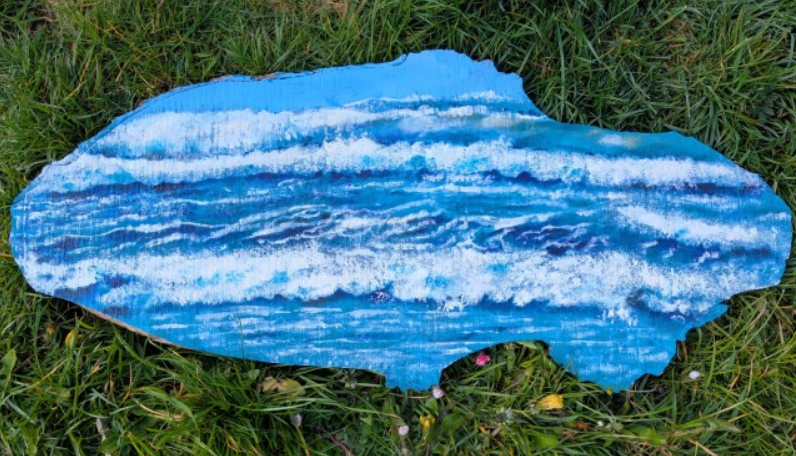
'Spring Tide'
In Argyll, we are surrounded by beautiful watery scenery. The raw and wild waves through the winter seasons and the calm mirror like reflections. There is always beauty to find in these moments. This piece, created using acrylic paint on wood, is reflective of the spring tide season, showing the high tide and rougher seas.
- H2O Designs website
- @h2odesigns (Facebook and Instagram)
Melanie Chmielewska
'What lies beneath'
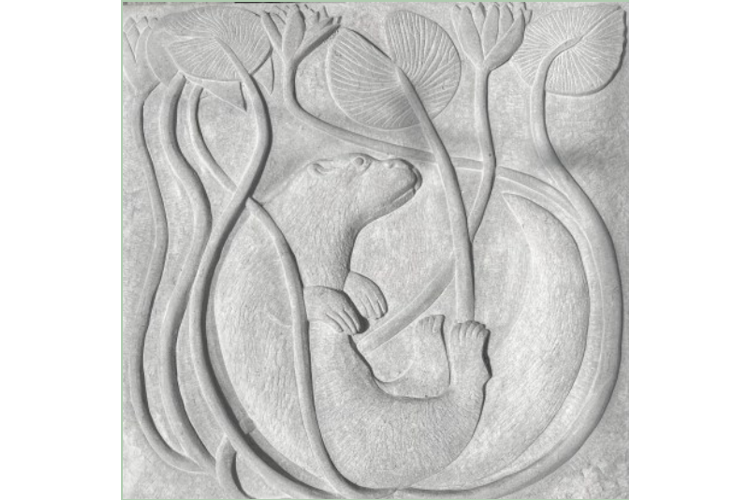
Inspired by the water lily’s at Taynish and carved in sandstone, this sculpture is questioning what lies beneath the surface? Could there be Otters and other creatures? It can be found at Melanie’s studio, red dot number 4 during Art Map and at Taynish for the rest of the trail dates.
Moira Ferguson
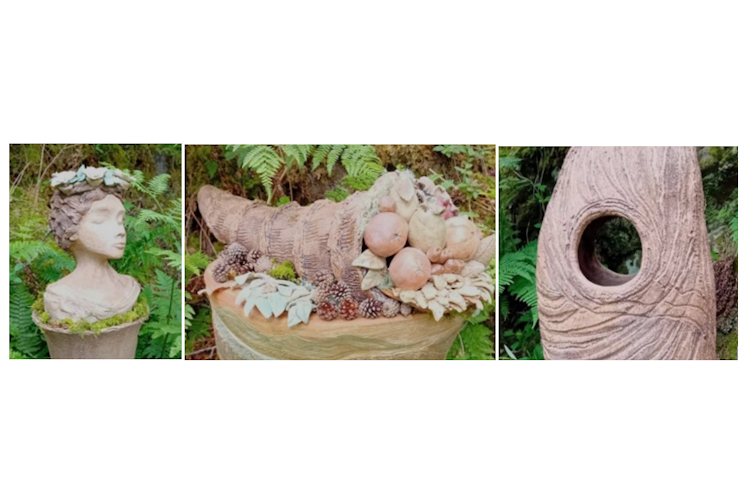
'Seasonal sculptures'
Celebrating the changing seasons of the year are deeply rooted in human history. Across the globe, cultures mark these transitions and have symbolised them in mythical Gods and Goddesses.
Goddess of Spring. Persephone is the Goddess of Spring in ancient Greek mythology. Brigid is the ancient Celtic goddess of fertility, healing, poetry, and the forge. Her arrival is celebrated early in the year, marking the awakening of the land and the first signs of Spring.
The Cornucopia or "Horn of Plenty," In Greek and Roman mythology this is a symbol of abundance and nourishment. It is depicted as a large, horn-shaped container overflowing with produce, flowers, or nuts grown in the summer and harvested in the Autumn. Today it is still a symbol and celebration for the Autumn harvest gathered in.
‘Hag Stone’ is a naturally formed pebble or rock with one or more holes eroded through its middle by moving water. In Gaelic folklore, the Goddess of Winter is the Cailleach, or Beira in Scotland. She is the ancient, one-eyed crone or Hag, who rules the dark, cold months, shapes the rugged landscape and commands the freezing winds. The one eye/hole in the Hag stone only allows good things can pass through.
- Holy Loch Pottery website
- holylochpottery/Facebook
Douglas Kerr
'Spring Equinox'
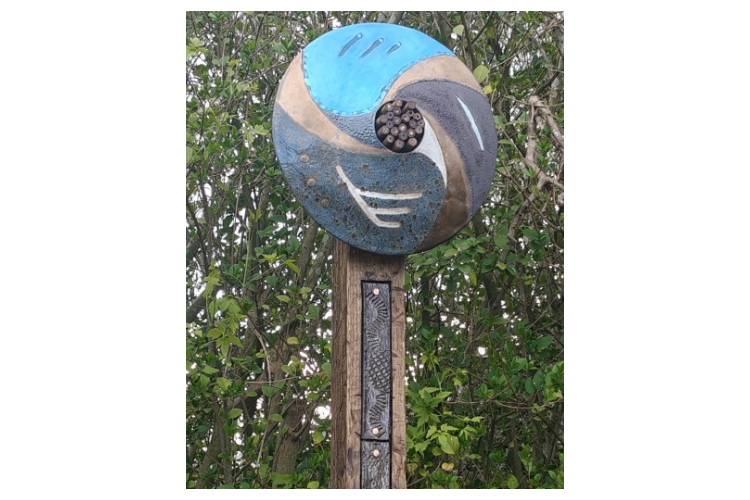
The Spring Equinox is that liminal space between where the wonderous light returns to the landscape and the potential of the new season is held back by the shadows of snow and winter storms. With this piece I wanted to represent the space between the seasons, a signpost of what has passed and what may come.
Katy Low
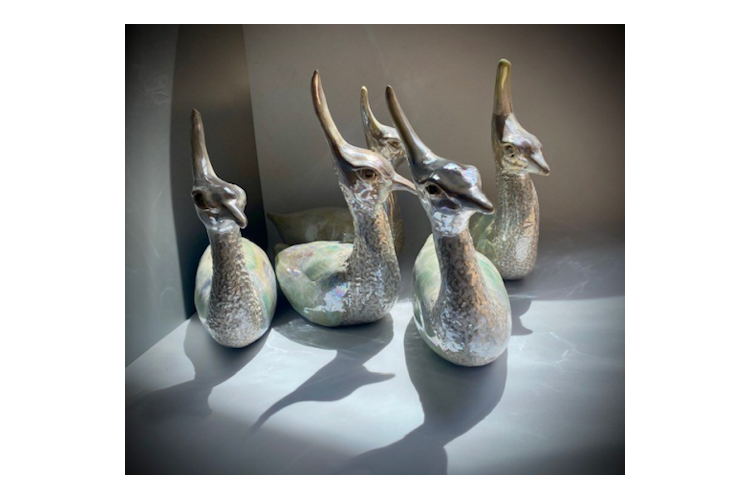
'Resting Flock'
(In memory of John)
Along the Taynish path, five resting peewits keep low to the land, each set on a wooden post above a ceramic ring with a scatter of leaves, feathers, and sticks. The posts rise in quiet steps, a soft lift through the landscape, while the birds themselves remain settled, soft breathing, watchful. Where the sedge breathes, a small flock gathers. Five resting bodies, keeping the slow turn of the seasons. Moving from post to post, a quiet unfurling takes place… near quiet… light lean … held hush … soft rise… edge rest. Together they form a slow, arc — a moment of pause stretched across the trail, where land, light, and low-held presence meet.
- @katylow_fernislay (Facebook)
Agnes MacLean
'The Green Man'
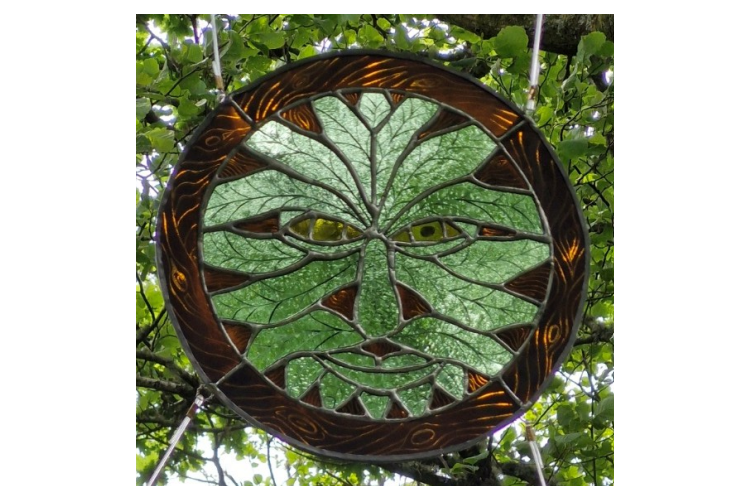
The Green Man is a legendary figure depicted as a male face peering out of or made entirely of leaves. He is an environmental guardian, keeper, of the forest. Representing the dormant earth awakening in spring and mankind’s connection to the forest. He symbolises sustainability, stewardship and the vital importance of living in harmony with the natural world.
The Green Man serves as the spirit of the forest, he is tied to the changing seasons and the perpetual cycle of death, decay and new growth heralding the arrival of spring breaking the long dead winter with the rebirth of lush, new vegetation. Most often the green man is seen as a benevolent symbol of spring fertility and the endless cycle of the seasons.
For those who encounter him along the trail, the Green Man is more than a sculpture. He is a symbol of the eternal cycle of enduring relationship between humanity and the natural world. Standing silently among the trees, he reminds us that we too are part of those rhythms – growing, flourishing, letting go and beginning again.
- [email protected]
- agnesmacleanglass/Facebook
Pauline Muir
'The Inside Story'
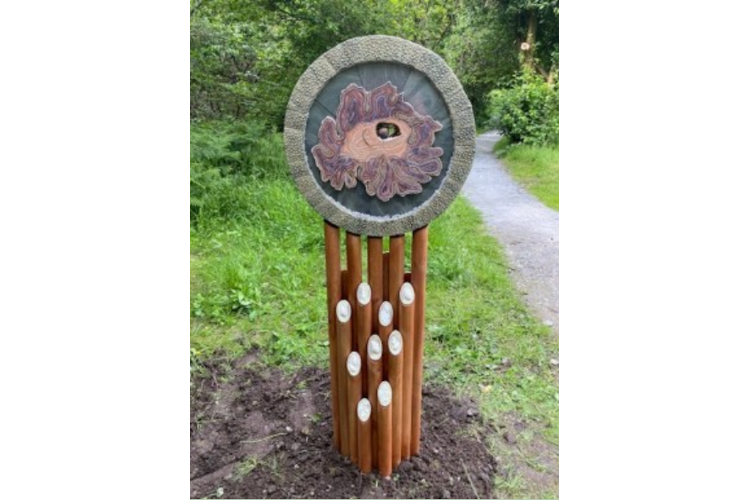
Every tree is unique. It does not have the ability to move nor does it have the capacity to make choices. It must endure whatever weather or conditions it encounters throughout all the seasons exactly where it is rooted. Its life cycle is entirely dictated by external environmental cues etched in its treerings marking time and telling stories about its life.
Not being a tree - I have had the privilege of travelling to the other side of the world where the time difference plays with your mind and the seasons are entirely opposite to those here. It was while I was in Australia that I had the joy of exploring Aboriginal dot painting which I have incorporated into my artwork. This piece was inspired by the beautiful colours and intricate tree-rings inside a fallen tree in my local park.
- Pauline Muir's website
- Pauline Muir Artist (Instagram)
- Pauline Muir Ceramics (Facebook)
Brian Wheeler
'Seasonal Panels'
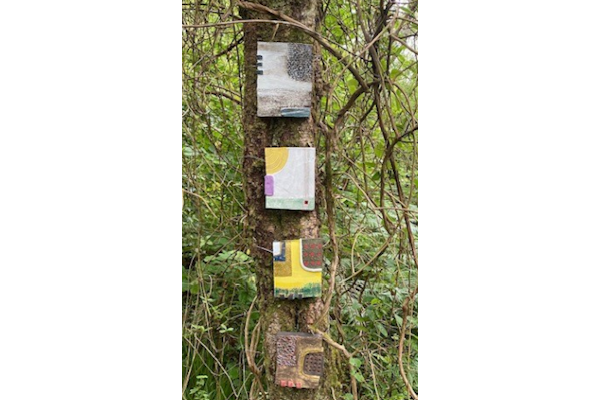
This collection of ceramic panels is inspired by the colours I associate with each of the seasons at Taynish Nature Reserve.
I've used texture and pattern to reflect detail I see in the woodland, such as bark, moss, lichen and seed heads.
Mounted onto the trees themselves, the work is intended to sit naturally within the woodland, encouraging people to slow down, take a closer look and enjoy the changing character of the landscape throughout the year.