NatureScot Research Report 1390 - Local ecological knowledge from the Scottish fishing fleet on the critically endangered flapper skate (Dipturus intermedius)
Year of publication: 2026
Authors: Ashworth, R.E.T, Fernandes, P.G., Kaiser, M.J., (Heriot-Watt University), Dodd, J., Donnan, D. (NatureScot)
Cite as: Ashworth, R.E.T, Fernandes, P.G., Kaiser, M.J., (Heriot-Watt University), Dodd, J., Donnan, D. (NatureScot) Local ecological knowledge from the Scottish fishing fleet on the critically endangered flapper skate (Dipturus intermedius). NatureScot Research Report 1390.
Keywords
Flapper skate; Dipturus intermedius; Scottish demersal fishing fleet; bycatch; local ecological knowledge (LEK)
Background
Flapper skate (Dipturus intermedius) is one of two species known as the common skate complex. Taxonomic revisions in 2010 confirmed Dipturus intermedius as the flapper skate and Dipturus batis as the blue skate (Iglesias et al. 2010). As a key apex predator that was historically abundant, flapper skate is now classified as Critically Endangered by the International Union for the Conservation of Nature (IUCN). Flapper skate populations have significantly declined with reported local extirpations in both the Irish and North Seas as a result of fishing (Brander, 1981).
As fish populations in the waters of Northwest Europe begin to rebound with the implementation of better science and management (Fernandes & Cook, 2013), anecdotal reports from the fishing industry suggest that rare species, such as the flapper skate, are being encountered more frequently as bycatch. Given that it is illegal to land and sell flapper skate, it is impossible to gain any insight from landings data. Current scientific groundfish surveys may not detect changes in the status of flapper skate until they become sufficiently abundant to be encountered in these annual surveys.
The aim of the present study was to gather first-hand insights from the fishing industry regarding spatial and temporal trends in flapper skate bycatch. Specifically, the study aimed to gain insights on the locations, habitats, and depths at which this species is encountered, as well as observations on the long-term and seasonal changes in occurrence.
Fishers can provide reliable local ecological knowledge that can provide qualitative information on species occurrence and patterns in fishing activity (Bergmann et al., 2004; Shepperson et al., 2014). Gaining insights from the fishing industry is essential to developing an increased evidence-base across a wide geographical range on the species and sheds light on the need for sustainable fishing practices that balance conservation objectives with economic viability.
Main findings
- Fishers interviewed across key Scottish ports using various demersal gear types reported a significant increase in flapper skate bycatch over the past 4 years.
- Just over half the fishers interviewed encountered the flapper skate daily, all year round. Typical encounter numbers range from 1 – 25 flapper skate in a day with an average of 6.
- Flapper skate bycatch was most frequently reported along the West Coast, particularly around the Isle of Rum and the Isle of Skye; and in western waters of Shetland.
- Reported encounters were most common on soft sediment habitats, likely due to the high proportion of Nephrops fishers interviewed.
- Reported depth ranges of flapper skate catches were highest between 50 – 200 metres depth, with few fishers catching the species over 200 metres.
- Fishers predominantly reported the prevalence of large (>100 cm width), mature individuals in bycatch, with few juveniles reported.
- The majority of fishers reported that flapper skates are in good health post capture and are released back within 2 - 20 minutes.
- Due to the large size of flapper skate captured as bycatch, fishers are unable to release them by hand. The common release method in the industry is to tie a rope to the tail and winch overboard (tail-roping for release).
- Fishers reported that their concerns around flapper skate bycatch include gear damage, blocking up meshes, scaring off catch and impacts to safety and operations.
Acknowledgements
Very many thanks to the fishers who gave up their time to take part in the survey. Thanks to CEFAS for use of the skate and ray images in the questionnaire. Thanks to Mike Park Chief Executive of the Scottish White Fish Producer’s Association for his help in securing interviews and Andy Read of Fishing News who helped to publicise the project. This work was funded by NatureScot.
Abbreviations
Local Ecological Knowledge (LEK)
Marine Protected Area (MPA)
Essential Fish Habitat (EFH)
1. Introduction
1.1 Flapper Skate (Dipturus intermedius)
The flapper skate (Dipturus intermedius) is the largest of all European skate species that inhabits the European continental shelf and Northeast Atlantic (Iglésias et al., 2010; Garbett et al., 2021; Régnier et al., 2021; Dodd et al., 2022). Until 2010, flapper skate and blue skate were known as ‘common skate’, however, work by Iglésias et al. (2010) revealed two genetically distinct species (Griffiths et al., 2010; Dodd et al., 2022). Collectively both species are still often referred to as the common skate complex.
Historically, flapper skate were abundant in the northeastern Atlantic, but increasing fishing effort and vulnerable life history characteristics, resulted in significant declines in their populations (McGeady et al., 2022). Flapper skate is recognised as one of the first fish species brought to near extinction as a result of commercial fishing and they were considered to be locally extinct in the southern North Sea and Irish Sea (Brander 1981; Iglésias et al., 2010). Flapper skate are classified as ‘Critically Endangered’ by the IUCN and, are recognised as a Priority Marine Feature in Scotland (Iglésias et al., 2010; Bach-Jeffreys et al., 2021; Ellis et al., 2021; Thorburn et al., 2022).
In 2009, a European Union (EU) 43/2009 wide ban was introduced prohibiting flapper skate landings by commercial fishing vessels (European Union, 2009; Elliott et al., 2020; Régnier et al., 2021). The species is a popular target for recreational sea anglers who must release any fish caught by law under the Sharks, Skates and Rays (Prohibition of Fishing, Trans-shipment and Landing) Order established in 2012 in Scotland (Scottish Government, 2012; Garbett et al., 2021).
Spatial management measures are used to protect flapper skate in Scotland which include the Loch Sunart to the Sound of Jura MPA to protect adult skate and the Red Rocks and Longay MPA established to protect an egg nursery (Thorburn et al., 2018; Philips et al., 2021, Dodd et al., 2022). There is anecdotal evidence of the beginnings of population recovery of flapper skate in Scotland which has coincided with a decrease in the size of the fishing fleet and the ban on landings of flapper skate. A recent study revealed a significant increase in juvenile skate survival within the Loch Sunart to the Sound of Jura MPA following fishing restrictions (Régnier et al., 2024a).
1.2 Marine Fisheries and Bycatch
There is increasing concern regarding capture and mortality of elasmobranchs in marine fisheries (Willems et al., 2016). Flapper skate are captured as bycatch in demersal (dredge and bottom trawls) and net fisheries. The size and shape of skates together with their feeding behaviour which involves settling on the seabed for a prolonged time while preying upon Nephrops, increases their vulnerability to demersal fishing gears (Régnier et al., 2024b). Flapper skates have no economic value to the fishing fleet as they are a protected species which has resulted in a lack of either qualitative or quantitative information for this species.
1.3 Local Ecological Knowledge
Local ecological knowledge (LEK) is recognised as a valuable tool for understanding elasmobranch distribution, population trends, and bycatch dynamics, particularly in data-limited scenarios (Mason et al., 2025). Fishers’ observations have been instrumental in identifying critical habitats, seasonal movement patterns, and changes in abundance for various shark and ray species. For example, LEK has been used to identify Essential Fish Habitats (EFH) for skate species in Portugal (Serra-Pereira et al., 2014) and to understand the ecological and temporal population trends of the critically endangered angelshark (Mason et al., 2025). It is evident that fisher’s LEK can supplement research to help identify vulnerable elasmobranch species and perceived changes in their status over time (De Santis et al., 2025).
Our study aimed to acquire LEK from the Scottish fishing fleet to improve our understanding on flapper skate distribution, habitat use, and interactions with fishers. Fishers operate across a range of environments and seasons, accumulating detailed, long-term observations that are often unavailable through conventional scientific surveys. By integrating their knowledge with existing ecological research, key habitats can be identified, the changing presence and frequency of flapper skate encounters can be assessed, and bycatch interactions evaluated. Despite the recognised value of LEK in fisheries science, no previous study has gained crucial fisher information from the Scottish demersal fishing fleet specifically on flapper skate. This study offers novel insights that can complement existing scientific research, inform conservation management strategies and best practice interactions for the species.
2. Methods
2.1 Questionnaire design
A semi-structured questionnaire was designed with the aim of improving our understanding of the spatiotemporal distribution, changing presence and frequency of encounter of flapper skate and to assess the nature of bycatch interactions in Scottish waters. The questionnaire was designed to capture both quantitative and qualitative data on the frequency, spatial distribution, and seasonality of flapper skate encounters, as well as fisher bycatch release techniques and ideas on mitigation strategies to avoid bycatch or to improve flapper skate release procedures. The questionnaire was structured into four main sections: (1) fisher demographics and fishing operations; (2) species identification and target catch composition; (3) temporal and spatial trends in flapper skate bycatch and egg encounters; and (4) bycatch release strategies and fisher perceptions on bycatch reduction techniques.
The questionnaire incorporated multiple-choice, likert-scale, and open-ended questions. Fishers were asked to provide information regarding vessel characteristics, gear type, target species, and primary fishing grounds. Additional questions assessed their ability to identify different skate species, frequency and location of flapper skate encounters, seasonal variation in bycatch, and nature of interactions post haul. Fishers were asked the predominant Disk Width (DW) of flapper skate bycatch, a measurement of width from wingtip to wingtip (left to right). Size bins were set at 30 cm increments due to the practicality for fishers estimating size by eye or arm span and for biological relevance (maturity stages). The full questionnaire is provided in Annex 1.
2.2 Fisher Recruitment and Data Collection
The study targeted only commercial fishermen operating demersal fishing gear, excluding those using pots and traps (creels). The questionnaire was distributed across a range of outlets in order to maximise engagement. In-person interviews were conducted at key fishing ports across Scotland.
The study was distributed online through industry-specific communication channels, including a Fishing News publication and outreach across Scottish fishing associations.
Data collection occurred between December 2024 and early March 2025. Participation was voluntary, and all responses were anonymised to encourage honest reporting of flapper skate encounters.
2.3 Study Locations
The questionnaire was administered in person at multiple key fishing ports throughout Scotland, targeting regions with significant demersal fishing activity. Specific locations included Peterhead, Fraserburgh, Macduff, Pittenweem, Lerwick, Scalloway, Eyemouth, Troon, Stornoway, Ullapool and Mallaig. By including geographically diverse sites across Scotland, the study ensured a representative sample of fishers operating various gear types and distinct ecological contexts.
2.4 Ethical Considerations
The study adhered to ethical research principles, ensuring informed consent and anonymity. Fishers were provided with detailed information on the purpose of the research, the significance of their local ecological knowledge for the study, and their right to withdraw at any stage (Heriot-Watt University ethics approval committee 2024-9423-12912).
3. Results
Results from the study provided valuable insights from the Scottish fishing fleet on the spatiotemporal distribution, changing frequency and presence of flapper skate encounters and the nature of bycatch interactions as well industry perspectives on the species. Data reveals that the just over half of the fishermen interviewed generally encounter skate on a daily basis and in higher numbers than previous years.
3.1 Participants and Vessel Characteristics
A total of 23 fishermen participated in the study. In addition to the open call for participation shared across all Scottish fishing associations, excluding the pelagic fleet, 30 fishermen were contacted directly. Of those contacted, 18 either declined the opportunity to participate or did not respond, while 8 expressed an interest but were unavailable to take part. The fishermen interviewed represented a range of vessel sizes, gear types, and target catches. The majority of fishers (n=8) were aged between 36-45 years, followed by those aged 56-65 (n=6), 46-55 (n=4), 26-35 (n=4), 16-25 (n=3), and one participant aged over 65 years. Fishers had fishing experience that ranged from 8 to 53 years. The most common years that respondents had fished for ranged between 25-45 years.
Fishing vessels operated by the fishers that participated in the survey ranged in length from 9 m to 34 m, with a corresponding engine power and tonnage (200kW to over 3000kW; 6t to 605t). The most common gear type used was a twin-rig otter trawl (n=12), followed by demersal otter trawls (n=5), single rig otter trawl (n=2), fly seine (n=1), gill nets (n=1), and a combination of twin-rig and single rig otter trawl (n=1). One skipper also operated a polyvalent fishing vessel using a twin rig otter trawl in the winter and creels in the summer. Target species also varied, but predominantly fishers targeted Nephrops (n=15). Other key target species included haddock (n=3), cod (n=3), monkfish (n=1), hake (n=1), whiting (n=1), and saithe (n=1).
3.2 Skate Identification
When using LEK regarding a specific species it is important to estimate the ability of the respondents to correctly identify the organism in question. This is particularly relevant with skate species which can look similar to the untrained eye and that can also be confused with smaller ray species. For this reason, a skate identification section was included in the questionnaire to test fishers’ ability to distinguish between various skate and ray species. Fishers were asked to identify images of six skate and ray species and tested to ascertain their ability to distinguish between species. Over half of the fishers were able to identify five out of the six species. Fishers were shown two photos, one of a flapper and a blue skate and asked if they were the same or different species. A total of 87% of fishers identified them as different species, with 30% aware that the common skate is now classified as two different species.
3.3 Fishing Grounds
The majority of fishers fished all year round, although a few vessels were more seasonal and only fished in the second half of the year depending on market prices. Fishing locations used by fishers in Scottish waters varied significantly throughout the year and by vessel which was influenced by seasonal conditions and patterns in fish movement. Many fishers alternated their operations between the east and west coasts, with a trend of moving further offshore during the summer and returning inshore for winter. For instance, some fishers fished in Oban and Mallaig during the winter before heading further offshore to the Minch in summer. Other fishers fished the west coast including in the Firth of Clyde, around the Isles of Islay, Jura, and Mull when targeting Nephrops in summer and then moved over to the east coast in winter to seek more favourable sea conditions. The Norwegian zone and Rockall also play a role in seasonal fishing patterns for the whitefish fleet, particularly from January to June. Ports like Eyemouth, and Fraserburgh serve as key winter bases, while Stornoway, Ullapool, Lerwick and Mallaig are more important in summer. Over half of fishers interviewed moved fishing locations throughout the year, increasing the potential geographic area in which skate encounters could occur. Despite the wide geographical coverage of ports surveyed, ports such as Wick, Scrabster, Kirkwall and Stromness located on Scotland’s north coast and Orkney were not surveyed due to time constraints.
Primary fishing grounds were predominantly on soft sediment grounds (sand and mud) due to a high number of fishers targeting Nephrops (Figure 1). However, several fishers operate over mixed and hard ground (bedrock), with 6 fishers operating mainly on gravel habitats.
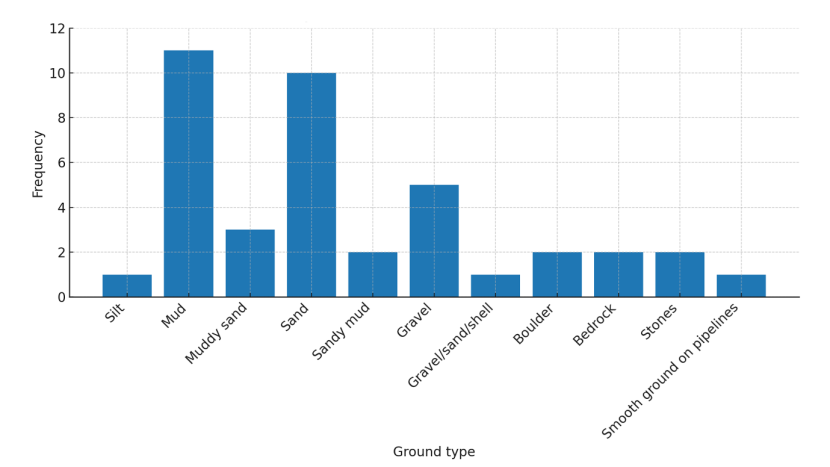
Figure 1. Fishing grounds reported as used by respondents.
Click for a full description
A bar graph of the frequency of fishing grounds used. The number of participants reporting they fished on sandy mud, sand, mud, Muddy sand, gravel, gravel / sand / shell, boulder, hard ground (bedrock), towing along pipelines, a mix of ground, mid water are recorded. The bar chart shows that most participants fished on sand (10) and mud (13).
3.4 Flapper skate bycatch frequency and location
The frequency of flapper skate bycatch was variable amongst fishers with 52% encountering the species daily and 26% weekly (Figure 2). The frequency of bycatch depended on fishing grounds, for example, one fisher reported catching one flapper skate every haul when fishing inshore but only once a week when fishing further offshore.
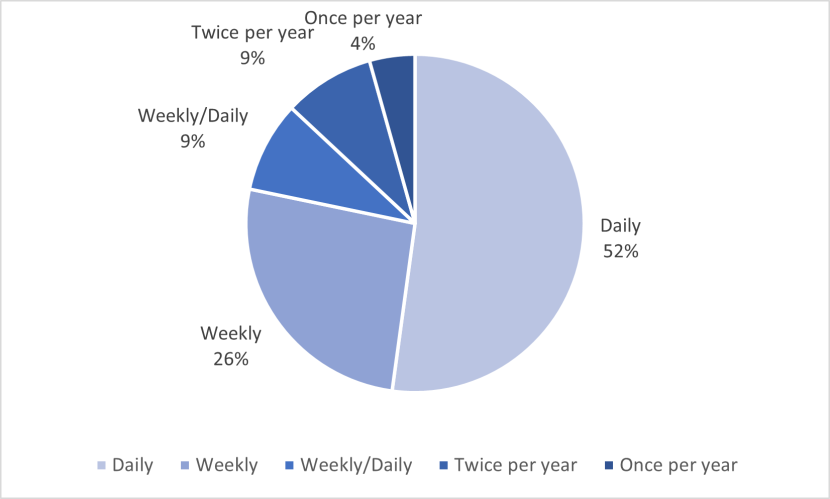
Figure 2. Frequency of flapper skate catches reported by fishers.
Click for a full description
A pie chart showing the frequency of flapper skate catches reported by fishers. 52% of fishers interviewed reported catching flapper daily, with 26% catching flapper skate weekly, 9% catching Weekly/Daily, another 9% catching flapper skate twice a year and 4% catching once a year.
Typical numbers of flapper skate encountered ranged significantly across locations and vessels with just over half of the fishers interviewed encountering between 1 to 20 flapper skate in a day. Eleven fishers typically encountered lower numbers of skate (between 1 and 3) a day, with another eight encountering a medium number per day (between 5 and 8 individuals per day) and four fishers typically encountering a high number of skate (between 10 and 25) per day. On average, fishers typically encountered 6 flapper skate per day (Figure 3).
The highest number of flapper skate encountered in any one day ranged from 1 to 50. A total of seven fishers reported having caught between 30-50 flapper skate in one day, with several catching between 10 to 30 individuals daily all year round.
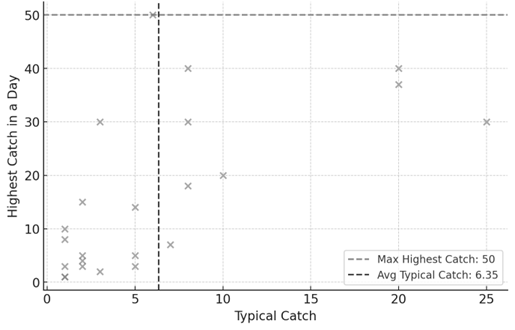
Figure 3. Flapper skate catch comparison, typical catch numbers and highest catch numbers per vessel.
Click for a full description
A scatter plot displaying flapper skate catch comparison between typical catch numbers on the x axis and highest catch numbers on the y axis. The majority of fishers reported catching flapper skate in numbers between 1-10, with 3 fishers catching between 20-25 typically. Highest catch in a day ranges amongst fishers, the highest number reported was 50 individuals.
Several fishers noted no seasonal fluctuations in their bycatch of flapper skate, however, several respondents highlighted increased bycatch during the summer months, particularly from April to October, and in September and October in shallower waters (70-90 m). One fisher reported distinct seasonal differences in bycatch rates, catching between 15 to 20 individuals daily in the summer which decreased to between 2 to 3 in the winter. This observation was reinforced by another fisher who shared their own flapper skate bycatch numbers recorded through the BATmap app (bycatch monitoring scheme) from April to December 2024. This fisher caught most flapper skate in May (146 skate) and June (93) based out of Ullapool with significantly lower numbers in October (13) and December (2) based out of North Shields.
The relationship between flapper skate bycatch and other variables was explored, which resulted in diverse opinions amongst fishers. Some suggested that higher bycatch is linked to flapper skate habitat preferences (such as muddy grounds) and food availability (e.g. Nephrops) rather than fishing effort. Factors such as sea temperature, climatic conditions, and the number of boats operating in specific areas (i.e. amount of fishing activity) were mentioned as influencing skate distribution. Fishers emphasised that flapper skate tend to inhabit areas with specific substratum types, with one fisher reporting higher abundance of skate on firm grounds in the Clyde compared to no occurrence on softer grounds in the Irish Sea. Additionally, fishers suggested that fishing activities can affect skate behaviour, with higher fishing activity ‘chasing them off [fishing grounds]’ leading to reduced bycatch.
3.5 Spatiotemporal Distribution
Fishers reported that flapper skate are encountered over a wide geographical range and were encountered by all gear types addressed in this study (Figure 4). Fishers reported the highest density of flapper skate bycatch along the west coast of Scotland, particularly west of Rum, around the Isle of Skye and east of Islay. Moderate bycatch was reported further offshore into the Minch and off Shetland’s west coast. It is evident that flapper skate are more prevalent on the west coast than the east coast of Scotland with limited bycatch reports from the Moray Firth. Lower numbers of reported bycatch were spatially distributed across the North Sea, southwest of South Uist and Barra and around Orkney and Shetland. Additionally, two fishers mentioned capture of skate in topographically complex regions on the west coast with skate being caught at the edge of deep basins. It should be noted that the absence of flapper skate reports in some areas reflects a lack of recorded bycatch encounters rather than an absence of fishing activity in Figure 4.
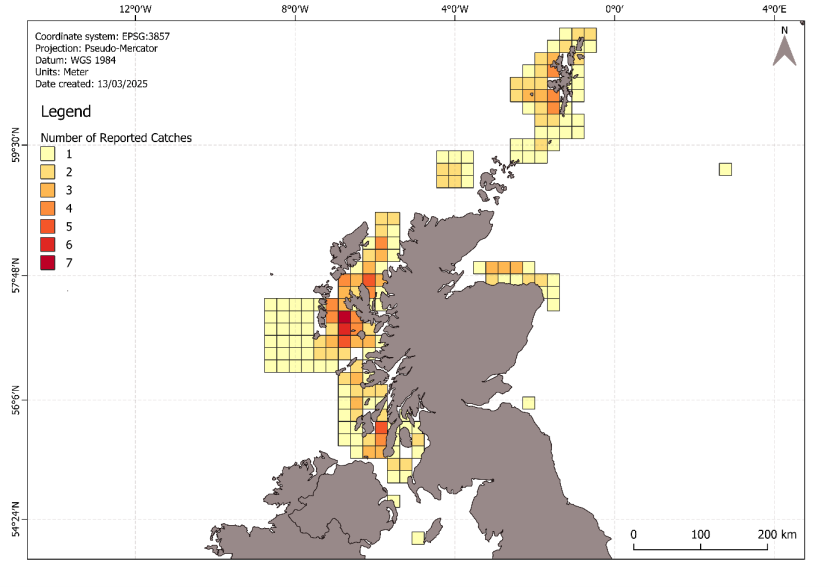
Figure 4. Map of the northern British Isles showing confirmed positive occurrence of flapper skate bycatch by fishers across all gear types (this does not represent confirmed flapper skate distribution).
Click for a full description
A heatmap displaying location of reported flapper skate catches across all gear types. Colours on heatmap range from light yellow (1) to dark red (7). Reported catches are distributed across Scotland’s west coast, in the Moray Firth and around Shetland. A higher density of reported catches (dark red on the map) is located west of the Isle of Rum.
Fishers reported captures of flapper skate in single rig otter trawls, otter trawls, gill nets and fly seine nets on the west coast including west of the Outer Hebrides, west of Shetland, west of Orkney and around Rattray Head (Figure 5, Map A). Captures with twin rig otter trawls were reported on the west coast of Scotland, the Moray coast, around Shetland and west of Orkney. (Figure 5, Map B). It is important to note that no fishers using scallop dredges were interviewed.
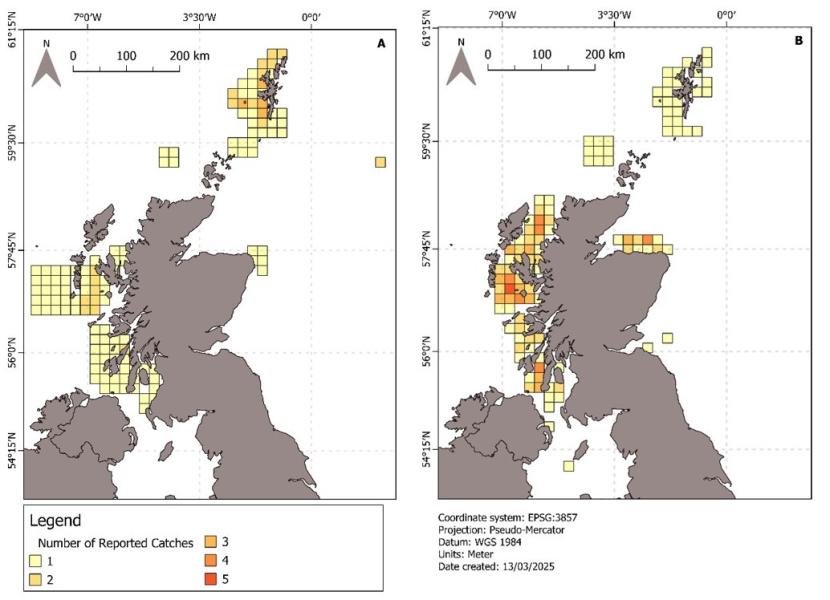
Figure 5. Map of the northern British Isles showing confirmed positive occurrence of flapper skate bycatch by gear type; A) Single rig otter trawl, demersal otter trawl, gill nets and fly seine; B) Twin rig otter trawl.
Click for a full description
A heatmap displaying location of reported flapper skate catches by gear types. Colours on heatmap range from light yellow (1) to red (5). Map A shows reported catches from fishers operating single rig otter trawls, demersal otter trawls, gill nets and fly seines. Catches predominate on the west coast, and in western waters of Shetland and the southern coast of the Moray Firth. Map B includes reported catches from fishers operating twin rig otter trawls with high number of flapper skate catches (red) in the Minch.
Bycatch from vessels operating twin rig otter trawls predominantly targeting Nephrops (Figure 5, Map B) indicate that bycatch of flapper skate tends to be more concentrated in northwestern coast waters, around Skye and east of Islay and in the Moray Firth on the east coast.
Fishers reported that flapper skate bycatch occur across a wide range of habitats, predominantly on softer ground sediments with mud (n=11) and sandy (n=10) habitats associated with the highest frequency of bycatch (Figure 6). Lower numbers of fishers reported flapper skate bycatch on rocky habitats (Bedrock, Gravel, Boulder and Stones, Figure 6). This suggests that while flapper skate may inhabit a range of benthic habitats, their occurrence and catchability are more strongly associated with certain ground types, particularly mud, sandy mud, and gravel substrates however a higher proportion of fishers interviewed predominantly fished on softer sediments (mud and sand).
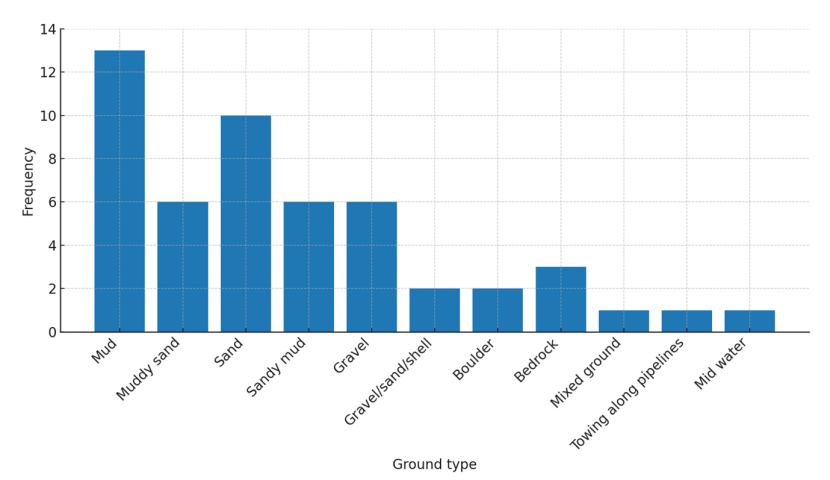
Figure 6. Frequency of ground types where flapper skate bycatch occurs.
Click for a full description
Bar chart showing frequency of ground types (Boulder (2), Gravel (5), Gravel/sand/shell (1), Hard ground (2), Mud (11), Muddy sand (3), Sand (10), Sandy mud (2), Silt (1), Smooth ground on pipelines (1), Stones (2)) where flapper skate bycatch is reported. Soft sediment such as mud and sand display the highest frequency of responses.
Flapper skate were reported to be caught across a depth range from 30 to > 200 m. Bycatch of skate was reported across a variety of depth ranges with several fishers catching skate across three depth categories. Flapper skate were most frequently caught at depths between 50 – 100 and 100 – 200 m (Figure 7).
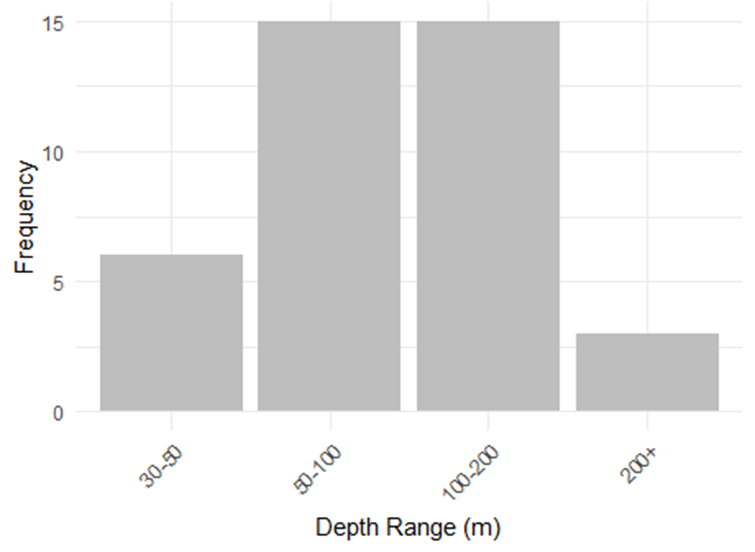
Figure 7. Average depth ranges of flapper skate bycatch reported by fishers.
Click for a full description
Bar chart showing average depth ranges of flapper skate bycatch reported by fishers. Depth ranges categories selected by fishers are 30-50 m, 50-100 m, 100-200 m and 200+ m. Highest reported frequency of depth ranges for flapper skate bycatch is two depth ranges, both 50-100 m and 100-200 m with 15 responses for each depth range.
3.6 Presence and Frequency Over Time
When fishers were asked about their perception of changes in the presence and frequency of encounters with flapper skate, their responses indicated that they have noticed a significant increase in flapper skate numbers in the last 4 years (Figure 8), with eight fishers also observing a significant increase in the last 10 years. Several fishers noted that skate numbers increased a little or increased significantly in the last 20 years, with fewer perceiving no change in numbers between the last 40 years. Only one fisher recorded his perception of change in the last 40 years (no change) because most fishers could not remember this far back (or were not fishing at that time) and, therefore, did not answer this part of the question.
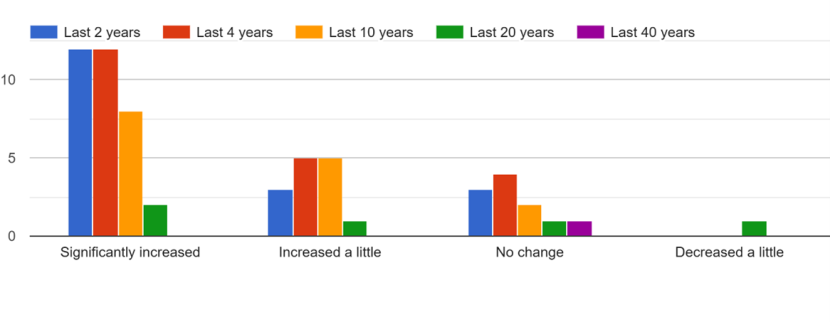
Figure 8. Fishers perceived changes in flapper skate bycatch over years fished.
Click for a full description
Bar chart showing the perceived changes by fishers in flapper skate bycatch numbers over the years from the last 2, 4, 10, 20 and 40 years. Most fishermen (12) reported that bycatch of flapper skate has significantly increased in the last 2 and 4 years.
Responses from the fishing industry indicate that the size of the most frequently caught flapper skate fell within 150–190 cm in width (Figure 9). This was followed by next size class of 120–150 cm, with a moderate number of smaller size classes (90–120 cm and 28-60 cm). The reported size distribution suggests a predominance of larger, mature individuals within the bycatch, with a lower number of juvenile flapper skate caught. It is possible that some fishers confused juvenile flapper skate with other ray species and grouped all these together or only recalled larger individuals because of the greater impact these had on their operations.
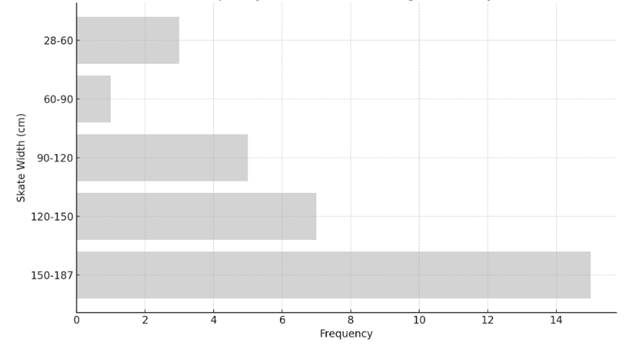
Figure 9. Average estimated flapper skate size (width) reported as predominantly caught by fishers.
Click for a full description
Bar chart showing average estimated flapper skate size (width) predominantly caught by fishers. Fishers were invited to report the size of flapper skate they predominantly caught categorised as 28-60 cm, 60-90 cm, 90-120 cm, 120-150 cm and 150-187 cm. The most fishers (15) reported predominantly catching skate over 150 cm and 6 reported predominantly catching skate between 120-150 cm.
Fishers were further questioned on perceived changes in skate size throughout their years actively fishing. Results indicate that the large majority noted no change to skate size over the last 2 to 20 years (Figure 10). A total of 5 fishers noted skate size ‘Increased a little’ over the last 4 and 10 years, with 5 also noticing a significant increase in the last 2 years. These results would indicate that there are some areas where fishers have always caught large flapper skate, whereas other areas are now associated with large flapper skate where previously only smaller flapper skate were encountered.
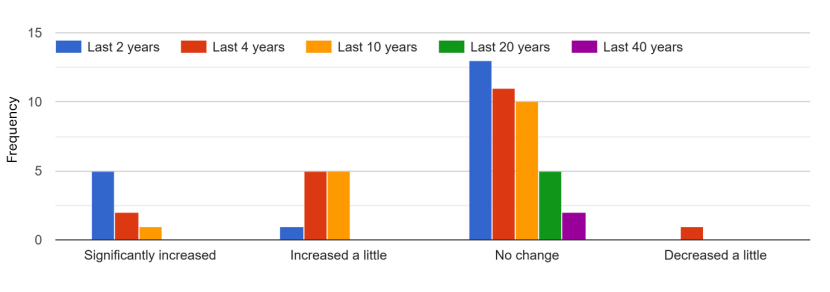
Figure 10 Fishers perceived changes in flapper skate size over years fished.
Click for a full description
Bar chart showing the perceived changes by fishers in flapper skate size over the years fished from the last 2, 4, 10, 20 and 40 years. Most fishermen reported no change to skate size over the last 2 to 20 years. Five fishers noted skate size ‘Increased a little’ over the last 4 and 10 years, with 5 also noticing a significant increase in the last 2 years.
3.7 Eggs
The majority of fishers (78%) reported that they did not catch any viable flapper skate eggs. Amongst those who encountered viable eggs, reports were variable, suggesting low and sporadic occurrence. A small number of fishers indicated finding one or two eggs per month when fishing inshore, while a few mentioned encountering them twice a year or seasonally (no season specified) (e.g., 20–30 eggs caught on gravel). A total of seven fishers reported catching viable eggs amongst sand and mud habitats, with one fisher reported catching eggs amongst gravel. Moreover, the few fishers catching viable flapper skate eggs reported no change in the last 2 to 10 years in the number caught.
3.8 Bycatch Interactions
To assess the likely survivability of flapper skate once caught and released, fishers were questioned about their perceptions of skate condition, the time retained on deck, gear deployment time, release techniques and gear modifications to avoid skate capture. Results indicated that post haul, skates were predominantly vital, with 91.3% of fishers classifying skates as ‘Healthy (no sign of injury)’ and 8.7% classified skates as ‘Mildly injured’.
The majority of fishers release skate as soon as possible, anywhere between 2 – 20 minutes after the fish arriving on deck with only several fishers redeploying their gear before they attend to flapper skate release. The duration of gear deployment varied across gear used, with towed gear deployed from 2 - 6 hours and static gear (gill nets) deployed from 12 -16 hours.
Responses indicate that flapper skate release methods vary depending on skate size, and vessel setup, but the predominant approach for large individuals involves securing a rope around the tail and using a winch or manual lifting to return them to the water. Several fishers reported that two-person lifts are required for larger skates, while others described using a discard chute and lifting up hatch for larger individuals (Figure 11). A few fishers described hooking the spiracle (breathing hole behind the eye) to lift larger skates overboard.
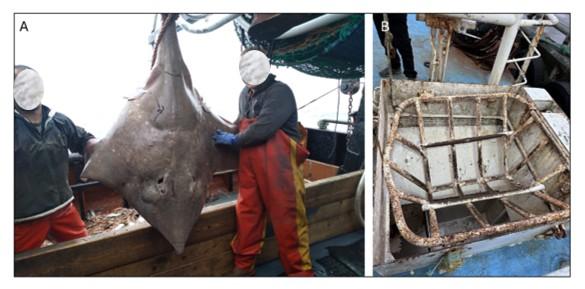
Figure 10. A) Image of flapper skate with rope on the tail to winch overboard from a Twin-rig Nephrops trawler, B) Catch sorting grid that can be lifted to release flapper skates.
Click for a full description
Two images illustrate the variation in methods used to return flapper skate caught as bycatch on different fishing vessels. Image A is a large flapper skate hoisted up via a rope attached to its tail to remove it from the receiving bin on a twin rig Nephrops trawler. Image B is a metal sorting grid placed over the hole in the deck leading to the catch sorting room below deck. The cod end (containing the catch) is emptied over the grid preventing flapper skate and other large bycatch entering the catch sorting room. Any large bycatch and flapper skates can be released by lifting one side of the grid allowing skate to slide off the vessel.
Common methods for releasing large skates include:
- Rope-assisted release: Tying a rope around the tail and lowering or winching the skate overboard.
- Manual handling: Lifting by hand when feasible, often requiring multiple crew members.
- Direct net release: In some cases, fishers reported releasing skates by inverting the net if they are stuck in the extension just before the cod end.
A few responses highlighted incidental injuries, such as bycatch of flapper skates with damaged tails or missing tails, which could influence survival post-release. Additionally, one fisher reported bycatch of flapper skates where individuals had markings of boat numbers and fisher’s initials on the dorsal side.
3.9 Gear Modifications
Fishers predominantly reported no attempt at gear modifications to avoid flapper skate bycatch. Several fishers stated that flapper skate are considered a "nuisance" species, as they can block or clog nets, reducing overall fishing efficiency. Responses regarding the adoption of fishing gear modifications or alternative technologies to reduce flapper skate bycatch were mixed, with both willingness and scepticism amongst fishers. Among the few who had attempted gear modifications to avoid flapper skate bycatch, the reported methods included:
- Lowering net height and using diamond-shaped or large square mesh escape panels to facilitate skate release—however these modifications were deemed ineffective, perhaps due to the size of flapper skate encountered.
- Adjusting net components such as removal of tickler chains, with some fishers suggesting that not using tickler chains did reduce skate bycatch rates.
- Participation in the Gear Innovation Technology Advisory Group (GITAG), which tested separation panels.
When asked about potential strategies to avoid flapper skate bycatch, the majority of fishers believed that there are no viable solutions, with fishers stating that it is difficult to avoid bycatch of such a large species without also reducing catches of target fish.
Moreover, some fishers suggested that the best approach is to avoid fishing in areas where flapper skate are known to be present, while others considered that this is not always feasible, as skate are widely distributed across their fishing grounds. A few fishers reported that skate tend to move from fishing grounds after initial encounters with fishing vessels.
A recurring perspective was that flapper skate have a high survival rate upon release, with fishers reporting bycatch of flapper skate with rope still lashed to their tails.
“We won’t ever be able to totally avoid catching them. I think trying to do this could have serious economic impacts for us commercial fishermen. Given their apparent high survivability, I think we continue with best practice with catch and release. The stock has obviously recovered despite fishing effort. I believe it’s best left alone whilst encouraging quick return to the sea.” – Twin rig otter trawl fisher based out of a west coast port.
Conditions for Adoption:
Several fishers expressed openness to trying modifications, but willingness was heavily dependent on specific factors, including:
- No impact on target species catches.
- Economic viability, with concerns about financial losses if modifications reduced catch rates or damaged gear.
- Regulatory flexibility, with some fishers suggesting they would consider modifications if it allowed access to other fishing areas.
- Practical feasibility, ensuring that modifications could be easily integrated into existing gear without increasing handling difficulty or creating safety risks.
Barriers to Adoption:
A significant portion of fishers were opposed to or sceptical of gear modifications, listing several key concerns:
- Potential loss of target species, particularly prawns, due to modifications that keep nets more open or allow unintended escape.
- Previous unsuccessful trials, with some fishers noting that they have already tested numerous approaches without success.
- Crew safety risks, particularly on vessels that lack the infrastructure to accommodate certain modifications.
- Industry uncertainty, with some fishers arguing that the fishing industry is already struggling, and additional regulatory pressures on gear could accelerate its decline.
Alternative Approaches:
A few respondents suggested possible solutions, including:
- Mechanical flaps and additional escape holes, however concerns were raised about profitability.
- Use of pingers to deter flapper skate from nets.
- Selective measures that reduce bycatch of non-target skate species while allowing fishers to land species that are commercially viable.
4. Discussion
LEK from the Scottish fishing fleet indicates that just over 50% of fishers interviewed reported bycatch of on average 6 flapper skate per vessel per day (in a range of 1 to 25), with highest bycatch reported of up to 40 - 50 a day. These high encounter rates reflect a notable increase in the frequency of encounters of flapper skate in Scottish fisheries, with most fishers indicating that bycatch has significantly increased over the last 4 years. The distribution of bycatch is predominantly on the West Coast and in the Northern Isles; in water depths between 50-200 m; across a range of ground types, largely reflecting the fishing grounds targeted, with muddy and sandy grounds predominating. These insights are caveated by the range of fishers that could be interviewed within the time constraints of the present study, the range of metiers surveyed and the timeline over which fishers could remember fishing encounters which extended back 20 years (i.e. back to 2004 / 2005).
4.1 Changing Presence and Frequency
Fishers across various sampled locations and gear types consistently reported an increase in flapper skate encounters over the last 4 years, with just over half of fishers encountering skate daily. While some of this perceived increase may be attributed to improved awareness and identification of flapper skate following an increase in conservation actions and media coverage on the species, the frequent and high number of encounters suggest that flapper skate around Scotland are beginning to show signs of recovery at least in terms of their abundance. It is evident that the species has benefited from declines in fishing effort related to a reduction in the size of the Scottish fishing fleet and the skate landing prohibition (McGeady et al., 2022; Régnier et al., 2024a).
The establishment of the Loch Sunart to the Sound of Jura MPA has been shown to enhance the local flapper skate populations by increased juvenile survival, but so far little overspill of flapper skate to outside the MPA has been recorded (Régnier et al., 2024a) probably due to the resident nature of flapper skate (Thorburn et al., 2021, Lavender et al., 2021). However, spillover may occur as the population of flapper skate within the boundary of the MPA increases. A proportion of the flapper skate population is transient (Regnier et al. 2024a) and will therefore be at greater risk to fishing gear encounter when they move out of the MPA (Régnier et al., 2024a, Schwanck et al., 2024). This has implications for recovery of the species including a potential reduction in the transient proportion of the population resulting in reduced genetic mixing.
The present study indicates that some fishers experience seasonal fluctuations in flapper skate bycatch, with several fishers reporting increased bycatch during the summer and autumn months. Seasonal changes in habitat use are often associated with ontogenetic shifts, changes in abiotic conditions and seasonal variation in resource or prey abundance (Thorburn et al., 2022). However it isn’t possible to describe trends in seasonal flapper skate abundance in specific locations based on the responses of the fishers interviewed due to the shifts in fishing grounds targeted in different seasons.
Large (likely mature) flapper skate are most frequently encountered, with few fishers reporting the bycatch of juvenile flapper skates. The high number of large, mature individuals in reported bycatch could be a significant threat if post-release mortality was high as flapper skate exhibit slow growth, late maturation and low fecundity. The low occurrence of juvenile skate in bycatch data may indicate either a natural preference for different habitats, a sampling bias due to gear selectivity or increased notice of large individuals. Nevertheless, based on the responses from fishers, flapper skate seem to survive the capture experience and are not prone to suffocate like ram ventilating sharks (Ellis et al., 2017). The main issue potentially impacting post-release survival seems to be the mechanism of removing the skate from the vessel deck and back into the sea, with clear evidence of tail loss when rope is not fully removed after winching the animal over the bulwark and into the sea.
4.2 Spatiotemporal Distribution and Habitat Preferences
The spatial distribution of flapper skate bycatch highlights a strong association with West Coast fishing grounds, particularly in the waters surrounding Rum, Skye, and Islay. The encounters amongst soft sediment habitats, such as mud and sand, suggests that flapper skate may be closely linked to areas with high Nephrops abundance, which constitute the primary target species for many fishers in the study. Nephrops are typically associated with fine sedimentary habitat in depths ranging from 20 m to 800 m deep (Johnson et al., 2013). The foraging behaviour of skates is closely linked to seabed habitat, and studies have documented depth-related dietary differences that can vary according to location and season (Brown-Vuillemin et al., 2020). Diet shifts have also been documented as skate species increase in size and hence increase in swimming ability.
Flapper skates are known to be generalist feeders however their diet is not well understood (Serra-Pereira et al., 2014; Thorburn et al., 2021). Gut content analysis from blue skates reveals a diet of Nephrops and teleost fish (McGeady et al., 2022). Nephrops are thought to be a key component of flapper skate diet which have been seen to regurgitate prawns on the decks of angling vessels (J.Dodd, personal communication, March 25, 2025). Species-specific studies have shown that flapper skates follow the daily movement of benthic prey such as Nephrops (Neat et al., 2014; Brown-Vuillemin et al., 2020). Flapper skate distribution has been documented to shift seasonally and is thought to vary in association with prey availability with mid to large-sized flapper skate using shallow water habitats more in the winter months (Thorburn et al., 2021).
The capture depth range of flapper skate described by fishers aligns with previous research where flapper skates are reported to occupy a depth range from 1 to 312 m (Thornburn et al., 2022). A previous study using acoustic tagging revealed flapper skate use deep (100+ m) basins on the seabed (Thornburn et al., 2022) which additionally links to anecdotal reports from two fishers who suggest that flapper skate prefer habitats at the topographic transition between shallow and deep basins. Moreover, flapper skate are documented to tolerate a large thermal range, highlighting the preference for bathymetrically and thermally variable habitats including a deep depth range, presence in cold sea lochs on the West Coast and shallower coastal regions such as Orkney (Frost et al., 2020).
Relative abundance of flapper skate encountered differs across gear types, with both whitefish vessels (targeting cod, haddock, whiting, hake and saithe) and twin rig otter trawls (targeting Nephrops) encountering a proportionally higher number of skate. Results from the study are predominantly from fishers operating twin rigs targeting Nephrops so bycatch frequencies are artificially higher for this gear type. Additionally, scepticism within the industry has reduced the willingness of fishers to participate, which may limit the breadth and accuracy of industry-reported data.
4.3 Mitigation Strategies for Reducing Bycatch
Results from the study revealed the increasing frequency of flapper skate encountered by the industry and a negative perception of the species among some fishers due to the extra time and financial costs they cause the fleet due to gear damage and the process of release. To minimise flapper skate bycatch whilst maintaining fishing efficiency, a range of mitigation strategies could be considered. The use of real-time reporting systems, where fishers voluntarily share bycatch hotspots, could help others adjust fishing locations to reduce bycatch interactions. Schemes that enable the rapid collection, processing, analysis and sharing information allows for real-time reporting of bycatch locations, assisting in bycatch avoidance (Calderwood et al., 2023). Yet, there is a reluctance to share catch information and success requires participation of a large number of fishers within the fleet. An example Scottish scheme is BATmap (Bycatch Avoidance Tool) designed for fishers to input catch data, location and bycatch (Calderwood et al., 2023). However, out of the fishers interviewed only one was utilising the app due to the reluctance to report a protected species like flapper skate for fear that fishing will be prohibited where they are present in the future.
The study responses highlight significant challenges in reducing flapper skate bycatch, with the majority of fishers perceiving that gear modifications offer little practical benefit and are not commercially viable. Bycatch Reduction Devices (BRDs), such as escape grids and large mesh panels, have shown promise in reducing bycatch of non-commercial teleost fish (Willems et al., 2016). Additional gear modifications such as the removal of the tickler chain from trawls have been effective at minimising bycatch of skates including flapper skate while not affecting catch (Kynoch, Fryer and Neat, 2015). Implementation of such modifications could take a seasonal approach, for example removing tickler chains in the spring when flapper skates are less active (Régnier et al., 2024b) or a zonal / seasonal approach such as removing tickler chains in the winter when flapper skate spend more time in shallower water (Thorburn et al., 2021). However, such modifications are largely dependent on willingness to adopt gear modifications voluntarily by industry or to implement them through regulatory measures by government.
The use of artificial lights has been trialled across multiple fisheries acting as deterrents to species subject to bycatch (Yochum et al., 2024). For example, the use of green LED lights placed along the trawl float line which resulted in significant reductions in elasmobranch bycatch (Senko et al., 2022). Moreover, electrosensory deterrents and lights on gillnets have provided promising avoidance of elasmobranchs (Lucas and Berggren, 2023). The effectiveness of lights in trawls to avoid flapper skate bycatch has not been tested but may be worth exploring at some point in the future.
More sophisticated approaches are also in development. These include “Smartrawl” and “Game of trawls” which use cameras and Artificial Intelligence to detect bycatch species and release them through various systems such as movable net flaps or gates (Fisheries Innovation & Sustainability, 2025; Ifremer, 2025).
The study’s findings highlight the physical challenges associated with releasing large flapper skates and the importance of best practices to minimise handling stress and injury. The predominant method of releasing large skates used is to tie a rope to the tail and winch the fish overboard. Hanging a 100 kg animal from its tail is likely to be damaging and photos from recreational anglers show that often a slipknot is not used and the rope remains on the tail (Skatespotter 2025, Figure 12). Photos from recreational anglers also show that flapper skate are capable of surviving a rope on the tail (if it is removed soon enough) and even survive losing their tail (Skatespotter 2025), however, it is likely that many individuals do not survive. Improved handling measures, including best-practice release techniques, such as using discard chutes, lifting tarpaulins (first suggested by Prof Francis Neat) and removing tail ropes at the point of release if they have to be used, may reduce injury and enhance post-release mortality. An alternative release method using a removable sleeve could be used to grip onto the tail, spread weight load and release the skate without the use of rope. Investigation of this less damaging option is likely to be valuable. The authors would welcome further suggestions, dialogue, testing and feedback from fishers on release methods in order to try and settle on a solution that is mutually beneficial to fishers and flapper skate.
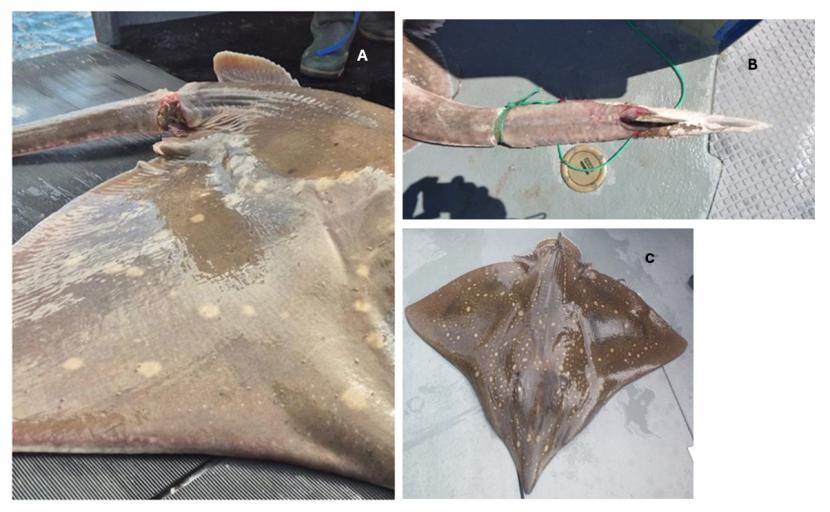
Figure 12. A) and B) Flapper skate tail injury from roped tail release method used by fishing fleet, C) flapper skate with no tail. Images taken by recreational anglers.
Click for a full description
Images taken by recreational anglers show injury to flapper skates from the rope on tail method of release used by the fishing industry to winch skates from fishing vessels following their accidental capture. Image A shows the tail of a flapper skate with tissue damage around the base as a result of a rope cutting into the tissue after being tied around it to winch the skate overboard and left on. Image B shows thin rope tied about half way down the skate’s tail, the skin of the skate is pale and the tissue at the end of the tail is white suggesting it is necrotic and the animal is suffering some level of infection. Image C shows a flapper skate with no tail possibly as a result of having a rope attached.
There are complex trade-offs between the need for conservation objectives and commercial fishing practices. While some fishers are open to innovation, their support is dependent on ensuring that gear modifications do not negatively impact catch efficiency or economic viability. Scepticism amongst other fishers, particularly due to past failed attempts and industry challenges suggests that any proposed modifications would need to be rigorously tested in real-world conditions, co-developed with industry stakeholders, and financially incentivised to gain broader acceptance.
5. Conclusion
This study highlights the valuable role of fisher knowledge in providing insights into flapper skate bycatch in Scottish waters. The increasing encounters reported by the industry representatives interviewed here suggest a need for continued research to determine whether these trends reflect true population recovery, changes in distribution, or other ecological drivers. Integrating fishers’ observations with scientific monitoring can enhance our understanding of flapper skate ecology and support the development of adaptive management strategies to mitigate bycatch while ensuring the sustainability of Scotland’s fisheries. By incorporating industry knowledge with ongoing research, future conservation efforts can be more effectively tailored to protect this vulnerable species while balancing the needs of the fishing industry.
Annexes
Annex 1
Insights from the Scottish fishing fleet on flapper skate catches - Questionnaire
Thank you for participating in this survey which will last approximately 15 minutes. As fish stocks around Scotland have continued to improve and as fishing effort has declined, it is not surprising to hear anecdotal accounts that rare species like flapper skate are increasing in number and are increasingly encountered by the fishing industry in catches. This research is being conducted to gain insights directly from the fishing industry on the changing presence and frequency of flapper skate as bycatch and to identify areas where these species may be more frequently encountered. Your knowledge and experiences are essential for building a more comprehensive evidence base on flapper skate distribution and abundance, with a focus on sustainable fishing practices and supporting healthier marine ecosystems.
The information you provide will play a key role in understanding skate hotspots and informing potential practices that can help minimise bycatch while supporting the recovery of skate populations and maintaining profitable fishing opportunities. Our goal is to work collaboratively with the fishing community to promote a sustainable future for our shared marine resources.
All responses will be anonymised.
For any questions please contact Rosie Ashworth (Researcher at Heriot-Watt University): [email protected]
Logistics:
Date:
Demographic section:
1. What size of vessel do you use?
Length Overall (LOA) (m):
Weight/Tonnage (t):
Power (kW):
2. What gear type do you use? (Tick accordingly)
Trawls
- Bottom otter trawl
- Multi-rig otter trawl
- Bottom pair trawl
- Beam trawl
- Twin rig
- Single rig
Dredge
- Scallop dredge
Longlines
- Drifting longlines
- Set longlines
Surrounding nets
- Purse seine
- Fly seine
- Seine
Other:
- What is your main target catch species?
- What is your age?
- (16-25)
- (26-35)
- (36-45)
- (46 – 55)
- (56-65)
- (>65)
- How long have you been fishing for?
- What is the main time of year you fish?
- Does the time of year change your fishing locations? If so, where do you fish during winter/spring/summer/autumn?
- What kind of ground are you primarily fishing on?
- Sand
- Mud
- Muddy Sand
- Sandy mud
- Gravel
- Gravel/sand/shell
- Boulder
- Hard ground (Bedrock)
- Other
Flapper Skate section:
9. How many of these skate/ray can you identify?
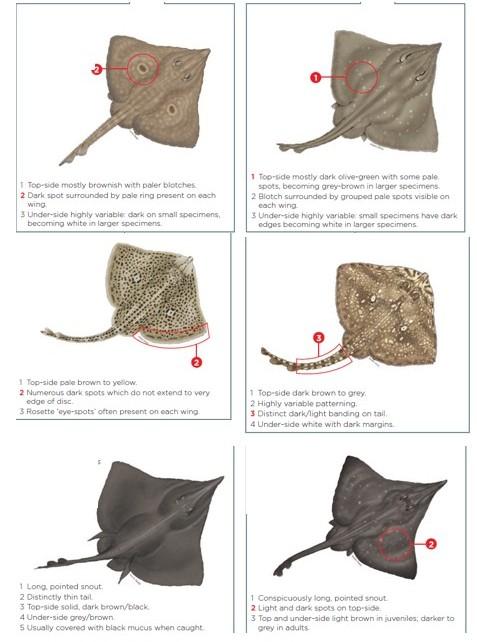
How many of these skate/ray can you identify? 1-6
Click for a full description
Top left
- Top-side mostly brownish with paler blotches
- Dark spot surrounded by pale ring present on each wing
- Under-side highly variable: dark on small specimens, becoming white in larger specimens.
Top right
- Top-side mostly dark olive-green with some pale spot, becoming grey-brown in larger specimens
- Blotch surrounded by grouped pale spots visible on each wing
- Under-side highly variable: small specimens have dark edges becoming white in larger specimens
Middle left
- Top-side pale brown
- Numerous dark spots which do not extend to very edge of disc
- Rosette 'eye-spots' often present on each wing
Middle right
- Top-side dark brown to grey
- Highly variable patterning
- Distinct dark/light banding on tail,
under-side white with dark margins
Bottom left
- Long, pointed snout
- Distinctly thin tail
- Top-side solid, dark brown/black
- Under-side grey/brown
- Usually covered with black mucus when caught
Bottom
- Conspicuously long, pointed snout
- Light and dark spots on top side
- Top and underside light brown in juveniles; darker to grey in adults
10. The photo below has a picture of two skates, are they different or the same?
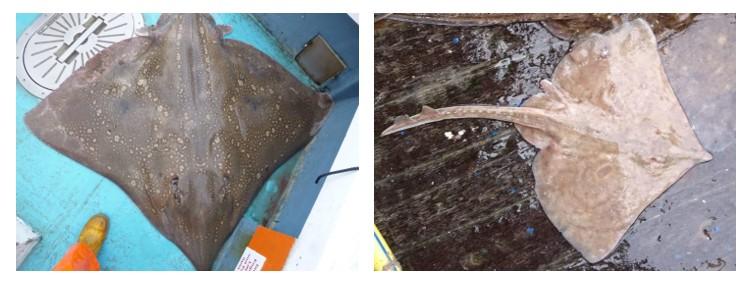
The photo has a picture of two skates, are they different or the same?
Same
Different
11. Are you aware that the common skate is now two distinct species - flapper skate (left photo) and blue skate (right photo)?
Yes
No
12. What species of skate/ray do you catch?
- Flapper skate
- Blue skate
- Black skate
- Long-nose skate
- Spotted ray
- Blonde ray
- Starry skate
- Thornback ray
- White skate
- Cuckoo ray
- Small-eyed ray
- Undulate ray
- Shagreen ray
- Sandy ray
- Other
13. How often do you catch flapper skate?
- Daily
- Weekly
- Monthly
- Four times per year
- Twice per year
- Once per year
14. What are the typical numbers you are catching flapper skate?
15. What is the highest number of flapper skate you have caught in any day?
16. Where are you catching flapper skate? Are there certain locations where you have a higher bycatch of flapper skate? (Map shown)
17. If you are catching a higher number in certain locations, would you say that is linked to fishing effort?
18. Does the number of flapper skate bycatch change seasonally? If so, which months or seasons do you see either the most or the least flapper skate.
19. What kind of ground are you primarily catching flapper skate on?
- Sand
- Mud
- Muddy Sand
- Sandy mud
- Gravel
- Gravel/sand/shell
- Boulder
- Hard ground (Bedrock)
- Other
20. On average, what depth are you catching flapper skate?
- 0-10 m
- 10-30 m
- 30-50 m
- 50-100 m
- 100-200 m
- 200+ m
- 0-5 fathom
- 5-16 fathom
- 16-27 fathom
- 27-54 fathom
- 54-109 fathom
- 109+ fathom
21. In your x years as a fisher, have you noticed any changes/trends in the amount of flapper skate caught over the years?
| Scale | Last 2 years | Last 5 years | Last 10 years | Last 20 years | Last 40 years |
|---|---|---|---|---|---|
| Significantly increased | - | - | - | - | - |
| Increased a little | - | - | - | - | - |
| No change | - | - | - | - | - |
| Decreased a little | - | - | - | - | - |
| Significantly decreased | - | - | - | - | - |
Skate size
22. On average what size of skate (width) are you catching now (monthly)?
| Size | 28 – 60 cm | 60-90 cm | 90-120 cm | 120 – 150 cm | 150-187 cm |
|---|---|---|---|---|---|
| Number | - | - | - | - | - |
23. Have you noticed a change in the size of flapper skate that you have been catching over the years? If so, in what way?
| Scale | Last 2 years | Last 5 years | Last 10 years | Last 20 years | Last 40 years |
|---|---|---|---|---|---|
| Significantly increased | - | - | - | - | - |
| Increased a little | - | - | - | - | - |
| No change | - | - | - | - | - |
| Decreased a little | - | - | - | - | - |
| Significantly decreased | - | - | - | - | - |
Egg cases:
24. Do you catch flapper skate live egg cases? If yes, how many do you catch in a week/month? (see photo of flapper skate egg case (20-24 cm)
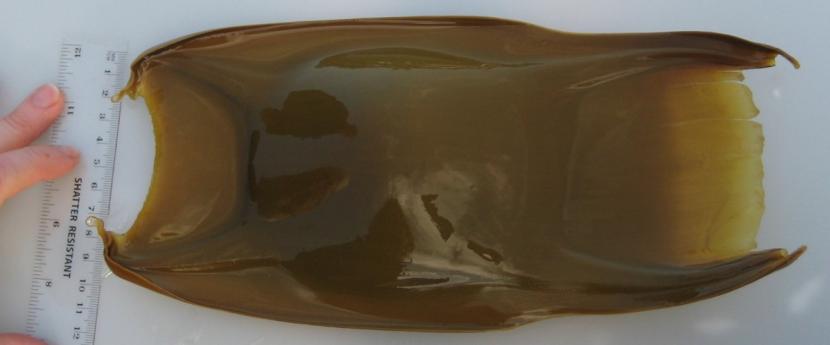
Photo of flapper skate egg case (20-24 cm)
25. Where are you catching flapper skate egg cases (mark on map)?
26. What kind of ground are you primarily catching flapper skate egg cases on?
- Sand
- Mud
- Muddy Sand
- Sandy mud
- Gravel
- Gravel/sand/shell
- Boulder
- Hard ground (Bedrock)
- Other
27. Has the number of flapper skate egg cases caught changed over the years?
| Scale | Last 2 years | Last 5 years | Last 10 years | Last 20 years | Last 40 years |
|---|---|---|---|---|---|
| Significantly increased | - | - | - | - | - |
| Increased a little | - | - | - | - | - |
| No change | - | - | - | - | - |
| Decreased a little | - | - | - | - | - |
| Significantly decreased | - | - | - | - | - |
Bycatch reduction and behaviour
28. On average what health state are flapper skates post haul?
- Healthy (no sign of injury/disease)
- Mildly injured
- Moderately injured
- Dead
29. On average how long are skate kept on deck before release?
30. How long is a typical gear deployment for your vessel (hours/days depending on metier)
31. Currently, how do you release skates post-haul? How do you release large skates?
32. Have you tried any techniques or gear modifications to avoid catching flapper skate? If so, what were they, and how effective were they?
33. What are your ideas about how we could avoid catching flapper skate?
34. If not, would you be open to using fishing gear modifications or alternative technology to reduce the likelihood of catching flapper skate? What factors would influence your decision?
References
Bache-Jeffreys, M., de Moraes, B.L.C., Ball, R.E., Menezes, G., Pálsson, J., Pampoulie, C., Stevens, J.R. and Griffiths, A.M., 2021. Resolving the spatial distributions of Dipturus intermedius and Dipturus batis—the two taxa formerly known as the ‘common skate’. Environmental Biology of Fishes, 104, pp.923-936.
Bergmann, M., Hinz, H., Blyth, R.E., Kaiser, M.J., Rogers, S.I. and Armstrong, M., 2004. Using knowledge from fishers and fisheries scientists to identify possible groundfish ‘Essential Fish Habitats’. Fisheries Research, 66(2-3), pp.373-379.
Brander, K., 1981. Disappearance of common skate Raia batis from Irish Sea. Nature, 290(5801), pp.48-49.
Brown-Vuillemin, S., Barreau, T., Caraguel, J.M. and Iglésias, S.P., 2020. Trophic ecology and ontogenetic diet shift of the blue skate (Dipturus cf. flossada). Journal of Fish Biology, 97(2), pp.515-526.
Calderwood, J., Marshall, C.T., Haflinger, K., Alfaro-Shigueto, J., Mangel, J.C. and Reid, D.G., 2023. An evaluation of information sharing schemes to identify what motivates fishers to share catch information. ICES Journal of Marine Science, 80(3), pp.556-577.
De Santis, L.J., Bonanomi, S., Li Veli, D., Bottaro, M. and Lucchetti, A., 2025. Fishers’ knowledge and risk assessment: a combined approach to studying endangered large-bodied sharks in the central Mediterranean. Reviews in Fish Biology and Fisheries, pp.1-21.
Dodd, J., Baxter, J.M., Donnan, D.W., James, B.D., Lavender, E., McSorley, C.A., Mogg, A.O. and Thorburn, J.A., 2022. First report of an egg nursery for the critically endangered flapper skate Dipturus intermedius (Rajiformes: Rajidae). Aquatic Conservation: Marine and Freshwater Ecosystems, 32(10), pp.1647-1659.
Ellis, J.R., McCully Phillips, S.R. and Poisson, F., 2017. A review of capture and post‐release mortality of elasmobranchs. Journal of fish biology, 90(3), pp.653-722.
Ellis, J.R., McCully-Philipps, S.R., Sims, D., Walls, R.H.L., Cheok, J., Derrick, D. and Dulvy, N.K., 2021. Dipturus intermedius. The IUCN Red List of Threatened Species.
Fernandes, P.G. and Cook, R.M., 2013. Reversal of fish stock decline in the Northeast Atlantic. Current Biology, 23(15), pp.1432-1437.
Fisheries Innovation & Sustainability., 2025. Smartrawl - Fisheries Innovation & Sustainability - A coalition of experts driving strategic innovation for a prosperous and sustainable UK seafood industry. (Accessed: 11 June 2025).
Frost, M., Neat, F.C., Stirling, D., Bendall, V., Noble, L.R. and Jones, C.S., 2020. Distribution and thermal niche of the common skate species complex in the north-east Atlantic. Marine Ecology Progress Series, 656, pp.65-74.
Garbett, A., Phillips, N.D., Houghton, J.D., Prodöhl, P., Thorburn, J., Loca, S.L., Eagling, L.E., Hannon, G., Wise, D., Pothanikat, L. and Gordon, C., 2021. The critically endangered flapper skate (Dipturus intermedius): Recommendations from the first flapper skate working group meeting. Marine Policy, 124, p.104367.
Griffiths, A.M., Sims, D.W., Cotterell, S.P., El Nagar, A., Ellis, J.R., Lynghammar, A., McHugh, M., Neat, F.C., Pade, N.G., Queiroz, N. and Serra-Pereira, B., 2010. Molecular markers reveal spatially segregated cryptic species in a critically endangered fish, the common skate (Dipturus batis). Proceedings of the Royal Society B: Biological Sciences, 277(1687), pp.1497-1503.
Ifremer., 2025. Let’s sort on the bottom, not on the deck ! Game of Trawls | Let’s sort on the bottom, not on the bridge. (Accessed: 11 June 2025).
Iglésias, S.P., Toulhoat, L. and Sellos, D.Y., 2010. Taxonomic confusion and market mislabelling of threatened skates: important consequences for their conservation status. Aquatic Conservation: Marine and Freshwater Ecosystems, 20(3), pp.319-333.
Johnson, M.P., Lordan, C. and Power, A.M., 2013. Habitat and ecology of Nephrops norvegicus. Advances in marine biology, 64, pp.27-63.
Kynoch, R. J., Fryer, R. J., and Neat, F. C. 2015. A simple technical measure to reduce bycatch and discard of skates and sharks in mixed-species bottom-trawl fisheries. ICES Journal of Marine Science, 72(6), pp.1860–1868.
Lavender, E., Aleynik, D., Dodd, J., Illian, J., James, M., Wright, P.J., Smout, S. and Thorburn, J., 2021. Environmental cycles and individual variation in the vertical movements of a benthic elasmobranch. Marine Biology, 168, pp.1-18.
Lucas, S. and Berggren, P., 2023. A systematic review of sensory deterrents for bycatch mitigation of marine megafauna. Reviews in Fish Biology and Fisheries, 33(1), pp.1-33.
Mason, F.C., Davies, J., Patel, S., Wray, B., Bartlett, C., Davies, M., Sharp, R., Worrall, C., Evans, J., O'Connor, J. and Davies, S., 2025. A fisher’s perspective: Using half a century of local fisher knowledge to identify socio-economic, ecological, and legislative trends influencing angelshark (Squatina squatina) records in Wales. People and Nature.
McGeady, R., Loca, S.L. and McGonigle, C., 2022. Spatio‐temporal dynamics of the common skate species complex: Evidence of increasing abundance. Diversity and Distributions, 28(11), pp.2403-2415.
Neat, F., Pinto, C., Burrett, I., Cowie, L., Travis, J., Thorburn, J., Gibb, F. and Wright, P.J., 2014. Site fidelity, survival and conservation options for the threatened flapper skate (Dipturus cf. intermedia). Aquatic Conservation: Marine and Freshwater Ecosystems, 25(1), pp.6-20.
Phillips, N.D., Garbett, A., Wise, D., Loca, S.L., Daly, O., Eagling, L.E., Houghton, J.D., Verhoog, P., Thorburn, J. and Collins, P.C., 2021. Evidence of egg-laying grounds for critically endangered 63 flapper skate (Dipturus intermedius) off Orkney, UK. Journal of Fish Biology, 99(4), pp.1492- 1496.
Régnier, T., Dodd, J., Benjamins, S., Gibb, F.M. and Wright, P.J., 2021. Age and growth of the critically endangered flapper skate, Dipturus intermedius. Aquatic Conservation: Marine and Freshwater Ecosystems, 31(9), pp.2381-2388.
Régnier, T., Dodd, J., Benjamins, S., Gibb, F.M. and Wright, P.J., 2024a. Spatial management measures benefit the critically endangered flapper skate, Dipturus intermedius. Aquatic Conservation: Marine and Freshwater Ecosystems, 34(4).doi:10.1002/aqc.4150.
Régnier, T., Gibb, F.M., Clarke, J., Langton, R., Kinnear, S. and Boulcott, P. 2024b. Elasmobranch distributions and interactions with fisheries. NatureScot Research Report 1365.
Schwanck, T.N., Vizer, L.F., Thorburn, J., Dodd, J., Wright, P.J., Donnan, D.W., Noble, L.R. and Jones, C.S., 2024. Mitochondrial haplotypes reveal low diversity and restricted connectivity of the critically endangered batoid population in a Marine Protected Area. Marine Ecology Progress Series, 731, pp.279-291.
Scottish Government., 2012. The Sharks, Skates and Rays (Prohibition of Fishing, Trans-shipment and Landing) (Scotland) Order 2012.
Senko JF, Peckham SH, Aguilar-Ramirez D, Wang J. 2022. Net illumination reduces fisheries bycatch, maintains catch value, and increases operational efficiency. Current Biology. 32(4), pp911–918.e2.
Serra-Pereira, B., Erzini, K., Maia, C. and Figueiredo, I., 2014. Identification of potential essential fish habitats for skates based on fishers’ knowledge. Environmental Management, 53, pp.985- 998
Shepperson, J., Murray, L.G., Cook, S., Whiteley, H. and Kaiser, M.J., 2014. Methodological considerations when using local knowledge to infer spatial patterns of resource exploitation in an Irish Sea fishery. Biological Conservation, 180, pp.214-223.
Thorburn, J., Dodd, J. and Neat, F., 2018. Spatial ecology of flapper skate (Dipturus intermedius) and spurdog (Squalus acanthias) in relation to the Loch Sunart to the Sound of Jura Marine Protected Area and Loch Etive. Scottish Natural Heritage Research Report No. 1011.: Scottish Natural Heritage Research Report No. 1011.
Thorburn, J., Lavender, E., Cole, G., Smout, S., & James, M., 2022. Movement Ecology of the Flapper Skate [project report]. Coastal Resource Management Group, University of St Andrews.
Thorburn, J., Wright, P.J., Lavender, E., Dodd, J., Neat, F., Martin, J.G., Lynam, C. and James, M., 2021. Seasonal and ontogenetic variation in depth use by a critically endangered benthic elasmobranch and its implications for spatial management. Frontiers in Marine Science, 8, p.656368.
Willems, T., Depestele, J., De Backer, A. and Hostens, K., 2016. Ray bycatch in a tropical shrimp fishery: Do Bycatch Reduction Devices and Turtle Excluder Devices effectively exclude rays?. Fisheries Research, 175, pp.35-42.
Yochum, N., Karlsen, J. D., Senko, J. F., Wang, J.H., Melli, V., Luca Geraci, M., and Oliver, M. 2024. Guidelines for Evaluating Artificial Light to Mitigate Unwanted Fisheries Bycatch. Reviews in Fisheries Science & Aquaculture, 32(4), pp.612–656.