NatureScot Research Report 1378 - Rural skills and game & wildlife apprenticeships - skills research 2024
Published: 2025
Authors: Alison Cairns (EKOS)
Cite as: Cairns, A. 2025. Rural skills and game & wildlife apprenticeships - skills research 2024. NatureScot Research Report 1378.
Contents
- Keywords
- Abbreviations
- Acknowledgement
- Summary
- 1. Introduction
- 2. Policy context
- 3. Land and nature-based sector
- 4. Land & nature-based apprenticeships
-
5. Stakeholder views
- 5.1 Introduction
- 5.2 Summary
- 5.3 Benefits of an apprenticeship
- 5.4 Need for apprentices
- 5.5 Attracting young people
- 5.6 Understanding younger audiences
- 5.7 Finding apprentices who want a career in the sector
- 5.8 Higher levels of interest from career changers
- 5.9 Mixed picture on employer demand
- 5.10 System constraints
- 5.11 Other issues
- 6. Employer survey findings
- 7. Conclusions
- 8. Recommendations and suggested actions
- 9. References
- Annexes
Keywords
apprenticeships; apprentice; rural; game; wildlife; stakeholders; skills; employers; learners
Abbreviations
Cairngorm National Park Authority (CGNPA)
Forestry Land Scotland (FLS)
Further Education (FE)
Game & Wildlife Management (G&WM)
Higher Education (HE)
Higher National Certificate (HNC)
Higher National Diploma (HND)
Modern Apprenticeship (MA)
National Certificate (NC)
National Parks (NP)
NatureScot (NS)
Rural Skills Scotland (RSS)
Scottish Credit and Qualifications Framework (SCQF)
Skills Development Scotland (SDS)
Scottish Land & Estates (SLE)
Scottish Qualifications Authority (SQA)
Scottish Vocational Qualification (SVQ)
Acknowledgement
NatureScot and the authors would like to thank the contributors to this report for their time in engaging with the research team and providing such insightful feedback.
Summary
Diverse and growing sector. The land and nature-based sector encompasses a variety of different industries that can be found in urban and rural areas. It includes, amongst others, forestry, agriculture, aquaculture and the game shooting sector. There is a growing workforce engaged in managing land primarily for nature restoration and carbon capture.
Employers involved in conservation and game and wildlife apprenticeships agree there is a need for apprenticeship pathways in rural skills and Game & Wildlife Management (G&WM). Employers agree that apprenticeships are essential for addressing skills gaps in rural skills and G&WM. 73% of employers surveyed view them positively for meeting their recruitment needs.
Since the introduction of the current modern apprenticeship (MA) frameworks in 2016 and 2018, the uptake of rural skills and G&WM apprenticeships in Scotland has been lower than industry expectations. In 2024 only four people registered for the SCQF Level 5 MA in Rural Skills and only one person registered for the SCQF Level 5 MA in G&WM.
There are high levels of non-completers in the Game & Wildlife Management apprenticeships. Of the 72 individuals who have registered for the MA in G&WM from 2018-2024, over half (56%) are yet to complete the apprenticeship. It is unclear how many have left the sector as stakeholders reported that there are apprentices still in work but who have not completed the qualification.
There are high levels of under 18yrs starts and non-completers in the Game & Wildlife Management apprenticeships. 93% of G&WM apprentices are under 18 but are too young to hold necessary licenses for some key tasks. A pre-apprenticeship programme or clearer full-time education routes may be more suitable as an entry point to the sector for under 18s.
A significant number of those undertaking Rural Skills MAs are adult (19+) apprentices. Most Rural Skills apprentices are 19+ career changers seeking formal qualifications. Completion rates are higher, suggesting more focus on job-changers could improve outcomes.
Apprenticeship product not well suited to small rural and island businesses. Small businesses (0-9 employees) in rural and island communities are central to sustaining these communities and managing the land in a nature positive way, but the current apprenticeship product does not meet their needs. They often lack the capacity, time and resources to engage with the apprenticeship process to meet their recruitment needs and, in some cases, they also lack the necessary skills to mentor and support a young person in the workplace.
Training providers face significant system challenges in delivering parity of esteem for these apprenticeships compared to other MAs and college based courses. The funding allocated to training providers for these apprenticeships is reported by training providers to be lower than both a fulltime HNC/HND place and other MA frameworks. This can lead to a de-prioritisation of these frameworks with low enrolment numbers further discouraging provider investment.
There are too few trained assessors in the system to assess the MAs. Stakeholders reported a lack of trained assessors has been a barrier, especially when a lecturer, who is a trained assessor, leaves the institution.
A better evidence base for college course outcomes is needed. Colleges report good job outcomes from their full-time provision, but there is a lack of reliable data to inform policymakers and help learners make informed career decisions.
A lack of diversity within the sector may be leading to poorer outcomes. There is a clear gender split in registrations across both Rural Skills and G&WM MAs. G&WM apprenticeships are 94% male, highlighting gender imbalance. Greater diversity may improve sector outcomes.
There is a lack of peer support for apprentices in the sector. There is no peer support network similar to young farmers for young people in conservation or G&WM. Many apprentices work in isolated environments with no workplace networks. A similar initiative to Young Farmers might go some way to addressing some of the social isolation young workers face in these occupations.
Industry representative bodies should be enabled to engage more effectively in addressing land and nature-based skills development issues. 83% of ‘rural’ Scotland is privately owned. The make-up of land ownership would suggest that private landowners could have a significant part to play in skills development to safeguard the current workforce and help ensure a future pipeline of talent enters the sector. Stronger partnerships are needed to engage them effectively.
Skills demand remains unclear despite nationally important policy drivers. Despite strong policy support highlighting the demand for these skills, there remains a disconnect between policy ambitions and actual practice, where they appear to be given a lower priority.
Stronger partnerships with the sector to increase awareness and promotion. All stakeholders need to work in stronger partnerships to sufficiently promote jobs and pathways in the sector. These smaller businesses on their own cannot compete with large industries like energy when it comes to influencing the career choices of young people. These paths need greater visibility.
1. Introduction
Since the introduction of the current modern apprenticeship (MA) frameworks in 2016 and 2018, the uptake of rural skills and G&WM apprenticeships in Scotland has been lower than industry expectations. This report aims to explore the underlying reasons for this trend, examining factors such as awareness and accessibility of apprenticeship opportunities, industry perceptions, and the challenges faced by potential apprentices. By identifying these barriers, the report seeks to provide actionable insights and recommendations to enhance the attractiveness, suitability and accessibility of these work-based pathways, ensuring they meet the needs of both the industry and the aspiring professionals who will shape the future of Scotland's land use in a nature positive way.
The land and nature-based sector includes agriculture, forestry, aquaculture, nature conservation and restoration and the game and wildlife sector, but for the purposes of this report the focus of the research is on those sectors that most commonly employ the rural skills and G&WM apprentices (see page 13).
1.1 Background
EKOS was commissioned by NatureScot to provide research services to explore why the take up of rural skills and game and wildlife apprenticeships in Scotland is low compared to industry expectations over the period since the current frameworks became available in 2016 and 2018 respectively. This is especially evident in the G&WM apprenticeship, which saw 77 registrations between 2014 and 2017 under the previous apprenticeship model, and only 72 registrations in the six years since the introduction of the modern apprenticeship framework in 2018. There was only one registration in 2024 (see chapter 4).
1.1.1 Research aims
There is a wide variety of career opportunities across the land and nature-based sector, developing specialist skills and knowledge required to produce food and raw materials from our natural environment in ways that don’t degrade our stock of natural capital. This includes the need to manage land in a way that minimises greenhouse gas emissions, helps to mitigate the impacts of climate change and supports the restoration of Scotland’s nature. The forecast increases in the number of skilled workers needed to tackle climate change and biodiversity loss presents both an opportunity in terms of new careers and skills pathways in nature-based work and a challenge in terms of recruitment, attraction and retention (ClimateXChange, 2023).
The Rural Scotland Business Panel Survey 2023 found that recruitment, retention and labour shortages are a problem for employers in some rural areas with many businesses experiencing skill shortages and recruitment problems. Given the sector’s importance for addressing the nature and climate crises as well as sustaining rural communities, it is critical that we fully understand the barriers in attracting new entrants, retaining them in the sector and widening the pool of applicants.
A key skills product directly supporting the skills challenges for estates has been the Rural Skills and G&WM apprenticeships. However, new starts and completions appear to be disappointingly low. Understanding the reasons behind this will help support the successful implementation of the new Land & Nature apprenticeship frameworks, planned to be launched in 2025 and wider skills planning for these two key areas of business.
The aims of the research were to:
- Explore the reasons behind the low number of modern apprenticeships starts and completions on the Rural Skills and G&WM Apprenticeships, compared to industry predictions over the period from when the current frameworks were established in 2016 and 2018 respectively.
- Provide a series of recommendations to support the establishment and promotion of the new Land & Nature apprenticeship frameworks, planned to be launched in 2025.
The apprenticeships in question are set out below:
- Rural Skills (Environmental Conservation) SCQF Level 5
- Rural Skills (Estate Maintenance) SCQF Level 5
- Rural Skills (Estate Management) SCQF Level 6
- Rural Skills (Environmental Conservation) SCQF Level 7
- G&WM SCQF Level 5
The report is structured as follows:
Section one: Introduction and background
Section two: Policy context
Section three: Nature and land-based sector
Section four: Land & nature-based apprenticeships
Section five: Stakeholder views
Section six: Employer survey findings
Section seven: Conclusions
Section eight: Recommendations and suggested actions
Section nine: References
Section ten: Annexes
2. Policy context
2.1 Policy drivers
Land is key to Scotland’s history, culture, and identity. Its landscape and natural environment are recognised as one of our greatest national assets, contributing hugely to the Scottish economy and society. Scotland’s land has a vital role to play in its future, not least in supporting Scotland to meet its ambitious climate change targets and ambitions. How a nation uses its land matters to collective health and wellbeing (Scottish Government, 2020).
This research takes place in a new era of policy development for nature positive land use and management. A skilled workforce is essential to meeting climate and nature targets and delivering change, and reference to the importance of skills in land management and land use changes can be found in several recent policy documents in three main areas:
- climate change plans, biodiversity strategy and net zero targets.
- reform of agriculture and land use post leaving the EU.
- review of land-based learning and the skills landscape for land and nature-based work.
2.1.1 Climate change, biodiversity and net zero targets
The Scottish Government’s 2020 Update to the Climate Change Plan 2018-32 recognises the need for large scale and rapid changes to the way we use and manage our land to help reach Scotland’s net zero targets. It makes a commitment to increase the number of good, nature and land-based jobs, and to enable people to access these jobs through training and reskilling. The strategy states a clear commitment to further align the skills system with the demand resulting from a green recovery and the transition to net zero.
The Scottish Government’s Biodiversity Strategy sets out a clear ambition for Scotland to be Nature Positive by 2030, and to have restored and regenerated biodiversity across the country by 2045. The new Biodiversity Delivery Plan for 2024-2030, which supports the Biodiversity Strategy, contains over 100 actions to accelerate the pace and scale of efforts to address the biodiversity crisis. The Strategy will also be supported by a Natural Environment Bill which will set out the framework for statutory targets for nature restoration. The ambitions of the strategy have skills and workforce implications that will need to be a key consideration in taking forward the delivery plans.
2.1.2 Reform of agriculture and land use post leaving the EU
The Scottish Government's Vision for Agriculture, published in March 2022, outlined a long term vision to transform support for farming and food production in Scotland to become a global leader in sustainable and regenerative agriculture. The vision set out the need to identify and develop the skills needed for regenerative and sustainable farming, changes of land use and adaptation to the changing climate (Scottish Government, 2022).
The new Agriculture and Rural Communities (Scotland) Bill, is considered by the SG to be a piece of landmark legislation to support sustainable farming. Supporting farmers and crofters to produce food more sustainably, work with nature and reduce emissions is at the heart of the new draft legislation. If the Bill is passed as introduced, Scottish Ministers will be required to prepare a five-year Rural Support Plan, including details of farming, forestry, and rural development support. The Bill gives Scottish Ministers the power to form a new support framework and provide financial and other assistance. This Bill also makes changes to the Agriculture (Retained EU Law and Data) (Scotland) Act 2020, and allows Scottish Ministers to change, extend or end Common Agricultural Policy (CAP) legislation as it applies in Scotland. Importantly the Bill would also allow the Scottish Government to introduce training requirements for farmers and other workers.
The Agriculture Reform Route Map outlines what information and guidance the sector can expect from 2023-2025 and when it will be available. Table 1 sets out the key elements of the Agricultural Support Payments beyond 2025 with Tier 4 of the payment proving support for skills, knowledge, training and the need for CPD in the agriculture sector.
| Tier | Agricultural Support Package Beyond 2025 |
|---|---|
| Tier 1 – Base |
|
| Tier 2 – Enhanced | For businesses that are highly effective in:
|
| Tier 3 – Elective | Targeted actions to support:
|
| Tier 4 - Complementary |
|
Source: Scottish Government Rural Payments and Services
2.1.3 Review of land-based learning and the skills landscape for land and nature-based work
Following on from The Commission for the Land-based Learning Review, the Scottish Government published an Implementation Plan. The short-term advisory group conducted a comprehensive review of learning opportunities in Scotland’s land-based and aquaculture sectors, spanning from early childhood to adulthood.
The Implementation Plan sets out the process and activities involved in delivering the Scottish Government’s response to the Land-based Learning Review’s recommendations.
The Scottish Government accepted the 22 key recommendations outlined by the Commission for the Land-based Learning review, which included the following:
- reframing the land-based sectors as nature-based industries.
- creating clear, progressive pathways for nature-based learning and climate literacy across all levels of the Curriculum for Excellence.
- securing funding for both core and innovative nature-based education and training programs to ensure sustainable provision despite fluctuating demand.
- ensuring accreditation bodies have the capacity to promptly review and develop awards that meet sectoral skills and knowledge needs.
- incorporating provisions in the upcoming Agriculture Scotland Bill to fund upskilling and continuing professional development (CPD) for farmers and workers, supporting a just transition to a green economy.
For each recommendation, the Implementation Plan provides outputs, implementing actions and, for the majority, timescales and milestones. The Scottish Government will undertake an annual review of progress, with the first progress report to be published in spring 2025.
2.1.4 Conclusion
There is currently a strong policy context for land and nature-based workforce development and labour market intervention with several policies identifying the sector and its workforce as key players in achieving national targets on climate change and net zero.
Whilst the policy context supporting the nature and land-based workforce and skills needs in Scotland will be shaped by the key government and global priorities of; tackling climate change, meeting net zero targets and agricultural reform, the nature and scale of skills requirements needed to address these priorities are not yet fully understood across government.
There is a need to better align national policy goals with skills planning and investment to ensure that a pipeline of talent enters the workforce and skills gaps and shortages are addressed within the architecture of these policies.
3. Land and nature-based sector
3.1 Defining the land and nature-based sector
There is currently no ‘formal, official’ definition of the nature and land-based sector. The Standard Industrial Classification (SIC) used by the Office for National Statistics doesn’t capture the full range of these jobs in one specific category code (SIC codes is the widely used system for classifying business units into industry types (based on their main activity) in a standardised way for statistical purposes), making it difficult to estimate the size of the workforce and its potential for contributing to key government targets and its associated skills needs.
For the purposes of this report the land and nature-based sector includes agriculture forestry, aquaculture, nature conservation and restoration and the game and wildlife sector, but the focus of the research is those sectors that most commonly employ the rural skills and G&WM apprentices (see page 13).
The rural economy plays an important role in Scotland’s economy, environment and culture. It encompasses a variety of different industries that can be found in urban areas (but scale and volume may be different) but has a predominance in land and sea-based industries such as forestry, agriculture, fishing, primary food and drink production, energy production and tourism. There is also a growing workforce engaged in managing land primarily for nature restoration, carbon capture and natural capital. Combined, these represent some of Scotland’s most important sectors that contribute significantly to employment, GDP, and Scotland’s identity in the world.
In reviewing the apprenticeship data supplied by Lantra as part of this commission, the employer base for these apprentices covered a range of different employers, including:
- private rural estates in the uplands and lowlands
- public landowners (e.g. local authorities, NatureScot, Forestry and Land Scotland)
- National Parks (NP) e.g. Cairngorm NP, and Loch Lomond and the Trossachs NP
- third sector conservation organisations – Cairngorm Mountain,
- Ministry of Defence (MOD)
- The Crown Estate
Some key findings from Andy Wightman’s 2024 research on ownership of land in Scotland found that:
- 83% of ‘rural’ Scotland is privately owned.
- community land ownership increased by 23% between 2012 and 20124 (40,048 hectares), although still only represents accounts for 2.8% of rural land.
- the public sector has decreased ownership by 2.2% since 2012, now owning 11.7% of rural Scotland.
- private land ownership has become marginally more concentrated over the past 12 years, with 433 landowners owning 50% of the privately owned rural land in 2024, compared to 440 in 2012.
This pattern of ownership suggests that with appropriate support private landowners could and should have a more significant part to play in skills development to not only safeguard the current workforce but to help ensure a future pipeline of talent enters the sector. This will require partnerships and skills products that support their engagement.
3.2 Scotland’s rural estates
A study produced by BiGGAR Economics in 2023, commissioned by Scottish Land and Estates, found that Scotland has 1,125 rural estates, which cover around 4.1million hectares and approximately 57% of Scotland’s rural land mass. Their research notes that there is no precise definition of a ‘rural estate’, but there is widespread agreement on their key characteristics, typically including:
- a contiguous area of land managed under a single set of overarching organisational objectives;
- involvement in a variety of activities, of which agriculture is traditionally the most important; and
- continuity of ownership, with academic research indicating that on average privately owned estates have been in the same ownership for 122 years (Scottish Land and Estates, 2014).
Rural estates play an important role in Scotland, in terms of generating economic activity in rural areas. They provide vital employment in some of the most remote parts of Scotland, including many of the Scottish islands, which is key to ensuring these communities remain sustainable and economically viable places to live. They are also key to safeguarding and enhancing Scotland’s natural environment, with many private estates at the forefront of managing land to maximise its natural capital. They are also likely to have an increasingly important role in the transition to net zero by providing sites for wind farms and engaging in large scale peatland restoration, wetland management, woodland regeneration and tree planting schemes. The Scottish Government aims to restore 250,000 hectares of peatland on the road to Net Zero by 2045. This cannot be achieved on public land alone. The 2023 BiGGAR Economics study found that rural estates play a vital role in enhancing Scotland's economic, human, social, and natural capital, with 80% of estates actively engage in environmental conservation, and 12% of their staff dedicated to conservation and land management efforts.
3.3 Labour market dynamics in land-based industries
The report Climate change, the land-based labour market and rural land use in Scotland (Atterton at al, SRUC) recognises how climate change is transforming rural land use, driving the need for significant changes in agricultural practices and natural resource management. It considers the implications of this for the labour market and the sustainability of many rural and island communities.
It found the Scottish labour market has developed and changed significantly, largely due to the Covid-19 pandemic, Brexit, and the net zero transition. Key drivers include an ageing population, technological advancements, and an increase in higher-level skills.
The research also identifies significant challenges in assessing the composition of the land-based workforce and the current condition of the rural land-based labour market. This is due to several factors:
- there is no universally accepted definition of the sector, leading to inconsistent data collection and varying classifications (SIC codes).
- the sector may be narrowly defined around agriculture or broadened to include forestry, aquaculture, and other activities.
- employment figures lack comparability, particularly in agriculture and forestry, due to differences in measurement methods.
- self-employed contractors and unpaid family labour are often underrepresented in official statistics.
Despite these issues, recent estimates suggest there are 67,400 workers in agriculture and 19,555 in forestry. Data available for game, wildlife, and peatland restoration roles is limited (Scottish Government, 2024). A 2020 study commissioned by NatureScot estimated there were around 195,000 people employed in nature-based jobs, although this was based on a very broad and inclusive definition of ‘nature-based’ and included elements of agriculture, forestry and tourism (NatureScot), as well as more directly related activities such as G&WM and nature conservation.
The research revealed a partial picture of the current condition of the rural land-based labour market, particularly in rural locations noting:
- employee numbers in agriculture and forestry grew between 2010 and 2021, particularly in rural areas.
- in agriculture, fewer working owners offset increased employee numbers.
- a significant gap between employees and full-time workers suggests a substantial reliance on part-time and seasonal labour.
- recruitment, retention, and labour shortages are challenges, with competition between sub-sectors in a tight labour market.
- rural areas face issues with limited public transport, childcare, and housing, affecting workforce mobility and recruitment.
- small businesses and microbusinesses in rural areas struggle with providing access to relevant training and skills development.
Overall, challenges in projecting future labour market requirements are significant and carrying out accurate modelling to understand the future size, scale, and location of this workforce will be challenging. The authors concluded that improving the consistency and coverage of both quantitative and qualitative data will help better understand the future land-based labour market, including its size, location, and seasonal patterns. This enhanced understanding will guide decisions on the skills, training, and infrastructure needed to meet Scotland's net-zero land use targets. The report recognises the need for closing the skills gap and ensuring the sustainability of Scotland’s rural economy, which requires significant investment.
Peatland restoration
The Scottish Government has placed an increased importance on peatland restoration as part of our efforts to fight climate change and meet the country’s net zero commitments. The recent Scottish budget (Nov 2024) announced almost £90 million of funding to protect, maintain and increase woodlands and peatlands in Scotland.
The Climate Change Plan for 2018–2032 estimated that the annual £25 million funding target for peatland restoration would support 200 jobs. However, this figure is likely a significant underestimate, as it’s unlikely to fully account for the broader range of jobs involved in planning restoration projects and the associated supply chain, with significant measurement challenges and limited data available on the sector. NatureScot has recently commissioned work (in preparation for 2025) to map the current and future workforce and skills requirements for peatland restoration in more detail.
3.3.1 Game & wildlife management
G&WM involves a wide variety of activities ranging from managing game bird populations for sport to managing wild deer populations in order to allow the natural regeneration of native woodlands. Land that is managed for game, such as grouse moors and deer stalking estates, can often include areas of high biodiversity, and important habitats for rare species. Estates involved in shooting and stalking are also often engaged in large-scale habitat restoration efforts, such as peatland restoration and tree planting, in-turn helping to enhance Scotland’s nature. As of 2018, there were c. 5,300 individuals employed in G&WM in Scotland (Lantra, 2018).
Deer management
The NatureScot Research Report on Deer Management Skills and Capacity focuses on the skills and capacity needed for effective deer management in Scotland, especially in light of increasing demands driven by the Scottish Biodiversity Strategy. As Scotland aims to meet ambitious biodiversity targets for 2030 and 2045, the report highlights the need for a substantial increase in the annual deer cull—by an additional 50,000 deer per year. This growing requirement underpins the necessity of adapting current deer management practices and ensuring that the workforce is equipped to handle these significant changes.
The report highlighted the following implications of achieving and maintaining a substantially smaller population of wild deer in Scotland:
- impacts on traditional practices - lower deer population densities may make traditional sporting stalking less viable. Alternative revenue streams, such as biodiversity or carbon credits, could become more significant.
- skillset evolution - future deer management will require a broader skill set, including butchery, carcass handling, habitat impact assessment, and data analysis. Current skills may need to be supplemented to meet evolving demands.
- employment changes - while there may be concerns about job losses in rural communities, new employment opportunities are expected to arise, albeit in different roles than traditional ones.
- capacity and skills gaps - the report identifies a need for between 118 and 236 additional full-time equivalents (FTEs) to manage the increased cull. Current training covers basic qualifications but lacks depth in specialised areas.
- data and resource gaps - there is a need for improved data collection and analysis to better understand and address the skills and capacity requirements for future deer management.
The report identifies critical gaps in both skills and resources, emphasising the need for additional training for the workforce and better data on the deer management workforce and its composition. This information is crucial for planning future workforce development and ensuring that Scotland's deer management practices can effectively support biodiversity goals while also providing new opportunities for rural communities. By addressing these gaps, there is potential not only to enhance deer management but also to create new opportunities for employment in rural communities, which could be particularly beneficial given the current challenges in attracting entrants to land and nature-based apprenticeships.
Game and wildlife activity and employment
Recent research from Forestry and Land Scotland (FLS) noted that the deer population in Scotland has doubled from 500,000 in 1990 to around one million today, which has led to calls from the Independent Deer Working Group for more proactive deer management. There are around 150 million young trees in Scotland at risk of damage from deer if not managed correctly, with the cost of damage often several million pounds a year. There is a need to control deer numbers, as the current levels of deer in some areas pose a significant threat to young trees and forest regeneration areas, both essential components of Scotland’s climate response. Maintaining a deer population in balance with its habitat is a key element of responsible management, helping to maximise welfare concerns about the animals themselves and ensuring that biodiversity recovery happens as quickly as possible.
The game and wildlife sector makes a significant contribution to the rural economy of Scotland. In terms of jobs in the sector, there are approximately 4,400 people directly employed in shooting and fishing in Scotland (Scottish Gamekeepers, 2023),The sector encompasses a variety of activities including grouse and game shooting, deer stalking and angling, all of which are significant elements of tourism. Scotland is particularly associated with traditional deer stalking where deer are stalked on foot, carried on foot from the hill with a pony (or quad) and typically involve stalking parties accommodated in baronial shooting lodges.
The Value of the shooting sector in Scotland
The recently published ‘Value of Shooting’ (2024) report, set out various economic statistics on the value and economic contribution of the sector to the rural economy in Scotland, these include:
- Scottish shooting is worth £340m in Gross Value Added (GVA) (the equivalent of 5,600 jobs) to the economy.
- the shooting sector delivers £780m in wider economic activity within the economy.
- around 68,000 individuals are actively involved in either shooting or other related activities each year in Scotland.
- shooting providers and volunteers carry out around £20m worth of conservation work in Scotland each year.
- the sector supports around 11,000 full time jobs.
Ranger Services
Ranger services in Scotland are delivered by a range of providers, including public sector organisations (such as local authorities and national bodies), non-governmental organisations (NGOs), private landowners, and local communities. Additionally, there are independent rangers offering e.g. guided walks and a large number of volunteer rangers, particularly in our National Parks. In total, approximately 100 employers support ranger roles across the country (Scottish Countryside Rangers Association).
The role of a ranger varies based on their location (e.g., urban rangers, forest rangers, etc.) but they all work towards common goals such as:
- contributing to local and national policy priorities (e.g., tackling inequalities, health and wellbeing, education, and tourism).
- safeguarding the natural and historic environment.
- encouraging individuals to enjoy Scotland’s outdoors responsibly.
- addressing biodiversity loss and climate change.
- supporting the local community.
Of those employers delivering ranger activity, it is in the main local authorities and national parks that have recruited apprenticeships – albeit in small numbers.
3.4 Conclusions
While it is challenging to report on the number of people in nature and land-based jobs due to different definitions and methods used in the literature, it is clear that the nature and land-based sector is significant in both economic terms and in terms of its contribution to key policy objectives around climate change and biodiversity. As such, the case for a skilled workforce in areas like estate management and G&WM is clear.
With much of Scotland’s land in private ownership, private landowners will have a significant part to play in skills development not only to safeguard the current workforce but to help ensure a future pipeline of talent into the sector. This will require appropriate levels of funding, stronger partnerships with public bodies and effective co-ordination across the skills system to ensure that the right education and training opportunities are available to meet the needs of the sector. This is both an economic and an environmental imperative.
4. Land & nature-based apprenticeships
4.1 Introduction
The Scottish Government’s Rural Scotland Data Dashboard (2023) publishes a range of data on issues that impact rural Scotland, including education and skills. In 2022-23, almost a third (29%) of all modern apprenticeship starts in Scotland were in mainly rural areas, with 3% in islands and remote rural areas. In the same period, just over a tenth of employed 16–24-year-olds in islands and remote rural areas (13%), and mainly rural areas (11%) were modern apprentices, compared to 9% in urban with substantial rural areas, and only 5% in larger cities (Skills Development Scotland).
In this chapter we take a closer look at the apprenticeship frameworks that are the focus of this research to understand their current use by the sector and performance data such as completion rates. We will also look at how they compare to other land and nature-based apprenticeships and alternative qualifications and paths into the sector.
4.2 Current apprenticeship frameworks
Between 2016 and 2018, three modern apprenticeship (MA) frameworks were developed for rural skills and G&WM in Scotland:
- MA Rural Skills (SCQF Level 5) Environmental Conservation and Estate Maintenance Pathways
- MA Rural Skills (SCQF Level 6 Estate Management & Level 7 Environmental Conservation)
- MA G&WM (SCQF Level 5)
These Rural Skills MAs were made available to candidates in 2016, while the G&WM MAs began in 2018.
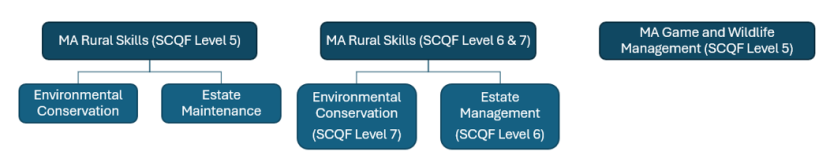
Figure 1. Current apprenticeship frameworks in Rural Skills and G&WM at SCQF levels 5, 6 and 7.
Click for a full description
Flowcharts of the three MAs for Rural Skills and G&WM and the pathways that could be taken.
The first flowchart, on the left, shows the MA for Rural Skills at SCQF level 5, with the option to follow the environmental conservation or estate maintenance pathway.
The second flowchart, middle, shows the MA for Rural Skills at SCQF level 6 and 7, with the option to follow the environmental conservation pathway at SCQF level 7 or the estate management pathway at SCQF level 6.
The third flowchart, on the right, shows the MA for G&WM at SCQF level 5.
This section will provide an overview of the frameworks, comparing the current Rural Skills and G&WM frameworks with the new Land & Nature frameworks that are in development.
4.2.1 MA Rural Skills SCQF Level 5
The MA Rural Skills SCQF Level 5 was developed in 2016 to address key sectoral and skills challenges and demand. This framework encompasses apprenticeships in:
- Rural Skills (Environmental Conservation) (SCQF Level 5).
- Rural Skills (Estate Maintenance) (SCQF Level 5).
The Framework document provided an overview of the sector at this time. It noted the following:
- the management of land and estates supports approximately 10,400 full-time equivalent jobs in Scotland and contributes around £760 million to Scotland’s economic output.
- around 2,600 businesses and organisations, with around 11,000 employees, deliver environmental conservation activities within Scotland.
- from 2010-2020 it was estimated that 12,000 would be required across Scotland’s Environmental and Land-based sector.
The development of the MA Rural Skills looked to address these skills needs and gaps, whilst also providing upskilling and reskilling for both new entrants and existing employees within the sector. Notably, the MA Rural Skills aims to address the issues surrounding technological advances and an aging workforce, ensuring there are skilled workers to meet replacement and expansion demand.
The SCQF Level 5 MA Rural Skills provides an entry level qualification, providing school leavers and career changers with a pathway into the environmental and land-based sector. This allows for progression into the SCQF Level 6/7 MA on completion. Candidates should also be able to enter careers such as:
- estate worker.
- ranger.
- conservation officer.
The MA Rural Skills (SCQF Level 5) takes around 12 months to complete, including 276 hours for off-the-job training. Currently the MA Rural Skills (SCQF Level 5) is offered through two providers, Scotland’s Rural College (SRUC) and Rural Skills Scotland.
4.2.2 MA Rural Skills SCQF Level 6 & 7
The MA Rural Skills SCQF Level 6 & 7 was developed to address the same challenges and sectoral demand outlined in the previous section. This Framework covers apprenticeships in the following courses:
- Rural Skills (Estate Management) (SCQF Level 6)
- Rural Skills (Environmental Conservation) (SCQF Level 7)
It stated “On average, the MA Rural Skills (SCQF Level 6 & 7) takes 18 months to complete, including 351 hours for off-the-job training. Currently, this MA is only offered by one training provider, Rural Skills Scotland.
This MA offers a route of progression for individuals who have completed the MA Rural Skills (SCQF Level 5), with potential career opportunities including:
- access/recreation officer.
- environmental management/officer.
- senior ranger.
- estate supervisor.
- wildlife manager.
- reserve manager.
Candidates could also continue to a range of further education (FE) and/or higher education (HE) courses, such as:
- Environmental Conservation Management (FE).
- Environmental Management and Sustainability (FE).
- Environmental Science (FE).
- Environmental Science (HE).
- Ecology (HE).
- Rural Land Management (HE).”
4.2.3 MA Game & Wildlife Management SCQF Level 5
The MA Game & Wildlife Management SCQF Level 5 Framework provides an overview of the game and wildlife industry in 2018. It stated the following:
- “the G&WM industry has c. 2,300 businesses across Scotland, with 5,300 employees.
- the G&WM sector has two key purposes: protecting habitats and supporting biodiversity; and supporting tourism and recreation.
The development of this Framework looked to increase the skills base relating to the G&WM industry in Scotland by upskilling existing employees and training new entrants to a high standard to ensure a skilled workforce.
The qualification takes 12 months to complete, including 234 hours for off-the-job training. The MA is offered via Borders College, North Highland College (UHI) and SRUC.
The framework states that “Upon completion, there are (higher education) progression opportunities to the HNC in G&WM. Beyond this, there are opportunities to progress to higher education, with degrees including:
- BSc Environmental Conservation.
- BSc Conservation Biology.
- BSc Wildlife Management.
For those who are looking to enter employment upon completion of the MA, there are potential career opportunities, such as:
- underkeeper/beat keeper.
- game farm worker.
- under-stalker/ghillie.”
4.2.4 Key features of the Scottish apprenticeship system
Modern Apprenticeship (MA) training enables people in paid work to develop and learn new skills from SCQF level 5 to level 11. This includes technical and professional levels, and training to support upskilling new and existing staff.
SDS administer the SG’s funding contribution towards the cost of training and assessment for employees who employers wish to support through an approved MA framework. MAs in Scotland are developed using an employer led development process ensuring they represent both the day-to-day skills required for the job role and relevant industry standards. The Apprenticeship Approvals Group (AAG) approves the frameworks for delivery in Scotland. The type and level of framework must be appropriate to the apprentice’s job role. Only those approved will be deemed eligible MAs for the purposes of SDS MA contracts.
The dual purpose of the MA programme is to support employers to recruit and train apprentices and to encourage economic growth across Scotland through increased employer participation. MAs are a joint investment between employers and the Scottish Government. Employers invest the greater amount through wage costs and on-going support, and public funding contributes towards the cost of training.
In Scotland, there are at present over 100 different apprenticeships in 17 occupational groupings. They are each designed to provide training that meets minimum standards of competence agreed by the AAG, after consulting employers. Details of AAG approved MA frameworks are published on Apprenticeships.Scot and SDS provider web pages.
They each contain the following:
- a relevant Scottish Vocational Qualification (SVQ) or alternative Competence Based Qualification (CBQ). CBQ’s are provided by awarding bodies approved to deliver qualifications in Scotland by the Regulator in Scotland (Scottish Qualifications Authority Accreditation).
- workplace core skills, except for technical and professional apprenticeships, where this component is ‘career skills’.
- industry-linked training.
Learning providers
SDS contract annually with a range of learning providers to deliver the MAs across different sectors and regions. These learning providers are a mix of colleges, private training providers and third sector providers.
MA offer - Funding contribution for learning providers
SDS administer the SGs funding contribution toward the cost of training for employees who employers wish to support through an approved MA framework. The contribution rates for 2024-25 are outlined here.
Whilst it might be desirable to compare the contributions for MAs with the contribution for a full-time college student to understand the cost benefit, it is not currently possible due the complexity of college funding arrangements.
Funding model
MA training provider funding is based on three types of payment: start payment; milestone payment; and output payment. An individual payment plan is assigned to an apprentice when they are registered on the Funding Information and Processing System (FIPS). It is set by the apprentice’s age; the MA framework they are taking; and any previous apprenticeship experience. The evidence needed to support Milestone payments depends on the individual Payment Plan.
Rural Uplift
SDS encourage provision in island and rural areas. As such, rural funding will apply to apprentices whose main employment and normal working hours are based in Argyll and Bute; the Isle of Arran; and the Orkney, Shetland, and Western Isles. Rural funding applies to other areas if the employer’s postcode is classed as “Remote Rural” or “Remote Small Towns” in the Scottish Government’s classification shown in the post code look-up see 2023-1 Scottish Postcode Directory Files on the National Records of Scotland website.
The funding can only be claimed while the apprentice is either in training or when the outcome has confirmed status. The funding is as follows:
- longer MA frameworks with 12-16 Milestones e.g. engineering and construction (including electrical and oil and gas frameworks) attract a £900 supplement paid as follows:
- when the Start has been confirmed on FIPS, you claim the first payment of £450.
- when claiming output-based funding for the MA, you claim the second payment of £450.
- medium length frameworks with 6-11 Milestones attract a £350 uplift paid when claiming output-based funding for the MA
- shorter frameworks with 2-5 Milestones will attract a £200 uplift paid when claiming output-based funding for the MA
The supplement is additional to the contribution rate and is to encourage learning providers to undertake physical visits to the apprentice and / or employer during the duration of the apprenticeship.
Full details of how the MAs are managed, funded and contracted out can be found in the SDS MA programme specification 2024 -2025 (with SDS option to extend to 2025/2026 and 2026/2027).
MA statistics are produced by SDS and can be found on the SDS webpages on MA statistics.
4.3 The new apprenticeships in development
The MA Land and Nature SCQF level 5 and Level 6/7 frameworks are currently in development to replace the existing frameworks.
Figure 2 provides an overview of the proposed structure of the MA Land and Nature SCQF Level 5 and SCQF Level 6 Frameworks.

Figure 2. Frameworks in development for the Land and Nature MAs at SCQF level 5 and 6.
Click for a full description
Flowcharts of the two Land and Nature MAs, which are in development, and the pathways that could be taken.
The first flowchart, on the left, shows the MA for Land and Nature at SCQF level 5, with the option to follow the land and estates, nature restoration, or game and wildlife pathway.
The second flowchart, on the right, shows the MA for Land and Nature at SCQF level 6, with the option to follow the land and estates or nature restoration pathway.
4.3.1 MA Land and Nature SCQF level 5
The MA Land and Nature SCQF level 5 framework is currently in development to replace the existing Rural Skills and Game and Wildlife frameworks. The draft framework aims to support the development of apprentices working in land and estate, nature restoration, and game and wildlife.
The MA is expected to take around 15-18 months to complete.
During the MA, apprentices can choose between three pathways:
- Diploma in Land and Nature (Land and Estates) (SCQF Level 5)
- Diploma in Land and Nature (Nature Restoration) (SCQF Level 5)
- Diploma in Land and Nature (Game and Wildlife) (SCQF Level 5)
The draft framework states that “There are no formal entry requirements for the Land and Nature MA, though apprentices must be employed in a suitable role to gain the necessary knowledge and experience required to complete the MA and any other training requirements and be willing to attend off-the-job training. Consideration of prior learning and employment is used to inform entry into the apprenticeship.
During the apprenticeship, students must undertake eleven units, with a mix of four mandatory units and a range of pathway specific and optional units. Assessments can be carried out in a range of formats, including case studies; evidence of prior learning; personal statements; presentations; and witness testimonies.
On completion there are several potential careers available, depending on the specific pathway chosen, including:
- underkeeper/beat keeper
- nature conservation worker
- assistant ranger
- game farm worker.
- under-stalker/ghillie.
For those who want to continue their education, there are options for further or higher education opportunities:
- SVQ 3 Estate Maintenance at SCQF 6 (FE).
- SVQ 3 Environmental Conservation at SCQF 7 (FE).
- HNC Wildlife and Conservation Management at SCQF Level 7 (FE).
- HND Wildlife and Conservation Management at SCQF Level 8 (FE).
- PDA Ecological Surveying at SCQF Level 7 (FE).
- Environmental science (HE).
- Ecology (HE).
- Rural Land Management (HE).
4.3.2 MA Land and Nature SCQF level 6
The MA Land and Nature SCQF level 6 apprenticeship draft framework aims to support the development of apprenticeships working in:
- land and estates.
- nature restoration.
The draft framework states: “It is expected that this apprenticeship will take 18-24 months to complete. During the apprenticeship, candidates can choose one of two pathways:
- Diploma in Land and Nature (Land and Estates) (SCQF Level 6).
- Diploma in Land and Nature (Nature Restoration) (SCQF Level 6).
The format of the MA Land and Nature SCQF Level 6 course follows the same structure of the MA Land and Nature SCQF Level 5. Apprentices must complete eleven units from a mix of mandatory, optional and pathway specific units –. Candidates can select up to between five and eight units from their pathway.
On completion of the MA there are several potential careers options available, including:
- access/recreation officer.
- environmental management/officer.
- senior ranger.
- estate supervisor.
- wildlife manager.
- reserve managers.
For those who want to continue their studies, there are various progression pathways, such as:
- Environmental Management and Sustainability (FE).
- Environmental Science (FE).
- HNC Wildlife and Conservation Management at SCQF Level 7 (FE).
- HND Wildlife and Conservation Management at SCQF Level 8 (FE).
- PDA Ecological Surveying at SCQF Level 7 (FE).
- Environmental science (HE).
- Ecology (HE).
- Rural Land Management (HE).
- BSc (Hons) Wildlife and Conservation Management (HE).”
NB: At the time of writing the SQA are not progressing with qualifications at SCQF level 6, pending a review of the success of the level 5 apprenticeships.
4.4 Apprenticeship statistics
This section provides an overview of the performance data for the current MA frameworks under the Rural Skills and G&WM frameworks, since their development. It also offers a comparison with other land-based MA frameworks, including Horticulture and Trees and Timber.
4.4.1 Total number of modern apprenticeships (2016-2024)
Figure 3 provides an overview of the total registrations and completions across the Rural Skills and G&WM MAs, since 2016.
Across both the Rural Skills and G&WM MAs, there have been 194 registrations since 2016. Of these, 124 have completed their apprenticeship.
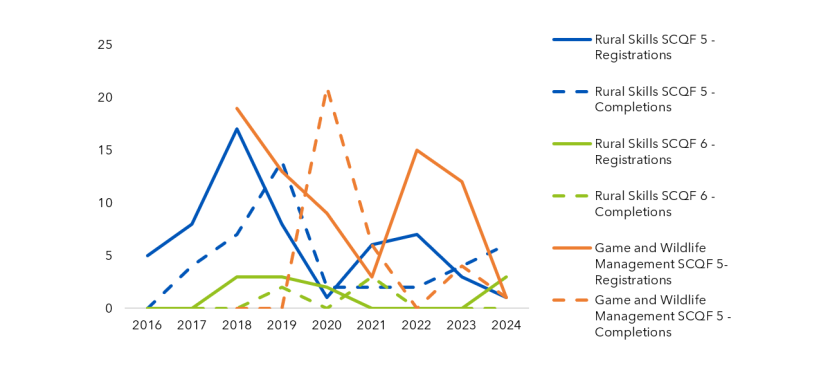
Figure 3. Registrations and completions for the game and wildlife and rural skills apprenticeships between 2016 and 2024.
Click for a full description
A time series graph showing the number of people registering and completing Game and Wildlife or Rural Skills apprenticeships between 2016 and 2024. Registrations are shown using a solid line and completions are denoted with a dashed line. The diagram shows there has been a sharp decline in registrations across all apprenticeships.
The Rural Skills SCQF level 5 registrations and completions are denoted with blue lines. The number of registrations increased initially after the inception of the MA, in 2016, peaking in 2018. Following 2018, the number of registrations has declined significantly, with a small increase from 2021 to 2022. The completions figures are similar, initially increasing and peaking in 2019, before dropping significantly. The number of completions has been increasing again since 2023.
The Rural Skills SCQF level 6 registrations and completions are denoted with green lines. The number of registrations for this apprenticeship have consistently been low, with less than 5 per year, and no new registrations from 2021-2023. The completions follow a similar pattern, with no new completions from 2022-2024.
The G&WM SCQF level 5 registrations and completions are denoted with orange lines. The number of registrations for the MA peaked at its inception in 2018, with 19 new registrations. However, these numbers have declined, with only 1 person registering for Game and Wildlife in 2024. The completions follow a similar trend, peaking at 21 completions in 2020.
Table 2 presents the number and proportion of registered individuals who have and have not completed their apprenticeship programme for each framework over the period 2016-2024, across the land-based apprenticeship frameworks. Notably, the G&WM apprenticeship has the greatest proportion of individuals who have not completed, at more than half (56%).
It should be noted that for all SCQF level 5 apprenticeships, the number of those who have not completed does not include those who registered for the MAs in 2024, as they take around one year to complete, on average. This is also applicable to Table 4 and Table 6.
Similarly, for the SCQF level 6 apprenticeships, the total number of those who have not completed their apprenticeship does not include those who registered for the MAs in 2024, as they take around one year to complete, on average. This also applies to Table 5.
Additionally, we cannot be certain that those who have not completed their MA have left the sector. Stakeholder feedback revealed that often individuals do not complete their MA qualification because they are already in employment and may have completed all the necessary microcredential certifications that allow them to work safely and legally.
| - | Certificate Authorised - Number | Certificate Authorised - Percentage | Not Completed - Number | Not Completed - Percentage |
|---|---|---|---|---|
| Rural Skills (SCQF 5) | 41 | 75% | 14 | 25% |
| Rural Skills (SCQF 6) | 5 | 63% | 3 | 38% |
| G&WM (SCQF 5) | 31 | 44% | 40 | 56% |
| Horticulture (SCQF 5) | 392 | 78% | 108 | 22% |
| Horticulture (SCQF 6) | 284 | 96% | 11 | 4% |
| Trees & Timber (SCQF 5) | 81 | 67% | 40 | 33% |
| Trees & Timber (SQCF 6) | 25 | 84% | 4 | 13% |
Source: Lantra
Note: ‘Not completed’ figure does not include those who registered in 2024 for SCQF Level 5, and 2023 or 2024 for SCQF Level 6.
4.4.3 Modern Apprenticeships in Rural Skills
Table 3 shows the industry expectations demand statements for the MAs in Rural Skills at both SCQF Level 5 and Level 6/7. This was presented within the original framework document in 2016.
During the development phase, it was expected that the take-up of these MAs would begin at c. 20 individuals in the first year and continue to increase on a yearly basis. As shown in Table 4 and Table 5, take-up for the MAs has not been as high as expected and has not followed the projected patterns.
| - | Expected take up in year 1 | Expected take up in year 2 | Expected take up in year 3 |
|---|---|---|---|
| SCQF Level 5 | 30 | 60 | 90 |
| SCQF Level 6/7 | 20 | 40 | 60 |
Source: Modern Apprenticeship in Rural Skills at SCQF Level 5
From 2016-2024 there have been 67 students who have registered for a Rural Skills MA across both SCQF Level 5 and SCQF Level 6. As of June 2024, there were six individuals undertaking a MA in Rural Skills.
Since its inception in 2016, 56 individuals have registered for the MA in Rural Skills (SCQF level 5). Of this, 73% have completed their MA.
Overall, take up of this MA has been low, with a mean average of 6 registrations per year. The highest number of registrations was in 2018, with 17 individuals (accounting for 30% of total registrations).
The pathway breakdown for those registering to a complete a MA in Rural Skills at SCQF level 5 include:
- Environmental Conservation (SCQF Level 5) (57%)
- Estate Maintenance at (SCQF Level 5) (43%)
| Year | Registered | Certificate Authorised |
|---|---|---|
| 2016 | 5 | 0 |
| 2017 | 8 | 4 |
| 2018 | 17 | 7 |
| 2019 | 8 | 14 |
| 2020 | 1 | 2 |
| 2021 | 6 | 2 |
| 2022 | 7 | 2 |
| 2023 | 3 | 4 |
| 2024 | 1 | 6 |
| Total | 56 | 41 |
| Not completed | - | 14 |
Source: Lantra
Note: ‘Not completed’ figure does not include those who registered in 2024.
Since its introduction in 2018, 11 individuals have registered for a MA in Rural Skills (SCQF Level 6) on the Estate Management pathway.
| Year | Registered | Certificate Authorised |
|---|---|---|
| 2018 | 3 | 0 |
| 2019 | 3 | 2 |
| 2020 | 2 | 0 |
| 2021 | 0 | 3 |
| 2022 | 0 | 0 |
| 2023 | 0 | 0 |
| 2024 | 3 | 0 |
| Total | 11 | 5 |
| Not completed | - | 3 |
Source: Lantra
Note: ‘Not completed’ figure does not include those who registered in 2023 or 2024.
The gender breakdown of the Rural Skills MAs is consistent with across framework level. These courses are disproportionately undertaken by male apprentices, with 84% of total applications across these frameworks being male – Figure 4 and Figure 5.
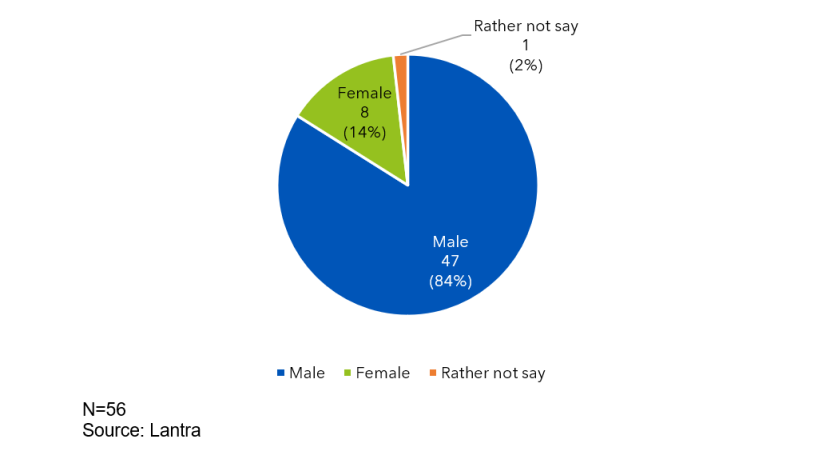
Figure 4. Registrations by gender MA Rural Skills SCQF level 5.
Click for a full description
A pie chart detailing the registrations by gender for the MA Rural Skills SCQF level 5 showing:
- Male – 47 (84%) – in blue
- Female – 8 (14%) – in green
- Rather not say – 1 (2%) – in orange
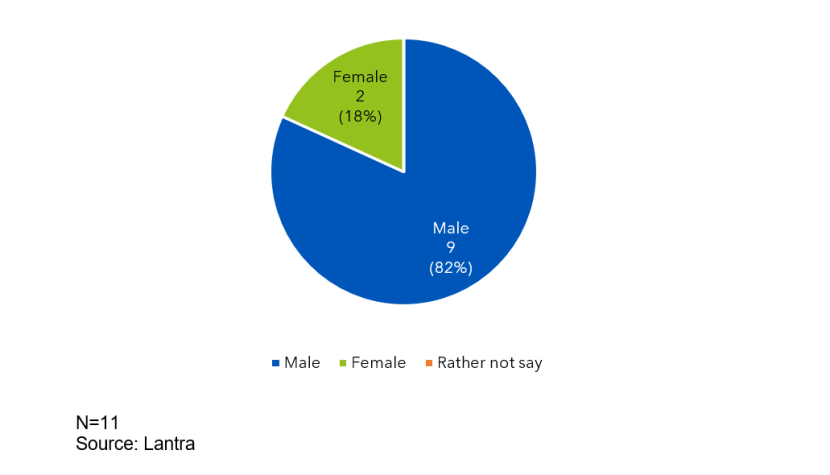
Figure 5. Registrations by gender MA Rural Skills SCQF level 6.
Click for a full description
A pie chart detailing the registrations by gender for the MA Rural Skills SCQF level 6 showing:
- Male – 9 (82%) – in blue
- Female – 2 (18%) – in green
Overall, adult apprentices (those aged 19+) account for over one-third (39%) of total apprenticeship registrations for the MA in Rural Skills.
Notably, there are a greater proportion of adult apprentices who are currently undertaking, or have undertaken, the MA Rural Skills at SCQF Level 6, at 64%.
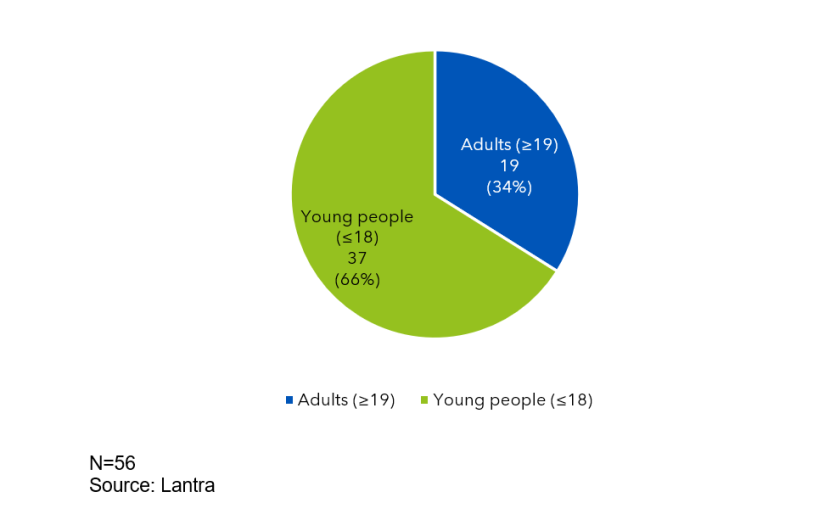
Figure 6. Registrations by age MA Rural Skills SCQF level 5.
Click for a full description
A pie chart detailing the registrations by age for the MA Rural Skills SCQF level 5 showing:
- Young people (aged 18 and younger) – 37 (66%) – in green
- Adults (aged 19 and over) – 19 (34%) – in blue
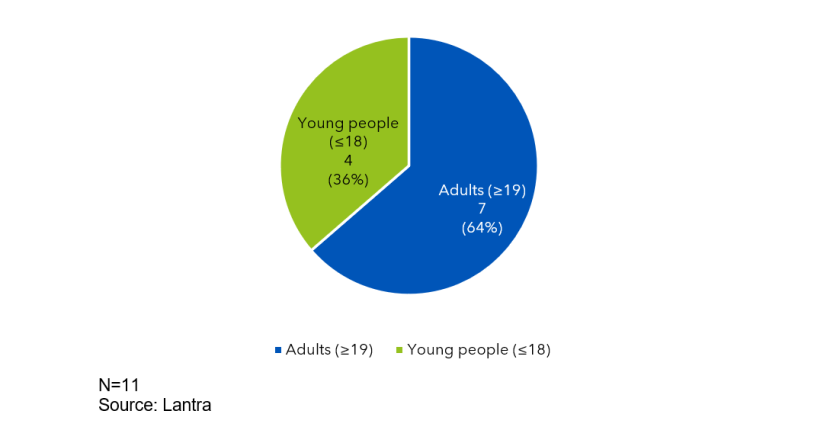
Figure 7. Registrations by age MA Rural Skills SCQF level 6.
Click for a full description
A pie chart detailing the registrations by age for the MA Rural Skills SCQF level 6 showing:
- Young people (aged 18 and younger) – 4 (36%) – in green
- Adults (aged 19 and over) – 7 (64%) – in blue
4.4.4 Modern Apprenticeships in Game & Wildlife Management
There was no demand statement available for the G&WM MA.
Since 2018, 72 individuals have registered to complete a MA in G&WM (SCQF level 5). The largest proportion of registrations was at the inception of the G&WM framework, with 19 new starts in 2018. Most recent figures show that as of June 2024, there were eight individuals currently enrolled in the G&WM MA.
Notably, of the 72 individuals who have registered for the MA in G&WM from 2018-2024, more than half, 40 individuals (56%), are yet to complete the apprenticeship.
| Year | Registered | Certificate Authorised |
|---|---|---|
| 2018 | 19 | 0 |
| 2019 | 13 | 0 |
| 2020 | 9 | 21 |
| 2021 | 3 | 6 |
| 2022 | 15 | 0 |
| 2023 | 12 | 4 |
| 2024 | 1 | 1 |
| Total | 72 | 32 |
| Not completed | - | 40 |
Source: Lantra
Note: ‘Not completed’ figure does not include those who registered in 2024.
The G&WM pathways undertaken by apprentices are:
- G&WM: Upland/Grouse (SCQF Level 5) (76%)
- G&WM: Lowland (SCQF Level 5) (14%)
- G&WM: Deer (SCQF Level 5) (10%)
Overwhelmingly, male apprentices (94%) have undertaken the G&WM MA.
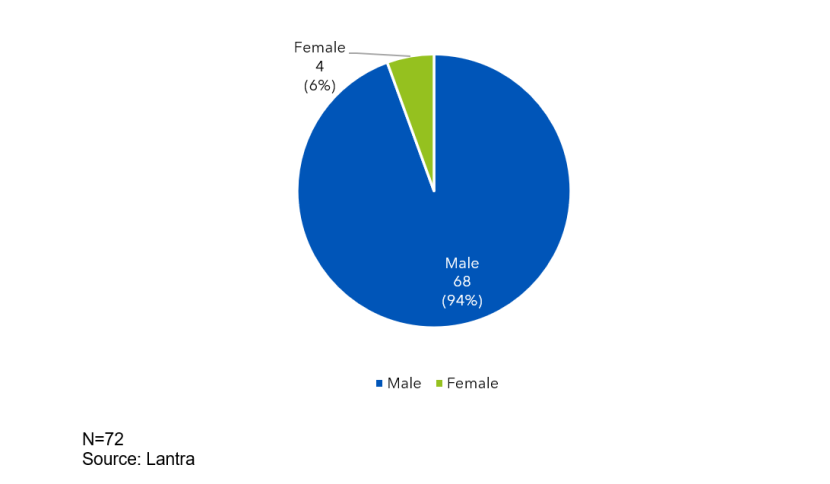
Figure 8. Registrations by gender MA G&WM SCQF 5.
Click for a full description
A pie chart detailing the registrations by gender for the MA G&WM SCQF level 5 showing:
- Male – 68 (94%) – in blue
- Female – 4 (6%) – in green
Notably, the majority of individuals who have registered onto the G&WM apprenticeships have been young people aged eighteen or under (93%). This suggests that the majority of these apprentices are new entrants and/or school leavers.
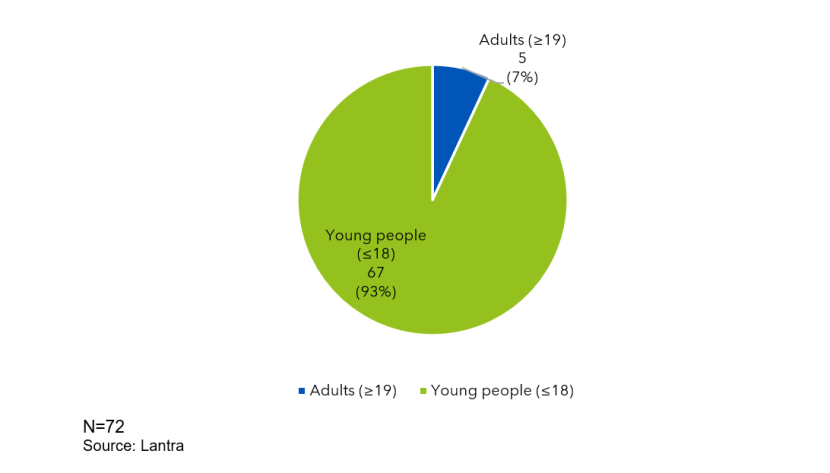
Figure 9. Registrations by age MA G&WM SCQF level 5.
Click for a full description
A pie chart detailing the registrations by age for the MA G&WM SCQF level 5 showing:
- Young people (aged 18 and younger) – 67 (93%) – in green
- Adults (aged 19 and over) – 5 (7%) – in blue
4.4.5 Comparisons with other land and nature-based apprenticeships
While other land-based apprenticeships, such as the Forestry (Trees and Timber), and Horticulture apprenticeships are outside the scope of this study, the researchers were asked to examine these apprenticeships to compare the take up and completion rates of Rural Skills and G&WM apprenticeships. New start numbers were examined across the Horticulture and Trees and Timber MAs to offer a comparison.
The Trees and Timber MA has a greater number of new starts than the Rural Skills and G&WM MAs – see Annex A – Table 25 and Table 26. It should be noted that the number of those who have not completed their MA does not include those who registered for the MA in 2024 for the SCQF 5 MA, and 2023 or 2024 for the SCQF 6 MA, as these courses take around 12 and 18 months to complete, respectively. Additionally, we cannot be certain that those who have not completed their MA have left the sector, as stakeholder feedback revealed that oftentimes individuals do not complete their MA because they enter employment in the field.
The Horticulture MA has consistently had a high number of new starts from 2016 to 2024 – Table 27 and Table 28. This is considerably higher than the number of new starts in both the Rural Skills and G&WM MAs, combined. This may be due to there being a greater number of pathways and availability of Horticulture MAs, across Scotland. Notably, the SCQF level 6 qualification has a low number of incomplete qualifications, at 4%.
It should be noted that in Table 27 and Table 28, the number of those who have not completed their MA does not include those who registered for the MA in 2024 for the SCQF 5 MA, and 2023 or 2024 for the SCQF 6 MA, as these courses take around 12 and 18 months to complete, respectively. Additionally, we cannot be certain that those who have not completed their MA have left the sector, as stakeholder feedback revealed that oftentimes individuals do not complete their MA because they enter employment in the field.
The Horticulture MA at SCQF level 5 offers six pathways:
- horticulture
- production horticulture or production horticulture (city & guilds)
- landscaping
- sports turf (greenkeeping)
- sports turf (groundsman)
- parks, gardens, and green space
The Horticulture MA at SCQF level 6 has four pathways:
- production horticulture
- landscaping
- sports turf
- parks, gardens, and green space
4.4.6 Conclusion
The Rural Skills and G&WM MAs have faced relatively low registration rates since their inception. The number of registrations were lower than predicted and did not follow the initial projections set out within the framework documents. This has especially been an issue for the Rural Skills MA, with only 67 starts across the two SCQF level courses in nine years. Of the 72 individuals who have registered for the MA in G&WM from 2016-2024, almost half, 40 individuals (56%), are yet to complete the apprenticeship.
There is a clear gender split in registrations across both Rural Skills and G&WM MAs. The overwhelming majority of those who have registered for these MAs have been male, particularly within the G&WM MA, where 94% of apprenticeships registered have been male.
The data shows that a significant number of those undertaking Rural Skills MAs are adult (defined as +19 years) apprentices. This is consistent with feedback from stakeholder consultations (presented in Chapter 4) which suggested that applications for apprenticeships in Rural Skills are broadly from career changers or those already working within the field who are looking to receive formal qualifications, rather than new entrants and/or school leavers. Additionally, some of these apprenticeships are not available to those aged U18, due to licensing restrictions. In contrast, G&WM MAs have primarily been undertaken by apprenticeships aged eighteen and younger which may be a factor contributing to non-completions and poorer outcomes.
4.5 Other qualifications and training relevant to the sector
In addition to the apprenticeship pathways there are other industry recognised qualifications that support entry into rural skills and game and wildlife careers. During the primary research phase deer management stakeholders at NatureScot identified the following alternative qualification and pathway as highly desirable for filling their own vacancies.
4.5.1 Deer Management Qualifications
Deer Management Qualifications (DMQ) are a not-for-profit company which maintains the Deer Stalking Certificate standard, quality assures the assessment process and administers the awards. There is one DMQ assessment centre in Scotland, located in Perth at the Scottish Gamekeepers Association (SGA). This centre offers the Deer Stalking Certificates (DSC) 1 and 2.
The DSC 1 assessment has five modules:
- written – 50 multiple choice questions.
- visual – identifying species and sex of wild deer.
- game meat hygiene – 40 multiple choice questions.
- safety – candidates are shown four deer targets and asked whether they were shoot them or not, along with nine safety questions.
- shooting – six shots to DMQ deer targets under a range of criteria.
Figures on the number of DSC 1 certificate holders per 100km2 can be found on the DMQ website.
The DSC 2 is assessed through candidates developing an electronic portfolio within three years of registration.
Figures on the number of DSC 2 certificate holders per 100km2 can be found on the DMQ website.
4.5.2 Further and higher education courses
The learning institutions across Scotland which provide the MAs also deliver several alternative and/or additional qualifications and pathways for careers in G&WM and estate management and conservation.
Table 7 provides a breakdown of the Rural Skills and G&WM further and higher education courses. These courses range from SCQF level 4 to SCQF level 8 (from Skills for Work to HND level). Additionally, some of these courses can be completed fully online, allowing individuals across Scotland to gain these qualifications.
| Course Name | Qualification Type | SCQF Level | Institution | Location |
|---|---|---|---|---|
| Land based – Rural Skills for Work – Schools Link Agriculture | Skills for Work | 4 | Borders College | Newtown St. Boswells |
| Gamekeeping – Upland/Grouse, Lowland, Deer, or Game Rearing | Modern Apprenticeship (SVQ level 2) | 5 | Borders College | Across Scotland |
| Gamekeeping and Wildlife Management | NC | 5 | Borders College | Newtown St. Boswells |
| Gamekeeping with Wildlife Management | HNC | 7 | Borders College | Newtown St. Boswells |
| G&WM | Modern Apprenticeship (SVQ level 3) | 5 | SRUC | Elmwood |
| G&WM | HNC | 7 | SRUC | Elmwood |
| Rural Skills | Modern Apprenticeship (SVQ level 2) | 5 | SRUC | Oatridge |
| Rural Skills | Modern Apprenticeship (SVQ level 3) | 6 | SRUC | Oatridge |
| Wildlife and Conservation Management | HNC | 7 | UHI | North, West, and Hebrides - Online |
| Wildlife and Conservation Management | HND | 8 | UHI | North, West, and Hebrides - Online |
| Estate Maintenance | SVQ Level 2 | 5 | Rural Skills Scotland | Workplace |
| Estate Management | SVQ Level 3 | 6 | Rural Skills Scotland | Workplace |
| Environmental Conservation | SVQ Level 2 | 5 | Rural Skills Scotland | Workplace |
5. Stakeholder views
5.1 Introduction
EKOS undertook an extensive consultation programme with 31 stakeholders which consisted of 31 in-depth one-to-one interviews via online/telephone drawn from the five key perspectives shown below in Figure 10. Interviews were primarily qualitative and tailored for each group according to their role and intervention in the apprenticeship continuum. Employer interviews included current and previous apprentices.
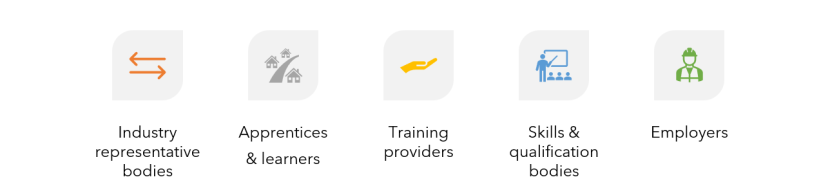
Figure 10. Five primary research perspectives.
Click for a full description
A diagram showing the five primary research perspectives:
- Industry representative bodies
- Apprentices and learners
- Training providers
- Skills and qualification bodies
- Employers
5.2 Summary
Whilst almost all the stakeholders reported high levels of support for the modern apprenticeships their feedback indicates several challenges and constraints which may be impacting on the numbers starting and completing their modern apprenticeship.
Awareness of apprenticeships is still low. For the majority there are still issues of awareness for both the learner and the employer with many reporting the following:
- low levels of marketing and promotion and a lack of funding for this activity in the sector.
- a strong desire from stakeholders to increase awareness of jobs and careers within the context of tackling climate change, reversing biodiversity loss and managing Scotland’s land in a nature positive way. They believe this may have greater impact on attracting new entrants to the sector and increase understanding of the opportunities.
Apprenticeships may not the best route for under 18yrs. There are indications from the feedback that the apprenticeship product as it stands is perhaps not the best route for 16-18yr olds due to the following:
- legal restrictions on using certain equipment, safeguarding issues for under 18s
- the remote location of the work leading to social isolation.
- a lack of a peer group to support each other and learn together that the full-time college route provides. Apprentices interviewed stated their desire to spend time with other apprentices.
Very small businesses struggle to provide effective support for apprentices within the current MA product due to the following:
- their own skills and capacity issues to mentor a young person and oversee the assessments and associated paperwork.
- the lack of financial support to backfill the support required to recruit and support apprentice rather a skilled person to a vacancy.
Training providers point to system challenges and constraints for the promotion, delivery, and management of the MAs which may be impacting the numbers and parity in promotion. These include:
- internal competition issues for promotion of MA places versus full and part time NC/HNs student places.
- training providers experience challenges with appropriate staffing numbers and availability to assess the MA qualifications.
The following section covers the feedback from stakeholders in more detail.
5.3 Benefits of an apprenticeship
Almost all stakeholders expressed high levels of support for the apprenticeships in principle. They reported several benefits to employers, such as helping to bring in new and innovative ideas which can improve an organisation’s efficiency and effectiveness. It also ensures that new entrants in the sector have the most up-to-date knowledge and understanding of current challenges and priorities for the sector.
Stakeholders acknowledged the difficulties of entering the land and nature-based sector, such as environmental conservation, and the Rural Skills apprenticeship offers a pathway into these areas. These difficulties ranged from a lack of understanding of how to get involved in this sector, (lack of clear pathways) particularly if you are from a non-land and nature-based background to the cost of equipment required for some jobs such as deerstalking and the poor visibility of job vacancies, which are often word of mouth. In addition, training providers mentioned:
"A lot of conservation employers insist on graduates when similar unpaid work is often done by volunteers with little or no qualifications."
Whilst stakeholders noted that employing apprentices can help to increase the capacity of the organisation, allow for a greater amount of work to be completed and can help to alleviate the workload of other staff members, one employer stated that apprentices should not be considered solely as a means of reducing workload. They went on to say that apprentices require support and mentoring, particularly those with no prior experience in the land-based sector. Employers need to ensure they have appropriately skilled staff to support and mentor apprentices alongside their existing workload.
5.4 Need for apprentices
Employer feedback suggests that there is a significant need for rural skills and G&WM apprentices. Employers noted that the land-based sector has an ageing workforce, and without apprentices, critical skills may be lost.
The interviewees suggested that while higher and further education courses can provide individuals with a strong education, hands-on experience and certifications are valued highly by employers (e.g., 4x4 training, chainsaw, etc.). These training courses are often costly for employers, so applicants with these certifications are more highly favoured. The modern apprenticeships content allows for relevant training certificates in microcredentials such as brushcutting, chainsaw, all -terrain vehicles etc. to be undertaken. Stakeholders reported this as a significant advantage of the MA. In the main these costs are covered by the Scottish Government under the MA. Non-MA training is to be covered by the employer.
Colleges and employers noted that the introduction of legislative changes and new technology or techniques in the way a job is done happens too quickly for the MA process to keep pace. Any industry changes should be covered in the training content but often the process for developing new apprenticeships is too slow to catch up and does not meet industry needs.
5.5 Attracting young people
The majority of stakeholders felt that in order to attract young people to follow a career in the land and nature-based sector more needs to be done to advertise and promote the available pathways. The opportunities and careers available need to be better communicated to young people by career influencers (parents, guardians, peers, teachers) to highlight that this could be a rewarding career for them.
There can be significant hurdles to overcome in entering game and wildlife jobs and estate work. For example, for deerstalking, kit such as rifles, silencers, and scopes are very expensive compared to some other occupations. Whilst most apprentices, whether they are a plumber, or a gamekeeper can use their employers’ tools to begin with, all apprentices are expected to build up their own kit and tools for the job. Access to these jobs is still largely done through word of mouth rather than through advertising vacancies. As a result, visibility of these opportunities is poor. Some employers believe they face a growing risk of significant skills shortages and recruitment problems if work on attracting new entrants (young people and job changers) doesn’t improve and increase as young people are likely to make other choices.
“How do you evoke a passion for land and nature-based work beyond doing it on a recreational basis?”
Several stakeholders suggested it may be beneficial to have employers and/or conservation bodies to develop more programmes of taster days for school pupils to give young people an insight into the workplace and what an apprenticeship could involve. This would allow those with an interest to gain some experience, meet those working in the sector and find out what jobs and opportunities are available to them. Some stakeholders reported an increasing awareness of careers within the sector through initiatives such as “estates that educate” and the from hill to grill partnership programme. However, in their view whilst there is increased interest conversion is still a challenge as evidenced by the numbers coming through. They believe this in part may be due to the prevailing “word of mouth” nature of these job opportunities. This often results in a lack of visibility of these jobs for young learners and new entrants.
Industry Representative bodies noted that whilst it is crucial to begin promoting these apprenticeships within schools, it can be difficult to get involved with schools and careers fairs due to school timetables and schools’ capacity to engage with employer bodies. Attending these events requires a significant investment of time and money from employers but employer bodies are unsure of the benefits.
5.6 Understanding younger audiences
Feedback from stakeholders providing career advice suggested that in order to attract young people to these apprenticeships it is important to ensure that the organisation understands how to support young people in what might be their first job. This is a particular issue for this sector where often young people with additional support needs and/or those with no qualifications are directed to this sector as one in which they could thrive. They stressed that appropriate supervision, support and care was particularly important where an employer was offering onsite accommodation during their apprenticeship. Social isolation is commonplace and can become a significant challenge for young people staying onsite for the duration of their apprenticeship, especially for those in rural areas with poor public transport.
For those without driving licenses it can be difficult to travel to and from the sites and the cost of car insurance is often prohibitive for many young people. One employer stated that when they employed younger apprentices without a license, they had to continually offer lifts to ensure they were able to socialise and see family. Industry bodies suggested that it might be good if Scottish Land & Estates (SLE) set up a youth wing for game and wildlife as the strengths of attending college helps with retention “if you have gone through a college course, you have mates and a peer network.” In their experience land management is very male dominated “women don’t do deerstalking and wildlife management.”
Skills bodies noted that for any industry it can be difficult to attract young people if they are not seeing themselves represented within these organisations’ staff complement. Providing new entrants with an example of a successful pathway from someone they relate to can help increase diversity of the talent pipeline into these sectors. Lantra Scotland’s Industry Champions were noted by skills bodies as a resource that could be helpful in attracting young people into the sector from diverse backgrounds.
5.7 Finding apprentices who want a career in the sector
Several employers stated that they were not facing a shortage in the number of people applying for apprenticeships. However, it is a challenge finding individuals who are seeking out a full-time career in the sector. Some employers highlighted that they typically get applications from university graduates who are looking for a short-term job whilst continuing their job search. This can create recruitment and retention issues for some employers who have invested time and money in training up new apprentices, only for them to move to a job with another employer. As a consequence, this can build reticence amongst employers to recruit an apprentice as opposed to a skilled induvial to meet their recruitment needs.
Some employers felt that there is often a negative narrative about people who work in the rural sector, and they have lived experience of being viewed quite negatively at school. Such narratives can impact on young peoples’ choices. More needs to be done on the messaging from the sector by the sector and training providers together. They feel that land-based careers are not pushed enough in schools. Vocational routes are still not promoted as of equal value to ‘academic routes and careers advisors are typically less informed about land-based careers than other careers.
5.8 Higher levels of interest from career changers
Several employers reported that there was a lack of new entrants (young people) applying for apprenticeships within the land and nature-based sector, and that a large proportion of the apprentices they have hired are aged 25+. These apprentices have mainly been job changers looking to enter the land and nature-based sector and gain practical experience with a clear pathway to employment. However, employers also noted that a significant barrier for career changes surrounds financial support. There is a lack of funding support available for adult apprentices and without this support it can be expensive to undertake an apprenticeship.
“In the main funding incentives focus on young people entering the sector, and as such are not available to most career changers.”
Training providers reported that occasionally they will get an enquiry from their website from someone with an interest in the MA in rural skills.
“Most colleges do not have a bank of employers looking for anybody to start an MA. But as with all good colleges we will also tell them that we have a NC or HNC because there is not an employer or MA available. So, most convert to full time students. Some go from our NC to the MA. This works well.”
The trees and timber MA delivered and managed by Forestry Land Scotland (FLS) reported receiving applications running into the hundreds every year, including from new entrants (young people). Skills bodies believe this may be due to the apprenticeship model that FLS deliver, and the fact that more work is carried out in teams which may suit younger people along with the support FLS provide for smaller employers/contractors to get involved.
5.9 Mixed picture on employer demand
The majority of stakeholders reported that the industry has recently come under a series of rapid legislative changes which include enhanced regulation e.g. on trapping, licencing of grouse moors and muirburn. This has led to increased pressure for some employers and training providers trying to keep up with relevant content. Many felt this may be having an impact on recruitment practices such as apprenticeship offers to young people.
Several stakeholders reported a potential loss of confidence in recruiting apprentices due to these changes in legislation around best practice and health and safety potentially rendering the MAs product itself as not entirely suitable for some young people and employers. They went on to say:
“It is a big challenge for employers to take a 16/17yr old and provide them with accommodation and have them staying on their own. Allowing them to do certain things at work (firearms, traps, vehicles, muirburn etc) is not allowed due to their age and the consequences of a mistake or an accident are severe to fatal.”
Some believe that this is why they are less keen on a school leaver and under 18s especially if they have no driving licence.
Stakeholders reported the sector as niche who only use specialist individuals. They feel it is a big ask on school leavers to meet the requirements of the MAs. One employer highlighted that they are unable to take on apprentices who are under eighteen, due to their insurance. This employer had some individuals as young as fifteen note their interest in the Gamekeeping and Wildlife apprenticeship, though they could not be taken on due to their age and they may not have a college nearby offering the NC.
Some employers have large landholdings, but do not employ large numbers of permanent staff. Stakeholders reported that some large estates have gone from over thirty staff 10-20 years ago down to maybe five staff now. Some stakeholders forecast demand for more staff due to policy drivers around rewilding and health & safety legislation, modernisation of practices and technology but the size of the workforce and skills demand is still unclear.
Several stakeholders reported an increase in demand due to the increasing attraction and promotion of the shooting sector. This picture is also mixed with greater demand from customers in the upland’s estates and grouse estates.
Stakeholders reported a decline in the number of lowland shoots which have suffered difficulties as a result of the covid pandemic and avian bird flu. They went on to say that pheasant shooting has witnessed an increase in its overheads for breeding and managing pheasants e.g. protection against and testing for avian flu, energy prices for gas, increased costs in materials for pens and food for the pheasants. This has impacted the demand for staff and the number of employees an estate will retain.
Several stakeholders noted the twin challenge of needing to achieve a higher deer cull with an ageing workforce. They believe there is a genuine risk of losing skills that are culturally important to Scotland’s way of life, its identity and central to managing the land in a low carbon way.
“The government wants communities to take greater ownership of land management to protect habitats and reverse biodiversity loss, but we still need trained people to manage this.”
One training provider noted that taking the beast off the hill with a pony may be old-fashioned, but these animals are traceable, high standards of welfare and safety are followed, and the meat is in good condition when they are culled by a trained deerstalker.
Some training providers suggested that FLS are using more contractors for deer culling. They believe this change to FLS practice has many positives for the agency but may have led to a decreased demand for apprentices for deer management on public land. Contractors sometimes use thermal imaging and night vision. The training providers acknowledged that contractors could shoot more deer (volume) in less time, by using this technology, but that “stalking skills are still very much needed to avoid accidents and to ensure the deer is suitable for the human food chain.
“You don’t need to be a trained stalker to use thermal imaging, but a trained stalker can make his or her job smarter with technology and ensure high standards of welfare and safety.”
Several training providers felt the mentors in the workplace are themselves short on the skills required to manage young people and particularly any young person with learning and/or behavioural challenges. In addition, they believe the workplace mentors are concerned about the level of paperwork and ensuring the assessment process is being carried out correctly. Some may “avoid recruiting an apprentice due to this perception”. Equally these stakeholders believe that with the right support these employers could offer a better experience and should not be disregarded as the job opportunity is there.
“Mentors have a fear factor in doing the job. Yes, extra pair of hands but if they have issues, they are often seen as a burden rather than a help.”
Employers and training providers reported that finances are a significant barrier as employers are not assisted financially take on a trainee. This can be a barrier when trying to encourage some of the land-based employers who have one or two staff to take on an apprentice rather than an experienced and skilled individual. There is no support for the employer to backfill the time out for supporting a young person. Most of their existing workforce are already trained through the college routes so a conversion to an apprenticeship is not well understood and/or valued.
“Most employers remember the old Youth Training Schemes (YTS) and New Deal for Employers. They had big take up but there is not much incentive for the employers on the MAs. YTS and New Deal had something in it for the employer – a wage subsidy. Good employers looked after their young people and topped the salary up.”
Many employers of these apprentices are small businesses who stated during the research that they do not have the capacity, knowledge, and/or the skills to support a young person in the workplace while undertaking their qualification, especially for new entrants with no support. As small businesses they often don’t have the capacity to take on an apprentice and ensure that they receive sufficient support and training.
“There is a lot of paperwork required to take on apprenticeships, it can be time consuming for us [employers] to begin the process of hiring apprenticeships”.
A few employers noted that they have people within their organisations who are hired to specifically oversee and manage the administrative side of apprenticeships within their organisation and that this was a full-time position. Additionally, time and resources from other staff members was also required to help train the apprenticeships, increasing their workload. Employers noted that it can take up to six months before apprentices have had the relevant training and support to begin working independently. Whilst larger organisations may have the capacity to support this training, often this is not possible for smaller organisations. When considering offering apprenticeships, organisations need to consider their current workload and whether they could manage additional work to support and train an apprentice.
5.10 System constraints
In the main these qualifications are delivered by three colleges, UHI North Highland, Borders College and the SRUC. There is a feeling amongst these training providers that the MA (Rural Skills & G&WM) is often the “poor relation” compared to the national certificates (NCs) and higher national certificates and diplomas (HNs) as colleges get less money for them. So, the apprenticeship is sometimes struggling to compete with other college provision when it comes to promotion, marketing, and prioritisation.
5.10.1 Ensuring trained assessor numbers to assess the MAs
As with all qualifications, training providers such as colleges need to ensure they have trained assessors to manage and deliver the MAs. Stakeholders reported that a lack of trained assessors has been a barrier in the past. A particular pressure arises when a lecturer, who is a trained assessor, leaves the institution. Often the priority is to replace the lecturer -and whether that lecturer is a trained assessor is a secondary concern. They need to be replaced and that can take time.
“We have people who can teach up to degree and masters’ level, but they don’t hold a qualification to assess SVQs.”
Stakeholders reported that this has affected their MA numbers and their ability to travel to see apprentices who are often very rural with limited or no access to a computer and Wi-Fi. One provider stated it would often take one assessor a whole day to visit one apprentice. They went on to say that “they were happy to do this, but they were not appropriately funded to do this.” One provider acknowledged that this resulted in very limited promotion to employers due to having one qualified member of staff at the time and the rural uplift is nowhere near enough to do the job well (Rural funding applies to other areas if the employer’s postcode is classed as “Remote Rural” or “Remote Small Towns” in the Scottish Government’s classification shown in the post code look-up).
5.10.2 Internal competition with other similar qualifications
As the apprenticeship contribution rate is very low compared to a fulltime HNC/HND or indeed other MAs, feedback suggests there can be a de-prioritisation of these qualifications by the college provider. MAs are also in competition with each other internally as there are different rates paid. One stakeholder gave the example of the MA in vet nursing, which is very popular, better resourced and easier to deliver. Consequently, the rural skills MAs are often losing potential apprentices to other courses.
Stakeholders from across all perspectives involved in the MAs hope these funding constraints are addressed in the implementation of the Independent Review of the Skills Delivery Landscape carried out by James Withers. The Review had a key recommendation to create a new single funding and delivery body, bringing together functions from Skills Development Scotland (SDS), the Scottish Funding Council (SFC) and, possibly, the Student Awards Agency Scotland (SAAS).
“This [Review] may address some of the system and funding challenges that impact these MAs as the current system is ensuring the skills we need as a society and nation is largely being driven by supply and not based on need.”
5.10.3 Restrictions on catchment areas for MA learners
For some colleges the decision by Skills Development Scotland (SDS) to mandate colleges to only support candidates in their own catchment area for the MAs meant that some institutions who had decades long expertise and connections with the sector suddenly had their intake reduced. In the past candidates travelled to the college for block release and it worked very well, and employers preferred the model. Stakeholders reported that this mandatory change meant that institutions in other parts of the country with no expertise in gamekeeping, estate work or conservation had to build capacity to meet learner needs and were slow to do so. Many employers operate across Scotland, and they valued the relationship they had with one institution and their expertise for all their staff training needs, but they were forced to work with a new institution who had perhaps not delivered this before.
“As far as the colleges involved with this sector were concerned this was not meeting employer needs this was meeting an admin system need.”
5.10.4 Duration of apprenticeships could be more tailored
Several stakeholders felt that the move to a one-year apprenticeship did not land well with some employers, who wanted it to be longer. Employers reported that whilst an apprentice will experience a full calendar of seasonal activity, it allows for no time to put these skills into practice or to lead on activities as some key activities may only take place once a year in a specific window.
They went on to say that as some apprenticeships average around 12 months (level 5 MAs) this results in many individuals not fully ready to stay and/or enter employment and there is a lack of jobs at entry level. Having a two-year apprenticeship for level 5 and level 6 would help to get them to an employable level. One employer felt that having short apprenticeships devalues the skills the apprenticeships need to learn and develop.
5.11 Other issues
5.11.1 Disconnect between policy drivers and skills planning and investment
The majority of stakeholders felt there is a disconnect between the multiple policy drivers and rhetoric on how important this sector is in meeting net zero targets in a nature positive way and what then happens on the ground with funding (particularly the use of short contracts for land-based work that constrain the ability of any employer to employ an apprentice) and skills planning decisions.
5.11.2 Increased leadership from nature agency in skills and jobs
The majority of stakeholders reported a pressing need for the nature agency, NatureScot to take more of a lead in apprenticeship management that supports small businesses. Given appropriate funding, this could be by employing the apprentices - similar to the Forestry Land Scotland approach or the Historic Environment Scotland (HES) hosting models. In the HES hosting model, HES employ the apprentices and pay their full salary. HES covers the cost of tools, personal protective equipment (PPE) and training and they also provide HR support for the apprentice. The host organisation trains the apprentice in a traditional building skill or skills that enables the apprentice to complete their apprenticeship and qualification. The host employer provides a safe working environment and mentors and develops the apprentice.
In addition to greater involvement in the delivery of apprenticeships, stakeholders across the board believed there is a need for a more strategic approach to skills development in land and nature-based apprenticeships which could be led by NatureScot in partnership with other sector stakeholders such as SLE.
5.11.3 A lack of diversity may be driving poor outcomes
Several stakeholders pointed to the need to improve diversity within the land and nature-based sector. Gender is a particular challenge with very low levels of females in these roles compared males. They recognise it is important to ensure that pathways and career opportunities are promoted and communicated to different groups.
“Ensuring diversity would also benefit employers, allowing for different perspectives and learning.”
5.11.4 Name of the frameworks need to change
Several stakeholders reported that the current apprenticeship framework names don’t communicate the value and contribution the sector could make to tackling climate change and restoring nature. Training providers would like to do more with employers to help them see the value of their work and why new entrants such as apprenticeships are critical to wider objectives such as tackling climate change. Industry Representative bodies also expressed a desire to change the promotional messaging supporting these apprenticeships so that it ties it into the national targets on nature restoration and tackling climate change to encourage greater uptake from both the learner and the employers.
6. Employer survey findings
An online survey was distributed by NatureScot and Lantra to employers in mid-September 2024. Following stakeholder calls with relevant employers, EKOS also shared the link with employers to quantify their feedback and to promote its wider distribution.
The survey closed on 7th November 2024 and received a total of 37 responses.
6.1 Key findings
Experience with apprenticeships
- almost two-thirds of respondents (62%) either currently or previously employed apprentices, with a further 30% interested in the opportunity.
- half of respondents reported that they had employed at least one person on one of the relevant Rural Skills or G&WM apprenticeships – almost all of these employers had used G&WM SCQF Level 5 (91%)
- all employers who had experience of a Rural Skills and/or Game and Wildlife Apprenticeship reported at least one benefit from their employment. Skills benefits were among the most common (a more skilled workforce: 55% and skills gaps addressed: 45%) as well as staff retention (45%).
- most employers (73%) positively rate using apprenticeships to address their recruitment and skills needs, with further feedback highlighting the motivation and willingness of apprentices and the opportunity to grow workforce and learning as key elements of success.
- the main barriers to recruiting a Rural Skills or G&WM apprentice are cost (67%) and a significant administrative burden to recruit an apprentice (e.g. paperwork) (64%). A relatively high proportion of employers (42%) report a lack of knowledge about how to recruit an apprentice.
Future use of apprenticeships
- around two in five employers (41%) are planning to recruit or start Rural Skills or G&WM apprenticeships in the next three years – of these employers, G&WM SCQF Level 5 (27% of employers) and Rural Skills (Estate Maintenance) SCQF Level 5 (20%) are the most common frameworks.
- most employers state that greater financial support and reduced government bureaucracy would allow more recruitment of Rural Skills and G&WM apprentices.
- while almost half of employers (46%) agree that the apprenticeships address skills shortages in their organisation, feedback suggests that the promotion of the apprenticeships has been severely lacking across employers, existing staff, and young people.
Recruitment and skills challenges
- the respondent employers have filled a total of 38 Full-Time Equivalent jobs in the last 12 months – these mostly related to estate maintenance (26% of employers who recruited), farm workers (17%), and ghillies (13%).
- almost half of employers who recruited (46%) reported that at least one of their vacancies had been hard to fill – this mainly related to the supply of applicants and logistical challenge of remote location/accessibility.
- over half of respondents (54%) stated that they would recruit in one of the areas related to the apprenticeship frameworks in the next three years, particularly environmental conservation (45%) and estate maintenance (45%).
- the core research question is to understand the low uptake of apprentices within the sector. Therefore, employers who indicated that they had no plans to use apprentices but were planning to recruit in one of these areas were asked to provide further explanation. Key barriers noted were limited awareness and knowledge of apprenticeships (e.g. funding and support), staffing capacity to manage apprentices, and role suitability.
A move to a nature-positive, net zero Scotland
- in moving to a nature-positive, net zero Scotland, most employers (70%) identified implementing wildlife habitat management and monitoring wildlife populations as key specialist skills for their workforce.
6.2 Profile of respondents
Over half of respondents were employers from the private sector (58%), Figure 11.
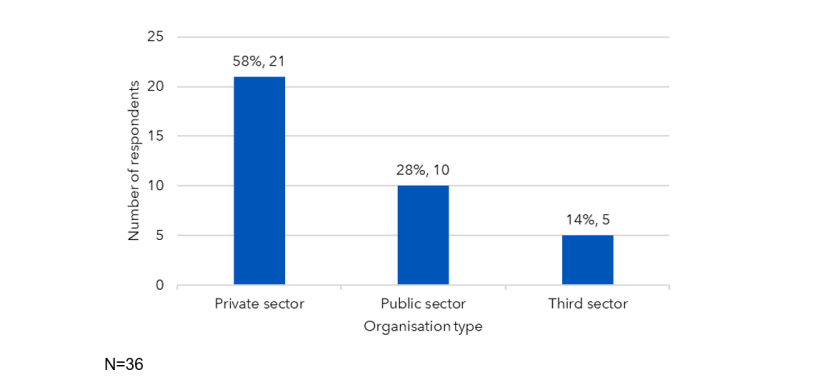
Figure 11. What sector does your business/organisation work in?
Click for a full description
A bar graph showing what sector the businesses/organisation works in.
- Private sector - 21 businesses (58%)
- Public sector - 10 businesses (28%)
- Third sector - 5 businesses (14%)
Over two-thirds of respondents were SMEs (68%), Figure 12. A relatively high proportion of large employers responded to the survey – this reflects the targeted promotion through stakeholder consultations, which included national public bodies.
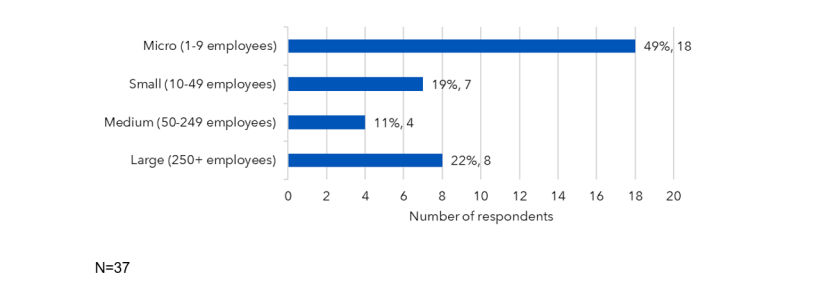
Figure 12. How many employees does your business/organisation have?
Click for a full description
A bar graph showing business size by number of employees:
- Micro (1-9 employees) - 18 businesses (49%)
- Small (10-49 employees) - 7 businesses (19%)
- Medium (50-249 employees) - 4 businesses (11%)
- Large (250+ employees) 8 businesses (22%)
The main industry sectors of respondents were environmental conservation (65%), wildlife management (59%), land and estate management (57%), and agriculture (54%), Table 8.
| - | % |
|---|---|
| Environmental conservation | 65% |
| Wildlife management | 59% |
| Land and estate management | 57% |
| Agriculture | 54% |
| Forestry and arboriculture | 51% |
| Fisheries management | 22% |
| Animal care | 11% |
| Visitor management and tourism* | 11% |
| Land-based engineering | 8% |
| Horticulture and landscaping | 5% |
| Other | 3% |
| Aquaculture | 0% |
N=37. Multi-choice response was possible. Visitor management and tourism was recoded from other. Other included education, heritage, and leisure (1).
Employers were reasonably well spread across the country with only six local authority areas not specifically represented (Argyll and Bute, Dundee City Council, Na h-Eileanan Siar, Orkney Islands, Shetland Islands, and South Ayrshire), Table 9.
| - | % |
|---|---|
| Highland | 27% |
| Nationally/Whole of Scotland | 16% |
| Aberdeenshire | 8% |
| Dumfries and Galloway | 8% |
| Loch Lomond & The Trossachs National Park | 8% |
| Moray | 8% |
| Perth and Kinross | 8% |
N=37. Multi-choice response was possible.
6.3 Experience with apprenticeships
Almost two-thirds of respondents (62%) either currently or previously employed apprentices with a further 30% interested in the opportunity, Table 10.
| - | % |
|---|---|
| Yes – we currently employ apprentices | 27% |
| Yes – we previously employed apprenticeships | 35% |
| No – but we would be interested in opportunity | 30% |
| No current or previous experience with apprentices | 11% |
N=37. Multi-choice response was possible for top two options.
Only four employers (11%) stated that they did not have any current or previous experience with apprentices – this is mainly due to lack of internal capacity and resources to supervise apprentices as well as a preference for shorter placements.
Half of respondents report that they had employed at least one person on one of the relevant Rural Skills or G&WM apprenticeships – almost all of these employers had used G&WM SCQF Level 5 (91%), Table 11.
Of the eleven employers, there was a reported total of 57 apprentices – this gives an average of five apprentices per employer. Further detailed analysis of apprenticeship data sourced from SDS and Lantra is presented in Chapter 4.4.
| - | % of employers | Total number | % of total number |
|---|---|---|---|
| G&WM SCQF Level 5 | 91% | 40 | 70% |
| Rural Skills (Environmental Conservation) SCQF Level 5 | 36% | 14 | 25% |
| Rural Skills (Estate Maintenance) SCQF Level 5 | 9% | 3 | 5% |
| Rural Skills (Estate Management) SCQF Level 6 | 0% | 0 | 0% |
| Rural Skills (Environmental Conservation) SCQF Level 7 | 0% | 0 | 0% |
| Total | 100% | 57 | 100% |
N=11. Multi-choice response was possible.
Most employers (73%) positively rate using apprenticeships to address their recruitment and skills needs, with further feedback highlighting the motivation and willingness of apprentices and the opportunity to grow workforce and learning as key elements of success, Table 12.
| - | % | Reasons |
|---|---|---|
| Very positive / positive | 73% | Apprentices were motivated, keen and wanting to stay in the area Effective method to increase the ability to grow their own workforce and develop new talent. Offers opportunity for two-way learning by upskilling the sector as well as attracting new talent Apprenticeships offer a structure and recognition to the learning and experience gained |
| Neither positive nor negative | 18% | Varying quality of candidates Often do not have recruitment opportunities within team to utilise apprentices |
| Negative / very negative | 9% | Lack of motivation and commitment from apprentice |
N=11
All employers who had experience of a Rural Skills and/or Game and Wildlife apprenticeship reported at least one benefit from their employment. Skills benefits were among the most common (a more skilled workforce: 55% and skills gaps addressed: 45%) as well as staff retention (45%), Figure 13.
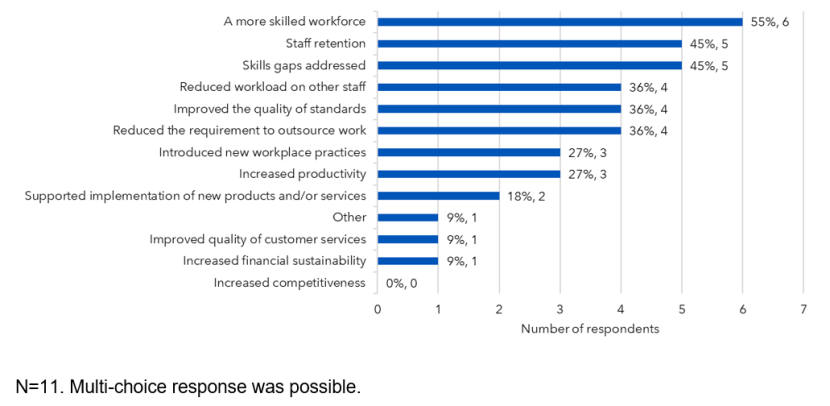
Figure 13. What have been the main benefits/impacts from employing a Rural Skills and G&WM apprentice(s)?
Click for a full description
A bar graph showing the main benefits/impacts from employing a Rural Skills and G&WM apprentice(s):
- A more skilled workforce - 6 respondents (55%).
- Staff retention - 5 respondents (45%)
- Skills gaps addressed - 5 respondents (45%)
- Reduced workload on other staff - 4 respondents (36%)
- Improved the quality of standards - 4 respondents (36%)
- Reduced the requirement to outsource work 4 respondents (36%)
- Introduced new workplace practices - 3 respondents (27%)
- Increased productivity - 3 respondents (27%)
- Supported implementation of new products and/or services - 2 respondents (18%)
- Other - 1 respondent (9%)
- Improved quality of customer services - 1 respondent (9%)
- Increased financial sustainability - 1 respondent (9%)
- Increased competitiveness - 0 respondents (0%)
Half of employers with experience of the apprenticeships (50%) indicated that apprenticeships are either a very important or somewhat important recruitment method to addressing their skills needs, Table 13. Only a few respondents provided further feedback – this included reference to the growing need for skilled working staff who are comfortable operating in remote parts of Scotland as well as to contribute to climate change and biodiversity goals.
| - | % |
|---|---|
| Very important / somewhat important | 50% |
| Neither important nor not important | 20% |
| Not important | 30% |
N=10
6.4 Future use of apprenticeships
Respondents were asked whether they were planning to recruit any apprentices, or start any existing staff, onto any of the apprenticeship frameworks in the next three years. Around two in five employers (41%) are planning to use apprenticeships – of these employers, G&WM SCQF Level 5 (27% of employers) and Rural Skills (Estate Maintenance) SCQF Level 5 (20%) were the most common, Table 14. There was also an option to specify other frameworks which half of these employers selected.
Respondents were also asked to quantify how many apprenticeships they were planning to recruit or start across the next three years. This data should be treated with caution as only a very small number of respondents quantified their future forecast of apprenticeships.
| - | % of employers | Total number | % of total number |
|---|---|---|---|
| Rural Skills (Environmental Conservation) SCQF Level 5 | 7% | 2 | 29% |
| Rural Skills (Estate Maintenance) SCQF Level 5 | 20% | 1 | 14% |
| Rural Skills (Estate Management) SCQF Level 6 | 7% | 2 | 29% |
| Rural Skills (Environmental Conservation) SCQF Level 7 | 7% | 2 | 29% |
| G&WM SCQF Level 5 | 27% | 0 | 0% |
| Other | 53% | 59 | N/A |
| Total | 100% | 100% |
N=15. Multi-choice response was possible. Other included forestry (4 respondents), “deer stalking” (1 respondent), “LANTRA” (1 respondent), and unspecified (2 respondents).
The main barriers to recruiting a Rural Skills or G&WM apprentice are cost (67%) and significant administrative burden to recruit apprentice (e.g. paperwork) (64%), Table 15 below. A relatively high proportion of employers (42%) reported a lack of knowledge about how to recruit an apprentice.
| - | % |
|---|---|
| Cost of employing an apprentice(s) | 67% |
| Significant administrative burden to recruit apprentice (e.g. paperwork) | 64% |
| Lack of knowledge about how to recruit an apprentice | 42% |
| Remote location/accessibility and travel/transport issues | 42% |
| Lack of applicants with necessary experience | 31% |
| Low number of applicants with the required attitude or motivation | 28% |
| Other | 22% |
| Sector is not considered attractive enough to workers | 19% |
| Lack of applicants with necessary qualifications | 17% |
| Low number of applicants with the required skills | 17% |
| Poor career progression/development opportunities in this role/sector | 14% |
| Seasonal/temporary work | 14% |
| Low number of applicants for post | 11% |
| Shift work/unsociable hours | 8% |
| Competition from other employers | 6% |
| Poorer terms and conditions (e.g. pay) | 6% |
| Preference for applicants with college certificates/university degrees | 0% |
N=36. Multi-response was possible. Unsure/do not know removed. Other included housing/accommodation (2), internal staff resource to manage apprentices (2), lack of understanding from apprentice about the apprenticeship (2), and lack of government support (2)
Over two-thirds of respondents (68%) were either fully or somewhat aware of the apprenticeships prior to the survey. Most of these employers became aware of the apprenticeships through their own research (44%) or an existing relationship with a skills body (44%), Figure 14.
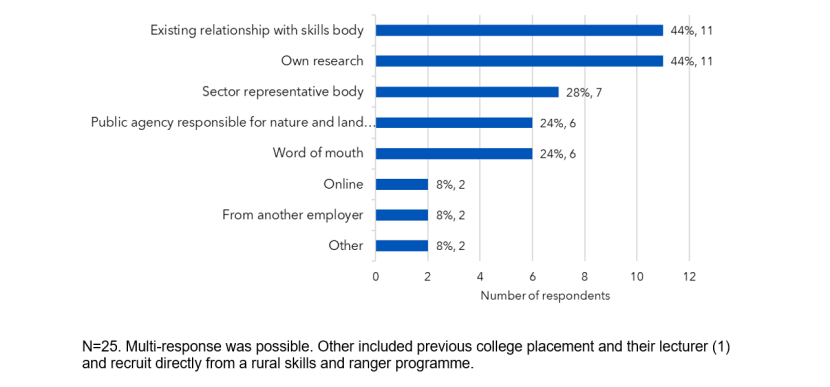
Figure 14. How did you become aware of these apprenticeships?
Click for a full description
A bar graph showing how respondents first became aware of the Rural Skills and G&WM apprenticeships:
- Existing relationship with skills body - 11 respondents (44%)
- Own research - 11 respondents (44%)
- Sector representative - 7 respondents (28%)
- Public agency responsible for nature and land management - 6 respondents (24%)
- Word of mouth - 6 respondents (24%)
- Online - 2 respondents (8%)
- From another employer - 2 respondents (8%)
- Other - 2 respondents (8%)
Respondents were asked to what extent they agree or disagree with various statements in Table 16. While almost half of employers (46%) agree that the apprenticeships address skills shortages in their organisation, feedback suggests that the promotion of the apprenticeships has been severely lacking across employers, existing staff, and young people.
| - | Strongly agree/ agree | Neither/ nor | Disagree/ strongly disagree |
|---|---|---|---|
| Staff retention is an increasing challenge in the sector | 54% | 30% | 16% |
| Poor career progression/ development opportunities in the role/sector makes attracting new entrants difficult | 54% | 24% | 22% |
| The apprenticeships address skills shortages in our business/organisation | 46% | 35% | 19% |
| Working in the land and nature-based sector is promoted as a positive career choice | 27% | 19% | 54% |
| The apprenticeships are well promoted to employers | 11% | 27% | 62% |
| The apprenticeships are well promoted to existing staff (n=35) | 6% | 31% | 63% |
| The apprenticeships are well promoted to young people | 3% | 51% | 46% |
N=37 unless stated
Respondents were asked what would attract more young people to enrol on Rural Skills or G&WM apprenticeships in order to follow a career into the land and nature-based sector. The top priorities related to:
- changing perceptions
- addressing policy concerns with greater government support
- financial incentives
- structural improvements in career progression
It was also suggested that increased visibility and hands-on experiences for young people at school could also effectively address early misconceptions and lack of exposure to rural careers.
Respondents were also asked what would make the biggest difference in terms of the number of Rural Skills and G&WM apprenticeships that their business/organisation would employ. Most employers state that greater financial support would allow greater recruitment of Rural Skills and G&WM apprentices. It is suggested that this could cover:
- direct apprenticeship costs
- wrap-around expenses (e.g., housing)
- funding to support employers’ administrative needs which could offset the cost of training and supervising apprentices.
Many employers also identify that reduced government bureaucracy and more streamlined administrative and assessment processes could help their business/organisation to recruit more apprentices, particularly as internal staff capacity to manage apprentices is raised as a concern.
Other key areas included clear communication and information regarding the Rural Skills and G&WM apprenticeships, as well as calls for high-quality training providers who understand sector-specific needs within rural sector.
6.5 Recruitment and skills challenges
Over three-quarters of respondents (76%) report that problem solving and manual dexterity are the most important technical or practical skills to their organisation, Table 17.
| - | % |
|---|---|
| Problem solving | 76% |
| Manual dexterity – i.e. skills with which to repair, mend, assemble, etc. | 76% |
| Knowledge of your organisation and/or industry sector | 65% |
| Reading and understanding instructions, guidelines, manuals, reports, etc. | 62% |
| Computer literacy/basic IT skills | 59% |
| Adapting to new equipment, processes, materials, etc. | 59% |
| Basic numerical skills and understanding | 57% |
| Specialist skills required to carry out the role in question | 41% |
| Knowledge of your organisation and products/services offered | 27% |
| Writing reports, emails, etc. | 22% |
| Advanced/specialist IT skills | 5% |
| Communicating in another language | 0% |
| Complex numerical/statistical skills and understanding | 0% |
N=37. Multi-response was possible.
For people and personal skills, most employers (86%) prioritise the ability to manage own time and prioritise tasks as well as team working, Table 18.
| - | % |
|---|---|
| Ability to manage own time and prioritise tasks | 89% |
| Team working | 86% |
| Creative and innovative thinking | 61% |
| Managing their own feelings and/or the feelings of others | 47% |
| Instructing, teaching, or training people | 39% |
| Customer handling skills | 36% |
| Managing and/or motivating others | 33% |
| Presentation skills | 19% |
| Persuading, influencing, and/or negotiating | 17% |
| Setting objectives for others | 11% |
| Other | 6% |
| Sales skills | 0% |
N=36. Multi-response was possible. Other included passion for the sector (1), flexibility/adaptability (1), dealing with difficult situations (1).
Almost three-quarters of respondents had recruited a new employee (excluding apprentices) in the last 12 months. For the remaining 29% of respondents, their organisation had not recruited due to a variety of reasons including lack of funding, restrictive bureaucratic processes (e.g. paperwork and regulation), no vacancies, and use of subcontractors.
Respondents who recruited were asked how many full-time and part-time vacancies they had filled over this period, Figure 15. This shows that these employers have filled a total of 38 Full-Time Equivalent jobs in the last 12 months.
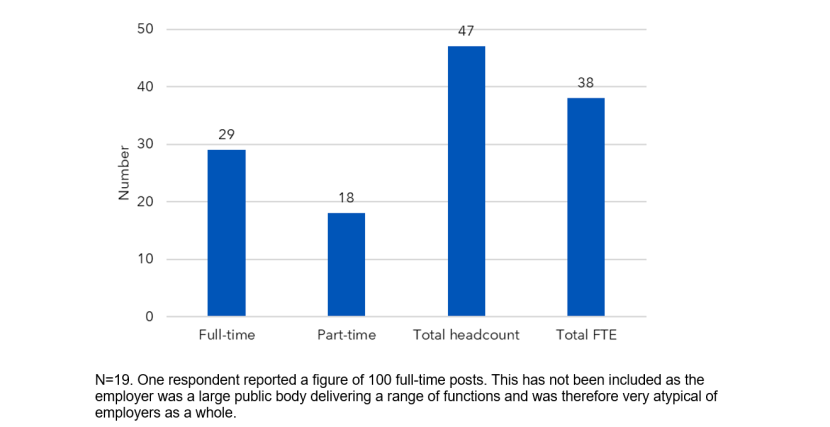
Figure 15. How many vacancies have you filled in the last 12 months?
Click for a full description
A bar graph showing how many vacancies employers have filled in the last 12 months, by type:
- Full-time - 29
- Part-time - 18
- Total headcount - 47
- Total FTE - 38
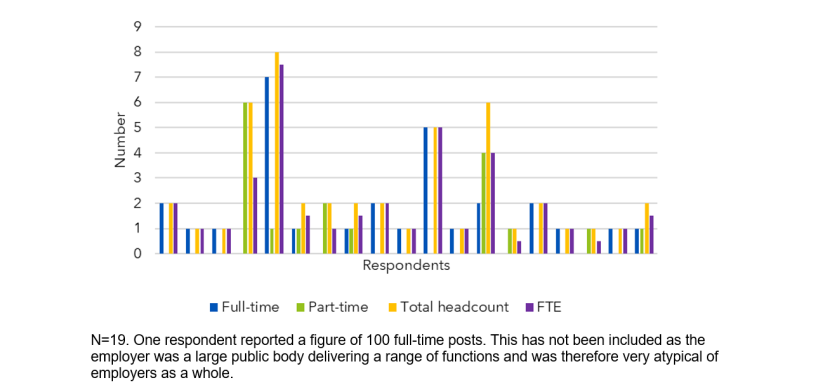
Figure 16. How many vacancies have you filled in the last 12 months? By employer.
Click for a full description
A bar graph showing how many vacancies employers have filled in the last 12 months, by employer.
- Full-time vacancies are displayed in blue.
- Part-time vacancies are displayed in green.
- Total headcount is displayed in yellow.
- FTE is displayed in purple.
Employers were asked to specify which roles had been filled with the most commonly reported roles related to estate maintenance (26% of employers who recruited), farm workers (17%), and ghillies (13%), Table 19. Other roles mentioned included countryside rangers, gamekeeping and wildlife management, forestry roles, housekeeping, and general managers.
| - | % |
|---|---|
| Estate maintenance | 26% |
| Farm worker | 17% |
| Ghillie | 13% |
| Other | 44% |
N=23. Question was asked as an open-ended question.
Almost half of employers who recruited (46%) reported that at least one of their vacancies had been hard to fill. Only a few respondents provided specific roles which were hard to fill – these included forestry workers and supervisors as well as housekeeping and labourers.
The most reported causes of having a hard to fill vacancy related to the supply of applicants (low number with required attitude or motivation: 55%, and lack of necessary experience: 45%) as well as the logistical challenge of a remote location/accessibility and travel/transport issues (55%), Table 20.
| - | % |
|---|---|
| Low number of applicants with the required attitude or motivation | 55% |
| Remote location/accessibility and travel/transport issues | 55% |
| Lack of applicants with necessary experience | 45% |
| Low number of applicants for post | 45% |
| Sector is not considered attractive enough to workers | 45% |
| Lack of applicants with necessary qualifications | 36% |
| Low number of applicants with the required skills | 27% |
| Poor career progression/development opportunities in this role/sector | 27% |
| Shift work/unsociable hours | 27% |
| Seasonal/temporary work | 18% |
| Competition from other employers | 9% |
| Poorer terms and conditions (e.g. pay) | 9% |
N=11. Multi-response was possible.
The following questions did not receive enough responses to provide meaningful feedback:
- have any vacancies been hard to fill due to a lack of applicants with the following requisite technical or practical skills?
- have any vacancies been hard to fill due to a lack of applicants with the following requisite people and personal skills?
Over half of respondents (54%) state that they would recruit in one of the areas related to the apprenticeship frameworks in the next three years, particularly environmental conservation (45%) and estate maintenance (45%), Figure 17.
A relatively large proportion of respondents (24%) were unsure if they would recruit in these areas with the remaining 22% stating that they do not plan to recruit over this period.
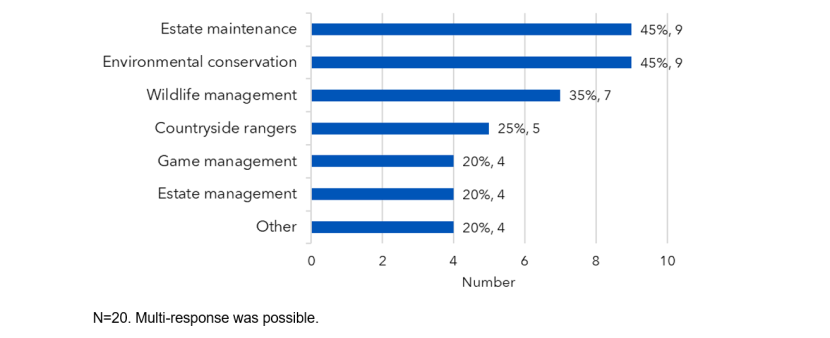
Figure 17. Do you plan to recruit in any of the following areas in the next three years?
Click for a full description
Bar graph showing where employers expect to recruit int he next 3 years:
- Estate maintenance - 9 respondents (45%)
- Environmental conservation - 9 respondents (45%)
- Wildlife management - 7 respondents (35%)
- Countryside rangers - 5 respondents (25%)
- Game management - 4 respondents (20%)
- Estate management - 4 respondents (20%)
- Other - 4 respondents (20%)
The core research question is to understand the low uptake of apprentices within the sector. Therefore, employers who indicated that they had no plans to use apprentices but were planning to recruit in one of these areas were asked to provide further explanation.
These employers report that limited awareness and knowledge of apprenticeships (e.g. funding and support), staffing capacity to manage apprentices, and role suitability are primary barriers to recruiting apprentices. Negative perceptions of the sector and a preference for more flexible trainee or internship programs are also key factors for a few respondents.
Over half of respondents (57%) state that their organisation has implemented changes to their terms and conditions/workplace practices to help attract and retain staff, including increased salaries (61%) and flexible working (50%), Table 21.
| - | % |
|---|---|
| Increased salary | 61% |
| Flexible working | 50% |
| Provided company transport (own van, mileage expensed etc) | 33% |
| Other | 28% |
| Introduced additional benefits (e.g. gym membership) | 22% |
| Increased annual leave or other special leave | 17% |
N=18. Multi-response was possible. Other included: housing (2), improved staff management and training opportunities (1), moved to casual contracts (1), and introduced private health care plan (1).
Most respondents (70%) identified one or more of the following issues creating skills gaps within their organisation – the most common relate to cost and availability of training, Table 22.
| - | % |
|---|---|
| Cost of training | 58% |
| Staff are new to role | 46% |
| Difficulty in finding suitable training | 46% |
| Unable to recruit or retain staff with the required skills | 38% |
| Staff lack motivation | 27% |
| Staff have not received the appropriate training | 19% |
| The introduction of new workplace practices | 15% |
| Staff training is only currently partially completed | 15% |
| Staff members have been on training, but their performances have not improved sufficiently | 4% |
| Other | 8% |
N=26. Multi-response was possible. Other included suitability of training for rural employers.
6.6 A move to a nature-positive, net zero Scotland
Around half of employers (51%) do not believe that the move to a nature-positive, net zero Scotland will affect their current skills requirement. The rest of the responses were split between uncertainty (27%) and those who believe there will be an impact (22%). Employers interviewed during the primary research believed the move to a nature positive economy may result in existing staff having to learn new skills for example, in peatland recovery.
Employers who do believe there will be an impact were asked to specify in what ways. These few respondents note there may be a specific impact on habitat management, outdoor skills, and technological adaptation. However, they also mentioned that workforce resistance, especially among older staff, may pose a challenge as quoted below by one respondent:
“The workforce is aged and set in its ways and lacks appreciation and understanding of the new nature positive net zero environment. It is happily stuck in its ways.”
Almost one-third of respondents (35%) foresee a requirement to upskill and/or reskill their workforce in the transition to a nature-positive, net zero Scotland. These employers believe that there will be many ways in which the workforce will require to be upskilled or reskilled in order to support delivery of Scottish Biodiversity Strategy and new nature restoration techniques. For example, there is a reported need for basic nature literacy and climate awareness skills as well as specialist skills such as habitat monitoring, mapping technologies (e.g. GIS), and regenerative farming practices.
A couple of respondents highlight the challenge of integrating the required skills into existing roles, such as farm management or animal husbandry. There is concern about whether workers can handle both their primary duties and new environmental responsibilities without additional support.
In moving to a nature-positive, net zero Scotland, most employers (70%) identified implementing wildlife habitat management and monitoring wildlife populations and habitats as key specialist skills for their workforce, Table 23.
| - | % |
|---|---|
| Implementing wildlife habitat management | 70% |
| Monitoring wildlife populations and habitats | 70% |
| Deer management (Habitat Impact Assessment) | 49% |
| Peatland restoration | 49% |
| Controlling vertebrate pests and predators | 49% |
| Deer management (Stalking and Culling) | 46% |
| Deer management (Carcass Preparation) | 43% |
| Use shotguns and rifles safely for pest control and sporting purposes | 38% |
| Caring for working animals | 22% |
| Rearing and releasing gamebirds | 14% |
| Other | 16% |
N=37. Multi-response was possible. Other included education roles (e.g., biodiversity loss, soil health management, woodland related knowledge) (2), access and impact (1), hydrology awareness (1), human interaction and group guiding skills (1), and visitor engagement (1).
Employers were asked what the main skills opportunities for their workforce were in moving to a nature-positive, net zero Scotland – 54% of respondents provided a response to this question. Most of these respondents highlight the crucial role that the sector will play in the transition to a nature-positive, net zero Scotland. They also note a growing demand for skilled professionals in ecology, conservation, and sustainable land management, along with the opportunities for training and upskilling across various sectors.
Over half of respondents (59%) provided a response to the question regarding challenges. The most pressing issues reported include the need for better financial support, training, and skilled workforce development, as well as the challenges posed by regulatory barriers and public attitudes. It was noted that addressing these themes are crucial for moving toward a nature-positive, net-zero Scotland.
7. Conclusions
7.1 Employers consider there is a need for apprenticeships in rural skills and game & wildlife management
Apprenticeship and work-based learning is considered a key route for the land and nature-based workforce: Work-based learning pathways are essential in addressing skills gaps within the workforce. They help ensure that employees have the necessary skills to meet current and future business needs. Therefore, the availability of an apprenticeship is an important driver of nurturing a qualified land and nature-based workforce. Employers highly value apprenticeships. 73% positively rate using apprenticeships to address their recruitment and skills needs with almost two-thirds of respondents (62%) either currently or previously employed apprentices, with a further 30% interested in the opportunity. Feedback suggests that there is a significant need for rural skills and G&WM apprentices. The land-based sector has an ageing workforce, and without apprentices, critical skills may be lost.
7.2 Challenges exist with the existing apprenticeship product
There are high levels of non-completers in the Game & Wildlife Management apprenticeships: of the 72 individuals who have registered for the MA in G&WM in the decade from 2016-2024, over half (56%) are yet to complete the apprenticeship. It is unclear how many have left the sector as stakeholders reported apprentices are still in work but have not completed the qualification.
There are high levels of under 18yrs starts and non-completers in the Game & Wildlife Management apprenticeships: the majority of individuals who have registered onto the G&WM apprenticeships have been young people aged 18 or under (93%). For many tasks on estates and in G&WM they are too young to hold certain licenses. The apprenticeship product for many under eighteens may not be the most appropriate starting point and the provision for 16-18yrs may need a new pre-apprenticeship product or clear guidance to undertake the relevant full time further education option as the entry point. The main reasons cited were:
- young people are required to work in very isolated locations, with no phone service perhaps and very little interaction with their peers.
- often, they are working in very small teams outdoors for long days. This can take some 16-18yr olds some time to adapt to.
- the level 5 apprenticeship is only for 12 months and often this is not long enough for them to become a skilled and valued member of the team. This suggests that most of these apprentices are new entrants and/or school leavers and there may be some connection between age and non-completion of the qualification.
A significant number of those undertaking Rural Skills MAs are adult (19+) apprentices: Applications for apprenticeships in Rural Skills are largely from career changers or those already working within the field who are looking to receive formal qualifications, rather than new entrants and/or school leavers. This suggests that the apprenticeships are being used for reskilling and upskilling workers. Despite small numbers, completion rates are higher for this group so more could be done to target job-changers and reskilling.
Apprenticeship product not suited to small businesses: Small businesses in rural and island communities are central to sustaining these communities and managing the land in a nature positive way but the apprenticeship product is not tailored enough to enable them to choose an apprentice to meet their recruitment needs. Helping small businesses grow and become more resilient is vital for creating the high-quality jobs that local communities need. Scotland is a nation of small and medium sized (SME) businesses with over 98% small businesses (Scottish Government, 2023).
However, very small businesses (0-9 employees) often lack the capacity, time and resources to use apprentices to meet their recruitment needs. On some occasions they also lack the necessary skills to mentor and support a young person in the workplace and with their training needs. Small local businesses have reported a genuine desire to support the young people in their community into work, but the current apprenticeship model provides little to no support for small employers who need their lost time replaced when supporting an apprentice and dealing with associated paperwork. Larger employers and public sector bodies can absorb these costs and tasks more readily. Consequently, it is increasingly considered a higher risk for small employers to recruit an apprentice to meet their skills needs.
7.3 System constraints
Training providers face significant system challenges in delivering parity of esteem for these apprenticeships: the apprenticeship contribution rate is reported by training providers to be lower than both a fulltime HNC/HND place and other MA frameworks. Consequently, this can lead to a de-prioritisation of these qualifications by colleges as the current numbers of these apprenticeships are also low. MAs are in competition with full time Further Education (FE) and with other apprenticeships internally. Learner demand and supply demand needs to achieve a better balance with societal needs. The land and nature-based workforce is currently small in comparative terms but given that land-use, land-use change and agriculture account for 49% of Scotland’s GHG emissions (gross) (Scottish Greenhouse Gas Statistics 2021) the sector is significantly important in terms of efforts to tackle climate change and achieving net zero targets.
There are too few trained assessors in the system to assess the MAs: As with all MA qualifications, college staff need to be trained assessors to manage and deliver the MAs. Stakeholders reported that a lack of trained assessors has been a barrier, especially when a lecturer- who is a trained assessor - leaves the institution.
A better evidence base for college courses outcomes is needed: Job outcomes from further education pathways in Game and Wildlife and Estate Management NC and HNC/HNDs needs a better evidence base. The research found that several employers view the FE courses as a preferred route to employment rather than employ an apprentice directly. Learning providers self-reported good job outcomes from FE provision but we need a better evidence base to help inform decision-making for policymakers and career choices for learners.
7.4 Sector challenges
A lack of diversity within the sector may be leading to poorer outcomes: There is a clear gender split in registrations across both Rural Skills and G&WM MAs. The majority of those who have registered for these MAs have been male, particularly within the G&WM MA, where 94% of apprenticeships registered have been male. Lack of diversity in any sector can be a significant issue, impacting innovation, employee satisfaction, and overall performance. The sector needs to have more inclusive recruitment practices and supportive working environments if it is to ensure a future pipeline of talent entering the sector.
The majority of employers interviewed stated that most of the young people entering their workforce are family and friends of current land and estate workers with word of mouth still being a preferred recruitment method. There are significant demographic changes taking place in Scotland, such as an ageing workforce and a declining working age population. Alongside this young people are finding it increasingly difficult to find and afford housing in rural areas. These societal challenges will require many in the land and nature-based sector to innovate and have more inclusive recruitment practices to encourage new entrants to the sector - who may live in the area but have no background in the sector.
There is a lack of peer support for apprentices in the sector: There is no peer support network similar to young farmers for young people in conservation or G&WM. Often these apprentices work in isolated areas and may only have one colleague. They are often required to live on their own with no workplace networks and social interaction with their peers. The farming industry recognised this as a problem some time ago when the young farmers network was established. A similar initiative might go some way to addressing some of the social isolation young workers face in these occupations.
Industry representative bodies should be enabled to engage more effectively in addressing land and nature-based skills development issues: 83% of ‘rural’ Scotland is privately owned. The make-up of land ownership would suggest that private landowners could have a significant part to play in skills development, to not only safeguard the current workforce but to help ensure a future pipeline of talent enters the sector. This will require investment, partnerships and skills products that support their engagement. Industry representatives and membership organisations need to be more included and engaged on skills issues.
7.5 Strategic challenges
Skills demand is still unclear despite nationally important policy drivers: There is currently a strong policy context surrounding the land and nature-based workforce with several policies identifying the sector and its workforce as key players in achieving national targets on climate change and net zero. However, the specific skills requirements and skills planning needed is currently not matching the policy discourse. It is essential that skills investment, skills development and planning for this workforce is prioritised, and coordinated across government to ensure a pipeline of talent enters the workforce to grasp the opportunities within this sector and to tackle the challenges that are set out in these key policies.
Stronger partnerships with the sector to increase awareness and promotion: All stakeholders need to work in stronger partnerships to sufficiently promote jobs and pathways in the sector. Careers information, advice, and guidance work delivered by SDS, colleges and universities cannot possibly cover everything in the detail required. Sector bodies for small but important industries such as G&WM, conservation and estate management need greater public partnerships to help inform the career choices of learners and support small employer engagement. These smaller businesses on their own cannot compete with large industries like energy when it comes to influencing the career choices of young people. These paths need greater visibility.
7.6 Other issues
Skills must be at the centre of the drive to reduce deer numbers using new methods. Most stakeholders noted the twin challenge of needing to achieve a larger deer cull with an ageing deer management workforce. There is also an increased use of contractors to manage deer. Some believe there is a genuine risk of losing centuries old skills that are culturally important to Scotland’s way of life, its identity and central to managing the land in a low carbon way. There is therefore a need to ensure that skills are at the centre of solutions and decision-making so that in the drive to reduce deer numbers, standards in animal welfare and safety are maintained.
A name change for rural skills more connected to climate change and nature restoration would provide more positive messaging and help overcome issues of stigma with learners and career influencers: Promotion of rural skills is low, and according to several college lecturers the label has often become stigmatised in schools as a path for learners and young people who have not chosen an academic path and/or have attendance issues or additional educational needs. However, this is often a good and preferred route for many learners as rural skills have a wide array of opportunities and career progression which is often overlooked. The proposed reframing of nature and land-based careers and the proposed name change for the new MA frameworks to land and nature-based may help to address this problem.
8. Recommendations and suggested actions
1. Continue to support the introduction of the new land and nature-based frameworks under development
Whilst there are very good reasons for some under 18yrs to avoid going straight to the apprenticeship the modern apprenticeship is still a key route for many individuals entering this sector. The availability and accessibility of a formal apprenticeship - with a recognised industry qualification - for skilled jobs is central to apprenticeship policy and workplace culture in Scotland. Therefore, it is vital that MAs remain as a route to employment in G&WM and estate work.
SDS, NatureScot and Lantra Scotland should continue to work in partnership with SQA to support their introduction and improve the evidence base where necessary.
2. Review the current delivery model for MAs in Game and Wildlife and Rural Skills, and the suitability of direct entry for under 18s.
There is a need to rethink the suitability of the MA as starting point for direct entrants under the age of 18yrs. Under 18s have additional barriers in these roles including social isolation, being unable to drive whilst living in remote locations, getting back and forth to work and meeting up with friends and family outside of work. The following is recommended:
- there is a need to explore the potential and suitability of a new pre-apprenticeship product in partnership with learning providers that would enable under 18s to bridge the gap between school and the MA.
- new delivery models should prioritise bringing cohorts together for example through block release models or a similar format. The delivery format must ensure the apprentices have a peer group to progress along the MA learner journey with. This may need to be coupled with incentives for employers to allow apprenticeships more time away from the workplace.
- a more formalised path from Further Education provision to the MA or a traineeship.
- introduce more practical training funds similar to the Women in Agriculture and Women in Forestry. These funds support the personal development of women and girls aged thirteen years and older, providing them with additional skills to progress their careers and employment opportunities in Scottish agriculture and Forestry beyond their current role.
These practical training funds were targeted specifically to address the gender gaps within these sectors and to encourage more people (women and girls) into the sector.
3. Support ways to embed industry recognised/ training courses and tickets in FE provision
There is a need to address the gap between the introduction of new land and nature-based legislation or mandatory practices (e.g. Muirburn licenses) and the ability for MAs and fulltime college provision to respond timeously. NatureScot and Scottish Government should continue to consider the skills impact of legislative and policy changes (skills proofing) and look to build in solutions and support for learning providers and learners to keep in step. A good example of this is the Muirburn Practitioner Foundation course which is now a Lantra accredited course.
NatureScot to introduce skills proofing to their work and explore the potential to fund micro credential courses and tickets required as a result of legislative changes. This will also require continued partnership working with the skills bodies and landowners.
4. Explore a new product for reskilling and upskilling for career changers utilising industry recognised course and tickets
Whilst career changers can also undertake a Modern Apprenticeship and the evidence suggests that the Rural Skills MA is being well used for 19+ as a tool for reskilling and upskilling, there is perhaps a need for an additional shorter upskilling product - one that enables the career changers to obtain key licenses and tickets, and knowledge in a shorter period. It was noted by employers that career changers bring other skills from previous work which should lighten the MA process for them. There is evidence in the MA data to suggest that individuals would and do change career but encouraging them in greater numbers to leave potentially a better paid job to start an MA with lower pay is currently not attractive enough. A new reskilling product that addresses both the financial and skills needs may encourage more job changers and ultimately fast track them quicker, addressing skills shortages more quickly.
NatureScot should explore the potential to develop a reskilling apprenticeship/ product that is shorter and contains the tickets and courses set by the industry. NatureScot will need to work in partnership with SLE and others to explore and develop this.
5. Better data on outcomes – MAs and NC/HNs
The lack of good data on outcomes for both the Further Education provision and MAs may be underselling the value of the provision and the skills journey for learners. Self-reported outcomes by learning providers are high, but the evidence base for FE outcomes is weak. Equally, whilst the MA provision payments are dependent on meeting milestones it was discovered during the research that some of these non-completers may still be in work and have not left their employer. They may have chosen not to complete the qualification once they have all the necessary tickets and experience. However, non-completers of the qualification (handing in evidence to the assessor etc.) shows up in the MA statistics as non-completers. Better tracking and follow up is required to evidence the real outcomes.
The sector needs to engage and collaborate more in building the evidence base. Lantra and NatureScot in partnership with SDS and employer representative bodies such as SLE and colleges need to come together to support ways of improving the data. An improved evidence base will help all stakeholders to lever more support and influence for the sector’s skills needs.
6. Enable small businesses to employ apprentices through new models (NS/SLE)
The apprenticeship product is not tailored enough to enable small businesses to choose an apprentice to meet their recruitment needs. Helping small businesses grow and become more resilient is vital for creating the high-quality jobs that local communities need. Very small businesses (0-9 employees) often lack the capacity, time and resources to use apprentices to meet their recruitment needs. On some occasions they also lack the necessary skills to mentor and support a young person in the workplace and with their training needs. Small local businesses have reported a genuine desire to support the young people in their community into work, but the current apprenticeship model provides little to no support for small employers who need their lost time replaced when supporting an apprentice and managing associated paperwork.
There is a need for a more strategic approach to skills development in land and nature-based apprenticeships which could be led by NatureScot and/or in partnership with others such as SLE. NatureScot should explore taking more of a lead in apprenticeship management that supports small businesses by employing the apprentices, similar to the Forestry Land Scotland approach or the Historic Environment Scotland (HES) models.
7. Renew the messaging and marketing of these apprenticeships with a greater emphasis on social and environmental value
There is a need to improve both the messaging ideas and the messaging strategies surrounding these apprenticeships and work in this sector. NatureScot, Lantra Scotland and SLE know the value of this work best, but the messaging is being led mostly by SDS. NatureScot should explore with partners which ideas and strategies would be most effective in promoting these occupations.
Messaging ideas should include:
- highlight Community Impact: showcase stories of how apprenticeships have positively impacted local communities. This could include testimonials from past apprentices who have gone on to make significant contributions.
- emphasise Skill Development: focus on how apprenticeships equip individuals with valuable skills that are in high demand, contributing to the overall betterment of society.
- promote Inclusivity: highlight efforts to make apprenticeships accessible to diverse groups, emphasising the importance of inclusivity in building a stronger, more equitable society.
- sustainability and Innovation: link apprenticeships to broader societal and environmental goals like sustainability and innovation, showing how they contribute to a better future.
Messaging strategies should include:
- social media campaigns: use platforms like Instagram, LinkedIn, and Twitter to share success stories, infographics, and videos that highlight the societal benefits of apprenticeships.
- partnerships with community organisations: collaborate with local community groups and third sector to spread the word and reach a wider audience.
- events and workshops: host events or workshops that focus on the social and environmental impact of apprenticeships, inviting speakers who can share their experiences and insights.
- content marketing: create blog posts, articles, and newsletters that discuss the societal value of apprenticeships, featuring interviews with current and former apprentices.
8. Work with the sector to agree and promote industry recognised skills pathways
There is a need to work with the sector to agree the most desired and relevant pathways into these jobs. For a learner wishing to be an electrician or a nurse the path is clear. For gamekeepers and estate managers or workers the paths are many and varied. This is not a problem in itself, but if the employers’ recruitment practices are to only employ from one route or insist on a particular qualification this makes the path unclear for the learner and the skills landscape surrounding it.
NatureScot should explore working with partners like SLE and Lantra to agree industry recognised pathways to employment that make it clearer for the learner (new entrants and/or job changers). Lantra Scotland’s new G&WM sector skills group could provide the platform to have these discussions.
9. Advocate relevant changes to the apprenticeship management architecture (rules, delivery and funding) to enable greater participation in the apprenticeships for all key stakeholder: learners, employers, training providers and industry bodies
There is currently a strong policy context surrounding the land and nature-based workforce with several policies identifying the sector and its workforce as key players in achieving national targets on climate change and net zero. However, prioritisation of the skills planning, delivery requirements and skills investment needed is currently not matching the policy discourse. It is essential that skills investment, skills development and planning for this workforce is prioritised, and coordinated across government to ensure a pipeline of talent enters the workforce to grasp the opportunities within this sector and to tackle the challenges that are set out in these key policies.
MAs are a key product in delivering these changes and NatureScot should increase its leadership role in both advocating the skills needs of these key sectors and workforce and setting the direction for the skills needs to meet nature-based solutions for net zero targets.
Changes could include investing in employer engagement capacity between providers and employers. Currently if a young person approaches a college for an apprenticeship, they are signposted to www.apprenticeship.scot or they are advised to find their own employer. Colleges need to have greater awareness of apprenticeship opportunities in their area so they can support the brokerage of the two. This would require greater employer engagement at the course and/or MA level. The proposed changes to the management of apprenticeship funding from SDS to the Scottish Funding Council (SFC) may help with increased and/or targeted funding in this regard, including a review of the rural uplift.
10. Increase opportunities for partnership working on skills planning, development and investment between nature restoration work and gamekeeping.
There is a growing need for these two areas to come together around a skills agenda to break down barriers and increase understanding to work together on shared goals such as retaining and attracting new entrants and job changers into the land and nature-based sector. This work could be led by SLE, Lantra and NatureScot in the form of a bespoke skills group.
9. References
Biggar Economics, 2023. Rural estates drive wellbeing
ClimateXChange, 2023. Climate change, the land-based labour market and rural land use in Scotland
Cognisense, 2024. The Value of Shooting Report 2024
DMQ, n.d. Deer Management Qualifications website
Forestry and Land Scotland, 2021. Deer numbers placing unprecedented pressure on environment
Forestry and Land Scotland, n.d. Forestry Land Scotland approach.
Lantra, 2024. Modern Apprenticeship in Rural Skills at SCQF Level 5.
National Records of Scotland, 2023. Scottish Postcode Directory Files
NatureScot, n.d. Nature-based jobs and skills for net zero: Initial assessment
NatureScot, 2023. Deer management skills and capacity - initial scoping report NatureScot Research Report 1333.
NatureScot, 2024. Peatland ACTION Programme
Scottish Countryside Rangers Association, n.d. About Scotland’s Rangers
Scottish Gamekeepers, 2023. Year of Employment, #YofE2023
Scottish Government, 2021. Scottish Greenhouse Gas Statistics 2021
Scottish Government, 2021. Securing a green recovery on a path to net zero: climate change plan 2018–2032 - update
Scottish Government, 2023. Agriculture Reform Route Map
Scottish Government, 2022. Scotland’s Biodiversity Strategy Post-2020
Scottish Government, 2023, Business Size - Businesses in Scotland 2023
Scottish Government, 2023. Rural Scotland Business Panel Survey February 2023
Scottish Government, 2023. SG Women in Agriculture.
Scottish Government, 2023. SG Women in Forestry.
Scottish Government, 2023. Rural Scotland Data Dashboard
Scottish Government, 2023. Sustainable and regenerative farming - next steps: statement
Scottish Government, 2024. Agriculture and Rural Communities (Scotland) Bill
Scottish Government, 2024. Agricultural Census Statistics June 2024.
Skills Development Scotland, 2020. Climate Emergency Skills Action Plan 2020-2025
Skills Development Scotland (SDS), n.d. Modern Apprenticeships
Skills Development Scotland (SDS), n.d. SDS Learning Provider pages.
Skills Development Scotland (SDS), n.d. SDS programme specification 2024-2025 (with SDS option to extend to 2025/2026 and 2026/2027).
Skills Development Scotland (SDS), 2024. SDS Quality Assurance Arrangements
Skills Development Scotland (SDS), n.d. SDS webpages on MA statistics.
SIC codes, n.d. The widely used system for classifying business units into industry types for statistical purposes.
The Commission for the Land-Based Review, n.d. Report on the land-based sector in Scotland.
Wightman, A. 2024. WOS 2024 Preliminary Report
Annexes
Annex 1: Apprenticeship tables
This annex provides additional apprenticeship data tables to give a more detailed breakdown of registrations and completions.
| - | Rural Skills | Rural Skills | G&WM | G&WM | Total | Total |
|---|---|---|---|---|---|---|
| - | Registrations | Certificates Authorised | Registrations | Certificates Authorised | Registrations | Certificates Authorised |
| 2016 | 5 | 0 | - | - | 5 | 0 |
| 2017 | 8 | 4 | - | - | 8 | 4 |
| 2018 | 20 | 7 | 19 | 0 | 39 | 7 |
| 2019 | 11 | 16 | 13 | 0 | 24 | 16 |
| 2020 | 3 | 2 | 9 | 21 | 12 | 23 |
| 2021 | 6 | 5 | 3 | 6 | 9 | 11 |
| 2022 | 7 | 2 | 15 | 0 | 22 | 2 |
| 2023 | 3 | 4 | 12 | 4 | 15 | 8 |
| 2024 | 4 | 6 | 1 | 1 | 5 | 7 |
| Total | 67 | 46 | 72 | 31 | 139 | 77 |
Source: Lantra
| Year | Registered | Certificate Authorised |
|---|---|---|
| 2016 | 16 | 10 |
| 2017 | 2 | 8 |
| 2018 | 37 | 3 |
| 2019 | 8 | 21 |
| 2020 | 25 | 19 |
| 2021 | 25 | 6 |
| 2022 | 1 | 0 |
| 2023 | 19 | 4 |
| 2024 | 13 | 10 |
| Total | 146 | 81 |
| Not completed | - | 40 |
Source: Lantra
Note: ‘Not completed’ figure does not include those who registered in 2024.
| Year | Registered | Certificate Authorised |
|---|---|---|
| 2016 | 0 | 0 |
| 2017 | 2 | 0 |
| 2018 | 0 | 0 |
| 2019 | 2 | 0 |
| 2020 | 8 | 0 |
| 2021 | 0 | 1 |
| 2022 | 13 | 8 |
| 2023 | 5 | 3 |
| 2024 | 2 | 9 |
| Total | 32 | 21 |
| Not completed | - | 4 |
Source: Lantra
Note: ‘Not completed’ figure does not include those who registered in 2023 or 2024.
| Year | Registered | Certificate Authorised |
|---|---|---|
| 2016 | 227 | 1 |
| 2017 | 163 | 85 |
| 2018 | 192 | 118 |
| 2019 | 180 | 130 |
| 2020 | 63 | 105 |
| 2021 | 169 | 107 |
| 2022 | 208 | 81 |
| 2023 | 234 | 159 |
| 2024 | 95 | 156 |
| Total | 1,531 | 942 |
| Not completed | - | 613 |
Source: Lantra
Note: ‘Not completed’ figure does not include those who registered in 2024.
| Year | Registered | Certificate Authorised |
|---|---|---|
| - | Number | Number |
| 2016 | 36 | 0 |
| 2017 | 54 | 20 |
| 2018 | 52 | 47 |
| 2019 | 37 | 49 |
| 2020 | 20 | 12 |
| 2021 | 58 | 35 |
| 2022 | 38 | 43 |
| 2023 | 73 | 31 |
| 2024 | 40 | 47 |
| Total | 408 | 284 |
| Not completed | - | 11 |
Source: Lantra
Note: ‘Not completed’ figure does not include those who registered in 2023 or 2024.
Annex 2: Stakeholder topic guides
The Stakeholder Topic Guide is available to download next.
Please note that this word document is not fully accessible. If you require an accessible format please use the feedback form on our website.