Muirburn licensing - guidance for applicants
The Wildlife Management and Muirburn (Scotland) Act 2024 (‘the Act’) introduced a new muirburn licence.
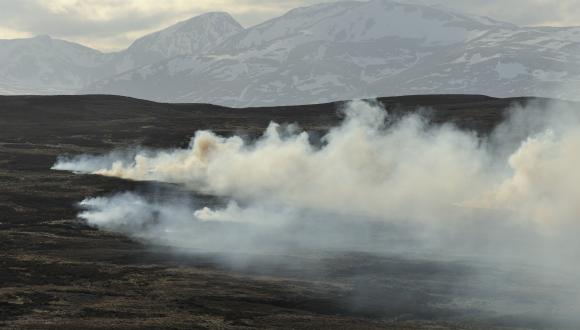
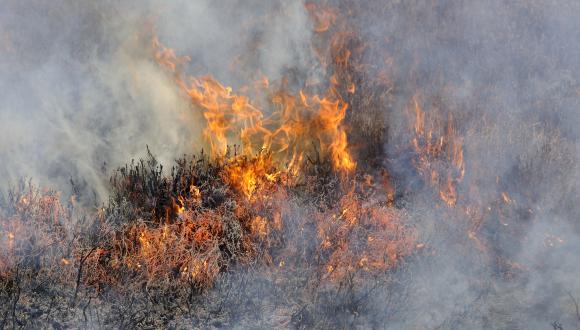
Muirburn is the practice of burning heather and other vegetation on moorland. The purpose of the new licence is to ensure that muirburn is carried out safely and appropriately.
From 15 September 2026, a licence will be required to carry out muirburn on any land in Scotland. It will be an offence to carry out muirburn without a licence.
NatureScot, as the relevant licensing authority, will be responsible for issuing muirburn licences. In keeping with our responsibilities under the Scottish Regulators’ Strategic Code of Practice, we aim to ensure our licensing service is efficient, effective, proportionate and adaptable.
Fire has been used as a land management tool across the world for generations, but if used inappropriately or without due regard to safety, it can be dangerous and damaging.
This guidance outlines how we will assess applications and what information we expect to receive. The guidance will be reviewed and adapted in line with the Wildlife Management Shared Approach as our knowledge and understanding grows.
Legal basis for muirburn
From 15 September 2026, all muirburn must be carried out under licence. It is an offence to carry out muirburn on land which is not licensed.
The Act sets out 12 reasons (purposes) why muirburn may be carried out. These are divided into those that relate to peatland and those that relate to non-peatland.
For peatland, muirburn must be appropriate, and must also be necessary.
For non-peatland, muirburn must be appropriate.
Licence holders must have regard to the Muirburn Code when carrying out muirburn and comply with all other relevant legislation.
Licensable purposes
For non-peatland, the purposes are:
- managing the habitats of moorland game or wildlife
- improving the grazing potential of moorland for livestock
- conserving, restoring, enhancing or managing the natural environment
- preventing, or reducing the risk of, wildfires causing damage to habitats
- preventing, or reducing the risk of, wildfires causing harm to people or damage to property
- research
- training
For peatland, the purposes are:
- restoring the natural environment
- preventing, or reducing the risk of, wildfires causing damage to habitats
- preventing, or reducing the risk of, wildfires causing harm to people or damage to property
- research
- training
Muirburn season
The muirburn season runs from 15 September to 31 March the following year.
Out-of-season muirburn
Muirburn must be appropriate and must also be necessary for peatland and non-peatland purposes, for out-of-season licences to be granted.
For out-of-season muirburn on non-peatland, the purposes are:
- conserving, restoring, enhancing or managing the natural environment
- preventing or reducing the risk of wildfires causing damage to habitats
- preventing or reducing the risk of wildfires causing damage to property and harm to people
- research
- training
For out-of-season muirburn on peatland, the purposes are:
- research
- training
Who can apply
Licence applications must be submitted by the owner or occupier of the land on which muirburn will be carried out, or someone who is acting on their behalf, and must include a named person.
Assessment
Muirburn licences:
- can only be granted for purposes specified under Section 14 of the Wildlife Management & Muirburn (Scotland) Act 2024 – as listed above
- will be valid for a maximum of 5 years
We assess each application on its own merit. Each licensable purpose will be assessed individually.
We will consider a range of information to assess whether to issue a muirburn licence.
Our assessment will be based on the information you provide, peer-reviewed research and professional opinion.
When assessing applications on peatland, we must be satisfied that muirburn is necessary to achieve that purpose. Whilst we may gather similar information to help our assessment of associated non-peatland and peatland purposes, our assessment of peatland purposes will have further considerations such as intended scale of burning, risks presented, the likely outcome, and whether the desired outcome could be achieved on non-peatland.
Carefully consider why you need to muirburn on your land before starting your application. You can apply for multiple purposes in the same application, if required.
When applying for a licence, you must specify which purpose(s) you are applying for and provide details of how muirburn will help achieve it.
Requirements for each licensable purpose
In the sections below, we have provided the following details for each purpose:
- the questions you will be asked in the application form
- the level of detail and evidence we are looking for
We will issue a licence if you can demonstrate there is a licensable purpose and that muirburn can help achieve your aims.
Managing the habitats of moorland game or wildlife (non-peatland)
Question: How will you use muirburn to manage the habitats of moorland game or wildlife?
Required information: Helpful details could include the desired outcome of burning, what impact it will have on the habitat, and how this will affect moorland game or wildlife. Details on the species of moorland game or wildlife affected should also be provided.
What we will be looking for:
- Whether the aim of burning has been explained. For example, to provide fresh shoots and a mosaic of heather heights for moorland game birds.
- A species of moorland game or wildlife has been referenced, for example, red grouse.
Improving the grazing potential of moorland for livestock (non-peatland)
Question: How will you use muirburn to improve the grazing potential of moorland for livestock?
Required information: Helpful details could include the desired outcome of burning, number of livestock grazing, and what impact muirburn will have on the grazing potential of the area. You should also explain what existing vegetation can be found in the proposed burn areas (dominant species) and what plants you expect muirburn to encourage.
What we will be looking for:
- Moorland vegetation such as new heather growth will be encouraged through burning.
- Livestock is grazing the area.
Conserving, restoring, enhancing or managing the natural environment (non-peatland)
For this purpose, you can apply for one of the actions or multiple.
Question 1: What natural environment do you want to conserve, restore, enhance or manage?
Required information: A clear explanation of what natural environment is being focused on. For example, heathland such as bearberry heath or a specific grassland.
Question 2: Why does it need to be conserved, restored, enhanced or managed?
Required information: A clear statement on why the natural environment needs to be conserved, restored, enhanced or managed.
Question 3: What are your aims for the land? How will muirburn help meet your aim(s)?
Required information: We need to understand what the aims are. For example, to remove encroaching scrub and how muirburn will help with this.
You may wish to provide supporting information for this purpose. For example, images that show the natural environment that needs to be restored, enhanced or managed.
What we will be looking for:
- The natural environment has been adequately described.
- It is clear which habitat or species muirburn is being used to manage.
- It is clear why the habitat or species needs to be conserved, restored, enhanced or managed and the use of muirburn will achieve the outcome.
Restoring the natural environment (peatland)
The current evidence base indicates that there are limited circumstances where muirburn will be appropriate and necessary for restoration of the natural environment on peatland. We will assess applications on their merits and information presented.
Question 1: What natural environment do you want to restore?
Required informationA clear description of the natural environment; this could be a type of heath or other peatland or moorland habitats.
Question 2: Why does it need to be restored?
Required information: We need a clear explanation of what has changed and why the area needs to be restored. It could be that the peatland itself needs to be restored because it has been degraded. Other examples could be the restoration of vegetation communities associated with that type of peatland.
Question 3: What are your aims for the land? How will muirburn help meet your aim(s)?
Required information: We need a clear explanation of what the objective for the area of land is and a clear explanation of how muirburn will help. You can also provide details of any other management measures you are taking to support this aim, for example, reducing grazing and trampling pressures.
You may wish to provide supporting information for this purpose. For example, photographs over time showing a change to demonstrate why restoration is required.
What we will be looking for:
- There is a clear explanation of the need for restoration which is in support of peatland vegetation/communities/processes.
- Muirburn is necessary to achieve the purpose.
Note: Restoration applications that seek to move away from a peatland environment / habitat are unlikely to be approved.
Preventing or reducing risk of wildfire causing damage to habitats (non-peatland/peatland)
You must identify areas within the landholding that you wish to burn for this purpose. The areas you wish to burn must focus on strategic fire prevention. You can use muirburn to create firebreaks and/or to reduce fuel load in a targeted way within the identified area(s).
Our assessment of peatland purposes will be subject to further considerations such as: intended scale of burning, risks presented, the likely outcome, and whether the desired outcome could be achieved on non - peatland.
Question: How will you use muirburn to reduce the risk of wildfires causing damage to habitats
Required information: Explain what habitat/s is at risk and how muirburn will help reduce the risk of wildfires causing damage to it. You must also provide a wildfire risk and mitigation plan. This will help you evidence the wildfire risks present and your approach to reducing this risk. You will also be asked to provide a map of your holding with the defined areas that you would like to burn annotated on it. Download risk and mitigation plan template.
What we are looking for:
The wildfire risk and mitigation plan may show several areas for this purpose. The following information should be provided for each area:
- A specific or strategic wildfire risk is presented in the wildfire risk and mitigation plan.
- A clear description of the habitat/s at risk
- A clear explanation of how muirburn will help to reduce or prevent the risk of wildfires
- Where applying to make muirburn on peatland we will require information on the scale of muirburn, the desired outcome, and why the desired outcome cannot be achieved on non-peatland
Preventing or reducing risk of wildfires causing harm to people or damage to property (non-peatland/peatland)
You must identify areas within the landholding that you wish to burn for this purpose. The areas you wish to burn must focus on strategic fire prevention. You can use muirburn to create firebreaks and/or to reduce fuel load in a targeted way within the identified area(s).
Our assessment of peatland purposes will be subject to further considerations such as: intended scale of burning, risks presented, the likely outcome, and whether the desired outcome could be achieved on non-peatland.
Question: How will you use muirburn to reduce the risk of wildfires causing harm to people or damage to property?
Required information: Explain what property is at risk or how people may be harmed and how muirburn will help reduce the risk of wildfires causing damage to property or harm to people. You must also provide a wildfire risk and mitigation plan. This will help you evidence the wildfire risks present and your approach to reducing this risk. You will also be asked to provide a map of your holding with the defined areas that you would like to burn annotated on it. Download risk and mitigation plan template.
What we are looking for:
The wildfire risk and mitigation plan may show several areas for this purpose. The following information should be provided for each area:
- A specific or strategic wildfire risk is presented in the wildfire risk and mitigation plan
- A clear description of the property you are trying to protect or the area which may put people at risk of harm
- It is clear how muirburn will help to achieve this purpose
- Where applying to make muirburn on peatland we will require information on the scale of muirburn, the desired outcome, and why the desired outcome cannot be achieved on non-peatland
Research (non-peatland/peatland)
Question 1: What is the aim of your research?
Question 2: How will the research be carried out?
Question 3: Upload research proposal
What we are looking for:
- There is a clear proposal which outlines the need for research.
- There is a defined aim for the research.
- A competent methodology is outlined.
- The outcomes from the research will be used appropriately, i.e. published/shared or inform other critical work.
- Where applying to make muirburn on peatland we will require details on why the research has to be carried out on peatland and cannot be carried out on non-peatland.
Training (non-peatland/peatland)
Question 1: Do you understand the licensing requirements?
Question 2: Why is training required on peatland?
What we will be looking for:
- The course is being delivered by an approved training provider.
- The applicant has agreed to report on the date(s), size of area burnt, number of trainees and training provider.
- Why is it necessary for the training to take place, on peatland (peatland only)
Having regard to the muirburn code
The Act requires licence holders to have regard to the Muirburn Code, when undertaking muirburn. The Code sets out actions which licence holders must/must not or should/should not follow.
There may be occasions where licence holders believe they need to burn in contravention of individual ‘musts’ and must nots’ in the Muirburn Code to achieve specific goals, such as for wildfire prevention purposes.
In these instances, the licence holders must email [email protected] requesting permission to do so. They must explain why they need to burn in contravention of the Code and why alternative options such as making muirburn in a different area are not suitable. Licence holders may only deviate from the Code once they have received written approval.
Compliance monitoring
We will monitor compliance with the terms and conditions of muirburn licences.