Hospital Grounds and Pollinators
NHS greenspaces are a valuable resource for patients and nature alike. The gardens and greenspaces you can enjoy at Ninewells Hospital, Royal Edinburgh and Gartnavel hospitals are examples of where hospital grounds support staff, patients, visitors and pollinators. Hospital boards are surveying their estates, working closely with environmental organisations, and impressing upon staff the multiple benefits good outdoor spaces offer.
Pollinators ensure that we have healthy greenspaces. Through their pollination service many of our wild plants, as well as fruit and vegetables, are more likely to succeed. Often these plants rely on insect pollination, and the habitats that pollinators thrive in are good for the wider environment.
For hospital staff considering improving their grounds for pollinators some of the following tips may help:
- Check what features your site already has to benefits pollinators
- Check which pollinators are using your site
- Consider whether you can have a flower strip or meadow
- Consider whether you can reduce your mowing
- Consider whether you have space for a hedgerow
- Consider whether your car park is pollinator-friendly, and if not, could you introduce native plants?
- Do you have options to plant native trees or shrubs that would benefit pollinators? If space is limited, containers and hanging baskets are alternatives
- Plant native flowers, and consider perennials rather than annuals.
- Do you have any suitable nesting sites for pollinators?
- Reduce pesticide use
When Ninewells Hospital opened in 1974 it is unlikely that a community garden was envisaged as a potential future addition. Yet, just over half a century later the Dundee hospital’s community garden is a wonderful addition. A range of plants in a well manged garden offer therapeutic benefits and a great habitat for a range of pollinators.
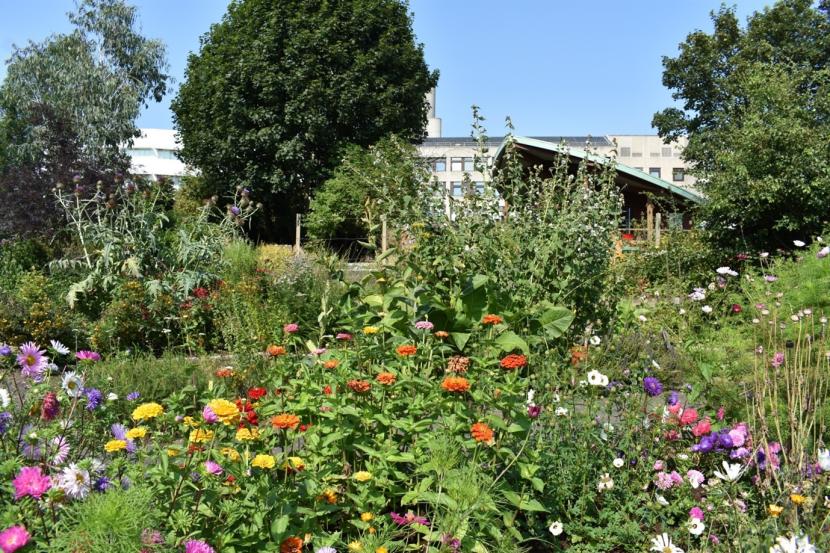
Ninewells Community Garden
Confirmation that Ninewells Community Garden philosophy works for patients came recently with the establishment of a new Oncology Courtyard Garden in the very heart of this huge hospital.
Around the sizeable Royal Edinburgh Hospital fruit trees are very evident. The popular orchard is a fantastic resource for patients and a wonderful spring resource for pollinators. The Cyrenians are the driving force caring for this green site and they have been steadily improving their orchard areas for pollinators.
The greenspace project at the site of Gartnavel Hospital in Glasgow features a walled garden, spring bulbs, herbs and raised beds. The site is both calm and welcoming, and contributes to NHS greenspace policies around sustainability and biodiversity. Similarly at Forth Valley Royal Hospital in Falkirk woodlands provides habitat for pollinators and recuperative walks for patients. Stress is known to play a major part in cardiac patients’ lives, and the hospital advocates using the greenspaces around the hospital grounds to alleviate this.
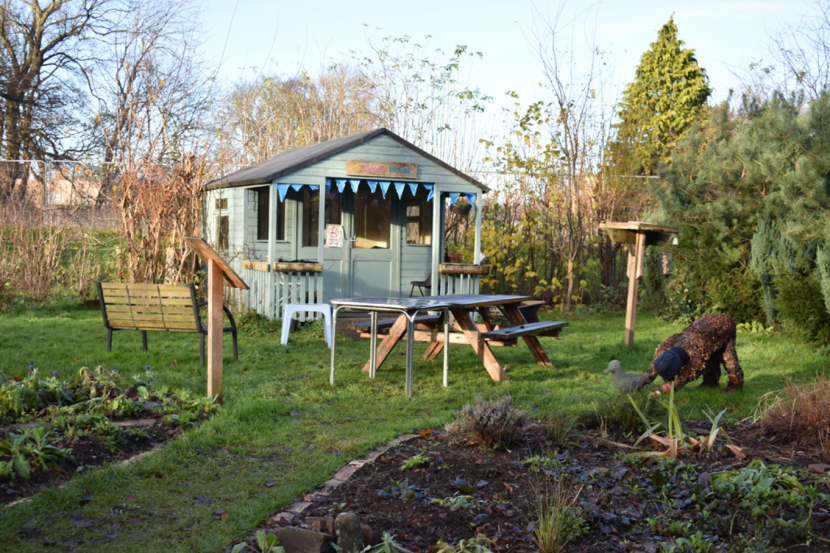
One of several greenspaces around the Royal Edinburgh Hospital.
Making changes to hospital grounds to benefit pollinators can be as simple as introducing containers, planters and hanging-baskets with pollinator-friendly planting.
Trees, shrubs, small orchards, meadows, flower strips and verges, along with hedgerows can all be beneficial for pollinators. Trees can be particularly good for pollinators, and native species such as willow, rowan, apple, pear and plum provide concentrated sites of nectar and pollen in spring for emerging insects.
Many hospital grounds now explore the potential to introduce sensory gardens. With careful planting these can be colourful, sweet-smelling areas, ideal for relaxing and very good for patients, staff, visitors and pollinators alike.
Our Planting for Pollinators guide will help you identify pollinator-friendly plants, and a phone app like PlantNet can be a useful aid in identifying what existing plants are in your hospital grounds. If you feel unconfident in identifying the plants, you could ask an ecologist or environmental group to help with the task.
If you have a large area of grass, you can reduce cutting by mowing paths through a grass area. You should take the cuttings away and not simply spread them over the site, this avoids the potential to return nutrients to the soil and inadvertently supressing the wildflower growth you are looking to encourage. Remember plants such as dandelions, knapweed, clovers, and birds-foot trefoil are great for pollinators.
Perception matters. Leaving areas of grasslands uncut until autumn can create an untidy look. If you are concerned that colleagues or visitors may perceive these areas as messy, you could use our free Managed for Wildlife signs to persuade them of the value of these area to nature.
Having considered managing your space for pollinator food resources, you may want to spend some time observing which pollinator species are using your site. There are many useful guides to help you. Indeed, taking part in one of the UK Pollinator Monitoring Scheme FIT Counts is a fun and practical way to do this.
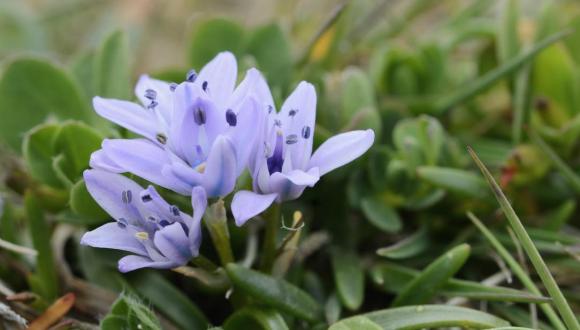
If you decide to enhance your site by planting, you should embrace native plants. Local plants have evolved alongside local pollinators, and are proven to thrive in local conditions. Plants such as begonias and daffodils may add a splash of colour, but they are no good for our pollinators as they provide little or no pollen and nectar. If you want to plant bulbs, then snowdrops, crocus, and grape hyacinth are good choices. If you are usure what to plant, then consult our Planting for Pollinators guidance where you will find advice on flowers, shrubs and trees, as well as a steer on what will flower in each season.
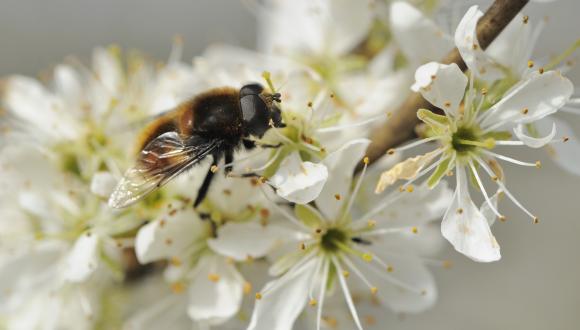
Hedgerows are a major asset for pollinators. They offer nesting sites in the tussocky grass at their base, provide corridors for insects to travel along, and lots of food in one place. Hawthorn and blackthorn are popular hedgerow plants and provide food in early spring, just when resources are scarce. Dog rose, ivy and bramble, which can appear in hedges, are also valuable assets for pollinators and wildlife.
Hedges do require some management, but there are many guides you can find on the internet. Main considerations are infrequent cutting, and no cutting during bird nesting season. Whilst hedgerow blossom provides nectar and pollen for pollinators in spring, their berries provide food for many birds and mammals in autumn and early winter.
Containers and hanging baskets are a great solution if your business does not sit on a large area of land. The same planting advice regarding native plants and bulbs applies.
You might be tempted to add honeybee hives to your site would be helping pollinators. But this isn’t the case. Honeybees are managed pollinators, under no threat, and will complete with wild pollinators for food.
There are options to provide wild pollinators with nesting sites. As you might imagine, different species have different nesting needs.
‘Wild’ corners of your grounds, where you don’t cut long grass can offer vital nesting and shelter sites for pollinators. Areas containing dead wood, log piles or leaf litter are ideal nesting and over-wintering sites for many species.
Most bumblebee species will nest in the tussocky grass beneath hedges or in long grass. Solitary bees nest in the ground, with a preference for south-facing bare earth. Cavity-nesting solitary bees will nest in holes and plant stems.
Pesticides are among the many threats our pollinators face and you should avoid the use of these products as they can disorientate, harm or kill pollinators.
Finally, please let us know how your hospital grounds are being used. Your actions could be just the encouragement and inspiration to help others adopt their own pollinator-friendly actions.