Freedom of Information Request - prosecutions for foraging
Date: 19 May 2025
Our ref: SIR179912/A5139889
Information Request – prosecutions for foraging
Your Request
‘I would like to submit a request for information under the Freedom of Information (Scotland) Act 2002 regarding prosecutions for foraging or the picking of plants or shellfish. Please provide the relevant information for the period between 1 April 2020 and the most recent date for which data is available.
Please could you provide the following:
1. Has NatureScot referred any incidents related to foraging or the picking of plants or shellfish to the Gangmasters and Labour Abuse Authority (GLAA)?
2. Does NatureScot hold any internal reports or assessments relating to illegal or commercial foraging or picking of plants or shellfish?
3. Does NatureScot currently collaborate with any other agencies or organisations to monitor or prevent illegal foraging or the picking of plants or shellfish?
4. Has NatureScot ever granted permission to any individuals or businesses to harvest wild plants or shellfish? If so, please provide the following:
a. A list of the permissions granted with the following included:
• Who received the permission
• When was the permission granted
• For which jurisdiction was the permission granted
• What is the permission expiry date (if it exists).
5. Has NatureScot ever reviewed or revoked such permissions due to concerns over scale, legality, or ecological impact?
6. Does NatureScot hold any records or correspondence related to commercial foraging courses, including those run by hotels, restaurants or freelance guides, on land it manages?
7. Does NatureScot hold any data or reports (even if provided by third parties such as the NHS or local authorities) relating to public health incidents—such as poisonings or gastric upsets—linked to mushroom foraging on its land?’
Clarified Request:
‘Yes, please include seaweed.’
Our Response
Has NatureScot referred any incidents related to foraging or the picking of plants or shellfish to the Gangmasters and Labour Abuse Authority (GLAA)?
No. The police are the competent authority in Scotland, not the GLAA (their powers extend to England and Wales only). In 2021, we reported one incident to the police involving mussel collection on the Dornoch Firth SSSI which was in breach of the Nature Conservation Order prohibiting shellfish collection. The suspects were identified by the police and given advice. It was small-scale collection.
Does NatureScot hold any internal reports or assessments relating to illegal or commercial foraging or picking of plants or shellfish?
Only the incident referred to above.
Does NatureScot currently collaborate with any other agencies or organisations to monitor or prevent illegal foraging or the picking of plants or shellfish?
We work closely with Police Scotland and the National Wildlife Crime Unit and provide expert advice to assist in their inquiries. We have a memorandum of understanding with Police Scotland ‘For the purpose of assisting with the protection of wildlife and the natural environment, and the prevention and investigation of related offences.’
NatureScot are members of the Partnership for Action Against Wildlife Crime Scotland (PAW Scotland), which aims to reduce wildlife crime through effective and targeted enforcement, better regulation and improved awareness.
There is no specific remit to cover the illegal foraging or the picking of plants or shellfish, but any emerging issues would be identified and addressed accordingly.
In September 2024 we liaised with Forest & Land Scotland and RSPB to ascertain numbers of incidences / damage caused by commercial fungi collection. Our initial report related to a group allegedly recruited to grid-walk the forest and collect fungi encountered for later sorting and ID.
Has NatureScot ever granted permission to any individuals or businesses to harvest wild plants or shellfish?
b. A list of the permissions granted with the following included:
• Who received the permission
• When was the permission granted
• For which jurisdiction was the permission granted
• What is the permission expiry date (if it exists).
Consented activities on Sites of Special Scientific Interest (SSSIs) since 2020 is attached separately.
The legislation underpinning Sites of Special Scientific Interest (SSSIs) requires that NatureScot identifies any activities that are likely to damage the natural features for which the site is designated. These activities are listed for each site as ‘Operations Requiring Consent’. Before a private owner or occupier of a SSSI carries out any activity listed on the ORC list, consent must be sought from NatureScot. Please note, we cannot give a consent to a third party, ie someone who is not an owner or occupier of the land. Consent is granted for ORCs from the local NatureScot operations officers. Within SSSI’s although consent may be granted by NatureScot, landowner permission is still required. For more information, please see Sites of Special Scientific Interest (SSSIs) - Consents.
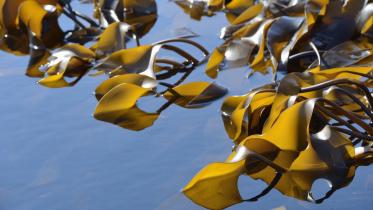
NatureScot is an advisory not regulatory body for the wild harvesting of seaweed. We provide advice on sustainability and environmental impacts of seaweed harvesting activities to regulators and harvesters. With the exclusion of Operations Requiring Consent on SSSI’s, where we grant consent for the activity, we do not grant permission; this is the landowners responsibility.
For harvest of wild seaweed from below the mean low water spring mark (i.e. from within the sea) or from beaches not in private ownership, the Crown Estate may issue licenses for seaweed harvesting proposals for the seabed and the foreshore under their ownership. More information about the Crown Estate's role, including in respect of seaweed cultivation, can be found on The Crown Estate website.
We work with The Crown Estate Scotland (CES) to provide advice to inform CES licensing application decisions for sustainable seaweed harvesting proposals. In advising the Crown Estate and harvesters, we would consider species, location, quantities in relation to the scale and regenerative capacity of the available resource and methods (including time of year, harvesting methods, duration and timing of any proposed fallowing period etc). Depending on the scale of operations, we may advise a stock biomass assessment is required to establish a baseline of the available seaweed resource, together with a sustainable harvesting strategy.
If a proposal is to harvest from the seabed below the mean low water spring mark using a vessel, an individual may require a marine licence for such operations. The requirement for a marine licence for harvesting involving the use of vessels should be discussed with the regulator, Marine Directorate, in the first instance.
Has NatureScot ever reviewed or revoked such permissions due to concerns over scale, legality, or ecological impact?
No.
Does NatureScot hold any records or correspondence related to commercial foraging courses, including those run by hotels, restaurants or freelance guides, on land it manages?
The relevant correspondence is attached separately.
We have marked out (redacted) personal and identifiable data in the documents provided. Releasing the personal data into the public domain in response to an access to information request would breach the Data Protection Act 2018. We are therefore withholding the information under EIRs Regulation 11(2) (Personal data).
Does NatureScot hold any data or reports (even if provided by third parties such as the NHS or local authorities) relating to public health incidents—such as poisonings or gastric upsets—linked to mushroom foraging on its land?
NatureScot was involved in the preparation and commenting of the Wild Food Accreditation Scheme Scoping Report, attached separately, which includes references to poisoning incidents.
How We Handled Your Request
We believe you have asked for environmental information as defined in the Environmental Information (Scotland Regulations 2004 (‘the EIRs’), so we are dealing with your request under those regulations. To be able to use the EIRs, we must apply an exemption under section 39(2) of the Freedom of Information (Scotland) Act 2002 (‘FOISA’). The Scottish Information Commissioner’s guidance recommends that public authorities apply this exemption to environmental information and handle request under the EIRs.
If you would like to find out more about the access to information legislation, there is a guidance booklet available on the Scottish Information Commissioner’s website.
Review and Appeal
I hope this information meets your requirements, but if you are dissatisfied with how we have responded to your information request, please write to us within 40 working days explaining your concerns. You can contact us at Battleby, Redgorton, Perth, PH1 3EW or email us at [email protected]. We will carry out a review of our response and contact you with our findings within 20 working days.
If you are not satisfied following this, you can make an appeal to the Scottish Information Commissioner within 6 months. The Scottish Information Commissioner can be contacted at:
Scottish Information Commissioner
Kinburn Castle
Doubledykes Road
St Andrews
Fife
KY16 9DS
Telephone: 01334 464610
Yours sincerely
FOI Officer,
NatureScot
Document downloads
Due to accessibility issues the attached information, referenced above, is available on request by contacting the FOI team at [email protected]. Please reference the case number (starting with SIR).