Equality Impact Assessment - Corporate Plan 2022-2026
Stage 5. Action needed to fulfil the needs of the general equality duty
Needs of the general equality duty
Mitigating or positive actions needed, recommended or planned for each protected characteristic. (Age, Disability, Sex, Race, Sexual orientation, Gender reassignment, Pregnancy and maternity, Religion or belief).
1. Eliminate unlawful discrimination, victimisation or harassment
The Corporate Plan sets out: “We are Scotland’s Nature Agency, protecting and restoring nature, and inspiring everyone to value our natural world. We do this because everyone’s future depends on it.”
There are some obvious barriers for several of the equality groups, and NatureScot must ensure that it remains focused on continuing to eliminate unlawful discrimination, victimisation or harassment:
Age
- Overall, the most common device that people access the internet with nowadays is their mobile phone, but for people over the age of 75 the most common device is a personal computer. NatureScot need to make sure that the information going out on social media can be accessed in a readily available format on computers as well as smartphones.
Socio-economic status
- With the heavy emphasis on promoting our work through social media, we could be discriminating against people from a low socio-economic background, as people living in the 20% most deprived areas in Scotland, are less likely to have access to the internet than those in the 20% least deprived areas. We can help mitigate this by working with partnership organisations to give equal opportunity to all.
Disability
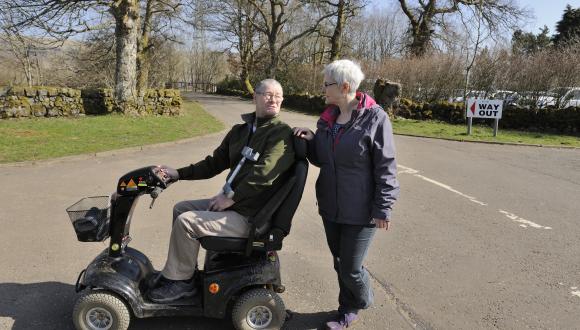
- People with a physical condition face the most concrete barrier to nature, this can range from access, to signage and interpretation, to toilet facilities and paths and benches. Those living with long-term limiting illness, health problem or disability are significantly less likely than average to participate in outdoor recreation. The development of accessible paths and routes close to where people live can improve outdoor access for everyone – and in particular those living with a disability or poor health.
Race
- The exclusion of Minority Ethnic (ME) people from the outdoors can be linked to many things such as the imbalances across STEM education and training in relation to race and geographic location. The lack of cultural familiarity and confidence is the main barrier to National Nature Reserve (NNR) access for Minority Ethnic (ME) groups, added to this is the lack of confidence about fitting in on NNRs (due to the predominately white visitor demographics of rural areas, strong associations of the countryside with white culture, and experiences or fears of hate crimes). This could be helped by encouraging events and marketing to invite those to safe spaces at local NNR’s.
2. Advancing equality of opportunity
As well as not causing any discrimination, NatureScot needs to take the opportunity to advance equality. Since the last Corporate Plan period we have advanced Equality and Diversity (E&D) across the organisation, creating internal diversity groups (e.g. Young Employee Network, Disability, Ability, Wellbeing and Neurodiversity Network (DAWNN), BAME Network), celebrating Pride and Black History months by sharing employee stories, and educational videos and articles. We also went out to staff to encourage them to disclose their E&D information as disclosure rates have been low in the past.
Age
- Young people’s connection to nature drops sharply from the age of 11 and doesn’t recover until they are 30 – with significant implications for their engagement with pro-environmental behaviours like recycling or buying eco-friendly products. NatureScot already engages through educational programmes, volunteering and a Youth Employment initiative. What opportunities can NatureScot make at a young age so that people don’t lose connection to nature?
Socio-economic status
- People from low income groups are less likely to visit NNRs due to: insufficient access to public transport; having to work longer hours to afford necessities on low wages; and have lower confidence in visiting natural spaces as it’s not the cultural norm. We need to ensure that we are not disregarding a key demographic of the Scottish population. NatureScot needs to think about ways to encourage those from a low socio-economic background into nature spaces. There are different avenues that are currently being explored for future development.
Disability
- Disabled people are more likely than non-disabled people to have lower or no qualifications at SCQF level 4 and a lower proportion of disabled people leave school for higher education. As at April 2019 2.4% of NatureScot employees had declared that they are living with a disability. With disclosure rates at 68%, this declaration is significantly lower than the Scottish population (25.6%). As an organisation we could be doing more to have a staff workforce that is more representative of the Scottish population.
Race
- People from Minority Ethnic communities are more likely to live in urban areas, and are less likely to be aware of NNRs. There is also a lack of confidence about fitting in on NNRs. This means ME communities engage in outdoor recreations more in urban areas such as parks. NatureScot could be doing more to encourage all races to visit our NNRs.
3. Fostering good relations
The above evidence shows that there is a potential to discriminate against the below equality groups:
- Age (both young people and older people);
- Socio-economic status;
- Disability; and
- Race (BAME).
While our work has the potential to impact all of the equality groups, these are the groups where we need to advance equal opportunity to ensure a nature-rich future for all.
Stage 6. Taking account of the results of the assessment
Having considered the potential or actual impacts you should be in a position to make an informed judgement on what should be done. In all cases, document your reasoning that justifies your decision. There are four main options you can take:
- No major change – your assessment demonstrates that the policy is robust. There is no potential for unlawful discrimination and you have taken all opportunities to advance equality of opportunity and foster good relations, subject to continuing monitoring and review
- Adjust the policy – this involves taking steps to remove any barriers, to better advance quality or to foster good relations.
- Continue the policy (despite the potential for adverse impact) – you should clearly set out the justifications for doing this and how you believe the decision is compatible with our obligations under the duty
- Stop and remove the policy – if there are adverse effects that are not justified and cannot be mitigated, you should consider stopping the policy altogether. If a policy leads to unlawful discrimination it should be removed or changed.
Option selected: No major change
Justification: The way in which we work will not majorly change. The list of actions below are to ensure that we are delivering our work in a way that:
- Eliminates unlawful discrimination, victimisation or harassment;
- Advances equality of opportunity; and
- Fosters good relations.
Stage 7. Summary of agreed actions resulting from your assessment
What action, by whom, will be undertaken as a result of the impact assessment.
Actions:
- Ensure we involve key equality group representatives and networks in the development of our corporate plan.
- Work in partnership with CEMVO to develop ME co design panels on:
- Funding
- STEM, Recruitment & Attraction Strategy (Link to Equality outcome 2 and Outcome 4.2)
- Nature Based skills work
- Link to Equality Outcome 1.6. Ensure that our existing Green Infrastructure work tackles engagement and inclusion.
- Increase diversity within decision making structures. Review current Project/Advisory Boards and ensure that any new boards include representatives from our target groups (young people, ME, disabled, disadvantaged) - Consider opportunities to widen to external pool.
- Link to Equality outcome 1.1. Inclusion principles must be built into emerging work streams (Nature Based solutions, Land & Sea, Building Natural Capital, Financing Nature restoration, NNRs, Nature based skills, development of STEM strategy and Programme for Youth employment)
- Link to Equality Outcomes 1.4 & 1.5. Development of an overarching Inclusive Funding Framework
- Consider the possible negative equalities impacts of all nature based solutions (seek NbS that help to address inequalities e.g. in health outcomes and by communities experiencing one or more elements of deprivation identified in the SIMD )
- Encourage staff to disclose E&D information
- Ensure that we use multiple channels of promoting our work (so as not to exclude those who don’t have easy access to social media/internet).
- Ensure that signage on our NNR’s are interpretive.
Alongside the above, we are also seeking to deliver actions from the Current Equality framework and action plan (2019 – 2023). The actions from this has been pasted below.
Outcome 1: Across the range of our activities, more people from Minority Ethnic (ME) communities, people with disabilities and disadvantaged families, individuals and communities enjoy and benefit from nature
Actions:
- Develop new engagement mechanisms or develop existing panels to engage with people from ME communities and/or disadvantaged families, individuals and communities on our existing or emerging work.
- Consider how we can demonstrate the long term impact of our projects involving the people we support with a view to influencing future strategic research programmes.
- Increase the number of visits to our NNRs by people from ME communities, people with disabilities and disadvantaged families, individuals and communities.
- Demonstrate how our external funding, projects, and campaigns support greater use of the outdoors by people from BAME communities, people with disabilities, and disadvantaged families, individuals and communities.
- Ensure that all of our external funding programmes are promoted effectively to help priority groups to access nature.
- Develop new opportunities to support minority businesses (i.e. majority owned, controlled and operated by ethnic minority individuals), supported businesses (majority of workers with a disability), and social enterprises to support our inclusive economic growth objectives.
- Development of a ME Engagement Action Plan for corporate plan period.
- Develop additional skills and capacity within relevant teams to provide greater focus for engagement and co-design work.
- Consider opportunities for the better monitoring of equality groups as part of the development of the next cycle of SPANs surveys 2022-2032.
Outcome 2: Through changes to recruitment and attraction procedures more people from Minority Ethnic (ME) communities and people with disabilities apply for opportunities with NatureScot
Actions:
- Development of our Recruitment & Attraction strategy.
- Monitoring diversity through recruitment cycle.
- Unconscious bias training for vacancy managers.
Outcome 3: We have am age inclusive culture that supports and values everyone
Actions:
- Review our approach to Employee networks.
- Building career MOTs into our performance management process to support employees through life transition stages.
- Review our mentoring offer to include reverse and reciprocal mentoring.
Outcome 4: We have reduced our gender pay gap to 9%
Actions:
- Review recruitment processes and polices.
- Development of STEM Ambassadors in areas where there is significantly lower female representation.
- Improve workplace flexibility for men and women.
- Increase number of makes choosing to take shared parental leave.
Stage 8. Monitoring implementation
As this is a strategic corporate document, setting the general direction for the organisation, its implementation will be undertaken through business planning and specific projects or pieces of work. Any monitoring would be undertaken at this level.
EqIA review date: will tie in with the start of revising our next corporate plan in 2026.
Stage 9. Procurement
N/A
Stage 10. Authorisation
Please confirm that this Equality Impact Assessment has informed the development of this policy:
Yes No
Opportunities to promote equality in respect of age, disability, sex, pregnancy and maternity, gender reassignment, sexual orientation, race and religion or belief have been considered, i.e.:
- Eliminating unlawful discrimination, harassment, victimisation;
- Advancing equality of opportunity;
- Fostering good relations
Yes No
I am satisfied with the equality impact assessment that has been undertaken for the Corporate Plan 2022-26 and give my authorisation for the results of this assessment to be published on the NatureScot website.
Name: Stuart MacQuarrie
Position: Deputy Director Business Services and Transformation
Authorisation date: 12 April 2022
Note: if this EqIA is associated with a policy that requires Director, Management Team or Board sign-off, you should arrange for the results of the assessment to accompany approval of the policy. This is to ensure that decision-makers are given sufficient information to enable them to pay due regard to equality when making their decision.
Stage 11. Storing and publishing this EqIA
The regulations require that where an assessment has been made and the policy is implemented, the results of any assessment be published ‘within a reasonable period’ of the decision to apply the policy.
Please consider what the evidence tells you about the likely impact (positive or negative) on people sharing a protected characteristic, i.e. how significant could the impacts be if we did not make any adjustments? Remember the duty is also positive – so please identify where the policy offers opportunities to promote equality and/or foster good relations.
Annex 1: The significance of the potential impacts
| Impact | Age | Disability | Sex | Race | LGBTQ+ | Marriage & CP | Pregnancy / Maternity | Religion / belief | Socioeconomic status | Positive (+) Negative (-) Neutral (0) | High (H) Medium (M) Low (L) |
|---|---|---|---|---|---|---|---|---|---|---|---|
| Awareness of NatureScot as an organisation | X | - | - | X | - | - | - | X | X | - | H |
| SIMD populations have contributed the least to climate change and biodiversity loss | - | - | - | X | - | - | - | - | X | - | L |
| Cost of going net zero – new technologies and sustainable practices less accessible | X | - | - | - | - | - | - | - | X | - | M |
| Ensure we are not causing harm elsewhere in the world/offsetting our emissions | - | - | - | X | - | - | - | X | X | - | L |
| Non participation in land management | X | X | X | X | X | - | - | X | X | + | H |
| Community involvement from the beginning to ensure meaningful inclusion and ownership | X | X | X | X | X | - | - | X | X | + | H |
| Lack of representation in decision making around environment | X | X | - | - | X | - | - | X | - | - | H |
| Ensure that people with 'invisible' protected characteristics are reached and included | - | X | - | - | X | - | - | X | - | - | H |
| Be aware that senior, cis-gendered/straight, able white male privilege is so embedded in NatureScot that we may appear patronising | X | X | X | X | X | - | - | X | X | 0 | M |
| Young people may be disillusioned at the promises put forward by the organisational goals | X | - | - | - | - | - | - | - | - | - | L |
| Take a stronger stance of inclusivity through zero tolerance to discrimination | X | X | X | X | X | X | X | X | X | 0 | H |
| Encouraging young people into the 'green sector' generally requires a degree, leading to disproportionally middle-class recruitment | X | - | - | X | - | - | - | X | X | - | M |
| Need to ensure NatureScot is embedded in local communities | - | - | - | X | - | - | - | - | X | 0 | H |
| Allow all staff to give their preference about working at home | X | X | X | X | X | X | X | X | X | 0 | L |
| Be aware that labelling ourselves as the 'first nation to be net zero' ignores communities who have minimal environmental impacts | - | - | - | X | - | - | - | X | X | - | L |
| We need more community led, cooperative, co-design methods for effective, successful, resilient long term goals | X | X | X | X | X | X | X | X | X | + | H |
| There are sometimes income reasons for not being interested in nature/being nature-averse | - | X | - | X | - | - | - | X | X | - | H |
| Ensure organisational campaigns work for all or are appropriately targeted | X | X | X | X | X | X | X | X | X | + | H |
| There are sometimes cultural reasons for not being interested in nature | X | - | - | X | X | - | - | X | X | - | H |
| The 2045 target is too late a response to the climate emergency | X | - | - | - | - | - | - | - | X | - | L |
| The approach we take to non-native species and the language we use to discuss the issue can be viewed negatively | - | - | - | X | - | - | - | X | - | - | L |
| Need to address the issues around funding the transport required to get to green spaces, reserves etc | X | X | - | X | - | - | - | - | X | - | H |
| Efforts need to be made to ensure those not represented within NatureScot or 'on our radar' are considered | X | X | X | X | X | X | X | X | X | + | H |
| Need to sufficiently resource the teams who will be delivering initiatives or funding. Teams are working at and above capacity in some cases and rolling out initiatives relies on their continuing capacity to deliver | X | X | X | X | - | - | - | X | X | 0 | M |
Last updated: