Beaver Decision Document - Licence Application 296282
Possession, Control, Transport and Release of Eurasian Beavers at agreed sites at Abriachan Forest, as part of the Abriachan Beaver Project.
Purpose of this document
This decision document:
- Explains how the application has been assessed;
- Provides a record of the decision-making process;
- Details how all material considerations as outlined in the Scottish Code for Conservation Translocation have been considered;
- Details the specific conditions added to the licence, in addition to our generic licence conditions.
Contents
- Purpose of this document
- Key factors of the assessment
Key factors of the assessment
1. Application summary
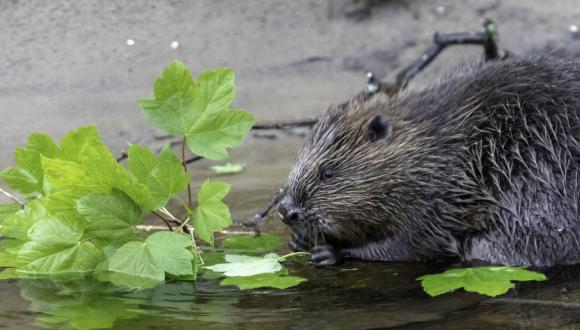
An application was received by NatureScot on 13 June 2025 for the release of Eurasian beaver (Castor fiber) to agreed sites at Abriachan Forest as part of the Abriachan Beaver Project. The project aims to release beavers in suitable habitat in Abriachan with the expectation that beavers will occupy these waterbodies and colonise and disperse into the wider Beauly catchment over time. The application from Abriachan Forest Trust is for the translocation of up to two beaver families from conflict sites within Scotland to agreed sites at Abriachan Forest. Releasing beavers to Abriachan, alongside existing wild beaver presence in the River Beauly catchment and the proposed release of beavers to Glen Affric, will increase the current range of beavers in Scotland as set out as a priority in the Scottish Beaver Strategy 2022 – 2045.
Beavers would be trapped following best practice under a separate licence (Beaver Trust licence 271106) and health screened before being transported for release. All beavers would be obtained from locations already covered by a NatureScot licence for removal associated with human-beaver conflict. This beaver reintroduction project is proposed as an alternative to translocation to sites in England or Wales or to lethal control at sites where mitigation measures are not feasible or have not been successful in resolving the human-beaver conflict. It is proposed such action will bring environmental benefits and conservation benefit from the continued restoration of beavers in Scotland.
Abriachan Forest Trust have proposed beaver translocation to the area to provide numerous biodiversity and environmental benefits and to help meet wider habitat restoration goals. This includes improved ecological functionality through wetland creation and expansion. Abriachan Forest Trust also consider there will be benefits to local communities and to wider audiences in Scotland, increasing awareness of the role that beavers play in restoring ecological function, demonstrating approaches to living with beavers and benefiting from beaver presence for example by providing ecotourism opportunities.
2. Our decision
NatureScot Licensing Officers have undertaken a full assessment of the proposal to relocate beavers to sites at Abriachan.
This assessment has been reviewed by the Licensing Manager who made recommendation to the Head of Wildlife Management for the decision as detailed below:
- Following thorough assessment of Abriachan Forest Trust’s application and giving careful consideration to the concerns raised by local communities and stakeholders, the licence application to reintroduce beavers to agreed sites at Abriachan Forest has been approved
- The licence permits the release of up to two beaver families at the agreed sites within the licence term
3. How we reached our decision
3.1 Assessment of proposal against legislative requirements
Release of a non-native species
Under section 14 of the Wildlife and Countryside Act 1981 (as amended) it is illegal to release, allow to escape from captivity or cause to be at a place outside the control of any person any animal species outside its native range (as defined in the Act) without a licence. ‘Former native’ species are considered to be ‘non-native species’ for the purposes of the Act. Beavers are considered a ‘former native’ species in Scotland. Therefore, any release of beaver into the wild in Scotland requires a non-native species licence under Section 16(4)(c) of the Act.
Requirement to possess, control and transport beavers for release
Abriachan Forest Trust has applied for permission to possess (for the purpose of health screening only), control, transport and release beavers at agreed sites at Abriachan Forest.
The beavers will be trapped, health screened and PIT tagged (Passive Integrated Transponders) under Beaver Trust Licence 271106 and will then be transported(following best practice) and released at the agreed release sites at Abriachan Forest.
The activity is proposed for the principle purpose of conserving wild animals, with a view to reintroduce beavers and preserve genetic diversity within the national population.
European Protected Species licensing of these activities requires that they meet the 3 licensing tests as follows:
Test 1 – There must be a licensable purpose:
The possession and transport of beavers is permitted under The Conservation (Natural Habitats, &c.) Regulations 1994 (as amended) (hereafter the Habitats Regulations 1994) for the following licensable purposes:
- 44 (2) (c) Conserving wild animals (primary purpose).
The conservation translocation is expected to have a positive effect on the conservation status of Eurasian beaver within Scotland by expanding their range and retaining individuals which would otherwise be lost to the Scottish population. As such the conservation of wild animals is the appropriate licensable purpose in this case.
There is a licensable purpose for this proposal and test 1 is passed.
Test 2 – There must be no satisfactory alternative:
NatureScot have considered the alternatives to granting a licence for the stated primary purpose (Regulation 44(3)(a) of The Habitats Regulations 1994). This included, not granting a licence, consideration of alternative locations and the timing; including whether allowing a natural process of colonisation would be a satisfactory alternative.
The trapping element of the project is covered by an existing licence to trap and translocate beavers to approved sites in Scotland. This licence to trap beavers at sites where they have been assessed in accordance with legislation to meet the licensing tests for beaver removal due to an active conflict between beavers and other land management uses. Hence the consequences of trapping or not trapping these animals is not considered further in the consideration of alternatives.
Do Nothing - Not granting a licence in this case would mean that beavers from conflict sites that could have been moved to the release sites within Abriachan would instead be moved to projects in England and Wales or killed under a lethal control licence. In both these scenarios the animals will be lost to the Scottish wild beaver population.
Alternative locations - There are currently a very limited number of sites in Scotland that are licenced for beaver release that have not already carried out beaver translocations. Therefore, the alternatives to consider in this case are whether or not to grant a licence for the possession, control, transport and release of beavers at the proposed release sites. The release of beavers to new catchments is part of the vision of Scotland’s Beaver Strategy and the Beauly catchment has been identified as one of the most suitable catchments in Scotland for beaver restoration due the availability of suitable habitat. The risks and benefits of beaver release at Abriachan in the Beauly catchment of a social, economic and environmental nature are considered further under section 3.2.
There are currently a small number of beavers living wild in the Beauly catchment arising from unauthorised releases. The number of animals that have escaped or have been released is unknown, but there are likely to be a small number of founding individuals and hence the population is likely to be vulnerable to inbreeding depression and stochastic events. An assessment of the likelihood of further beavers naturally colonising the proposed release area has demonstrated that, given current population numbers and distribution, it is highly unlikely without assistance via proactive translocations. Licensing the release of two beaver families to Abriachan will provide greater viability to the beavers present in the catchment from a population and genetic perspective. However, we would note that approval of beavers in the Beauly catchment is only being granted here on the basis of the formal application and the process of engagement that has taken place and unauthorised releases remain to be ill-advised and an offence under the Wildlife & Countryside Act (1981 as amended).
NatureScot considers Scotland’s beaver population will be enhanced by establishing a viable population within the Beauly catchment. The proposed release sites have been assessed and are considered favourable for beavers to establish. The application seeks to take proactive actions to facilitate the restoration of this species and conserve well-adapted, healthy individuals in order to promote the genetic diversity of the Scottish beaver population. It is recognised that beavers are a valuable key stone species and will bring positive biodiversity and ecosystem beavers to the catchment.
Timings – Beavers are protected year-round, so a licence will always be required to possess, control, transport and release. To ensure minimal welfare impacts; beaver trapping, transportation and release will take place out with the kit dependency period (1 April to 16 August).
We have concluded that not granting a licence in this case would mean that beavers from existing conflict sites that could have been released within Abriachan would as a result be released at other sites in England and Wales or killed via lethal control licence and therefore lost to the Scottish wild beaver population; and that for the purpose of conserving wild beavers in Scotland there is no satisfactory alternative to granting a licence in this case.
Test 2 is passed, there is no satisfactory alternative.
Test 3 – Actions will not be detrimental to Favourable Conservation Status
The translocation of beaver to Abriachan will contribute to improving the overall status of the beaver population within Scotland, in terms of both numbers and maintaining genetic diversity. The Scottish Government has stated its strong determination to see more beavers translocated within Scotland to directly reduce the number of beavers killed via lethal control at conflict sites. The use of lethal control is of significant public concern and alternative solutions, such as translocations, should be applied to ensure healthy beaver populations.
The proposed action will not be detrimental to the maintenance (or restoration) of the population of beavers at a favourable conservation status in their natural range (regulation 44(3)(b) of The Habitats Regulations 1994.
On the genetic status of the population we refer to:
Campbell-Palmer, R., Senn, H., Girling, S., Pizzi, R., Elliott, M., Gaywood, M. & Rosell, F. (2020). Beaver genetic surveillance in Britain. Global Ecology and Conservation, 24, e01275.
Licensing test 3 is passed.
3.2 Assessment of proposal against Scottish Code for Conservation Translocations
NatureScot have assessed the benefits and risks of the proposal in line with the Scottish Code for Conservation Translocations. We have also considered the practical aspects of the project feasibility and desirability.
3.2.1 Release location suitability
A summary of the characteristics of the Beauly catchment and its suitability for beavers is provided in the Environmental Report (section 2) produced to consider the effect of beaver releases in this catchment. The ER concluded that ‘these catchments are highly suitable for beavers in terms of habitat availability and suitability. Based on the availability of suitable habitat and potential for ecosystem benefits, the Beauly catchment is considered to be one of the most suitable catchments for beavers in Scotland (ranked 9th in SEA Addendum 2022).
An assessment of the suitability of the Abriachan release sites for beaver has been provided by the Beaver Trust and has been assessed by our own beaver specialist. These assessments support that there is suitable habitat for two beaver families at the proposed sites and the immediate surrounding area. We note that the released beavers may move beyond the release site into the wider catchment and we have taken this into account in our assessment of potential effects and mitigation. NatureScot can clarify that should beavers be released, all beavers present within the Beauly catchment will be regarded as wild animals and are already afforded European Protected Species status.
We have assessed there is the potential for beavers to significantly contribute to the nature and climate challenges currently faced in this catchment. The proposal is also considered to present low risk in terms of the likelihood and scale of negative impacts that may arise from beaver release. If negative impacts do occur, we considered there are existing mechanisms available through the Beaver Management Framework to deal with them. It is also planned that a Beaver Monitoring and Mitigation Group be established to co-ordinate and oversee beaver activity and impacts in the wider catchment.
3.2.2 Assessment of potential impacts on designated sites
Impacts on the designated sites in the wider catchment have been assessed with respect to agreed release sites at Abriachan via appropriate assessment in relation to Regulation 48 of the Conservation (Natural Habitats, &c.) Regulations 1994 as amended (Habitats Regulations Appraisal).
The Habitats Regulations Appraisal concludes:
“With the appropriate mitigation in place beaver translocations to the River Beauly catchment will not adversely affect the integrity of a European site. This mitigation will need to be considered and secured as part of the consenting process for any applications to translocate beavers to the River Beauly catchment.”
The agreed release locations do not fall within a European Designated Site and dispersal of the released animals to a European Designated Site is considered to be very unlikely. As such there is no specific mitigation related to the HRA included in this proposal. However, alligned with the beaver release planned for Glen Affric also in the Beauly catchment, a Beaver Monitoring Plan is in place and a Beaver Monitoring and Mitigation Group will be established that will co-ordinate beaver related monitoring and management in the whole catchment. Responsibility for monitoring of European Designated Sites in the wider catchment is set out in this plan, and resides with Forestry and Land Scotland and NatureScot Central Highlands Operations Team.
3.2.3 Other potential environmental effects
The Environmental Report systematically assessed the likelihood and significance of beaver effects in the Beauly catchment. This includes to biodiversity, to water resources, to population and human health, to cultural heritage, to material assets (including agriculture, forestry, fisheries) and to infrasture. The potential for negative impacts are recognised particularly to riverbank erosion, riparian woodlands and to migratory fish which are addressed below. These potential impacts are not specific to the Abriachan proposal, but to beaver presence in the wider catchment.
Beavers dig canals and create burrows in the riverbank. The effect of such burrowing is context specific depending on the substrate, the nature of vegetation and trees holding the bank together, and the existing river processes; whether erosional, balanced or depositional.
Further to the Environmental Report and concerns raised by the land management and fisheries interests regarding potential impacts on riverbanks, we sought advice from SEPA on the risk of beaver induced erosion on the River Glass and River Beauly. A senior SEPA hydro morphologist carried out an assessment of coarse sediment dynamics on the River Glass and Beauly based on a comparison of bar and channel areas in aerial imagery (between 2013 and 2024). This assessment established that erosion is more dominant in the river reaches in the steep higher energy headwaters above Loch Affric. SEPA consider it is reasonable to assume that beavers could add to erosion in such reaches (noting riparian woodland is sparse above Loch Affric which is likely to limit beaver spread in this direction), but the beaver effects may be small here compared to existing erosion processes. Below the power station at Fasnakye, the rivers have a gentler gradient and are classified as balanced or depositional. SEPA advise suggests beaver influence is unlikely to change the overall balance in depositional reaches but reaches that are ‘in balance’ may be more vulnerable to being ‘tipped’ towards beaver induced erosion. This data is now on NatureScot’s GIS system to inform monitoring of these reaches. SEPA also highlighted the benefit of riparian woodland restoration in such reaches in stabilising the banks.
The SEPA hydro-morphologist highlighted the embankment data used in NatureScot’s ER had been remotely derived. This data suggests there are relatively few artificial flood banks in the catchment. Some sections of embankment identified on the SEPA data were visited on stakeholder site visits in Strathglass. Some sections of embankment were adjacent to back channels on the river and hence likely to be areas favoured by beavers. We propose that proactive mitigation would include; risk assessment, monitoring and carrying out repairs or river restoration approaches to reduce the impact of beaver activity. There is an offer of support to land managers from the Trees for Life Beaver Project Officer relating to the Glen Affric project. What other support can be offered for manage these risks could be further considered by the Beaver Monitoring and Mitigation Group.
The rivers in the Beauly catchment are important for fish and fisheries. Atlantic salmon, sea trout and eels are found in the catchment, (with a few local records of lamprey). The Beauly District Fishery Board in collaboration with the Beaver Trust, UHI and Trees for Life carried out baseline electrofishing at 39 sites in summer 2022, which provided valuable information on salmon and trout distributions and densities. NatureScot staff met with the Lower Beauly and River Glass fishing Syndicates and some individual proprietors during local community visits. This enhanced our understanding of the areas that are important for salmonid spawning and fishing pools and the concerns that have been expressed about impacts on riverbanks and fishing.
The Beauly District Fishery Board staff already check key spawning locations for beaver dams as part of their routine patrolling and other burns in the lower catchment are regularly checked for woody debris by the Lower Beauly Syndicate staff. We have shared what we have learned about fisheries interests and locations identified from site visits with fishing interests with the Beauly District Fishery Board. NatureScot have committed to working with the Beauly District Fishery Board to ensure that the essential monitoring is supported in the catchment. Through engagement with the Beaver Monitoring and Mitigation Group it is proposed that this monitoring (surveillance for dams) can be responsive to the beaver distribution as monitored by public reporting of field signs.
Whilst the woodlands in the catchment provide an extensive network of suitable habitat for beavers, various bodies have highlighted the scope for improvement in riparian woodland. A programme of monitoring of herbivore impacts in existing woodland and opportunities for habitat enhancement should be considered by the Beauly Beaver Monitoring and Mitigation Group.
Concern has been raised in relation to potential impacts of beaver activity on important lichen assemblages in relation to the Abriachan application. Consideration of this is included in the Monitoring Plan for the wider catchment including for the Abriachan Beaver Project and recommends risk-based monitoring of lichen interests is implemented informed by specialist and working with volunteers with a view to avoiding/ mitigating any negative impacts.
3.2.4 Stakeholder engagement
The Scottish Code for Conservation Translocation sets out the expectation that those proposing a project will carry out a consultation that is proportionate to the project/risk and will engage with those most likely to be affected by the proposal.
There have been discussion of proposals to reintroduce beavers to the Beauly catchment for several years. The University of the Highlands and Islands carried out research on the socio-cultural perceptions of beaver presence in the Beauly catchment, which has been published as NatureScot CR1318.
Abriachan Forest Trust have produced a report of their community engagement (in which they were supported by their project partner Scotland: The Big Picture) which details the efforts made in this regard. This included the advertisement of and hosting of a drop in Consultation event which was attended by around 35 local people and representatives of the National Farmers Union of Scotland, the Beauly District Salmon Fishery Board and the Ness District Salmon Fishery Board. The event invited attendees to complete a survey questionnaire and 26 survey responses we provided. Eighty eight percent of survey responses were supportive with the remaining 12% unsupportive or unsure.
There have been limited concerns from stakeholders but the main concerns have been raised by those with farming/crofting and fisheries interests. The NFUS representative present at the event raised general concerns about the potential impacts of beavers on farming, but confirmed that there had been no communication from local members objecting to the Abriachan project itself. The Beauly District Fishery Board raised concerns that it would be necessary to ensure that there are checks in place for dams which may affect fish passage; notably of sea trout on burns within the Beauly coastal catchment. The Ness District Salmon Fishery Board raised similar concerns if beavers were to colonise the Ness catchment including the Rivers Oich and Moriston.
The Scottish Code for Conservation Translocations recognises the need for stakeholder engagement to help shape the project, share views, address concerns and identify mutually agreeable mitigation. The Code suggests translocation should not proceed where there is the potential for harm unless acceptable solutions can be developed. In this case there have been limited concerns raised regarding potential negative impacts at the immediate release sites though there remain some concerns relating to the longer-term presence in the wider catchment. Hence, perhaps more important in the decision making than the absolute numbers for and against a proposal, is the development of an appropriate suite of mitigation measures to address concerns and the acceptability of them to stakeholders.
Based on our experience from Tayside and the Forth catchment (and internationally) we believe that the likely scale of impacts on agriculture, forestry and fisheries will be small and localised, though undoubtedly of importance to those affected. We also consider there are licensing and mitigation approaches to deal with these scenarios. The approach as for other areas, will be to utilise the Beaver Management Framework to address any significant negative impacts that arise. Where mitigation is not possible, protected species licensing may be used subject to meeting the three licensing tests (that there is a licensable purpose, that there is no satisfactory alternative and that the actions will not be detrimental to maintaining the species in Favourable Conservation Status). There may be some anticipated need for beaver licensing to prevent serious agricultural impacts, but these would be expected to be limited in number and geographically, relating to the topography and types farming and crofting present in much of the catchment. However, the facility of species licensing is there to prevent serious damage and preserve public safety if required. There will inevitably be some additional time demands for land managers in dealing with conflicts where they arise, including taking actions under licence, such as dam removal. Recognising this, the NatureScot mitigation scheme sets out the circumstances where we will provide practical assistance as we learn to live with beavers in the landscape again. However, NatureScot do not provide compensation for damage caused by beaver activity, with a focus on acting early to enable licenced intervention in order to prevent serious damage. The Beaver Monitoring and Mitigation Group will consider what further support can be provided to those experiencing negative impacts as a result of living with beavers. NatureScot will undertake to ensure that this group is supported by a public body for a minimum period of 10 years post release.
Our view is that the proposals will not lead to unacceptable harm and will provide significant benefits in biodiversity benefits and ecosystem services.
4. Health screening and tagging
Pre-release health screening is carried out for the following purposes:
- to ensure individuals are suitable for release,
- that their welfare is not compromised, and
- to ensure individuals do not introduce a disease risk to wildlife, livestock or human health following release.
We have consulted with public health and veterinary experts and have prepared a health screening protocol for all beaver translocation projects.
5. The Legal Framework
Under regulation 39(3) of The Habitats Regulations 1994 it is an offence to possess or control wild beavers and to transport wild beavers in Scotland.
However, regulation 44 of The Habitats Regulations 1994 allows derogation from the offences contained in regulation 39, provided three tests are met:
- There must be a licensable purpose as listed in regulation 44(2) of The Habitats Regulations 1994.
- There must be no satisfactory alternative (regulation 44(3)(a) of The Habitats Regulations 1994).
- The action authorised will not be detrimental to the maintenance of the population of the species concerned at a favourable conservation status in their natural range (Regulation 44(3)(b) of The Habitats Regulations 1994).
Regulations 44A and 45 of The Habitats Regulations 1994 provides NatureScot with powers as to terms and conditions of any licence it may issue under regulation 44.
The possession, control and transport of beavers for this project is licensed under regulation 44 of The Habitats Regulations 1994.
Under section 14 of the Wildlife and Countryside Act 1981 (as amended) it is an offence to release, allow to escape from captivity or cause to be at a place outside the control of any person any animal species outside its native range (as defined in the Act) without a licence. ‘Former native’ species are considered to be ‘non-native species’ for the purposes of the Act. Beavers are considered a ‘former native’ species in Scotland.
However, section 16(4)(c) of the Wildlife and Countryside Act 1981 (as amended) provides a derogation from the offence contained in section 14 if the introduction of such an animal is in accordance with the terms of a licence granted by NatureScot.
Section 16(5) of the Wildlife and Countryside Act 1981 (as amended) provides NatureScot with general powers as to terms and conditions of any licence it may issue under section 16.