Advice for the sustainable harvesting of seaweed
We advise a sustainable harvest strategy is developed that demonstrates best practice for harvesting seaweed. We offer the following general best practice advice that can help to form part of a sustainable harvesting strategy for seaweed:
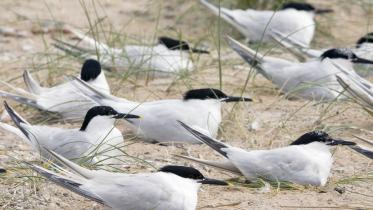
- Avoid disturbing wildlife such as nesting birds including seabirds, especially in the main bird nesting season as well as seals, especially during the pupping season by keeping an appropriate distance away. Further guidance can be found in the Scottish Marine Wildlife Watching Code and the Guide to Best Practice for Watching Marine Wildlife. NatureScot has published a literature review of seaweed hand-harvesting: on disturbance distances and vulnerabilities of marine and coastal birds which is also relevant.
- Vehicle access should be restricted to existing tracks and vehicles should not be used on the foreshore.
- Cut fronds (leaves) with sharp scissors or a knife, well above the point of growth and always leave the holdfast attached.
- Harvest sparsely. Take less than one third of an individual plant to allow for regrowth. Information for how to harvest to permit regrowth is available for most harvested seaweed species
- Harvest during the active growth season and after reproduction has occurred if possible. General information about the timing of reproductive cycles of seaweed species is available, for example: Edwards, M. et al. 2012. Macroalgae Fact-Sheets. Edited by A. Soler-Vila & M. Moniz. This lists the reproductive periods for Irish seaweeds; however, these may not be representative for all Scottish coasts.
- Avoid denuding entire patches of any one species in one growth season.
- Rotate harvesting areas and use fallow areas to allow ample time for recovery.
- If you are proposing the removal or collection of drift (beach cast) seaweed from a strandline, harvest sparsely from various locations on the beach. In general, it is advised this is only for personal use or for crofting*.
- Avoid or minimise trampling on other plants species and avoid taking ‘bycatch’ such as stalked jellyfish, brittlestars, bryozoans and blue-rayed limpets.
- Avoid moving rocks and substrates.
- Harvesters should record and maintain records. This should include details on location, harvest period, and seaweed quantity as well as any other pertinent observations e.g. invasive non-native species (INNS).
- Harvesters should familiarise themselves with local wildlife, INNS and guidance on how to avoid disturbance.
- Follow “Check, Clean, Dry” biosecurity principles, checking, cleaning and drying all equipment and clothing when moving between sites to ensure that invasive species, pests and diseases are not spread to new areas. Further information about biosecurity principles is available on our website - marine non-native species page
- Report any non-native species you observe on the iRecord platform. All INNS must be reported to NatureScot ([email protected]) and Marine Directorate ([email protected]).
*The traditional gathering of beach-cast seaweed by crofters does not require landowner permission. The Crofters (Scotland) Act 1993 (as amended) gives crofters access to reasonable use of seaweed under Common Grazing regulations and these rights are attached to particular tenancies.
Commercial seaweed harvesting advice.
If the activity is relating to commercial harvesting of seaweed, please provide the following details:
- What do you propose to undertake:
- harvest wild seaweed (i.e. remove living seaweed from the sea or shore), or
- gather beach-cast seaweed (i.e. seaweed that has been thrown up on the shore by the sea but is no longer growing), or
- culture seaweed (i.e. the cultivation of algae by manipulation of the environment with or without the introduction of young plants)?
- Location(s) of proposed activity:
- The exact locations as co-ordinates of the start and end of harvest site(s)
- If the activity is proposed in the Intertidal (foreshore) or subtidal (seabed)
- Harvest method (Hand cutting, boat and rake, mechanical etc)
- What seaweed(s) are proposed to be harvested
- Quantities proposed to be harvested (per a species)
- Period(s) when harvesting is proposed
- If there will be any deviation from our standing advice
- Anything else pertinent to the proposed activity
Contact
Our Area teams lead to provide our advice for seaweed harvesting. Any requests for advice should be made using our new InformedDECISION™ casework service.