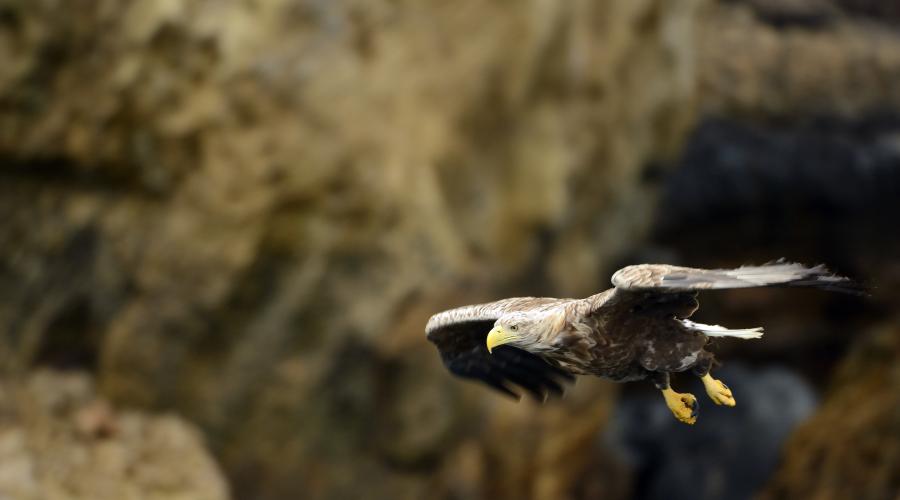
Scotland's Sea Eagles: Balancing Conservation and Farming
Fifty years since their reintroduction, Scotland now hosts around 200 breeding pairs of white-tailed eagles (also known as sea eagles), representing both a remarkable conservation success and a challenge for some farmers and crofters. This podcast explores the relationship between these magnificent birds and farming communities through conversations with NatureScot's Andrew Kent and Appin-based sheep farmer David Colthart.
We hear how eagle predation impacts sheep flocks and how the recently expanded Sea Eagle Management Scheme supports farmers with deterrence and adaptation strategies. The discussion reveals emerging collaborative approaches, including enhanced shepherding and research to track predation patterns.
From extinction to reintroduction, conservation success to agricultural concerns - this episode examines the multifaceted story of Scotland's sea eagles and the ongoing efforts to balance wildlife conservation with the needs of rural livelihoods.
Information:
Sea Eagle Management Scheme - Enhanced Shepherding
White-tailed Eagle Action Plan - Questions and Answers
Transcript:
00:05 Kirstin:
Hi and welcome to Make Space For Nature from NatureScot, the podcast that celebrates Scotland's nature, landscapes and species. I'm Kirstin Guthrie, and in each episode we’ll be joined by inspiring guests who share their expertise and passion for the natural world.
In this episode, Catriona Webster and I explore the fascinating story of white-tailed eagles, also known as sea eagles, and the reintroduction to Scotland. These magnificent birds made a remarkable comeback after being absent from our skies for much of the 20th century.
In what has been both a conservation triumph and a complex challenge for some rural communities, we hear from different voices on this subject. Andrew Kent from Naturescot explains the history of these birds, the return to Scotland the management strategies being developed to address livestock predation concerns. We also hear from David Colthart, a sheep farmer from Appin, with generations of farming heritage who shares his first-hand experiences of farming alongside these birds of prey, and his involvement in collaborative efforts to find workable solution.
From extinction to reintroduction, conservation success to agricultural concerns, this episode explores the multifaceted story of Scotland's sea eagles and the ongoing effort to balance wildlife conservation with the needs of rural livelihoods.
So we're up high on a hillside near Appin on the west coast of Scotland with NatureScot’s Andrew Kent. So, hi, Andrew, welcome to the podcast. Could you start by telling us briefly about the history of sea eagles and why they disappeared from Scotland?
01:33 Andrew:
Thanks Kirstin. Yeah white tailed eagles, also known as sea eagles, were persecuted to extinction in Scotland in the early 1900s. So Victorian periods seen a lot of species persecuted and yeah, the last birds in Scotland were shot in Shetland in the early 1900s. Since then, there's been a reintroduction to Scotland. A couple of failed attempts in the 1950s and 1960s, and Argyle and Fair Isle, but a successful reintroduction commenced in 1975 on the Isle of Rum, that was a collaboration between RSPB and The Nature Conservancy Council and yeah, this year marks 50 years of the birds return to Scotland.
02:11 Kirstin:
Wow that is a long time and what's the kind of rationale behind bringing them back?
02:16 Andrew:
So at that time the white-tailed eagle population was suffering across Europe as were other species due to pesticide use and the impact on, you know, the fledgling success of birds and there was concern over the population. So yeah, I think in terms of the conservation side of things, but also it would be a moral argument in terms of the birds were persecuted by man and bringing them back would restore a, you know, a lost species to the ecosystem. So yeah, 50 years since that reintroduction, which has been a conservation success. But as we'll touch on today has come with its challenges.
02:48 Kirstin:
Absolutely. Do you know how many sea eagles are estimated to be in Scotland now and where are their main populations, would you say?
02:56 Andrew:
So there's around 200 breeding pairs in Scotland around about that and they're mostly focused on the west coast and seaboard. So yeah, the main populations are Argyll, Lochaber, Sky and Lochalsh, the Western Isles. But yeah, we're seeing expansion from those core areas into Sutherland further south into Argyll, but also the birds are present in Fife, Angus, you know, the Cairngorms and parts of Ross-shire as well. So there is a spread across Scotland, but mostly focused in the west.
03:27 Kirstin:
Mm-hmm. OK, great. And you know they are as you say certainly spreading out and a great conservation success as you say. And so in conservation terms and also for tourism, the reintroduction has been very successful, would you say?
03:41 Andrew:
Yeah. I mean there we've got a self-sustaining population now and yeah, you can see that the population is expanding. So it is a, it is a conservation success story. You can see from some case studies in Mull you know, that the sort of tourism benefit from sea eagles in terms of, you know, wildlife photography coming to see the birds, but also acknowledge that there’s other wildlife that people are going to hope to see as well. But, but yeah, they're iconic species and you know a species that when you see them that I think everybody can admire, but yeah, they do come with challenges as well for the farming and crofting community.
04:19 Kirstin:
Yeah. I mean, they are magnificent birds, huge and such an amazing bird to see. But as you say, there's been issues, particularly for some farmers and crofters. So you know, what are the main concerns that have been raised about sea eagles?
04:30 Andrew:
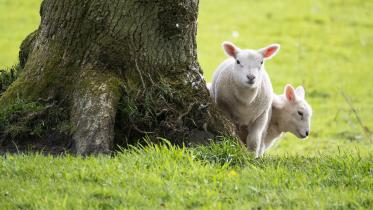
So yeah, the sort of conflict is around predation of lambs by white tailed eagles, which NatureScot have accepted for a long time now happens. And yeah, in some locations can have quite a significant impact on farmers and crofters’ livelihoods. So you know we fully accept that white tailed eagles take life healthy lambs and the impacts are you know, significant in some areas, so yeah it's really that conflict is around, you know, predation. But the conflict has also sort of bubbled away because at the time farmers and crofters, you know, in the initial years following the reintroduction, they felt their views were not listened to and the conservations at the time were sort of ignoring their concerns. But as I say, we've accepted for a number of years now that this is a challenge, and we're working closely with farmers and crofters to try and address those issues and ultimately foster coexistence between the birds and farming and crofting which are both very important.
05:23 Kirstin:
And what specific support does NatureScot offer to farmers and crofters affected by sea eagles?
05:29 Andrew:
So I manage the Sea Eagle Management Scheme and that's the principle support mechanism for farmers and crofters affected by white tailed-eagle predation. So the scheme has been running for, you know, a number of years now, firstly local schemes, but a national scheme for more than 11 years now and that's working with farmers and crofters across those areas where there are impacts trying to find solutions and it’s focused on mitigation and trying to solve those, those complex challenges where they are.
05:57 Kirstin:
And as you say, the Sea Eagle Management Scheme, you manage that and it's recently had a big increase to its funding. Can you explain how the scheme works in practise - I mean if a farmer or crofter for example comes to you with an issue, you know what happens next?
06:13 Andrew:
So the first sort of step in the process is to register an interest in the scheme and that comes through to myself. And then that prompts a visit from one of our call off contractor team. So I've got a team of six call off contractors working across the core white tailed eagle range and the guys and girls in that team are all, you know, white tailed eagle ecologists but have a background in farming and crofting as well. So they act as a sort of first point of contact for farmers or crofters affected by this issue.
So everybody will get a site visit that will allow us to get a better understanding of the management system on the individual areas and the issues that the farmer or crofter is experiencing because obviously we're working with over 200 farms and crofts in the schemes. So you know some people have four sheep, some people have 2800 sheep, so the schemes got to be flexible to those different challenges, different management systems and it can support a wide range of different options. So once that visits completed, you know I have quite close contact with farmers and crofters affected by this issue and it's a case of a discussion between ourselves to try and work out how best to try and mitigate this problem going forward.
07:13 Kirstin:
So just to be clear, I mean there are various options available under the Sea Eagle Management Scheme and it's not a compensation scheme. You know, I think that's often a misperception that people may have.
07:23 Andrew:
Yeah, it's not a compensation scheme. So the scheme is a mitigation scheme focused on mitigating impacts and ultimately fostering coexistence. It's important to say the scheme is not going to solve everyone's problem and we’re very upfront about that. But yeah, the scheme has had a big uplift in support this year from the Scottish Government. Over £500,000 has been put into the scheme alongside NatureScot’s funding. So a budget of nearly £1,000,000 with most of that support going to farmers and crofters affected by this issue. And it covers a wide variety of different things so you know, at a very basic level that can be provision of scaring equipment on in-by areas to try and deter white tailed eagle presence, where there are challenges in the in-by. We're also supporting enhanced shepherding with some of the work we're doing in more extensive areas which Is a complex challenge, but the scheme also supports some of the additional costs that farmers and crofters have incurred as a result of adapting their management to live alongside eagles or try and mitigate the impact. So you know for some people that’s sacrificing silage fields to retain sheep in-by for longer. For others it's a shift to indoor lambing, and you know, for others it's a retention of using lambs in the in-by for longer periods, so that all has costs and we can we do help to support some of those costs. So yeah, a lot of the stuff we support through the scheme is you know, ideas that have been developed by farmers and crofters and we work closely to come up with collaborative solutions.
08:49 Kirstin:
That's great. It's good to hear so many different options and obviously by case by case basis as well and you know why would a compensation scheme be so difficult with the kind of predation issues that we see?
09:00 Andrew:
So yeah, I mean, compensation schemes are used in parts of Europe for wildlife conflicts, but I suppose a lot of these schemes are reliant on the provision of a carcass, you know, to evidence, you know, that the predator has caused that damage. And in a lot of cases, especially an extensive hill setting, what we're seeing is that, you know, lambs just disappear. I mean, you sort of marking and weaning time there might not be much left of a carcass and you might just have a ring of plucked wool, you know, so you wouldn't be able to in a lot of cases provide a carcass to evidence, you know, compensation that the other, you know, sort of countries take as an approach to the likes of wolf predation and also compensation - it’s a difficult one to work out, especially in the sort of hefted hill situation. So if that's a ewe lamb that's lost, it's not just the value of that ewe lamb in that system.
The ewe lambs are effectively the future of the flock, so the replacements, so it's the potential breeding value of that ewe lamb going forward and the knock-on consequences of that loss and also the loss of you know subsidy support in those region 3 areas. So it’s very complex and ultimately compensation I don't think would be the route to go down for this issue.
10:08 Kirstin:
There's some, you know, quite innovative work that's going on as part of the scheme, you know, testing and trialling new methods to deter sea eagles - can you tell us a bit about the different approaches that are that are being trialled?
10:19 Andrew:
Yeah so enhanced shepherding is one of those. And I think David will speak about that later today. But that was really developed from a crofter in a sheep stock club in Skye and it was really his - he was taking a diary of what he was seeing on the hill. And we worked with him and others to sort of develop that going forward. So it's trying to build a picture of what farmers and crofters are seeing on the ground. So recording white tailed eagle activity, recording lamb carcasses, recording other predators and prey species on the hill and compiling all that information together. And ultimately, on those more extensive areas we’re seeing whether additional human presence on the ground has an impact and in some locations you know we have seen that it’s really helped and the farm and crofter feedback on that has been in positive and we rely on that feedback because ultimately it's the farmers and crofters that are delivering this and this year we're trialling the use of mobile phone application to you know, streamline that process. And I think feedback in that early stage has been has been very good so that's one thing we're trialling. There's also some DNA research work we're doing to monitor farms in Argyll looking at predator DNA retrieval from lamb carcasses and working closely with farmers and crofters there to understand the extent of predation in these two farms by white tailed eagles.
11:31 Kirstin:
That's great. So many different options and innovations as well. And what about, you know you spoke about enhanced shepherding, so how effective has that been? Does it depend on the area you know and other factors on farms and crofts?
11:45 Andrew:
Yeah. I mean, the area is a challenge to the extent of the area. So in some locations, you know it has been a challenge to deliver just because you know, you might be having a deterrence effect one part of the hill that you know, you're then shifting that problem onto another part of the hill that isn't covered. So yeah, that is a challenge. You know, where the measure has worked initially, there have been some challenges the birds get used to the, you know, the extra human presence that habituation. But as I say, in some locations it’s really worked and you know farmers and crofters have fed that back and what we're seeing in the data actually has increased, you know or improved performance levels in the flock since the measure started and returned to where you know the flock performance might have been before white tailed eagles arrived. So yeah, it’s an interesting measure. And yeah, the farmers and crofters we’re working with have been key in helping to develop that going forward.
12:36 Kirstin:
That's great to hear. And you know what advice would you give to farmers and crofters that are experiencing issues with sea eagle predation?
12:45 Andrew:
I think get in touch with us as an early stage as possible with the key advice, we're here to try and help and you know the sooner we know about issues the better placed we are to try and address them. So get in touch, you can find the details for the scheme on our website.
My mobile number is on there and this scheme mailbox is on there so get in touch as soon as you can. We're here to try and help and work through these difficult challenges we understand that's you know a complex and a challenging issue for farmers and crofters and an emotional issue, but we're here to try and work through that. And yeah, getting in touch early, but also in terms of record keeping, if you know if you are seeing impacts, record all that information, photographs and all that sort of stuff is really useful for us to help try and inform the picture and try and find solutions for that individual farmer or crofter.
13:33 Kirstin:
Well, that's great. Thank you, Andrew. You know you've provided a really fascinating insight into the reasons you know behind the conservation efforts, but also the range of support available. You know if required and you know and we definitely encourage people to get in touch if they are experiencing issues as Andrew says. And so thank you for joining us today.
13:50 Andrew:
Thank you Kirstin.
13:51 Kirstin:
So I'll now hand over to Catriona, who's with David Coultard, a well-known sheep farmer here in Appin and a prominent voice for farmers and crofters, particularly on the issue of sea eagles.
14:00 Catriona:
So welcome to the podcast David. So we're standing in this lovely Glen in Appin and your family has a long history here - can you tell us a bit about the land - how long have you been farming?
14:05 David:
Yes. Well, the family's been farming here for actually 99 years, so 100 years next year since my grandfather took over the tenancy of one side of the Glen and he then passed it on to my father, who then passed it on to my brother, to, to farm it. I help him out as well. And this other side of the Glen I took this over in 2007. So we run this, we help out each time there's a sheep operation but in essence, we run it, you know, as a family since nearly 99 years ago.
14:47 Catriona:
Wow, yes. So really a really long history here. So Andrew's been telling us a bit this morning about some of the challenges about livestock predation by sea eagles and particularly in a hefted hill system which is what you have here. So it would be great if you could just tell us a bit more about how that works and why predation is such an issue.
15:06 David:
Well, a hefted flock works well. There's a need structure that you cast the sheep out at maybe 5 or 6 years old, and then you bring them in. The very best yew lambs in. Just take them into the flock at a year old. But predation has been an issue is that it affects the a structure of that flock in that it can't sustain itself, and if they focus on one particular part of the hill, and it's usually at the higher part where it's a very, very low stock density because that's what the hill can carry, then you're not getting the females which the best females we keep to go back to that particular part and sustain the grazing.
There's some though might say, well, you know what if the sheep aren't there, but some of the biodiversity we've got here, if there isn't the right balance of grazing, likes of the white molinia grass will smother some of the biodiversity we've got on this farm. So it's just getting that balance right and unfortunately with predation, when it can be quite bad at times affects that whole balance.
The worst effects are that if you can't keep the very best of females and the strongest females to sustain that hefted flock. What has happened here in the past is that you maybe kept the sheep for longer, so they may be 6 or 7 years old or more before you cast them onto flock you keep ewe lambs, which are the replacement, and that's a lifeblood to keep that flock going. You keep ones that you actually should be selling rather than keeping and then that affects the age structure. If you do have poor weather, then these are the ones that affect the most and if you if it's a small sheep, it's not necessarily going to produce a good lamb to keep the older sheep. If it's a bad winter time, weather can take its toll on them, so the flock goes into a decline and you know which the to intervene some parts of the Highlands like over on the on the left hand side that hill. There's no a boundary there because the flock that's previously there. It was a hefted flock, so both flocks were one side of the hill on the other, and though there's a wee bit mixing in the top, they kept their own part. If there's not a fence there, any bought sheep coming in will just wander because they've got a homing signal and one of the most pleasurable things when we've had the sheep in, when we're clipping them when we let them out the hill gate, they all go it's just like migrating salmon. They'll go back to their own part of the hill where they are reared and they'll stay there because you often wonder, even though the worse the weather, the sheep at the top of the why they did not want to go to the bottom where it's is greener but.
that's where it stays, and that's where it wants to stay. And that's been the biggest effect. The predation here, it's just upset that balance on the flock. And it's been very, very hard to come back from that.
17:51 Catriona:
So you have been doing quite a lot of work, yeah with ourselves, with NatureScot to kind of try and understand the effects that you've been describing there more and kind of look at ways that you could try and reduce conflict. Can you tell us a bit more about that, that sort of work, what you've been trying here?
18:07 David:
Well, for the last several years, we've been a monitor farm for NatureScot, and we've tried through these various years, you know, all sorts of things to try and prevent the birds to coming into the, especially the lambing time into the lambing parks, but also too, there's been a level of monitoring from observers and from the first year, which is really kind of a baseline year to monitor what the birds are doing, and then each year after that was trying to alter activities to see if that would kind of reduce or change the habits of the birds and where we’re at at the moment it's not been through the lack of effort from ourselves as farmers and NatureScot you know, there's a lot of resource been put into trial and various things and you know, one of the main things that come out of it is that, you know, when the observers have been on the hill, it has put the birds off. And we started trying out an enhanced shepherding in which we do now which in essence is that normally speaking when the sheep are in for lambing, when the sheep go back to the various parts of the hill or hill park you don't normally have to go round them every day, you know, because part of the things with a hefted flock, they're very, very hardy sheep. They're not park sheep that are maintained every day have to be checked going round. Their survival instinct and the hardiness that's in their genetics and, you know, in an extensive, there's 3000 acres between land that we own and land that we tenant. So it's a huge area to cover and that has been one of the issues with enhanced shepherding that in the areas that we can take the sheep into which we have, we've changed the whole way we've farmed because of the impacts of the birds and trialling out the various measures is that if we've got one of the shepherds on one part of the hill going round there, if the birds appear they'll just move to another part. If the birds are determined to get to lamb, they'll do that sometimes, they'll fly off like this morning. Donnie, who's is one of the young shepherds that we use is going through the hill park. The bird lifted up and it flew off and it flew for quite a distance. He followed it with the binoculars, so hopefully that bird won't return today. So you know that's a positive and if there wasn't the help through the scheme, you know the farm wouldn't be able to, it wouldn't be financially viable to have that level of labour unless there's assistance from NatureScot.
20:30 Catriona:
So you've also been really involved in sort of representing the interests of farmers and crofters on this issue more widely through various stakeholder groups as I understand, yeah, so could you explain your role and kind of how you think that sort of partnership working and collaboration is helping to tackle the issue?
20:47 David:
In my role as Chair, you know we've got both sides, farmers and crofters sitting around the table with the conservationists and the interests of the bird, as well as government, NatureScot. And my role is to try and reduce the conflict between both sides, because if we're still talking and still discussing and still trying to work to find mitigation that's going to reduce or stop predation on livestock, that's the aim of it. But as long as we're still talking and discussing rather than two sides just apart, that doesn't do anyone any good and it doesn't help resolve the issue.
21:22 Catriona:
Absolutely. It's just having everyone around that table, isn't it. The Sea Eagle Management Scheme has had a bit of a funding uplift this year as well - do you think that funding will help with the support that's available?
21:34 David:
Definitely. I think that the funding uplift, I think it will really do a good job because the caps that were in place beforehand really goes back nearly a decade and you know that the costs that the farmers and crofters that they experience, you know, have especially in the last few years, really, really jumped. So with the extra money that has come into the scheme and the uplift has reflected some of the increase in the cost that we face as farmers. The main thing we've got standard measures which the uplift was very good. The enhanced measures where it doubles the cap to £10,000. So the folks that are doing enhanced measures. You know that's a big lift because the bigger places that do it like ourselves the previous cap didn't cover the extra costs as farmers, which has cost our business to try and mitigate the impacts of the bird and the majority of the stuff that we do, we wouldn't have to do if the birds weren't here. So that the scheme covers quite a lot of these costs you know, but still a stepping stone and I'm sure that there's further refinements that we can make. And you know, from the Union's perspective, we'll be pushing to hopefully see that funding and a further uplift, because if more folks are affected then there's going to be a bigger demand on these funds.
22:57 Catriona:
So what would your advice be, David, to farmers and crofters, say, who are having problems with sea eagles for the first time - what would you advise them to do?
23:05 David:
I think in the very first instance anyone experiencing problems for the first time, or indeed anyone who's experienced problems for a few years it's does no good not telling anyone about it, or even going on social media and saying it, there's a balance there that you need to contact NatureScot in the first instance because you can't get help unless they know there's a problem. And maybe the problem can't be solved, but at least you can start the process of trying to work out there's maybe mitigations that might work for that particular farmer or crofter, it might not work other places, but it might work for you, so I would definitely say please if you've got an issue please contact NatureScot.
23:44 Catriona:
Great. And just finally, so what sort of lessons do you think could be learned from the sea eagle reintroduction project in terms of conservation, similar conservation projects in future?
23:55 David:
If this was to be redone again and the birds were to be released, they should have a full consultation with the farmers and crofters. You know, it's great in hindsight, looking back to what has happened and in my view, the birds have adapted very, very well to the west coast of Scotland. And the increase in the population, there's been an exponential rise in the population, but I don't feel there's been enough natural prey to sustain themselves and that's where the conflict is coming. The birds have adapted to the availability of the food that is there, now not every bird is a problem, and it's not the bird's fault. You know if they are nested in a particular area they just look at the resource that's there and unfortunately if domestic livestock are the food resource and you know we have to call it as it is, they are focusing on that because in some of these areas there isn't sufficient natural prey available to sustain these birds. You know that is exactly where we are at the moment. We're trying to work through all the various mitigations. In an ideal world, there's stuff that we find is going to help prevent the birds take livestock but the biggest frustration is that you know the public really need to understand that yes, there's a benefit for tourism with seeing the birds and you know that they are a sight to see, but the impact is where it's affecting our business, different families businesses, you know, that is I don't think the public realise that it has a quite an impact and the places that are hit quite bad, you know, it’s these businesses that are suffering from it and so far we haven't found anything that's going to resolve the issue.
25:38 Catriona:
Well, thank you very much David for sharing your insights and your experiences with us today. And thanks to Andrew as well for his insight. Thanks very much.
25:46 David:
No, thank you.
25:47 Kirstin:
It's clear that finding solutions to this complex issue requires ongoing dialogue, practical solutions and a collaborative approach so that we can all work towards a future where both Scotland's iconic sea eagles and its vital agricultural communities can thrive together.
For more ways to connect with and help protect Scotland's natural world, go to nature.scot.
Last updated: