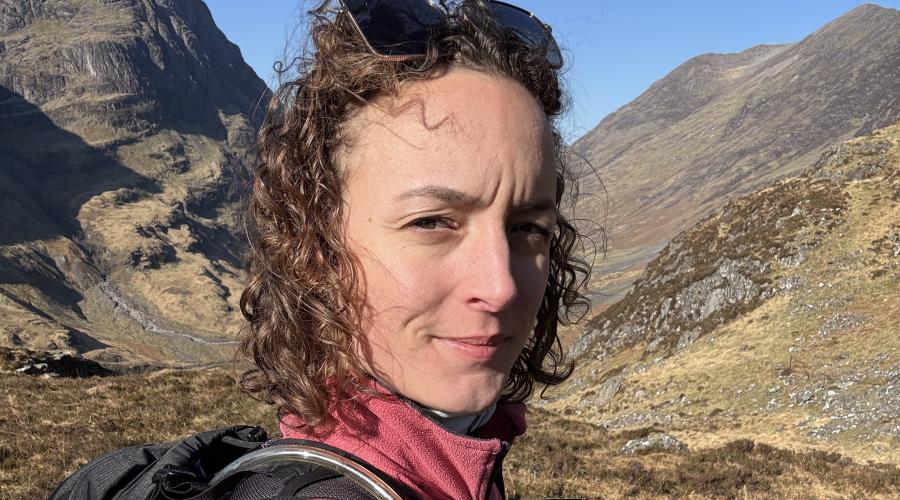
Mixing Colours: Digital Creator Ophelie Adeyemi on Belonging in Scotland's Outdoors
From Paris to the peaks of Scotland, Ophelie Adeyemi's journey is one of love, belonging, and the transformative power of the outdoors. The creator of Mixing Colours, an Instagram account celebrating multicultural family life and the blending of cultures, backgrounds, and languages, shares how she found her home—and her soulmate Josh, co-founder of Black Scottish Adventures—in Edinburgh, and why getting families outside matters more than ever.
Together, they're changing what Scotland's trails look like, combining accessible hikes with community and culture. Ophelie opens up about being questioned when out on the hills, the power of representation, and offers honest advice for families—from puddle suits to hot chocolate bribes!
Listen now and discover why seeing yourself reflected in nature changes everything.
Information
MixingxColours on Instagram
Transcript
Kirstin: 0:04
Welcome to Make Space for Nature from NatureScot, the podcast celebrating Scotland's nature, landscapes, and species. I'm Kirstin Guthrie, and in this episode, Tim Hancox and I are joined by Ophelie Adeyemi, the creative mind behind Mixing Colours on Instagram, where she shares honest, often humorous moments of raising a family in Scotland across cultures, inspired by her French background and her partner Josh's Nigerian roots and their two children's unique identities.
But this isn't just about lovely family photos. For too long, Scotland's countryside hasn't felt welcoming to everyone. Josh is co-founder of Black Scottish Adventures, an organisation breaking down racial barriers in the outdoors. Together, Ophelie and Josh are showing that nature is for everyone, regardless of background or skin colour.
Ophelie is passionate about getting kids outside in all weathers, because connecting with nature starts young. This is a conversation about representation, resilience, and why seeing yourself reflected in the outdoors matters.
Kirstin 1:01
So hi Ophelie and welcome to the podcast. So thank you. Well, first of all, thank you for all the inspirational posts you've been creating for our Make Space for Nature campaign. And I just want to go back, let's rewind a wee bit. And can you tell us about you, you know, where you're from in France and what brought you to Scotland and obviously how you met your husband Josh as well?
Ophelie: 1:19
Sure. So I don't have to specify that I am French. You can hear it. I was born in Paris, very cliché. But when I was around nine or ten, my parents moved the whole family to the south of France. It's like a small village near Nice. So we went from a two-bedroom flat in the middle of Paris city centre to a small village of about 7,000 people. So it was quite brutal. With a house and a garden. I mean, so whoa, are we on a holiday? So that was a shock for a while. And funny enough, for a while I thought it was actually a holiday. It's only when we started going to primary school that I thought, wait, are we not going back to our school? What's going on? So yeah, it took me some time to realise there is no plan on going back to Paris. This is where we are for now.
Kirstin: 2:09
Yeah.
Ophelie: 2:10
And then what brought me to Edinburgh? Actually it's my sister. So I have two sisters. We are triplets. So one of my sisters moved to Edinburgh to do a master's. She studied in Heriot-Watt University. She loved it. Always talked great things about Scotland and Edinburgh. And once I finished my own degree, I quickly realised that in my line of studies, which was hotel management, English was going to be something that I need. You can't, you know, have a high role in hotel management if you don't have any English. So I moved to Edinburgh in August 2012, and we took a flat near Haymarket together. And then Josh comes into play seven months later, completely randomly. I met Josh. He lived basically opposite my flat with his brother. So I lived with my sister, he lived with his brother, and then what started as a bit of banter across the street basically turned into meeting my soulmate. We started chatting via Facebook, via messages, and then we met again. And I was just, oh my, you're great. I like you, you like me. Let's get together. And that was it. Now we've been married for 12 years. We just celebrated a 12-year anniversary on the 13th of November.
Kirstin: 3:31
Oh, lovely. Oh, that's such a lovely story. What a nice way to meet as well. Aww.
Ophelie: 3:35
People don't believe us when we tell them we met face to face. There was nothing there at the time.
Kirstin: 3:39
So yeah, yeah, yeah, absolutely. And you know, growing up in France, how has that shaped your relationship with nature? Because obviously you're outdoors a lot, you're out, you know, you're outside with your family quite a lot. And obviously, you mentioned being a triplet. And that must have meant, you know, built-in adventure companions all the time outside with your sisters. That must have been fantastic.
Ophelie: 4:01
Yeah, built-in friends. I always say that's why I struggle to make friends because I have sisters. So in my mind, I feel like I have people to talk to. So yeah, no, I spent the first 10 years of my life in Paris. So I remember the chaos of the city, walking to school with the cars, the horns. But my dad was amazing and he took us to parks a lot, he took us on holidays to the countryside. He has family in Clermont-Ferrand in like the mountains, you know, when they make the water, Evian, and all those things. So complete countryside. I remember going to the farm, and I loved putting my finger into the baby cow's mouth because they would suck on it. They would think it's like, you know, they're just little babies, and that was one of my favourite memories back then. Oh, and then we moved to a small village near Nice, and suddenly very quiet, very peaceful, and it was actually a bit too peaceful in my teenage years. I thought, oh, is this my life? I was so far from the city, there were no buses, just a school bus. That was the only bus that was running through our streets. So we spent our childhood outside with both my sisters and neighbours, climbing trees, building little dens in the woods, playing volleyball, beach volley. Basically, we were constantly outside, and the only thing that would make us come home is hunger. And also because it was getting dark, so we knew that we were going to get in trouble. So honestly, now I don't like crowds anymore. I mean I don't like noise. If you ask me, do you want to go to Rome or do you want to go to the Dolomites? I would 100% pick the Dolomites. I don't like city breaks. The only city I like going to is Nice now, where I'm from, because obviously I get to see my family. But other than that, no. Don't take me to Barcelona, please. Nothing against Barcelona, but I like the countryside.
Tim: 6:02
Yeah. Oh brilliant. That's great. Hi, Ophelie. That's such a great story. We've obviously started to work with you now through your fantastic Instagram channel, Mixing Colours. Can you tell us a bit more about the inspiration behind the name and what you hoped that would start to represent?
Ophelie: 6:21
Sure. So people often ask. I created it when we had kids, my husband and I, but actually I created Instagram in 2018. So that was two years before having my first child. And regarding the name, I wanted a name that described my life. So mixing or mixing cultures, backgrounds, and languages, and the colours. It's because even as a white woman, I wanted to celebrate all colours and show that love doesn't need to follow rules or expectations. And then for me, the name is really an invitation to be open. You never know where you will meet your soulmate. My story is a perfect example. I was not expecting to meet a Nigerian guy in Scotland. I always laugh when people say my type is this, you know, tall, blonde, blue eyes, because my type was not Josh. Sorry. I thought he was handsome, but it was not my type. If I had stuck to my type back then, then I would have missed out on the greatest love of my life. That would have been a shame. So what we see around us shapes what we think is normal. And unfortunately, although I had a great childhood, there was not much diversity around me. So for me, my mum was white, my dad was white, my sisters were white. So that's why now after I met Josh, it really opened my eyes, and I now try my best to break those barriers for others, you know, be a voice, just do my little thing, do what I can do anyway, not much, but I support my husband anyway.
Tim: 7:56
Well, it's such a lovely warm channel, and your platform shows families who you might not always see themselves, you know, being in outdoor spaces. Can you tell us why that representation matters to you?
Ophelie: 8:10
I think the outdoors is truly for everyone, and people need to actually see to believe it. When I moved to Scotland, my first focus, and like many immigrants, was simply settling in, finding work, for me learning a new language because my English was really bad. It was nothing, really. It was tough. First year was brutal. So Josh and I, when we met, because we met very early on, when I moved here, we didn't really take time to explore and we didn't have time to explore. We were still focused on stability at the beginning, trying to save money to buy our first house. It's only later that we started hiking. We started with Arthur's Seat, and then we thought, oh, let's move. We bought a car, we went to Ben Lomond, and over time the outdoors became a huge part of our life. And in the last few years, I've really noticed how Edinburgh has become much more diverse. And diversity in the city doesn't always translate to diversity outdoors. So the type of people you see in Edinburgh, for example, you will not see them on Arthur's Seat, even though it's just there. And that matters because when people don't see themselves represented in certain spaces, they can start to believe those spaces aren't for them. And sometimes even other people look surprised to see black families hiking, swimming, or here walking. So that's exactly why representation is so important. We need the outdoors to reflect the real Scotland and Scotland now, I think, and I'm sure it's multicultural, modern, and welcoming. I think Scottish people are known for being very welcoming and very friendly. And black people shouldn't feel unusual anymore, it should just feel normal. And I think also sometimes within our own communities, we kind of carry the weight of stereotypes that have been placed on us. Like the idea that black people don't hike, they don't swim, they don't do outdoor activities. Sometimes you feel like you have to fight that thing, and when you try to come out of it, you're being told, oh, that's a white people thing, you know. And for me, I have the same for little silly clichés about the French being rude or drinking wine all day. That's not true. Those are just stereotypes. I don't think I'm rude, that doesn't reflect the reality. I mean, if you have been unlucky, you met one French person and they were not nice to you, and now that's the image you have of French people, or maybe a black person stole your phone in London and now you hate all black people. No, that just doesn't make sense. There are black people everywhere. So we all need to work together to break those walls. And the more we show up in those spaces, my kids, my husband, the more other people we hope anyway, that more people will feel like they can do it too. But just recently, because before for BSA, Black Scottish Adventurers, my husband is the founder. I would usually just join the group in the afternoon. So in the morning, my husband would take the group into like a nice walk, and then in the afternoon, we do like what we call vibes. So we meet somewhere, we have food, we kind of network, and we dance and other things. So usually I would always come in the afternoon and bring the food with me and my daughters. But now that they are older, we started taking them in September to the hike in the morning, and they've loved it, they are loving it. Thea even did her first Munro at five years old. She did Ben Lomond.
Tim: 11:48
Oh, fantastic.
Ophelie: 11:49
And she put her feet into Loch Lomond afterwards.
Kirstin: 11:53
Oh, brave girl.
Ophelie: 11:54
And oh, it was amazing. I just loved it. So yeah, Scotland is stunning, and I feel like that people don't realise how lucky they are. It's amazing. I love it. I'm Scottish at heart, I can say that for sure.
Kirstin: 12:07
You've spoken about Josh and the Black Scottish Adventures. You know, he's so good at talking about diversity, encouraging people into the outdoors, but he's also very good at talking about responsible access and the Scottish Outdoor Access Code. So it is about getting people into the outdoors, but with that obviously comes responsibility. So has he influenced or changed, you know, how you and your girls see or enjoy the outdoors?
Ophelie: 12:35
Oh yeah, definitely.I mean, we've always been on the same page. We always, the two of us, we always love the outdoors. It's not like he ever had to drag me out. Yeah. So that was a good thing. I think that's why we connected so well at the start. But seeing him actually building Black Scottish Adventures has just been incredible. He really took it to another level and created that community so that people never had to experience what he did. And also it teaches in a good way, you know, responsible access. It teaches them about right to roam, but you also have to be responsible and leave no trace. And yeah, I think it's very important for people that just moved to the country so they feel welcome and they can actually not just work, work, work, but also, you know, discover the outdoors. I'm just really proud and I'm so happy that the girls have him as an example, you know, such a strong role model to look up to. That's been amazing.
Kirstin: 13:31
Yeah, absolutely. That's brilliant. I know we are very lucky in Scotland to have the Scottish Outdoor Access Code and everything that comes with it. So, you know, and you've talked about generally people in Scotland being very welcoming and friendly, but have you or your family experienced any negative interactions, you know, when you're outdoors? And how did you kind of deal with that if you have?
Ophelie: 13:54
So, with the girls, nothing. I think people are always very lovely with them. But at the start of our hiking journey with Josh, we did get comments. For example, when you go up the hill and you meet people going down, we would always get comments. Oh, have you got crampons? Have you got a head torch? They would just assume we don't have those things, like they can see in our bag, you know? So very, you know, like yes, we do, but like I don't know if you were walking up the hill, would you think someone coming down would ask you if you have a head torch? Have you ever been asked this?
Kirstin: 14:33
No, never. No, but yeah, I know. It's funny though, but sometimes Scottish people tend to be looking out for people, yeah. And it's like, oh, are you okay? Do you need help with something? But yeah, whether it was done in that way, I don't know.
Ophelie: 14:47
But yeah, I guess we'll never know. No, but it can be a bit frustrating because we look like we know what we are doing. We've got hiking shoes, we've got hiking clothes. It's not like we're wearing trainers or yeah, absolutely. We still get asked, do you have your head torch? But now it doesn't happen anymore because I think Josh is known, so he's recognised a lot, so they don't ask anymore when they see us with like one metre of snow on top of a mountain. They don't ask questions, they see Josh and they're like, okay, that's fine.
Kirstin: 15:17
Yeah, they'll be asking you guys for advice.
Ophelie: 15:19
Yeah, but with Black Scottish Adventures, though, we had some issues where we were accused of littering, so we started doing all these videos where we tidy the whole place, and then we take a video, we make a video before leaving the place just as proof because we don't want people to come and then make a mess and say, oh, the Black Scottish Adventures were there. And we even had a time a couple of years ago where we found a bag of litter by a car that was not ours, and someone had left it by our car. I don't know if it was just random that it was our car, but it was our car, and we had to take it with us because the bins were full. So we couldn't just — we always take our own bin bags with us. We don't put it into the communal bin. Yeah, it was a bit, it was very, very frustrating. So that's not even our rubbish. Not fair.
Kirstin: 16:15 No, not at all, no, no.
Ophelie: 16:19 But more good to be honest.
Kirstin: 16:20 That's what I was going to ask.
Ophelie: 16:21 A lot more good, yeah.
Kirstin: 16:22 And you know, on the flip side, as you say, has there been like a really kind of positive outdoor experience that's reinforced, I suppose, why this work on representation and access matters so much?
Ophelie: 16:32
Yeah, I think what I love the most at BSA, at Black Scottish Adventures, is when we sit together afterward and you hear people's stories on how it helped them with loneliness and depression. It's so lovely to hear, and that's the biggest reward. And it also means that our own daughters are growing up in a community, they see people that look like them, that have the same hair type as them, and they're going outside and doing all those things. So for them, that's their normal, and that's amazing. That's what I want for them. But I don't want them to feel like oh, that's not my space. They're Scottish, they were born in Edinburgh, born and bred. They don't drink Irn-Bru yet, but I'm working on it.
Kirstin: 17:15
No
Ophelie: 17:18
You don't like it?
Kirstin: 17:19
It's okay, yeah. It's okay, it's okay.
Ophelie: 17:22
The first Scottish person that doesn’t like Irn-Bru – my gosh!
Kirstin: 17:24
Yeah, I don't mind it, but it's not, I don't tend to drink it myself.
Ophelie: 17:28
I don't want to say, but you're wearing stripes, so it feels like you're more French than Scottish.
Kirstin: 17:34
I do wear a lot of stripes to be fair, yeah, absolutely.
Tim: 17:39
Yeah, I know what you mean. It's yeah, having a foreign-born child in Scotland, my little boy, same as you, but born and bred in Scotland. I take him back to South Africa and he complains it's too hot.
Ophelie: 17:53
I can hear your accent now. I can hear the South African accent now.
Tim: 17:58
So Ophelie, you've hinted at it, but how outside time is clearly really important to you and your family. Can you tell us a bit how that helps you to connect and how it's different from time spent together, you know, indoors, which obviously also has its place, but how does that help you as a family, do you think, to all be together in the outdoors and in Scotland where there's so many beautiful places to go and things to see and do.
Ophelie: 18:25
Yeah, well outside everyone just relaxes. Indoors, the girls are like tornadoes, they just try to knock off the walls. Outdoors, they are free. I don't have to worry about tidying. They explore, they run, they climb, they use their imagination. And Josh and I actually get to have conversations outside. When we are at home, we can't, they are just constantly at our legs. It's not me, it's Josh. And also being outdoor, it tires them out and they sleep very well. And weirdly enough, I don't know if we're just lucky, but our kids are never sick. They didn't, even though they go to school, they went to nursery, they didn't get all those, you know, hand and mouth kind of stuff. They had very light chicken pox at the start, and that was it. They have sometimes a small cold, you know, they have a stomach bug, but every time I talk to my mum's friends, they say, oh, my son has this, my child has this. And I'm like, I don't know. I don't know what you're talking about. I don't know, I should touch wood because you'll see that tonight. Yeah, yeah. They almost come home with red cheeks with that. I'm not feeling well. I don't know if it's spending time outdoors that just makes them more resilient, but I don't know.
Tim: 19:40
Yeah, maybe it could well be all that fresh air and time outside. Are there any, you know, outdoor rituals or places that have become really special for your kids? Do they have a favourite place to go and walk, or do you just try and do a different place every time? Or have you got sort of a few standard places that you go, it's like this is our favourite. This is when we're not sure where else to go, we go here and the kids love it.
Ophelie: 20:05
They really like where we live. We've got a park called the Seven Acres, and it has a long walk, and it's called the Puddle Walk. And so it's massive holes, and when it rains, it makes some really, it's like very big. I've never seen puddles like that. And so after it rains, we put like a whole suit, waterproof suit with boots, and we take them there, and they just for hours. They are completely soaked with so much fun, they love it. And then on the same walk, we've got a lot of horses, and sometimes the horses come to us and we get to pet them, and you know, they love it as well. And the little ritual in when it's cold, we always take a hot flask with hot chocolate. That's really nice. That's the reward when your hands are cold, just nice hot chocolate, a snack, and go back home.
Tim: 20:54
Yeah, no, I like that. Yeah, we do that as it's good, it's good bribery to make the kids keep going to get to the top of the hill or something as well. I found that with some hot chocolate.
Ophelie: 21:04
Yeah, but it's quite funny because now when we do big hikes and when we stop to rest, they're always like, oh, that means we can eat, Mama. Oh, so we need to plan a snack for each time we stop.
Tim: 21:15
Yeah, but I think I talking about, you know, a place nearby that you can go often like that. It also just shows, you know, what we try to emphasise that you know you can go and do the big Munro and go out and explore, you know, all different parts of the country, but at the same time, you know, there are nice places, even from the cities, nice green spots that you can go just for a bit of outdoor time.
Ophelie: 21:37
Yeah, well definitely. I think we're quite lucky in our area because we've got the Pentland Hills, we've got Roslin, we've got a lot of, Dalkeith Country Park, all this kind of nice, even Portobello, the promenades. I love to take them. It's not really outdoorsy, but take the bikes or the scooters, take them there and you just go.
Kirstin: 21:55
Yeah, I mean the thing is with kids is, you know, it is great getting them outside, but it's sometimes it's not always that easy, you know. As much as some Instagram posts try to make you believe it, you know, but you know, using things like snacks and treats and these kind of things often helps. But you know, you do include humour in your posts, which is great because, you know, I have laughed at quite a lot of them in a good way. And so what's the funniest or the maybe the most chaotic thing that's happened with the kids outdoors?
Ophelie: 22:25
So recently there's not been much. I think I really try to be prepared. Yeah. So always have a change of clothes. That's the number one. I have a change of clothes, socks, everything, even flannels in the car just in case. But the first time I actually took Thea to a BSA walk, her sister was still a baby, so I've just taken her. She was three or something, and it was autumn. And she was walking and she fell face first into the mud. Face first. Oh no, and she was covered. I wanted to laugh so bad, and she didn't even cry, she just went like, what's going on? And now that's when the BSA community really kicked in. They took her up, and someone had some warm water in a flask, and it was probably to keep them warm and maybe have something, some warm water later on, and instead they used it to wash her face and her hands. Oh, and I thought that was amazing. I'm like, thank you so much. But that was the, the BSA community is really good for that. Even just the last walk. Someone, I was last because my kids always, I want to see, I want this, I want that. So we're always at the end, I want my jacket, I don't want my jacket, I want my gloves, I don't want my gloves. Just make up your mind. So we're always at the end, and there is Jamie, a Scottish man actually. He comes quite often and he stopped and he waited for us because there were some massive cows by the path. So he didn't want us to walk by them by ourselves. So he waited and then we walked next to the big cows. So that really shows he could have just kept going, you know, and joined the big group, but no, he did wait. So that was quite nice. That shows that it's really a community, even though he is not black, but he's part of the community, it's for everybody, it's not just for black folk.
Kirstin: 24:11
Just when you're talking about rain suits and puddle suits, I remember putting mine in some of these suits, and didn't realise how slippy slides are, wet slides when you put a child in a puddle suit. Yeah, flying, and again, it was one of those moments when you don't want to laugh, but you have to, and they were absolutely fine.
Ophelie: 24:28
I have a video of Thea doing it just next door, as she, same exactly, just oh go down, you got your wetsuit, so it's okay, you won't wait. Ah, she flew off the slide and she really fell hard on her bum and just cried and it just ruined. We had to go back home.
Kirstin: 24:44
Oh no, so maybe a health and safety advice around puddle suits. I'll tell you, honestly, we've all done it.
Ophelie: 24:52
Imagine though they should do a soft play where they wet it.
Kirstin: 24:55
Yeah, that would be fun.
Ophelie: 24:56
That would be so much fun.
Kirstin: 24:59
Little practice, get in practice, yeah.
Tim: 25:02
Ophelie, you've mentioned a fresh pair of socks and things and some hot chocolate and things like that as good advice for families to have with them. But do you have any other tips for people who maybe they're part of a family who don't go outdoors very often but are looking to get outdoors with their kids? What would you advise them to do? Where to start? What should they bring with them?
Ophelie: 25:23
Well, I would say first start small. You don't need to go on a big mountain, just go to the local walk, go to the park, don't go crazy. Get the basics as well. So, as you said, waterproof, so a wet suit, waterproof, very important, warm layers, so some fleece, good gloves, proper footwear, and then for yourself as well. So sometimes a lot of people make that mistake, they will dress the kids really warm, very well, and they forget about themselves, and then they are the ones suffering. So you have to be warm as well, otherwise, you are going to suffer. And then very important, snacks, chocolate, you know, really, very important. And then, as I said, just do local walks and then see how that goes. And once they build stamina, you can take them to do Corstorphine Hill, you know, Pentland Hills, and then you can find all those walks that I'm sure on the internet if you write easy walks in Scotland or around your area, you will find a lot. And then start young, obviously, because I don't know how I would feel trying to get a seven-year-old or eight-year-old to go outside. I feel like it's too late already. They don't want to go. So start young as long as they are steady on their feet, maybe three, four years old. I think you should start. Try to, they will complain, but then it will pass and they will actually enjoy it. And they'll be the one asking you on weekends, can we go? My kids, they mix French and English, and they always say, Mama, can we go for a balade? And balade is a walk in French. So they always say, can we go for a balade, Mama? Oh look outside, okay. Even though sometimes I'm the one that gets lazy and they're pushing me, like, let's go, I don't want to be inside. But BSA does very easy walks, so even if you want to join with BSA, just see how that goes. And then we've got jollof rice after for lunch. That's a nice incentive.
Tim: 27:19
That's what I was going to say, snacks, but again, not just for the kids, for you too. We've all made that mistake before. Like nice snacks for the kids, and then you're starving.
Ophelie: 27:27
Yeah, well, they want to hold your hands, and you forgot to take your gloves and your hands are absolutely freezing. I want to put my hands in my pockets, and they're crying for your hands - I'm cold.
Tim: 27:40
And growing up, obviously your kids are getting bigger, and like you're saying, nice to start them young, but when they're older, like teenagers or young adults, what memories or feelings of being outdoor are you hoping they take with them and are left with as they go into their adult life?
Ophelie: 27:59
I think really that they belong there. That's the main thing. They belong there and they're, you know, they should also make sure they take other people with them. You can't be selfish. So I really hope that they carry my husband and my pop, you know, and take it even higher and do great for their community.
Tim: 28:20
So because we're now going into like the proper depths of winter approaching and Christmas time, where it's dark and cold and it gets harder and harder to get outdoors. Do you have any idea what, you know, what inspires you to keep going and still go outside, even though you know it's not the middle of summer, although you know people joke about summer being very short, so you know you can have bad weather at any point and good weather at any point. But what helps you to feel like you still want to get outdoors even if it's, you know, it's raining or at this time of year when it's really cold?
Ophelie: 28:52 I think it's really all to do with your clothing. You just have to be more prepared. And maybe don't spend as long outside, so do shorter walks. Don't take your kids for hours outside. I mean it might be a bit too cold. Yeah, just short little walks, and hot chocolate, good clothing, warm clothing, good hat over your ears. I think in the winter months really the good clothing is the number one. If you've got good clothing, you can go out at any time of the year. I think accordingly, check the weather forecast. If it's planning 90% chance of rain, take waterproof clothing. Obviously, you have to stay safe if it's really really bad. Stay at home and do a movie night or popcorn. Don't want to like scare them off and never do it again.
Tim: 29:52
That's a good point. It's having those nice memories that make them want to keep going. But it sounds like you've already managed that if they're asking you to go all the time. So that's fantastic.
Ophelie: 30:08
Well we took them to Arthur’s Seat, I think, two weeks ago and it got really windy on top and it was raining at the same time so it was not enjoyable. And Thea screamed on top of her lungs and said, I'll never do that one again. And all the people around were laughing, and I thought, oh my god, you'll do it again, Thea. Don't worry. But she was so honest about it, it was really funny.
Tim: 30:24
Oh, brilliant. Well, thank you so much, Ophelie. And thank you for sharing your story and you know your lovely family. We follow you on Instagram and see your adventures, which has been fantastic. And thanks for just sharing the, you know, everything you've created and all the great work you're doing with Josh and Black Scottish Adventures, which really feels like it's making a big difference in Scotland to show that, you know, like you say, outdoors is for everyone, and we want everyone to get out there and enjoy it, obviously, responsibly. But it's, we've got all this amazing nature on our doorstep, and thank you for inspiring us to be brave and not be lazy and get outdoors and enjoy it more.
Ophelie: 31:04
It's my pleasure, thank you so much.
Kirstin: 31:07
Thanks for listening. For more ways to connect with and help protect Scotland's natural world, go to nature.scot.
Last updated: