Menu
NatureScot Logo NatureScot Logo
Close navigation
  • Home
  • About NatureScot
  • Climate change
  • Enjoying the outdoors
  • Funding and Projects
  • Gaelic
  • Information hub
  • Landforms and geology
  • Landscapes and habitats
  • Plants, animals and fungi
  • Professional advice
  • Scotland's Biodiversity

How to recognise wireweed

https://www.nature.scot/doc/how-recognise-wireweed
Breadcrumb navigation
  • Information hub Information hub
    • About NatureScot
    • Climate change
    • Enjoying the outdoors
    • Funding and Projects
    • Gaelic
    • Landforms and geology
    • Landscapes and habitats
    • Plants, animals and fungi
    • Professional advice
    • Scotland's Biodiversity
  • Publications and documents Publications and documents
    • News
    • Podcasts
    • Blogs
    • Webinars
    • Seminars
    • Research
    • NatureScot data services
    • Trends, Indicators and Official Statistics
    • Newsletters
    • Archived Publications

Reviewed: 2026

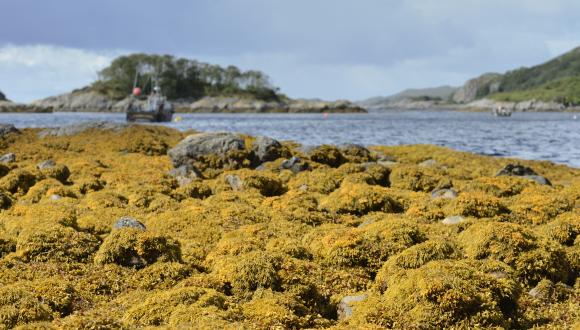
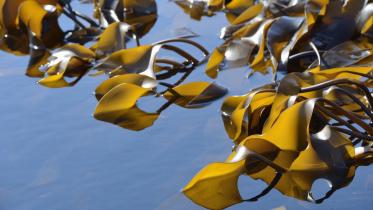
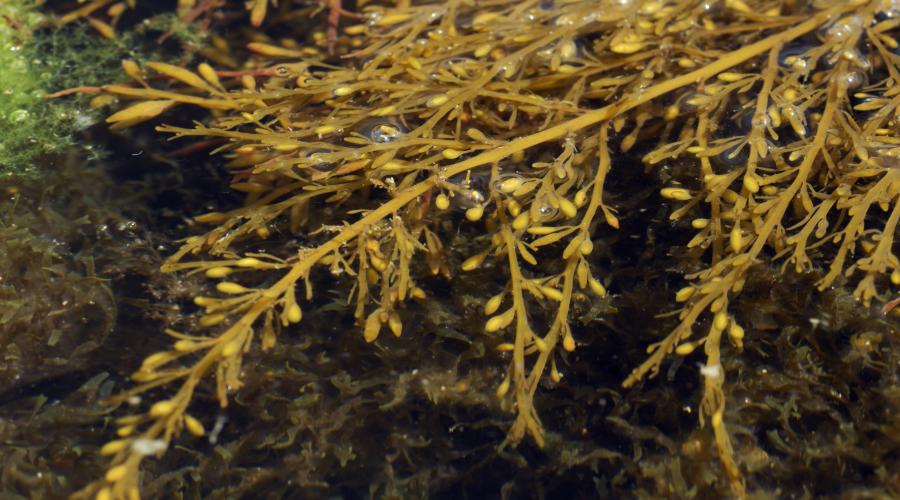
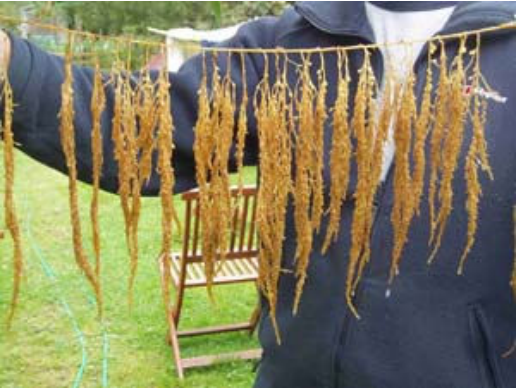
Wireweed is a large olive-brown seaweed that can grow more than a metre long. The plants have long main branches with side branches that hang like washing from a line when held out of the water. The lateral branches support distinctive grape-like air bladders (picture). These branches can break off from the base and they can be found floating individually or in large masses. The base remains attached to the rock and will regenerate new branches in spring.
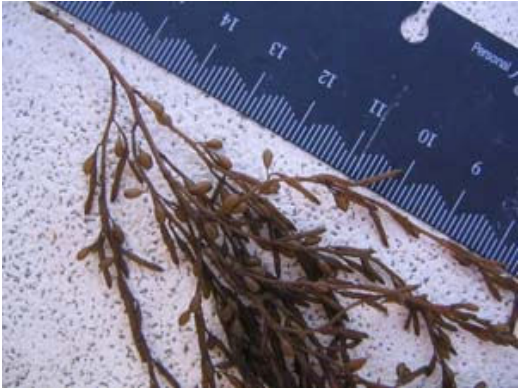
Wireweed diagnostic features - close-up
Wireweed diagnostic features - wireweed washing line

Identifying features

The air bladders on wireweed are small (pea-size or ball-bearing size or smaller) and are on short stalks. They are never within the fronds themselves as they are in the native bladderwracks. Some native bladderwracks have reproductive "bladders" on short stalks, but don't confuse these with the air bladders on wireweed. The air bladders on native bladderwracks tend to be large and are within the fronds.

Wireweed fronds are circular in cross-section, not flattened as they are on many of the native bladderwracks.

Wireweed tends to be found growing very low down on the shore, between the native bladderwrack zone and the kelp zone. Normally, you can only see them on very low spring tides. They can also grow in sheltered rockpools.

When floating on the surface of the water, wireweed forms a smooth canopy on the water surface. Native bladderwracks look more spikey on the water surface, with their leaflets sticking like small spikes out of the water.

Wireweed has one or more main branches (quite strong and "wirey") from which side branches hang down (forming the washing-line appearance). Although other bladderwracks also have these side branches, they do not neatly line up along the main branch in the same way.

Colour is not a good diagnostic characteristic. Although wireweed tends to be an olive-yellow colour, it can vary quite a bit.

Similar species

Similar-looking species can be confused with wireweed. The following are common native seaweeds in UK waters.
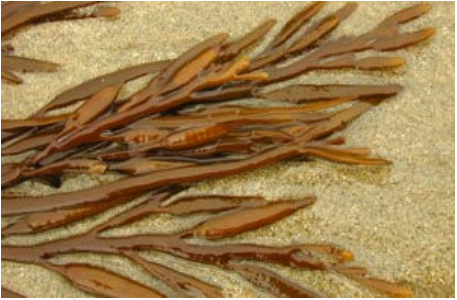
 Wireweed diagnostic features - Sea oak (Halidrys siliquosa)

This alga has been mistaken for wireweed in the past. The growth form is similar but the oval, pod-shaped bladders are quite different from wireweed.
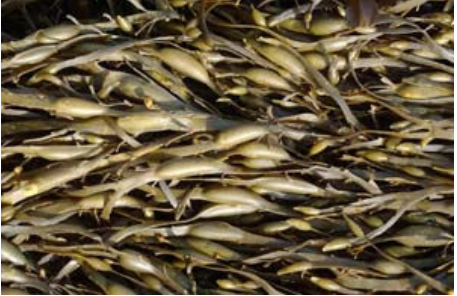
Wireweed diagnostic features - Knotted wrack (Ascophyllum nodosum)

Fronds are 1-2 m long but with elongate air bladders rather than the round bladders found on wireweed.
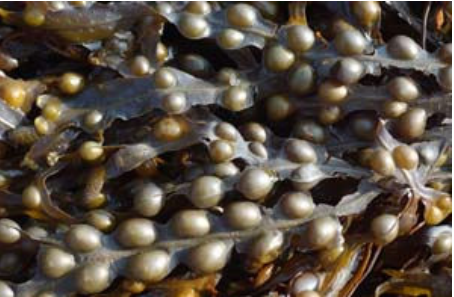
Wireweed diagnostic features - Bladder wrack (Fucus vesiculosis)

Fronds are flattened, about 20-40 cm long with round air bladders in pairs along the fronds.

Last updated:30/04/2026
Feedback
  • Facebook
  • X
  • Whatsapp
  • Email

You may also be interested in

Seaweed harvesting

Kelp and other seaweeds play an important role in coastal and marine ecosystems. Providing food, shelter and a variety of ecosystem services.

12 Apr, 2017

Managing coasts and seas

Our coasts and seas support a wealth of habitats and species and Scotland's economy. We help to manage the marine environments many, often competing, uses.

News and Blogs

World Peatlands Day celebrated with record restoration figures in Scotland

Job opportunities, collaboration and nature recovery show promise for the national commitment to restore Scotland’s peatlands.

News - 2 June

Helping Scotland’s Rainforest thrive

Helping to restore Scotland’s precious rainforests by reducing deer grazing pressures.

Blog - 28 May

Guga hunt statement

NatureScot's latest guga hunt statement.

News - 26 May

Consultation for Scotland’s peatlands

Now open to peatland practitioners, land managers, regulators, funders, researchers, and members of the public to have their say.

News - 22 May

Warning: roe deer on the move

Drivers are being warned to watch out for roe deer on the roads at this higher-risk time of year for deer-vehicle collisions. 

News - 26 May

A Green Light for Nature

South Ayrshire is becoming a leading example of how nature can support healthier, connected, happier communities.

Blog - 21 May

View all news

View all blogs

Back to top Back to top

Quick Links

  • What we do
  • FAQs
  • Contact us
  • Our work
  • Licensing
  • Careers
  • Gaelic
  • Events
  • Sitemap
  • Publications & Documents
  • Board and Committees
  • NatureScot data services
  • Freedom of Information
  • LinkedIn
  • Facebook
  • Instagram
  • YouTube
  • Wordpress
  • Flickr


© NatureScot 2025

  • Privacy policy
  • Cookie policy
  • Accessibility
  • Copyright
  • Links policy
  • Feedback