Genetic Scorecard Indicator - Woolly Willow
Woolly Willow (Salix lanata L.)

IUCN Category:
- Great Britain: Vulnerable (indicated above)
- Europe: Least Concern
- Global: Least Concern

Genetic Health Status:
- Scottish Risk: Moderate (indicated above)
- UK Risk: Moderate
- Scottish Mitigation status: Mitigation effective
- UK Mitigation status: Mitigation effective
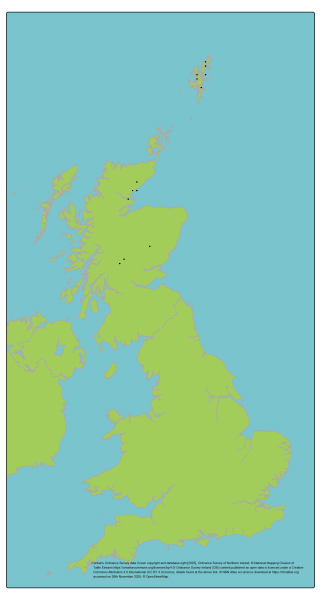
Background
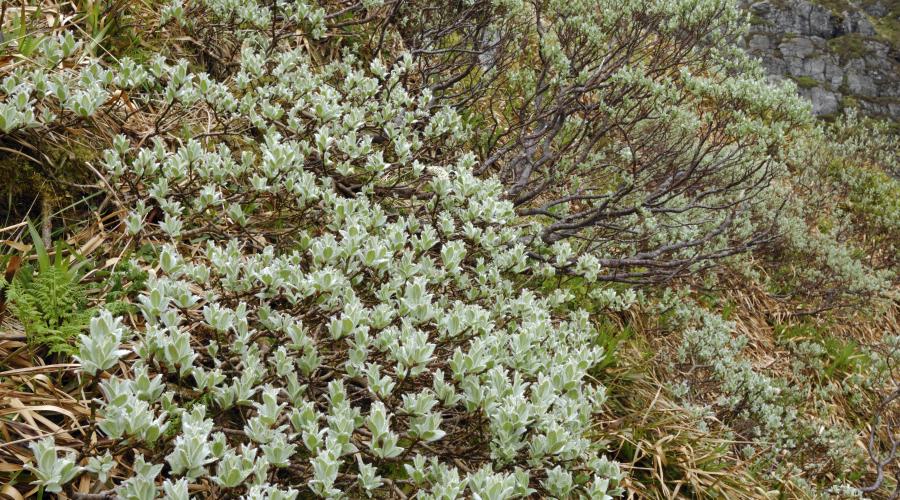
Salix lanata is a perennial dioecious long-lived shrub confined to wet and steep mountain crags with late snow-lie at 600–1000 m elevations. In Scotland, the species has traditionally been accepted from 13 native extant sites (Marriot et al., 2016; Watts and Hutchinson, 2020). In 2007, only five of these sites had > 100 individuals, and three sites consisted of a single individual. Historical records suggest past losses of further populations from three hectads (Marriot et al., 2016). There has since been extensive population augmentation and establishment of new populations with c 35K individuals being planted into the wild (Watts, 2025). S. lanata remains the rarest willow species in the highly threatened sub-arctic willow scrub habitat in Scotland. Elsewhere S. lanata is widespread with a circumboreal distribution. It is capable of local clonal spread, but a detailed study in one Scottish population showed limited evidence for clonal growth with most individual bushes showing unique genotypes (Stamati et al., 2007). The main relevant genetic data is the Stamati et al. (2007) assessment of clonal growth, a general SSR-based population genetic survey of Scottish populations (Scottish Montane Willow Research Group, 2005), and an AFLP based assessment of hybridisation (Forrest, 2006).
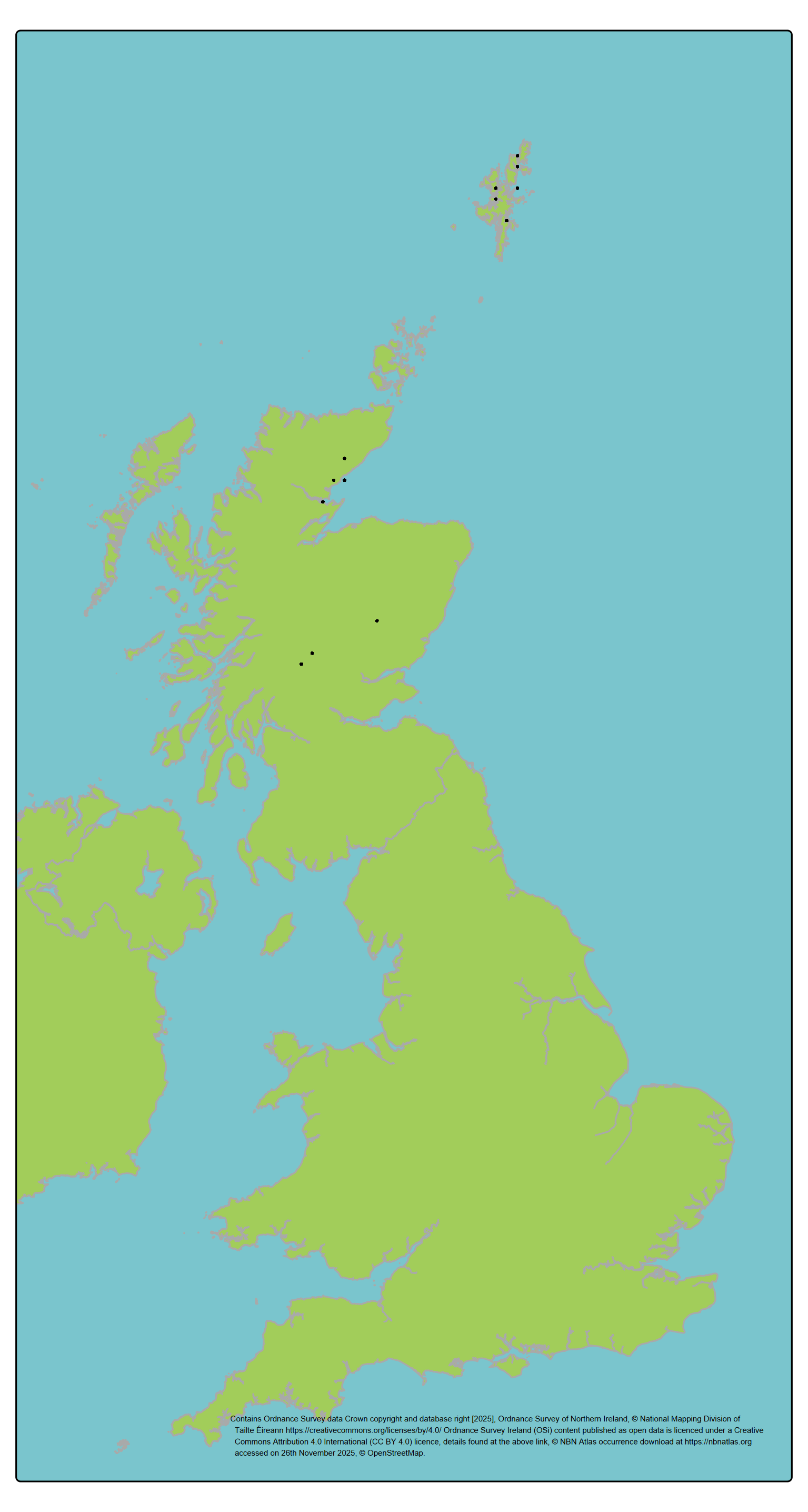
View a larger version of the distribution map for Wooly Willow.
Current Threats
The primary threat is over-grazing, and the species is also increasingly threatened by reduced snow-lie which increases susceptibility to grazing.
Contribution of Scottish/UK population to total species diversity
S. lanata is common elsewhere in its range, and there is no evidence for divergent endemic genetic lineages in Scotland, although the populations may be adapted to the local environment. The Scottish populations are the sole locations within the British Isles.
Genetic risks
Diversity loss: population declines
Populations are small, fragmented and isolated but genetic studies shows low differentiation between populations and little correlation between genetic diversity and population size, consistent with the longevity of individuals retarding genetic drift and ameliorating short-term risks of further loss of genetic diversity.
Global Biodiversity Framework Indicators
Population definitions:
Populations are defined based on geographical discontinuities. Combining the population classification of Marriot et al. (2016), and Watts (2025), gives 16 sites (five of which have been supplemented, and four which are newly established by translocation).
Ne500: The proportion of populations that have an effective population size of more than 500.
- Proportion of populations with Ne > 500 in Scotland = 3/16
- Proportion of populations with Ne > 500 in UK = 3/16
PM: Proportion of populations that existed in 2000 that still exist in 2025.
- Proportion of populations maintained in Scotland = Not assessed
- Proportion of populations maintained in UK = Not assessed
Diversity loss: functional variation
Functional variation
No immediate risk to functional variation from population declines. Populations occupy relatively similar environmental conditions, minimising likelihood of loss of unique adaptive variants.
Divergent lineages
Limited risk as no evidence for phylogenetically divergent lineages present in Scotland.
Hybridisation/Introgression
The species co-exists with hybridising species, and inter-specific hybrids are recorded at several sites. However, genetic marker data give no evidence for genetic swamping or risk of extinction-by-hybridisation (Forrest, 2006).
Low turnover - constraints on adaptive opportunities
Regeneration is considered to be a limiting factor due to grazing limiting flower production, coupled with poor seedling establishment (Forrest, 2006). This may constrain adaptive change.
Cumulative Risk Summary
Overall Genetic Health Status
Scotland
- Risk: Moderate
- Mitigation: Effective
Great Britain/UK
- Risk: Moderate
- Mitigation: Effective
Overall Genetic Health status explanation
Despite fragmented distribution and small population sizes, conservation efforts such as ex situ collections, in situ reinforcement and new-site establishment through translocations have led to an increase in the number of individuals and a positive trajectory. The overall risk level is expected to drop if translocated populations establish).
In situ genetic threat level
In situ genetic threat level
- In situ Risk for Scotland: Moderate
- In situ Risk for UK: Moderate
Small, fragmented populations of a hybridising species presents genetic risks, mitigated by longevity of individual plants and extensive translocations.
Confidence in in situ threat level
- Confidence score for Scotland: High
- Confidence score for UK: High
Assessment based on good demographic data and direct genetic observation of some populations.
Ex situ representation
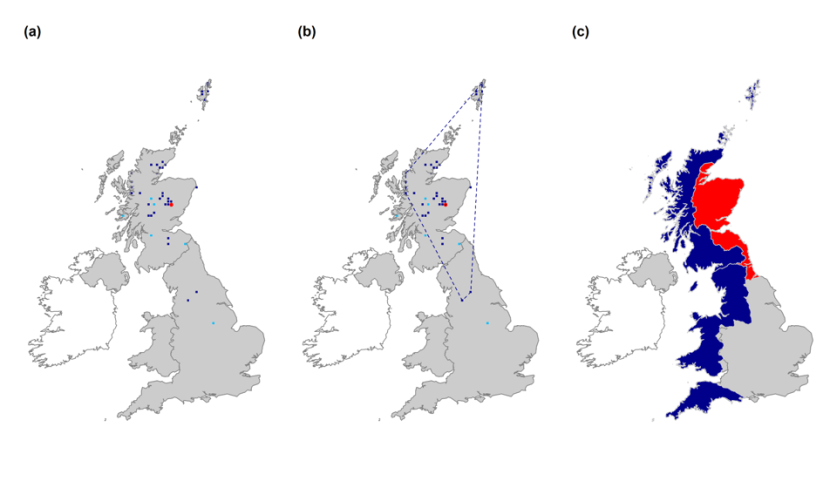
Seed collections in the Millenium Seed Bank (MSB) cover
Click for a full description
Dark blue = species distribution, red = represented in ex situ collection, light blue= pre 2000 records
- (a) 1 of 36 occupied 10-km squares (3%)
- (b) an EOO of 0 km² out of 110,850 km² occupied (0%)
- (c) 1 out of 3 Regions of Provenance (33%)
Current conservation actions
Restoration underway at native sites and new sites in Scotland. This includes ex situ propagation and translocations to reinforce extant populations as well as the establishment of new sites. Deer management and the wider grazing controls plans as part of the 2024 Scottish Biodiversity Strategy should be beneficial to S. lanata and other scrub forming montane Salix species.
| Ex situ | Translocation | Habitat management | Legal protection of habitat or species | Regulation of exploitation | Control of INNS/pests/pathogens |
|---|---|---|---|---|---|
| X | X | X | X | - | - |
Population assessment/monitoring
Population
Demographic
No current survey programme in place. The last systematic surveys of native populations were reported in Marriot et al. (2016).
Genetic
A genetic study was conducted in 2006 in nine populations across the range of S. lanata in Scotland.
There is no current genetic monitoring program.
Further Research
The genetic approaches used are now somewhat dated and a resurvey of populations with contemporary methods would be useful. The Darwin Tree of Life project is producing a reference genome for S. lanata which will facilitate future genetic studies. Demographic surveys need repeating.
References
Forrest A (2006). Hybridization in sub-arctic willow scrub in Scotland. PhD Thesis, University of Edinburgh.
Marriot RW, McHaffie H, and Mardon DK (2016). Woolly Willow, in Gaywood MJ, Boon PJ, Thompson DBA, Strachan IM. (eds). The Species Action Framework Handbook. Scottish Natural Heritage, Battleby, Perth, UK.
Scottish Montane Willow Research Group (2005). Biodiversity: taxonomy, genetics and ecology of sub-arctic willow scrub. Royal Botanic Garden Edinburgh.
Stamati K, Hollingsworth PM, and Russell J (2007). Patterns of clonal diversity in three species of sub-arctic willow (Salix lanata, Salix lapponum and Salix herbacea). Plant Systematics and Evolution, 269: 75–88.
Watts SH and Hutchinson G (2020). Salix lanata L., in Stroh PA, Humphrey TA, Burkmar RJ, Pescott OL, Roy DB, Walker KJ. (eds). BSBI Online Plant Atlas 2020. https://plantatlas2020.org/atlas/2cd4p9h.p4m [Accessed 21/03/2025]
Watts SH (2025). Montane willow scrub restoration in Scotland: reviewing 30 years of progress to reestablish the altitudinal treeline. Restoration Ecology, 33, e14290. doi:https://doi.org/10.1111/rec.14290
Assessor: Pete Hollingsworth, Royal Botanic Garden Edinburgh
Reviewer: Rob Ogden, University of Edinburgh