Genetic Scorecard Indicator - Scots pine
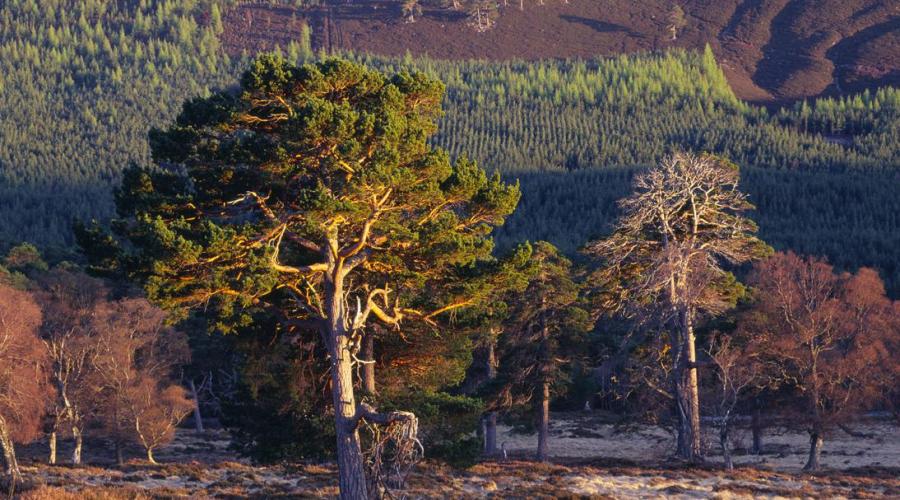
Scots pine (Pinus sylvestris)

IUCN Category:
- Great Britain: Least Concern (indicated above)
- Europe: Least Concern
- Global: Least Concern

Genetic Health Status:
- Scottish Risk: Moderate (indicated above)
- UK Risk: Moderate
- Scottish Mitigation status: Partially effective
- UK Mitigation status: Partially effective
Background
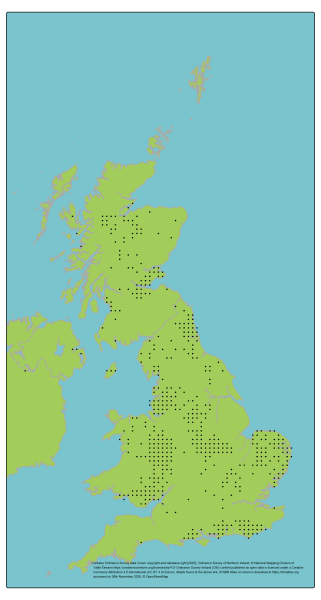
Hermaphrodite, wind pollinated, widely distributed tree. Currently recognised as being present in 84 natural stands (Forestry Commission, 1994; Steven & Carlisle, 1959), which are often small and fragmented; work is underway to assess additional sites outside the current list (Rainey & Holmes, 2023; Manning et al., 2010). Natural stands represent only ~10% of trees in Scotland and extensive plantations have been established across the UK, although usually from seed sources that originated in Scotland. At some sites in southern Scotland and England, questions persist regarding the native status of trees, and work is underway to assess their genetic composition (Manning et al., 2010). Genetic marker studies show large amounts of neutral genetic diversity and very low genetic structure (Wachowiak et al., 2011, 2013), consistent with the species’ high seed and pollen dispersal capability, although a spatial cline in differentiation suggests weakly biased dispersal (Gonzalez-Diaz et al., 2018). Common garden studies have shown genetic differences in multiple phenotypic traits among plants originating from different sites across Scotland, which suggests local adaptation (Salmela, 2011; Donnelly et al., 2018; Perry et al., 2016 a, b; Beaton et al., 2022).
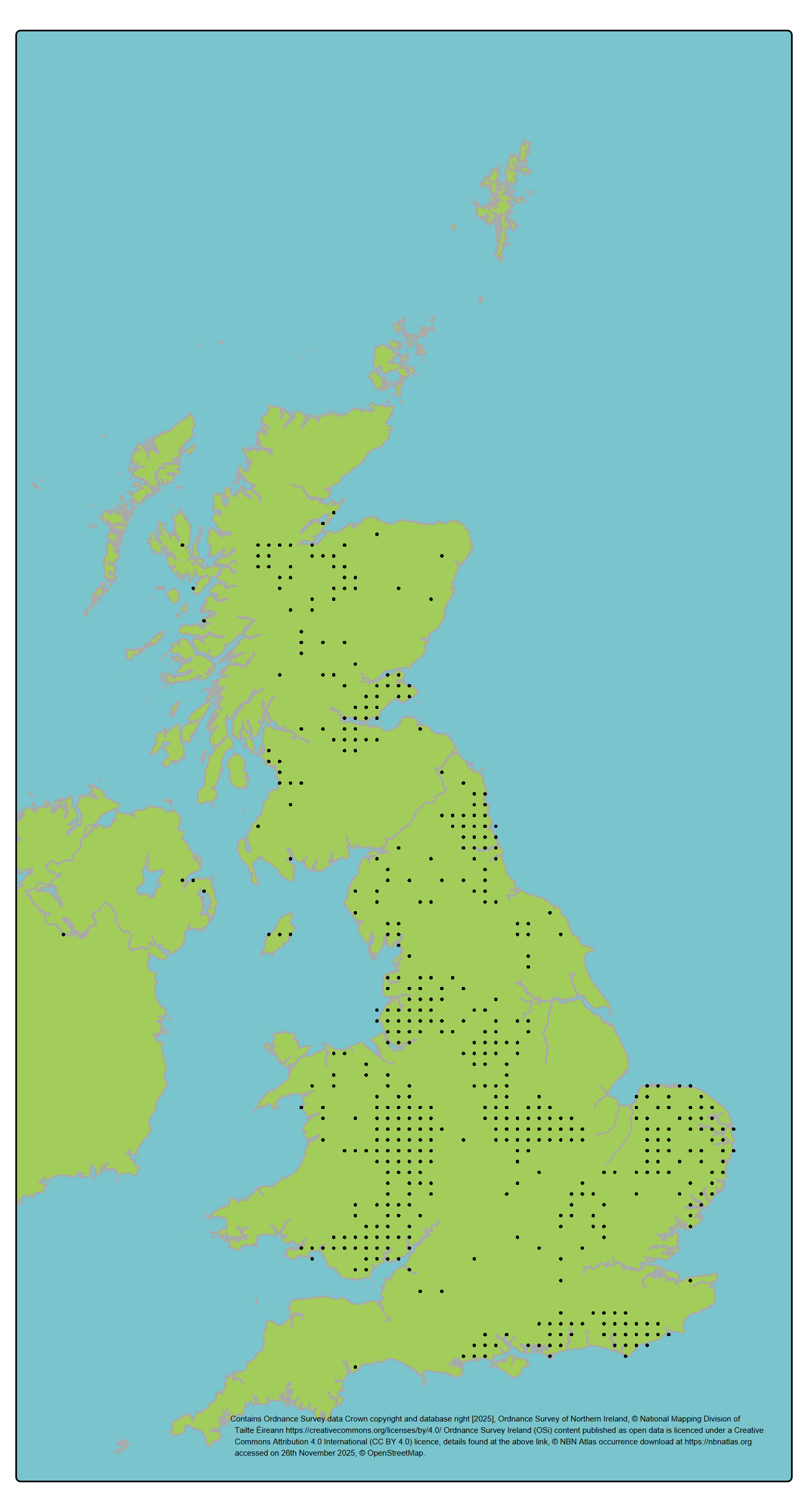
View a larger version of the distribution map for the Scots Pine.
Current Threats
Plant pathogens represent a significant threat, with novel races of the needle blight pathogen Dothistroma septosporum apparently introduced with Corsican and lodgepole pine (an indigenous race of the pathogen appears also to be present, Piotrowska et al., 2018) and there is concern regarding apparently growing occurrence of the rare fungus Curreya pithyophila (Forest Research, 2023). Caledonian pinewoods remain under-protected with frequently poor regeneration and extensive invasion by exotic tree species (Summers & Cavers, 2021). Evidence for declining growth in western populations suggests the impact of climate change is already being felt (Wilson, 2023).
Contribution of Scottish/UK population to total species diversity
Scots pine in the Caledonian pinewoods appears to have adapted to its distinct northwest Atlantic environment and represents a valuable and distinct component of global genetic diversity in the species (Ennos et al., 1997; Perry et al., 2016 a, b; Donnelly et al., 2018; Beaton et al., 2022). Some molecular evidence exists for a putative separate lineage in north-western Scotland (Ennos et al., 1997), although nuclear markers indicate very low differentiation of Scottish populations, even from continental Europe (Wachowiak et al., 2014, 2022).
Genetic risks
Diversity loss: population declines
Multiple small populations with no regeneration coupled with an age-structure biased towards older trees compromises the sustainability of many populations. Invasion of pinewood populations by exotic species may compromise their regeneration further. There is limited risk of imminent genetic diversity loss due to high levels of standing variation in adult trees (assuming no catastrophic population losses due to pathogens) and highly effective gene dispersal mechanisms, although signs of slowing growth rates in western sites are concerning and may threaten locally adapted populations in future.
Global Biodiversity Framework Indicators
Population definitions:
Populations are defined based on management units. This species is widely distributed across UK in large numbers, per NBN Atlas. The set of naturally established populations known as the Caledonian pinewoods represent a distinctive occurrence of in situ unique genetic diversity should be evaluated in its own right with the highest conservation priority. The wider population, which is many times larger and includes commercial plantations, plantings of ‘native pinewood’, forest restoration and amenity plantings, is most likely overwhelmingly derived from genetic resources originating in or near the Caledonian pinewoods, some of which have undergone a cycle of improvement (Lee, 2002). This wider population therefore constitutes a substantial contribution to the maintenance of the UK’s genetic diversity in this species, including – via gene flow – the native pinewood fragments.
The four Great British Regions of Provenance (Herbert et al., 1999) were selected here to represent the major population groupings / management units (treating Northern Ireland as an additional region) as they broadly reflect the environmental variation across which the species is distributed and are likely to capture major patterns of genetic structure.
An estimate of Ne is made below, using the rule of thumb 0.1 x census size. This should be considered highly uncertain: tree species generally maintain large population sizes with overlapping generations that stabilise the gene pool over time. However, a wide range of factors including variation in reproductive success among individuals, and demographic bottlenecks (e.g. in response to arrival of a novel disease) can affect population genetic diversity, and consequently estimates of Ne.
Ne500: The proportion of populations that have an effective population size of more than 500.
- Proportion of populations with Ne > 500 in Scotland = 2/2
- Proportion of populations with Ne > 500 in UK = 5/5
PM: Proportion of populations that existed in 2000 that still exist in 2025.
- Proportion of populations maintained in Scotland = 2/2
- Proportion of populations maintained in UK = 5/5
Diversity loss: functional variation
Functional variation
The general persistence of the species across its range in Scotland is not threatened, which minimises the likely loss of adaptive variation, although efforts to ensure the demographic health of important indigenous populations are still insufficient. There are risks to loss of high elevation and western populations through climate change, and to other populations through disease, which may lead to some loss of adaptive variation although current disease threats are low impact.
Divergent lineages
Limited divergence from European populations and a massive planted or naturalised ex situ population largely derived from genetic resources originating in the native distribution precludes loss of major divergent lineages. The most genetically distinct populations are in the northwest of Scotland around Shieldaig and are not currently threatened.
Hybridisation/Introgression
Buffer zones in which planting of non-local seed is prohibited around existing native stands limits risk to loss of integrity from exotic stands.
Low turnover - constraints on adaptive opportunities
Deer and other herbivore grazing is a major limitation on turnover and regeneration, which can be mitigated by active management.
Cumulative Risk Summary
Overall Genetic Health Status
Scotland
- Risk: Moderate
- Mitigation: Moderate
Great Britain/UK
- Risk: Partially effective
- Mitigation: Partially effective
Overall Genetic Health status explanation
Despite the fragmented nature and small size of many populations, longevity of individual trees minimises imminent loss of genetic diversity. Management to promote regeneration supports some ongoing evolutionary processes, and wide representation of all seed zones in seed banks has likely captured a wide sample of genetic diversity.
In situ genetic threat level
In situ genetic threat level
- In situ Risk for Scotland: Moderate
- In situ Risk for UK: Moderate
Scotland and the UK: in the face of emerging pathogen threats, major limitations to regeneration present a moderate risk of genetic variation loss and constraints to adaptation.
Confidence in in situ threat level
- Confidence score for Scotland: High
- Confidence score for UK: High
Assessment based on good demographic data and direct data on genetic variation, population differentiation and biology.
Ex situ representation
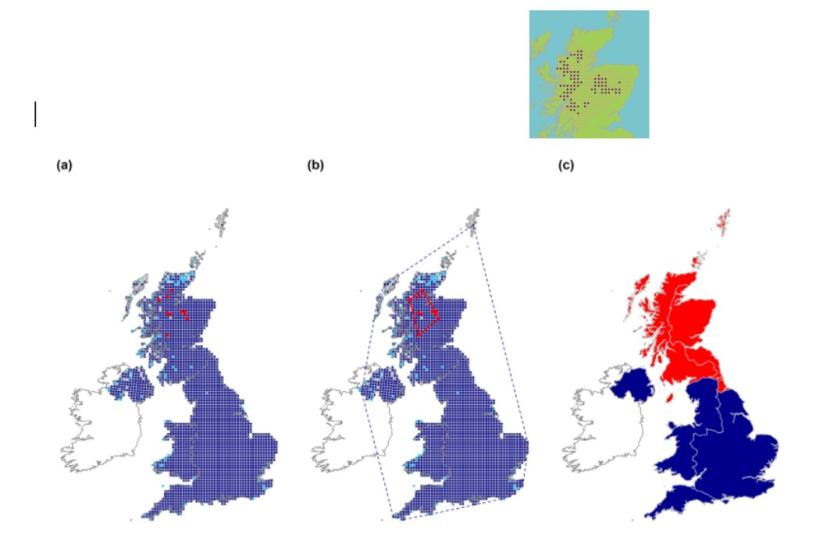
Seed collections in the Millenium Seed Bank (MSB) cover
Click for a full description
Dark blue = species distribution, red = represented in ex situ collection, light blue= pre 2000 records. Insert shows recognised regions of native Caledonian pinewoods.
- (a) 11 of 2540 occupied 10-km squares (0%)
- (b) an EOO of 10,408 km² out of 510,516 km² occupied (2%)
- (c) 2 out of 5 Regions of Provenance (40%)
The seed collections are concentrated on the recognised regions of native Caledonian pinewoods.
Current conservation actions
Key actions required are: 1) Improve the management of the recognised Caledonian pinewoods including: grazing control to promote natural regeneration within extant stands, removal of invasive non-native tree species, and expansion of extant stands through natural colonisation. 2) Secure consensus on the status of putative native pine sites in Scotland beyond those on the Caledonian pinewood inventory and in England. 3) Declaration of further Gene Conservation Units within the EUFORGEN system to add to the three existing ones (Beinn Eighe National Nature Reserve, Shieldaig and Glen Derry) - a minimum of 10 should be the target (Action 21.4 SBS Delivery Plan). 4) Favour natural regeneration over planting of nursery-derived saplings wherever possible to minimise transfers of diseases. 5) Prevent planting of exotic pine species in proximity of Caledonian pinewoods to minimise pathogen transfer risk. See also the recommendations of Willoughby et al. (2026).
| Ex situ | Translocation | Habitat management | Legal protection of habitat or species | Regulation of exploitation | Control of INNS/pests/pathogens |
|---|---|---|---|---|---|
| X | X | X | X | - | X |
Population assessment/monitoring
Population
Demographic
N pops assessed/monitored in Scotland = 2/2
N pops assessed/monitored in UK = 5/5
Genetic
N pops assessed/monitored in Scotland = 2/2
N pops assessed/monitored in UK = 5/5
Further Research
Extensive data now exist on the genetic diversity in the Caledonian pinewoods, including genotypic data (Kastally et al., 2022) and quantitative genetic data on a suite of traits evaluated in common gardens (Beaton et al., 2022). Efforts to infuse genetic diversity from the pinewoods into the Scots pine breeding programme are underway and a new trial series to be planted across a much wider environmental range and including continental European provenances will be established in 2026. Priorities include evaluation of genetic diversity in UK populations relative to that in continental European populations (i.e. assessment of the new trial series), re-characterisation of the putative northwestern lineage identified in Ennos et al (1997), and establishing monitoring to assess population changes in response to climatic shifts, disease and changes to grazing.
References
Dunlop et al (2025) Caledonian Pinewoods: a conservation framework. Scottish Forestry. 79(3): 32-37
Forest Research (2023) A new old health threat to scots pine.
Forestry Commission (1994) Caledonian Pinewood Inventory. Forestry Commission, Edinburgh.
Gonzalez-Diaz P., Cavers S., Iason G., Booth A., Russell J., Jump A. (2018) Weak isolation by distance and geographic diversity gradients persist in Scottish relict pine forest, linked to flowering asynchrony and effective gene flow. iForest, 11: 449-458.
Herbert, R., Samuel, S., & Patterson, G. (1999). Using Local Stock for Planting Native Trees and Shrubs. Forestry Commission Practice Note.
Kastally, C., Niskanen, A.K., Perry, A., Kujala, S.T., Avia, K., Cervantes, S., Haapanen, M., Kesälahti, R., Kumpula, T.A., Mattila, T.M. and Ojeda, D.I. (2022). Taming the massive genome of Scots pine with PiSy50k, a new genotyping array for conifer research. The Plant Journal.
Lee SJ (2002) Selection of parents for the Scots pine breeding population in Britain, Forestry, 75(3): 293–303
Manning, A.D., Kesteven, J., Stein, J., Lunn, A., Xu, T. and Rayner, B. (2010). Could native Scots pines (Pinus sylvestris) still persist in northern England and southern Scotland?. Plant Ecology & Diversity, 3(2): 187-201.
Perry, A., Wachowiak, W., Brown, A.V., Ennos, R.A., Cottrell, J.E. and Cavers, S. (2016). Substantial heritable variation for susceptibility to Dothistroma septosporum within populations of native British Scots pine (Pinus sylvestris). Plant pathology, 65(6): 987-996.
Perry, A., Brown, A.V., Cavers, S., Cottrell, J.E. and Ennos, R.A. (2016). Has S cots pine (Pinus sylvestris) co‐evolved with Dothistroma septosporum in Scotland? Evidence for spatial heterogeneity in the susceptibility of native provenances. Evolutionary Applications, 9(8): 982-993.
Rainey, J. and Holmes, F. (2023) Caledonian Pinewoods: Findings from the Caledonian Pinewood Recovery Project. Trees for Life.
Summers, R.W. and Cavers, S. (2021). The past, present and uncertain future for Caledonian pinewoods. Scottish For, 75:19-28.
Wachowiak, W., Salmela, M.J., Ennos, R.A., Iason, G. and Cavers, S. (2011). High genetic diversity at the extreme range edge: nucleotide variation at nuclear loci in Scots pine (Pinus sylvestris L.) in Scotland. Heredity, 106(5): 775-787.
Wachowiak, W., Iason, G.R. and Cavers, S. (2013). Among population differentiation at nuclear genes in native Scots pine (Pinus sylvestris L.) in Scotland. Flora-Morphology, Distribution, Functional Ecology of Plants, 208(2): 79-86.
Wachowiak, W., Wόjkiewicz, B., Cavers, S. and Lewandowski, A. (2014). High genetic similarity between Polish and North European Scots pine (Pinus sylvestris L.) populations at nuclear gene loci. Tree Genetics & Genomes, 10(4): 1015-1025.
Wachowiak, W., Żukowska, W.B., Perry, A., Lewandowski, A., Cavers, S. and Łabiszak, B. (2023). Phylogeography of Scots pine in Europe and Asia based on mtDNA polymorphisms. Journal of Systematics and Evolution, 61(2): 315-327.
Willoughby, I.H., Clarke, T., Stokes, V.J. and Dhanda, R. (2026). Underplanting extends the range of coniferous tree species that could potentially be used to diversify future commercial timber production in the United Kingdom. Forest Ecology and Management, 601: 123346.
Wilson R (2023) Warmer and wetter: how climate change is impacting the Caledonian pine forest. Reforesting Scotland.
Assessor:
- Richard Ennos, University of Edinburgh
- Stephen Cavers, UK Centre for Ecology & Hydrology
Reviewer: Pete Hollingsworth, Royal Botanic Garden Edinburgh