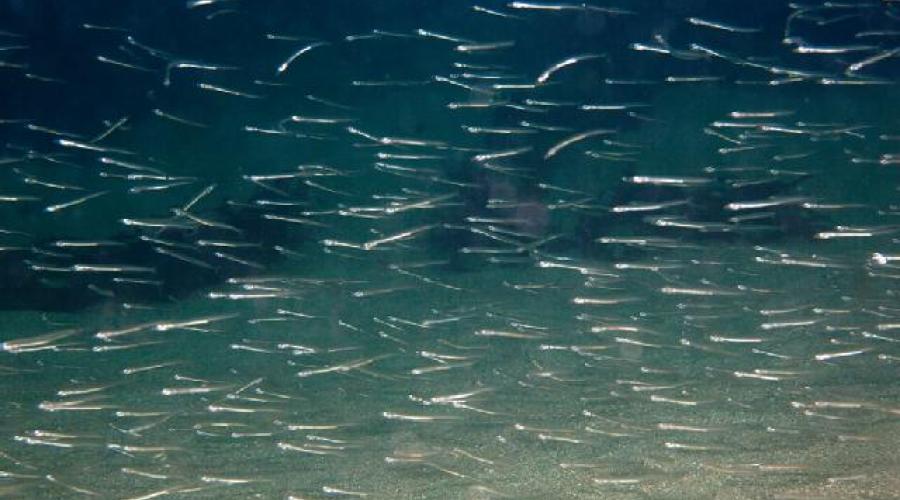
Genetic Scorecard Indicator - Sandeel
Sandeel (Ammodytes marinus)
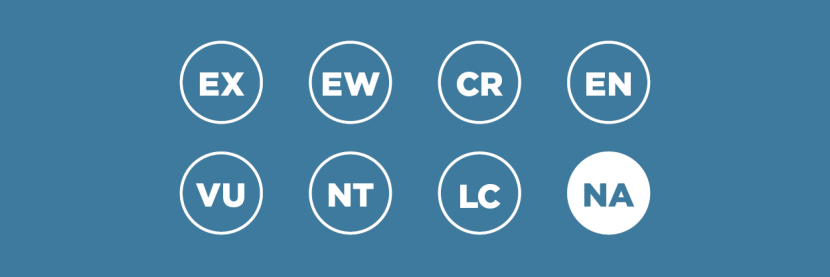
IUCN Category:
- Great Britain: Not Assessed (indicated above)
- Europe: Least Concern
- Global: Not Assessed

Genetic Health Status:
- Scottish Risk: Serious (indicated above)
- UK Risk: Serious
- Scottish Mitigation status: Partially Effective
- UK Mitigation status: Partially Effective
Background
Ammodytes marinus is restricted to the Northeast Atlantic and Arctic oceans (Fernandes et al., 2015). Sandeels are common throughout UK and Irish waters and generally recorded at depths ranging from 10 to 150 metres (Barnes, 2008). A. marinus is a commercially important species, supporting an historically large fishery in the North Sea and, prior to the mid-2000s, inshore fisheries off the Shetland Isles and the Scottish west coast (Scottish Government, 2020; Langton et al., 2021). Sandeels live in close association with sandy substrates in which they burrow (Wright et al., 2000; Holland et al., 2005; Tien et al., 2017). Sandeels are a keystone species in marine ecosystems (Pint et al., 2024) and are a significant prey resource for many species (Santos & Pierce, 2003; Frederiksen et al., 2005; Anderwald et al., 2012; Eigaard et al., 2014; Scottish Government, 2023; Ludwig et al., 2024; Defra, 2025)
Low levels of genetic differences across most of the genome suggests panmixia, but this masks genetic heterogeneity linked to the limited mixing between different spawning grounds (Jiménez-Mena et al., 2019; Allgayer et al., 2024; ICES, 2024a).
Sandeels in the North Sea are managed as six stocks on the basis of information from tagging studies, otolith micro-chemistry, drift modelling and genetics research (ICES, 2024a). The five management areas relevant to UK waters are:
- Dogger Bank (Central and southern North Sea): Spawning stock biomass (SSB) is above thresholds of concern at 186,569 tonnes, with a 72,997 tonnes recommended total allowable catch in 2025 (ICES, 2025a). Average weight of sandeel at age 2 is 15g (Boulcott et al., 2007), indicating the population has at least 1.2x10¹⁰ individuals.
- Northern North Sea: minimum SSB is 44,716 tonnes, with a zero catch recommended. The SSB equates to a population of 3.0x10⁹ (ICES, 2025b)
- Viking and Bergen banks (Northern North Sea): no information on abundance, zero catch recommended (ICES, 2025c)
- Shetland (Northern North Sea): no information on abundance, zero catch recommended (ICES, 2025d)
- West of Scotland: no information on abundance, zero catch recommended (ICES, 2024b)
Current Threats
Historically high fishing pressure has led to localized depletions, and recovery following mitigation has been slow (ICES, 2024a). Sandeel recruitment is highly variable, closely linked to sea temperature and zooplankton availability (Régnier et al., 2019; Olin et al., 2025). Rising sea temperatures have caused trophic mismatches, with peak prey availability no longer aligning with sandeel larval development, leading to recruitment failures (ICES, 2024a).
Offshore developments (e.g., wind farms) may impact sandeel burrowing habitat. Changes in sediment composition and increased underwater noise levels could further stress populations (ICES, 2024a).
Contribution of Scottish/UK population to total species diversity
The Scottish populations of A. marinus are considered regionally important, with evidence of partial reproductive isolation of sandeels particularly along the Scottish North Sea coast (Jiménez-Mena et al., 2019; Allgayer et al., 2024).
Genetic risks
Diversity loss: population declines
Population contractions and stock collapses have been observed in several areas (ICES, 2024a). These declines have been particularly pronounced where recovery from historical overexploitation remains uncertain despite management efforts.
Global Biodiversity Framework Indicators
Population definitions:
Populations are based on geographic boundaries based on information from tagging studies, otolith micro-chemistry, drift modelling and genetics research (ICES, 2024a)
Ne500: The proportion of populations that have an effective population size of more than 500.
- Proportion of populations with Ne > 500 in Scotland = 0/4
- Proportion of populations with Ne > 500 in UK = 0/5
PM: Proportion of populations that existed in 2000 that still exist in 2025.
- Proportion of populations maintained in Scotland = 4/4
- Proportion of populations maintained in UK = 5/5
Diversity loss: functional variation
Functional variation
Observed changes in phenotypic traits such as length at maturity, variable recruitment and limited mixing reflect potential reductions in functional genetic diversity (Wright et al., 2019; Allgayer et al., 2024).
Divergent lineages
Sandeel stocks exhibit localised differentiation with distinct genetic signatures. As a result of over-exploitation, some populations may have already lost critical genetic variants that support local adaptation and ecological resilience (Jiménez-Mena et al., 2019; Régnier et al., 2019; Wright et al., 2019; Van Deurs et al., 2023).
Hybridisation/Introgression
There is no evidence of hybridisation of A.marinus with other species in UK waters or elsewhere, although hybridisations between other Ammodytes species have been recorded (Kim et al., 2017).
Low turnover - constraints on adaptive opportunities
There is a strong relationship between sandeels and their habitat requirements with irregular recruitment (Wright et al., 2000; Holland et al., 2005; Eigaard et al., 2014; Tien et al., 2017). This means there is limited capacity for adaptation particularly to climate change (Régnier et al., 2019).
Cumulative Risk Summary
Overall Genetic Health Status
Scotland
- Risk: Serious
- Mitigation: Serious
GB/UK
- Risk: Partially Effective
- Mitigation: Partially Effective
Ne500 not met in any stock. Historic overexploitation, irregular recruitment, limited ability to adapt to environmental change and limited mixing between spawning grounds. Recovery remains uncertain despite fisheries management measures. Additional conservation measures were introduced in 2024 that protect sandeels throughout Scottish waters and also in the English waters of the North Sea but the effectiveness of these new measures will remain unknown for a number of years. Climate-driven shifts remain an ongoing concern.
Overall Genetic Health status explanation
Low levels of genetic differences across the genome which masks genetic heterogeneity. Highly variable recruitment and limited mixing between spawning grounds. Recovery remains uncertain despite fisheries management measures. Additional conservation measures were introduced in 2024 that protect sandeels throughout Scottish waters and also in the English waters of the North Sea but the effectiveness of these new measures will remain unknown for a number of years. Climate-driven shifts remain an ongoing concern.
In situ genetic threat level
In situ genetic threat level
- In situ Risk for Scotland: Serious
- In situ Risk for UK: Serious
Confidence in in situ threat level
- Confidence score for Scotland: Medium
- Confidence score for UK: Medium
Ex situ representation
Sandeels are held in some aquaria, with a focus on public display rather than genetic conversation.
Current conservation actions
Since 2024, all Scottish waters have been closed to commercial fishing of sandeels. Prior to this, northeast inshore waters were closed to commercial fisheries, with designation as an Other Effective Area-Based Conservation measures (OECM) to aid seabird and cetacean conservation. The English waters of the North Sea were also closed to commercial fishing of sandeels in 2024.
Four Nature Conservation Marine Protected Areas (NCMPA) have been designated to protect sandeels. Sandeels are recognised as a priority marine feature (PMF) in Scotland’s seas, which means that National Marine Plan General Policy GEN 9b applies. This ensures that development and use of the marine environment does not have a significant effect on their national status.
The Scottish Biodiversity Strategy to 2045, the Scottish Biodiversity Duty and UK Marine Strategy Good Environmental Status provide further drivers to ensure biological diversity is restored, and ecosystems are safeguarded.
| Ex situ | Translocation | Habitat management | Legal protection of habitat or species | Regulation of exploitation | Control of INNS/pests/pathogens |
|---|---|---|---|---|---|
| - | - | - | X | X | - |
Population assessment/monitoring
Population
Demographic
N pops assessed/monitored in Scotland = 0/4
N pops assessed/monitored in UK = 5/5
Scotland: No abundance estimates have been undertaken in Scottish waters in recent years.
GB/UK: ICES collate stock assessment information from across the species range for the determination of fisheries advice for the North Sea stocks.
Genetic
N pops assessed/monitored in Scotland = 0/4
N pops assessed/monitored in UK = 0/5
Scotland and GB/UK: Genetic assessments have been undertaken for sandeel stock identification. These are not however systematic or regular.
References
Allgayer, R.L., Fernandes, P.G., Travis, J.M. and Wright, P.J., (2024). Spatial patterns of within-stock connectivity provide novel insights for fisheries management. Marine Ecology Progress Series, 731: 159–178.
Anderwald, P., Evans, P.G.H., Dyer, R., Dale, A., Wright, P.J., Hoelzel, A.R. (2012). Spatial scale and environmental determinants in minke whale habitat use and foraging. Mar Ecol Prog Ser 450: 259−274
Barnes, M.K.S. (2008). Ammodytes marinus Raitt's sand eel. In Tyler-Walters H. and Hiscock K. Marine Life Information Network: Biology and Sensitivity Key Information Reviews. Plymouth: Marine Biological Association of the United Kingdom.
Boulcott, P., Wright, P.J., Gibb, F.M., Jensen, H., Gibb, I.M. (2007). Regional variation in maturation of sandeels in the North Sea. ICES Journal of Marine Science, 64(2), 369–376.
Defra (2025). Evidence update: North Sea sandeels.
Delord, C., Arnaud-Haond, S., Leone, A., Rolland, J. and Nikolic, N. (2024), Unraveling the Complexity of the Ne/Nc Ratio for Conservation of Large and Widespread Pelagic Fish Species: Current Status and Challenges. Evolutionary Applications, 17, e70020.
Eigaard, O.R., van Deurs, M., Behrens, J.W., Bekkevold, D., Brander, K., Plambech, M., Schreiber Plet-Hansen, K., Mosegaard, H. (2014) Prey or predator—expanding the food web role of sandeel Ammodytes marinus. Marine Ecology Progress Series, 516, 267-273.
Fernandes, P., Collette, B. & Heessen, H. (2015). Ammodytes marinus (Europe assessment). The IUCN Red List of Threatened Species 2015.
Frederiksen M, Wright PJ, Heubeck M, Harris MP, Mavor RA, Wanless S (2005) Regional patterns of kittiwake Rissa tridactyla breeding success are related to variability in sandeel recruitment. Marine Ecology Progress Series, 300, 201–211.
Hauser, L., and G. R. Carvalho. 2008. “Paradigm Shifts in Marine Fisheries Genetics: Ugly Hypotheses Slain by Beautiful Facts. Fish and Fisheries, 9, 333–362.
Hoban, S., Bruford, M., D'Urban Jackson, J., Lopes-Fernandes, M., Heuertz, M., Hohenlohe, P.A., Paz-Vinas, I., Sjögren-Gulve, P., Segelbacher, G., Vernesi, C., Aitken, S., Bertola, L.D., Bloomer, P., Breed, M., Rodríguez-Correa, H., Funk, W.C., Grueber, C.E., Hunter, M.E., Jaffe, R., Liggins, L., Mergeay, J., Moharrek, F., O'Brien, D., Ogden, R., Palma-Silva, C., Pierson, J., Ramakrishnan, U., Simo-Droissart, M., Tani, N., Waits, L., Laikre, L., (2020). Genetic diversity targets and indicators in the CBD post-2020 Global Biodiversity Framework must be improved. Biological Conservation, 248, 108654.
ICES (2010). Report of the Benchmark Workshop on sandeel (WKSAN). ICES Expert Group reports (until 2018). Report.
ICES (2025a). Sandeel (Ammodytes spp.) in divisions 4.b and 4.c, Sandeel Area 1r (central and southern North Sea, Dogger Bank). In Report of the ICES Advisory Committee, 2024. ICES Advice 2025, san.sa.1r, https://doi.org/10.17895/ices.advice.27202845
ICES (2025c). Sandeel (Ammodytes spp.) in Division 4.a, Sandeel Area 5r (northern North Sea, Viking and Bergen banks). In Report of the ICES Advisory Committee, 2025. ICES Advice 2025, san.sa.5r,
ICES (2025d). Sandeel (Ammodytes spp.) in Division 4.a, Sandeel Area 7r (northern North Sea, Shetland). In Report of the ICES Advisory Committee, 2025. ICES Advice 2025, san.sa.7r.
Jiménez-Mena B, Le Moan A, Christensen A, van Deurs M, Mosegaard H, Hemmer-Hansen J, Bekkevold D. (2019). Weak genetic structure despite strong genomic signal in lesser Sandeel in the North Sea. Evolutionary Applications, 13(2), 376-387.
Kim, J.-K., Bae, S.E., Lee, S.J., Yoon, M.G. (2017) New insight into hybridization and unidirectional introgression between Ammodytes japonicus and Ammodytes heian (Trachiniformes, Ammodytidae). PLoS ONE 12(6), e0178001.
Langton, R., Boulcott, P. & Wright, P.J. (2001). A verified distribution model for the lesser sandeel Ammodytes marinus. Marine Ecology Progress Series, 667, 145–159.
Laurent, V. and Planes, S. (2007) Effective population size estimation on Sardina pilchardus in the Bay of Biscay using a temporal genetic approach. Biological Journal of the Linnean Society 90, 591–602.
Ludwig, K.E., Singer, A., Kröncke, I. and Sell, A.F. (2024). Predator-prey trait associations and feeding preferences of demersal fishes in the southern North Sea. Marine Ecology Progress Series, 739, 173-190.
MacDonald, A., Speirs, D.C., Greenstreet, S.P.R., Boulcott, P. and Heath, M.R. (2019). Trends in Sandeel Growth and Abundance off the East Coast of Scotland. Frontiers in Marine Science, 6, 201.
Olin, A.B., Banas, N.S., Heath, M.R., Wright, P.J., MacDonald, A., Wanless, S., Daunt, F., Speakman, J.R. and Nager, R.G., 2025. Changing food conditions and size declines in a North Sea forage fish. bioRxiv, pp.2025-03.
Pint, S., Stevens, M., Musimwa, R., Standaert, W., De Troch, M., van Oevelen, D., Heymans, J.J. and Everaert, G. (2024). A food web model of the Southern Bight of the North Sea. Ocean & Coastal Management, 255, 107256.
Régnier, T., Gibb, F.M. & Wright, P.J. (2019). Understanding temperature effects on recruitment in the context of trophic mismatch. Scientific Reports, 9, 15179.
Santos, M., Pierce, G.J. (2003). The diet of harbour porpoise (Phocoena phocoena) in the Northeast Atlantic: a review. Oceanography and Marine Biology Annual Review, 41, 363-369.
Tien, N.S.H., Craeymeersch, J., van Damme, C., Couperus, A.S., Adema, J., Tulp, I. (2017) Burrow distribution of three Sandeel species relates to beam trawl fishing, sediment composition and water velocity, in Dutch coastal waters. Journal of Sea Research, 127, 194−202.
Van Deurs, M., Jacobsen, N.S., Behrens, J.W., Henriksen, O. and Rindorf, A. (2023). The interactions between fishing mortality, age, condition and recruitment in exploited fish populations in the North Sea. Fisheries Research, 267, 106822.
Wright, P.J., Bailey, M.C. (1996) Timing of hatching in Ammodytes marinus from Shetland waters and its significance to early growth and survivorship. Marine Biology,126,143–152.
Wright, P.J., Jensen, H., Tuck, I.D. (2000). The influence of sediment type on the distribution of the lesser sandeel, Ammodytes marinus. Journal of Sea Research, 44, 243−256.
Wright, P.J., Christensen, A., Régnier, T., Rindorf, A. & van Deurs, M. (2019). Integrating the scale of population processes into fisheries management, as illustrated in the sandeel, Ammodytes marinus. ICES Journal of Marine Science, 76(6), 1453–1463.
Assessor:
- Emma-Louise Smith (University of Edinburgh)
- Eunice Pinn (NatureScot)
Reviewer:
- Alex Thomson (Seawilding)
- Linda Neaves (Murdoch University)