Genetic Scorecard Indicator - Ocean Quahog
Ocean Quahog (Arctica islandica)

IUCN Category:
- Great Britain: Not Assessed (indicated above)
- Europe: Not Assessed
- Global: Not Assessed

Genetic Health Status:
- Scottish Risk: Moderate (indicated above)
- UK Risk: Moderate
- Scottish Mitigation status: Partially effective
- UK Mitigation status: Partially effective
Background
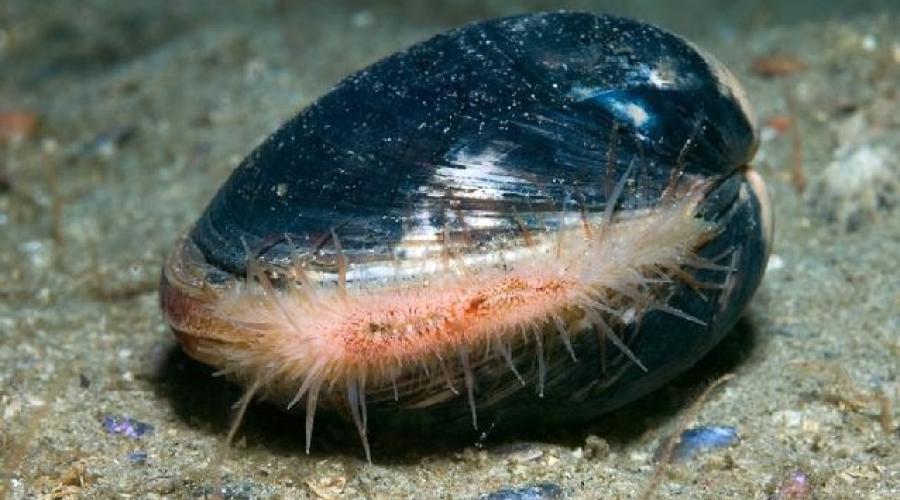
The ocean quahog (Arctica islandica) is an arctic-boreal species of the North Atlantic and adjacent waters, commonly found between 10-280m depth (OSPAR, 2009). It lives buried in soft sands and muddy sands, with its inhalant and exhalent siphons at the surface (Taylor, 1976; Morton, 2011). Significant declines in distribution and abundance have been recorded in the North Sea over the last century associated with fishing activity (Rumohr et al., 1998; OSPAR, 2009).
A. islandica is a long-lived species with a very slow growth rate. Individuals typically reach sexual maturity at 10–13 years and can live for over 200 years, with the oldest recorded specimen exceeding 500 years (Holmes et al., 2003; Epple et al., 2006; Butler et al., 2013). Reproduction occurs over a protracted period from June to November, depending on location. The species is dioecious with external fertilisation, and the pelagic larval stage lasting 32–55 days depending on temperature (Cargnelli et al., 1999; Holmes et al., 2003).
A. islandica comprises many small discrete populations reflecting limited gene flows between grounds and localised adaptation to habitat (Holmes et al., 2003). Recruitment to the ocean quahog population is irregular, with infrequent large year-classes appearing unpredictably, often with intervals exceeding 10 years and as much as 30 years (Lewis et al., 2001; Powell and Mann, 2005; Harding et al., 2008; Hennen, 2015). This means the population structure is often skewed with some locations dominated by juveniles and others by adults (Witbaard & Bergman, 2003; OSPAR, 2009).
Current Threats
Demersal fishing gear such as trawls can cause mechanical damage and result in incidental bycatch of A. islandica leading to direct mortality (Piet et al., 1998; Witbaard & Klein, 1994; Klein & Witbaard, 1995; Tyler-Walters & Sabatini, 2017; Herman & Witbaard, 2023). Disturbance of the habitat resulting in loss or degradation (e.g. sand and gravel extraction) can also result in damage and mortality (OSPAR, 2009; Tyler-Walters & Sabatini, 2017).
Contribution of Scottish/UK population to total species diversity
70% of the British records for this species occur in Scottish waters (Tyler-Walters et al., 2016).
Genetic risks
Diversity loss: population declines
Population fragmentation and founder effects are evident (Dahlgren et al., 2000; Holmes et al., 2003). Genetic drift is likely in small or isolated populations.
Global Biodiversity Framework Indicators
Population definitions:
Populations are defined by geographic boundaries and genetic clusters. Ocean quahog have been found to have many small discrete populations potentially reflecting localised adaptation to habitat (Holmes et al., 2003). However, the distribution of ocean quahog beds and the abundance of the bivalve remain unknown in the UK, due to lack of data, making metrics incalculable.
Ne500: The proportion of populations that have an effective population size of more than 500.
- Proportion of populations with Ne > 500 in Scotland = Unknown
- Proportion of populations with Ne > 500 in UK = Unknown
PM: Proportion of populations that existed in 2000 that still exist in 2025.
- Proportion of populations maintained in Scotland = Unknown
- Proportion of populations maintained in UK = Unknown
A. islandica comprises many small discrete populations.
Diversity loss: functional variation
Functional variation
Reproductive isolation means A. islandica comprises many small discrete populations. Consequently, local population losses may result in the permanent loss of unique genetic variants or regionally adapted traits.
Divergent lineages
A. islandica is the last extant species of the family Arcticidae (Hemeon et al., 2023). The North Atlantic populations show genetic divergence between the east and west sides of the Atlantic, likely driven by historical founder effects and limited gene (Dahlgren et al., 2000; Holmes et al., 2003).
Hybridisation/Introgression
There is no evidence of interspecific hybridisation in A. islandica.
Low turnover - constraints on adaptive opportunities
A. islandica is a long-lived species with a very slow growth rate. Individuals typically reach sexual maturity at 10–13 years and can live for over 200 years, with the oldest recorded specimen exceeding 500 years (Holmes et al., 2003; Epple et al., 2006; Butler et al., 2013). Irregular recruitment and/or low juvenile survival, mean that recovery may be very slow in areas where the population numbers become depleted (OSPAR, 2009). Combined with delayed sexual maturity and extreme longevity, it is likely that the ocean quahog has limited capacity to adapt over short timescales (Holmes et al., 2003; Harding et al., 2008).
Cumulative Risk Summary
Overall Genetic Health Status
Scotland
- Risk: Moderate
- Mitigation: Partially effective
Great Britain/UK
- Risk: Moderate
- Mitigation: Partially effective
Many small discrete populations with irregular recruitment exposed to the impact of fishing activities. Additional management measures are being considered, which could reduce genetic risks.
Overall Genetic Health status explanation
The ocean quahog faces long-term genetic risks due to its biological characteristics and external pressures. It is an extremely long-lived species with a very slow growth rate, only reaching sexual maturity after 10 years. Recruitment is irregular and phenotypic plasticity leads to adaptation to local conditions which has resulted in many small discrete populations, some of which have a skewed age distribution.
In situ genetic threat level
In situ genetic threat level
- In situ Risk for Scotland: Moderate
- In situ Risk for UK: Moderate
Many small discrete populations with irregular recruitment and slow recovery following exposure to fishing disturbance indicate ongoing genetic risks.
Confidence in in situ threat level
- Confidence score for Scotland: Medium
- Confidence score for UK: Medium
Data regarding biology, population differentiation and genetic studies, although much of the evidence is non-UK.
Ex situ representation
No UK-based ex situ or gene bank collections. The species is not included in conservation breeding or restoration programs.
Current conservation actions
Ocean quahog is listed as an OSPAR Threatened and Declining Species (OSPAR, 2009). The species is recognised as a priority marine feature (PMF) in Scotland’s seas, which means that National Marine Plan General Policy 9 applies. This ensures that development and use of the marine environment does not have a significant effect on their national status.
18 Marine Protected Areas (MPAs) have been designated for the protection of ocean quahog and its habitat. Most human activities with the potential to have adverse effects, such as construction and dredging, are managed through a licensing and consents process. Fisheries measures have been introduced to the majority of these sites. Additionally, fisheries measures are being consulted upon for English sites and it is expected that fisheries measures linked to Scottish MPA and PMF management areas for fishing gear to which ocean quahog are sensitive to will be consulted upon in 2025/26.
The Scottish Biodiversity Strategy to 2045, the Scottish Biodiversity Duty and UK Marine Strategy Good Environmental Status provide further drivers to ensure biological diversity is restored, and ecosystems are safeguarded.
| Ex situ | Translocation | Habitat management | Legal protection of habitat or species | Regulation of exploitation | Control of INNS/pests/pathogens |
|---|---|---|---|---|---|
| - | - | - | X | - | - |
Population assessment/monitoring
Population
Demographic
Scotland: Monitoring of protected sites with ocean quahog is undertaken at irregular intervals depending on the prioritisation and risks identified by NatureScot and Marine Directorate.
UK (excluding Scotland): Monitoring of the MPA network is undertaken through a dedicated programme of adaptive management (Noble-James et al., 2023).
- N pops assessed/monitored in Scotland: unknown
- N pops assessed/monitored in UK: unknown
Genetic
Genetic monitoring of populations is ad hoc and rare.
- N pops assessed/monitored in Scotland: unknown
- N pops assessed/monitored in UK: unknown
References
Butler, P.G., Wanamaker Jr, A.D., Scourse, J.D., Richardson, C.A. & Reynolds, D.J. (2013). Variability of marine climate on the North Icelandic Shelf in a 1357-year proxy archive based on growth increments in the bivalve Arctica islandica. Palaeogeography, Palaeoclimatology, Palaeoecology, 373, 141-151.
Cargnelli, L.M., Griesbach, S.J., Packer, D.B. & Weissberger, E. (1999). Essential fish habitat source document: Ocean quahog, Arctica islandica, life history and habitat characteristics. NOAA Technical Memorandum, NMFS-NE-148, 12pp.
Dahlgren, T.G., Weinberg, J.R., Halanych, K.M. (2000). Phylogeography of the ocean quahog (Arctica islandica): influences of paleoclimate on genetic diversity and species range. Marine Biology,137, 487–495.
Epple, V. M., Brey, T., Witbaard, R., Kuhnert, H. & Päzolt, J. (2006). Sclerochronological records of Arctica islandica from the inner German Bight. The Holocene, 16, 763-769.
Harding, J.M. et al. (2008). Decadal trends in age structure and recruitment patterns of Ocean Quahogs Arctica Islandica from the mid-Atlantic bight in relation to water temperature. Journal of Shellfish Research, 27(4), 667–690.
Hemeon, K.M., Powell, E.N., Klinck, J.M., Mann, R., Pace, S.M. (2023). Regional growth rates and growth synchronicity between two populations of Arctica islandica in the western Mid-Atlantic (US). Estuarine, Coastal and Shelf Science, 291, 108412.
Hennen, D.R. (2015). How Should We Harvest an Animal that Can Live for Centuries? North American Journal of Fisheries Management, 35, 512-527.
Herman, P. & Witbaard, R. (2023). Mapping Arctica islandica. Deltares project 11209797-002
Holmes, S., Witbaard, R. and van der Meer, G. (2003). Phenotypic and genotypic population differentiation in the bivalve mollusc Arctica islandica: Results from RAPD analysis. Marine Ecology Progress Series, 254, 163–176.
Klein, R. & Whitbaard, R. (1995). Long-term trends in the effects of beam trawl fishery on the shells of Arctica islandica. NIOZ Rapport 1995-3.
Lewis, C.V.W., Weinberg, J.R. and Davis, C.S. (2001). Population structure and recruitment of the bivalve Arctica islandica (Linnaeus, 1767) on Georges Bank from 1980–1999. Journal of Shellfish Research, 20, 1135–1144.
Morton, B. (2011). The biology and functional morphology of Arctica islandica (Bivalvia: Arcticidae) -- A gerontophilic living fossil. Marine Biology Research, 7(6), 540-553.
Noble-James, T., Bullimore, R. McBreen, F., O’Connor, J., Highfield, J., McCabe, C., Archer-Rand, S., Downie, A.-L., Hawes, J. & Mitchell, P. (2023). Monitoring benthic habitats in English Marine Protected Areas: Lessons learned, challenges and future directions. Marine Policy, 157, 105852
OSPAR (2009). Background for Ocean quahog Arctica islandica. OSPAR Commission.
Piet, G.J., Rijnsdorp, A.D., Bergman, M.J.N., van Santbrink, J.W., Craeymeersch, J.A. & Buys, (1998). A quantitative evaluation of the impact of beam trawl fishery on benthic fauna in the southern North Sea. In Bergman et al (Eds) The distribution of benthic macrofauna in the Dutch sector of the North Sea in relation to the micro distribution of beam trawling. Final report. 1998. BEON Rapport No. 98-2:5-15.
Powell, E.N. and Mann, R. (2005). Evidence of recent recruitment in the ocean quahog Arctica islandica in the Mid-Atlantic Bight. Journal of Shellfish Research, 24, 517–530.
Ridgway, I.D. et al. (2011). The population structure and biology of the ocean quahog, Arctica islandica, in Belfast Lough, Northern Ireland. Journal of the Marine Biological Association of the United Kingdom, 92(3), 539–546.
Rumohr, H., Ehrich, S., Knust, R., Kujawsik, T., Philippart, C.J.M., & Schroeder, A. (1998). Long term trends in demersal fish and benthic invertebrates. In: Linderboom, H.J. & de Groot, S.J. (1998). The effects of different types of fisheries on the North Sea and Irish Sea benthic ecosystems. IMPACT-II. NIOZ-RAPPORT 1998-1.
Taylor, A.C. (1976). Burrowing behaviour and anaerobiosis in the bivalve Arctica islandica (L.). Journal of the Marine Biological Association of the UK, 56, 95-109.
Tyler-Walters, H., & Sabatini, M. 2017. Arctica islandica Icelandic cyprine. In Tyler-Walters H. Marine Life Information Network: Biology and Sensitivity Key Information Reviews. Plymouth: Marine Biological Association of the United Kingdom
Tyler-Walters, H., James, B., Carruthers, M. (eds.), Wilding, C., Durkin, O., Lacey, C., Philpott, E., Adams, L., Chaniotis, P.D., Wilkes, P.T.V., Seeley, R., Neilly, M., Dargie, J. & Crawford-Avis, O.T. 2016. Descriptions of Scottish Priority Marine Features (PMFs). Scottish Natural Heritage Commissioned Report No. 406.
Witbaard, R. & Klein, R. (1994). Long-term trends on the effects of the southern North Sea beam trawl fishery on the bivalve mollusc Arctica islandica L. (Mollusca, bivalvia). ICES Journal of Marine Science, 51, 99-105.
Witbaard, R. & Bergman, M.J.N. (2003). The distribution and population structure of the bivalve Arctica islandica L. in the North Sea: what possible factors are involved? Journal of Sea Research, 50, 11-25.
Assessor:
- Emma-Louise Smith, University of Edinburgh
- Eunice Pinn, NatureScot
Reviewer: Tim Bean, University of Edinburgh