Genetic Scorecard Indicator - Great yellow bumblebee
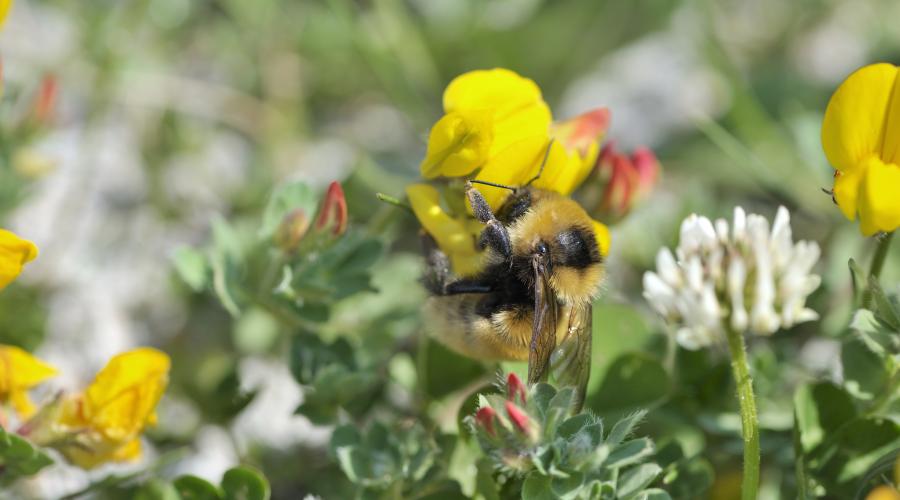
Great yellow bumblebee (Bombus distinguendus)

IUCN Category:
- Great Britain: Not assessed (indicated above)
- Europe: Vulnerable
- Global: Not assessed

Genetic Health Status:
- Scottish Risk: Serious (indicated above)
- UK Risk: Serious
- Scottish Mitigation status: Not effective
- UK Mitigation status: Not effective
Background
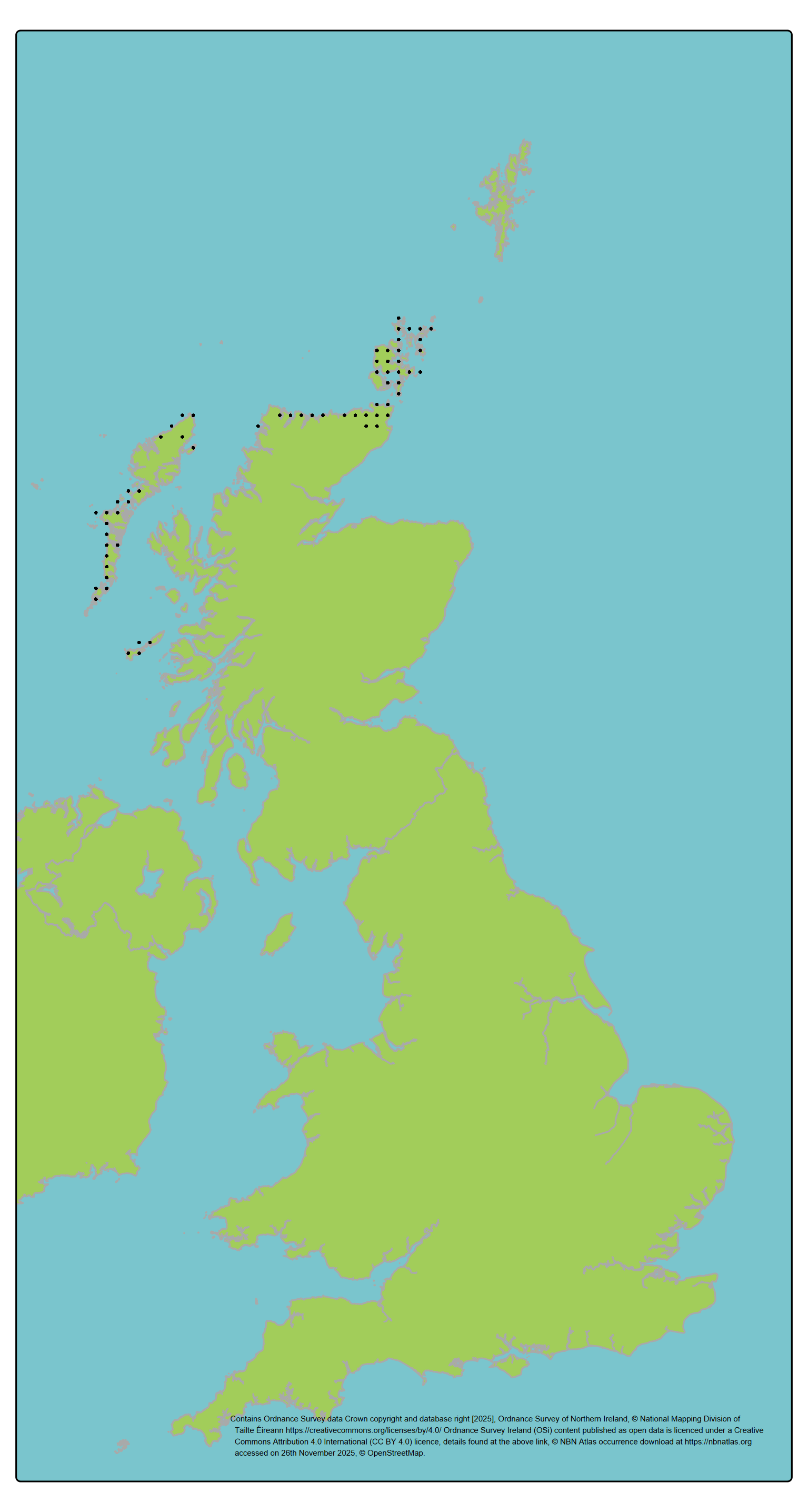
Bombus distinguendus has a Palearctic distribution and is found across parts of northern and western Europe, including Ireland, northern France, Belgium, the Netherlands, Denmark, and parts of Scandinavia. However, it has experienced significant range contraction throughout its global range due to habitat loss and agricultural intensification. In the UK, it was formerly widespread but is now restricted to isolated areas of Scotland—particularly the Outer and Inner Hebrides (e.g. Tiree, Colonsay), Caithness & Sutherland, and Orkney. It is extinct in England and Wales, making Scotland its final stronghold (Goulson, 2003; Malone, 2025). The species has declined by ~80% since 1900 due to agricultural intensification, early mowing, overgrazing, crofting abandonment, and loss of flower-rich habitats (Bibby, 2025). Despite restoration efforts, populations remain fragmented with no natural recolonisation observed (Phelan et al., 2021).
It is a univoltine species with one annual generation. Queens emerge mid-May, nesting in long vegetation or old burrows. Colonies (50–80 workers) persist until late September. Reliant on deep-flowered plants and foraging <1 km, it is highly sensitive to habitat fragmentation (Malone, 2025; Phelan et al., 2021).
Genetic analysis shows strong differentiation between island populations (e.g. South Uist, Coll, Tiree, Orkney), reflecting the fragmented structure now represented by five main Scottish population groups: the Outer Hebrides, Inner Hebrides, Orkney, northwest Sutherland and Caithness (Charman et al., 2010; Phelan et al., 2021; Bumblebee Conservation Trust, 2024; Buglife, 2024). Minimal variation was found at finer spatial scales within these groups.
View a larger version of the distribution map for the Great Yellow Bumblebee.
Current Threats
Agricultural intensification, early mowing, crofting abandonment, overgrazing, and chemical use have reduced floral and nesting habitats and degraded habitat quality.
Fragmentation limits dispersal and gene flow, though queens can travel over 5 km (Phelan et al., 2021).
Climate change further threatens low-lying habitats like the machair through sea-level rise and heatwaves (Williams et al., 2007). In Caithness, only ~5% of surveyed roadside verges were suitable, but 30% could be enhanced with minimal intervention (Malone, 2025).
Contribution of Scottish/UK population to total species diversity
Scotland holds the only viable UK populations of B. distinguendus, which have become highly isolated following widespread national declines. While the species persists in parts of mainland Europe, the Scottish populations represent the last remaining UK stronghold. Their loss would not significantly impact global genetic diversity but would represent a substantial loss of regional genetic variation and national conservation value.
Genetic risks
Diversity loss: population declines
Genetic studies show low diversity, with reduced heterozygosity and allelic richness. Despite no signs of recent bottlenecks or inbreeding, effective population sizes are critically low (~25). Populations are genetically sub-structured, reflecting isolation and limited gene flow. The species now occupies less than 10% of Scotland’s 10 km grid squares. Formerly widespread in the UK, the species has declined by ~80% since the early 20th century due to habitat loss and agricultural intensification (Charman et al., 2010; Phelan et al., 2021; Bibby, 2025).
Global Biodiversity Framework Indicators
Population definitions:
Populations defined by geographic boundaries and genetic clusters. The species is present in five primary population centres. These groupings are based on known occurrences from recent surveys (2023–2024) and reflect major geographic separations reinforced by limited dispersal capability and habitat discontinuity. While earlier studies often grouped these into three broader regional populations, the current understanding recognises five biologically meaningful and geographically isolated units (Bumblebee Conservation Trust, 2024; Buglife, 2024).
Ne500: The proportion of populations that have an effective population size of more than 500.
- Proportion of populations with Ne > 500 in Scotland = 0/5
- Proportion of populations with Ne > 500 in UK = 0/5
PM: Proportion of populations that existed in 2000 that still exist in 2025.
- Proportion of populations maintained in Scotland = 5/5
- Proportion of populations maintained in UK = 5/5
Diversity loss: functional variation
Functional variation
Limited flight range (~1 km), dependence on deep-flowered forage plants, and widespread floral scarcity restrict both dispersal and gene flow. Habitat fragmentation further reduces genetic connectivity, leading to increased risks of inbreeding, disease susceptibility, and reduced adaptive potential. This is exacerbated by small colony sizes and isolated nesting, particularly in low-density coastal populations and could cause the loss of functional diveristy (Phelan et al., 2021; Malone, 2025; Buglife, 2024).
Divergent lineages
There is currently no evidence of divergent evolutionary lineages within the UK populations. While strong population structure is observed between islands and regions, this likely reflects recent isolation rather than long-term divergence (Charman et al., 2010).
Hybridisation/ Introgression
There are no known hybridisation risks or evidence of introgression from other Bombus species. The species’ ecological specialisation and geographic isolation limit opportunities for hybridisation with other closely related taxa.
Low turnover - constraints on adaptive opportunities
The univoltine life cycle, low reproductive output, and strong dependence on specific habitats reduce opportunities for adaptation. Combined with small Ne, this constrains the potential for adaptive responses to environmental change. Populations are also highly vulnerable to stochastic events such as poor weather years, local habitat loss, or disease outbreaks.
Cumulative Risk Summary
Overall Genetic Health Status
Scotland
- Risk: Serious
- Mitigation: Not effective
Great Britain/UK
- Risk: Serious
- Mitigation: Not effective
Overall Genetic Health status explanation
Bombus distinguendus faces serious genetic risks due to very small effective population sizes (Ne ~25), a highly fragmented distribution, and restricted gene flow. Of the five known population centres, only the Outer Hebrides appears relatively stable, while the others remain small and vulnerable, with no evidence of genetic recovery.
In situ genetic threat level
In situ genetic threat level
In situ Risk for Scotland: Serious
In situ Risk for UK: Serious
Low diversity, steep population declines, specific habitat requirements and limited reproductive output.
Confidence in in situ threat level
Confidence score for Scotland: High
Confidence score for UK: High
This is a well-studied species in Scotland.
Ex situ representation
There are currently no known ex situ conservation programmes for Bombus distinguendus. While the species has been the focus of in situ efforts, no captive breeding, genetic banking, or insurance populations exist (Bumblebee Conservation Trust, 2024).
Current conservation actions
Conservation focuses on habitat management via agri-environment schemes promoting delayed mowing, reduced grazing, and low-chemical practices in crofting and machair systems. Roadside verge management has improved floral connectivity in areas such as Caithness and the Outer Hebrides (Malone, 2025). From 2025, Bumblebee Conservation Trust will enhance habitats through seed planting, wildflower restoration, and sustainable grazing.
The species also benefits from the Pollinator Strategy for Scotland (2017–2027). Current conservation relies mainly on habitat measures and community involvement (Bumblebee Conservation Trust, 2024; Buglife, 2024).
| Ex situ | Translocation | Habitat management | Legal protection of habitat or species | Regulation of exploitation | Control of INNS/pests/pathogens |
|---|---|---|---|---|---|
| - | - | - | X | X | - |
Population assessment/monitoring
Population
Demographic
- N pops assessed/monitored in Scotland = 5/5
- N pops assessed/monitored in UK =5/5
Genetic
- N pops assessed/monitored in Scotland =0/5
- N pops assessed/monitored in UK = 0/5
References
Bibby, H. (2025) ‘Practical Guide: Land Management for the Great Yellow Bumblebee ‘Bombus distinguendus’.
Buglife (2024) Great Yellow Bumblebee conservation update. Buglife – The Invertebrate Conservation Trust.
Bumblebee Conservation Trust (2024) Great Yellow Bumblebees: On the Verge Report. Stirling: Bumblebee Conservation Trust.
Charman, T.G. et al. (2010) ‘Conservation genetics, foraging distance and nest density of the scarce great yellow bumblebee (bombus distinguendus)’, Molecular Ecology, 19(13), pp. 2661–2674. doi:10.1111/j.1365-294x.2010.04697
Goulson, D. 2003. Bumblebees: their Behaviour and Ecology. Oxford University Press, Oxford.
Malone, K. (2025) Great Yellows: On the Verge Development year survey report, The UK’s bumblebees are in crisis. (Accessed: 11 July 2025).
Scottish Natural Heritage, T. (2017) Pollinator Strategy for Scotland 2017–2027 [Preprint]. (Accessed: 2025).
Phelan, N., Suddaby, D. and Stanley, D.A. (2021) ‘Investigating the ecology of the Great Yellow Bumblebee (Bombus distinguendus) within the wider Bumblebee community in north-West Ireland’, Journal of Insect Conservation, 25(2), pp. 297–310. doi:10.1007/s10841-021-00299-7.
Williams, P.H., Araújo, M.B. & Rasmont, P. 2007. Can vulnerability among British bumblebee (Bombus) species be explained by niche position and breadth? Biological Conservation, 138, 493-505
Assessor: Emma-Louise Smith, University of Edinburgh University.
Reviewer: David O’Brien, NatureScot.