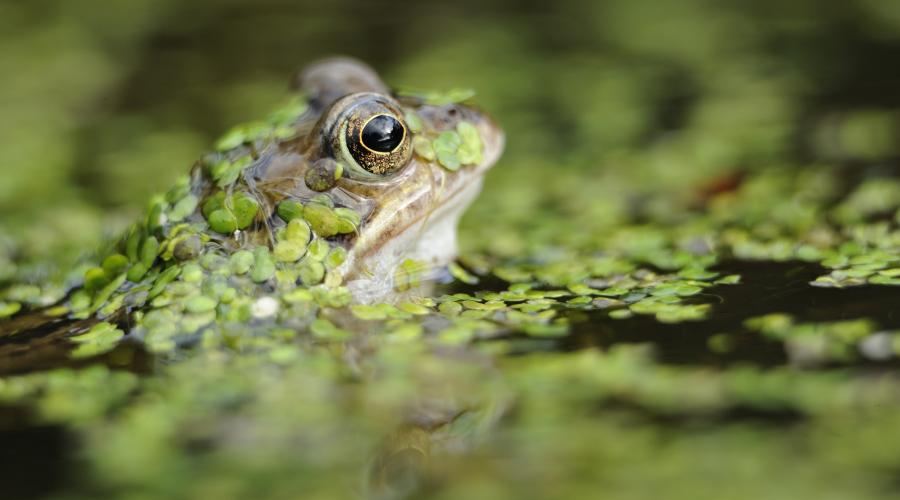
Genetic Scorecard Indicator - Common frog
Common frog (Rana temporaria)

IUCN Category:
- Great Britain: Least concern (indicated above)
- Europe: Least concern
- Global: Least concern

Genetic Health Status:
- Scottish Risk: Negligible (indicated above)
- UK Risk: Negligible
- Scottish Mitigation status: Not required
- UK Mitigation status: Not required
Background
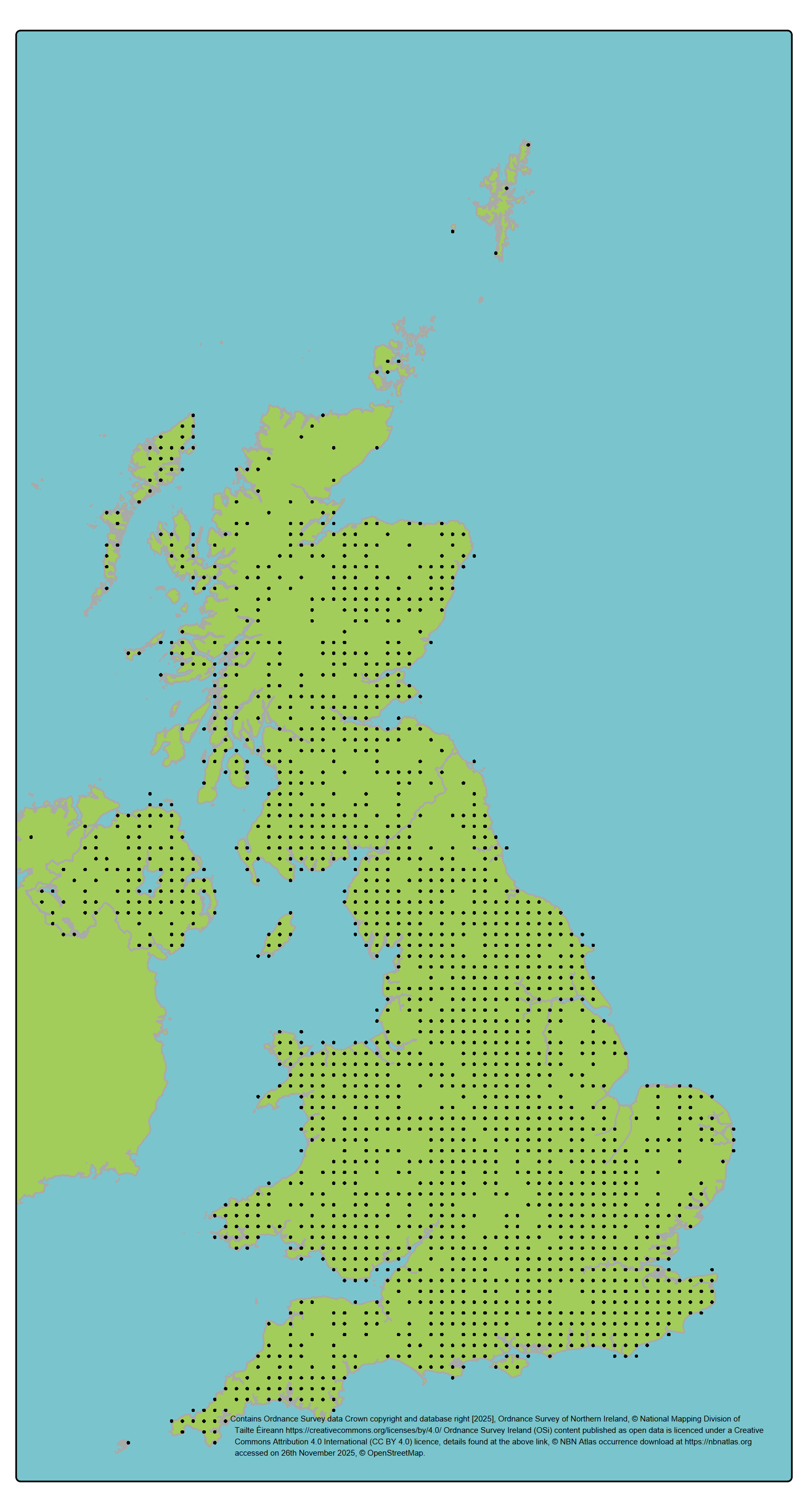
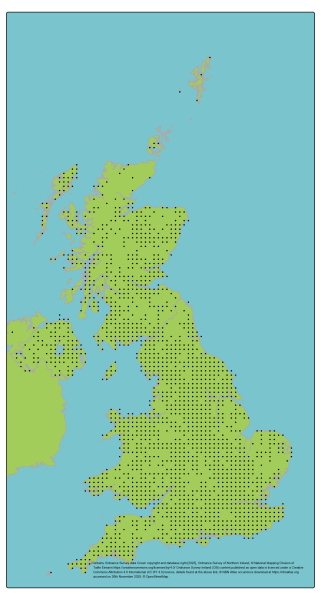
The common frog is widespread across the UK, excluding some Scottish islands, and broadly distributed throughout northern and central Europe and north-western Asia. It occupies diverse habitats including urban ponds, gardens, meadows, and woodlands (Scottish Wildlife Trust, 2023). Its abundance and adaptability make it an important part of food webs both as a predator and as prey. Common frogs colonised the UK after the last glacial period. Mitochondrial DNA suggests divergence between western and eastern European lineages with a common ancestor ~700,000 years ago (Teacher, 2008).
Maturity is reached between 3–4 years; lifespan typically 5–10 years (up to 13) (Patrelle et al., 2012; McInerny et al., 2016). Common frogs breed in spring; females laying up to2,000 eggs in shallow ponds. Tadpoles usually metamorphose the same season (Jehle et al., 2023) though some may overwinter in colder ponds.
View a larger version of the distribution map for the Common Frog.
Current Threats
Multiple human-driven threats affect native frogs, including habitat fragmentation from urban and agricultural development, which reduces connectivity and increases genetic isolation (Jehle et al., 2023; Turner et al., 2022). Seasonal migrations expose them to high road mortality, especially in spring and autumn (McInerny et al., 2016). The fungal disease chytridiomycosis, spread through trade and translocation, poses an additional risk (Cunningham, 2018). Although currently uncommon in Scotland, ranaviruses are predicted to spread northwards under likely climate change scenarios and may pose the greatest threat (Price et al., 2019). Climate change, particularly increased frequency and duration of droughts, is also likely to impact on frogs.
Contribution of Scottish/UK population to total species diversity
Mitochondrial DNA sequences from Scottish samples were identical to, or clustered with, the common haplotype previously identified from Western Europe (Muir et al., 2013).
Genetic risks
Diversity loss: population declines
Negligible risk. Although local declines have been observed, re-colonisation can be rapid in urban (O’Brien, 2015) and rural areas (O’Brien et al., 2021). Frogs using urban Green Infrastructure have similar levels of genetic diversity to those in rural areas (Jehle et al., 2023).
Global Biodiversity Framework Indicators
Population definitions:
Populations are defined based on biogeography and genetic evidence. There is a wide and near continuous distribution of common frogs in the UK. To allow for local adaptation, populations have been assessed based on the five zones that form the basis of UK provenance zones.
Ne500: The proportion of populations that have an effective population size of more than 500.
- Proportion of populations with Ne > 500 in Scotland = 2/2
- Proportion of populations with Ne > 500 in UK = 5/5
PM: Proportion of populations that existed in 2000 that still exist in 2025.
- Proportion of populations maintained in Scotland = 2/2
- Proportion of populations maintained in UK = 5/5
Diversity loss: functional variation
Functional variation
Negligible risk of loss despite adaptations to local conditions (Muir et al., 2014), because there is high gene flow between high and low altitude populations (Muir et al., 2013) and in urban settings via green infrastructure (Jehle et al., 2023).
Divergent lineages
Risk appears low as there is no evidence of structuring within Scottish and UK populations, which themselves are little different from those of wider western Europe.
Hybridisation/Introgression
There are no species in Scotland, native or introduced, known to produce fertile hybrids with common frogs, although introductions of conspecifics from elsewhere in its range have occurred.
Low turnover - constraints on adaptive opportunities
Common frogs in Scotland typically produce up to 2,000 eggs per breeding pair and can use a wide range of water bodies to breed and reproduce readily (McInerny et al., 2016).
Cumulative Risk Summary
Overall Genetic Health Status
Scotland
- Risk: Negligible
- Mitigation: Not required
Great Britain/UK
- Risk: Negligible
- Mitigation: Not required
Overall Genetic Health status explanation
Genetic studies indicate stable diversity across most populations, with allelic richness and heterozygosity remaining high, including in urban populations such as those in Inverness (Jehle et al., 2023). Although population sizes are not directly reported, the number of occupied ponds and the maintenance of stable genetic diversity suggests that many populations exceed the Ne > 500 threshold necessary for long-term viability.
In situ genetic threat level
In situ genetic threat level
- In situ Risk for Scotland: Negligible
- In situ Risk for UK: Negligible
Genetically diverse, with evidence of gene flow between populations despite natural and artificial barriers.
Confidence in in situ threat level
- Confidence score for Scotland: High
- Confidence score for UK: High
Assessment based on good demographic data, direct data on genetic variation, population differentiation and biology.
Ex situ representation
Whilst the species is often kept by hobbyists, there is no structured ex situ breeding of this species.
Current conservation actions
Common frogs (Rana temporaria) are protected from trade under Section 9(5) of the Wildlife and Countryside Act 1981 but not from capture or killing. The common frog benefits from the creation of generalist wildlife ponds in rural and urban areas, including Sustainable Drainage Systems (SuDS), which support urban gene flow (Jehle et al., 2023). The Scottish Biodiversity Strategy promotes connectivity and disease monitoring, while citizen science aids population tracking and public engagement.
| Ex situ | Translocation | Habitat management | Legal protection of habitat or species | Regulation of exploitation | Control of INNS/pests/pathogens |
|---|---|---|---|---|---|
| - | - | X | - | X | - |
Population assessment/monitoring
Population
Demographic
N pops assessed/monitored in Scotland = 2/2
N pops assessed/monitored in UK = 5/5
National Amphibian and Reptile Monitoring Programme (UK)
Genetic
N pops assessed/monitored in Scotland = 2/2
N pops assessed/monitored in UK = 5/5
References
Cunningham, A.A. (2018) ‘Infectious disease threats to amphibian conservation’, The Glasgow Naturalist, 27(Supplement), pp. 81–90. doi:10.37208/tgn27s14.
Jehle, R., Hall, J., Hook, S.A., King, S., MacArthur, K., Miró, A., Rae, M. and O’Brien, D., 2023. High evolutionary potential maintained in common frog (Rana temporaria) populations inhabiting urban drainage ponds. Diversity, 15(6), p. 738. doi:10.3390/d15060738.
McInerny, C.J., Minting, P.J., Cathrine, C. and O'Brien, D., 2016. The amphibians and reptiles of Scotland. Glasgow: Glasgow Natural History Society.
Muir, A.P., Thomas, R., Biek, R. and Mable, B.K., 2013. Using genetic variation to infer associations with climate in the common frog, R ana temporaria. Molecular ecology, 22(14), pp.3737-3751.
Muir, A.P., Biek, R., Thomas, R. and Mable, B.K., 2014. Local adaptation with high gene flow: temperature parameters drive adaptation to altitude in the common frog (R ana temporaria). Molecular ecology, 23(3), pp.561-574.
O’Brien, C.D., 2015. Sustainable drainage system (SuDS) ponds in Inverness, UK and the favourable conservation status of amphibians. Urban ecosystems, 18(1), pp.321-331.
O'Brien, D., Hall, J.E., Miró, A., O'Brien, K. and Jehle, R., 2021. A co‐development approach to conservation leads to informed habitat design and rapid establishment of amphibian communities. Ecological Solutions and Evidence, 2(1), p.e12038.
Patrelle, C. et al. (2012) ‘Sex differences in age structure, growth rate and body size of common frogs Rana temporaria in the Subarctic’, Polar Biology, 35(10), pp. 1505–1513. doi:10.1007/s00300-012-1190-7.
Price, S.J., Leung, W.T., Owen, C.J., Puschendorf, R., Sergeant, C., Cunningham, A.A., Balloux, F., Garner, T.W. and Nichols, R.A., 2019. Effects of historic and projected climate change on the range and impacts of an emerging wildlife disease. Global Change Biology, 25(8), pp.2648-2660.
Teacher, A. (2008) Population and immunocompetent genetic variation: A field-based study, Population and Immunocompetent Genetic Variation: a Field-Based Study. thesis. Queen Mary, University of London.
Turner, R.K. et al. (2022) ‘Diversity, fragmentation, and connectivity across the UK amphibian and Reptile Data Management Landscape’, Biodiversity and Conservation, 32(1), pp. 37–64. doi:10.1007/s10531-022-02502-w.
Websites:
Assessor: Emma-Louise Smith, University of Edinburgh
Reviewer: David O'Brien, NatureScot
Last updated: