Genetic Scorecard Indicator - Blue mussel
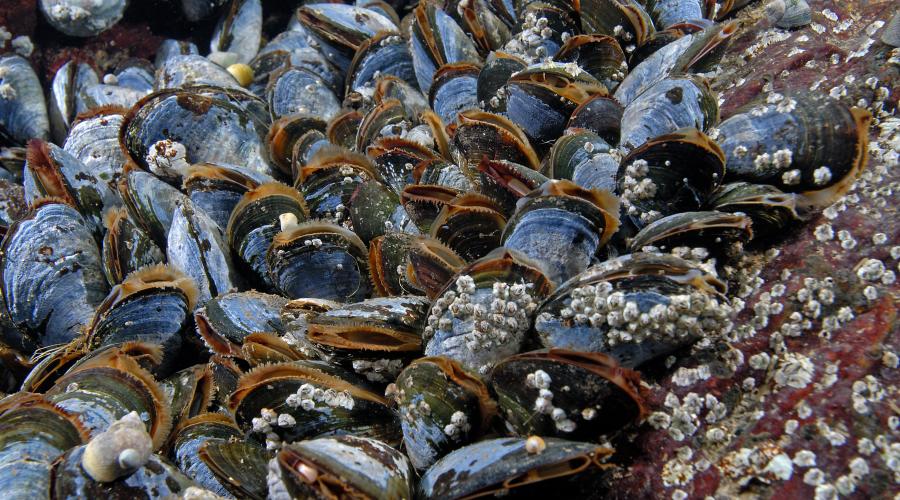
Blue mussel (Mytilus edulis)

IUCN Category:
- Great Britain: Not assessed (indicated above)
- Europe: Not assessed
- Global: Not assessed

Genetic Health Status:
- Scottish Risk: Moderate (indicated above)
- UK Risk: Moderate
- Scottish Mitigation status: Partially effective
- UK Mitigation status: Partially effective
Background
Mytilus edulis is ecologically and economically important, as a human food resource, an ecosystem engineer and a major component of coastal food webs (Pinn, 2021). Blue mussels are native to the North Atlantic, although today the species has a global distribution in temperate and subarctic regions of the northern and southern hemispheres due to both accidental and deliberate transfers (McDonald et al., 1991; Heath et al., 1995; Hilbish et al., 2000; Gérard et al., 2008; Tyler-Walters, 2008). Although blue mussel beds are relatively common and the beds can undergo considerable fluctuations, their extent is thought to be declining in the Scotland and other areas of the European Atlantic (OSPAR, 2015, 2023; Baden et al., 2021; Johansson et al., 2024; Burrows et al., 2025; West et al., 2025).
They occur in a wide range of habitats from estuaries and shorelines to depths of 50m, on any substratum providing a secure anchorage such as rocks, stones, and dead shell. Blue mussel beds play an important role in the healthy functioning of the marine ecosystem, stabilising sediment, improving water quality and nutrient cycling, and providing a food source for other species (Seed & Suchanek, 1992; van der Schatte Olivier et al., 2020; Pinn, 2021).
The genome of M. edulis has been fully sequenced (Taylor et al., 2024). M. edulis demonstrate high levels of genotypic and phenotypic plasticity leading to local environmental adaptations (Gosling, 1992; Kijewski et al., 2009; Utermann et al., 2018; Wenne et al., 2020; Corrochano‑Fraile et al., 2024; Regan et al., 2024).
Current Threats
Threats to blue mussel beds include fishing (targeted removal of mussels and physical damage and/or smothering from use of mobile fishing gear), water quality (bioaccumulation of pollutants with sublethal or lethal effects), competition with non-native species (e.g. slipper limpet Crepidula fornicata), physical damage and removal linked to infrastructure development, dredging, cable/pipe-laying, or anchoring and mooring chains, as well as removal for fishing bait and physical damage from associated trampling (Fariñas-Franco et al., 2014; Mainwaring et al., 2014; Baden et al., 2021; Wenne et al., 2020; OSPAR 2023). Blue mussel beds will also be vulnerable to future climate impacts associated with salinity changes, increased storminess, marine heatwaves and ocean acidification (O’Donnell et al., 2013; Fitzer et al., 2014; Mainwaring et al., 2014; Zhao et al., 2017; Seuront et al., 2019; Baden et al., 2021; OSPAR, 2023).
Contribution of Scottish/UK population to total species diversity
Scotland hosts some of the most important remaining NE Atlantic occurrences (western Scotland, Rockall waters), likely contributing disproportionately to regional representation of remnant populations and genetic diversity; an internationally significant portion of the extant NE Atlantic distribution. It is difficult to estimate the exact contribution due to a lack of quantitative abundance estimates.
Recognised as a Priority Marine Feature the Scottish populations are globally important. Fishing continues in the Celtic Sea and declines are noted off Norway. The Rockall Bank population remains the largest population (see Delaval et al., 2022a).
Genetic risks
Diversity loss: population declines
Mytilus edulis demonstrate high levels of genotypic and phenotypic plasticity leading to local environmental adaptations (Gosling, 1992; Kijewski et al., 2009; Utermann et al., 2018; Wenne et al., 2020; Corrochano‑Fraile et al., 2024). Consequently, the long-term declines being recorded in blue mussel beds could lead to loss of genetic diversity and a reduction in adaptability to changing environmental conditions.
Global Biodiversity Framework Indicators
Population definitions:
Populations defined by genetic clusters. Mytilus edulis is widely distributed, with genetic patchiness, composed of a composite mix of connected populations and some more isolated populations that are genetically distinct from the wider metapopulation. Mussel density is highly variable within and between beds, and there can be >4500 individuals per m2 (Raffaelli et al., 1990), and without systematic assessment of blue mussel populations in UK waters it is difficult to meaningfully assess effectove population size.
Ne500: The proportion of populations that have an effective population size of more than 500.
- Proportion of populations with Ne > 500 in Scotland = not assessed
- Proportion of populations with Ne > 500 in UK = not assessed
PM: Proportion of populations that existed in 2000 that still exist in 2025.
- Proportion of populations maintained Scotland =12/12
- Proportion of populations maintained UK =23/23
Diversity loss: functional variation
Functional variation
The genetic diversity of mussels is constantly evolving due to the high levels of connectivity facilitated by water movements (both wind and tidally driven) which allow for the exchange of genetic material over long distances and also create persistent and intricate spatial patterns of connectivity between different mussel populations over tens of kilometres (Coolen et al., 2020; Pastor et al., 2021; Demmer et al., 2022; Corrochano‑Fraile et al., 2024).
Divergent lineages
Blue mussels are part of the Mytilus species complex, which encompasses three primary species: M. edulis, M. galloprovincialis and M. trossulus among others (Śmietanka et al., 2014; Regan et al., 2024). The blue mussels of the east and west North Atlantic are genetically different and continue to diverge due to low gene flow between them (Riginos et al., 2004; Riginos and Henzler, 2008; Waltari and Hickerson, 2013; Mathieson et al., 2017).
Hybridisation/Introgression
Mytilus edulis hybridises with M. galloprovincialis and M. trossulus where their ranges overlap (Gosling, 1992; Riginos & Cunningham, 2004; Wilson et al., 2018). The species can also hybridize with other putative Mytilus species in the southern hemisphere including M. chilensis, M. platensis, M. aoteanus and M. planulatus (Oyarzún et al., 2021). Introgression and heteroplasmy of mitochondrial DNA are also known to occur (Skibinski et al., 1994; Zouros et al., 1994; Śmietanka et al., 2016; Mathiesen et al., 2017; Wenne et al., 2020; Diz & Skibinski, 2024).
Low turnover - constraints on adaptive opportunities
Longevity is dependent on locality and habitat, ranging from 2 to 24 years (Tyler-Walters, 2008). However, mussels lower on the shore, tend to survive for only 2-3 years due to high predation levels, whereas higher up on the shore a wider variety of age classes are found (Seed, 1969). Recruitment is episodic due to seasonal and local variation in planktonic larval dispersal and settlement processes (McGrorty et al., 1990; Seed & Suchanek, 1992). This restricts adaptive potential. The presence of anthropogenic structures (i.e. offshore wind turbines and oil platforms) can potentially increase connectivity by providing stepping stone populations (Coolen et al., 2020)
Cumulative Risk Summary
Overall Genetic Health Status
Scotland
- Risk: Moderate
- Mitigation: Partially effective
Great Britain/UK
- Risk: Moderate
- Mitigation: Partially effective
Overall Genetic Health status explanation
Widespread species that is both ecologically and economically important. Mytilus edulis demonstrate high levels of genotypic and phenotypic plasticity leading to local environmental adaptations. Although the beds undergo fluctuations, there has been a long-term decline in extent. Hybridisation and introgression are both known to occur.
In situ genetic threat level
In situ genetic threat level
- In situ Risk for Scotland: Moderate
- In situ Risk for UK: Moderate
Long term decline in extent of mussel beds, anthropogenic impacts and climate change present ongoing genetic risks. The species has a high capacity for recovery in the right conditions.
Confidence in in situ threat level
- Confidence score for Scotland: High
- Confidence score for UK: High
Extensive genetic data, known biology and population differentiation.
Ex situ representation
No comprehensive ex situ genetic conservation program for wild populations.
Current conservation actions
Blue mussels are protected in over 30 UK Marine Protected Area (MPAs). Blue mussel beds are also protected as supporting features of Special Areas of Conservation (SAC), Sites of Special Interest (SSSI) and Ramsar sites. Most human activities with the potential to have adverse effects on protected sites are managed through a licensing and consents process. For fishing activity, management measures have been implemented in some sites, with further measures either being consulted upon or planned.
As a Priority Marine Feature (PMF) in Scotland’s seas, blue mussel beds are also protected via the National Marine Plan.
Blue mussels are a commercially important species, with Scotland accounting for approximately three quarters of the UK production (Pinn, 2021).
| Ex situ | Translocation | Habitat management | Legal protection of habitat or species | Regulation of exploitation | Control of INNS/pests/pathogens |
|---|---|---|---|---|---|
| - | Occurs within aquaculture for on-growing | X | X | X | Occurs in aquaculture operations but not for wild populations |
Population assessment/monitoring
Population
Demographic
- N pops assessed/monitored in Scotland = 12/12
- N pops assessed/monitored in UK: = 23/23
In Scotland, routine monitoring of protected sites is undertaken at irregular intervals depending on the prioritisation and risks identified by NatureScot and Marine Directorate. Every six years the Marine Biodiversity and Climate Change (MarClim) project surveys Scotland’s rocky shores which includes blue mussel populations. Since 2010, MarClim surveys have been undertaken annually in England and Wales. Ad hoc stock assessments are also undertaken by the Inshore Fisheries and Conservation Authorities for the management of public shellfish beds.
Genetic
- N pops assessed/monitored in Scotland = 0/12
- N pops assessed/monitored in UK = 0/23
Specific data on the number of populations genetically monitored in Scotland is limited and ad hoc. Across the UK, genetic monitoring is part of various research initiatives across the UK, though the number of populations monitored is likely to be ad hoc.
Useful links
Based on OBIS data, the number of global records of Mytilus edulis is 144,747, of which 25,697 occur in UK waters. This equates to 18% of global records.
Region | Reference |
|---|---|
Scotland west coast | Corrochano-Fraile et al., 2024; Dias et al., 2009 |
Northern Isles | Dias et al., 200 |
Scotland east coast | Scottish Government mNPI |
Eastern England
| Coolen et al 2020 (resulted interpreted as either no structure or >25 subpopulations across North Sea) |
SW England | Diz & Skibinski 2024 |
Wales | Diz & Skibinski 2024; Demmer et al., 2022 |
NW England | Demmer et al., 2022 |
References
Baden, S., Hernroth, B. and Lindahl, O. 2021. Declining Populations of Mytilus spp. in North Atlantic Coastal Waters - A Swedish Perspective. Journal of Shellfish Research, 40(2), 269-296.
Burrows, M.T., Brook, T., and Twigg, G. 2025. Marine Biodiversity and Climate Change (MarClim): Scotland 2020-2022. NatureScot Research Report 1371.
Coolen, J.W.P., Boon, A.R., Crooijmans, R., et al. (2020). Marine stepping-stones: Connectivity of Mytilus edulis populations between offshore energy installations. Molecular Ecology, 29, 686–703.
Corrochano-Fraile, A., Carboni, S., Green, D.M. et al. (2024). Estimating blue mussel (Mytilus edulis) connectivity and settlement capacity in mid-latitude fjord regions. Communications Biology, 7, 166.
Demmer, J., Robins, P., Malham, S. et al. (2022). The role of wind in controlling the connectivity of blue mussels (Mytilus edulis L.) populations. Movement Ecology, 10, 3.
Dias, P.J., Dordor, A., Tulett, D., Piertney, S., Davies, I.M. and Snow, M. (2009), Survey of mussel (Mytilus) species at Scottish shellfish farms. Aquaculture Research, 40: 1715-1722.
Diz, A.P., & Skibinski, D.O.F. (2024). Patterns of admixture and introgression in a mosaic Mytilus galloprovincialis and Mytilus edulis hybrid zone in SW England. Molecular Ecology, 33(3):e17233.
Fariñas-Franco, J.M., Pearce, B., Porter, J., Harries, D., Mair, J.M., Woolmer, A.S. & Sanderson, W.G. (2014). Marine Strategy Framework Directive indicators for biogenic reefs formed by Modiolus modiolus, Mytilus edulis and Sabellaria spinulosa Part 1: Defining and validating the indicators. JNCC Report No. 523. JNCC Peterborough.
Fitzer, S.C., Phoenix, V.R., Cusack, M. & Kamenos, N.A. (2014). Ocean acidification impacts mussel control on biomineralisation. Scientific Reports, 4: 6218.
Gérard K, Bierne N, Borsa P, Chenuil A, Feral JP. (2008). Pleistocene separation of mitochondrial lineages of Mytilus spp. mussels from Northern and Southern Hemispheres and strong genetic differentiation among southern populations. Molecular Phylogenetics and Evolution, 49(1), 84–91.
Gosling, E.M. (1992). Systematics and geographic distribution of Mytilus. Developments in Aquaculture and Fisheries Science, 25, 1–20.
Hauser, L., and Carvalho, G. R. (2008). Paradigm Shifts in Marine Fisheries Genetics: Ugly Hypotheses Slain by Beautiful Facts. Fish and Fisheries, 9, 333–362.
Heath, D.D., Rawson, P.D., Hilbish, T.J. (1995) PCR-based nuclear markers identify alien blue mussel (Mytilus spp.) genotypes on the west coast of Canada. Canadian Journal of Fisheries and Aquatic Science, 52, 2621-2627.
Hilbish, T.J., Mullinax, A., Dolven, S.I., Meyer, A., Koehn, R.K., Rawson, P.D. (2000). Origin of the antitropical distribution pattern in marine mussels (Mytilus spp.): routes and timing of transequatorial migration. Marine Biology, 136, 69–77.
Hoban, S., Bruford, M., D'Urban Jackson, J., Lopes-Fernandes, M., Heuertz, M., Hohenlohe, P.A., Paz-Vinas, I., Sjögren-Gulve, P., Segelbacher, G., Vernesi, C., Aitken, S., Bertola, L.D., Bloomer, P., Breed, M., Rodríguez-Correa, H., Funk, W.C., Grueber, C.E., Hunter, M.E., Jaffe, R., Liggins, L., Mergeay, J., Moharrek, F., O'Brien, D., Ogden, R., Palma-Silva, C., Pierson, J., Ramakrishnan, U., Simo-Droissart, M., Tani, N., Waits, L., Laikre, L., (2020). Genetic diversity targets and indicators in the CBD post-2020 Global Biodiversity Framework must be improved. Biological Conservation, 248, 108654.
Johansson, I., Saurel, C., Taylor, D., Petersen, J.K., Nielsen, P. (2024). Longevity of subtidal mussel beds (Mytilus edulis) in eutrophic coastal areas. Journal of Sea Research, 199, 102506.
Kijewski, T., Wijsman, J. W. M., Hummel, H. & Wenne, R. (2009). Genetic composition of cultured and wild mussels Mytilus from The Netherlands and transfers from Ireland and Great Britain. Aquaculture, 287, 292–296.
Mainwaring, K., Tillin, H. & Tyler-Walters, H. (2014). Assessing the sensitivity of blue mussel beds (Mytilus edulis) to pressures associated with human activities. Peterborough, Joint Nature Conservation Committee, JNCC Report No. 506.
Mathiesen, S.S., Thyrring, J., Hemmer‐Hansen, J., Berge, J., Sukhotin, A., Leopold, P., Bekaert, M., Sejr, M.K., & Nielsen, E.E. (2017). Genetic diversity and connectivity within Mytilus spp. in the subarctic and Arctic. Evolutionary Applications, 10(1), 39–55.
McDonald, J.H., Seed, R. & Koehn, R.K. (1991). Allozymes and morphometric characters of three species of Mytilus in the Northern and Southern Hemispheres. Marine Biology, 111, 323–333.
McGrorty, S., Clarke, R.T., Reading, C.J. & Goss, C.J.D., 1990. Population dynamics of the mussel Mytilus edulis: density changes and regulation of the population in the Exe Estuary, Devon. Marine Ecology Progress Series, 67, 157-169.
O’Donnell, M.J., George, M.N. & Carrington, E. (2013). Mussel byssus attachment weakened by ocean acidification. Nature Climate Change, 3, 587-590.
OSPAR (2023). Status Assessment 2023 - Intertidal Mytilus Edulis Beds on Mixed and Sandy Sediments.
Oyarzún, P.A., Toro, J.E., Nuñez, J.J., Suárez-Villota, E.Y., Gardner, J.P.A. (2021). Blue mussels of the Mytilus edulis species complex from South America: the application of species delimitation models to DNA sequence variation. PLoS One, 16(9), e0256961
Pastor, A. et al. (2021). Agent-based modelling and genetics reveal the Limfjorden, Denmark, as a well-connected system for mussel larvae. Marine Ecology Progress Series, 680, 193–205.
Raffaelli, D., Falcy, V. and Galbraith, C. 1990. Eider predation and the dynamics of mussel bed communities. In Trophic relationships in the marine environment, (ed. M. Barnes & R.N. Gibson), pp. 157-169. Aberdeen: Aberdeen University Press.
Regan, T., Hori, T.S., Bean, T.P. (2024). A chromosome-scale Mytilus edulis genome assembly for aquaculture, marine ecology, and evolution, G3 Genes|Genomes|Genetics, 14 (8), jkae138
Riginos, C. & Cunningham, C.W. (2004). Local adaptation and species segregation in two mussel (Mytilus edulis × Mytilus trossulus) hybrid zones. Molecular Ecology, 14, 381–400.
Riginos, C., & Henzler, C. M. (2008). Patterns of mitochondrial DNA diversity in North Atlantic populations of the mussel Mytilus edulis. Marine Biology, 155, 399–412.
Riginos, C., Hickerson, M. J., Henzler, C. M., & Cunningham, C. W. (2004). Differential patterns of male and female mitochondrial DNA exchange across the Atlantic Ocean in the blue mussel, Mytilus edulis. Evolution, 58, 2438–2451.
Seed, R., 1969. The ecology of Mytilus edulis L. (Lamellibranchiata) on exposed rocky shores 2. Growth and mortality. Oecologia, 3, 317-350.
Seed, R. & Suchanek, T.H. (1992). Population and community ecology of Mytilus. Developments in Aquaculture and Fisheries Science, 25, 87-169.
Seuront, L., Nicastro, K. R., Zardi, G. I. & Goberville, E. (2019). Decreased thermal tolerance under recurrent heat stress conditions explains summer mass mortality of the blue mussel Mytilus edulis. Scientific Reports, 9: 17498.
Skibinski, D.O.F., Gallagher, C., Beynon, C.M. (1994). Mitochondrial DNA inheritance. Nature, 368, 817–818.
Śmietanka, B., Burzyński, A., Hummel, H. et al. (2014). Glacial history of the European marine mussels Mytilus, inferred from distribution of mitochondrial DNA lineages. Heredity 113, 250–258.
Śmietanka, B., Wenne, R., Burzyński, A. (2016). Complete male mitochondrial genomes of European Mytilus edulis mussels. Mitochondrial DNA Part A: DNA Mapping, Sequencing, and Analysis, 27 (3), 1634-1635.
Taylor, S., Payne, B. & Modepillai, V., (2024). The genome sequence of the blue mussel, Mytilus edulis Linnaeus, 1758. Wellcome Open Research, https://wellcomeopenresearch.org/articles/9-396
Tyler-Walters, H., 2008. Mytilus edulis Common mussel. In Tyler-Walters H. Marine Life Information Network: Biology and Sensitivity Key Information Reviews. Plymouth: Marine Biological Association of the United Kingdom.
Tyler-Walters, H., James, B., Carruthers, M. (eds.), Wilding, C., Durkin, O., Lacey, C., Philpott, E., Adams, L., Chaniotis, P.D., Wilkes, P.T.V., Seeley, R., Neilly, M., Dargie, J. and Crawford-Avis, O.T. (2016). Descriptions of Scottish Priority Marine Features (PMFs). Scottish Natural Heritage Commissioned Report No. 406.
Utermann, C., Parrot, D., Breusing, C. et al. (2018). Combined genotyping, microbial diversity and metabolite profiling studies on farmed Mytilus spp. from Kiel Fjord. Sci Rep 8, 7983.
van der Schatte Olivier, A., Jones, L., Vay, L.L., Christie, M., Wilson, J., & Malham, S.K. (2020). A global review of the ecosystem services provided by bivalve aquaculture. Reviews in Aquaculture, 12(1), 3–25.
Waltari, E., & Hickerson, M. J. (2013). Late Pleistocene species distribution modelling of North Atlantic intertidal invertebrates. Journal of Biogeography, 40, 249–260.
Wenne, R., M. Zbawicka, L. Bach, P. Strelkov, M. Gantsevich, P. Kuklin´ski, T. Kijewski, J. H. McDonald, K. K. Sundsaasen, M. Árnyasi, S. Lien, A. Kaasik, K. Herkül & J. Kotta. (2020). Trans-Atlantic distribution and introgression as inferred from single nucleotide polymorphism: mussels Mytilus and environmental factors. Genes, 11, 530.
West, V., McGregor, K., Baker, M., Ward, G. & Frost, N. (2025). Review of status and subsequent surveys of blue mussel beds in Scotland. NatureScot Report 1352.
Wilson, J., Matejusova, I., McIntosh, R.E., Carboni, S., Bekaert, M. (2018). New diagnostic SNP molecular markers for the Mytilus species complex. PLoS One, 13, e0200654.
Zhao, X., Guo, C., Han, Y., Che, Z., Wang, Y., Wang, X., Chai, X., Wu, H. & Liu, G. (2017). Ocean acidification decreases mussel byssal attachment strength and induces molecular byssal responses. Marine Ecology Progress Series, 565: 67-77.
Zouros, E., Ball, A.O., Saavedra, C., Freeman, K.R. (1994). Mitochondrial DNA inheritance. Nature, 368, 818.
Assessor: Eunice Pinn, NatureScot
Reviewer: Tim Bean, Roslin Institute, University of Edinburgh