Genetic Scorecard Indicator - Basking Shark
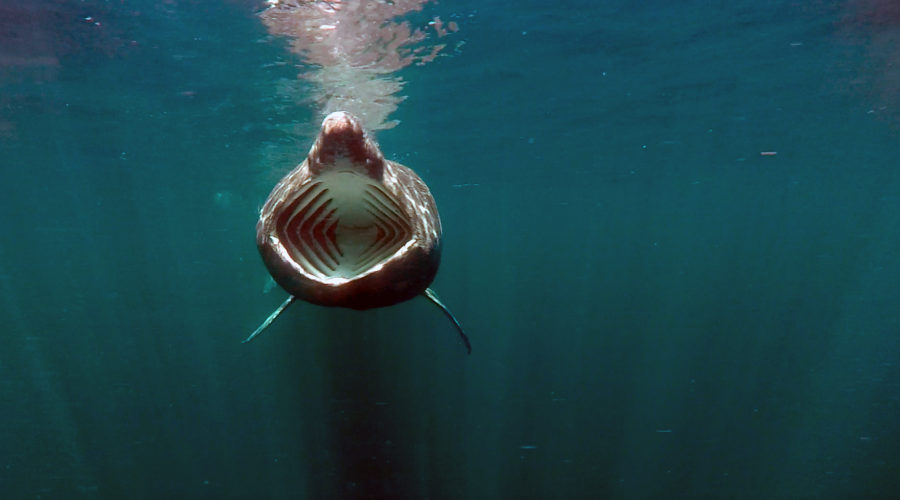
Basking Shark (Cetorhinus maximus)
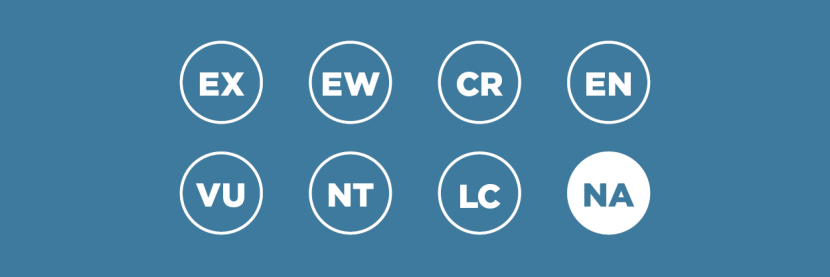
IUCN Category:
- Great Britain: Not assessed (indicated above)
- Europe: Endangered
- Global: Endangered

Genetic Health Status:
- Scottish Risk: Serious (indicated above)
- UK Risk: Serious
- Scottish Mitigation status: Effectiveness unknown
- UK Mitigation status: Effectiveness unknown
Background
Basking sharks are found in temperate and boreal seas worldwide. Within the NE Atlantic, there are seasonal occurrences in Scottish and UK waters (Pikesley et al., 2024). There have been some severe historic declines in the global population of basking sharks, although it may now be beginning to stabilise following cessation of targeted fishing and the introduction of high levels of protection (Rigby et al., 2021; Sun et al., 2024).As large filter-feeding sharks, basking sharks can reach up to 12 metres in length (Sims et al., 2022). Their reproduction is slow, with estimated generation times of 20 to 50 years and a prolonged gestation period (Noble et al., 2006; Wilson et al., 2020). They exhibit seasonal migrations linked with feeding and reproduction, occurring in productive oceanic fronts (Doherty et al., 2017; Gore et al., 2019; OSPAR, 2021).
Genetic studies reveal low global genetic diversity, likely due to a historical bottleneck (Hoelzel et al., 2006; Noble et al., 2006; Lieber et al., 2020). Despite long distance migrations, seasonal site fidelity has resulted in some genetic differentiation among Northeast Atlantic populations (Lieber et al., 2020).
Genetic studies suggest that while basking sharks are highly mobile, there is evidence of regional structuring and familial groupings due to site fidelity (Doherty et al., 2017; Lieber et al., 2020). Scottish populations may function as semi-discrete subpopulations, showing connectivity with Irish Sea and Isle of Man populations but also displaying localized movements (Lieber et al., 2020). Although the absence of strong genetic differentiation suggests that these populations are part of a broader Northeast Atlantic meta-population, rather than entirely isolated units.
Current Threats
Basking sharks were historically exploited by directed fisheries in Scotland, Ireland and Norway (Doherty et al., 2017; Wilson et al., 2020). Although commercial fishing no longer occurs in the Northeast Atlantic, populations remain vulnerable to bycatch, vessel strikes, habitat degradation and climate change (Doherty et al., 2017; OSPAR, 2021; Wilson et al., 2020; Sun et al., 2024). Their recovery is slow due to low reproductive rates and the wide-ranging migratory behaviours of extended familial groups (Johnston et al., 2022; Lieber et al., 2020).
Contribution of Scottish/UK population to total species diversity
Scotland hosts important seasonal aggregation sites for basking sharks in UK waters, and potential genetic differentiation between aggregations suggests an important conservation role.
Genetic risks
Diversity loss: population declines
Basking sharks have experienced severe population declines due to historical overexploitation and slow recovery rates. The species exhibits low global genetic diversity, suggesting a historic bottleneck event (Hoelzel et al, 2006). Site fidelity and seasonal migration of familial groups may also contribute to a higher risk of diversity loss within isolated populations, especially in the Northeast Atlantic (Lieber et al., 2020). Evidence of kin-based group structures suggests that the loss of specific aggregations could accelerate genetic diversity loss.
Global Biodiversity Framework Indicators
Population definitions:
Populations defined by geographic boundaries and genetic clusters.
Ne500: The proportion of populations that have an effective population size of more than 500.
- Proportion of populations with Ne > 500 in Scotland = 0/3
- Proportion of populations with Ne > 500 in UK = 0/5
PM: Proportion of populations that existed in 2000 that still exist in 2025.
- Proportion of populations maintained in Scotland = 3/3
- Proportion of populations maintained in UK = 5/5
Diversity loss: functional variation
Functional variation
Genetic studies indicate that functional genetic variation in basking sharks may be low. Loss of adaptive diversity may be accelerated by decline of specific kin groups during episodes of harvesting, and other past population bottlenecks.
There is no evidence of distinct adaptive lineages across studied populations suggesting that basking sharks may have limited ability to respond to environmental changes such as ocean warming and shifts in prey availability
Divergent lineages
Genetic connectivity between UK, Irish, and Isle of Man populations implies that while some differentiation may exist, no major divergent lineages have been identified (Lieber et al., 2020)
Hybridisation/Introgression
There is no evidence of interspecific hybridisation in basking sharks.
Low turnover - constraints on adaptive opportunities
Basking sharks have long generation times (20-50 years) and low reproductive rates, leading to slow genetic turnover (Wilson et al., 2020). The combination of low genetic diversity, slow reproduction, and site fidelity constrains evolutionary adaptability, limiting the species' ability to respond to future environmental pressures (Wilson et al., 2021; Sun et al., 2024).
Cumulative Risk Summary
Overall Genetic Health Status
Scotland
- Risk: Serious
- Mitigation: Effectiveness unknown
Great Britain/UK
- Risk: Serious
- Mitigation: Effectiveness unknown
Conservation measures are in place. However, the overall impact on conservation outcomes remains unknown.
Overall Genetic Health status explanation
Basking shark populations in Scotland and the UK have low genetic diversity, and small population sizes. Strong site fidelity and kin aggregations characterise basking sharks, and this can inhibit genetic exchange between populations increasing their susceptibility to localized declines. Despite existing conservation measures, these do not sufficiently address the long-term genetic viability of the species.
In situ genetic threat level
In situ genetic threat level
- In situ Risk for Scotland: Serious
- In situ Risk for UK: Serious
Low global genetic diversity and aggregations of familial groups showing site fidelity there is a high risk of genetic erosion, combined with limited natural recruitment.
Confidence in in situ threat level
- Confidence score for Scotland: Medium
- Confidence score for UK: Medium
Assessment based on data regarding biology, population differentiation and genetic studies.
Ex situ representation
There are no ex-situ populations.
Current conservation actions
Basking sharks are legally protected internationally through Convention on International Trade in Endangered Species of Wild Fauna and Flora (CITES) and the Convention on Migratory Species (CMS). Basking shark are listed as an OSPAR Threatened and Declining Species with their population status considered to be poor (OSPAR, 2021). The Northeast Atlantic Fisheries Commission (NEAFC) has implemented recommendation 8/2020 (2020-2023) which prohibits directed fishing for basking sharks and that any bycatch must be promptly released alive.
In the UK, the basking shark receives protection under the Wildlife and Countryside Act. The Sea of the Hebrides Nature Conservation Marine Protected Area (MPA) was designated for basking sharks in 2020 (Witt et al., 2019). Basking sharks are also recognised as a priority marine feature (PMF) in Scotland’s seas.
| Ex situ | Translocation | Habitat management | Legal protection of habitat or species | Regulation of exploitation | Control of INNS/pests/pathogens |
|---|---|---|---|---|---|
| - | - | X | X | X | - |
Population assessment/monitoring
Population
Demographic
Basking sharks are monitored through sightings databases and photo-identification projects, primarily in the Sea of the Hebrides, Irish Sea, and west coast of Scotland. Tracking studies and aerial surveys provide insights into seasonal aggregations, but no formal population estimates exist for UK waters.
- N pops assessed/monitored in Scotland = 3/3
- N pops assessed/monitored in UK = 5/5
Genetic
There is no long-term genetic monitoring program, instead genetic surveys are ad hoc and rare.
- N pops assessed/monitored in Scotland = 0/1
- N pops assessed/monitored in UK = 0/5
References
Doherty, P.D., Baxter, J.M., Godley, B.J., Graham, R.T., Hall, G., Hall, J., Hawkes, L.A., Henderson, S.M., Johnson, L., Speedie, C. & Witt, M.J. (2017). Testing the boundaries: Seasonal residency and inter-annual site fidelity of basking sharks in a proposed Marine Protected Area. Biological Conservation, 209, 68-75.
Gore, M., Abels, L., Wasik, S., Saddler, L. & Ormond, R. (2019). Are close-following and breaching behaviours by basking sharks at aggregation sites related to courtship? Journal of the Marine Biological Association of the United Kingdom, 99(3), 681-693.
Hoelzel, A. R., Shivji, M. S., Magnussen, J. & Francis, M. P. (2006). Low worldwide genetic diversity in the basking shark (Cetorhinus maximus). Biological Letters, 2, 639–642.
Johnston, E.M. et al. (2022). Cool runnings: Behavioural plasticity and the realised thermal niche of basking sharks. Environmental Biology of Fishes, 105(12), 2001–2015.
Lieber, L. et al. (2020). Spatio-temporal genetic tagging of a cosmopolitan planktivorous shark provides insight to gene flow, temporal variation and site-specific re-encounters. Scientific Reports, 10(1). doi:10.1038/s41598-020-58086-4.
Noble, L.R. et al. (2006). Conservation Genetics of basking sharks. Conservation Genetics of basking sharks: Final report for Defra: Tender CR 0288.
OSPAR (2021). Status Assessment: Basking shark.
Pikesley, S.K., Carruthers, M., Hawkes, L.A. & Witt, M.J. (2024). Analysis of Basking Shark Watch Database 1987 to 2020. NatureScot Research Report 1279
Rigby, C.L., Barreto, R., Carlson, J., Fernando, D., Fordham, S., Francis, M.P., Herman, K., Jabado, R.W., Liu, K.M., Marshall, A., Romanov, E. & Kyne, P.M. (2021). Cetorhinus maximus (amended version of 2019 assessment). The IUCN Red List of Threatened Species 2021: e.T4292A194720078.
Sun, R., Liu, K., Huang, W., Wang, X., Zhuang, H., Wang, Z., Zhang, Z., Zhao, L. (2024). Global distribution prediction and ecological conservation of basking shark (Cetorhinus maximus) under integrated impacts. Global Ecology and Conservation, 56, e03310.
Wilson, C.M., Tyler-Walters, H., & Wilding, C.M. (2020). Cetorhinus maximus Basking shark. In Tyler-Walters H. Marine Life Information Network: Biology and Sensitivity Key Information Reviews. Plymouth: Marine Biological Association of the United Kingdom
Witt, M. J., Hawkes, L. A. & Henderson, S. M. (2019) Identifying zones where basking sharks occur more frequently within a possible MPA to aid management discussions.
Assessor:
- Emma-Louise Smith, University of Edinburgh
- Eunice Pinn, NatureScot
Reviewer:
- Catherine Jones, University of Aberdeen
- Leslie Noble, Nord University, Norway