Genetic Scorecard Indicator - Atlantic white-sided dolphin
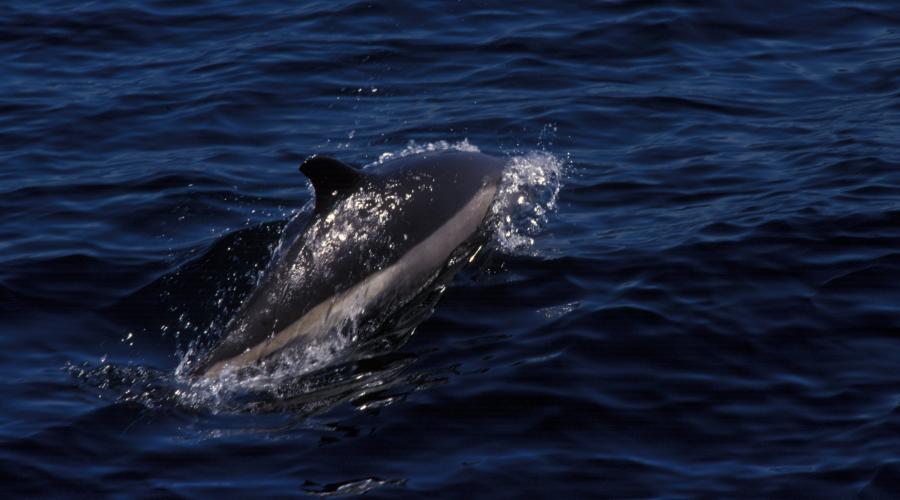
Atlantic white-sided dolphin (Leucopleurus acutus (formerly Lagenorhynchus acutus)

IUCN Category:
- Great Britain: Not assessed (indicated above)
- Europe: Least concern
- Global: Least concern

Genetic Health Status:
- Scottish Risk: Negligible (indicated above)
- UK Risk: Negligible
- Scottish Mitigation status: Not required
- UK Mitigation status: Not required
Background
The Atlantic white-sided dolphin (AWSD) inhabits cold temperature and subpolar waters across the North Atlantic Ocean, from the Gulf of Maine and western North Atlantic shelf areas, across Iceland and the Faroes, to the waters around Scotland and northern Europe. It is largely pelagic and aggregates off the continental shelf but is sometimes associated with shelf habitats (Galatius et al., 2025). The species is estimated to be among the most abundant delphinid in the North Atlantic, with population estimates in the hundreds of thousands (Bloch & Mikkelsen, 2017; Braulik, 2019; Gilles et al., 2023). Population trends are poorly understood due to the species’ offshore distribution and elusive behaviour which makes monitoring challenging. AWSD feed on lower trophic level fish and cephalopods, including smelt, mackerel and squid (Plint et al., 2023; Weinrich et al., 2001). They live in fluid fission-fusion social groups with weak kin structure (Pugliares‐Bonner et al., 2021).
Genome-wide single-nucleotide polymorphisms have been catalogued from AWSD (Fernández et al., 2016). Banguera-Hinestroza et al., (2014) uncovered weak structuring between eastern and western North Atlantic populations and fine-scale structure between regions in the eastern North Atlantic and North Sea using mitochondrial control region sequencing and microsatellites. However, Gose et al. (2023), using genome-wide single nucleotide polymorphisms and mitochondrial DNA from >90 individuals across the species’ NE Atlantic range found evidence for complete panmixia.
Current Threats
Threats include entanglement in pelagic trawl fisheries (Addink et al., 1997), exposure to legacy contaminants (e.g. PCBs, mercury) through diet, although their oceanic nature may buffer impacts (Williams et al., 2023). AWSD are vulnerable to habitat contraction and prey re-distribution as ocean warming reduces suitable cold-water habitat. Like other delphinid species, seismic surveys, shipping and offshore energy development in North Atlantic shelf habitats could impact AWSD (Fernandez-Betelu et al., 2021; Pirotta et al., 2013).
The AWSD is subject to subsidence hunting in Canada, Greenland and the Faroe Islands (Bloch & Mikkelsen, 2017).
Contribution of Scottish/UK population to total species diversity
Genetic evidence indicates that Scottish animals are not differentiated from the wider NE Atlantic population and that they form part of a single panmictic gene pool.
Genetic risks
Diversity loss: population declines
Currently no evidence of recent loss of genetic diversity, and overall diversity levels appear to be high, in line with their large, panmictic population (Gose, 2024). Further demographic modelling is required to fully assess potential reductions associated with population size changes, range contraction or fragmentation.
Global Biodiversity Framework Indicators
Population definitions:
Populations defined by geographic boundaries and genetic clusters. The species is continually distributed throughout the North Atlantic Ocean and within UK waters, AWSD are considered a single management unit encompassing the Celtic and Greater North Seas (IAMMWG, 2023).
Ne500: The proportion of populations that have an effective population size of more than 500.
- Proportion of populations with Ne > 500 in Scotland = 1/1
- Proportion of populations with Ne > 500 in UK = 1/1
PM: Proportion of populations that existed in 2000 that still exist in 2025.
- Proportion of populations maintained in Scotland = 1/1
- Proportion of populations maintained in UK = 1/1
Diversity loss: functional variation
Functional variation
No evidence for strong local adaptation; generalist diet and wide-ranging behaviour may buffer against loss of functional variation.
Divergent lineages
No distinct lineages or sub-divisions across the species range therefore limited risk.
Hybridisation/Introgression
No evidence to date of interspecific hybridisation in AWSD.
Low turnover - constraints on adaptive opportunities
Late maturity (~7–12 years), single calf births and multi-year calving intervals mean slower generational turnover and potential constraints under rapid environmental change.
Cumulative Risk Summary
Overall Genetic Health Status
Scotland
- Risk: Negligible
- Mitigation: Not required
Great Britain/UK
- Risk: Negligible
- Mitigation: Not required
Overall Genetic Health status explanation
High genetic diversity and range-wide panmixia indicate low immediate genetic risk. However, a lack of targeted monitoring and vulnerability to climate change remain concerns.
In situ genetic threat level
In situ genetic threat level
- In situ Risk for Scotland: Negligible
- In situ Risk for UK: Negligible
High genetic diversity and range-wide panmixia indicate low immediate genetic risk.
Confidence in in situ threat level
- Confidence score for Scotland: Medium
- Confidence score for UK: Medium
Assessment based on extensive genetic and genomic data from across the NE Atlantic.
Ex situ representation
There are no ex-situ populations in the UK.
Current conservation actions
In Scotland, the AWSD is afforded legal protection through the Conservation (Natural Habitats, &c.) Regulations.
The AWSD is recognised as a priority marine feature (PMF) in Scotland, meaning the species must be given special consideration in marine planning and decision making.
Internationally, the species is covered under ASCOBANS, which commits parties to reduce bycatch, disturbance and other pressures on small cetaceans.
| Ex situ | Translocation | Habitat management | Legal protection of habitat or species | Regulation of exploitation | Control of INNS/pests/pathogens |
|---|---|---|---|---|---|
| - | - | X | X | X | - |
Population assessment/monitoring
Population
Demographic
NE Atlantic European waters are surveyed every six years through the international SCANS and Irish ObSERVE line transect surveys (e.g Gilles et al., 2023; Rogan et al., 2018).
- N pops assessed/monitored in Scotland = 1/1
- N pops assessed/monitored in UK = 1/1
Genetic
No routine genetic monitoring takes place, and genetic surveys of UK populations rely almost entirely on strandings collections.
- N pops assessed/monitored in Scotland = 0/1
- N pops assessed/monitored in UK = 0/1
References
Addink, M., Hartmann, M. G., & Couperus, B. (1997). A note on life-history parameters of the Atlantic white-sided dolphin (Lagenorhynchus acutus) from animals bycaught in the Northeastern Atlantic. Reports of the International Whaling Commission, 47, 637–639.
Banguera-Hinestroza, E., Evans, P. G. H., Mirimin, L., Reid, R. J., Mikkelsen, B., Couperus, A. S., Deaville, R., Rogan, E., & Hoelzel, A. R. (2014). Phylogeography and population dynamics of the white-sided dolphin (Lagenorhynchus acutus) in the North Atlantic. Conservation Genetics, 15(4), 789–802.
Bloch, D., & Mikkelsen, B. (2017). Catch history and distribution of white- sided dolphin (Lagenorhynchus acutus) of the Faroe Islands. Fróðskaparrit - Faroese Scientific Journal, 57(0), 190–198.
Braulik, G. (2019). Lagenorhynchus acutus. IUCN Red List of Threatened Species.
Fernández, R., Schubert, M., Vargas-Velázquez, A. M., Brownlow, A., Víkingsson, G. A., Siebert, U., Jensen, L. F., Øien, N., Wall, D., Rogan, E., Mikkelsen, B., Dabin, W., Alfarhan, A. H., Alquraishi, S. A., Al-Rasheid, K. a. S., Guillot, G., & Orlando, L. (2016). A genomewide catalogue of single nucleotide polymorphisms in white-beaked and Atlantic white-sided dolphins Molecular Ecology Resources, 16(1), 266–276.
Fernandez-Betelu, O., Graham, I. M., Brookes, K. L., Cheney, B. J., Barton, T. R., & Thompson, P. M. (2021). Far-field effects of impulsive noise on coastal bottlenose dolphins. Frontiers in Marine Science, 8.
Galatius, A., Kinze, C. C., Olsen, M. T., Tougaard, J., Gotzek, D., & McGowen, M. R. (2025). Phylogenomic, morphological and acoustic data support a revised taxonomy of the lissodelphinine dolphin subfamily Molecular Phylogenetics and Evolution, 205, 108299.
Gilles, A., Authier, M., Ramirez‐Martinez, N., Araújo, H., Blanchard, A., Carlström, J., Eira, C., Dorémus, G., Fernández‐Maldonado, C., Geelhoed, S., Kyhn, L., Laran, S., Nachtsheim, D., Panigada, S., Pigeault, R., Sequeira, M., Sveegaard, S., Taylor, N., Owen, K., … Hammond, P. (2023). Estimates of cetacean abundance in European Atlantic waters in summer 2022 from the SCANS‐IV aerial and shipboard surveys (p. 64).
Gose, M.-A. (2024). Connectivity, diversity, and demography of Lagenorhynchus dolphins of the North Atlantic [The University of Edinburgh].
Gose, M.-A., Humble, E., Brownlow, A., Mikkelsen, B., Loftus, C., Wall, D., Rogan, E., ten Doeschate, M., Davison, N., & Ogden, R. (2023). Stranding collections indicate broad-scale connectivity across the range of a pelagic marine predator, the Atlantic white-sided dolphin (Lagenorhynchus acutus). ICES Journal of Marine Science, 80(4), 1120–1128.
IAMMWG. (2023). Review of Management Unit boundaries for cetaceans in UK waters (2023). JNCC Report 734, JNCC, Peterborough
Pirotta, E., Laesser, B. E., Hardaker, A., Riddoch, N., Marcoux, M., & Lusseau, D. (2013). Dredging displaces bottlenose dolphins from an urbanised foraging patch. Marine Pollution Bulletin, 74(1), 396–402.
Plint, T., Ten Doeschate, M., Brownlow, A., Davison, N., Hantke, G., Kitchener, A., Longstaffe, F., McGill, R., Simon Nutbrown, C., & Magill, C. (2023). Stable isotope ecology and interspecific dietary overlap among dolphins in the Northeast Atlantic. Frontiers in Marine Science, 10.
Pugliares‐Bonner, K., LaSpina, K., Rose, K., Travis, S., & Cammen, K. (2021). Strandings provide insight into social group structure of Atlantic white‐sided dolphins. Marine Mammal Science, 37.
Rogan, E., Breen, P., Mackey, M., Cañadas, M., Scheidat, M., Geelhoed, S., & Jessopp, M. (2018). Aerial surveys of cetaceans and seabirds in Irish waters: Occurrence, distribution and abundance in 2015-2017. Department of Communications, Climate Action & Environment.
Weinrich, M. T., Belt, C. R., & Morin, D. (2001). Behavior and ecology of the atlantic white-sided dolphin (Lagenorhynchus acutus) in coastal new england waters. Marine Mammal Science, 17(2), 231–248.
Williams, R. S., Brownlow, A., Baillie, A., Barber, J. L., Barnett, J., Davison, N. J., Deaville, R., ten Doeschate, M., Murphy, S., Penrose, R., Perkins, M., Spiro, S., Williams, R., Jepson, P. D., Curnick, D. J., & Jobling, S. (2023). Spatiotemporal trends spanning three decades show toxic levels of chemical contaminants in marine mammals. Environmental Science & Technology, 57(49), 20736–20749.
Assessor: Emily Humble, University of Edinburgh.
Reviewer: Eunice Pinn, NatureScot.