Deer Management Incentive Scheme Pilots - end of first year report
Keywords
Deer management; incentive scheme; pilot project; Scotland.
Background
Globally and in Scotland, biodiversity is in decline, and we face a climate emergency. Greater urgency is required to meet the challenges of these twin crises, and the Scottish Biodiversity Strategy (SBS) sets ambitious targets to halt nature loss by 2030 and deliver nature restoration across Scotland by 2045.
A significant reduction in the wild deer population and their impacts on biodiversity is required, if we are to meet the ambitious but necessary targets to restore native habitats and reach ‘net-zero’. It has been estimated that 80% of deer management is currently carried out by the private sector, at a net cost to deer managers. Therefore, the Strategic Deer Board, under the Scottish Biodiversity Strategy Board, recognises the need for incentivisation to be part of an effective model of deer management, if SBS targets are to be achieved.
Main Findings
Following the submission of statutory cull returns for all deer species killed, the data from South Loch Ness has shown that the culling of other deer species, which were not eligible for the incentive scheme, appears to have fallen as a potential consequence of increased focus on sika hinds during this first year of the pilot scheme. Due to the availability of detailed FLS data and previous returns from neighbouring properties, there is more of a complete picture of culling levels on South Loch Ness. Looking ahead, this will support a full assessment of sika culls delivered in this area over the duration of the trail period of the Incentive scheme and allow a review of whether this approach delivers effective control of an invasive non-native species.
While these pilots have seen some success, uptake has been more limited than anticipated due to a variety of potential barriers or conflicting interests.
Abbreviations
CNPA – Cairngorms National Park Authority
DMG – Deer Management Group
EUNIS - European Nature Information System
FLS – Forestry and Land Scotland
Ha – Hectares
LLTNPA – Loch Lomond and the Trossachs National Park Authority
No. – Numbers
SAC – Special Area of Conservation
SAOS – Scottish Agricultural Organisation Society
SBS – Scottish Biodiversity Strategy
SNH – Scottish Natural Heritage (which operates under the name NatureScot)
SLN – South Loch Ness
SSSI – Site of Special Scientific Interest
Summary
In this first year of the deer management incentive scheme pilots, 907 deer (which were additional to the base thresholds agreed) were culled on 28 properties covering 50,747ha, at a cost of £56,630.
| Pilot Area | No. Red Hinds | No. Red Calves | No. Sika Hinds | No. Sika Calves | No. Roe Does | No. Roe Kids | Total number of deer culled | Total Cost |
|---|---|---|---|---|---|---|---|---|
| CNPA | 940 | 94 | - | - | - | - | 1034 | £28,070 |
| South Loch Ness | - | - | 373 | 162 | - | - | 535 | £23,485 |
| Central Scotland | 8 | 1 | - | - | 72 | 50 | 131 | £5,075 |
In the Cairngorms National Park, a 65% increase in culling of red deer hinds on twelve participating properties, led to a 14% increase on annual hind culls in the wider West Grampian Deer Management Group.
On the six fully participating properties in South Loch Ness (SLN), this effected an increased hind cull of 162%, and a 381% increase in the calf cull, on the previous five-year median average.
Over all properties which submitted Statutory Cull Returns within the SLN pilot scheme area, there was a modest overall increase in sika culls compared to previous years. Ninety-one more sika were culled in 2024/25, than any annual cull in the previous five years. This led to a 27.8% increase on the median average sika cull over this time. As incentivised, the increase in sika was primarily due to a 38.8% increase in culling of hinds (N=805), compared to the previous five-year average (Median= 580, Range= 487-800). Although, it should be recognised that this was only five more hinds than the previous (un-incentivised) peak cull of sika hinds in 2022-2023 (N=800).
In Central Scotland 24 properties registered along with 22 controllers of which ten properties and nine active participants ultimately submitted returns. Given the incomplete picture of cull returns across the Central Scotland area it is difficult to make any quantitative assessment of whether there was an increase on previous levels from the last five years. However, data available from only three of the previously registered properties suggests this was below the previous average culling rates.
Four properties in South Loch Ness and twelve estates in the West Grampian Deer Management Group achieved culls significantly higher than their average annual returns over previous years. Those that did not meet their minimum thresholds for payment, either dropped out of the schemes or they were already near their capacity and achieving relatively high culling rates, prior to the pilot schemes commencing.
Introduction
In 2024, NatureScot implemented two pilot projects, focussing on sika and roe deer, to assess whether the provision of direct financial support to deer stalkers would increase the number of deer killed annually. The Cairngorms National Park Authority trialled a third scheme, which focused on the management of red deer by highland estates within the National Park. All three pilot projects were funded by NatureScot.
The main objectives of the pilot schemes were to:
- assess if payment per animal shot leads to an overall increase in deer culled,
- identify and quantify the routes of deer carcase disposal to better understand potential barriers in the venison market.
- assess the effectiveness of each scheme in terms of additional deer culled, efficiency of administration and ease of verification.
These pilots are proposed to run over three seasons, where NatureScot pay an agreed sum per deer shot to either the deer controller or landowner. All three pilot schemes were funded by NatureScot, with a budget of £95,000 for the first year of each pilot scheme. The first year of the schemes opened in Autumn 2024 and ran until the 15 March 2025. This report outlines the lessons learned in this first year and makes initial recommendations to help inform the development of future pilots and any potential national scheme.
Pilot Areas
The two NatureScot pilot schemes were located on the southeastern side of Loch Ness and in the central belt (see Figures 2 and 3 below). These areas were chosen as they represent a variety of challenges facing the deer management sector and were representative of the types of land use and patterns of land ownership that would allow an incentivisation pilot to be tested on both sika deer and roe in a lowland context.
South Loch Ness (Figure 2) has high densities of the non-native and invasive deer species, sika, which are impacting on commercial forestry, native woodland and agriculture. Sika (Cervus nippon) are an invasive non-native species of deer previously introduced to Great Britain. Originating from Japan, Taiwan and mainland East Asia, sika are predominantly a forest and woodland species, which can have significant negative impacts on newly planted, established and regenerating woodlands.
Because sika can maintain high reproductive rates, a high proportion of the female sika population needs to be culled annually to effect a decrease in population size. This can be a significant challenge. Sika and red deer can hybridise naturally in the wild to produce fertile offspring. Although sika culls have been increasing steadily across Scotland in recent years, there is little sign that culls are affecting sika abundance or distribution. Without more focus on the species, their population will continue expand and become established in new areas.
The South Loch Ness Pilot Area was outlined to include the most likely sika habitat, with land use types comprising commercial forestry, private and National Forest Estate woodlands, agricultural and amenity land (Figure 1). The pilot Area in South Loch Ness totalled 52,776ha (527.76km2). 92% (48,503ha) of this area was privately owned, and potentially eligible to participate in the scheme. The National Forest Estate, managed by FLS, accounted for the remaining 8% (4,273ha) of this area, and was not eligible to participate in the scheme.
| Habitat | Area (ha) | % of Pilot Area |
|---|---|---|
| E - Grasslands and lands dominated by forbs, mosses or lichens | 110.71 | 0.21% |
| I - Regularly or recently cultivated agricultural, horticultural and domestic habitats | 4217.96 | 7.99% |
| G - Woodland, forest and other wooded land | 12950.79 | 24.54% |
| E,I,G | 17279.46 | 32.74% |
| E,I,G & 150m buffer | 28316.82 | 53.65% |
| Total Pilot Scheme Area | 52776 | 100.00% |
The area in Central Scotland (Figure 3), north of Glasgow and west of Stirling, totals 95,889 ha (959.89km2), and represents a cross-section of the challenges in the lowlands and central belt; a mix of land management (peri-urban, agriculture and forestry), a multiple and fragmented land ownership, and a mix of contractor, syndicate and recreational stalking. Although roe deer (Capreoulus capreolus) are the most abundant species in this area, red deer (Cervus elaphus) and sika are also resident. The area was selected based on the project area considered in the SNH Research reports 1069 & 1188; ‘Lowland deer management: assessing the delivery of public interest & phase 2’ (Chetwynd 2019).
The Cairngorms National Park Authority (CNPA) pilot scheme focuses on red deer managed by highland sporting estates their associated and venison production, within the National Park.
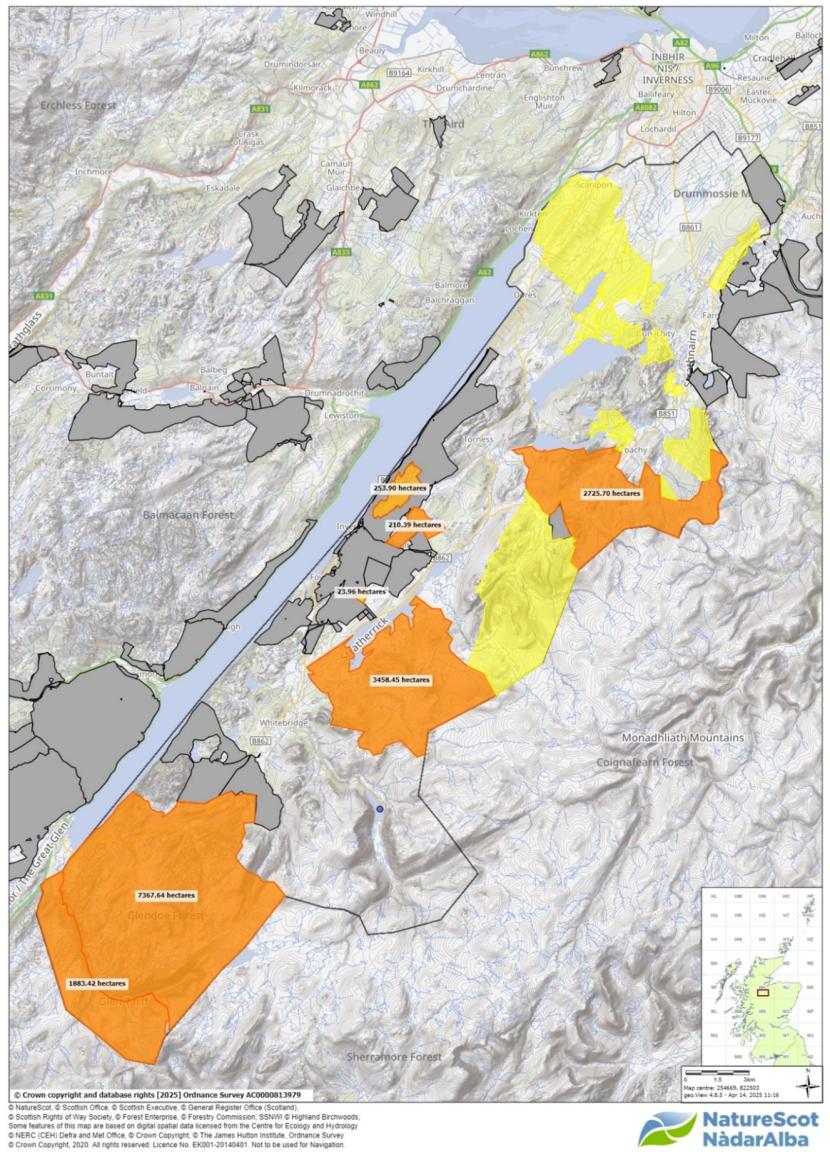
Figure 1. South Loch Ness Pilot Incentive Scheme area for sika.
Click for a full description
Map showing the area of the South Loch Ness Pilot Scheme, on the south side of Loch Ness. The area is marked out into yellow areas that identify properties that initially signed up to the scheme but dropped out. Orange areas show the properties that participated in the scheme, and the grey delineated areas are the National Forest Estate and are not eligible for the scheme.
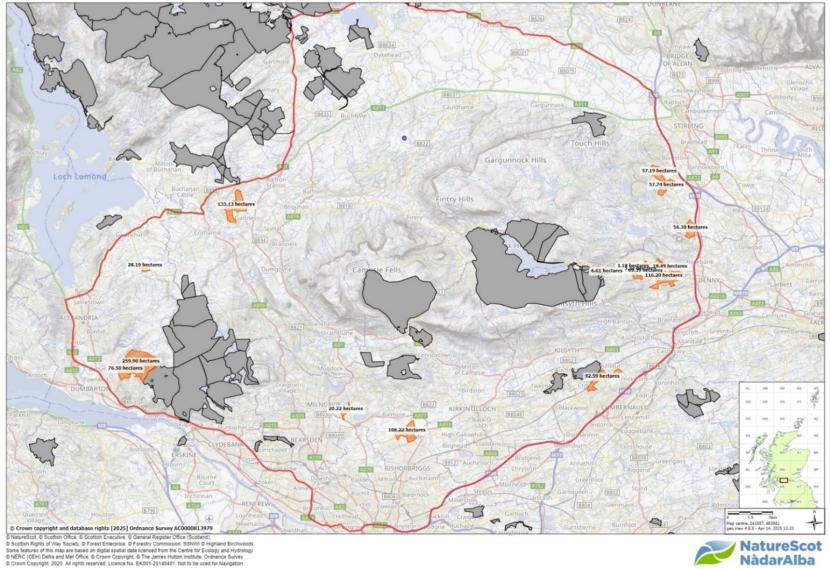
Figure 2. The Central Scotland Incentive Scheme Pilot area for red and roe deer.
Click for a full description
Map showing the Central Scotland Pilot Scheme area. The scheme covers an area bounded to the north and west by Loch Lomond and covers the Campsie Fells north of Glasgow and west of Stirling. Within the boundaries of the pilot scheme, some areas are indicated by orange; these are properties that participated in the pilot scheme. The areas covered by the National Forest Estate are coloured grey and are not eligible for the scheme.
Terms and Conditions of Incentive Payments
South Loch Ness & Central Scotland
The South Loch Ness pilot scheme focused specifically on sika with payment being made per adult female and any calves culled. The Central Scotland pilot scheme applied to culling of adult female, and calves, of roe and red deer.
To ensure that culling was additional to the levels currently recorded in the scheme areas; payment was only available for the number deer culled above a minimum culling rate, on each participating property. On South Loch Ness this was set at five adult female sika and calves of any sex per 100ha (Figure 1). In the Central Scotland scheme this was set at four female adult Red/Roe/Sika or juveniles per 100ha. For those managing deer on areas of land less than 100ha, payment was only available for culls which are additional to the first five or four adult hinds or calves culled.
Because several of the South Loch Ness properties were extensive, commonly above 1000ha, and included significant areas of habitat less favoured by sika; individual culling thresholds were agreed on a case-by-case basis based on area of woodland, forestry and low ground more favoured by sika.
Once the culling thresholds had been met, payments per deer culled were made at £70 per adult female, and £35 per juvenile (under 1 year of age of either sex). This was paid directly to either the deer stalker or landowner, depending on their individual arrangements. Payment was made at three breakpoints (31 November 2024, 31 January 2025 and 15 March 2025) following receipt of cull returns recorded via NatureScot’s mobile phone-based Deer App. Participants were able to record the age, sex and species of the individual animals killed, along with a geotagged photograph providing the date and time of the cull.
Use of the Deer App would serve as the compliance monitoring tool to allow verification of culls, support any spot checks by the project team and provide a robust audit trail for the NatureScot finance team.
Deer stalkers were eligible to participate in these schemes provided they had the legal right to take or kill deer on the specified land, and that they held a minimum qualification of Deer Stalking Certificate level one. This did not remove the need to be on NatureScot’s Fit & Competent Register if they wished to apply for night shooting or out-of-season Authorisations. Deer management on publicly owned land was excluded from these schemes. Further details of the NatureScot pilot scheme conditions
Cairngorms National Park
This pilot scheme was managed by CNPA staff. Here, targets were agreed with the individual estates, based on their previous three-year average hind cull. Payment were be made for carcases, if the total cull exceeds 110% of the three-year average.
When this threshold was met, subsidy was provided as a grant calculated at £70 per carcass paid for each carcass in excess of 85% of the agreed three-year average cull level for each estate. Subsidy was capped at 150% of the agreed three-year average cull level. Culling of calves was also subject to payment, to avoid welfare concerns around orphaning dependant young. Approved subsidy recipients must also provide proof of cull by supplying game dealer uplift receipts or another acceptable documented proof of cull, e.g. receipts of purchase from a butchery business.
Participation
South Loch Ness
Twenty-three controllers over twelve properties successfully applied to participate in the South Loch Ness Scheme. However, only sixteen participants, operating on six of these properties, reported culls above their agreed threshold and were eligible to receive payment. Seven participants dropped out, or did not actively participate early on in the scheme.
Only one applicant who completed the application form was not eligible to participate. This was because they did not have access to any ground for shooting. All applicants reported that they held at least Deer Stalking Certificate Level1, with 50% (N=9) holding DSC2. All properties where already registered in Deer Online Services.
Both properties surrounding Glen Tarff Site of Special Scientific Interest (SSSI) have registered to participate. A small part of Easter Ness Forest SSSI & Ness Woods Special Area of Conservation (SAC), as well as Inverfarigaig SSSI and parts of Loch Ruthven SSSI are adjacent to, or overlap, participating estates. NatureScot has found the designated woodland features of these sites to be in Unfavourable Condition due to herbivore impacts.
The initial 12 properties represented 45% (21,897ha) of privately owned land within the pilot scheme area (48,503ha). However, the reduction to six properties who successfully continued to participate in the scheme represented 33% (15,897ha) of this potential area (Figure 2).
Central Scotland
Twenty-two individual controllers, stalking over twenty-four separate properties applied to participate in the Central Scotland Scheme. Three were not eligible to participate. Six individuals dropped out from the scheme before being eligible for payment, and thirteen individuals shooting over 10 individual properties remained active participants. The ten properties who continued to participate in the scheme represented 1.2% (1105ha) of the whole eligible area (Figure 3). Some people were shooting over more than one property. Five properties where previously unregistered on NatureScot’s Deer Online Services.
Participating properties overlapped, or were adjacent, to Lang Crags Site of Special Scientific Interest (SSSI), Dumbarton Muir SSSI, Blarbeich Bog SSSI, Denny Muir SSSI and Endrick Water SSSI and Special Area of Conservation.
Cairngorms National Park
This pilot scheme was developed and managed entirely by the CNPA and was open to all Deer Management Groups within the National Park area. However, the only uptake was from twenty estates within the West Grampian Deer Management Group.
Results
South Loch Ness
A total of 540 sika were reported to have been culled by scheme participants in South Loch Ness. This included 373 hinds, 158 calves and nine stags. On the six fully participating properties, this is a 162% increase of 226 more hinds compared to the median average sika hind cull over the last five years (Median=139, Range= 66-379), and a 381% increase of 122 more sika calves (Median=32, Range=20-154).
Compared to the previous 2023/24 season cull of 365 hinds and 154 calves, this was a 79% increase in hinds, and a 170% increase in calves culled (See Figure 4). However, the 2024/25 sika hind cull on participating properties, did not meet their previous peak cull of 379 hinds in 2022/23. Four of the six participating properties did achieve hind and calf culls above their previous five-year average, three of these increased their culling of hinds and calves compared to the previous 2023/24 season (See Figure 5).
The total number of sika culled over the agreed minimum thresholds was 276 hinds and 119 calves, giving a total incentive spend of £23,485, for 74% of the season’s total hind and calf cull. This was split between £19,320 for hinds, and £4,025 for calves.
The 162 sika calves culled were noted as 107 female, and 55 male calves. Presuming deer controllers did not consciously favour culling female calves over males, this indicates a calf sex ratio of approximately 2:1 females to males after their first summer. This does not follow the parity in sex at births expected and observed in FLS’s cull records from the area. Cull records however indicated a 42% calf to hind culling ratio.
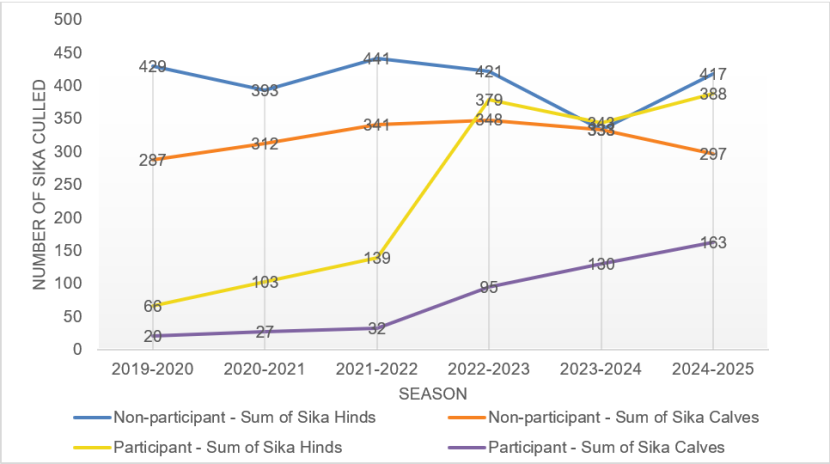
Figure 3. Recorded sika hind and calf culls on the six participating properties compared to the non-participating properties within the pilot area, from .April 2019 until April 2025. Data from statutory culls returns
Click for a full description
Figure 3 is a line graph comparing the cull rates of incentive scheme participants with cull rates of non-participants of the respective season (21 October – 15 February) for sika hinds and sika calves for 2019-2020; 2020-2021; 2021-2022; 2022-2023; 2023-2024 and 2024-2025. There is an overall increase in sika calves culled by participants and a recent decline in sika calves culled by non-participants. There is an overall increase in sika hinds culled by participants and a variable cull rate that does not show an overall trend by non-participants.
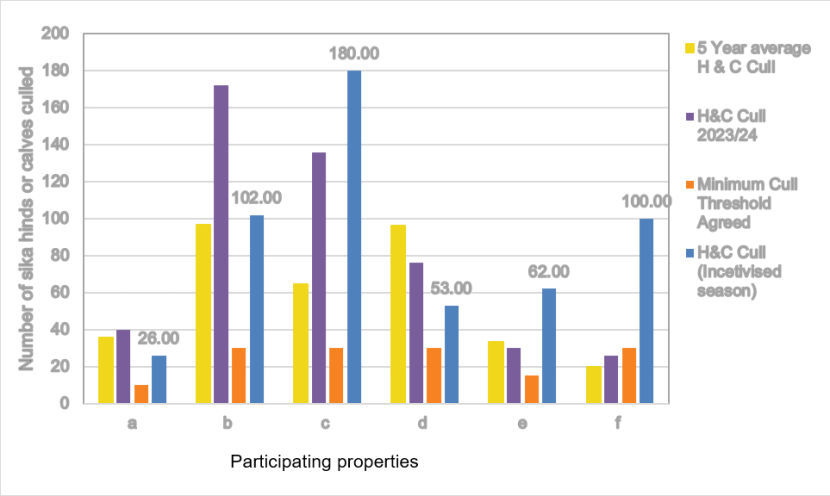
Figure 4. Number of sika hinds and calves on the six participating properties on South Loch Ness, during the pilot year, compared to the minimum cull thresholds agreed, the 2023/24 season and the average cull over the last five years.
Click for a full description
Figure 4 is a bar chart comparing the six participating properties in the South Loch Ness pilot scheme. It shows for each property the five-year average culls of Sika hinds and calves; the hind and calf cull figures for the 2023-2024; the minimum cull thresholds agreed and the culls for the incentivised season. Each property; a,b,c,d,e and f have columns for the five-year average cull figures for hinds and calves; the hind and calf cull figures for the season 2023-2024; the agreed minimum cull figure and the cull figures for the incentivised season. For properties c, e and f, the incentivised season has the highest cull figures. For properties a and b the season cull in 2023-2024 is the highest. For property d, the five-year average figure is the highest.
The overall culling rate achieved over the whole extent of the six participating properties was 2.4 sika hinds or calves, per 100ha (Range 1.1 - 20.87). The highest culling rate being on a property approximately 250ha compromising a mosaic of woodland, forestry plantations and pasture. The lowest rate of 1.1 hinds or calves per 100ha, was on a property over 9000ha including large areas of hill ground less favourable to sika. However, this property also achieved a cull, of 82 hinds and 18 calves, five-times their annual average of 20 hinds and calves over the previous five years.
The culling rates recorded over the previous five years indicate that it was largely only the properties under 1000ha which achieved culls above five hinds or calves per 100ha at the whole property level (Figure 6).
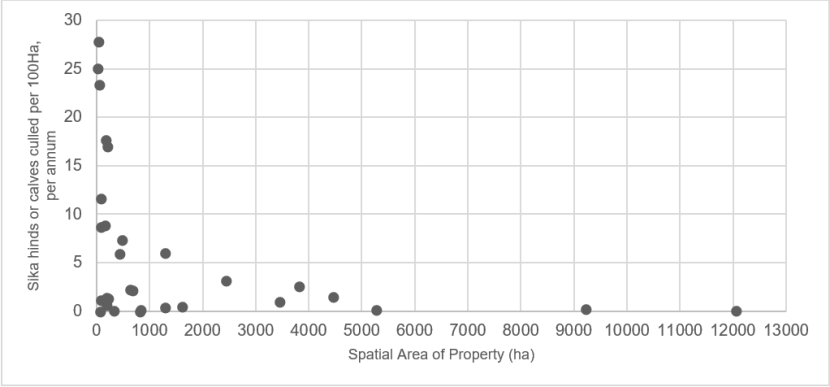
Figure 5: Mean cull of sika hinds and calves per 100ha, per annum, in relation to area of property or estate within the South Loch Ness Pilot area. Mean based on cull returns between April 2019 to April 2024.
Click for a full description
Figure 5 is a scatter plot of mean cull density of sika and calves per 100 hectares per annum in the South Loch Ness pilot scheme. The largest properties have the lowest cull density figures. The range of density goes from zero to just under thirty per 100 hectares.
The number of sika culled on the National Forest Estate in South Loch Ness, between April 2024 and 2025, by Forestry and Land Scotland (FLS) was 109 hinds and 208 Calves (at a culling rate of 7.4 sika hinds and calves per 100ha (1km2), over the 4273ha of this Wildlife Management Unit. This is lower than any of the previous five years (Figure 7), when the mean culling rate was 9.2 sika hinds and calves per 100ha. However, the number of sika stags culled by FLS, during the course of the pilot scheme, was higher than any of these previous years.
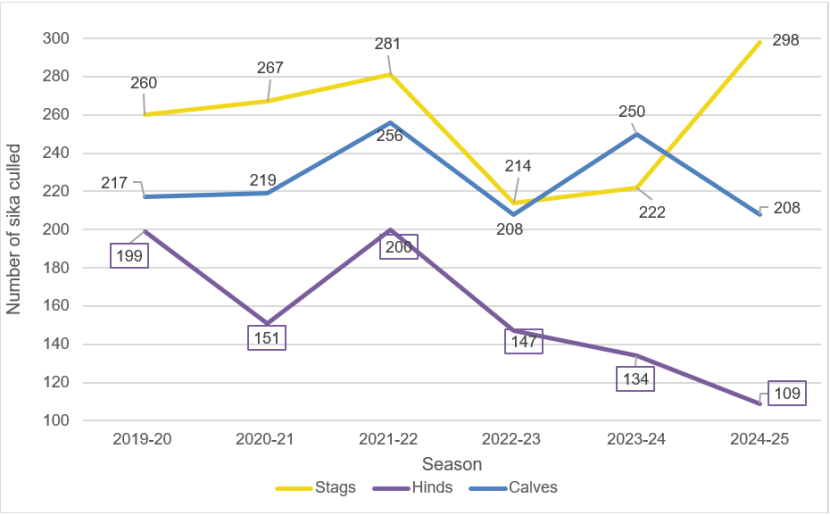
Figure 6: Forestry and Land Scotland’s annual sika cull returns for their wildlife management unit on South Loch Ness between 2019 and April 2025.
Click for a full description
Figure 6 is a line graph which shows Forestry and Land Scotland’s annual sika cull returns for their wildlife management unit on South Loch Ness between 2019 and April 2025. Stags, hinds and calves are each represented by a line spanning the years: 2019-2020; 2020-2021; 2021-2022; 2022-2023; 2023-2024 and 2024-2025. Over these years there is an overall increase in the stag cull with a significant dip in the years 2022-2023 and 2023-2024 before an increase to similar numbers before the dip. The hind line describes an overall decline over the period. The calf line shows no overall change.
From 29 properties registered on NatureScot’s Deer Online Services, within the South Loch Ness Pilot area, 27 properties have now returned statutory cull returns for the 2024-2025 season. This includes 23 properties, including FLS, who did not participate in the scheme. As two non-participating properties, have not submitted cull returns for the period of the pilot scheme, the culls figures for this year may be underestimated. It is hoped that these records will be available for future reporting. The trend in culling of all deer species across the pilot scheme area can be seen in the following figures 8, 9, 10 and 11.
Although the cull of sika hinds (N=805) during the pilot scheme was only slightly higher than a previous peak cull in 2022-2023 (N=800), this was 38% higher than the median average over the last 5 years (Median= 580, Range= 487-800).
The cull of sika calves (N=460) was 23% higher than the average cull over the previous five years (Median= 373, Range=307-463). However, this was marginally lower than the peak of 463 calves culled in 2023/2024. Similarly, the cull of sika stags (N=630) was 18.9% higher than the last five year’s average (Median=530, Range=440-640), but lower than a previous peak (N=640) during the 2023/2024 season (see Figure 8).
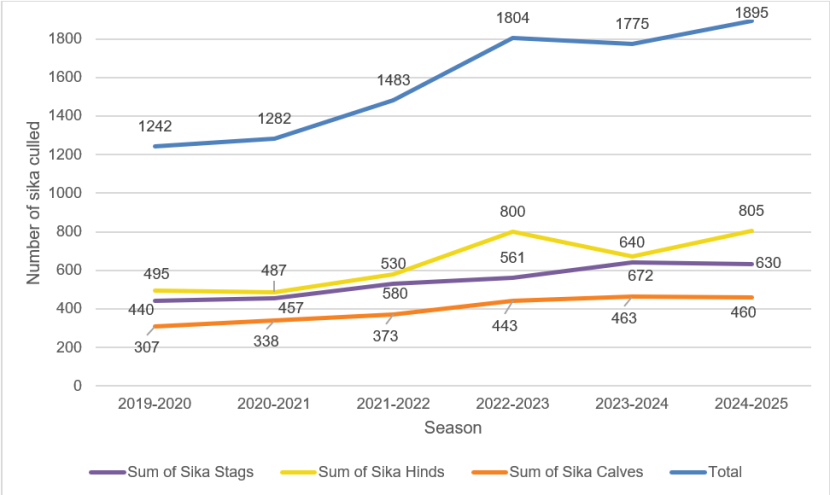
Figure 7: The number of sika culls reported via statutory returns, within the South Loch Ness area from spring 2019 and until spring 2025.
Click for a full description
Figure 7 is a line graph showing the number of sika culls reported via statutory returns, within the South Loch Ness area from spring 2019 and until spring 2025. There are separate lines for stags, hinds, calves and the total of all stags, hinds and calves. There is a general increase in the number of sika culled over the entire period of spring 2019 to spring 2025 for stags, hinds and calves.
Overall, there was a moderate overall increase in sika culls on South Loch Ness during the first year of the pilot scheme. A 27.8% increase compared to the previous five-year median average, and an increase of 91 animals compared to the previous peak in 2022-2023.
However, whilst there was some maintained or increase in culling of sika following incentivisation, there was a recorded decline in the (unincentivized) culling of red deer, of both sexes and age classification, compared to the previous 2023/2024 season (Figure 9). However, the total red deer culls (N=989, inclusive of sex or age), did remain 17.3% higher than the previous five-year average (Median=843, Range=578-1160).
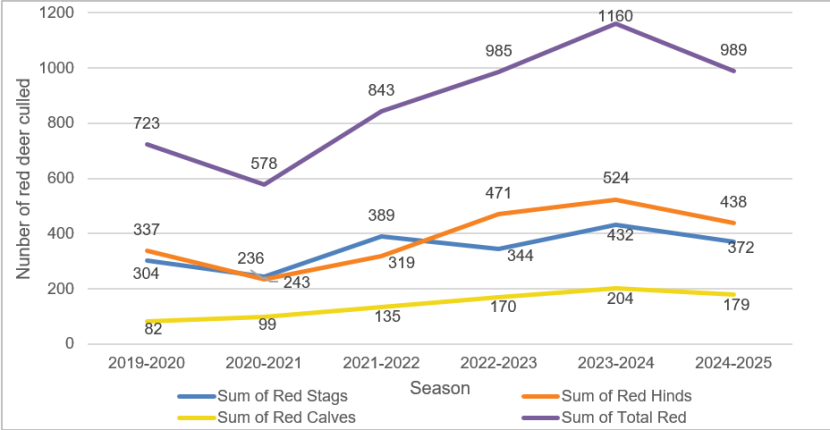
Figure 8: The number of red deer culls reported via statutory returns, within the South Loch Ness pilot scheme area from spring 2019 and until spring 2025.
Click for a full description
Figure 8 shows the number of red deer culls reported via statutory returns, within the South Loch Ness area from spring 2019 and until spring 2025. There are separate lines for stags, hinds, calves and the total of all stags, hinds and calves. The red deer line shows an overall increase with a peak over the 2023-2024 season which then declines in the 2024-2025 season. This trend is repeated for hinds and calves too.
The culls for roe deer (Figure 10), which were also not eligible for the incentive payment on south Loch Ness, showed a similar trend to that of red deer. Although there was a decline from a previous peak in roe culls, the number culled during the pilot scheme (N=285) remained 15.4% higher than the previous five-year average (Median=247, Range=188-332).
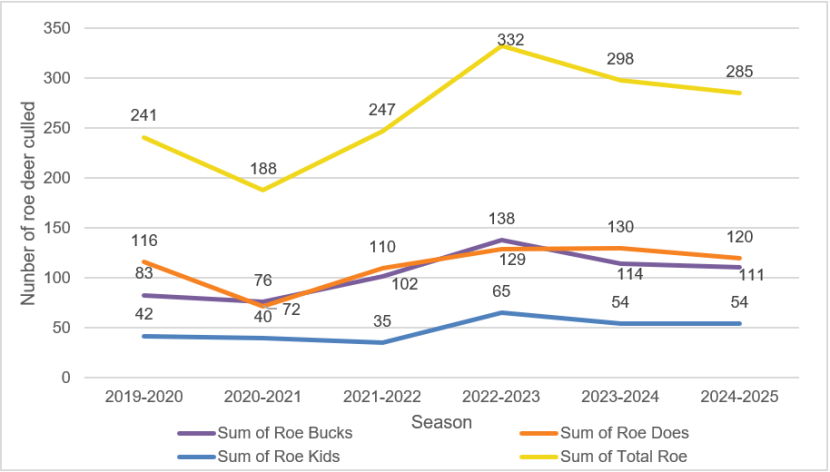
Figure 9: The number of roe deer culled as reported via statutory returns, within the South Loch Ness pilot scheme area from spring 2019 and until spring 2025.
Click for a full description
Figure 9 is a line graph showing the number of roe deer culls reported via statutory returns, within the South Loch Ness area from spring 2019 and until spring 2025. There are separate lines for stags, hinds, calves and the total of all stags, hinds and calves.
The line describing the total number of roe culled over the seasons 2019-2025 shows an overall increase with a decline from the 2022-2023 season onward. The line for bucks culled follows this trend, as dose the line for kids. The line describing the hind cull shows a peak over the 2023-2024 season and then declines over the 2024-2025 season.
Central Scotland
A total of 150 deer were reported to have been culled by scheme participants in Central Scotland Pilot. This included 72 roe does, 50 kids, 18 roe bucks as well as eight red deer hinds, one red deer calf and one red deer stag.
The total incentive spend in the central scheme was £5075. This was split between £4060 for 58 adult female red and roe deer, and £1015 for 29 juvenile deer that were ‘additional’ to the agreed minimum threshold. Three of the nine active participants were not successful in meeting the minimum threshold of four female deer or juveniles per 100ha.
Because we only hold previous cull records for three of the participating properties, comparing the level of culling in the incentivised season to previous years is limited. However, the data that we do have indicates a 58% below average cull of 17 adult roe does per year, compared to the previous 4 years (Median=41, Range= 28-89), and a marginal decrease to 17 kids compared to the previous median of 18.5 per year (Range=14-24) (Figure 11).
Previous cull returns for red deer were not available for any participating property.
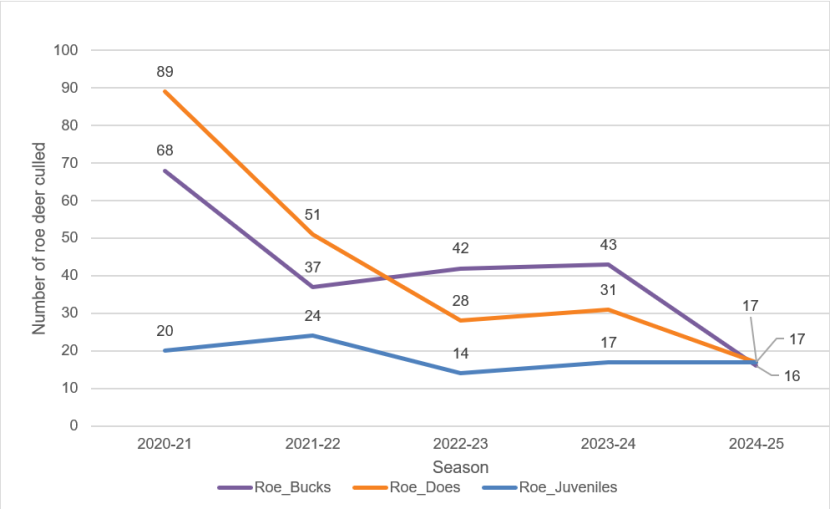
Figure 10: Recorded roe culls on the three participating properties that have previous cull records. April 2020 – April 2025.
Click for a full description
Figure 10 is a line graph showing the recorded roe culls on the three participating properties that have previous cull records, for the period April 2020 – April 2025. All show an overall decline from 2021 until the last records for 2024-2025. The rate of decrease shows some disparity initially with much higher buck and doe cull figures that decline to a similar figure as 2024-2025 figure for kids. The buck cull figure declines steeply from 2020 until the end of the 2021-2022 season. The doe declines steeply from 2020 until the end of the 2022-2023 season.
The 71 adult roe does to 51 roe kids culled in the central scheme suggests a 71% kid to doe culling ratio.
Cairngorms National Park
A total cull of 1496 red deer hinds and calves was culled in the West Grampian DMG, during the pilot scheme. Over the whole DMG this was an overall 14% increase in the hind cull of 185 extra hinds, on the previous three-year average of 1311 hinds per year (see figure 12).
The total claimed through the scheme was £28,070, from twelve of the twenty properties which claimed the subsidy. These twelve holdings covered an approximate 33,745ha. The payment made was for the culling of 291 hinds which were over 85%, but not above 150% of each estates’ average cull. Plus the addition of 94 calves.
With 329 ‘additional’ hinds culled on these 12 properties, this created a total of 940 hinds. This indicates a 65% increase on the previous three-year average hind cull of 611, on these 12 fully participating properties (See figure 13). It is believed some estates cut back as a result of stalkers observing fewer deer on the ground. The cull returns indicate a 10:1 hind to calf culling ratio.
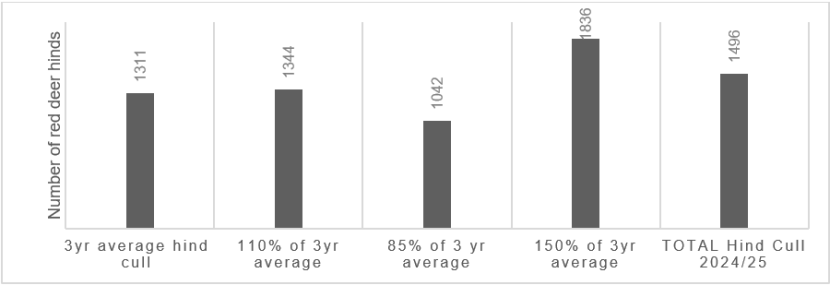
Figure 11. The number of red hinds culled during the pilot scheme period on twenty (participating and non-participating) properties within the West Grampian DMG compared to the previous three-year average, and percentages of that average.
Click for a full description
Figure 11 is a bar chart describing the number of red hinds culled during the pilot scheme period on twenty participating and non-participating properties within the West Grampian DMG compared to the previous three-year average, and percentages of that average. The first bar is the three-year average, the 2nd bar shows what 110% of the three-year average would be, the 3rd bar shows what 85% of the three-year average would be; the 4th bar shows what 150% would be and the 5th bar shows the total hind cull for 2024-2025. In the pilot scheme managed by the Cairngorms National Park Authority, payments were only made if the total cull on each participating property exceeded 110% of the previous three-year average. When this threshold was met, subsidy was provided for each carcass above 85% of the agreed three-year average cull level for each estate. Subsidy was capped at 150% of the agreed three-year average cull levels.
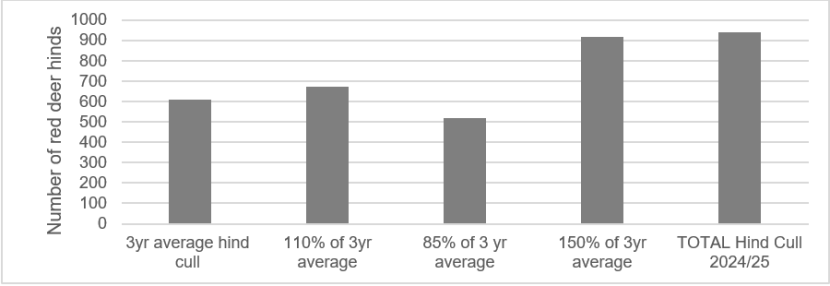
Figure 12. The number of red hinds culled during the pilot scheme period on the twelve fully participating properties within the West Grampian DMG compared to the previous three-year average, and percentages of that average.
Click for a full description
Figure 12 in comparison to figure 11 shows the number of red hinds culled during the pilot scheme period on the twelve fully participating properties within the West Grampian DMG compared to the previous three-year average, and percentages of that average. The first bar is the three-year average, the 2nd bar shows what 110% of the three-year average would be, the 3rd bar shows what 85% of the three-year average would be; the 4th bar shows what 150% would be and the 5th bar shows the total hind cull for 2024-2025. In the pilot scheme managed by the Cairngorms National Park Authority, payments were only made if the total cull on each participating property exceeded 110% of the previous three-year average. When this threshold was met, subsidy was provided for each carcass above 85% of the agreed three-year average cull level for each estate. Subsidy was capped at 150% of the agreed three-year average cull levels.
Discussion
Did the number of deer culled increase?
The cull data provided via NatureScot’s ‘Deer App’, needs to be considered in the context of cull data from the whole scheme area, not just that which has been reported through the pilot. There was the potential risk of non-participating properties easing off culls due to concerns for increased culls and expected deer population reductions on neighbouring ground under the schemes.
The data collected from those which fully participated in the South Loch Ness and Cairngorms National Park Scheme, indicates that there was an overall increase on previous years in adult sika and red deer hinds and calves culled.
Compared to the median average sika cull on South Loch Ness over the previous five years the culling of sika hinds and calves increased during the first pilot scheme year. Although, the hind cull was only marginally higher than that carried out in 2023-2024, and the calf was not much more than that carried out in the previous season (See figure 4).
The overall cull of sika hinds, by those not participating in the scheme, remained at similar levels to previous years and they actually increased on the cull of 2023-2024. However, there was a recorded decline in the (unincentivised) culling of both red and roe deer compared to the previous 2023/2024 season. This is likely to have been a consequence of the shift in focus to sika by scheme participants.
With limited historic cull data from the Central Scotland area, it is difficult to assess whether the scheme increased culling activity. In fact, the data available suggest that culls did not increase on the properties with previous cull data. The pilot schemes did however increase reporting of culls, and it may be possible to further assess future trends over the duration of the trial period of this pilot scheme as our intelligence on cull returns improves.
Cull records from FLS for South Loch Ness indicate a marginal drop in the number of sika hinds and calves taken, with a slight increase in sika stags culled over the same period of the pilot. This may suggest that increased culling of sika hinds and calves, was effective in reducing the number on the neighbouring National Forest Estate.
There were either very few adult sika stags culled during the South Loch Ness Pilot or participants did not report these culls via the Deer App as they did not carry the same financial incentive as hinds and calves. A marginal increase in sika stags culled by FLS, suggests that there may have been a higher presence of sika stags due to less focus on stags on neighbouring holdings during the scheme. As outlined above statutory cull returns are required to assess the number of adult male deer culled alongside these pilot incentive schemes.
What were the barriers to participation?
While these pilots have seen some success, uptake has been more reserved than anticipated. The NatureScot project team sought direct feedback from scheme participants, and several eligible candidates gave the following reasons for not engaging, when they were invited to participate in the pilot schemes:
Economical factors:
- Many dismissed the scheme on the grounds that they believed the minimum thresholds to be too high, for either their capacity, sporting objectives or the end financial return.
- There was the opinion that deer controllers should be paid to shoot all deer given the perceived net cost to deer managers. On the other hand, some in the central belt felt that the current pilot schemes were helpful in mitigating their costs as recreational stalkers.
- Lack of participation was often a resistance to shooting more deer. For example, it was voiced in South Loch Ness that sika are seen by many as a sporting resource and their local eradication was not economically desirable.
- In the Central Scotland area there were differing views on whether it be the landowner or stalker who should be renumerated. This highlighted that the schemes may need to be more specifically tailored to motivate paid full-time stalkers, under traditional estate models in the CNPA and South Loch Ness areas, as well as more recreational or contract stalkers in Central Scotland area.
- There was a fear from recreational stalkers and contractors that eligibility for incentive payments may cause landowners to renegotiate the finances of their current arrangements.
- There were fears around potential for increased taxation and concerns over sporting rates.
- Lack of engagement may simply be due to a lack of capacity and staff resource to increase on current culling levels.
Intrinsic factors:
- Deer are largely valued as a recreational game resource. This may outweigh the short-term value of capitalising on the incentive scheme, particularly considering the long-term implications. Many recreational stalkers in the central belt were clear that they desired more, not fewer deer on their land.
- A lack of trust/suspicion was felt around sharing information and committing to the objectives of a NatureScot scheme.
- There was early resistance/lack of confidence in using NatureScot’s Deer App during its development stages. Many expressed some frustration with the added ‘bureaucracy’ and task of using the app for reporting culls whilst gralloching or lardering deer. However further updates to the App functionality have largely addressed ongoing glitches and users’ concerns. The significant lack of adult male deer that were reported via the app suggest that reporting was reliant on the associated payment.
- Individuals may also be concerned with the ethics and subsequent practices, of incentivised species eradication and a ‘bounty’ on females and juvenile deer (Proulx & Rodtka 2015).
Extrinsic factors:
- Some potential participants said they did not read or hear about the scheme and suggested the advertisement was not sufficient.
Access to Infrastructure for carcass handling and processing and venison markets. This was identified as a current barrier in lowlands in particular.
Was payment for 'additionality' cost-effective?
At the rate paid per adult hinds and calves in the two NatureScot schemes and given the 42% calf to hind culling ratio recorded on south Loch Ness, the budget of £95,000 had the capacity to pay for culling of close to 1600 deer (1125 adult hinds and 475 calves). This potential cull is close to three times the 531 hinds and calves reported to have been culled by participants on South Loch Ness, and more than eighteen times the number culled by participants in the Central Scotland pilot in this first year.
It is difficult to predict whether paying for all female and calves culled, rather than only those ‘additional’ to an agreed threshold per area of land, would encourage greater engagement and participation. This was raised by several potential participants as a barrier to participation, particularly those on the more extensive holdings, or those whose current culls are limited and fall significantly below these thresholds.
Previous studies of incentive schemes, suggest that for extrinsic motivators such as financial payments to be effective, reward should be as immediate as possible and sufficiently compensate the desired behaviour. To maintain engagement, financial incentives are more likely to be sustainable if the activity is reinforced by the intrinsic values, beliefs and motivators of the participants, and that there is sufficient trust, support, recognition and ready engagement from the authority behind the scheme (Von Essen et al. 2025).
Because the South Loch Ness Scheme included several larger estates, which extended into upland habitats less favoured by sika, it was necessary to compromise on the minimum thresholds before payment, as the rate per 100ha was not practical, and would in some instances require a tenfold increase in culling levels before the being eligible for payment for the ‘additional’ number of culls. The significant increases in culls recorded on these properties, suggest that financial incentivisation was effective where minimum targets were more achievable, based on the properties current culling capacity, and the payment for overall culling effort more worthwhile. Feedback from active participants suggested that the agreed compromises in minimum threshold was fair and enabled their participation.
At the level of current participation and culling recorded removal of the minimum threshold would have cost a further £8295 for South Loch Ness and £2345 for the Central Scheme. Which, in addition to a potential increase in participation and deer culling, may work out more cost-effective than the loss of staff time to administrating and troubleshooting a more complex scheme.
The deer management sector has called for the need for financial incentivisation to subsidise the net cost of deer management. If deer management already operates at a net cost, then increasing unsubsidised culls to meet a higher target before being eligible for payment, initially increases this net cost.
The significant lack of adult male deer or non-eligible species that were reported via the Deer App suggest that reporting was dependant on the associated payment. Payment for all deer culled, even at a lesser rate, may therefore improve engagement, reporting, and potentially the number of deer culled when financial compensation is more immediately received.
Are the schemes value for money?
To understand the costs of the scheme further analysis is required beyond the direct costs of £70 or £35 per carcase. The significant staff time spent on planning, administrating and troubleshooting app related issues during the scheme needs to be considered. It is estimated that 630 hours of NatureScot ‘D’ grade, 200 hours of ‘E’ grade, and 60 hours of app developer time was spent on the two NatureScot administered scheme, with 335 hours being in the administration phase after the 1 October and directly reducing capacity for NatureScot’s other statutory responsibilities and focus on deer management concerns elsewhere.
Staff costs for South Loch Ness and Central Scotland covering development of the schemes, delivery and administration of the schemes were £42,670
Development of the Deer App was £5,100.
| Pilot Area | Direct Payment for Deer culls |
|---|---|
| CNPA | £28,070 |
| South Loch Ness | £23,485 |
| Central Scotland | £5,075 |
Staff feedback
From knowledge of a similar scheme on the High Weald in East Sussex, it was found that their scheme had a considerable ‘warm up’ period. They suggested that it may take up to three years for the deer management community to become fully aware of the schemes, build confidence and allow for sufficient trust to be established before they become fully committed to engaging with the schemes.
NatureScot staff held mixed opinions on the requirement for ‘additionality’ before payment. This may have been related to the idiosyncrasies of the different pilot areas and stakeholders. However, this condition was identified as the most significant barrier to participation in the pilot schemes, as well as a significant staff time for administrating the schemes in terms of calculating minimum cull rates by property, negotiating the bespoke conditions for some of the larger properties in South Loch Ness, and subsequently calculating the number of culls which were eligible for payment, at each break point.
Options and recommendations
MacMillan & Phillip (2010) urge caution when considering the deployment of economic incentives to resolve contemporary conservation conflicts. Particularly those related to deer management in Scotland, where profit maximisation may not be the dominant land-use objective and/or where strong cultural identities, family or ritual factors are present. Incentivising carcase production on a longer-term basis, also risks deliberate management of deer populations to provide a maximum sustainable yield, rather than the actual objective of reducing these populations, (and their subsequent capacity for reproduction) to levels that will minimise adverse impacts to native habitats and agriculture.
- To investigate further, and on the basis of lessons learned from England that it takes time for schemes to become established, recognised and trusted, it is suggested that the pilot schemes continue in the same areas for at least another year and ideally two more, to allow for increased engagement and potential culling levels. It is suggested that the Central Scotland pilot scheme area is also expanded to include the Operational Delivery Workstream Central Scotland Priority Area and include Local Authority owned land.
- Explore options for a small-scale bespoke scheme for encouraging increased culling of roe deer in the Scottish Lowlands working with a delivery partner to assist with scheme administration and link with SAOS larder infrastructure project
- Allocation of funding to both of Scotland’s National Parks should also be considered, as deer impacts are of equal concern in areas of Loch Lomond and the Trossachs National Park. This would better align with the Operational Delivery Workstream priority areas.
- For the CNPA area consideration could be given to specifically targeting the Caenlochan Section 7 area in light of the Spring 2025 population census results and the 2024/2025 cull targets which were delivered in line with the s7 agreed population model. This could trial the merits of balancing effective incentivisation and regulatory tools within the same landscape scale area and could be a mechanism to link with wider habitat enhancement related to the Heritage Horizons work and the CNPA Park Plan.
- Consider the use of the DeerApp for data collation and compliance monitoring for both the CNPA and LLTNPA areas for consistency. ie across all schemes.
Next Steps for the Winter 2025/2026
A budget of £160K has been allocated for the 2025/2026 financial year to support four pilot schemes to commence October 2025
NatureScot will manage two pilots: the South Loch Ness Scheme as per the 2024/2025 season and the Central Scotland Scheme will be expanded to include the Operational Delivery Workstream area.
The CNPA will operate a scheme eligible across the full park area and the LLTNPA will deliver a scheme eligible across that park area.
Further findings will be published in summer 2026.
References
- Chetwynd, T. 2019. Lowland deer management – assessing the delivery of public interests – phase 2. Scottish Natural Heritage Research Report No. 1188. Available at: https://www.nature.scot/doc/naturescot-research-report-1188-lowland-deer-management-assessing-delivery-public-interests-phase-2
- McMorran, R., Gibson-Poole, S. & Hamilton, A. 2019. Lowland deer management: assessing the delivery of public interests. Scottish Natural Heritage Research Report No. 1069. Available at: https://www.nature.scot/doc/naturescot-research-report-1069-lowland-deer-management-assessing-delivery-public-interests
- von Essen, E., Gelink, H.W., Figari, H. and Krange, O., 2025. Hunting for volunteers: Toward understanding embedded motivations for citizen science contributions among Norwegian hunters in the case of wild boar. Journal of Environmental Management, 373, p.123659. https://doi.org/10.1016/j.jenvman.2024.123659
- MacMillan, D.C. and Phillip, S., 2010. Can economic incentives resolve conservation conflict: the case of wild deer management and habitat conservation in the Scottish Highlands. Human Ecology, 38, pp.485-493. https://doi.org/10.1007/s10745-010-9332-4
- Proulx, G. and Rodtka, D., 2015. Predator bounties in Western Canada cause animal suffering and compromise wildlife conservation efforts. Animals, 5(4), pp.1034-1046. https://doi.org/10.1016/j.jenvman.2024.123659