Deer Incentive Schemes Summary Report 2025/2026 Season
Published: July 2026
Background
Globally and in Scotland, biodiversity is in decline, and we face a climate emergency. Greater urgency is required to meet the challenges of these twin crises, and the Scottish Biodiversity Strategy (SBS) sets ambitious targets to halt nature loss by 2030 and deliver nature restoration across Scotland by 2045.
A significant reduction in the wild deer population and their impacts on biodiversity is required, if we are to meet the ambitious but necessary targets to restore native habitats and reach ‘net-zero’. It has been estimated that 80% of deer management is currently carried out by the private sector, at a net cost to deer managers. Therefore, the Strategic Deer Board, under the Scottish Biodiversity Strategy Board, recognises the need for incentivisation to be part of an effective model of deer management, if SBS targets are to be achieved.
Following on from Year 1 of the incentive schemes pilot project, this report summarises the 2025 / 2026 season for Year 2 of the project, with the addition of the Loch Lomond & Trossachs National Park along with the existing scheme areas of Central Scotland, South Loch Ness and the Cairngorms National Park.
Main findings
- In this it’s first year as part of the incentive scheme, Loch Lomond & Trossachs National Park have not only added the most area to any of the schemes, but they have also had the largest uptake in terms of properties within the scheme and cull totals.
- Despite the almost doubling in size of the Central Scotland scheme, the area of properties in the scheme hasn’t changed much (in fact it has decreased slightly), however their cull rate per KM2 has almost doubled showing good uptake amongst those properties involved in Year 2 of this scheme.
- Despite similar areas being part of both Year 1 and Year 2 of the South Loch Ness scheme, the cull rates have almost halved in Year 2.
- Similarly in the Cairngorms National Park Authorities scheme the area of properties actively involved in the scheme in Year 2 has more than halved, but those properties active have more than doubled their cull rate per KM2 which is positive.
Deer Incentive Schemes – 2025 / 2026 Season
This report will summarise the key results from Year 2, shown below in Table 1, and look at the differences between Years 1 and 2 of the incentive scheme pilot projects for CS, SLN & CNPA, along with a quick review of the headline figures from Year 1 of the LLTNP incentive scheme.
Pertinent feedback from scheme administrators and stakeholders have been gathered and presented at the end of this report.
| Central Scotland Year 1 (2024/25) | Central Scotland Year 2 (2025/26) | South Loch Ness Year 1 (2024/25) | South Loch Ness Year 2 (2025/26) | Loch Lomond & Trossachs National Park (First year of scheme in 2025/26 season) | Cairngorms National Park Year 1 (2024/25) | Cairngorms National Park Year 2 (2025/26) |
|---|---|---|---|---|---|---|---|
Number of properties signed up for the incentive scheme. | 24 | 20 | 12 | 11 | 26 | 12 | 7 |
Number of properties actively participating in the scheme. | 10 | 11 | 12 | 11 | 24 | 12 | 7 |
% variance between number of properties active in Year 1 & Year 2. | N/A | 10% increase in Year 2. | N/A | 8.33% decrease in Year 2. | N/A | N/A | 58.33% decrease in Year 2. |
Number of properties that hit their payment threshold. | 7 | 7 | 6 | 5 | 17 | 12 | 7 |
Number of stalkers signed up and using the scheme / Deer App. | 9 | 8 | 23 | 22 | 41 | N/A | N/A |
Total number of hinds & juveniles culled (across all scheme properties). | 131 | 225 | 535 | 305 | 1,276 | 940 | 851 |
Total number of hinds & juveniles culled above threshold. | 87 | 176 | 395 | 166 | 651 | 401 | 355 |
% variance between Year 1 & Year 2 above threshold cull totals. | N/A | 202.30% increase in Year 2 | N/A | 57.97% decrease in Year 2. | N/A | N/A | 11.47% decrease in Year 2. |
Total payments (across all properties)? | £5,075 | £10,255 | £23,485 | £10,150 | £64,860 | £28,070 | £35,500 |
Payment difference (all properties) between Year 1 & Year 2. | N/A | £5,180 increase in spend in Year 2 | N/A | £13,335 decrease in spend in Year 2. | N/A | N/A | £7,430 increase in spend in Year 2. |
Area within incentive scheme. | 960km2 | 1600km2 | 525km2 | 525km2 | 1,865km2 | 1,240km2 | 1,240km2 |
Total area of all properties within scheme. | 11km2 | 10.34km2 | 219km2 | 197km2 | 382.33km2 | 330.94km2 | 121.84km2 |
% of total area | 1.15% | 0.65% | 41.72% | 37.52% | 20.50% | 26.69% | 9.83% |
Cull rate per km2 | 13.64 deer per km2 | 23.11 deer per km2 | 2.44 deer per km2 | 1.55 deer per km2 | 3.34 deer per km2 | 2.84 deer per km2 | 6.98 deer per km2 |
Staffing cost for scheme administration. | £42,670 for both NatureScot schemes (Central Scotland and South Loch Ness) | £26,748 for both NatureScot schemes (Central Scotland & South Loch Ness) | £42,670 for both NatureScot schemes (Central Scotland and South Loch Ness) | £26,748 for both NatureScot schemes (Central Scotland & South Loch Ness) | £17,980 | £1,300 | £1,300 |
Central Scotland Incentive Scheme Year 2
The key changes in Year 2 to the Central Scotland scheme versus Year 1 are the addition of 640km2 of area included within the scheme, increasing it from 960km2 in Year 1 to 1,600km2 in Year 2. This now takes the Western boundary right up to the border with the LLTNP scheme area and to the East the scheme has expanded to include the rest of the Central Scotland Priority Area as can be seen in Figure 1 below. The total area of all properties within the scheme has remained similar with 11km2 in Year 1 versus 10.34km2 in Year 2. As percentages of the total area this equates to 1.15% in Year 1, but only 0.65% in Year 2 due to the much larger scheme area.
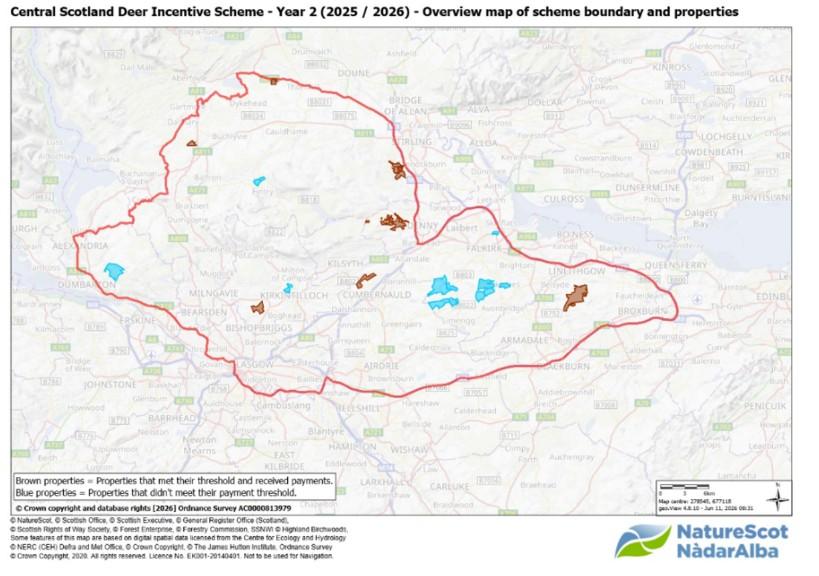
Figure 1. Central Scotland Deer Incentive Scheme Year 2 - Overview Map
Click for a full description
Map showing the Central Scotland Deer Incentive scheme area. It stretches across the Central Belt of Scotland from the Forth Road crossing in the East to Dumbarton in the West and from just north of the A811 in the North to Cambuslang in the South.
Despite 4 fewer properties signing up in Year 2 (20 versus 24 in Year 1), the number of properties actively participating in the scheme has increased from 10 in Year 1 to 11 in Year 2. Properties which sign up to the scheme but then don’t actively participate in the scheme are still recorded as this is a useful metric of overall interest versus active participation. Some of the reasons for this can include properties or stalkers not using the Deer App to record culls once signed up for the scheme or receiving their minimum cull threshold targets and not engaging with the scheme beyond this. Unrealistic or unachievable minimum thresholds for incentive payments are still seen as a barrier to entry into the scheme for some properties / stalkers.
The number of properties that hit their payment threshold stayed the same at 7 for each year. The number of stalkers signed up for the scheme dropped from 9 to 8. Despite this the total number of females and juveniles culled (across all scheme properties) increased from 131 in Year 1 to 225 in Year 2. The resulting cull totals for females and juveniles culled above minimum thresholds therefore also increased from 87 in Year 1 to 176 in Year 2, a 202.30% increase.
Due to this increase the incentive scheme payments for Central Scotland increased from £5,075 in Year 1 to £10,255 in Year 2. Staff administration and scheme setup costs decreased substantially from the Year 1 cost of £42,670 (for both SLN & CS), to £26,748 for both NatureScot administered schemes in Year 2.
The headline figure of cull rate per km2 has increased greatly from 13.64 deer per km2 in Year 1, to 23.11 deer per km2 in Year 2 – the highest of any of the four schemes, influenced mainly by the high cull rates of lowland roe deer on relatively small properties.
South Loch Ness Incentive Scheme Year 2
As can be seen in Figure 2 below, the scheme area for SLN has remained the same as in Year 1 at 525km2 for Year 2 also. The total area of all properties within the scheme has decreased slightly from 219km2 in Year 1 versus 197km2 in Year 2. As percentages of the total area this equates to 41.72% in Year 1, compared to 37.52% in Year 2. SLN has the greatest coverage in terms of properties in the scheme as a percentage of the total scheme area of all four incentive scheme pilot project areas.
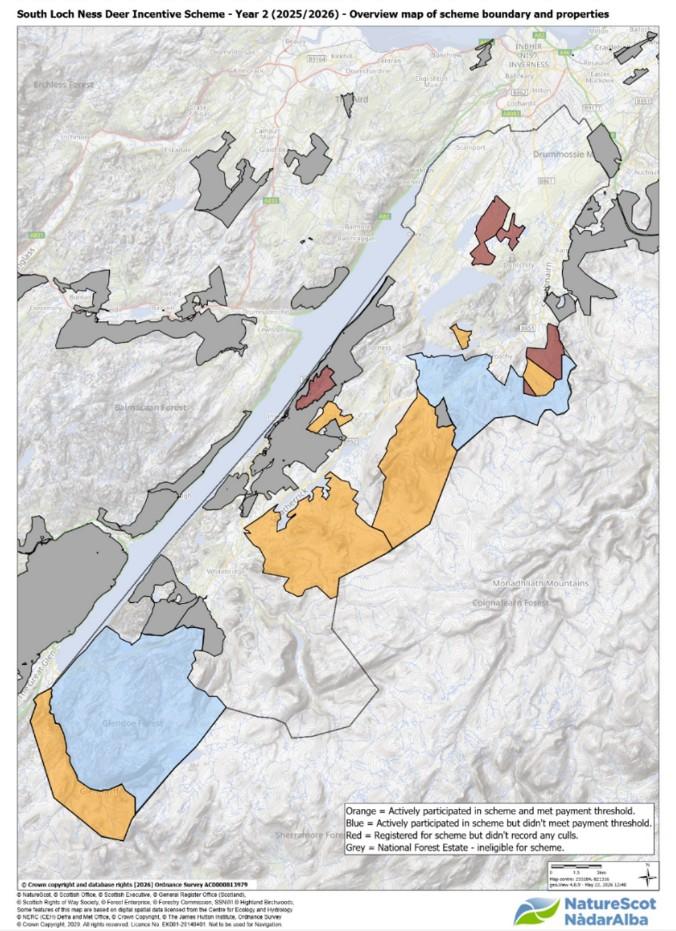
Figure 2. South Loch Ness Deer Incentive Scheme Year 2 - Overview Map
Click for a full description
Map showing the participants in the South Loch Ness Deer Incentive Scheme. The map shows those who actively participated in the scheme and met payment thresholds; those that actively participated in the scheme but didn’t meet the payment thresholds; those who registered for the scheme but didn’t record any culls and National Forest Estate areas which are ineligible for the scheme.
The number of properties signing up in Year 2 was 11 versus 12 in Year 1, the number of properties actively participating in the scheme is the same (12 in Year 1 versus 11 in Year 2). All of the properties within the SLN incentive scheme are large estates employing stalkers to cover that one property rather than recreational stalkers / professional deer managers covering multiple smaller properties as we often see in CS and parts of the LLTNP. Unrealistic or unachievable minimum thresholds for incentive payments are still seen as a barrier to entry into the scheme for some properties in SLN.
The number of properties that hit their payment threshold was 6 in Year 1 and 5 in Year 2. The number of stalkers signed up for the scheme dropped from 23 to 22.
The total number of females and juveniles culled (across all scheme properties) decreased significantly from 535 in Year 1 to 305 in Year 2. The resulting cull totals for females and juveniles culled above minimum thresholds therefore also decreased from 395 in Year 1 to 166 in Year 2, a 57.97% decrease.
Due to this decrease the incentive scheme payments for SLN decreased from £23,485 in Year 1 to £10,150 in Year 2. Staff administration and scheme setup costs decreased substantially from the Year 1 cost of £42,670 (for both SLN & CS), to £26,748 for both NatureScot administered schemes in Year 2.
The headline figure of cull rate per km2 has decreased from 2.44 deer per km2 in Year 1, to 1.55 deer per km2 in Year 2 – the lowest cull rate per km2 of any of the four schemes. Due to large proportions of some estates being mature forestry, and therefore more challenging to cull deer within, common feedback has called for properties to be able to exclude parts of their landholdings to only include areas of ground where deer culling realistically be undertaken and cull rates increased – this would reduce the minimum cull thresholds required to receive incentive payments and make entry into the scheme, and reaching minimum cull thresholds, more feasible.
Cairngorms National Park Authority Incentive Scheme Year 2
The scheme area for CNPA has remained the same as in Year 1 at 1,240km2 for Year 2 (see Figure 3 below) and is now the third largest scheme area after the newly created LLTNP incentive scheme and the extension of the CS scheme area in Year 2. The total area of all properties within the scheme has decreased significantly from 330.94km2 in Year 1 to 121.84km2 in Year 2. As percentages of the total area this equates to 26.69% in Year 1, compared to 9.83% in Year 2.
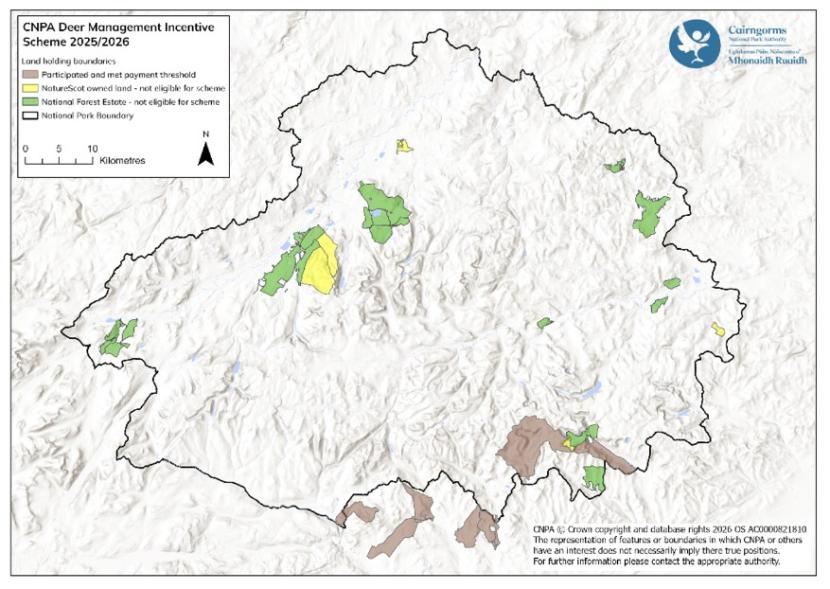
Figure 3. Cairngorms National Park Authority Deer Incentive Scheme Year 2 – Overview Map
Click for a full description
Map showing the participants in the Cairngorms National Park Deer Incentive Scheme. The map shows those who actively participated in the scheme and met payment thresholds; and Nature Scot owned land and National Forest Estate areas which are both ineligible for the scheme.
The number of properties signing up in Year 2 almost halved to 7 versus 12 in Year 1, the number of properties actively participating in the scheme is the same (12 in Year 1 versus 7 in Year 2). Similarly to the SLN scheme, all the properties within the CNPA incentive scheme are large estates employing stalkers to cover that one property rather than recreational stalkers / professional deer managers covering multiple smaller properties as observed in the CS and LLTNP areas. Unrealistic or unachievable minimum thresholds for incentive payments are still seen as a barrier to entry into the scheme for some properties in CNPA despite the raising of the incentive payments from £70 in Year 1 to £100 in Year 2.
All properties that signed up hit their payment threshold in Years 1 and 2. No data was recorded for the number of stalkers signed up and using the Deer App as the CNPA elected not to use this as a means of recording cull data so this is N/A.
The total number of females and juveniles culled (across all scheme properties) decreased slightly from 940 in Year 1 to 851 in Year 2. The resulting cull totals for females and juveniles culled above minimum thresholds therefore also decreased from 401 in Year 1 to 355 in Year 2, an 11.47% decrease. Given the large decrease in the number of properties actively participating in the scheme, the cull totals represent a marked increase in cull effort across the 7 properties active in Year 2.
The incentive scheme payments for CNPA increased from £28,070 in Year 1 to £35,500 in Year 2, explained by the increase in incentive payment per carcass to £100, so despite 89 fewer deer being culled above minimum thresholds, the increased payment per deer put total spend up compared to Year 1. Staff administration and scheme setup costs remained the same in both years at £1,300.
The headline figure of cull rate per km2 has increased markedly from 2.84 deer per km2 in Year 1, to 6.98 deer per km2 in Year 2 – the second highest after the CS scheme. Common feedback has called for reduced minimum cull thresholds required to receive incentive payments, which could explain the drop in participation between Years 1 and 2.
Loch Lomond & Trossachs National Park Incentive Scheme Year 1
As LLTNP only joined the incentive scheme pilot project for this past season (2025 / 2026) we cannot make the same comparisons between Years 1 and 2 as we can for the other schemes. We can however look at the headline figures for this first year of their scheme.
The scheme area, shown in Figure 4 below, for LLTNP is the largest of all four schemes at 1,865km2 compared to the second largest scheme area of CS (1,600km2). The total area of all properties within the scheme in this first year is 382.33km2 which equates to 20.50% of the overall scheme area.
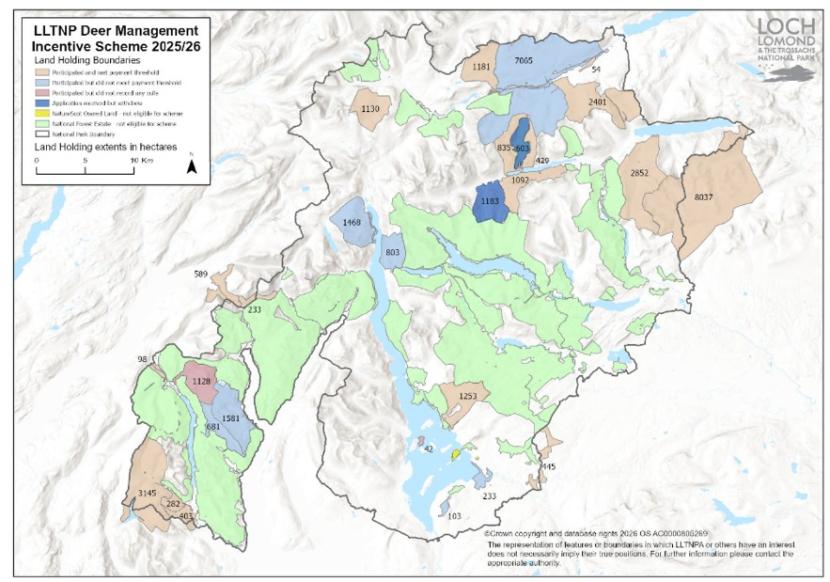
Figure 4. Loch Lomond and Trossachs National Park Deer Incentive Scheme Year 1 - Overview Map
Click for a full description
Map showing the Loch Lomond and Trossachs National Park Deer Incentive Scheme. The map identifies Participants who met payment thresholds; Participants that didn’t meet the payment threshold; Participants that didn’t record culls; Withdrawn applications to join the scheme; and NatureScot and National Forest Estate land that is ineligible.
The number of properties which signed up was 26, the number of properties actively participating in the scheme was 24.
The number of properties that hit their payment threshold was 17.
The number of stalkers signed up for the scheme was 41.
The total number of females and juveniles culled (across all scheme properties) was the highest of any of the four schemes at 1,276. The resulting cull totals for females and juveniles culled above minimum thresholds was therefore also the highest across all four schemes at 651.
This made the LLTNP scheme the highest incentive payment total of any of the four schemes at £64,860. Staff administration and scheme setup costs totalled £17,980.
The headline figure of cull rate per km2 came to 3.34 deer per km2 for this first year of the LLTNP scheme.
Feedback from the 2025 / 2026 season
As well as similar feedback to that received from stakeholders and scheme administrators in Year 1, the most prominent feedback for the 2025 / 2026 season is summarised below in Pro’s and Con’s lists. See Annex 1 for a more comprehensive breakdown of feedback received for each individual scheme.
Pros;
- Incentive data sifted and recorded accurately and before payment deadlines, ensuring correct payments made on time across all schemes.
- Audits carried out successfully via a variety of means (game dealer records, on-site inspections, direct communication with stalkers).
- General feedback from the use of the Deer App users is positive – various technical issues identified and dealt with (incorrect phone settings, outdated app versions etc).
Cons;
- Multiple geolocation issues with cull records – some resolved due to phone settings. This created additional administrative burden for all schemes (except for the CNPA who didn’t use the Deer App).
- Technical difficulties with Deer App data exports – duplication of cull records, images not coming through with records etc., this created additional administrative burden for the CS, SLN & LLTNP schemes.
- Minimum cull rate thresholds seen as a barrier to participation for a lot of estates / landholdings – especially relevant to the SLN & CNPA schemes but reiterated by stakeholders in all schemes.
Annex - Deer Incentive Scheme 2025-26 season feedback and observations
Common feedback across incentive schemes
Pros;
- Incentive data sifted and recorded accurately and before payment deadlines, ensuring correct payments made on time across all schemes.
- Audits carried out successfully via a variety of means (game dealer records, on-site inspections, direct communication with stalkers).
- General feedback from Deer App users is positive – various technical issues identified and dealt with (incorrect phone settings, outdated app versions etc).
Cons;
- Multiple geolocation issues with cull records – some resolved due to phone settings. Created additional administrative burden for all schemes.
- Technical difficulties with Deer App – duplicating of culls, images not coming through with records etc., created additional administrative burden for schemes.
- Minimum thresholds seen as a barrier to participation for a lot of estates / landholdings.
Central Scotland
- Increased boundary of scheme to the East to include all of the Central Scotland priority site and to the West right up to the border with the Loch Lomond & Trossachs National Park pilot scheme boundary.
- Inclusion of Local Authority land such as Mugdock Country Park and Beecraigs Country Park.
- No issues with the Microsoft forms used for signing interested parties up.
- Incentive payments all made on time.
- Audits carried out and successfully aligned with data received.
- Certain issues with individual stalkers phones (eventually resolved) not working with the Deer App.
- Some geolocation discrepancies through the Deer App – identified as incorrect settings on users’ phones in some instances.
- Advertising of the scheme could be stronger and further reaching.
South Loch Ness
- Common feedback from stakeholders that minimum thresholds are too high and create a barrier to participation in the incentive schemes.
- Some cull data not recorded successfully by the Deer App.
- Geolocation data linked to culls received through the Deer App sometimes incorrect – creating an administrative burden to investigate and rectify.
Loch Lomond & Trossachs National Park
- Well defined process for registering Deer App users.
- General feedback from Deer App users is positive – intuitive, easy to use and quick to register culls.
- Deer App registration emails frequently end up in Junk or Spam folders.
- Some records didn’t upload on the first try – possible cause identified as a lack of signal in the field – records will upload in due course once signal is available.
- Two incidents of blank screen / Deer app freezing - app developer advised fix is to restart phone and app.
- No direct access to the cull exports by LLTNP staff – requested for future years.
- Geolocation issues with certain records – creates additional administrative burden in checking these records before payment cut-off.
- Some land-holdings are covered by multiple property ID’s – creates additional administrative burden.
Cairngorms National Park Authority
- Increasing carcass value to £100 was deemed positive although didn’t have as great an effect as hoped on scheme recruitment.
- Audits carried out via game dealer records and on-site sample visit for carcasses left out on the hill proved consistent with records submitted.
- Weather worked against the scheme participants – wettest season in the Grampians in living memory.
- Cull targets based on DMP (2025/26) were perceived as more challenging than targets based on 3-year cull average (as in 2024/25).
- Subsidy was not the motivator for increased culls at estate level as might have been expected.
- No general use of the Deer App.
Authors
Jake Dove (NatureScot)
Keywords
Deer; Incentive; Scheme; Scotland; Year 2; Deer App; Central Scotland; South Loch Ness; Cairngorms; Loch Lomond & Trossachs.
Acknowledgements
Thanks to Loch Lomond & Trossachs National Park and Cairngorms National Park Authority with the administration of their respective schemes and for supplying final figures and maps for this report.
Abbreviations
Loch Lomond & Trossachs National Park – LLTNP
Cairngorm National Park Authority – CNPA
South Loch Ness – SLN
Central Scotland – CS
Scottish Biodiversity Strategy - SBS