NatureScot Research Report 1369 - Cetacean monitoring in the North Minch
Published: 2025
Authors: Hodgins, N.K.
Cite as: Hodgins, N.K. 2025. Cetacean monitoring in the North Minch. NatureScot Research Report 1369.
Keywords
Cetaceans; Risso’s dolphin; photo-identification; acoustics; behaviour; health; North Minch
Background
Exploratory research off the east coast of the Isle of Lewis in the Outer Hebrides, in the early 1990s, demonstrated that the region was important to Risso’s dolphins and a variety of other cetaceans, including harbour porpoises, and minke whales. Between 2010 and 2023, with a view to better understanding the residency of Risso’s dolphins, WDC researchers undertook annual spring and summer boat-based surveys to conduct photo-identification. To try to address the gaps in data collection, winter surveys were attempted in two of the years however, due to adverse weather conditions, no surveys were undertaken.
Between 2011 and 2022, WDC researchers collected seasonal acoustic data at various locations throughout our survey area to investigate the presence and habitat use of harbour porpoises and other odontocetes. Situated within our boat-survey area is Tiumpan Head, a headland on the north end of the Eye Peninsula (or Point/An Rubha), which commands expansive views of the northern Minch. Land-based surveys were undertaken from here in both 2010 and 2011, and in late 2011, WDC set up a year-round, land-based citizen science Shorewatch site at this location to assist in data collection of cetaceans using the area.
In 2020, thanks to evidence gathered by WDC, HWDT and others, our survey site (and adjacent waters) were designated as the North-east Lewis Marine Protected Area (NE Lewis MPA) withRisso’s dolphins and sandeels as protected features. At its southern boundary, the MPA overlaps with the harbour porpoise Inner Hebrides and the Minches Special Area of Conservation (SAC), and it was in this area that we deployed acoustic devices year-round to enable a long time-series of data recording harbour porpoise presence/absence.
In recent years, our work expanded to include a preliminary health assessment of the Risso’s dolphins using the area, with a view to informing appropriate management of the Marine Protected Area. Although our focal species was Risso’s dolphins, data were collected on all species of marine mammal encountered during fieldwork.
Main findings
- Survey-based photo-identification data collected during this study (2010-2023) records and documents a total of 212 individually identifiable Risso’s dolphins in the NE Lewis Photo-ID catalogue. This forms the basis for a mark-recapture analysis which is planned pending the addition of other photo-ID images collected from within the wider Hebrides area.
- Photo-ID data indicates strong site-fidelity for at least some of the population with 35% of catalogued Risso’s dolphins having been resighted in more than one year, including mothers with young calves: four mothers were documented returning to the area over multiple years. Several ‘core’ areas have been identified with returning individuals regularly sighted within these specific areas and/or staying over the course of several weeks. This supports the need (IAMMWG, 2023) for further research and analysis to provide insights into possible sub-structuring of the Risso’s dolphin population in UK waters.
- The photo-ID data increases understanding of local Risso’s dolphin social structure by evidencing individuals forming stable, long-term bonds and returning year after year within the same social groupings. For example, a group of 15 individuals, first encountered in 2010 have been sighted between five and 10 times associated with each other and, more recently, in association with younger individuals.
- Observations show that Risso’s dolphins, including mothers and calves, spend significant periods of time feeding within the area as well as milling/resting and travelling. Individual dolphins were visually observed to be feeding repeatedly at various sites within the MPA (both within and between years). In 2022, a pod of known dolphins was encountered feeding in the same location, at the same time, on consecutive days.
- A diversity of cetacean species has been encountered in the study site from boat surveys and Shorewatch data, including Risso’s dolphins, harbour porpoises, minke whales, humpback and fin whales, common dolphins, white-beaked dolphins, bottlenose dolphins and orca.
Wider findings
- During five encounters, other species were recorded associating with Risso’s dolphins including white-beaked dolphins, bottlenose dolphins, and known hybrid dolphins. This phenomenon is discussed in more depth in Hodgins et al., (In Prep.), ‘Evidence for hybridisation between two species of dolphin in the northwest of Scotland.’
- Within the Lewis Photo-ID catalogue, 55 (25.9%) individual dolphins display some level of lesioning, trauma and/or other damage.
- Samples collected from stranded Risso’s dolphins from around the UK coastline, suggest that Risso’s dolphins in UK waters are descendants from a unique lineage, and so require appropriate management. This phenomenon is discussed in more depth in Hodgins et al., (In Prep.), ‘Genetic data determine a lack of population structure of Risso’s dolphins in United Kingdom waters.’
- Acoustic devices (CPODs) confirmed the year-round presence of harbour porpoise in three locations off the east coast of the Isle of Lewis, including Loch Erisort (which is outside the Inner Hebrides and Minches SAC boundary). These results have critical implications for both the management and monitoring of harbour porpoise in the region. This phenomenon is discussed in more depth in Smal et al., (In Prep.), ‘Passive acoustic monitoring reveals seasonal and diurnal patterns in harbour porpoise acoustic detections and foraging activity within a Special Area of Conservation in the Outer Hebrides, Scotland.’
Acknowledgements
First and foremost, I would like to express gratitude to Sarah Dolman who co-founded this project and worked tirelessly to deliver on all aspects of the work. Sarah has been involved throughout the duration of the project and she continues to be a source of unwavering support and inspiration. This report is delivered on both our behalf.
Sarah and I would like to acknowledge the fantastic support and local knowledge of our skippers over the years, Johannes and Charles Engebrettson, and Lewis McKenzie, and their additional assistance in many aspects of the project. We are also eternally grateful to Caroline Weir, Dr Lindsay Porter and Naomi Brannan for volunteering their time on surveys, and to local stakeholders and community members for information and support throughout our time spent on the island. We are also very grateful to Alice Walters for creating and providing our location data sightings maps.
For supporting the project financially, we are grateful to NatureScot, The R S MacDonald Charitable Trust, The Mackintosh Foundation, The J & J R Wilson Trust, Elite Eco Logistics, and St Mary’s Charity.
Abbreviations
European Protected Species (EPS)
Hebridean Whale and Dolphin Trust (HWDT)
Marine Protected Area (MPA)
National Biodiversity Network (NBN)
Whale and Dolphin Conservation (WDC)
Introduction
In 2010, following reports from local fishermen and stakeholders that Risso’s dolphins, once a common sight off north-east Lewis, were being seen in fewer numbers, we initiated the ‘Cetacean Monitoring in the North Minch’ research project with the aim of understanding the residency patterns of Risso’s dolphins in the area. This involved dedicated land and boat-based surveys and where possible, the use of photo-identification to catalogue individual dolphins. Surveys were predominantly undertaken between August and September; however, we also undertook surveys in April and May whilst deploying our acoustic equipment. To complement the seasonal surveys and help us understand more about absence/presence of Risso’s dolphins throughout all months of the year, in 2011, WDC set up a dedicated land-based citizen science Shorewatch site at Tiumpan Head which sits at the northern tip of the Eye Peninsula, or Point/An Rubha, and affords a 180-degree panoramic view over the waters of the north Minch. This site was within our boat-survey area and enabled year-round data collection when conditions permitted.
In 2011, WDC and HWDT submitted a third-party proposal under the Marine (Scotland) Act 2010, for the designation of the area as a Marine Protected Area. After extensive consultation, local community involvement and NatureScot support, in November 2020 the site was officially designated by the Scottish Government as the ’North-east Lewis marine protected area (MPA) with Risso’s dolphins and sandeels as protected features’. The MPA overlaps with the northern portion of the Inner Hebrides and the Minches Special Area of Conservation (SAC), designated to protect harbour porpoise on the west coast of Scotland.

Figure 1. Map showing the location of the North-east Lewis (nc)MPA
See Figure 1 for location data of the North-east Lewis (nc)MPA.
By undertaking dedicated boat surveys and using photo-identification, we aimed to build an understanding of the habitat use, site fidelity, behaviour and seasonal presence of Risso’s dolphins within the North-east Lewis MPA. We also aimed to document the health of individual dolphins as a number of individuals presented with evidence of trauma and/or disease including fully collapsed dorsal fins. Using acoustic devices, we aimed to assess the presence of a variety of cetacean species year-round, with a focus on harbour porpoises due to the predominant equipment deployed (C-PODs). The research is also supporting efforts to build a picture of pressures, such as entanglement, boat traffic, disturbance, noise pollution, fish farming and fishing, to which these dolphins, their prey (squid and octopus) and their habitat, might be vulnerable. This local knowledge will be used to contribute to conservation strategies moving forward.
The results from this photo identification fieldwork will help to provide the scientific evidence needed to contribute towards delivery of the Scottish MPA monitoring programme and inform NatureScot’s conservation and management advice. In addition, acoustic research will help to monitor cetacean species presence year round in this study area.
This report presents the results from boat surveys carried out in August 2023, comprising photo-identification and sightings data, in addition to deployments of passive acoustic recorders at certain locations between 2011 and 2022. As in previous years, we documented the prevalence of injuries and, where possible, skin disease within this dolphin population (and on other species encountered). As part of a longer-term project, this will help with the identification of on-going threats to the dolphins both within and outwith the MPA.
Additionally, as the WDC Cetacean Monitoring in the North Minch research project has reached its conclusion, this report includes a summary of the photo-identification and acoustic work undertaken as a result of effort-based boat surveys between 2010 – 2023 and uses these results as a basis for setting out recommendations for future research to enable conservation objectives to be met. Additional information is provided on relevant associated projects.
Methods
Survey methods
Boat-based visual surveys
In 2023, when weather and sea state afforded opportunities during daylight hours, boat-based surveys were conducted by two experienced researchers aboard Per Mare 2, a 6m rigid-hull inflatable boat,. Survey tracks were opportunistic based on prevailing weather conditions and reports of animals in the area. Details of date, time, encounter duration and cetacean numbers were recorded. GPS location, vessel position, species, group size and composition (e.g. presence of calves) were logged at the time. Boat-based surveys were not carried out during adverse weather conditions (heavy or prolonged rain/sea state of 4 or above) as these conditions impact cetacean sighting probability and make high-quality photography impossible.
A Garmin GPSmap 78 was used to collect track data. High-quality photographs of cetacean dorsal fins and bodies were taken using a Canon R5 camera and Canon RF 100-500mm lens, under EPS licence no. 104986.
In 2023, a DJI Air 2s UAV was available to researchers who had previously undertaken training and were certified drone pilots. Best practice and NatureScot guidelines were followed.
Acoustic surveys
CPODs monitor the presence and activity of toothed cetaceans by the detection within the CPOD app of the trains of echolocation clicks. In 2023, CPODs were deployed in Loch Erisort, the site of long-term, continuous data collection with a focus on harbour porpoise. The devices were deployed in the same location as previous years at a depth of approximately 18m. Loch Erisort lies to the south of the MPA boundary however for several years it was within our boat survey area and importantly, it is also adjacent to the Inner Hebrides and the Minches SAC. It is also the site of a recently expanded MOWI-owned salmon farm.
Results
Visual surveys
Six weeks of fieldwork were conducted in the study area, between 13th – 27th May and 12th August – 9th September 2023.
17 boat surveys were conducted on 17 days. Surveys ranged between 1 and 8.5 hours in duration. A total of 63.4 hours was spent on effort, covering 1099.1km. We identified 5 cetacean species: common dolphins (60+ individuals), Risso’s dolphins (3 groups), harbour porpoises (10), minke whales (7), and fin whale (1). We also encountered grey and harbour seals.
See Table 1 for details of sightings, species and group sizes in 2023.
| Species | Sightings (number) | Group size |
|---|---|---|
| Risso’s dolphin | 4 (19) | 1-7 |
| Harbour porpoise | 9 (9) | 1 |
| Common dolphin | 6 (75) | 7-18 |
| Minke whale | 6 (7) | 1-2 |
| Fin whale | 1 (1) | 1 |
| Grey seal | 14 (15) | 1-2 |
See Figure 2 for survey effort per km2 in 2023
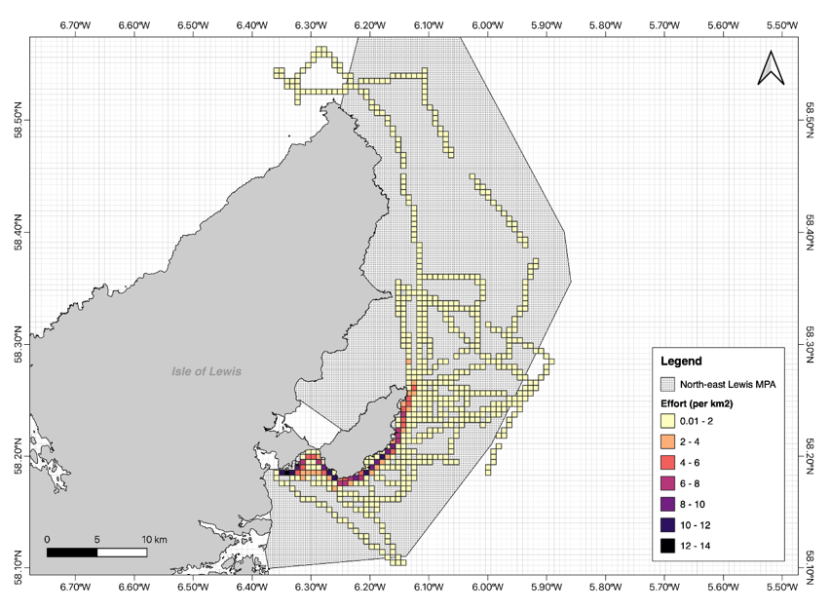
Figure 2. Search effort per km2 2023.
See Figure 3 for location data of sightings of Risso’s dolphin, common dolphin, harbour porpoise and minke whale between 2018 and 2023.
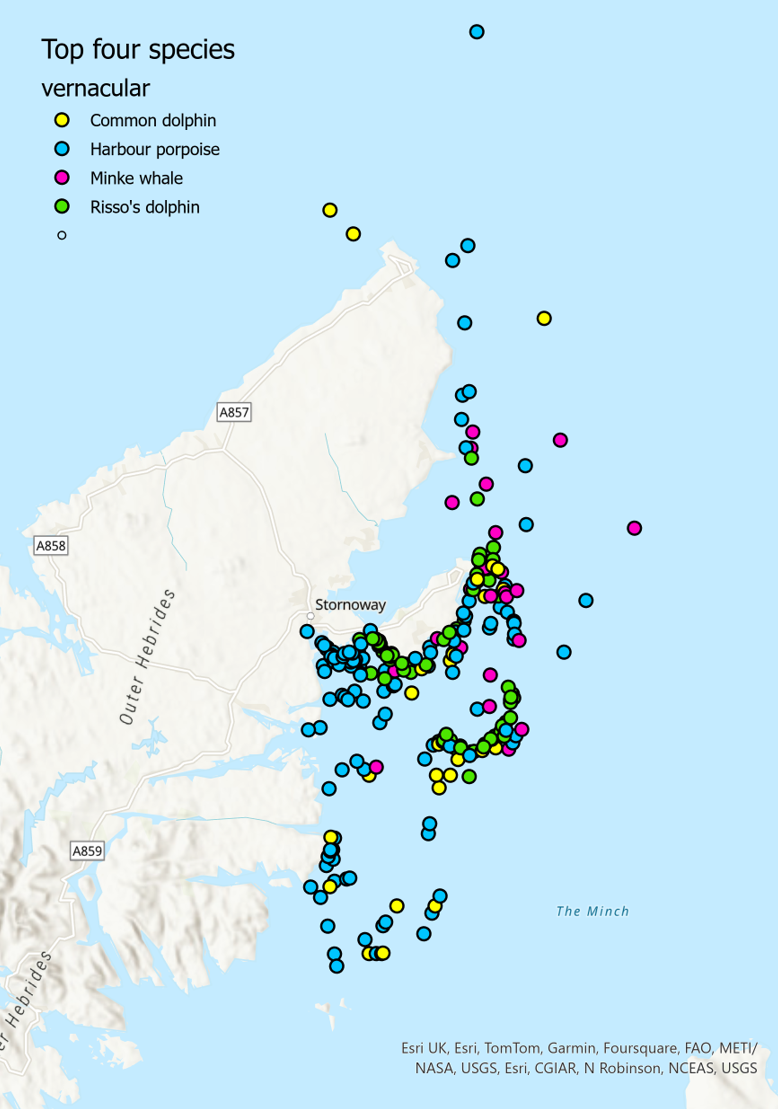
Figure 3. Location data of sightings of Risso’s dolphin, common dolphin, harbour porpoise and minke whale between 2018 and 2023.
See Figure 4 for location data of sightings of Risso’s dolphin between 2018 and 2023.

Figure 4. Location data of sightings of Risso’s dolphin between 2018 and 2023.
See Figure 5 for location data of sightings of common dolphin between 2018 and 2023.
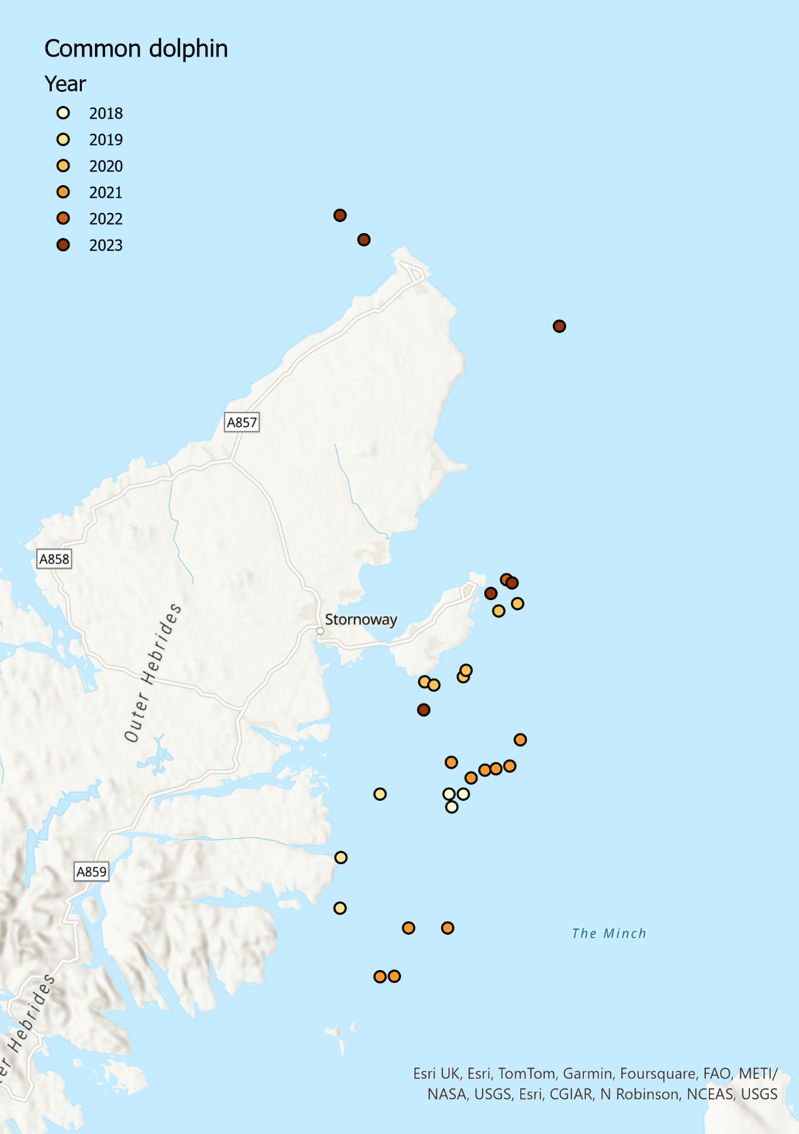
Figure 5. Location data of sightings of common dolphin between 2018 and 2023.
See Figure 6 for location data of sightings of harbour porpoise between 2018 and 2023.
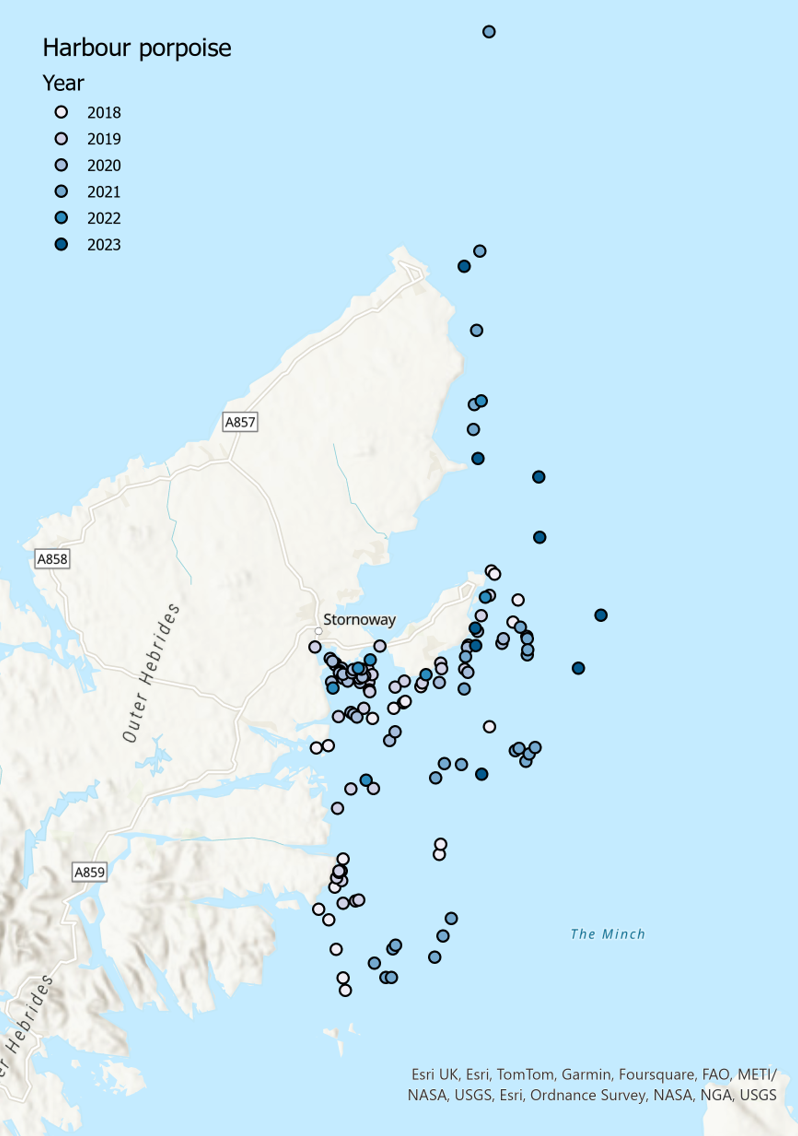
Figure 6. Location data of sightings of harbour porpoise between 2018 and 2023.
See Figure 7 for location data of sightings of minke whale between 2018 and 2023.
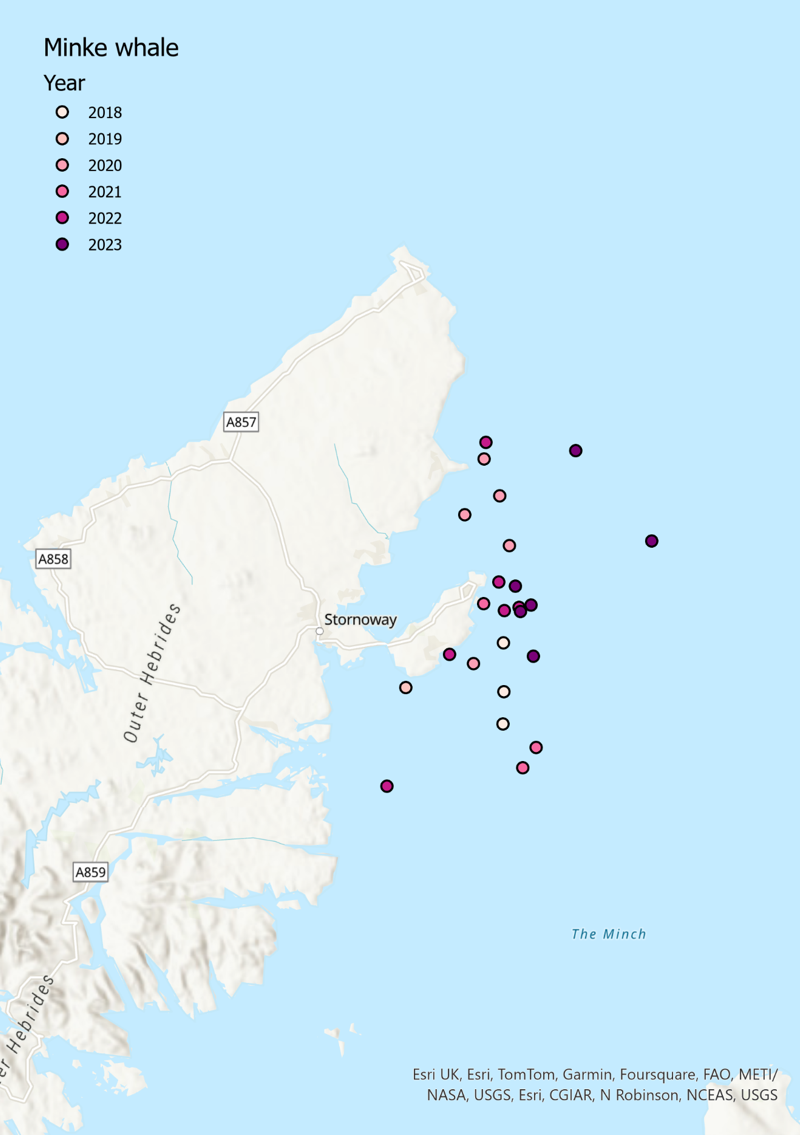
Figure 7. Location data of sightings of minke whale between 2018 and 2023.
Images taken during the surveys were analysed and resulted in photographs of suitable enough quality to recognise 10 individual Risso’s dolphins, four of which were known to researchers, one individual having been first catalogued in 2010. The remaining dolphins were added to the photo-id catalogue.
Summary of analysis of photo 2010-2023
Risso’s dolphins were encountered in every year of surveys except 2019 where we had no sightings of this species. Additionally, 2012 was notable as we had only one sighting of one individual Risso’s dolphin associating with a pod of known bottlenose/hybrid dolphins. This Risso’s individual had not been seen before nor has he/she been sighted since. 2017 was also a quiet year with only seven new individuals and six known individuals encountered, as was 2023 with only six new individuals and four known individuals encountered. Although Risso’s are known to be present in these waters year-round (Wier et al., 2019), despite undertaking spring and attempting winter photo-ID surveys, Risso’s dolphins were never recorded on boat-based surveys in winter months and only encountered once during spring surveys, in May 2018.
The busiest year was 2020 with 44 new individuals added to the catalogue and 42 sightings of known individuals. Pod structure in 2020 differed from other years and consisted of numerous sub-adults, mothers and calves. 2018 was also a significant year with 40 new individuals added to the catalogue and 38 sightings of known individuals.
Between 2010 and 2023, researchers had a total of 96 encounters with Risso’s dolphins. During five of these encounters other species were recorded including white-beaked dolphins, bottlenose dolphins and known hybrid dolphins.
Over 14 years of surveys, 931 Risso’s dolphins were encountered. Of these 713 encounters were with known individuals (i.e. individuals that are in the catalogue) with individuals varying in their presence/absence and use of the area – see Photo-ID below.
The behaviour of the dolphins within the MPA varied, from milling/resting to travelling through the area at speed. Individual dolphins were documented to be feeding repeatedly (both within and between years) at various sites within the MPA and although Risso’s dolphin are thought to be predominantly a nocturnal feeder, feeding behaviour (long, deeper dives with individuals spread out across a wide area) was witnessed whilst on survey effort which took place during daylight hours. In 2022, a pod of known dolphins was encountered feeding in the same location, at the same time, on consecutive days. A Soundtrap set to record continuously was deployed in the area at the time. As the device was recording for 24 hours a day, over a period of eight days, it allowed us to understand more about preferential feeding times – see Acoustics/Soundtrap below.
Adult dolphins accounted for the majority of individuals encountered between 2010 and 2016 whereupon there was a proportional increase in the number of juveniles and younger adults using the area between 2016 and 2023. The number of adult dolphins using the area was not reduced but what changed was group composition. In total, 66 juveniles and 18 calves were recorded. Four mothers were documented as returning to the area in different years. For example, LW0156 was encountered in 2020 accompanied by a juvenile and again in 2021 accompanied by a calf. One individual, LW0105, was sighted unaccompanied in May 2018, then again in August 2018 accompanied by a calf.
Group size varied between 1 and 50 individuals but average group size was c. 10 individuals.
Effort-based photo-ID catalogue
Over 20,000 images collected during targeted boat-based surveys were analysed for photo-identification purposes. Individual adults with at least three distinctive markings, nicks etc. were given a catalogue number, those with fewer markings were retained in a sub-catalogue for future comparison work.
The catalogue currently contains 212 individuals. Of these, 173 individuals have associated images of both sides of their dorsal fins, 24 have right side dorsal only, and 15 have left-side dorsal only.
An additional 47 individuals are not considered well enough marked to be confident of a confirmed resighting and were not added to the catalogue but retained for future comparison work. Of these, 21 individuals have associated images of both sides of their dorsal fins, 17 have right side dorsal only, and 9 have left-side dorsal only.
A total of 259 individual dolphins have therefore been photographically recorded and documented using the waters off the northeast coast of the Isle of Lewis, and predominantly within the NE Lewis MPA. Only one encounter took place outside of the MPA boundaries, although effort within the MPA was prioritised. Photo-identification data indicates this habitat to be especially important for mother and calf pairs as well as a significant number of known individuals returning year after year, within the same social groupings.
Site fidelity to the MPA varied amongst dolphins with 75 individuals (35%) having been sighted in more than one year and 21 individuals (10%) sighted in four or more years. Several core areas have been identified with returning individuals regularly sighted within this specific habitat. Interestingly, 15 individuals first encountered in 2010 have been sighted between five and 10 times, most of the time in each other’s company and in recent years, associating with younger individuals. These individuals were older adults (displaying white colouration on their heads) when first encountered in 2010 and have been returning to the area around the same time, almost every year. On their return they have been documented as staying within the area over the course of several weeks (see Figure 8).
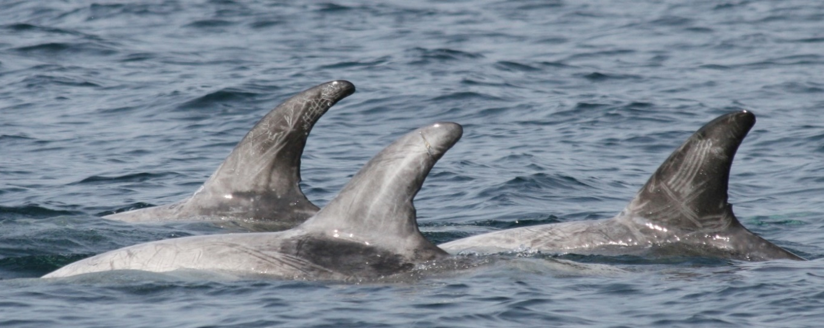
Figure 8. LW0008 (Icarus), LW0010 (Spider) and LW0013 (Scratchy) first encountered together in 2010, shown here ten years later in 2020 in the same area.
Matching with other catalogues/images
Six (2.8%) individuals have been matched to the WDC Orkney and North/northeast Scotland Risso’s dolphin photo-id catalogue whilst none have been matched to the Shetland catalogue.
- LW0001 was catalogued within the NE Lewis MPA for the first time in 2010 but interestingly has not been encountered in the area since. Eleven years later in 2021, this individual was sighted by Andy Knight in Caithness and subsequently catalogued as NE0070.
- LW0100 was first catalogued within the NE Lewis MPA in May 2018 accompanied by a juvenile and subsequently seen in Caithness in August 2018. A member of the public encountered her in 2019 in the NE Lewis MPA (see using opportunistic images) and we recorded her again whilst on effort in the NE Lewis MPA in 2020 accompanied by a calf. The most recent sighting of her was in 2022, again accompanied by a calf, where she was photographed by both Andy Knight and Colin Bird in Caithness on the east coast of Scotland and is catalogued as NE0086.
- LW0108 was first catalogued within the NE Lewis MPA in 2018 and was subsequently seen by a member of the public in 2019 in the same area (see using opportunistic images). In 2021 the individual was photographed by Robert Foubister off Hoxa Head, Orkney and catalogued as NE0061.
- LW0144 was first catalogued within the NE Lewis MPA in 2020. The individual was subsequently sighted by Andy Knight in Caithness in 2021 and catalogued as NE0068.
- LW0148 was first catalogued within the NE Lewis MPA on the 9 August2020 within the NE Lewis MPA was subsequently sighted on the 15 October 2020 in the River Wick on the east coast of Scotland by Colin Bird and catalogued as NE0034.
- LW0150 was first catalogued within the NE Lewis MPA in 2020 and subsequently sighted by Andy Knight in Caithness in August and September 2021 and catalogued as NE0072.
It is of note that all but one of the individuals matched with the Northeast and Orkney catalogue were first catalogued in 2018 and 2020 within the NE Lewis MPA.
Hebridean Whale and Dolphin Trust (HWDT) provided images up to and including 2017. These were originally analysed with a view to creating a stand-alone catalogue, however, on viewing the quality of most images, and after discussions with HWDT, it has been agreed that it would be more useful to combine the images of known individuals within the existing effort-based Isle of Lewis photo-id catalogue with their images, and moving forward, create a wider, more collaborative ‘West Coast of Scotland’ Risso’s dolphin photo-id catalogue which would include individuals within the Isle of Lewis effort-based catalogue, individuals identified via HWDT images and individuals identified utilising procured opportunistic images.
- Initial analysis of HWDT images up to 2017 has provided photographic evidence of 26 individuals from within the Isle of Lewis effort-based photo-id catalogue. These images show their presence in the wider area over multiple years and importantly, in both months and years when they were not encountered by WDC researchers. Combining the available images into one catalogue will be critical in gaining a fuller understanding of individual Risso’s dolphin distribution and behaviour. Once the remaining images from 2018 – 2024 have been received, a fuller analysis should be undertaken and data added to a revised and more comprehensive ‘West Coast of Scotland’ Risso’s dolphin photo-id catalogue – see recommendations below.
As Risso’s dolphins are known to have a large home range, catalogue matching is not restricted to Scotland. To examine spatial and temporal movement patterns of individual dolphins several catalogue matching projects are underway.
- A Masters student at University of Exeter (co-supervised by Nicola Hodgins) is undertaking photo-identification work on Risso’s dolphins found in the south-west of England. Preliminary analysis shows potential matches with both Wales and Ireland.
- A Masters student at University of Bangor (co-supervised by Nicola Hodgins) is undertaking photo-identification work on Risso’s dolphins found off the Welsh coast and within the wider Sea Watch catalogue. Matching work will be focusing on catalogues available throughout the wider west coast of the UK.
Drone surveys
Drone footage collected by a contracted drone operator in 2021 allowed us to conduct brief focal follows of individual dolphins, to identify novel behaviour. Footage obtained was used to report on a behaviour which we had not encountered previously and can be viewed at WDC researchers spot dolphin doing headstands.
In both 2022 and 2023, weather conditions made it unfavourable to fly the drone from land and we did not undertake drone surveys whilst undertaking boat surveys as photo-identification work was always prioritised.
Acoustic monitoring
Acoustic analysis of seasonally deployed C-PODs around the survey area between 2011 and 2022 was undertaken in 2023 (see Acoustics in Discussion below) and so these devices were not redeployed that year. However, to continue the long-term and year-round monitoring for harbour porpoises in Loch Erisort, adjacent to both the NE Lewis MPA and the Inner Hebrides and the Minches SAC, this C-POD was continuously deployed throughout 2023 until it was retrieved for the final time in April 2024.
Soundtrap data was not collected in 2023. This was due to the loss of equipment during its deployment in 2022/2023 and the analysis of data collected in 2022 having been completed.
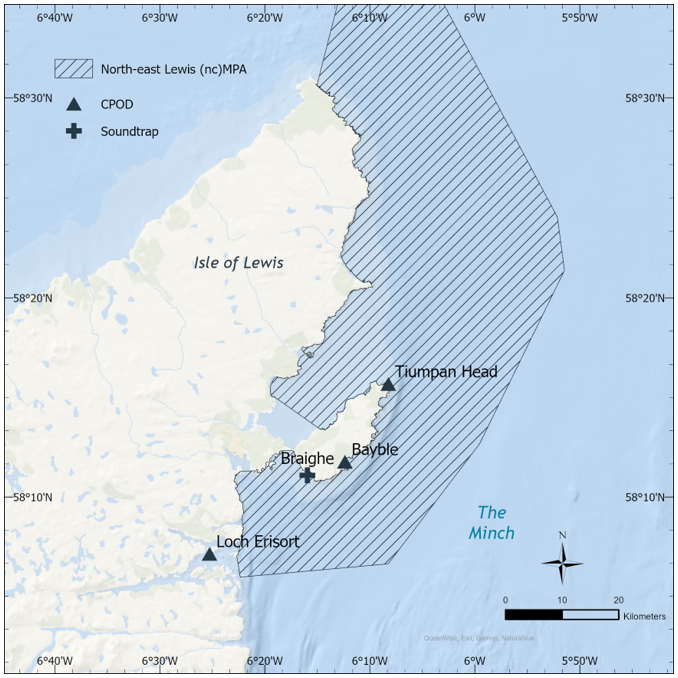
Figure 9. Common dolphin presenting with injuries likely sustained as a result of fisheries interactions.
See Figure 9 for location data of passive acoustic devices deployed between 2011 and 2022.
Discussion
2023 season
Targeted boat-based surveys enabled one WDC researcher and two highly qualified volunteers, Dr Lindsay Porter and Naomi Brannan, to count cetaceans and take high-quality photographs of their dorsal fins and bodies for identification analysis. Body images also aid our understanding of the dolphins’ condition, health and potential threats they face. Our two most frequently encountered species were Risso’s dolphins and harbour porpoises, both of which are offered site-based protection with MPAs in this area.
On the 31 August 2023, we had our first ever encounter with a fin whale whilst on survey. The individual was actively feeding, and we were able to collect images suitable for photo-identification purposes. This is noteworthy, as according to WDC Shorewatch data, sightings of fin whales (as with humpback whales) have been steadily increasing within the survey area over recent years and being able to procure photo-id images is immensely important to furthering our understanding of this species use of waters within the North-east Lewis MPA. At time of writing, there is no relevant photo-id catalogue for fin whales in the north Atlantic however images will be retained by Nicola Hodgins for future identification efforts.
Despite the survey tracks providing more comprehensive coverage of the MPA than in previous years, with another survey north to the Butt of Lewis and a foray into waters to the eastern MPA boundary, there were limited encounters with Risso’s dolphins in 2023. During surveys we encountered harbour porpoises and several pods of very active common dolphins. WDC recommends that future surveys are expanded to include areas outwith but bordering on the MPA. Doing so would help further our understanding of Risso’s dolphin distribution, abundance and habitat use, aiding an assessment of the objectives of the MPA.
Photo-identification 2010-2023
The Isle of Lewis Risso’s dolphin photo-id catalogue currently contains 212 individuals with 75 individuals (approximately 35%) having been seen in multiple years. Photo-identification data indicates this site to be especially important for mother and calf pairs (Weir et al., 2019) with a significant number of known individuals returning year after year, within the same social groupings.
The long-term protection of this habitat and the marine mammals who use these waters requires on-going engagement with local communities, fishers, boat operators and other stakeholders relative to the dolphins’ presence and the Marine Protected Area. A useful way to achieve this is to promote the individuality of the dolphins, tell their stories and involve stakeholders in the collection of photo-id and other data.
The scope of this study had some limitations, including that survey effort was only undertaken on relatively few fieldwork days and undertaken mostly during summer months, thus providing a seasonal window into Risso’s dolphin presence. Opportunistic and community contributed data potentially provides effort (and therefore insights) from other seasons, for example, images of Risso’s dolphins taken opportunistically by members of the public can provide a fantastic resource to cover a wider temporal and geographic area and can increase our understanding of Risso’s dolphin behaviour substantially. Although there are some challenges, we have demonstrated that this approach can work in other areas in Scotland where two photo-id catalogues - The Orkney & North/northeast Scotland Risso’s Dolphin Photo-ID catalogue & The Shetland Risso’s Dolphin Photo-ID catalogue have been compiled and published (Hodgins et al., 2024);‘Using citizen science to better understand Risso’s dolphin (Grampus griseus) presence in northeast Scotland and the Northern Isles’, published in Frontiers in Conservation Science, April 2024.
In addition to images received from HWDT (which have been collected by both effort-based surveys and members of the public opportunistic encounters), to date, over 5,000 images of Risso’s dolphins in the north-west Scottish coasts have been submitted by over 34 different people/companies/researchers. Date of image collection ranges from 1995 – 2023.
An initial analysis of images has already matched four individuals (three of which were first catalogued in 2010 and another of which is a known mother) from an encounter in 2005. At least seven additional individuals have been matched to images recently submitted from an encounter in 2008. This longer and more expansive dataset will allow us to broaden our temporal knowledge, pre-dating the commencement of dedicated surveys in the area as well as increasing our spatial knowledge, as these images have been available from various locations both within and outwith the MPA. Images received from one contributor over the course of two years will result in 26 new individuals being added to the catalogue as well as the documentation of multiple sightings of known individuals. Importantly, this individual had several encounters in 2019, one of the years in which WDC researchers did not encounter any Risso’s dolphins whilst on survey. This data alone is therefore highly significant and can help to fill gaps in the behaviour timeline of multiple individuals. Some of the other images contributed to researchers leading this study show at least 20 catalogued individuals in the area at times not documented by WDC researchers during effort-based surveys. Incorporating this information into the existing catalogue dataset is critical and will provide a fuller reflection of habitat use within the MPA across all months of the year – see recommendations below. This further analysis will also allow us to provide a population estimate for Risso’s dolphins utilising the NE Lewis MPA. These additional sources offer the potential to add significantly to our current understanding of the Risso’s dolphins using the MPA and surrounding waters by providing an incredible opportunity to strengthen the catalogue and present a more accurate picture of individual Risso’s dolphin use of the waters within and adjacent to, the NE Lewis MPA.
In conclusion, the photo-ID data clearly shows that this area is of critical importance to individual Risso’s dolphins who use the area to feed, breed, calve and socialise. Utilising and integrating opportunistic photographs provided by members of the public and other institutions will strengthen our understanding as to when dolphins are using the area, how often and for what purpose. Improved knowledge of spatial and temporal movements of individual Risso’s dolphins will provide further insights into the importance of specific habitats and ensure appropriate measures are implemented for the long-term monitoring and protection of Risso’s dolphins in Scottish (and wider UK) waters.
Health
Photo-identification can not only allow for the identification and tracking of individual dolphins, but it can also tell us more about the status of their health. Within the Lewis catalogue, 55 (25.9%) individuals are displaying some level of lesioning, trauma and/or other damage. Except for a few 'dorsal fin' lesions, all individuals were considered to be older adults due to body colouration. It must be noted, however, that body/fluke images of all catalogued individuals are not available therefore this is likely an underrepresentation of the true number affected.
In addition to lesions and nicks, damage included one individual with a fully collapsed fin, one with a partially collapsed fin, one with a completely severed fin and one with half the fin sliced off. One individual presented with large tumours around the mouth and neck area. It is noteworthy that nine individuals have damage and lesioning at the base of the leading edge of the dorsal fin (which may be a prelude to dorsal fin collapse) with all these individuals having suffered the damage within the last few years. Interestingly, eight of the nine individuals were first catalogued back in 2010 and 2011.
Risso’s dolphins appear to feed almost exclusively on octopus and squid (MacLeod et al., 2014) and the habitat of their prey is oveerlapping with the creel fishery – both commercial and recreational. It is entirely possible that some of these lesions/trauma (especially dorsal fin collapse etc.) is due to interactions with creel lines and associated gear. Although live stranding is now considered the main reason for mortality within Risso’s dolphins in Scotland (Nick Davison, SMASS, Pers.Comm.), in previous years bycatch and/or entanglement was considered the leading cause of death (Dolman et al., 2010). The reasons for live stranding are yet to be investigated in full however one possibility is that Risso’s dolphins are also known to have relatively sensitive hearing in comparison to other odontocete species (between 11-100 kHz) and may therefore be more susceptible to underwater noise (Mooney et al., 2015; Mooney et al., 2012).
Working collaboratively with local fishermen, stakeholders, industry and the strandings team in the future will help to understand more about the health of the population and the threats they face.
It was confirmed that one individual (LW0178), seen on effort in 2020 and 2021, was found dead on Traigh Mhor beach on the east coast of the Isle of Lewis. Information gathered from SMASS allowed us to identify her as an adult female and although her cause of death is unknown, she was significantly underweight which likely contributed to her demise. Given the species known social behaviour, with males and females mostly segregated (Hartman et al., 2008) knowing the sex of this individual allows us to infer potential sexing of the individuals that she was previously documented associating with, allowing us further insight into the social structure and behaviour of Risso’s dolphins using the NE Lewis MPA.
During surveys we recorded all species of cetacean encountered. Several of these encounters were with individual animals who presented with traumatic injuries and/or evidence of disease. One common dolphin presented with a broken rostrum (see figure 9), likely caused by fisheries interactions, and one harbour porpoise presented with cutaneous scarring and nodules evidencing disease (see figure 10).
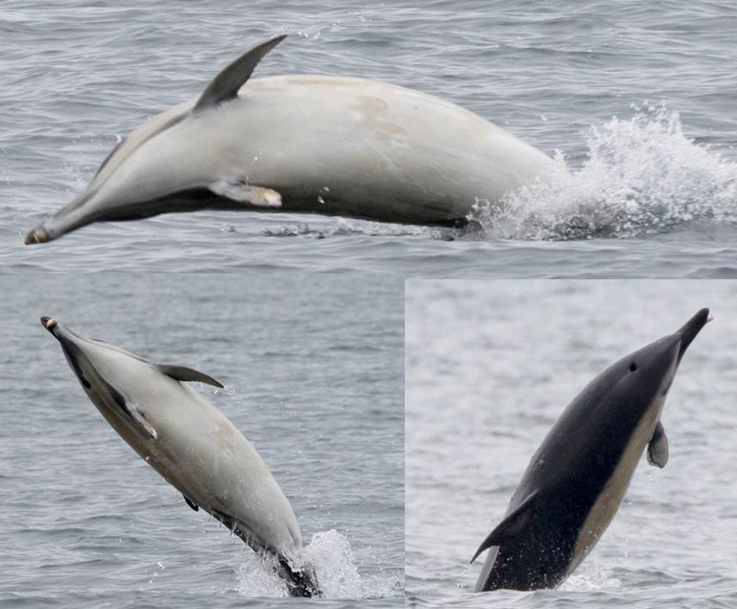
Figure 10. Common dolphin presenting with injuries likely sustained as a result of fisheries interactions.
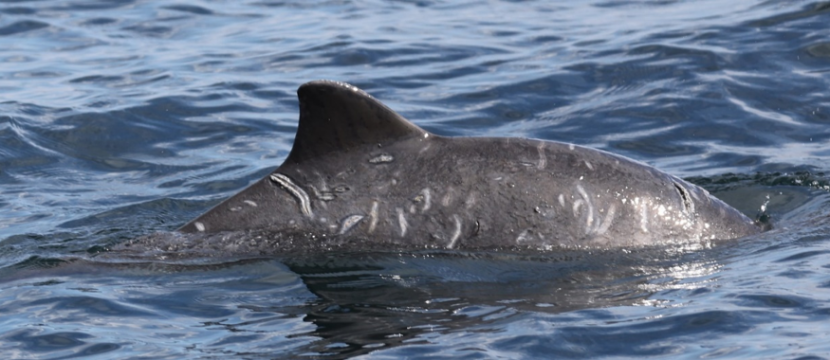
Figure 11. Harbour porpoise presenting with cutaneous scarring and evidence of disease.
Crucial to understanding the long-term health of the Risso’s dolphin population in Scotland is a more comprehensive understanding of prey availability and health as the presence/absence of cephalopods is likely to affect the occurrence and distribution of their predators. The life history strategy of cephalopods combined with their sensitivity to environmental conditions means that their abundance can be extremely variable (Rodhouse et al. 2014) and changes in the abundance of Risso’s dolphins could reflect this as confirmed by anecdotal information on octopus presence gained from local fishermen operating within the survey area, with the finding that in years where we encountered a lower number of individual Risso’s dolphins there was likely a lack of suitable prey. Globally, cephalopod abundance is thought to be increasing (Doubleday et al., 2016) with recent research in the North Sea corroborating this (Oesterwind et al., 2022) . This may be an additional reason for an increase in Risso's dolphin sightings in the northern and eastern waters of Scotland (Wier et al., 2019). A clearer understanding of cephalopod presence/absence within the NE Lewis MPA is therefore critical to our continued understanding of Risso’s dolphin habitat use.
Acoustics
- CPODs – for further information see Smal et al., Passive acoustic monitoring reveals seasonal and diurnal patterns in harbour porpoise (Phocoena phocoena) acoustic detections and foraging activity adjacent to a Special Area of Conservation in the Outer Hebrides, Scotland. (In Prep)
We analysed 12 years (2011-2022) of passive acoustic data from C-PODs in three locations off the east coast of the Isle of Lewis, Loch Erisort, Bayble, and Tiumpan Head, with the two latter locations sited within the NE Lewis MPA. Our analysis found harbour porpoise to be most active in Loch Erisort, followed by Bayble and Tiumpan Head. Seasonal and diurnal variations were apparent in all locations, with harbour porpoise detections peaking in winter for Loch Erisort, in summer for Bayble, and in spring for Tiumpan Head. These results have critical implications for management and monitoring of harbour porpoise in this region.
The northern boundary of the Inner Hebrides and Minches Special Area of Conservation (SAC) overlaps with the southern boundary of the NE Lewis MPA. It does not however, incorporate Loch Erisort, and it is recommended that the Inner Hebrides and Minches SAC be expanded to include Loch Erisort as our findings show year-round presence of harbour porpoise in this location – see recommendations below. An additional recommendation is that acoustic monitoring is conducted year-round in Loch Erisort, Bayble, and Tiumpan Head to fully assess harbour porpoise activity in the long-term. Furthermore, the relationship between harbour porpoise and the fish farms in Loch Erisort should be studied in depth.
- Soundtrap
To enable a clearer understanding of habitat use within the NE Lewis MPA, in 2022 we used passive acoustic monitoring (a Soundtrap - ST300) in a known preferred foraging area for Risso’s dolphins on continuous recording for a period of eight days. Current literature focuses on deep dives, and this is the first known study to focus on Risso’s dolphin vocalisations in water depths <20m in the wild.
The characteristics and the functionality of vocalizations produced by Risso’s dolphins, as well as temporal variations during the day and night, are still little explored (Carlucci et al., 2024) however, it is known that Risso’s dolphins produce a wide range of vocalisations between 30 Hz and 22 kHz and combine a variety of unusual features in their acoustic faculty, including broadband clicks, burst-pulse vocalizations (barks and buzzes), low frequency narrow band sounds (grunts and chirps), and the simultaneous production of whistles and burst-pulsed sounds (Corkeron & Van Parijs, 2001).
Risso’s dolphins appear to employ several mechanisms to maximize foraging efficiency, depending on their feeding depth (Arranz et al., 2019) and geographic variations in the acoustic structure of Grampus vocalizations have been described (see Carlucci et al., 2024 for review) and are thought to be the result of a combination of morphological differences, differences in prey type, size and location, differences in behaviour and social/group structure, and ambient noise conditions (Soldevilla et al., 2017).
Of note is that a first analysis of the soundtrap data shows that the dolphins are very quiet (few vocalisations were recorded), including at times when sightings of known dolphins exhibiting foraging behaviour in close proximity to the acoustic recorders were evidenced and we are considering if, when they are feeding in such shallow depths (c. 18m), perhaps they do not vocalise as often as they do when at deeper depths, which may be a sensible foraging strategy in this type of habitat. As automated detectors for Risso’s dolphins are not currently available (although work is currently underway by SAMS to develop species-specific detectors), all the data has to be analysed manually, second by second and a fuller analysis is still on-going.
The location of our Soundtrap deployment, Branahuie Bay, is clearly an important habitat area for Risso’s dolphins as they have been repeatedly observed displaying foraging behaviour in the bay, however, this represents only a small portion of the both the MPA boundaries and geographical range of this population. By extending the range of future deployments, knowledge of habitat use of Risso’s dolphins in adjacent waters, would contribute greatly to the conservation needs of this population.
Hybrid dolphins
In 2014 we published on the potential hybridism between free-ranging Risso’s and bottlenose dolphins (Hodgins et al., 2014), the first such occurrence to be documented for these species in UK waters. The context and significance of these hybridisation events are unknown however, the collation of more opportunistic sightings (and associated images) of this pod of bottlenose dolphins and/or hybrid Risso’s individuals over the past decade allow for more insight into this behaviour and confirm that hybridisation between the two species is continuing. Although the driver for these hybridisation events is unknown there are several possible reasons: (1) individual mate-choice, (2) an increase in the range/overlap of the two species, (3) a lack of available mates of the same species for either or both species. In addition to evidence of recurrent hybridisation, six putative second-generation hybrid calves were documented.
This phenomenon is discussed in more depth in Hodgins et al., (In Prep.), ‘Evidence for hybridisation between two species of dolphin in the northwest of Scotland.’
Genetic data
Currently, there is only very limited information available on population structure in Risso’s dolphins. Gaspari et al. (2007) found that Risso’s dolphins in UK waters are genetically differentiated from and genetically less diverse than the population in the Mediterranean Sea. To address this shortcoming, by using samples from stranded Risso’s dolphins from around the UK coastline, we aimed to determine population structure and genetic connectivity of Risso’s dolphins in UK waters, based on autosomal and sex-linked markers. We also compared mitochondrial (mtDNA) haplotypes of UK Risso’s to a worldwide sample of Grampus griseus haplotypes to investigate their phylogenetic position in a larger geographic context. Our genetic assessment confirmed that there is no genetic structure for Risso’s dolphins in UK waters and suggest that Risso’s dolphins in UK waters are descendants from a unique lineage, which has not yet been identified anywhere else in the world. The implications for conservation and management of this species in UK waters are far-reaching as although we found no significant genetic differences within the population, this does not mean that there is not further behavioural/cultural sub-structuring within the population and further analysis is required to investigate this.
This is discussed in more depth in Hodgins et al., (Submitted), ‘Genetic data determine a lack of population structure of Risso’s dolphins in United Kingdom waters.’
Management
Currently, Risso’s dolphins within the UK comprise one Management Unit (MU) however, this assumption has been made based on a lack of evidence proving otherwise. MU criteria (for all species) do not work in a precautionary way which can be problematic for dolphins who show a preference for specific areas.
A ‘Review of Management Unit Boundaries for Cetaceans in UK waters (2023)’ (IAMMWG, 2023) undertook a review of literature published since 2015 and provided further insight into possible sub-structuring of UK Risso’s dolphins. The report noted that ‘the evidence is still emerging and with further research and analysis it is possible that multiple sub-populations may exist around the UK’ and called for ‘further research and analysis before any additional boundaries for Risso’s dolphin are delineated' (IAMMWG, 2023).
Our research has shown that we can be confident of site fidelity in our study area even if there is some movement between different regions of the UK MU. This means that the scale of management of human activities that could impact Risso’s dolphins needs to be considered on a smaller, more regional basis, as it is with bottlenose dolphins. For example, the fact that all five recent entanglements happened on the north and west coast of Scotland will have more significance for the local Risso’s population than for the Risso’s found to reside off Wales. Equally, in several Environmental Impact Assessments for potential renewable developments, a Potential Biological Removal (PBR) type approach is being used to determine how many Risso’s dolphins (and other species) may be ‘removed’ (killed) without having a population level effect. Using the UK wide MU would result in a figure being proposed that, we would argue, is not appropriate given the emerging evidence of site-fidelity displayed by individual dolphins. WDC recommend that future photo-identification work should investigate sub-structuring within Risso’s populations in UK waters. A more precautionary approach would be to split UK Risso’s dolphins into several Management Units, perhaps separately for: Western Isles; Shetland; Orkney, and Scottish mainland; Wales and South-west England. The low number of matches to date (<3%) between the Isle of Lewis effort-based catalogue and the catalogues held for Orkney and north-east Scotland and Shetland catalogues, provide initial evidence for regional preferences for individual Risso’s dolphins. Once the wider contributions of images are incorporated, further matching and analysis is likely to support preliminary indications of habitat and site preferences for individual dolphins.
Challenges and benefits of seasonal effort-based boat-based surveys, and land-based surveys
In spring and summer of 2010 and 2011 we undertook dedicated land-based surveys from Tiumpan Head, on the Eye Peninsula. These surveys followed a scan-sampling protocol and in 2012, were replaced with dedicated effort-based watches undertaken by WDC Shorewatch volunteers.
Land and vessel-based studies offer different opportunities and insights in terms of their methodologies, costs and outputs. Land-based citizen science effort provides year-round monitoring of coastal waters (albeit potentially patchy in terms of effort, e.g. time of day, quality and other challenges to photo-ID), which could potentially be complimented by targeted, multi-season boat-based photo-ID surveys which could provide more comprehensive survey coverage of the MPA as well as accruing photo-ID data.
As noted, both methodologies have their pros and cons – effort-based boat-based surveys provided quality images which enabled the creation of a photo-id catalogue, whilst WDC Shorewatch data showed us that Risso’s dolphins are present in the area year-round. Neither should be undertaken in isolation as this would weaken the evidence base and bias the results, however, a combination of both methodologies would provide the most cost-effective solution, allow for spatial and temporal data collection and ensure the robustness of the data collected. In both cases, the year-round presence of researchers and community citizen scientists will enable opportunistic uptake of shorter weather windows and a reactive approach to data gathering.
Conclusion and recommendations
Over the past 14 years of field research off the east coast of Lewis, there have been many achievements, as well as lessons learnt. Effort-based sightings revealed evidence of high site fidelity and long-term residency of individual dolphins in the study area and a higher ratio of mother-calf pairs than in other Risso’s dolphin populations. Due to the continued evidence gathering and the collaboration between organisations and individuals, this critical habitat has received MPA designation. It is vital to create local interest and on-going support for the MPA, as well as maintaining the collection of robust evidence to ensure the implementation and support of effective management measures for the MPA. Continued outreach to local communities and wildlife enthusiasts will continue to increase our understanding of Risso’s dolphins’ use of habitat around the wider Scottish coasts. However, it is crucial that targeted research continues and long-term monitoring of the population is undertaken as this will enable us to understand more about Risso’s dolphin population dynamics, distribution and habitat use and importantly the health of both the dolphins and the habitat on which they rely. Understanding the effectiveness of the MPA is also crucial, as is ensuring the long-term health of the habitat.
Recommendations for long-term monitoring:
The objectives of this project were to; (a) increase our understanding of the habitat use, site fidelity, behaviour, seasonal presence and the threats facing Risso’s dolphins within the North-east Lewis MPA, and, (b) to provide the scientific evidence needed to contribute towards delivery of the Scottish MPA monitoring programme and inform NatureScot’s conservation and management advice. Relevant recommendations include:
To better understand habitat use, site fidelity, behaviour and seasonal presence of Risso’s dolphins.
(a) The photo-ID catalogue resulting from this study is limited in that it only evidences the results of ‘effort-based’ surveys in a relatively small area, within a relatively short window of time. Dedicated surveys were predominately undertaken during the months of August and September, and it is of paramount importance that both spatial and temporal distribution of Risso’s dolphins within the MPA is understood. The inclusion of images taken opportunistically within the MPA and surrounding waters will provide a more accurate picture as to the movements, habitat preferences, behaviour and indeed, the threats facing the Risso’s dolphins.
Recommendation 1. – Cleaning & integration of all additional effort-based (via HWDT) and opportunistic images (via HWDT and various stakeholders/members of the public, c. 5000 images) into a more comprehensive ‘West Coast of Scotland’ catalogue.
(b) Understanding temporal and spatial use of the MPA by Risso’s dolphins will provide a better understanding as to the requirements of these and other, marine mammals.
Recommendation 2. – Undertake a mark-recapture analysis on the West Coast of Scotland photo-id catalogue resulting from Recommendation 1. above, providing a population estimate for the area and further insights into Risso’s dolphin habitat use in the NE Lewis MPA and surrounding waters.
(c) It is vital to maintain robust evidence data collection throughout the MPA and dedicated photo-ID boat-based surveys are required to complement opportunistic sightings generated by the public and other stakeholders. To ensure spatial and temporal coverage, and given the limitations noted above, it is recommended that between 12 and 24 surveys are planned per annum, where possible spread evenly across all months of the year and covering areas both within and outwith the MPA boundaries.
Recommendation 3. – Undertake between 1 and 2 monthly photo-ID surveys both within and outwith the boundaries of the MPA.
To better understand more about absence/presence of Risso’s dolphins throughout all months of the year.
As opposed to CPODs, Soundtraps allow differentiation between different dolphin species (e.g. Risso’s, bottlenose, common and white-beaked dolphins, as well as orca), creating a more precise picture of the presence of different species of cetaceans in this habitat. The collection of acoustic data can provide insight into habitat use, presence/absence and potentially behaviour during all hours of the day and in adverse weather conditions when visual surveys (both land and boat based) are not possible.
Recommendation 4. – Deploy Soundtrap devices at strategic locations throughout the MPA and adjacent waters and analyse recordings to investigate odontocete presence from their vocalisations. Additionally, where possible, it is recommended to make Soundtrap recordings accessible for collaborative projects to train and test automated detection algorithms.
To better understand the threats facing Risso’s dolphins.
Over 25% of dolphins in the catalogue display signs of trauma/injury and/or disease. Especially worrying are the consequences of any interaction with static fisheries gear which have been shown to be a significant cause of death where known. Understanding the extent of fisheries effort within (and outwith) the MPA would be useful in gauging the level of threat posed by these fisheries.
Recommendation 5. – (a) Understand and document fisheries effort (including static gear) within the MPA, and the potential impacts of fishing effort on the dolphins, (b) ensure findings are used to inform development of fisheries measures within the MPA, (c) Understand and document other marine traffic usage of the area and, (d) Undertake an analysis on cause of death (where known) of Risso’s dolphins stranded around Scottish and wider UK, coasts.
Recommendations for future research:
- To ensure appropriate management of Risso’s dolphins it is vital to understand their wider distribution and use of UK waters.
Recommendation 6. – Comparison with other available Risso’s dolphin photo-ID catalogues including southwest of England (University of Exeter), Sea Watch, IWDG and WDC Bardsey catalogue – building on the aforementioned Masters projects.
- To provide a higher resolution of population structure, demography and gene flow information for conservation management and to determine whether this UK population of Risso’s dolphins is truly endemic to UK waters, further examination with samples collected from adjacent regions with presumably similar habitat settings is required.
Recommendation 7. – Undertake further genetic analysis of stranded Risso’s dolphins in adjacent regions using advanced molecular techniques, such as restriction site-associated DNA sequencing, whole genome sequencing, and transcriptome sequencing.
- Risso’s dolphins strand in various locations around the country, presenting a valuable opportunity to learn more about their life history, diet, distribution and diseases they may be subject to. It is critical to the further protection of Risso’s dolphins that their prey is also protected and an understanding of where and what they eat will provide important information and answer a multitude of questions.
Recommendation 8. – Undertake multiple analysis on samples retrieved from stranded Risso’s dolphin individuals, including stomach content and stable isotope analysis.
- Very little is known about the status of the habitat within the MPA and it is vital to understand the availability and quality of Risso’s dolphin preferred prey.
Recommendation 9. – Determine (seasonal) extent and movement/distribution of cephalopods within the MPA.
All the recommendations above will lead to an improved understanding of Risso’s dolphins’ behaviour, and therefore their conservation needs, in the area. This will contribute to effective long-term conservation management strategies that will also benefit other wildlife using the habitat, such as harbour porpoises, bottlenose dolphins, basking sharks, minke, fin and humpback whales, seals and a variety of seabirds including puffins and fulmars.
It is important to note that the recommendations made here stem specifically from the research undertaken within this particular study. Contributions from, and collaborations with, other researchers and research groups, stakeholders and members of the public including citizen science programmes, investigations of stranded cetaceans, will be important moving forward, as together these efforts will improve our knowledge of cetaceans in the region, and feed into the development and implementation of long-term monitoring and conservation programmes.
References
Arranz, P., Benoit-Bird, K.J., Friedlaender, A.S., Hazen, E.L., Goldbogen, J.A., Stimpert, A.K., DeRuiter, S.L., Calambokidis, J., Southall, B.L., Fahlman, A. and Tyack, P.L., 2019. Diving behavior and fine-scale kinematics of free-ranging Risso's dolphins foraging in shallow and deep-water habitats. Frontiers in Ecology and Evolution, 7, 53.
Carlucci, R., Cipriano, G., Bonato, M., Buscaino, G., Crugliano, R., Fanizza, C., Gatto, S., Maglietta, R., Papetti, C., Pelagatti, M. and Ricci, P., 2024. Anthropogenic noise effects on Risso's dolphin vocalizations in the Gulf of Taranto (Northern Ionian sea, central Mediterranean sea). Ocean & Coastal Management, 254, 107177.
Corkeron, P.J. and Van Parijs, S.M., 2001. Vocalizations of eastern Australian Risso's dolphins, Grampus griseus. Canadian Journal of Zoology, 79(1), 160-164.
Dolman, S., Hodgins, N., Deaville, R., Jepson, P., Baker, J., Penrose, R. and Reid, R., 2010. Risso's dolphin stranding in the British Isles; UK Cetacean Strandings Investigation Programme, 20th Anniversary Symposium, ZSL, UK.
Doubleday, Z.A., Prowse, T.A.A., Akrhipkin, A., Pierce, G.J., Semmens, J., Steer, M., Leporati, S.C., Lourenco, S., Quetglas, A., Sauer, W. and Gillanders, B.M., 2016. Global proliferation of cephalopods. Current Biology, 26, 387-407.
Gaspari, S., Airoldi, S. and Hoelzel, A.R., 2007. Risso’s dolphins (Grampus griseus) in UK waters are differentiated from a population in the Mediterranean Sea and genetically less diverse. Conservation Genetics, 8, 727-732.
Hartman, K.L., Visser, F. and Hendriks, A.J., 2008. Social structure of Risso’s dolphins (Grampus griseus) at the Azores: a stratified community based on highly associated social units. Canadian Journal of Zoology, 86(4), 294-306.
Hodgins, N.K., Dolman, S.J. and Weir, C.R., 2014. Potential hybridism between free-ranging Risso's dolphins (Grampus griseus) and bottlenose dolphins (Tursiops truncatus) off north-east Lewis (Hebrides, UK). Marine Biodiversity Records, 7, e97.
Hodgins, N.K., Steel, E.M., Dyke, K., Walters, A.E., Dolman, S.J., Hall, K., Neave-Webb, E., Evans, P.G., Bird, C., Robinson, K.P. and Marwood, E.M., 2024. Using citizen science to better understand Risso’s dolphin (Grampus griseus) presence in northeast Scotland and the Northern Isles. Frontiers in Conservation Science, 5, 1366064.
IAMMWG, 2023. Review of Management Unit boundaries for cetaceans in UK waters (2023). JNCC Report 734, JNCC, Peterborough, ISSN 0963-8091.
MacLeod, C.D., Santos, M.B., Burns, F., Brownlow, A. and Pierce, G.J., 2014. Can habitat modelling for the octopus Eledone cirrhosa help identify key areas for Risso’s dolphin in Scottish waters?, Hydrobiologia, 725, 125-136.
Mooney, T.A., Yamato, M. and Branstetter, B.K., 2012. Hearing in cetaceans: from natural history to experimental biology. Advanced Marine Biology, 63, 197-246.
Mooney, T.A., Yang, W.C., Yu, H.Y., Ketten, D.R. and Jen, I.F., 2015. Hearing abilities and sound reception of broadband sounds in an adult Risso’s dolphin (Grampus griseus). Journal of Comparative Physiology A, 201, 751-761.
Oesterwind, D., Barrett, C.J., Sell, A.F., Nunez-Riboni, I., Kloppmann, M., Piatkowski, U., Wieland, K. and Laptikhovsky, V., 2022. Climate change-related changes in cephalopod biodiversity on the North East Atlantic shelf. Biodiversity and Conservation, 31, 1491-1518.
Weir, C.R., Hodgins, N.K., Dolman, S.J. and Walters, A.E., 2019. Risso's dolphins (Grampus griseus) in a proposed Marine Protected Area off east Lewis (Scotland, UK), 2010–2017. Journal of the Marine Biological Association of the United Kingdom, 99(3), 703-714.