NatureScot Climate change & nature
Here are the challenges that we face in the current climate change emergency.
We are the Scottish Government’s nature conservation agency. We know a fair bit about climate change. That’s not surprising – climate and nature have been wholly linked for three billion years, in a colossal carbon cycle that now includes humankind.
We also know a nature-rich future is our best response to the climate emergency.
Climate change is already happening and a serious risk in Scotland – there’s useful detail at Adaptation Scotland website. It’s widely agreed the world can stop this getting a lot worse if global emissions of greenhouses gases are reduced to net-zero by around 2030. The key thing is to stop burning fossil fuels.
However, it takes a long time to put the brakes on. After we reach net-zero, temperatures will continue to rise for decades, and sea-level for centuries. The planet is already locked into a lot of change. It’s essential we adapt to that change at the same time as reducing emissions.
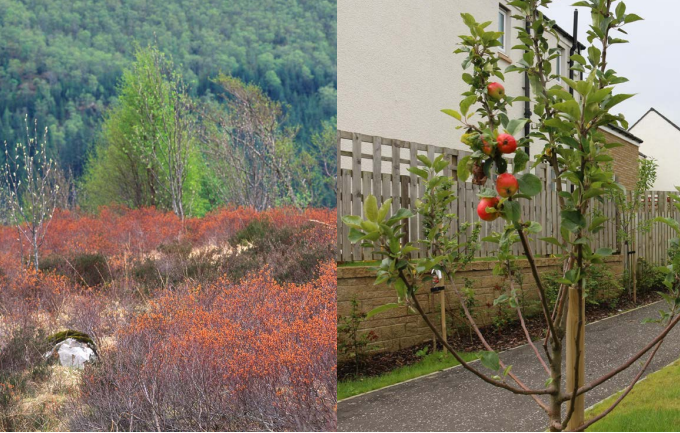
This is where the ‘net’ comes into the net-zero target. The scientists’ calculations rely on major changes to how our land and seas are used. NatureScot’s work is all about this use and the habitats involved – whether native woodlands in our hills, peat bogs, marine mud thick with tiny organisms, or the networks of field boundaries and urban greenspaces in our lowlands.
We help to conserve and expand habitats, making them better connected and increasing their biodiversity. We call this ‘nature-based solutions’. They have three main interlocking benefits:
- by taking up CO2 from the atmosphere, they reduce net emissions.
- by helping reduce the severity of floods, heatwaves, sea-level rise and storms, they help our society and economy adapt to climate change we are already locked into.
- they play our part in addressing the global biodiversity crisis, with habitats and species threatened not only by climate change but also by changing use of land and sea, direct exploitation, pollution, and invasive non-native species.
And that’s not all. Putting in place more and healthier nature is good for people’s health and well-being, and for social justice. It supports various industries, from high-quality food production to tourism – and it is part of how we, and others, see Scotland. We also try to involve communities, especially young people, who are arguing passionately for transformative change.
NatureScot has delivered climate change action through nature for many years. Some is direct, like funding habitat projects on the ground, and much is about influencing policies, planning and guidance that others work within. We’ll continue to update the detail on our Climate Change webpages.
We’re now working hard to establish new and expanded action, collaborating with other organisations. We have published our Climate Change Commitments that will guide what we do. Here are the themes:
- Changing use of the land
- Changing use of the sea and coasts
- Tackling climate-change effects on native habitats and species
- Supporting climate resilient communities
- Enabling new development that helps address climate change
- Managing NatureScot's own emissions and sequestration
Want to play your part?
- Read our What can YOU do to help us tackle the climate emergency
- Make Space for nature campaign, close to home for all seasons
- See our Biodiversity web pages.
If we started recommending further reading, it would be hard to know where to stop, but here are the global reports that currently frame our work:
- Net Zero by the UK Committee on Climate Change
- Global Assessment on Biodiversity and Ecosystem Services by IPBES
- Climate Change and Land by the Intergovernmental Panel on Climate Change
Published: 2019