NatureScot Business Plan 2023-24
Introduction
As Scotland’s nature agency our ambition is that all nature in Scotland – our soils, freshwaters, seas, key habitats and landscapes, our green space and our native species – is protected, restored and valued so that we all benefit.
This is the second year of our Corporate Plan – A Nature Rich Future for All. To tackle the climate-nature crisis we focus on three priority areas:
- Protecting Nature by expanding and modernising protected areas, improving and regulating wildlife management, and delivering effective advice on development on land and at sea.
- Restoring Nature through a new Scottish biodiversity strategy, climate change plan and legislation, regenerating peatlands, aiding nature’s recovery and transforming farming and crofting.
- Valuing Nature by connecting people and nature, driving better decisions and greater investment based on nature’s benefits and helping grow the skills and jobs nature needs and can provide.
Through these priorities we work to enhance our natural environment and inspire the people of Scotland to care more about it. Our natural world is at the heart of improving the nation’s well-being. Our focus on a nature-rich future for all will tackle biodiversity loss and the climate emergency with a mix of large and smallscale nature-based solutions.
The nature-based solutions required to make the necessary and significant impact must be bold, innovative, for everyone and built on sound science delivered not only through our own work but in partnership with many others.
Although damaged, our natural environment remains our greatest national asset. Scotland's nature is special, with awe-inspiring landscapes and habitats found in few other places on Earth: from our diverse marine life and spectacular coastal machairs to ancient Scots pine forests, peatlands and heather-covered mountains.
But it has faced catastrophic loss as a result of centuries of overexploitation which has intensified over the last 50 years. This has led to degraded biodiversity, ecosystems and landscapes.
It could contribute so much more to net zero, managing climate risks and our health and wellbeing by providing the essentials we need to survive and thrive. Our economy must be embedded in nature. It attracts people and businesses to choose Scotland as a place to live, work and invest, securing thriving local economies and communities in rural areas. Integrated approaches across sectors and working at scale will be essential to make best use of public and private resources to tackle the climate-nature crisis.
Through these activities and other key areas of work during 2023/24, NatureScot will strengthen understanding and connection to Scotland’s natural environment, focusing on the diversity of nature where we live, work, visit, heal and play.
2023/24 Focus
This is a big year for nature as we prepare to launch the Scottish Biodiversity Strategy and associated delivery plan. A new climate change plan will be activated and a wide ranging legislative programme will go through its paces. Never before has there been such concerted effort from across the Scottish Government to tackle the nature-climate emergency, and we are playing a key role supporting and leading some of this work.
The scale of the challenge is massive. The Green Finance Institute estimated we need to invest more than £20bn if we are to hit 2030 environmental targets. Meanwhile, the headwinds are significant. As we face pressure on the public purse and as we emerge from the Covid-19 pandemic, people in Scotland are in the midst of a cost of living crisis. Nonetheless, it is clear that the Scottish Government remains focused on making meaningful progress in tackling the nature-climate emergency in Scotland.
The Conference of Parties (COP) 27 on Climate Change cemented the need for action and the fragility of keeping the 1.5⁰C target alive.
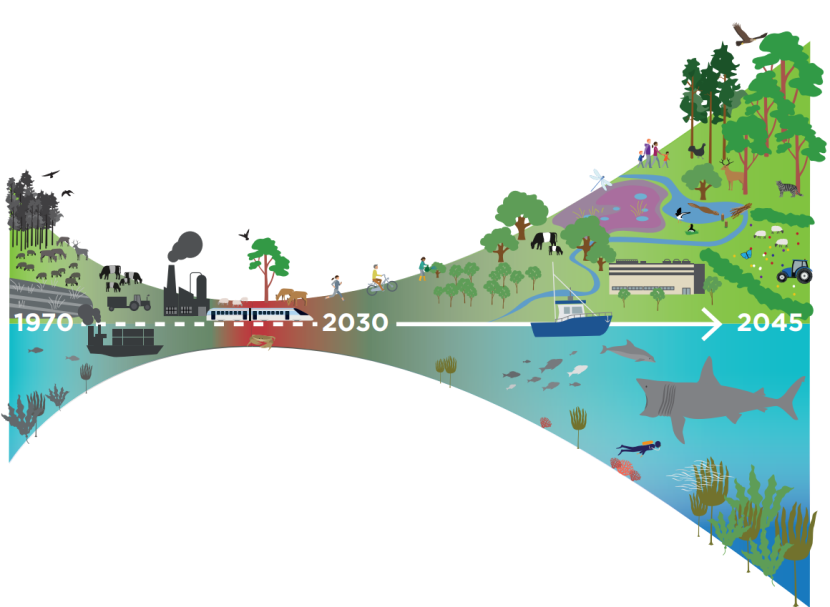
The 'Proposed vision' timeline from 1970 to 2045
Click for a full description
The 'Proposed vision' infographic shows a timeline from 1970 to 2045 depicting biodiversity (examples of flora and fauna) declining and then regenerating by 2045. Its starts with images of how land and sea was used in the 1970s, such as farming, a factory and a fishing trawler. As the timeline progresses its shows a decline in biodiversity and then portrays the decline ending by around 2030. From 2030 to 2045, the image shows how land and sea might be used as biodiversity is substantially restored.
The image includes the draft Scottish Biodiversity Strategy vision text, stating:
By 2045, Scotland will have restored and regenerated biodiversity across our land, freshwater and seas.
Our natural environment, our habitats, ecosystems and species, will be diverse, thriving, resilient and adapting to climate change.
Regenerated biodiversity will drive a sustainable economy and support thriving communities and people will play their part in the stewardship of nature for future generations.
Limiting global warming to 1.5C requires rapid, deep and sustained reductions in global greenhouse gas emissions, reducing them by 43% by 2030, compared to 2019 levels. For Scotland, this equates to annual emission reductions of at least 10% every year from 2022 onward, or over three times what we have achieved over the last 30 years. Throughout this decade we will see nature making increasingly telling contributions to emissions reductions. There is no road to net zero without nature, and in particular without the transformation of how we use the land and sea.
Biodiversity is still deteriorating worldwide, primarily because we have failed to address the impact of food systems on nature and climate. Scotland currently has one of the lowest biodiversity intactness indexes in the world and this decline will worsen without action. In parallel with emission reduction targets, biodiversity loss must be halted by 2030, and reversed by 2045, and requires a similar escalation of effort.
The Conference of Parties (COP) 15 Biodiversity Conference set out new goals for nature over the next decade through the Convention on Biological Diversity post2020 framework process. The framework sets out an ambitious plan to implement broad-based action to bring about a transformation in society’s relationship with biodiversity. This is to ensure that by 2050, biodiversity is valued, conserved, restored at large scale and used wisely, maintaining ecosystem services and sustaining a healthy planet.
NatureScot is co-leading, with Scottish Government, the development of the Scottish Biodiversity Strategy. The strategy will focus on halting biodiversity loss by 2030 and substantially regenerating nature by 2045. We will also support the development of the Natural Environment Bill. The Bill will include statutory nature targets to achieve the 2030 and 2045 goals.
In 2023/24 NatureScot will drive progress by focusing on the following:
- the transformation of land and sea use
- putting in place changes to restore and protect nature for the future
- within Scotland’s control, working towards the prevention of any further extinctions of wildlife and halting declines by 2030
- focusing on species recovery, functional ecological diversity, and habitat quality and extent reflecting the challenges of a changing climate
- delivering our targets to protect at least 30% of Scotland’s land and seas by 2030, and highly protect 10% of the seas by 2026 including one new National Park
- reducing our own emissions and biodiversity footprint through our procurement and Net Zero Plan
- securing new sources of income and investment to offset pressures on the public purse to achieve nature-positive outcomes.
We will prioritise our available resources to delivering the Programme for Government whilst continuing to deliver complementary statutory functions, covering areas of work from terrestrial birds and marine protected areas to planning and land management responsibilities, in ways that are efficient and contribute effectively to protect, restore and value nature.
This Business Plan is an essential element of setting the framework towards our vision for a nature-rich future for all. Inspiring people to connect and value is a shared responsibility. NatureScot has a unique role to play in supporting others to build capacity, develop policies and drive action across Scotland. From academic institutions to land managers, third sector organisations to private enterprise – the whole of Scotland must move forward with urgency and ambition.
Protecting Nature
Strengthened protection of existing biodiversity
The degradation of nature contributes to the climate emergency and threatens our society and the wellbeing of future generations. A nature-rich future starts with halting biodiversity loss by protecting what we have now.
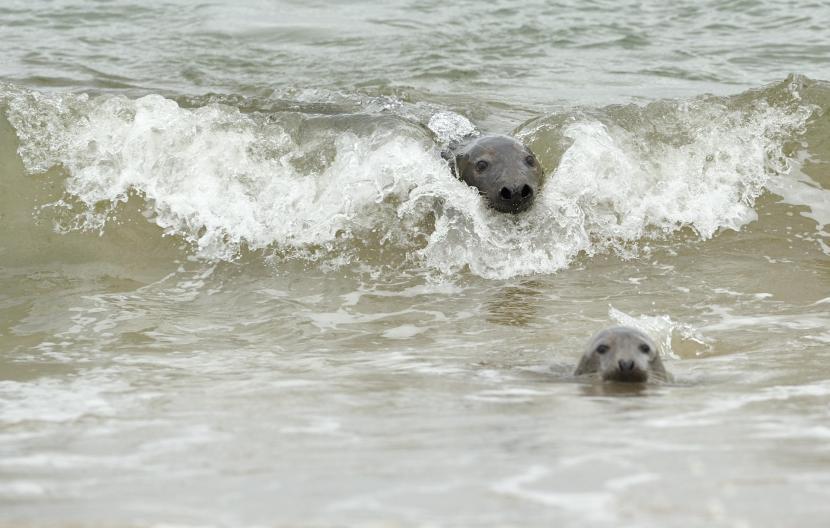
Grey seals (Halichoerus grypus) in the sea near John O' Groats, Caithness.
Protecting 30% of land and sea (with 10% highly protected) by 2030 together with at least one new National Park will contribute to a coherent, robust and effective nature network of protected areas and other area - based conservation measures supporting and integrating with our restoration objectives and sustainable use of our land and sea.
In 2023/24 we will:
- Identify potential protected areas and new approaches to managing them to support other effective area -based conservation measures
- Support legislative changes including provisions for Highly Protected Marine Areas
- Refine mechanisms for delivery of 30x30 and facilitation of local delivery of Nature Networks
- Provide support to Scottish Government in selecting new National Park area/s and developing legislative proposals for refreshing our approach to National Parks
– Work with the National Nature Reserve partnership to increase the contribution of NNRs to landscape -scale action for nature Through leadership across wildlife management and an effective licensing function we will gear the management of uplands to meet Scotland’s emission reduction and biodiversity targets. We will reduce conflict between people and species, provide advice for mitigation and management and advocate for the appropriate balance between incentive and regulation in order that Scotland’s people can safely and sustainably coexist with wildlife.
In 2023/24 we will:
- Move the majority of our licencing functions online
- Support Scottish Government in developing new legislation, incentives and apply our regulatory role in wild deer management across Scotland
- Deliver Beaver Strategy Action Plan Priorities
- Publish the National Goose Policy Review
- Identify priority sites and approaches to control invasive nonnative species and use of species control powers
- Ensure effective mitigation measures and monitoring for avian influenza across important wildlife sites
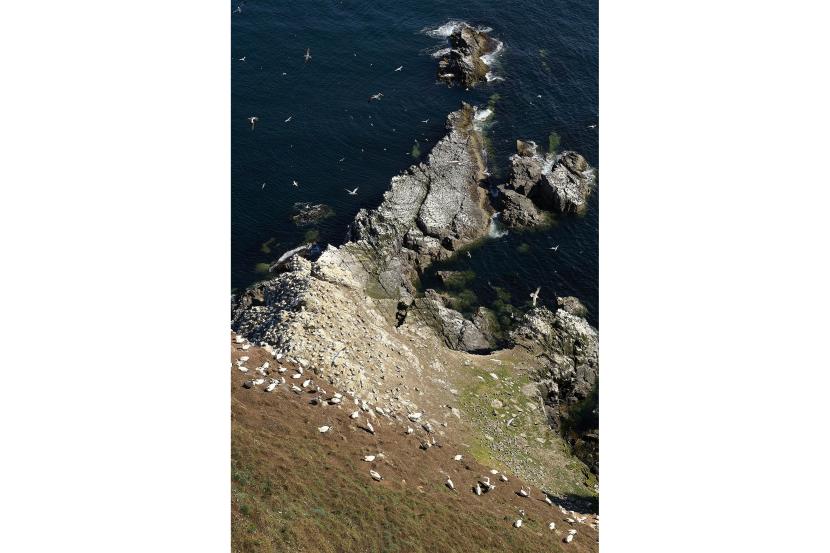
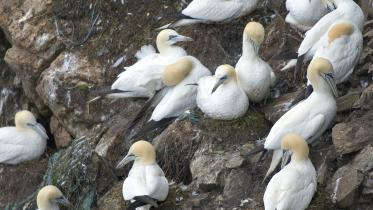
The Gannet colony at Troup Head on the Buchan coast.
We will influence planning and other regulatory systems to help deliver positive restoration of nature and nature networks. Our engagement in development and regulation safeguards existing nature. It will aid investment in nature based solutions and engagement with other stakeholders to invest in the assets on which they depend.
In 2023/24 we will:
- Influence suites of new Local Delivery Plans and other strategic plans to increase nature positive outcomes
- Publish tools and guidance to improve delivery of final National Planning Framework 4 (NPF4) Policies, and define our role on individual development management cases in light of the new NPF4
- Contribute to co-production of Evidence Reports including evidence gathering and associated Strategic Environmental Assessment scoping
- Deliver proposal for Informed Decision to streamline casework using Artificial intelligence
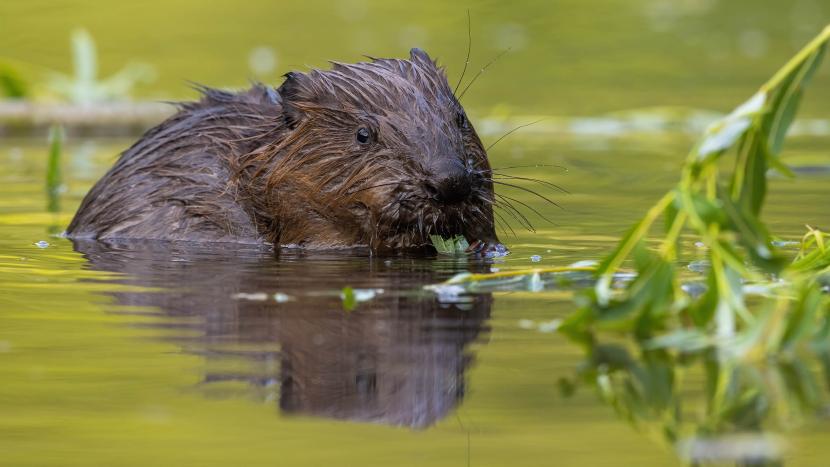
Beaver in the loch at Knapdale, Argyll.
Transforming marine management will ensure that new frameworks for managing Scotland’s seas are underpinned by strong objectives on nature and climate. This will help protect and restore coastal and marine biodiversity; and contribute to net zero targets and adaptation to climate change.
In 2023/24 we will:
- Support the development of strong policies for nature and climate within a new National Marine Plan
- Provide robust advice to help steer marine energy development proposals, including Berwick Bank Offshore Wind Farm and ScotWind developments
- Influence a strengthened and streamlined regulatory framework for aquaculture
- Build our capacity and evidence base to influence the development of Coastal Change Adaptation Strategies
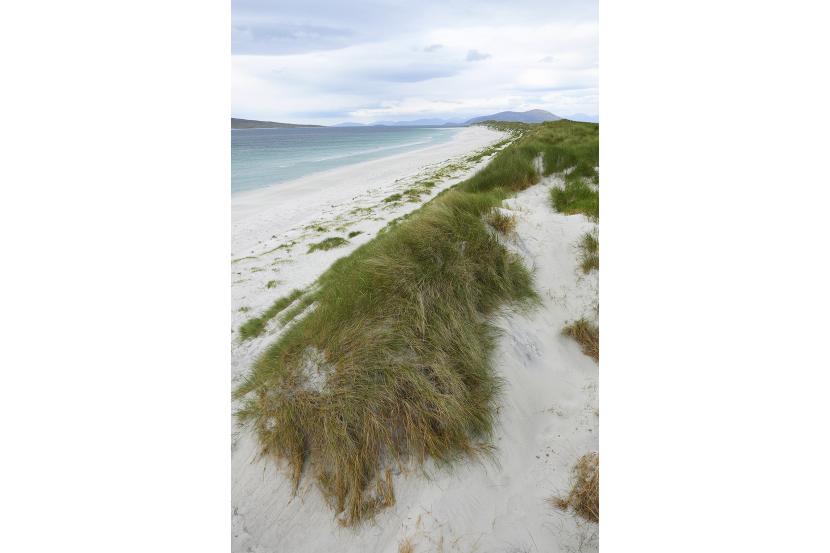
The West Beach, Berneray, Western Isles.
Additional Performance Metrics
NatureScot’s success is measured through a suite of key performance indicators which, together with the milestones (page 5 to 15), provide evidence of NatureScot’s impact on delivery of our corporate plan outcomes. These have been assessed against our objectives and can be cross cutting, evidencing the improvements we seek to make in a number of areas. The key performance indicators are show below Protect, Restore, Value and NatureScot Way.
| Corporate Plan Objective | Result | Business Plan Performance Indicators |
|---|---|---|
| Lead the delivery of 30% of land and sea being protected by 2030 |
|
|
| Build stronger collaboration reducing the impacts of deer and modernise our wildlife management and underpinning licencing functions to enable a net zero and nature positive future |
|
|
| Engage and influence planning and other regulatory systems to ensure they deliver for nature and climate | – Nature is in a better state than before development. | – Formal applications that provide all the necessary information for us to fully advise on initial submission |
| Influence the transformation of marine management through new marine planning, protection and fisheries management frameworks, and working with the marine renewable energy sector | – We can help meet net zero targets through marine renewable energy avoiding major impacts on nature | – No. of marine renewable energy consultations where we have provided advice on avoiding impacts on nature |
Restoring Nature
Halt the loss of Biodiversity by 2030 and restore nature by 2045
Protecting the nature we have will not be enough to secure or maintain net zero, or to turn the corner into a nature positive future. We must also restore nature’s complexity and connectivity across land and seascapes.
Leading the development and delivery of the 25-year Scottish Biodiversity Strategy (SBS) including large scale restoration measures to regenerate biodiversity, building complexity and connectivity across landscapes, including farms and forests, to better manage the impacts of a changing climate.
In 2023/24 we will:
- Consult on the Scottish Biodiversity Strategy 25 year plan and delivery plan
- Publish the detailed delivery plan
- Publish the State of Nature Report
- Publish the Biodiversity Duty Report
- Help develop the targets for the Natural Environment Bill
Through our leading Peatland ACTION programme we will manage an accelerated delivery of peatland restoration. This restoration makes an important contribution to tackling climate change by enhancing the functioning peatland resource and securing the benefits for biodiversity, carbon stores, water management and amenity. We will inspire wider interest for investment and delivery by others and target the most degraded areas.
In 2023/24 we will:
- Increase the demand for restoration by providing and promoting evidence of the benefits for climate change, biodiversity and water management
- Develop a long term pipeline of project through an expanded programme of feasibility studies and surveys, and incentivised design/development of large scale projects
- Share and promote the restoration techniques that deliver the most benefits for nature and achieve best value from public investment.
- Increase the skills/capacity of the workforce through a range of opportunities
- Support projects that will put 6,100 hectares on the road to recovery
- Develop new operating models that will inject pace, transformation and new finance into peatland restoration
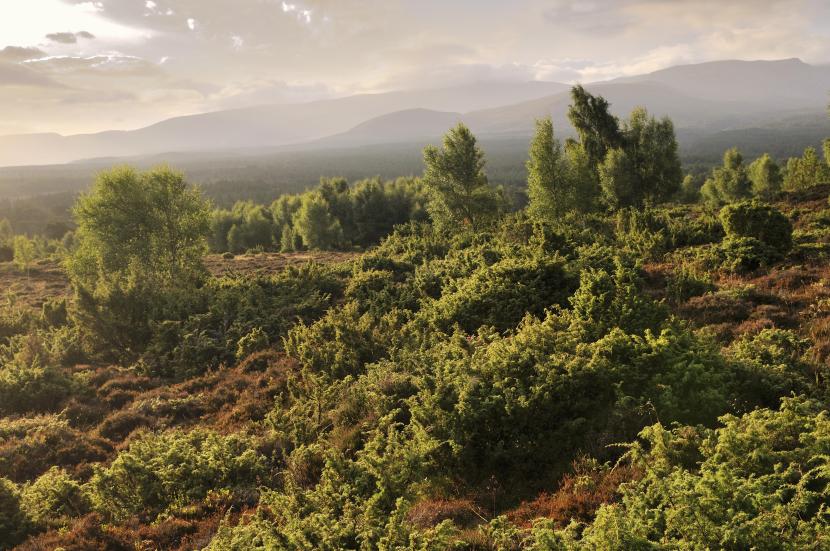
Heather, juniper and birch trees at Glenmore, Cairngorms National Park.
Promoting a collaborative approach to the planning, development and delivery of restoration projects across Scotland. This approach will prioritise place-based and thematic areas for nature and climate restoration to make better use of scarce resources.
In 2023/24 we will:
- Launch next round of the Nature Restoration competitive fund
- Identify strategic themes and priority delivery areas for Nature
Restoration Fund funding based on the Scottish Biodiversity Strategy delivery plan
- Develop closer working relationships with potential funders
- Deliver species, habitat and geodiversity duties to complement effort on the climate-nature crisis
- Conclude our Green Infrastructure programme of investment in creating nature-rich greenspace in some of Scotland’s most disadvantaged communities
Working with others to transform agriculture towards regenerative, low input, high nature methods, we will help to promote soil health, reduce emissions from the land, extend complexity and connectivity to reduce vulnerability to climate risks and protect and improve biodiversity.
In 2023/24 we will:
- Co-deliver the Agri Environment Climate Scheme 2023
- Complete Piloting Outcome Based Approach Scheme Phase 4 including App user experience
- Roll out a Biodiversity Audit App
- Contribute to the development and testing of enhanced conditionality biodiversity and climate measures under the National Test Programme
- Roll out NatureScot’s transformative land use good practice and advice training to key public agencies and NGOs who engage with land managers.
| Corporate Plan Objective | Result | Business Plan Measure |
|---|---|---|
| Co-lead the production of the new Scottish Biodiversity Strategy (SBS) and develop targets to include in a new Natural Environment Bill | – See milestone section page 8 | – See milestone section on page 8 |
| Scale up Peatland Restoration by delivering Peatland ACTION funding to projects | – Tackling climate change through restoring peatlands to lock in carbon | – Area (hectares) of peatland included in peatland restoration projects. |
| Lead, enable and convene others around the development of ambitious and coherent actions to restore nature. Deliver a major Nature Restoration Fund (NRF) targeted at high impact nature recovery projects and seeding greater investment from the private sector | – We have increased investment for nature restoration |
|
| Demonstrate how agriculture can be transformed with new approaches to deliver targeted outcomes for nature and climate | – Agricultural land managers are motivated to take action to improve nature and climate | – No. of individual farms that have completed a biodiversity audit. |
Valuing Nature
The value of nature is reflected throughout public and private sector policy, strategy and investment towards a wellbeing economy.
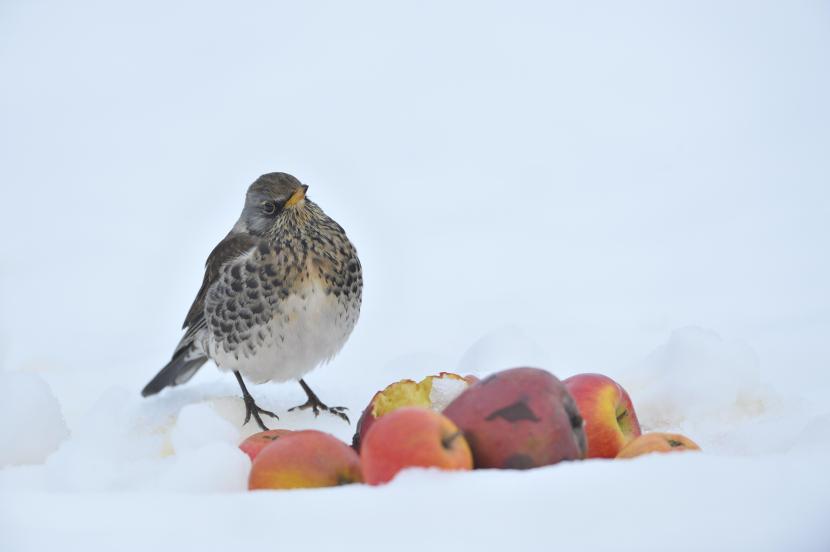
A fieldfare (Turdus pilaris) eating fallen apples in a snow covered garden, Wolfhill, Perthshire.
By raising awareness of the work of NatureScot and building people’s connection with nature we will enable a wider audience to value Scotland’s natural environment and establish life-long connections between people and nature that lead to positive climate and nature behaviours and support our efforts to protect and restore nature.
In 2023/24 we will:
- Build the reach and impact of the Make Space for Nature campaign
- Promote the Scottish Outdoor Access Code through strategic leadership, provision of advice and campaigning activity
- Undertake survey work to learn more about changing attitudes and behaviours towards nature
- Work to raise awareness and commitment to the new SBS with local authorities
- Conclude the Green Health Partnership programme and support its mainstreaming in health policy and practice
- Raise the profile of nature as part of the programme of changes to education policy and practice
- Develop our strategic approach to volunteering, outreach and engagement on our National Nature Reserves
- Conclude our Natural and Cultural Heritage programme of investment in sustainable tourism facilities
Helping to establish a strong pipeline of investible nature-based projects, priming values-based, high-integrity environmental markets is a necessity to delivering a just transition to a net zero, naturepositive economy, and rebuilding natural capital.
In 2023/24 we will:
- Ensure that lessons learned from Investment Ready Nature in
- Scotland (IRNS) funded projects are shared widely
- Deliver the Facility for Investment Ready Nature in Scotland (FIRNS)
- Take significant steps to grow private investment in peatland restoration by measures including blending private finance with Peatland Action funding
- Set up the governing SCIO for the Flow Country Green Finance Initiative, establish up to three pilot projects, and establish mechanisms for securing community and biodiversity benefit
- Work in partnership to deliver multi-million pound investment in the expansion of native woodland
- Develop and grow the role of the Scottish Marine Environment Enhancement Fund (SMEEF) in bringing corporate funding to marine nature restoration and natural capital projects
In 2023/24 we will:
- Develop a Landscape-scale tool for natural capital assessment for use by public/private partnerships to inform nature restoration
- Update our natural capital accounts for NatureScot land in line with established standards
- Develop a means of assessing the natural capital implications of the Scottish budget.
- Engage and embed Natural Capital approaches in decision making to see others undertake natural capital accounts for their land
- Ensure natural capital assessment tools enable us and our stakeholders to deliver our ‘protect’ and ‘restore’ priorities
Developing new skills and jobs to significantly grow and develop a workforce of salaried employees and volunteers in Scotland across the nature based sector to support our efforts to protect and restore nature. This will also require the growth in climate and nature literacy to support new ways of working in long established sectors.
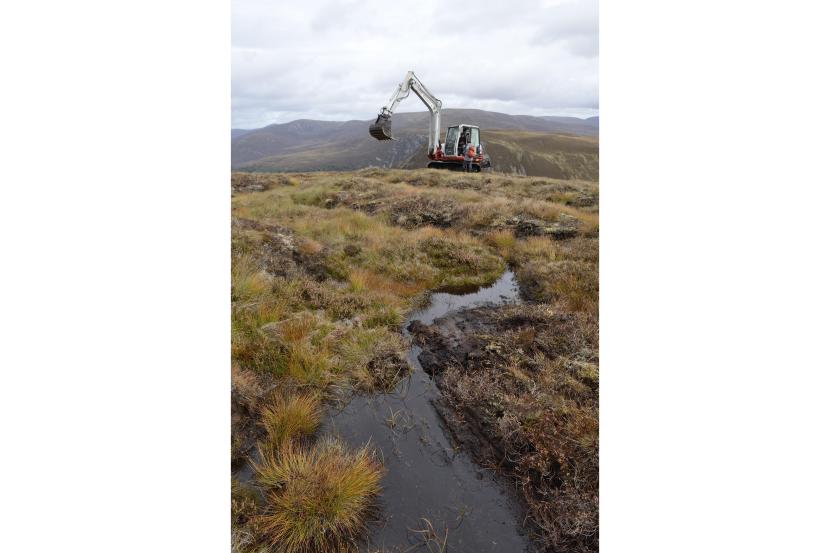
Stephen Corcoran discussing peatland restoration with a contractor at a Peatland Action site at Glenfeshie Estate in the Cairngorms National Park.
In 2023/24 we will:
- Raise the profile of nature and nature-based solutions to climate change in the refresh the climate change skills action plan
- Establish and promote pathways to nature-based jobs to raise awareness of a range of nature-based jobs and the opportunities for people on every stage of their career journey
- Deliver demonstration projects to address skills gaps related to Scottish Biodiversity Strategy outcomes
- Increase the impact and influence of our science through our science and evidence leadership programme and our strategic engagement with STEM
- Develop a new NatureScot National Volunteer Framework for increasing nature-based volunteers in the sector
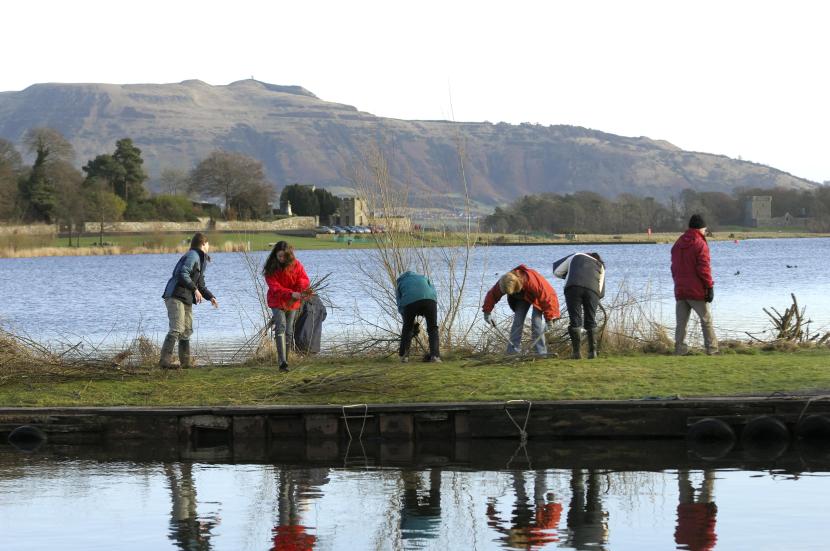
Volunteers clearing willow scrub at Loch Leven NNR.
| Corporate Plan Objective | Result | Business Plan Measure |
|---|---|---|
| Inspire people to connect with nature, increasing appreciation of nature’s value through impactful delivery and communication of our work | – More people visit nature |
|
| Influence the regulatory, policy, market and institutional infrastructure needed to stimulate private sector investment into nature | – There are more hectares of nature restored through funding from private investment | – No. of hectares of natural habitat put on the road to recovery using private finance (recognised codes and standards) |
| Drive the establishment of Natural Capital as an integral part of public and private business planning and investment decisions at national, landscape and landholding/business scales | – The full benefits of nature are included in decision making by public at all scales | – No of landscape partnerships that NatureScot is involved in that use a Natural Capital Approach |
| Promote understanding and awareness of skills and capacity needs for the nature based sector | – There are more nature based skills in the Scottish workforce | – No of NatureScot nature based jobs and skills opportunities |
The NatureScot Way
Our passion, inspiration and expertise will put nature at the heart of Scotland's future
The NatureScot Way describes our corporate culture, our values and how we act towards each other– it’s the way we do things. We want NatureScot to have a fantastic reputation, not just for what we deliver, but also for the way we work to Protect, Restore and Value nature.
Transforming NatureScot’s ways of working to ensure we are fit for the future creating a green, agile and flexible organisation in order to underpin successful delivery of our ambition.
In 2023/24 we will:
- Continue to invest in and develop tools to support connectivity and collaboration
- Provide evidence based decision support to ensure optimal investment in strategic goals and better understanding and demonstration of our impact
- Implement new ways of working through networked delivery teams to increase flexibility and agility and foster a culture that we succeed as one NatureScot
- Continue our work to right-size our estate, delivering fewer but better shared public sector buildings, efficiencies for the overall public purse, reduced carbon emissions, more collaboration and a workplace experience that enables hybrid working options
Enabling NatureScot to be an employer of choice, with a happy and resilient workforce which is empowered, diverse, inclusive, productive, skilled and motivated.
In 2023/24 we will:
- Implement our strategic learning framework to ensure our people have the right skills and are valued for their skills and abilities. This will ensure that learning and development underpins our work and helps individuals realise their potential
- Embed a culture where innovation is valued and encouraged
- Continue to move towards a workforce that better represents our national demographic in terms of youth employment and protected characteristics with a drive towards increased disclosure rates
- Embed our zero-tolerance approach to bullying, harassment and victimisation
Transforming NatureScot’s leadership capability; being bold and ambitious so that we become more influential leaders in biodiversity.
In 2023/24 we will:
- Ensure that decision making is transparent, takes place at the appropriate level and decisions are followed through;
- Embed a coaching culture to bring out the best in our people
- Develop leadership skills at every level in the organisation and use them to enhance performance
- Increase the impact and influence of our science through our science and leadership programme
| Corporate Plan Objective | Result | Business Plan Measure |
|---|---|---|
| Deliver new ways of working to stimulate achievement of our ambitions | – We have introduced new ways of working |
|
| Transform our individual and collective leadership capability |
|
|
| Sustain our focus on developing a happy and resilient workforce | – A diverse and inclusive workforce |
|
Spatial Priorities
The objectives in the Corporate Plan and Business Plan provide a comprehensive view of where we will prioritise our efforts to deliver a nature-rich future. These are translated into Delivery Plans which are effecting change across the whole country. The maps below illustrate some specific thematic areas of focus. We have also highlighted some of our local and regional cross-cutting, place-based priorities where we will direct resources to make a difference for nature.
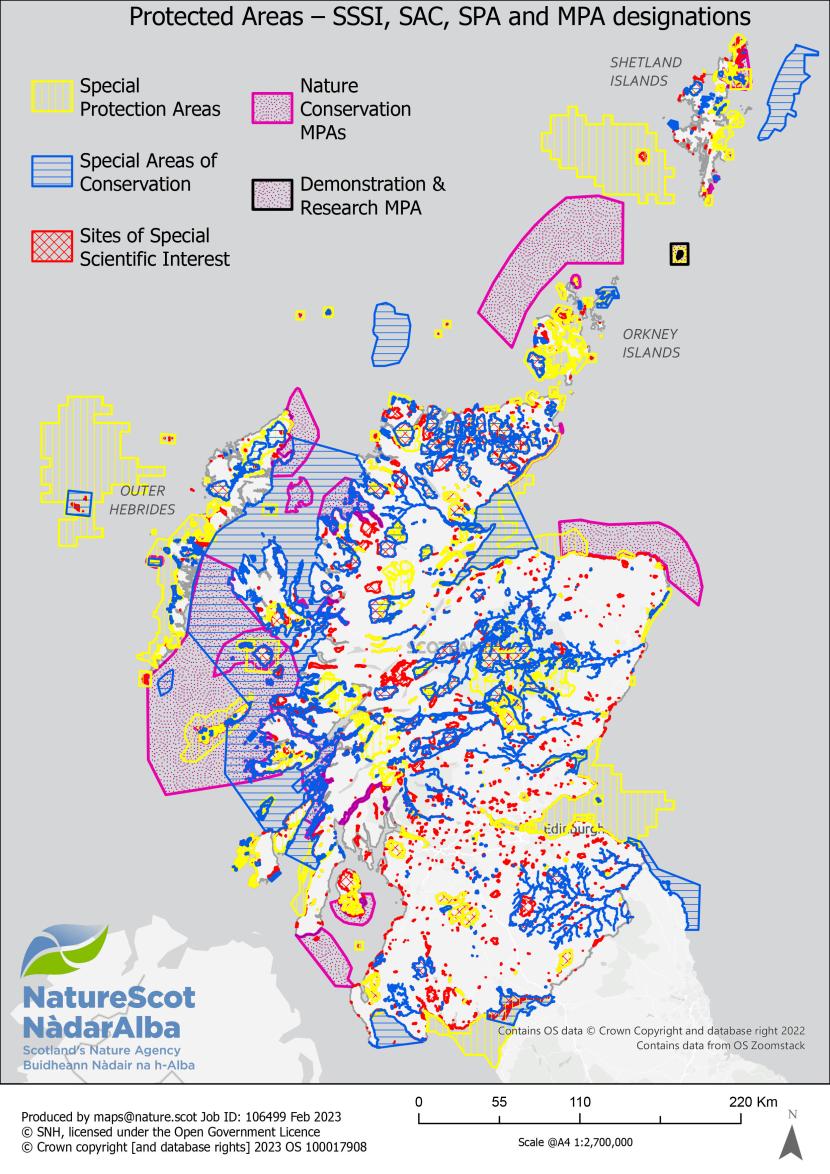
Protected Areas SSSI, SAC and SPA designations
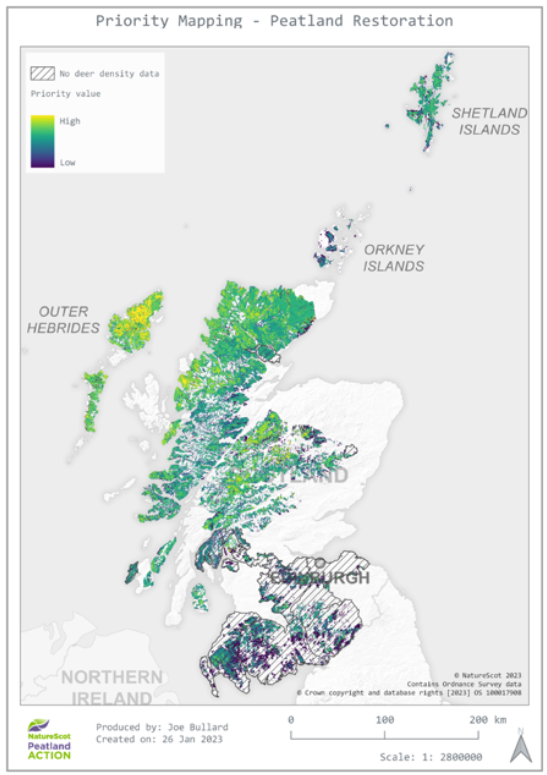
Priority Mapping - Peatland Restoration map
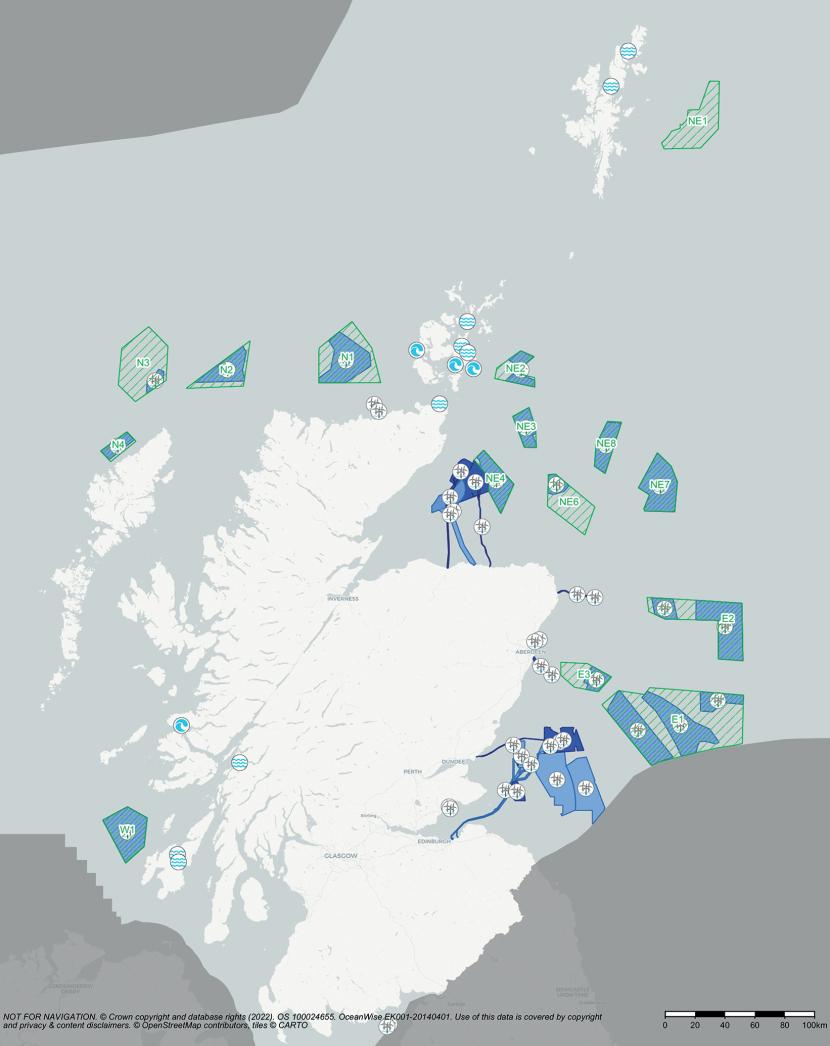
Marine renewable energy map
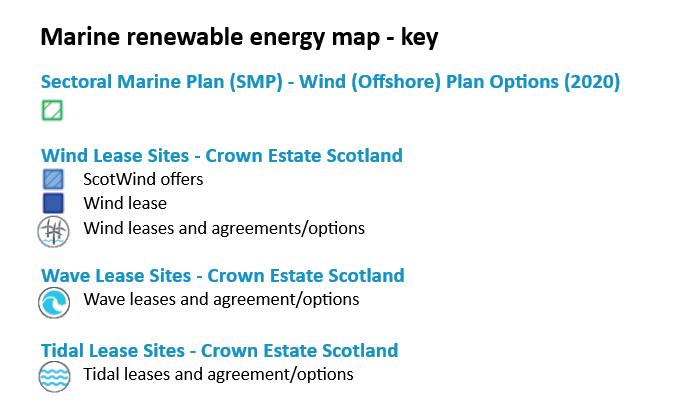
Marine renewable energy map key
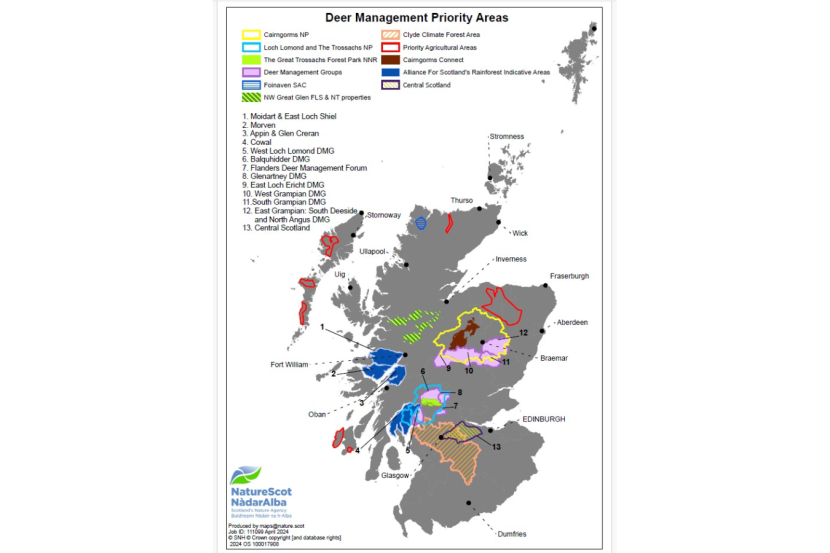
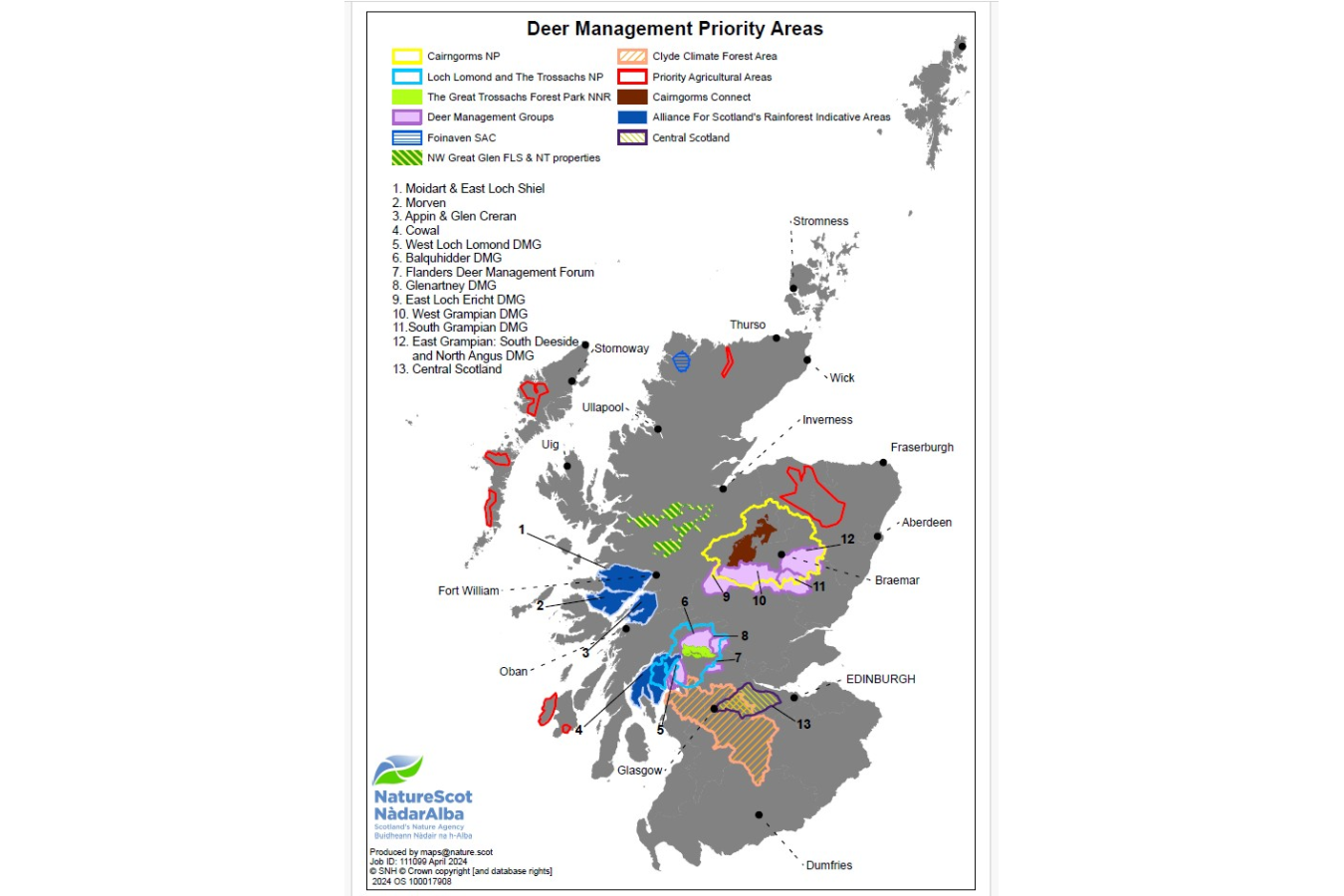
Deer Management Priority Areas Map
Click for a full description
View a larger image of the map.
Map of Scotland with Deer Management Priority Areas outlined and twelve associated Deer Management Groups/ Forums identified.
The Deer Management Priority Areas are:
- Cairngorms National Park
- Loch Lomond and the Trossachs National Park
- The Great Trossachs Forest Park National Nature Reserve
- Foinaven Special Area of Conservation
- North West Great Glen Forestry and Land Scotland and National Trust for Scotland properties.
- Clyde Climate Forest Area
- Priority Agricultural Areas
- Cairngorms Connect
- Alliance for Scotland’s Rainforest Indicative Areas
- Central Scotland
The associated Deer Management Groups (DMG)/ Forums (DMF) are:
1. Moidart and East Loch Shiel DMGs
2. Morven DMG
3. Appin and Glen Creran DMG
4. Cowal DMG
5. West Loch Lomond DMG
6. Balquidder DMG
7. Flanders DMF
8. Glenartney DMG
9. East Loch Ericht DMG
10. West Grampian DMG
11. South Grampian DMG
12. East Grampian: South Deeside and North Angus DMG
13. Central Scotland
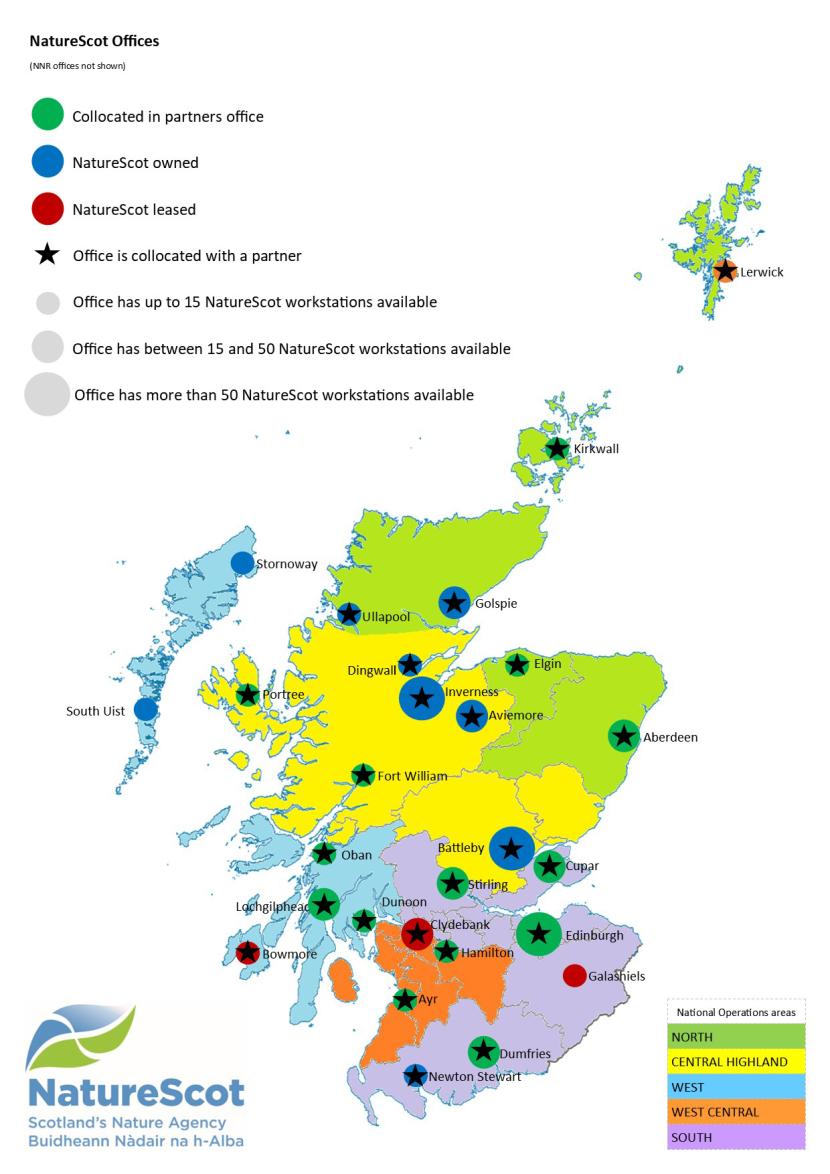
NatureScot office map
- Flow Country Landscape Finance Initiative & World Heritage site bid
- Orkney Native Wildlife Project
South
3. Upper Forth – Coastal and Marine Restoration
4. Wild Heart of Southern Scotland – Re-naturalisation in the central Borders
5. Borderlands Economic Partnership
6. River Leven project – Place based regeneration of the Leven Valley
7. West Edinburgh and Waterfront – strategic planning to integrate nature into large scale city growth
Central Highland
8. Nevis Landscape Partnership
9. Cairngorms Connect
10. Spey and Esk River Catchment Initiatives
11. Torridon Partnership / Wester Ross Biosphere
12. Moray Firth Coastal Partnership
13. Allan Water Partnership
West
14. Sea Eagle Management Scheme
15. Goose Management Schemes – Kintyre, Islay, Coll, Tiree, Uist, Lewis and Harris
16. Scotland's Atlantic Rainforests
17. Species Recovery – chough
18. Wildlife management – Hebridean Mink Project, Uist Wader Recovery
19. Species on the Edge – Outer Hebrides, Inner Hebrides and Argyll
West Central
20. Glasgow City Region including Clyde Mission, Clydeplan etc.
21. Ayrshire Coast including Hunterston and Ardeer
22. Central Scotland Green Network
Our Resources
Our funding comprises our Grant-in-Aid of £61.118m. This includes investment in key areas through funding for Nature Restoration and Visitor Management. Further funding expected for Peatland ACTION will boost our investment in peatland restoration significantly advancing our efforts to tackle climate change.
Our funding will contribute to a range of Government priorities, and deliver across all our priorities. Through our role in supporting the Agri-environmental Climate Scheme, leading on major strategy develop such as the Scottish Biodiversity Strategy and through administering large-scale external funds we will increase the benefits for nature beyond the grant in aid we receive.
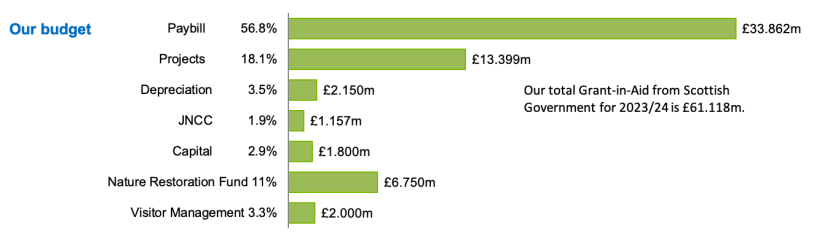
Budget graph
Resourcing our plan
|
Protecting Nature |
£m |
FTE |
|---|---|---|
|
Marine Ecosystems |
0.780 |
30 |
|
Protected Areas |
1.018 |
58 |
|
Supporting Good Development |
0.272 |
57 |
|
Wildlife Management |
2.308 |
70 |
Each year we set out to deliver the priorities from our Corporate Plan. To do this our resources are allocated through the activities we undertake. These activities provide an emphasis on flexible working across the organisation. The tables below shows the budget and resource allocation by these activities for 2023/24.
|
Restoring Nature |
£m |
FTE |
|---|---|---|
|
Biodiversity & Geodiversity |
0.964 |
50 |
|
Sustainable Coasts and Seas |
0.075 |
33 |
|
Natural Resource Management |
1.555 |
95 |
|
Valuing Nature |
£m |
FTE |
|
People and Places |
1.955 |
84 |
|
NatureScot Way |
£m |
FTE |
|
Workplace Facilities and Services |
1.798 |
23 |
|
People and Organisational Development |
0.349 |
26 |
|
Finance, Planning and Performance |
0.028 |
25 |
|
Information and Cyber Security |
0.446 |
21 |
|
Technology and Digital Services |
1.501 |
37 |
|
External Funding |
0.000 |
19 |
|
Communications |
0.255 |
23 |
|
Executive Governance |
0.095 |
9 |
|
Total |
£m |
FTE |
|
|
13.399 |
659 |