Genetic Scorecard Indicator - Western capercaillie
Western capercaillie (Tetrao urogallus)

IUCN Category:
- Great Britain: Red listed (indicated above)
- Europe: Least concern
- Global: Least concern

Genetic Health Status:
- Scottish Risk: Serious (indicated above)
- UK Risk: Serious
- Scottish Mitigation status: Not effective
- UK Mitigation status: Not effective
Background
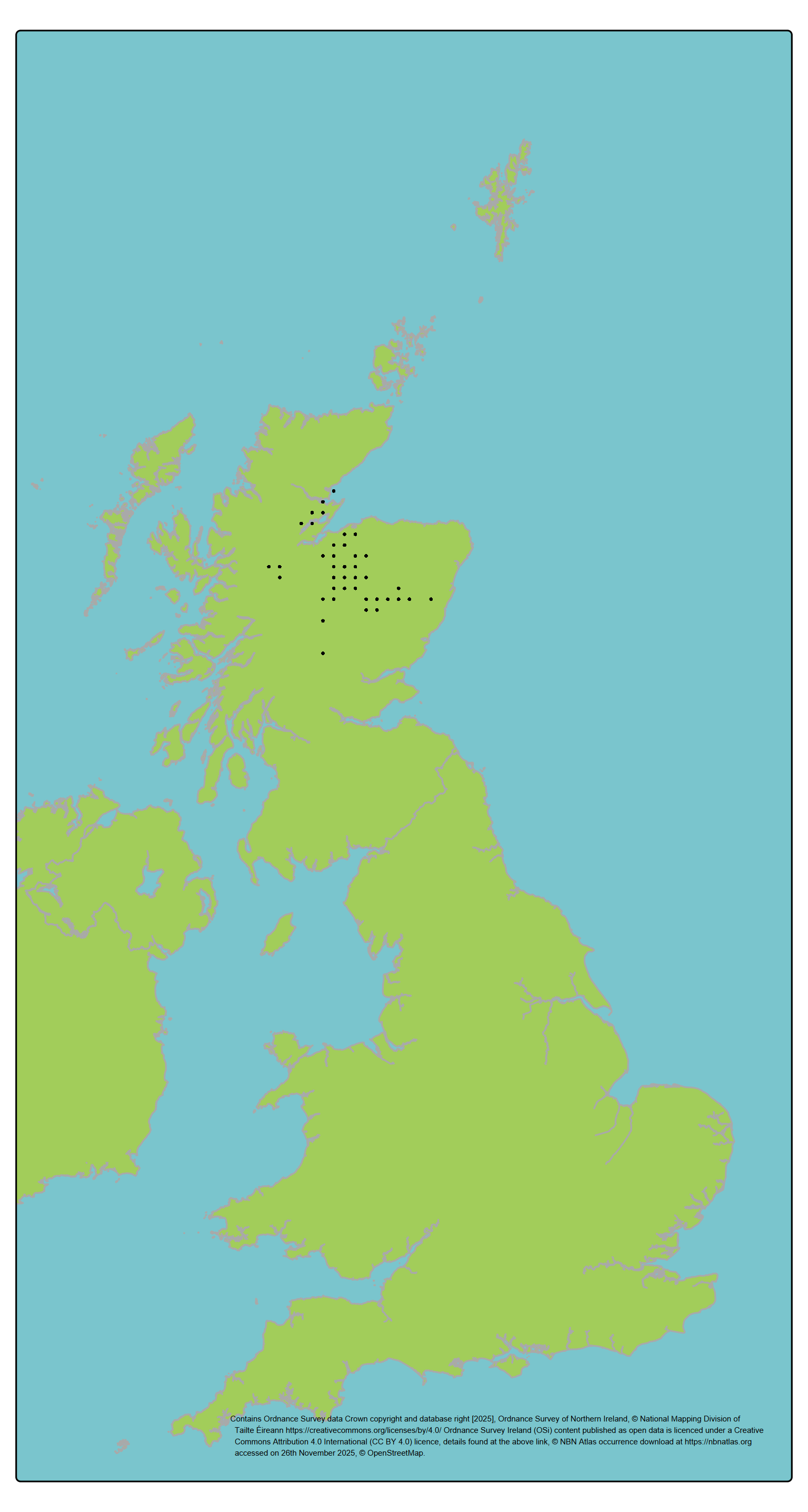
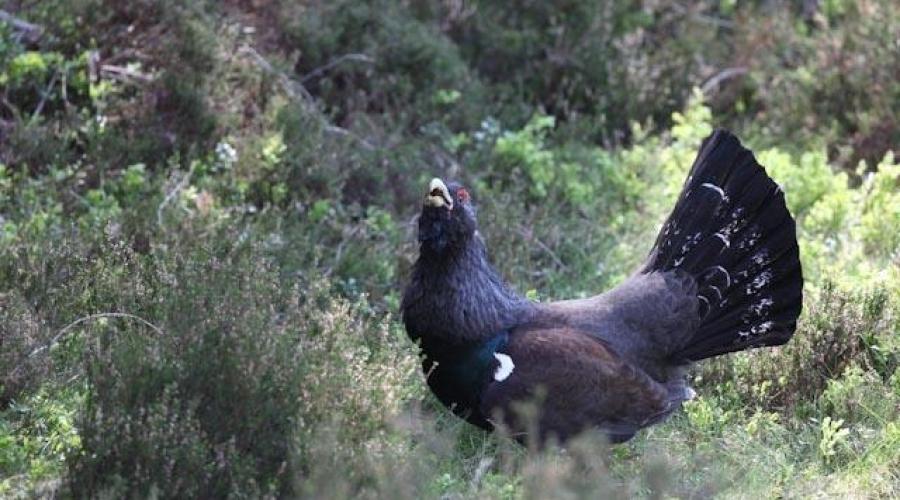
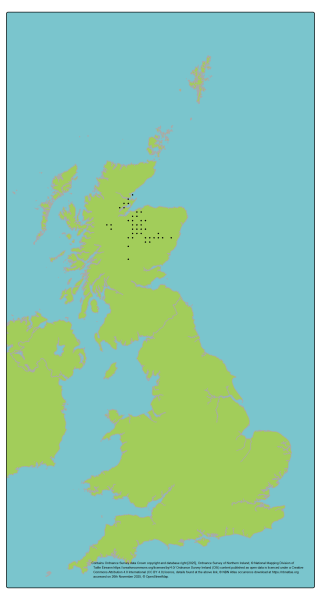
The capercaillie is a symbol of Scotland’s pine forests and was an historically important gamebird. This is the largest grouse species globally. It is closely associated with mature pine forests, relying on a mosaic of habitats; understorey for nesting and blaeberry for food, clearings for leks and mature trees for roosting, it also relies heavily on pine needles for food in winter. It is a lek species with a skewed mating system and sex ratio. Capercaillie breed annually in spring (April to May), with females being able to breed at 1 year of age and males at 3 years. Lek sites are generally stationary, being used across generations. Currently they are only present in Scotland within the UK, with about 80% of the population found in the Badenoch and Strathspey area of the Cairngorms National Park. There are small populations in Deeside, Nairnshire and Easter Ross. Previous extinctions in the UK are thought to have occurred in the 1790s. Reintroduction attempts occurred in the 1830s using birds from Scandinavia. The population grew to an estimated 20,000 birds in the 1970s, but has declined dramatically since then to the most recent national survey estimating 532 (95%CI:227–810) adult birds in 2022 (Wilkinson et al., 2024). The range has also contracted during this decline with populations being loss from the Trossachs and Perthshire. Scotland is at the western edge of the range, and across Europe there is thought to be a population size of 1,590,000-3,420,000 individuals, which make up about 40% of the global population. Fennoscandia and Russian population are thought to be large and continuous but most other mainland European populations are small and fragmented. Is known to hybridise with black grouse (Lyrulus tetrix) in some countries.
A phylogeographic study on the population in Scotland and a recent single nucleotide polymorphisms and mitochondrial DNA survey by the Cairngorms Capercaillie Project (Ball & Ritchie-Parker 2023) indicates two main mitochondrial DNA phylogeographic groupings across Europe, with a southern/Iberian group and a northern/European group (Segelbacher & Piertney, 2007; Ball & Ritchie-Parker, 2023). There is a large body of literature on mainland European populations.
View a larger version of the distribution map for the Capercaillie.
Current Threats
Human disturbance (esp. in breeding season), predation, persecution, climate change, habitat loss, fence collisions, road traffic accidents.
Contribution of Scottish/UK population to total species diversity
Diversity within Scotland is a subset of haplotypes from the Northern grouping. (Segelbacher & Piertney, 2007; Ball & Ritchie-Parker, 2023) However, two haplotypes have been observed within Scotland that have not been observed elsewhere in Europe, which may reflect some ancestral relict diversity or that these have not yet been detected in mainland Europe through low sampling effort.
Genetic risks
Diversity loss: population declines
The complete extinction of the UK population likely occurred in the 18th century. The subsequent reintroduction of the species using birds from Scandinavia returned the species to Scotland. There have been dramatic population declines and range retraction of the reestablished population since the 1970s. Diversity levels are unknown pre-extinction, but the Scottish population now has less diversity than most mainland European populations.
Global Biodiversity Framework Indicators
Population definitions:
Populations defined by geographic boundaries and genetic clusters. Four geographic groupings: Easter Ross, Nairnshire, Badenoch & Strathspey, and Deeside were used based on geographic discontinuities, low natal dispersal distances (median 11km) and fragmented distribution, some potentially caused by human mediated transfers. These relate to 4 of the 6 metapopulations defined in the early 2000s, the other two have been extinct since 2000. There was also evidence of genetic structure between some metapopulations, with Easter Ross being the most divergent (Piertney 2004).
Ne500: The proportion of populations that have an effective population size of more than 500.
- Proportion of populations with Ne > 500 in Scotland = 0/6
- Proportion of populations with Ne > 500 in UK = 0/6
PM: Proportion of populations that existed in 2000 that still exist in 2025.
- Proportion of populations maintained in Scotland = 4/6
- Proportion of populations maintained in UK = 4/6
Diversity loss: functional variation
Functional variation
As the birds in Scotland originate from a reintroduction, genetic diversity is low and consists of a subset of Scandinavian diversity. There is no evidence that functional variation has been lost within the last 25 years.
Divergent lineages
As the birds in Scotland originate from a reintroduction, they are a subset of diversity from Scandinavia. There is some evidence of genetic distinctiveness of the birds in Abernethy and Easter Ross which could be due to human-mediated translocation. There is no evidence that divergent lineages have been lost in the last 25 years.
Hybridisation/Introgression
Capercaillie are known to hybridise with black grouse Lyrurus tetrix, which is native to its Scottish range. There is no genetic evidence that this is currently occurring in Scotland, however it has not been directly assessed.
Low turnover - constraints on adaptive opportunities
One of the reasons for declines is thought to be low recruitment, with high failures in breeding success across years. This is particularly problematic in areas outside of Badenoch and Strathspey.
Cumulative Risk Summary
Overall Genetic Health Status
Scotland
- Risk: Serious
- Mitigation: Not effective
Great Britain/UK
- Risk: Serious
- Mitigation: Not effective
Overall Genetic Health status explanation
All populations have an NE<500 and are continuing to decline. Genetic diversity is lower than most other assessed European populations, likely due to a small founder number during reintroduction.
In situ genetic threat level
In situ genetic threat level
In situ Risk for Scotland: Serious
In situ Risk for UK: Serious
There are no populations that have an Ne > 500
Confidence in in situ threat level
Confidence score for Scotland: High
Confidence score for UK: High
A regular standardised population survey of the entire range in Scotland has been ongoing since the 1990s.
Ex situ representation
The species is difficult to breed in captivity although there are a small number present in zoos and private collections. Currently there are 116 in European zoos but none are in the UK.
Current conservation actions
A Capercaillie Emergency Action Plan has been implemented by NatureScot and the Cairngorms National Park Authority for conservation between 2025-2030. Actions include Woodland expansion and improvement, reducing impacts of predation, removing fences, reducing disturbance, improving monitoring and assessing the feasibility of reinforcement.
| Ex situ | Translocation | Habitat management | Legal protection of habitat or species | Regulation of exploitation | Control of INNS/pests/pathogens |
|---|---|---|---|---|---|
| - | - | X | X | - | - |
Population assessment/monitoring
Population
Demographic
- N pops assessed/monitored in Scotland = 4/4
- N pops assessed/monitored in UK = 4/4
Genetic
- N pops assessed/monitored in Scotland = 4/4
- N pops assessed/monitored in UK = 4/4
Useful links
References
Ball, A & Ritchie-Parker, H (2023) Analysing the genetic diversity of the capercaillie population in the Cairngorms National Park. Report for the Cairngorms National Park Authority.
Piertney, S. (2004) Genetic diversity in Scottish populations of capercaillie (Tetrao urogallus). SEERAD report -Phase 2 project.
Segelbacher, G., & Piertney, S. (2007). Phylogeography of the European capercaillie (Tetrao urogallus) and its implications for conservation. Journal of Ornithology, 148(S2), 269–274.
Wilkinson, N. I., Doubleday, M., Douse, A., Ford, A., Kelly, L. A., Kortland, K., … Ewing, S. R. (2023). Further declines of the Western Capercaillie Tetrao urogallus in Scotland as shown by the 2021–2022 winter survey. Bird Study, 71(1), 17–31.
Assessor:
- Alex Ball, University of Edinburgh,
- Martin Stervander, National Museums of Scotland
- Stuart Piertney, University of Aberdeen
Reviewer:
- David O’Brien, NatureScot
- Linda Neaves, Murdoch University