Genetic Scorecard Indicator - Sugar Kelp
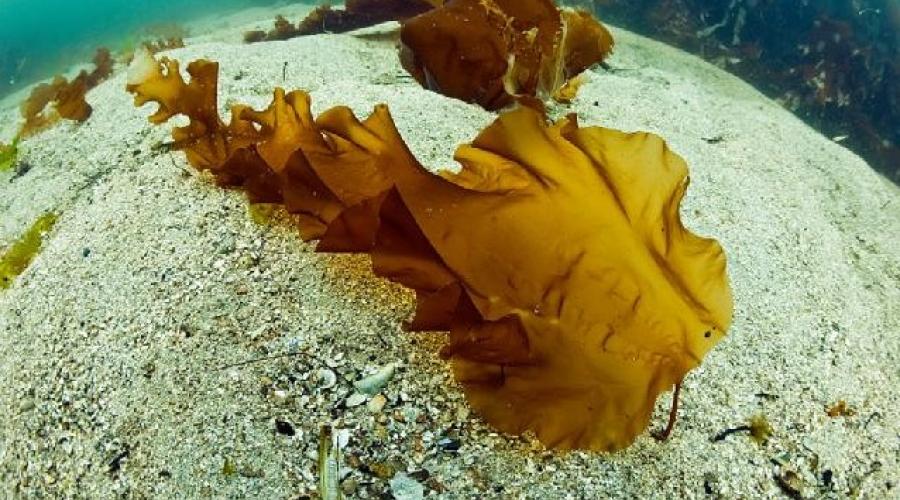
Sugar kelp or Sea belt (Saccharina latissima)

IUCN Category:
- Great Britain: Not Assessed (indicated above)
- Europe: Not Assessed
- Global: Not Assessed

Genetic Health Status:
- Scottish Risk: Negligible (indicated above)
- UK Risk: Negligible
- Scottish Mitigation status: Effective
- UK Mitigation status: Effective
Background
A large heteromorphic brown algae or kelp. The species has a distribution across the northern hemisphere (Atlantic and Pacific), from polar to mid latitudes. Southern-most European populations, located in Portugal and Northern Spain, are under threat from warming waters (Diehl et al., 2024).
Saccharina latissima is widespread and abundant in UK coastal waters across a wide range of habitats and environments, from exposed to sheltered shores. It acts as a foundation species, habitat provider, and nursery for a multitude of temperate species in coastal waters. S. latissima is generally more tolerant to low light and salinity levels than Laminarian kelp species. It requires hard substrate for attachment but can attach to cobbles and boulders in soft sediment.
Saccharina latissima is estimated to be the second highest biomass producer amongst macroalgae in Scottish waters (Burrows et al., 2018) with high turnover and fast growth compared to other Laminarian species. It has potential for significant carbon sequestration through detrital export and a significant role in local and atmospheric biogeochemical cycles (Krause-Jensen & Duarte, 2016; Murie & Bourdeau, 2020; Keng et al., 2020).
Saccharina latissima is one of the main species of interest in the growing macroalgal cultivation industry in the UK. It is also of interest in active restoration and recovery projects for kelp forests around the northeast and southeast of England (Wilding et al., 2022; Forster et al., 2024)
The life cycle of S. latissima has been well studied as part of the successful development of cultivation practices (Sæther et al. 2024). Haploid zoospores are released into the water column by large diploid sporophytes. Locally dispersed zoospores develop into microscopic benthic gametophytes which produce the sperm and egg for the next generation of sporophytes. Dispersal ranges are unknown, and estimates vary from meters to 10s of kilometres.
Saccharina populations reflect the complex interplay between demographic history and phylogeography, seascape connectivity, and environmental adaptation. Near-continuous distribution of Saccharina around the Scottish coastline, and effective short to mid-distance dispersal capabilities (<10s km), would indicate the potential for a continuous population. However, historic patterns of glacial refugia and range expansion, contemporary seascape barriers to connectivity, and strong environmental gradients in localised environments, may explain some of the sub-population patterns observed between Scottish populations (Thomson, 2021). Sampling regime has influenced the results of the discerned population structure of Laminaria digitata on the north coast of France; the reduction of distance between sampled populations has shifted conclusions to ocean currents driving connectivity rather than geographic distance or fragmentation (Fouqueau et al., 2024).
Current Threats
Trailing edge populations in Spain and France are at risk of climate (temperature) driven range shifts. Populations in Norway and the Gulf of Maine have suffered severe losses through eutrophication and climate driven community shifts (Assis et al., 2018; Moy & Christie, 2012; Filbee-Dexter et al., 2020; Suskiewicz et al., 2024).
In the UK, Saccharina habitat and population densities in the English Channel and up the east coast have thought to have decreased through fishing activities (dredging), coastal darkening, and pollution from historic and contemporary mining and industry waste disposal (Yesson et al., 2015, Forster et al., 2024).
Scottish populations are relatively healthy and remain steady in number on the Western and Northern coastlines; some decline has been recorded on the East coast (Yesson et al., 2015).
The development of the seaweed cultivation industry introduces the risk of non-native strain introductions and farm-to-wild interactions, however the associated risks to wild populations are, at present, minor (Goecke et al., 2020; Jaugeon et al,. 2025).
Contribution of Scottish/UK population to total species diversity
Unpublished data suggests the presence of at least three differentiated populations around Scotland with populations dividing into three distinct clusters based around the Clyde Sea, the Lorne and Inner Hebrides, and the Outer Hebrides and North-West beyond Skye (Thomson, 2021).
Microsatellite data from Jaugeon et al. (2025) suggested that Scottish and Irish populations represented a distinct sub-population at a European level and contained higher levels of genetic diversity than other sub-populations, possibly as a result of refugial populations off the west of Scotland and Ireland persisting through the last glacial maxima. Their data also supports some sub-division within the Scottish and Irish population cluster.
Wider phylogeographic studies in related Laminaria sp. have also highlighted the South Coast of Ireland and the West Coast of Scotland as potential hotspots for genetic diversity, possibly associated with historic glacial refugia in the region (Schoenrock et al., 2020; Neiva et al., 2020; Reynes et al., 2024).
Genetic risks
Diversity loss: population declines
There is no direct evidence of population decline in Scotland, though indications from northeast England might suggest that southeast Scotland may have had larger populations of Saccharina in the recent past, extending to greater depths (Forster et al., 2024). There is little risk of diversity loss in Scotland through population changes in the near future.
Global Biodiversity Framework Indicators
Population definitions:
Populations have been defined based on genetic evidence, with detection of genetic structure among sampled populations taken as evidence for separate genetic populations. In Scotland, genome-wide data from west coast populations suggests the presence of at least 3 sub-populations, centred around the Clyde, the Inner Hebrides as far as Skye, and the Outer Hebrides and north-west (Thomson, 2021). East coast populations have not been analysed in detail, but data from Jaugeon et al. 2025 show that east coast populations are more closely related to northern populations, than to Inner Hebrides and Irish populations. Orkney and Shetland remain unsampled. Based on this data, 3 populations (or 4 if separating north coast and east coast populations) can be delineated around Scotland. All populations remain in apparently healthy condition. Across the rest of the UK, the number of distinct genetic populations is hard to define, but there is evidence for three additional gene pools: Jaugeon et al. 2025 reported a distinct population from Cornwall, as well as distinct populations from nearby North Sea populations (although not from UK coastlines). Mooney et al. (2018) reported structuring of populations from the Isle of Man and the Clyde area, and differentiation between populations in Strangford Lough and the north coast of Northern Ireland.
Ne500: The proporition of populations that have an effective population size of more than 500.
- Proportion of populations with Ne > 500 in Scotland = unknown
- Proportion of populations with Ne > 500 in UK = unknown
The effective population size of Saccharina latissima in the UK is not meaningfully assessable, but from assumptions based around population size, reproduction and dispersal, it is likely to be unbounded, even within sub-populations.
PM: Proportion of populations that existed in 2000 that still exist in 2025.
- Proportion of populations maintained in Scotland = 4/4
- Proportion of populations maintained in UK = 7/7
Diversity loss: functional variation
Functional variation
There is no evidence of loss of functional variation at present, and the immediate risk is small. Marine heatwaves do present a risk to functional diversity in the near future, especially for southern UK populations facing increased extreme heat events, and cold-adapted northerly populations (Straub et al., 2019; Teagle & Smale, 2018). Increased competition with Laminaria ochroleuca, a warm-water kelp expanding its northern range, may also heighten pressure on S. latissima (Smale et al., 2015).
Divergent lineages
No evidence of isolated population loss or decline in specific populations or lineages. Southern populations, and isolated populations, such as Clyde Sea populations, may be more at risk of marine heatwave events in the future.
Hybridisation/ Introgression
There are no known cases of natural hybridisation in Saccharina with other related species in the UK. S. angustissima is a debated species reported from the US which is likely to interbreed with S. latissima (Li et al., 2022). It has so far not been described from the UK (though similar morphotypes have been observed (Thomson, 2021).
Introgression from seaweed farms to wild populations presents a minor risk through the introduction of maladapted genotypes and reduced diversity and Ne. Farm population genetic diversity has been observed to be much lower than wild populations (Jaugeon et al., 2025; Bråtelund et al., 2025). Current farm practices stipulate the use of local source populations for seeding reducing the risk (Goecke et al. 2020). Population genetic data from farms suggests these recommendations are being adhered to (Jaugeon et al., 2025). The scale of cultivation in the west coast of Scotland compared to the likely large Ne of S. latissima in the wild also precludes significant effects from introgression. This should be monitored in the future though as the scale of cultivation and the breeding of cultivars intensifies (Sæther et al., 2024)
Low turnover - constraints on adaptive opportunities
Dispersal range remains uncertain but is thought to be in the range of meters to 10s of kilometres. Short generation time, high turnover in populations, and large functional diversity over local environmental gradients suggests plenty of opportunities for adaptation (Diehl et al., 2024).
Cumulative Risk Summary
Overall Genetic Health Status
Scotland
- Risk: Negligible
- Mitigation: Some mitigation around farming, likely to be effective at present
Great Britain/UK
- Risk: Negligible
- Mitigation: Some mitigation around farming, likely to be effective at present
Overall Genetic Health status explanation
Widespread distribution and dispersal, large effective population size, and high abundance and turnover ensure negligible risks from cultivation or harvesting. MPA networks, restoration and recovery projects, and ex situ representation further support resilience. Greatest threats in the future are from marine heatwave events and potential ecosystem shifts (grazers), as well as longer term range shifts of invasive species and diseases, for instance Sargassum muticum. It can be reasonably assumed that all UK populations of S. latissima persist in good health.
In situ genetic threat level
In situ genetic threat level
- In situ Risk for Scotland: Negligible
- In situ Risk for UK: Negligible
Large, connected populations, mid-distribution range, high potential for adaption.
Confidence in in situ threat level
- Confidence score for Scotland: High
- Confidence score for UK: High
Assessment based on reasonable genetic data for UK and EU populations, well characterised biology, and well-defined population trends.
Ex situ representation
Well represented. Genotype banking for S. latissima has been carried out across the UK and Europe, for research and cultivation purposes (GENIALG, 2021; SAMS, 2025).
Current conservation actions
Saccharina latissimi is a key component of the priority marine feature (PMF) ‘Kelp and seaweed communities on sublittoral sediment’. This means that National Marine Plan General Policy GEN 9b applies, ensuring that development and use of the marine environment does not have a significant effect on the national status of the habitat.
Saccharina latissimi stands are likely to benefit from the wider effects of MPA designations. The Scottish Biodiversity Strategy to 2045, the Scottish Biodiversity Duty and UK Marine Strategy Good Environmental Status provide further drivers to ensure biological diversity is restored, and ecosystems are safeguarded.
At least two projects in England are looking at active restoration approaches, including seeding techniques (Forster et al., 2024; Wilding et al., 2022).
Seaweed farming guidance in the UK currently recommends the use of local genotypes and high genetic diversity broodstocks to reduce the potential for introgression of maladapted genotypes and low nursery N(e) effects.
| Ex situ | Translocation | Habitat management | Legal protection of habitat or species | Control of INNS/pests/pathogens |
|---|---|---|---|---|
| X | - | X | X | - |
Population assessment/monitoring
Population
Demographic
- pops assessed/monitored in Scotland = No routine monitoring of S. latissima populations
- N pops assessed/monitored in UK = No routine monitoring of S. latissima populations
Genetic
- N pops assessed/monitored in Scotland = No routine monitoring of population genetics exists for S. latissima
- N pops assessed/monitored in UK = No routine monitoring of population genetics exists for S. latissima
A baseline of Scottish population genetics was undertaken in 2019 (Thomson, 2021). Ad-hoc sampling for population genetics has also been undertaken across the UK (Mooney et al., 2018; Jaugeon et al., 2025)
Increasing interest for cultivation strains is likely to increase the availability of genetic data on cultivated populations.
Further Research
- Improved understanding of local adaptation and isolation by environment in S. latissima
- Improved management of genetic resources in seaweed farming and seaweed restoration projects, including genetic and biosecurity protocols, and monitoring of genetic changes in farmed populations.
References
Assis, J., Serrao, E.A. & Araujo, M.B., 2018. Projected climate changes threaten ancient refugia of kelp forests in the North Atlantic. Global Change Biology, 24(January 2017).
Bråtelund, S., Ruttink, T., Goecke, F., Klemetsdal, G., Forbord, S., Skjermo, J., Aldridge, D., Borrero-Santiago, A.R., Ødegård, J., Funderud, J. and Ergon, Å., 2025. Genetic transmission, self-fertilization, apomixis and triploidy in mixed hybridizations of sugar kelp (Saccharina latissima). Aquaculture, p.742928.
Burrows, M., Fox, C., Moore, P., Smale, D., Greenhill, L. and Martino, S., 2018. Wild seaweed harvesting as a diversification opportunity for fishermen.
Diehl, N., Li, H., Scheschonk, L., Burgunter-Delamare, B., Niedzwiedz, S., Forbord, S., Sæther, M., Bischof, K. and Monteiro, C., 2024. The sugar kelp Saccharina latissima I: recent advances in a changing climate. Annals of Botany, 133(1), pp.183-212.
Filbee-Dexter, K. et al., 2020. Marine heatwaves and the collapse of marginal North Atlantic kelp forests. Scientific Reports, 10, p.13388.
Forster, R. M. et al (2024) The Great Yorkshire Kelp Project. An HML report to YMNP. Report No.
HML_kelp_final_2025; June 2025.
Fouqueau, L., Reynes, L., Tempera, F., Bajjouk, T., Blanfuné, A., Chevalier, C., Laurans, M., Mauger, S., Sourisseau, M., Assis, J. and Lévêque, L., 2024. Seascape genetic study on Laminaria digitata underscores the critical role of sampling schemes. Marine Ecology Progress Series, 740, pp.23-42.
GENIALG, 2021 – Biobanking of S. latissima
Goecke, F., Klemetsdal, G. and Ergon, Å., 2020. Cultivar development of kelps for commercial cultivation—past lessons and future prospects. Frontiers in Marine Science, 8, p.110.
Jaugeon, L., Destombe, C., Ruggeri, P., Mauger, S., Coudret, J., Cock, J.M., Potin, P. and Valero, M., 2025. The genetic structure of wild and cultivated Saccharina latissima populations across European coasts provides guidance for sustainable aquaculture, traceability, and conservation. Journal of Applied Phycology, pp.1-15.
Keng, F.S. et al., 2020. The emission of volatile halocarbons by seaweeds and their response towards environmental changes. , 1, pp.1377–1394.
Krause-Jensen, D. & Duarte, C.M., 2016. Substantial role of macroalgae in marine carbon sequestration. Nature Geosci, 9(10), pp.737–742.
Li, Y., Umanzor, S., Ng, C., Huang, M., Marty-Rivera, M., Bailey, D., Aydlett, M., Jannink, J.L., Lindell, S. and Yarish, C., 2022. Skinny kelp (Saccharina angustissima) provides valuable genetics for the biomass improvement of farmed sugar kelp (Saccharina latissima). Journal of Applied Phycology, 34(5), pp.2551-2563.
Mooney, K.M., Beatty, G.E., Elsäßer, B., Follis, E.S., Kregting, L., O'Connor, N.E., Riddell, G.E. and Provan, J., 2018. Hierarchical structuring of genetic variation at differing geographic scales in the cultivated sugar kelp Saccharina latissima. Marine environmental research, 142, pp.108-115.
Moy, F.E. & Christie, H., 2012. Large scale shift from sugar kelp (Saccharina latissima) to ephemeral algae along the south and west coast of Norway. Marine Biology Research, 8(4), pp.309–321.
Murie, K.A. & Bourdeau, P.E., 2020. Fragmented kelp forest canopies retain their ability to alter local seawater chemistry. Scientific Reports, (0123456789), pp.1–14.
Neiva, J., Serrão, E.A., Paulino, C., Gouveia, L., Want, A., Tamigneaux, É., Ballenghien, M., Mauger, S., Fouqueau, L., Engel-Gautier, C. and Destombe, C., 2020. Genetic structure of amphi-Atlantic Laminaria digitata (Laminariales, Phaeophyceae) reveals a unique range-edge gene pool and suggests post-glacial colonization of the NW Atlantic. European Journal of Phycology, 55(4), pp.517-528.
Reynes, L., Fouqueau, L., Aurelle, D., Mauger, S., Destombe, C. and Valero, M., 2024. Temporal genomics help in deciphering neutral and adaptive patterns in the contemporary evolution of kelp populations. Journal of evolutionary biology, 37(6), pp.677-692.
SAMS, 2025 – Seaweed nursery
Sæther, M., Diehl, N., Monteiro, C., Li, H., Niedzwiedz, S., Burgunter-Delamare, B., Scheschonk, L., Bischof, K. and Forbord, S., 2024. The sugar kelp Saccharina latissima II: Recent advances in farming and applications. Journal of Applied Phycology, 36(4), pp.1953-1985.
Schoenrock, K.M., O’Connor, A.M., Mauger, S., Valero, M., Neiva, J., Serrao, E.A. and Krueger-Hadfield, S.A., 2020. Genetic diversity of a marine foundation species, Laminaria hyperborea (Gunnerus) Foslie, along the coast of Ireland. European Journal of Phycology, 55(3), pp.310-326.
Smale, D.A., Wernberg, T., Yunnie, A.L. and Vance, T., 2015. The rise of Laminaria ochroleuca in the Western English Channel (UK) and comparisons with its competitor and assemblage dominant Laminaria hyperborea. Marine ecology, 36(4), pp.1033-1044.
Straub, S.C. et al., 2019. Resistance , Extinction , and Everything in Between – The Diverse Responses of Seaweeds to Marine Heatwaves. Frontiers in Marine Science, 6(December), pp.1–13.
Teagle, H. & Smale, D.A., 2018. Climate-driven substitution of habitat-forming species leads to reduced biodiversity within a temperate marine community. Diversity and Distributions, 24(October 2017), pp.1367–1380.
Thomson, A.I., 2021. Population Genomics of the sugar Kelp Saccharina latissima (Doctoral dissertation, University of the Highlands and Islands).
Wilding, C.M., Earp, H.S., Cooper, C.N., Lubelski, A. and Smale, D.A., 2022. British Kelp Forest Restoration: Feasibility Report. Natural England.
Yesson, C., Bush, L.E., Davies, A.J., Maggs, C.A. and Brodie, J., 2015. Large brown seaweeds of the British Isles: evidence of changes in abundance over four decades. Estuarine, coastal and shelf science, 155, pp.167-175.
Assessor: Alex Thomson, Seawilding
Reviewer: Jack Burton, Queens University Belfast