Genetic Scorecard Indicator - Smooth Snake
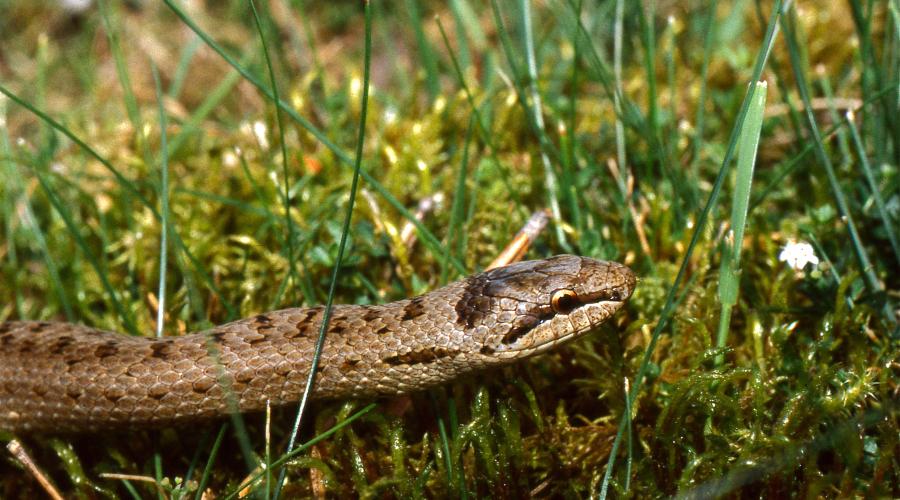
Smooth Snake (Coronella austriaca)

IUCN Category:
- Great Britain: Endangered (indicated above)
- Europe: Least Concern
- Global: Least Concern

Genetic Health Status:
- Scottish Risk: Negligible (indicated above)
- UK Risk: Moderate
- Scottish Mitigation status: N/A
- UK Mitigation status: Partially Effective
Background
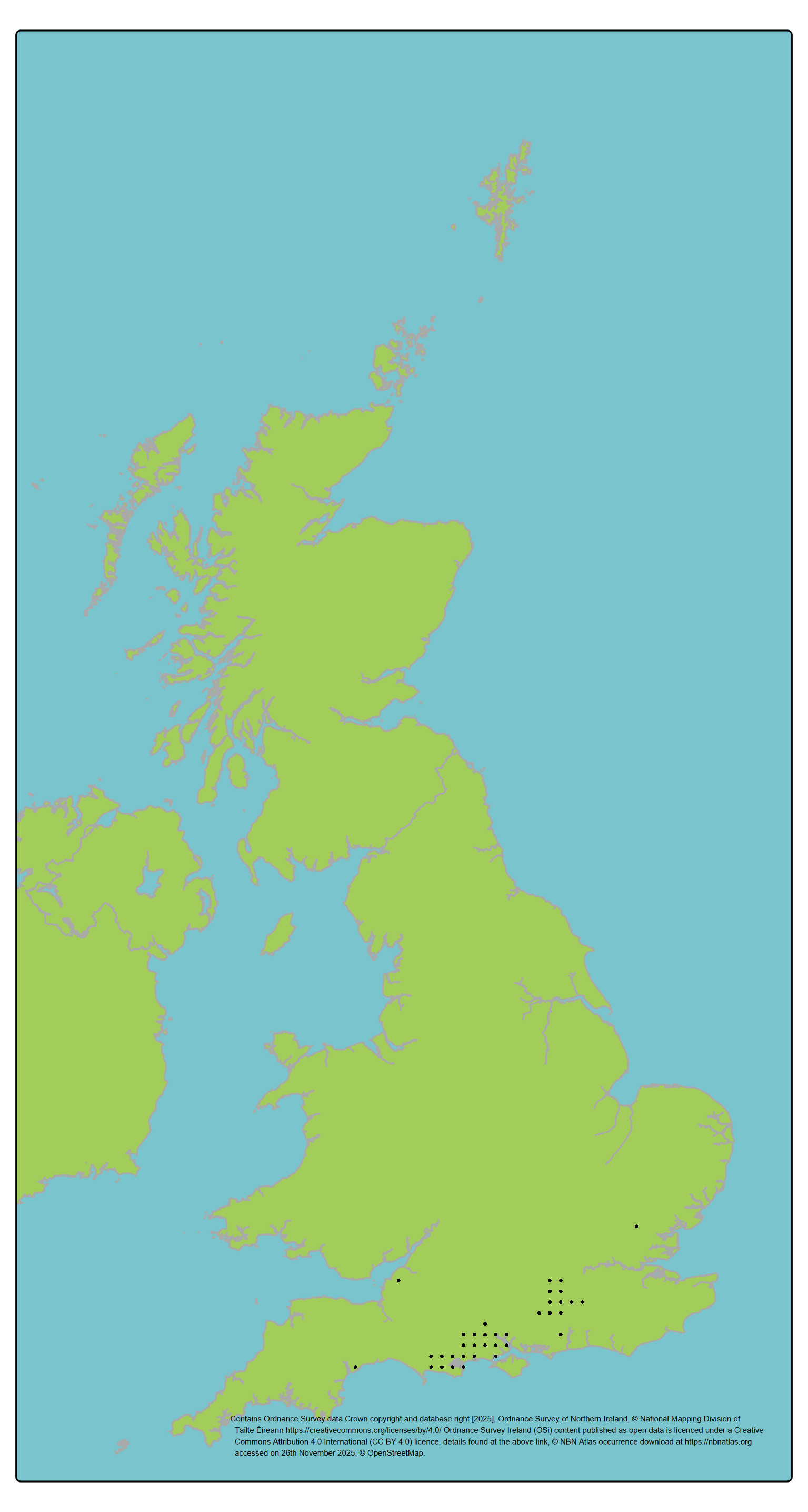
Coronella austriaca is a widespread species of the western Palearctic with a range extending from Portugal to Iran. In the UK it has undergone a substantial range contraction since the 19th Century and is confined to the south of England where it is largely restricted to lowland heath. There are two extant native populations in Surrey, and in Dorset and Hampshire. The species has also been translocated to Sussex and Devon for conservation purposes. Sexual maturity occurs at around four years of age (Beebee and Griffiths, 2000).
View a larger version of the distribution map for the Smooth Snake.
Current Threats
The overall area of its sole habitat, lowland heathland remains stable, however its quality for C. austriaca continues to deteriorate. The most recent conservation status assessment under the Habitats Regulations found that grazing by livestock was the principal threat to C. austriaca, along with increased risk of damage from wildfires due to drought resulting from climate change (JNCC, 2019). In the 20th Century, development and afforestation led to severe loss of range (Beebee and Griffiths, 2000).
Contribution of Scottish/UK population to total species diversity
Not found in Scotland. The UK population is part of the nominate subspecies C. austriaca austriaca. It is nested within the "Western 1" clade described by Jablonski et al. (2019) which is relatively widespread in Austria, France, Germany, northern Italy and Switzerland. As a range edge population, British snakes may be expected to show lower levels of diversity than continental animals
Genetic risks
Diversity loss: population declines
The population is currently stable (JNCC, 2019) but the species has suffered from population loss and range fragmentation since it was first discovered in the mid 19th Century (Beebee and Griffiths, 2000). It has been suggested that future declines are likely to occur if pressures from overgrazing and fire are not addressed (Reading & Jofre, 2015; JNCC, 2019).
Global Biodiversity Framework Indicators
Population definitions:
Populations are defined by geographic boundaries and dispersal buffers. There are two separate UK populations, one of which is greater than 5,000 adult individuals, which are separated by a distance far greater than their dispersal range (JNCC, 2019). For the purposes of this assessment, the recently established translocated population in Devon is treated as part of its source population.
Ne500: The proportion of populations that have an effective population size of more than 500.
- Proportion of populations with Ne > 500 in Scotland = NA
- Proportion of populations with Ne > 500 in UK = 1/2
PM: Proportion of populations that existed in 2000 that still exist in 2025.
- Proportion of populations maintained in Scotland = NA
- Proportion of populations maintained in UK = 2/2
Diversity loss: functional variation
Functional variation
There is no evidence of loss of functional diversity.
Divergent lineages
The UK population is part of the "Western 1" clade which is widespread in north-western Europe (Jablonski et al., 2019).
Hybridisation/Introgression
There are no species with the potential to hybridise with C. austriaca in the UK.
Low turnover - constraints on adaptive opportunities
C. austriaca appears to breed biennially or triennially in the UK and typically can produce 4-10 young (Reading, 2004). The species has a low dispersal range and is highly susceptible to habitat fragmentation leading to genetic structuring (Pernetta et al., 2011).
Cumulative Risk Summary
Overall Genetic Health Status
Scotland
- Risk: Moderate
- Mitigation: Moderate
Great Britain/UK
- Risk: Partially effective
- Mitigation: Partially effective
Overall Genetic Health status explanation
Although there are a number of initiatives aimed at improving the status of this species, it remains vulnerable to habitat deterioration and fragmentation. This in turn is highly likely to have led to loss of genetic diversity and pressures remain, which can be expected to lead to further loss.
In situ genetic threat level
In situ genetic threat level
- In situ Risk for Scotland: Not present
- In situ Risk for UK: Moderate
The combination of habitat loss and fragmentation, combined with C. austriaca's low dispersal range makes it vulnerable to loss of genetic diversity though drift.
Confidence in in situ threat level
- Confidence score for Scotland: Not present
- Confidence score for UK: High
This is a reasonably well-studied species whose ecology and genetics are understood.
Ex situ representation
Small populations held as part of conservation translocation programmes.
Current conservation actions
Smooth Snakes have been protected from killing and disturbance in the UK since 1975. The species is the subject of habitat management and conservation translocations e.g. Devon and Surrey (JNCC 2019). Many population strongholds are on land managed for conservation.
| Ex situ | Translocation | Habitat management | Legal protection of habitat or species | Regulation of exploitation | Control of INNS/pests/pathogens |
|---|---|---|---|---|---|
| - | X | X | X | - | - |
Population assessment/monitoring
Population
Demographic
N pops assessed/monitored in Scotland = NA
N pops assessed/monitored in UK = 2/2
Genetic
N pops assessed/monitored in Scotland = NA
N pops assessed/monitored in UK = 2/2
References
Beebee, T.J.C. and Griffiths, R.A., 2000. The new naturalist. Amphibians and reptiles. A Natural History of the British Herpetofauna.–London, pp.45-56.
Jablonski, D., Nagy, Z.T., Avcı, A., Olgun, K., Kukushkin, O.V., Safaei-Mahroo, B. and Jandzik, D., 2019. Cryptic diversity in the Smooth Snake (Coronella austriaca). Amphibia-Reptilia, 40(2), pp.179-192.
JNCC 2019 Conservation status assessment for the species:
S1283 ‐ Smooth Snake (Coronella austriaca) JNCC: Peterborough.
NBN 2025 https://species.nbnatlas.org/species/NHMSYS0000332360
Pernetta, A.P., Allen, J.A., Beebee, T.J.C. and Reading, C.J., 2011.
Fine-scale population genetic structure and sex-biased dispersal in the Smooth Snake (Coronella austriaca) in southern England. Heredity, 107(3), pp.231-238.
Reading, C.J., 2004. The influence of body condition and prey availability on female breeding success in the Smooth Snake (Coronella austriaca Laurenti). Journal of Zoology, 264(1), pp.61-67.
Reading, C.J. & G.M. Jofre. 2015. Habitat use by Smooth Snakes on lowland
heathland managed using 'conservation grazing'. Herpetological Journal 25: 225-
231
Assessor: David O'Brien, NatureScot.
Reviewer: Isa-Rita Russo.