Genetic Scorecard Indicator - Smooth Newt
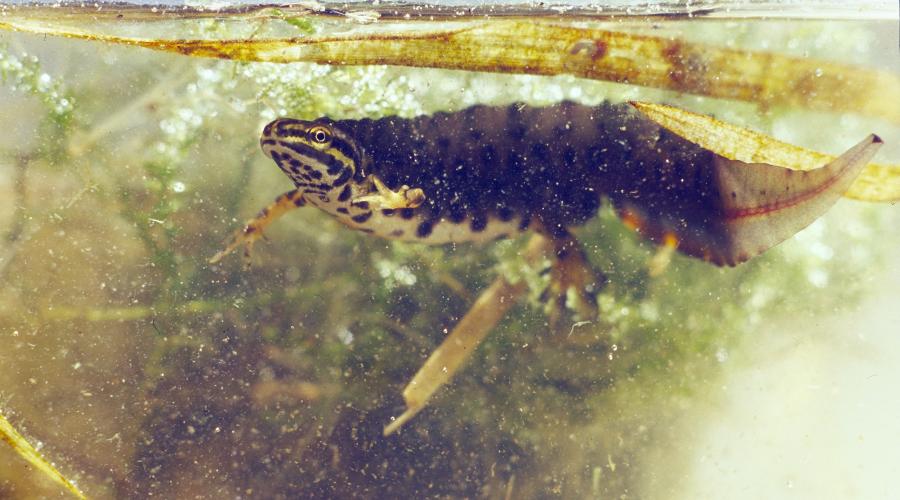
Smooth Newt (Lissotriton vulgaris)

IUCN Category:
- Great Britain: Least concern (indicated above)
- Europe: Least concern
- Global: Least concern

Genetic Health Status:
- Scottish Risk: Negligible (indicated above)
- UK Risk: Negligible
- Scottish Mitigation status: Not required
- UK Mitigation status: Not required
Background
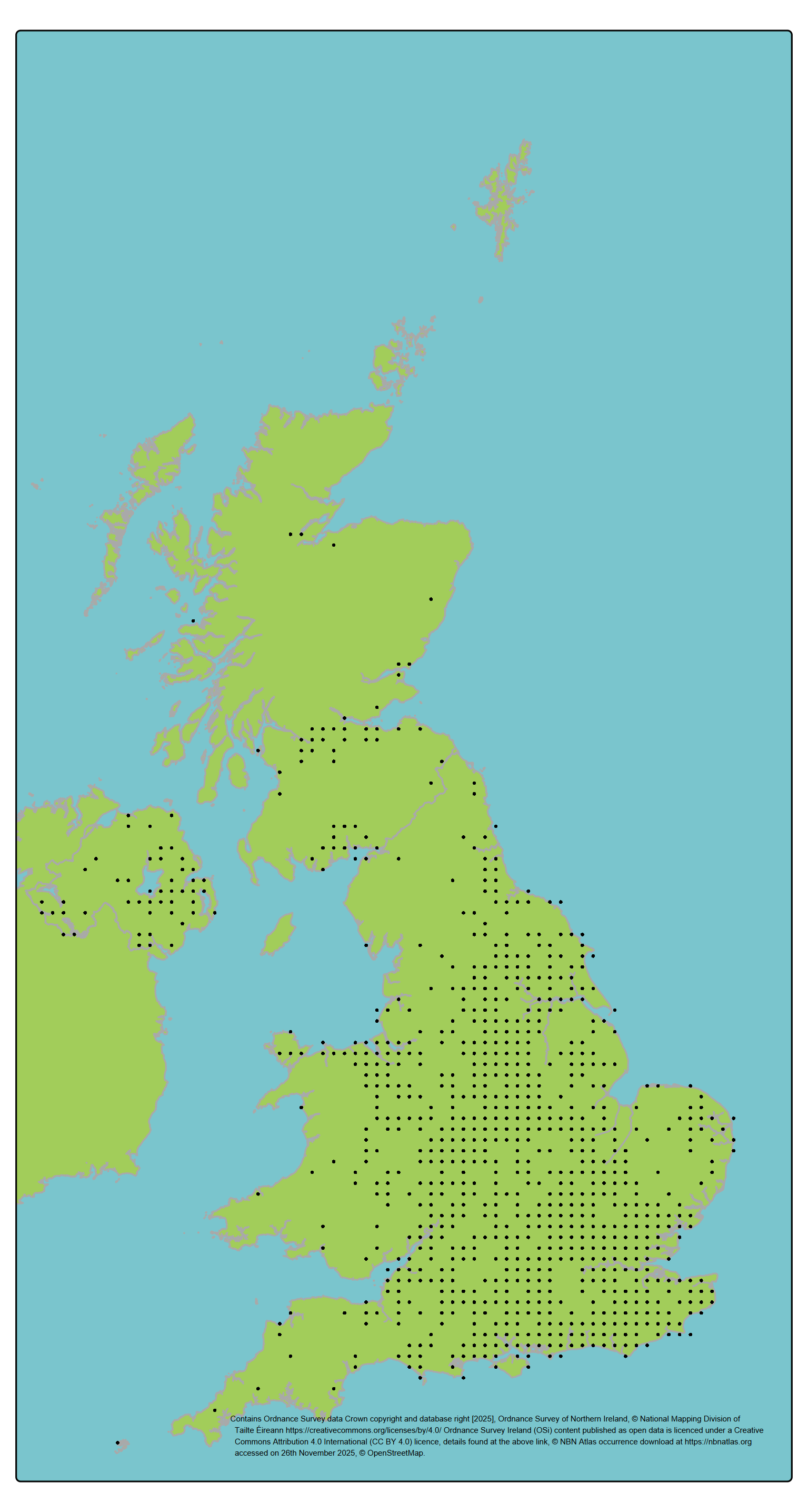
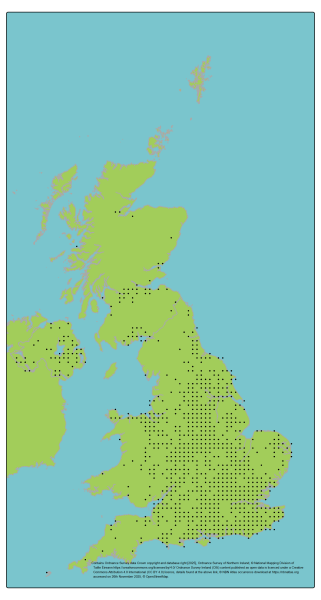
Smooth newts are currently widespread throughout England, Wales and Northern Ireland (where it is the only species of newt) as well as lowland Scotland. Historically, this species has been very widely distributed but, like many amphibian species, has experienced localised declines in the past 50 years (Beebee & Griffiths, 2000). Currently, the species overall is considered stable across its European range (Poboljšaj et al., 2024). Smooth newts can also be found throughout northern Europe, ranging from Northern France, South and Central Scandinavia and most of Central and Southeast Europe, reaching far into Russia (Poboljšaj et al., 2024). They favour ponds with circumneutral and mildly alkaline water including lowland agricultural and urban areas (Beebee & Griffiths, 2000).
View a larger version of the distribution map for the Smooth Newt .
Current Threats
Poboljšaj et al. (2024) report no major threats across its range, although localised threats include habitat loss/degradation, caused by both climate change and human activity or lack of pond management. Introduction of predatory fish can also be a threat (Poboljšaj et al., 2024). Smooth newts are also affected by surface run-off from agricultural production which can affect their size and development (Mclnerny et al., 2016). As for other newts, there is a risk of disease from Batrachochytrium salamandrivorans (Bsal). In UK this has only been detected in captive populations so far (Defra, 2021). However, evidence suggests that Bsal may pose a relatively low risk to smooth newts, as they seem to be less susceptible than other newt species. In laboratory trials, mortality was 25% (Poboljšaj et al., 2024).
Contribution of Scottish/UK population to total species diversity
The populations found within the UK are nested within the western European lineage (Babik et al., 2005).
Genetic risks
Diversity loss: population declines
The smooth newt is widely distributed throughout lowland Britain and Northern Ireland, and its population is estimated to be large with high standing diversity. While all lowland UK amphibians suffered declines in the 20th century, potentially leading to some loss of diversity (Turner et al., 2022), the large population sizes at breeding sites and the relatively continuous distribution mean that sizeable diversity loss seems unlikely.
Global Biodiversity Framework Indicators
Population definitions:
Populations are defined based on biogeographic evidence. To allow for local adaptation, populations have been assessed based on the five zones that form the basis of UK provenance zones. The disjunct population in the Scottish Highlands has been considered as a separate population. Whilst there is no direct evidence to support this, the similarity of its range and habitat preferences with the great crested newt (Triturus cristatus), which does have a distinct Highland lineage (O’Brien et al., 2015) makes it prudent to consider this a separate population until evidence is found to the contrary.
Ne500: The proportion of populations that have an effective population size of more than 500.
- Proportion of populations with Ne > 500 in Scotland = 2/3
- Proportion of populations with Ne > 500 in UK = 5/6
PM: Proportion of populations that existed in 2000 that still exist in 2025.
- Proportion of populations maintained in Scotland = 3/3
- Proportion of populations maintained in UK = 6/6
Diversity loss: functional variation
Functional variation
Currently, there is no evidence of threats to the functional diversity of the smooth newt populations within the UK.
Divergent lineages
There is no evidence of divergent linages in the UK. However, given its separation from the mainland European population and its range edge nature, some adaptive variation may be present.
Hybridisation/Introgression
While there are rare cases of hybridizations of smooth newts and palmate newt species within the UK and elsewhere in Europe (Beebee & Griffiths, 2000; Babik et al., 2005), there is no consistent evidence of introgression within the smooth newt (Miralles et al., 2023).
Low turnover - constraints on adaptive opportunities
Smooth newts can produce 200-300 eggs in a season and are quick to colonise newly created ponds (Beebee &Griffiths, 2000) leading to little risk of low turnover.
Cumulative Risk Summary
Overall Genetic Health Status
Summary of genetic conservation status, encompassing risk and efficacy of current mitigating actions e.g.
Scotland
- Risk: Negligible
- Mitigation: Not required
Great Britain/UK
- Risk: Negligible
- Mitigation: Not required
Overall Genetic Health status explanation
Overall, the smooth newt has a negligible risk of loss of genetic diversity within all portions of its range in the UK.
In situ genetic threat level
In situ genetic threat level
- In situ Risk for Scotland: Negligible
- In situ Risk for UK: Negligible
With the current, limited, knowledge there appears to be a low risk of loss of genetic diversity within the listed areas.
Confidence in in situ threat level
- Confidence score for Scotland: Medium
- Confidence score for UK: Medium
This confidence level is based on the lack of current genetic data on the species as well as its overall Least Concern and stable Red List assessment.
Ex situ representation
Whilst there are no current collections in the UK outside of private collections, the species is commonly kept by hobbyists.
Current conservation actions
The smooth newt has limited protection under the Wildlife and Countryside Act, 1981 which prohibits its sale within the UK. However, within Northern Ireland, it is illegal to disturb, kill, injure, capture, or damage/destroy habitat for the smooth newt under The Wildlife (Northern Ireland) Order 1985. The species benefits from pond creation schemes and related habitat management.
| Ex situ | Translocation | Habitat management | Legal protection of habitat or species | Regulation of exploitation | Control of INNS/pests/pathogens |
|---|---|---|---|---|---|
| - | - | - | X (NI) | X | - |
Population assessment/monitoring
Population
Demographic
N pops assessed/monitored in Scotland = 3/3
N pops assessed/monitored in UK = 6/6
National Amphibian and Reptile Monitoring Programme (UK)
Genetic
N pops assessed/monitored in Scotland = 0/3
N pops assessed/monitored in UK = 0/6
References
Babik, W., Branicki, W., Poulakakis, N., Cogălniceanu, D., Sas, I., Olgun, K., Poyarkov, N. A., García-París, M., & Arntzen, J. W. (2005). Phylogeography of two European newt species - discordance between mtDNA and morphology. Molecular Ecology, 14(8), 2475–2491.
Beebee, T. J. C., & Griffiths, R. A. (2000). Amphibians and Reptiles: A Natural History of the British Herpetofauna: Vols. 87 The New Naturalist Library. HarperCollins.
Mclnerny, C. J., Minting, P. J., Cathrine, C., & O’Brien, D. (2016). The Amphibians and Reptiles of Scotland. The Glasgow Natural History Society.
Miralles, A., Secondi, J., Pabijan, M., Babik, W., Lemaire, C., & Crochet, P.-A. (2023). Inconsistent estimates of hybridization frequency in newts revealed by single nucleotide polymorphisms and microsatellites. Conservation Genetics, 25(1), 215–225.
O’Brien, C.D., Hall, J.E., Orchard, D., Barratt, C.D., Arntzen, J.W. and Jehle, R., 2015. Extending the natural range of a declining species: genetic evidence for native great crested newt (Triturus cristatus) populations in the Scottish Highlands. European Journal of Wildlife Research, 61(1), pp.27-33.
Poboljšaj, K., Litvinchuk, S., Halpern, B., Üzüm, N., Speybroeck, J., Crochet, P.-A., Wielstra, B. & IUCN SSC Amphibian Specialist Group. 2024. Lissotriton vulgaris. The IUCN Red List of Threatened Species 2024: e.T79078647A229006372. Accessed on 08 August 2025.
Turner, R. K., Griffiths, R. A., Wilkinson, J. W., Julian, A. M., Toms, M. P., & Isaac, N. J. B. (2022). Diversity, fragmentation, and connectivity across the UK amphibian and reptile data management landscape. Biodiversity and Conservation, 32(1), 37–64
Assessor: Abigail Sikes, Napier University
Reviewer: Jeanette Hall, NatureScot
Last updated: