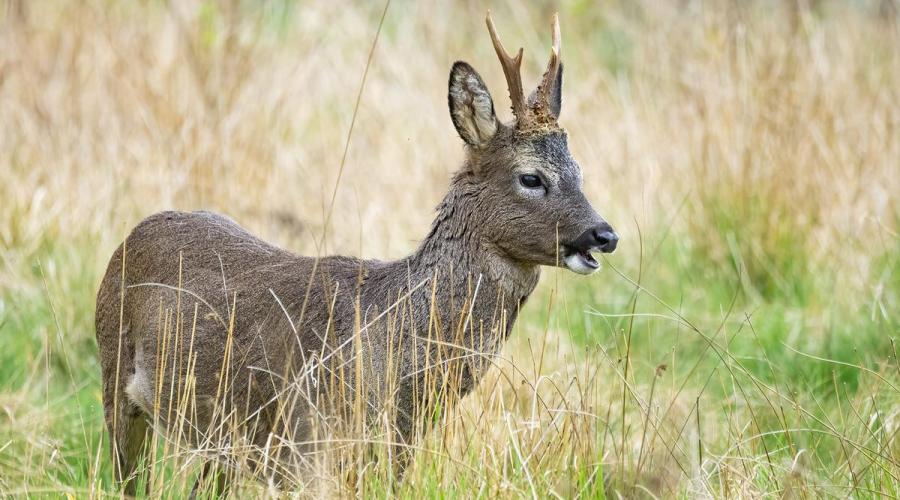
Genetic Scorecard Indicator - Roe Deer
Roe Deer (Capreolus capreolus )

IUCN Category:
- Great Britain: Least Concern (indicated above)
- Europe: Least Concern
- Global: Least Concern

Genetic Health Status:
- Scottish Risk: Negligible (indicated above)
- UK Risk: Negligible
- Scottish Mitigation status: Not Required
- UK Mitigation status: Not Required
Background
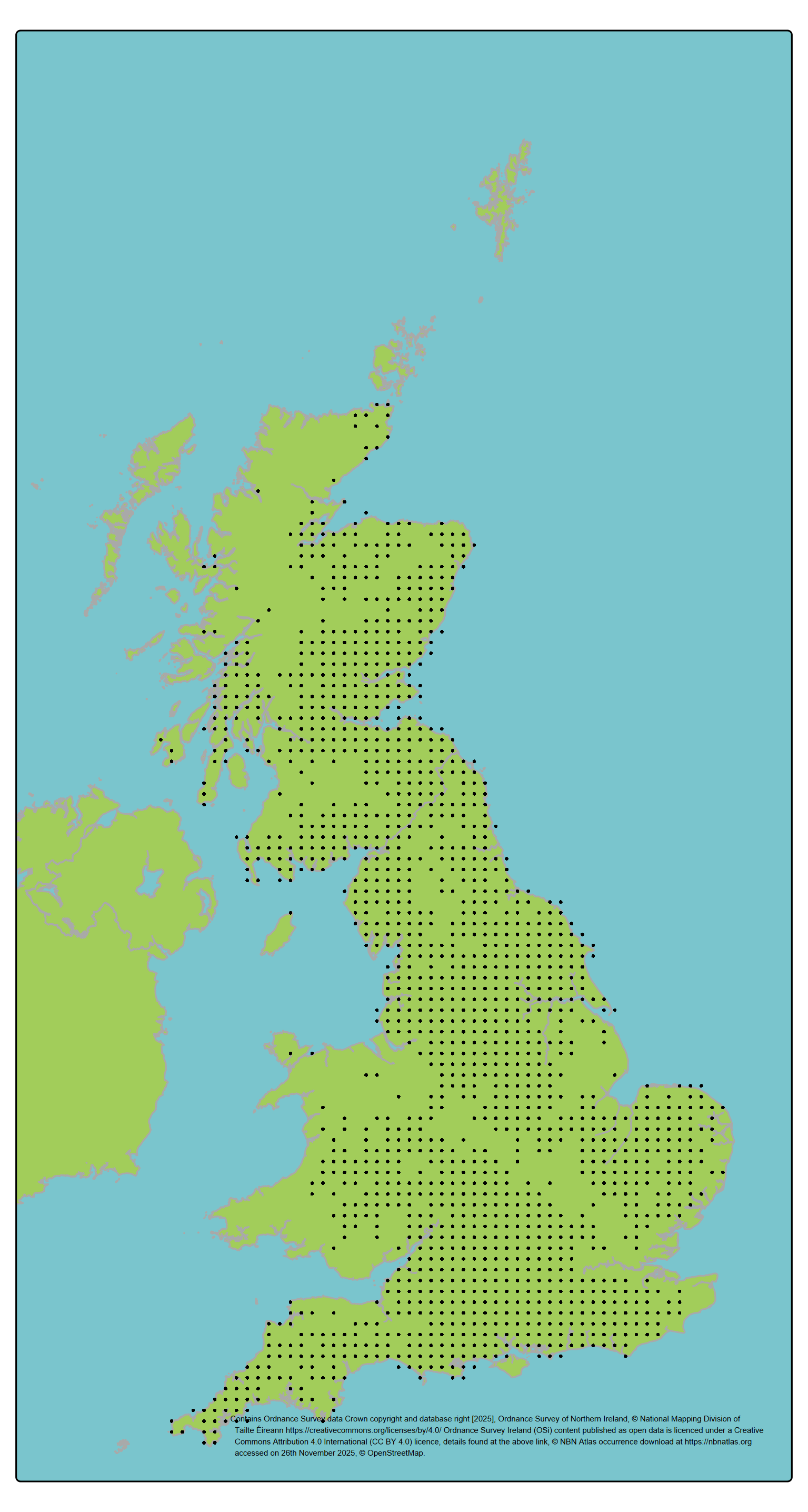
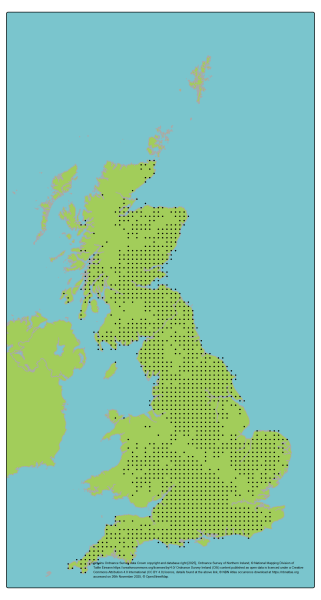
Roe Deer is widespread in Europe (from the Mediterranean to Scandinavia, Scotland to the Caucasus Mountains and east to northern Iran and Iraq; The British Deer Society, NatureScot). It is the most widely distributed deer species across mainland Britain, with strongholds in Scotland and southern England but absent from Ireland (Woodland Trust). Roe Deer is an iconic forest-dwelling species and an economically important game species, due to the revenue gained through deer stalking, venison and tourism (Burbaitė & Csányi, 2009). Although associated with woodland, it is increasingly found in urban areas due to its ecological plasticity and adaptability. Roe Deer disappeared from most of the UK by the 19th Century with populations surviving in Scotland and isolated pockets elsewhere (Woodland Trust). Subsequent reintroductions from Europe and habitat change have contributed to the recovery of the species in mainland Britain (Woodland Trust). Reproduction is characterised by ruts in the summer after which mating occurs in July and August, but females delay implantation of the fertilised egg until January of the following year (Wildlife Online). Roe Deer has a weakly polygynous mating system where males defend territories and attract multiple females with overlapping home ranges (Woodland Trust). This means that females may mate with more than one male. Previous genetic studies have studied the effect of natural and anthropogenic processes on the population genetic structure of British Roe Deer and selection through the Pleistocene (Baker & Hoelzel, 2013; Alexander & Dutoit, 2020).
View a larger version of the distribution map for the Roe Deer.
Current Threats
Threats to Roe Deer may include road traffic accidents, overharvesting, persecution and competition with other species such as sika deer (Cervus nippon), muntjac deer (Muntiacus reevesi) and in conifer plantations, red deer (Cervus elaphus) (Dolman & Wäber, 2008). Other potential threats to the species might arise as the result of emergence and re-emergence of disease, or due to transmission of disease from livestock. Disease manifestation and risk in European wild ungulates is not as high as that reported in North America but has increased in the past years (Ferroglio et al., 2011).
Contribution of Scottish/UK population to total species diversity
Mainland Britain Roe Deer genetic diversity is likely to be represented in European/Asian Roe Deer populations as a result of reintroductions to the UK. Despite an increase in harvest of 735% over the last twenty years, mainland Britain holds one of the largest populations in Europe, with the largest continuous population being found in Scotland (Burbaitė & Csányi, 2009). There are a lack of studies assessing genetic diversity of Roe Deer across mainland Britain relative to the species range. The contribution of the Roe Deer population in mainland Britain to the total diversity across the species’ range is unknown but this population represents the edge of the species’ range and may harbour unique genetic variation for adaptation.
Genetic risks
Diversity loss: population declines
Considering the current sizeable range expansion and large population in Great Britain, there are no apparent current threats that would lead to population declines and consequent genetic diversity loss.
Global Biodiversity Framework Indicators
Population definitions:
The populations are defined using geographic boundaries. Due to the continuous distribution of the species across Great Britain and its long-distance dispersal capabilities (up to several kilometres), one population was defined.
Ne500: The proportion of populations that have an effective population size of more than 500.
- Proportion of populations with Ne > 500 in Scotland = 1/1
- Proportion of populations with Ne > 500 in UK = 1/1
PM: Proportion of populations that existed in 2000 that still exist in 2025.
- Proportion of populations maintained in Scotland = 1/1
- Proportion of populations maintained in UK = 1/1
Diversity loss: functional variation
Functional variation
There are no studies regarding functional variation for Roe Deer in Great Britain. The population is at the edge of the range and may contain locally adapted variants.
Divergent lineages
A study in 2013 recorded 17 different maternal haplotypes for mainland Britain. Diversity was greatest in the northern samples (Scotland) and lowest at sites where Roe Deer was (re)introduced (Norfolk and Somerset; Baker & Hoelzel, 2013). More research is required to include Welsh and mainland European/Asian samples but there is a possible risk of haplotype loss especially in Scotland.
Hybridisation/Introgression
Hybridisation with other species is unlikely as no introductions of Siberian Roe Deer have been reported.
Low turnover - constraints on adaptive opportunities
Roe Deer densities vary in forested areas but are particularly high in lowland areas. The species’ rapid increase reported from the 1970s onward suggests recruitment is not limiting and there is no evidence of constraints on adaptive opportunities (Aebischer et al., 2011). The species reproduces annually with sufficient fecundity (two to three kids per female) for population growth.
Cumulative Risk Summary
Overall Genetic Health Status
Scotland
- Risk: Negligible
- Mitigation: Negligible
Great Britain/UK
- Risk: Not Required
- Mitigation: Not Required
Overall Genetic Health status explanation
Numbers of roe deer are high and not declining across the UK. No isolated locally-adapted sub-populations at risk of loss.
In situ genetic threat level
In situ genetic threat level
- In situ Risk for Scotland: Negligible
- In situ Risk for UK: Negligible
Widely distributed species with population increases.
Confidence in in situ threat level
- Confidence score for Scotland: High
- Confidence score for UK: High
The Game and Wildlife Conservation Trust published recent trends from the national gamebag census from 1901-2009 (Aebischer et al., 2011).
Ex situ representation
Roe Deer from mainland Britain may be represented in deer parks, but no active genetic management.
Current conservation actions
Population management to regulate exploitation. Habitat management not specific to Roe Deer.
| Ex situ | Translocation | Habitat management | Legal protection of habitat or species | Regulation of exploitation | Control of INNS/pests/pathogens |
|---|---|---|---|---|---|
| - | - | X | - | X | - |
Population assessment/monitoring
Population
Demographic
N pops assessed/monitored in Scotland = 1/1
N pops assessed/monitored in UK = 1/1
Genetic
N pops assessed/monitored in Scotland = 0/1
N pops assessed/monitored in UK = 0/1
Further Research
Although the species has a continuous distribution across mainland Britain, it is important to encourage research to assess genetic diversity (neutral and adaptive) across the geographic range of the species. Studies on the impact of past reintroductions in the genetic make-up of the population in mainland Britain would be particularly useful.
Useful Links
References
Aebischer, N.J., Davey, P.D., Kingdon, N.G. 2011. National Gamebag Census: Mammal Trends to 2009. Game & Wildlife Conservation Trust. Fordingbridge.
Alexander, A. & Dutoit, L. 2020. Roe Deer on ice: selection despite limited effective population size through the Pleistocene. Molecular Ecology, 29, 2765-2767.
Baker, K.H. & Hoelzel, A.R. 2013. Evolution of population genetic structure of the British Roe Deer by natural and anthropogenic processes (Capreolus capreolus). Ecology and Evolution, 3(1), 89-102.
Burbaitė, L. & Csányi, S. 2009. Roe Deer population and harvest changes in Europe. Estonian Journal of Ecology, 58(3), 169-180.
Dolman, P.M. & Wäber, K. 2008. Ecosystem and competition impacts of introduced deer. Wildlife Research, 35(3), 202-214.
Ferroglio, E., Gortázar, C., Vincente, J. 2011. Ungulate management in Europe. Problems and practices, 192-214. Eds. Putman, R., Apollonio, M., Andersen R. Cambridge University Press.
Assessor:
Isa-Rita Russo, University of Cardiff
Sílvia Pérez-Espona, University of Edinburgh
Reviewer:
Linda Neaves, Murdoch University
Rob Ogden, University of Edinburgh