Genetic Scorecard Indicator - Red deer
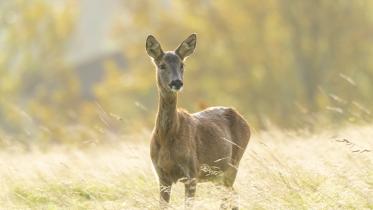
Red deer (Cervus elaphus)

IUCN Category:
- Great Britain: Least Concern (indicated above)
- Europe: Least Concern
- Global: Least Concern

Genetic Health Status:
- Scottish Risk: Negligible (indicated above)
- UK Risk: Negligible
- Scottish Mitigation status: Not required
- UK Mitigation status: Not required
Background
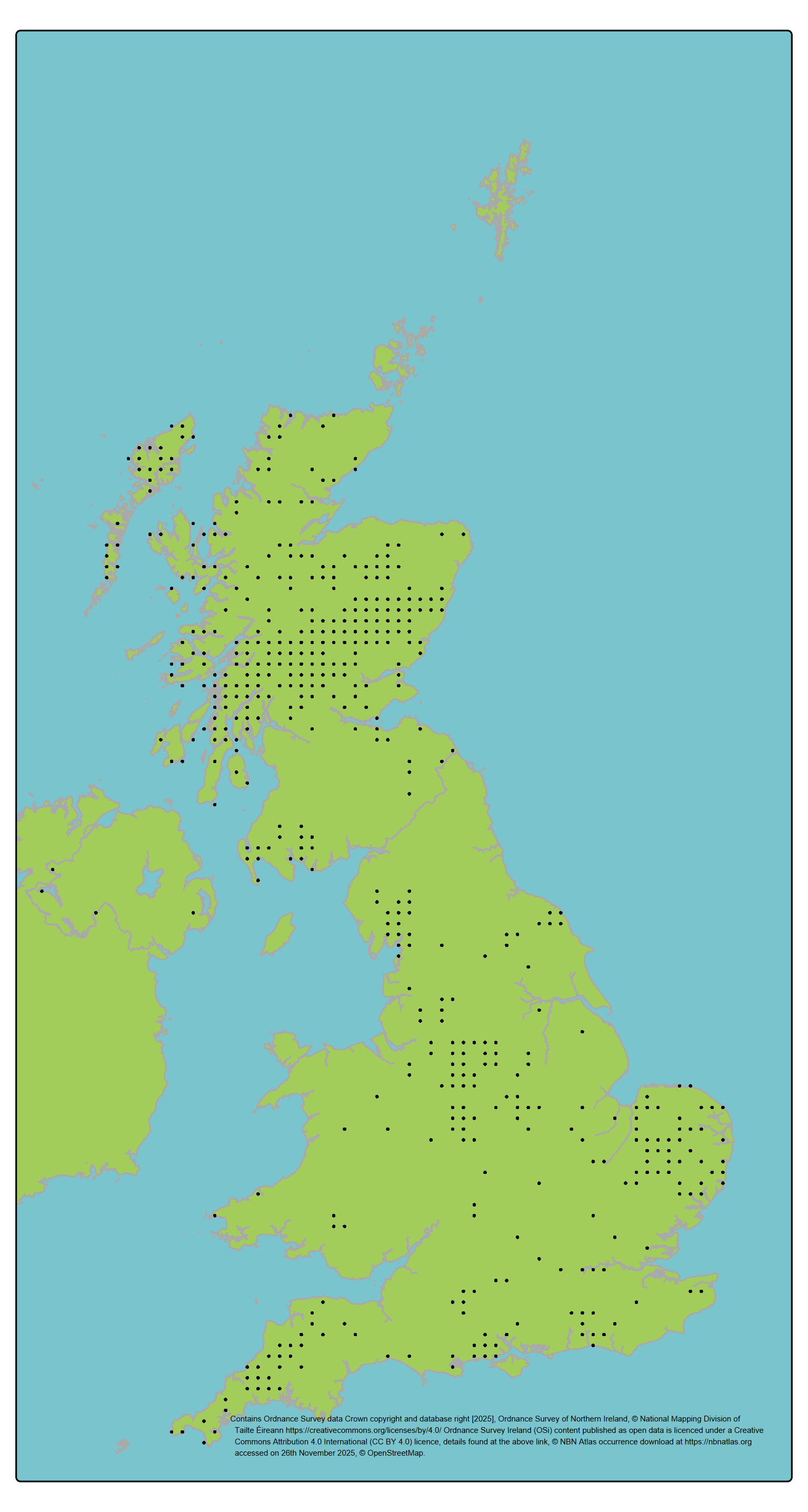
The species inhabits most of Europe, the Caucasus Mountains, Iran, Anatolia, western Asia and parts of Northern Africa in the Atlas Mountains (Pérez-Espona et al., 2013). It is widely distributed across the UK with the largest population in Scotland (Apollonia et al., 2010). The species prefers woodland and forest habits but can also thrive in moorland and hills (NatureScot). In the UK, particularly Scotland, the species is economically important through revenue from stalking, venison and tourism (Pérez-Espona et al., 2009b). Red Deer is an ecologically important species and plays a significant role in shaping landscapes in influencing plant and animal communities (Hegland et al., 2013; Apollonia et al., 2017). The current population in the UK is estimated at 518,250 (Scotland: 505,000, England: 12,500, Wales: < 500 and around 700 in Killarney National Park in Ireland) (see NatureScot, the Game and Wildlife Conservation Trust, Irish Deer Commission). Reproduction is characterised by seasonal ruts where stags will compete for access to groups of females. Mating is polygynous where one male will mate will multiple females (Wildlife Online). Previous genetic/genomic studies have shown that the overall genetic diversity for this species is considered high and some genetically distinct populations have been identified due to previous re-introductions (Pérez-Espona et al., 2008; Pérez-Espona et al., 2009a; Pérez-Espona et al., 2019; Carranza et al., 2024).
View a larger version of the distribution map for the Red Deer.
Current Threats
The main threat to Red Deer is hybridisation with sika deer (Senn & Pemberton, 2009; Smith et al., 2018). Other threats facing the species include overgrazing (habitat damage) due to large populations in certain areas, overharvesting, persecution and potentially climate change. Poaching, wildlife crime and disease outbreaks can also impact Red Deer populations (Ferroglio et al., 2011).
Contribution of Scottish/UK population to total species diversity
A genome-wide single nucleotide polymorphisms assessment in 2024 showed that the Scottish deer population is genetically differentiated form mainland central European populations and even more so from peripheral Iberian and Norwegian populations which highlights the impact of glacial refugia and post-glacial colonisation on Red Deer genomics (Carranza et al., 2024). The Scottish population seems to harbour unique genomic variation but the situation for Red Deer populations in England, Wales and Ireland is unknown. Scottish genomic diversity represents about one-third of the diversity across the European range of the species and may harbour unique genotypes for adaptations due to the Scottish population’s edge of the range distribution (Carranza et al., 2024).
Genetic risks
Diversity loss: population declines
Currently the large size of Red Deer populations in Great Britain suggests that there is no likelihood of diversity loss due to population declines. The Northern Ireland population is small and therefore risk of diversity loss exists, but standing diversity not considered distinct from rest of UK.
Global Biodiversity Framework Indicators
Population definitions:
The populations are defined based on geographic boundaries. Based on the available data, three populations were defined: Scotland, England/Wales and Northern Ireland. There are no genetic data available to access structure and define populations across the UK.
Ne500: The proportion of populations that have an effective population size of more than 500.
- Proportion of populations with Ne > 500 in Scotland = 1/1
- Proportion of populations with Ne > 500 in UK = 2/3
PM: Proportion of populations that existed in 2000 that still exist in 2025.
- Proportion of populations maintained in Scotland = 1/1
- Proportion of populations maintained in UK = 3/3
Diversity loss: functional variation
Functional variation
No evidence of risks of loss of functional variation. The UK populations are at the edge-of-range and may contain locally adapted variants.
Divergent lineages
Although DNA studies do not support the classification of western European Red Deer into different subspecies, studies have shown that at least Scottish Red Deer harbour unique DNA lineages (Pérez-Espona et al., 2009a) which has been supported by a genome-wide assessment (Carranza et al. 2024). The placement of populations from England, Wales and Ireland are unknown.
Hybridisation/Introgression
Hybridisation between Red Deer and sika deer (Cervus nippon) is one of the main threats for the maintenance of genetic distinctiveness in Red Deer (Senn & Pemberton, 2009; Smit et al., 2018; Mammal Society). Hybrid individuals are mainly found on the Kintyre Peninsula with smaller numbers in the northern Highlands. Based on the UK sika deer distribution map (see British Deer Society map) it is likely that hybridisation events are also common in the north and south of England, Wales and western parts of Northern Ireland. No hybrids have been recorded in the central Highlands or the Hebrides; however, hybridisation may be undetected.
Low turnover - constraints on adaptive opportunities
The species reproduces annually with sufficient fecundity (one fawn per female) for population growth. There is therefore no evidence of constraints on adaptive opportunities.
Cumulative Risk Summary
Overall Genetic Health Status
Scotland
- Risk: Negligible
- Mitigation: Not required
Great Britain/UK
- Risk: Negligible
- Mitigation: Not required
Overall Genetic Health status explanation
There is good information on genetic diversity across Scotland, although further areas need to be studied for a complete overview.
In situ genetic threat level
In situ genetic threat level
- In situ Risk for Scotland: Negligible
- In situ Risk for UK: Negligible
UK-wide distribution, range expansion and increased abundance mean there is a relatively low risk of loss of locally adapted variation.
Confidence in in situ threat level
- Confidence score for Scotland: High
- Confidence score for UK: High
Species is managed and/or monitored in most parts of its UK range, with high levels of genetic data available for Scotland.
Ex situ representation
Red Deer individuals with UK origin can be found in deer parks and in New Zealand wild populations although these are not genetically managed and it is likely that some ex-situ populations are introgressed after crossing with other Red Deer populations and North American wapiti (Cervus canadensis).
Current conservation actions
Red Deer are managed for production and to control densities in certain habitats. The species is not directly managed for conservation purposes.
| Ex situ | Translocation | Habitat management | Legal protection of habitat or species | Regulation of exploitation | Control of INNS/pests/pathogens |
|---|---|---|---|---|---|
| - | - | X | - | X | - |
Population assessment/monitoring
Population
Demographic
N pops assessed/monitored in Scotland = 1/1
N pops assessed/monitored in UK = 3/3
Genetic
N pops assessed/monitored in Scotland = 1/1
N pops assessed/monitored in UK = 1/3
Further Research
Genetic studies needed in Dumfries and Galloway (southwest Scotland), England, Wales and Ireland.
References
Carranza, J., Pérez-González, J., Anaya, G. et al. 2024. Genome-wide single nucleotide polymorphisms assessment of contemporary European Red Deer genetic structure highlights the distinction of peripheral populations and the main admixture zones in Europe. Molecular Ecology, 33(18), e17508.
Ferroglio, E., Gortázar, C., Vincente, J. 2011. Ungulate management in Europe. Problems and practices, 192-214. Eds. Putman, R., Apollonio, M., Andersen R. Cambridge University Press.
Hegland, S.J., Lilleeng, M.S., Moe, S.R. 2013. Old-growth forest floor richness increases with the Red Deer herbivory intensity. Forest Ecology and Management, 310, 267-274.
Pérez-Espona, S., Pérez-Barbería, F.J, McLoed, J.E., Jiggins, C.D., Gordon, I.J., Pemberton, J.M. 2008. Landscape features affect gene flow of Scottish Highland Red Deer (Cervus elaphus). Molecular Ecology, 17, 981-996.
Pérez-Espona, S., Pérez-Barbería, F.J., Goodall-Copestake, W.P., Jiggins, C.D., Gordon, I.J., Pemberton, J.M., 2009a. Genetic diversity and population structure of Scottish Highland Red Deer (Cervus elaphus) populations: a mitochondrial survey. Heredity 102, 199–210.
Pérez-Espona, S., Pemberton, J.M., Putman, R. 2009b. Red and sika deer in the British Isles, current management issues and management policy. Mammalian Biology, 74, 247-262.
Pérez-Espona, S., Hall, R.J., Pérez-Barbería, F.J, Glass, B.C., Ward. J.F., Pemberton, J.M. 2013. The impact of past introductions on the iconic and economically important species, the Red Deer of Scotland. Journal of Heredity, 104(1), 14-22.
Pérez-Espona, S., Goodall-Copestake, W.P., Savirina, A., J Bobovikova, J., Molina-Rubio, C., Pérez-Barbería, F.J. 2019. First assessment of MHC diversity in wild Scottish Red Deer populations. European Journal of Wildlife Research, 65(2), 22.
Senn, H. & Pemberton, J.M. 2009. Variable extent of hybridisation between invasive sika (Cervus nippon) and native Red Deer (C. elaphus) in a small geographic area. Molecular Ecology, 18(5), 862-876.
Smith, S.L., Senn, H.V., Pérez-Espona, S., Wyman, M.T., Heap, E., Pemberton, J.M. 2018. Introgression of exotic Cervus (nippon and canadensis) into Red Deer (Cervus elaphus) populations in Scotland and the English lake district. Ecology and Evolution, 8, 2122-2134.
Websites:
Deer Management in scotland - FAQs
Game and Wildlife Conservation Trust - Red Deer
Irish Deer Commission - Red Deer
Wildlife Online - Red Deer breeding biology
The British Deer Society - Red Deer
People's Trust for Endangered Species - Red Deer
Assessor:
- Isa-Rita Russo, University of Cardiff
- Sílvia Pérez-Espona, University of Edinburgh
Reviewer: Rob Ogden, University of Edinburgh