Genetic Scorecard Indicator - Papillose bog moss
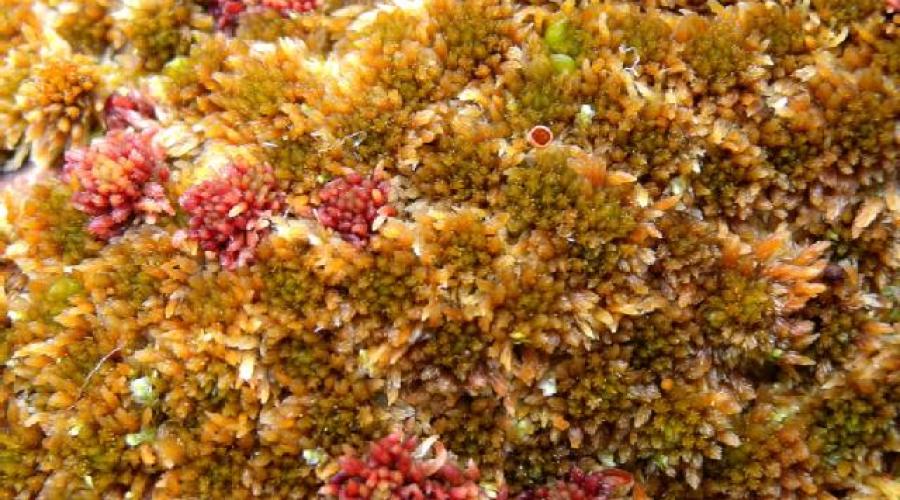
Papillose bog moss (Sphagnum papillosum)

IUCN Category:
- Great Britain: Least Concern (indicated above)
- Europe: Least Concern
- Global: Least Concern

Genetic Health Status:
- Scottish Risk: Negligible (indicated above)
- UK Risk: Negligible
- Scottish Mitigation status: Not required
- UK Mitigation status: Not required
Background
Mat-forming widely distributed dioecious moss; the most common bog moss in cool-temperate Eurasia, and an indicator of good habitat quality due to low tolerance of pollution and shade (Blockeel et al., 2014). Also widespread in wet grassland, heath and other wet peaty habitats (Atherton et al., 2010). This single species is the main component of most peat deposits (Hill, 2014) and therefore crucial for carbon storage. It is uniformly polyploid across the circumboreal zone (Karlin et al., 2010). Globally, Sphagnum distribution is expected to contract due to climate warming (Bragazza, 2008; Gallego-Sala et al., 2013).
Current Threats
Most bogs in the UK have been substantially modified by artificial drainage, afforestation, overgrazing, burning, erosion and pollution (Bragg & Tallis, 2001). Climate and management are predicted to result in increased erosion over parts of the UK (Li et al., 2016), and over 50% of bog habitats currently exceed nitrogen critical loads leading to preferential growth of more competitive grasses and direct toxicity (APIS, 2019a).
Contribution of Scottish/UK population to total species diversity
No evidence for divergent genetic lineages being present in Scotland.
Genetic risks
Diversity loss: population declines
Despite ongoing population declines, the overall abundance of the species suggests any imminent loss of genetic diversity will be negligible.
Global Biodiversity Framework Indicators
Population definitions:
Seed zones
Ne500: The proportion of populations that have an effective population size of more than 500.
- Proportion of populations with Ne > 500 in Scotland = 2/2
- Proportion of populations with Ne > 500 in UK = 5/5
PM: Proportion of populations that existed in 2000 that still exist in 2025.
- Proportion of populations maintained in Scotland = 2/2
- Proportion of populations maintained in UK = 5/5
Diversity loss: functional variation
Functional variation
Acidification during the Industrial Revolution resulted in historical loss of S. papillosum from parts of England which may have involved past loss of adaptive variation (Hill, 2014). However, no direct evidence of historical losses from Scotland, and no overall evidence of loss of functional/adaptive variation.
Divergent lineages
Negligible risk (no evidence for divergent lineages in Scotland).
Hybridisation/Introgression
Sphagnums are known to hybridise and to become interploidal, and it is possible that this species arose through hybridisation of two unknown parents (Meleshko et al 2018, Karlin et al 2010).
Low turnover - constraints on adaptive opportunities
Turnover rates in these long-lived species are poorly known. Sexual reproduction is common and experiments in cultivation suggest spores are easy to obtain and grow (Gaudig et al., 2014).
Cumulative Risk Summary
Overall Genetic Health Status
Scotland
- Risk: Negligible
- Mitigation: Not required
Great Britain/UK
- Risk: Negligible
- Mitigation: Not required
Overall Genetic Health status explanation
Limited immediate genetic concerns due to the sheer abundance of the species. Pollution and climate change may, in the future, lead to population declines that create genetic problems, but in the immediate future the risk is low.
In situ genetic threat level
In situ genetic threat level
- In situ Risk for Scotland: Negligible
- In situ Risk for UK: Negligible
Negligible (a very abundant and widespread species despite many ongoing risks from habitat loss and degradation).
Confidence in in situ threat level
- Confidence score for Scotland: Medium
- Confidence score for UK: Medium
Medium (assessment based on good distribution and ecological data supported by direct data on most aspects of species’ distribution and management requirements, but lacking direct genetic data).
Ex situ representation
Some material is held in ex situ cultivation for both micropropagation and experimental farming techniques (Caporn et al., 2018; Gaudig et al., 2014). No structured sampling to-date to represent S. papilosum in spore banks.
Current conservation actions
Raised bog and blanket bogs are conservation priority habitats under EU habitats directives (92/43/EEC) and UK government supports phasing out peat in cultivation. Restoration of peatlands is an ongoing activity, and although hydrologic conditions can successfully be restored, vegetation recovery depends on additional factors (topography and climate).
| Ex situ | Translocation | Habitat management | Legal protection of habitat or species | Regulation of exploitation | Control of INNS/pests/pathogens |
|---|---|---|---|---|---|
| - | - | X | X | - | - |
Population assessment/monitoring
Population
Demographic
N pops assessed/monitored in Scotland = 0
N pops assessed/monitored in UK = 0
Genetic
N pops assessed/monitored in Scotland = 0
N pops assessed/monitored in UK = 0
References
APIS, 2019. Nitrogen deposition- dwarf scrub heath.
Atherton,I., Bosquanet, S., & Lawley, M. eds. 2010. Mosses and Liverworts of Britain and Ireland. A Field Guide. British Bryological Society, Plymouth.
Bragazza, L. 2008. A climatic threshold triggers the die-off of peat mosses during an extreme heat wave. Global Change Biology, 14: 2688-2695.
Bragg, O.M., Tallis, J.H. 2001.The sensitivity of peat-covered upland landscapes. CATENA, 42, 345-360.
Caporn, S.J.M., Rosenburgh, A.E., Keightley, A.T., Hinde, S.L., Riggs, J.L., Buckler, M. & Wright, N.A. 2018 Sphagnum restoration on degraded blanket and raised bogs in the UK using micropropagated source material: a review of progress. Mires and Peat, 20, 1-17.
Gallego-Sala, A. V. & Prentice I.C. 2013. Blanket peat biome endangered by climate change, Nature Climate Change, 3, 152-155.
Gaudig, G., Fengler, F., Krebs, M., Prager, A., Schulz, J., Wichmann, S. & Joosten, H. 2014. Sphagnum farming in Germany - a review of progress. Mires and Peat, 13(08), 1–11
Hill, M.O. 2014. ‘Sphagnum papillosum’ in. Blockeel, T.L., Bosanquet, S.D.S., Hill M.O., and Preston, C.D. 2014. Atlas of British and Irish Bryophytes Volume 2. Pisces Publications, Newbury, on behalf of the British Bryological Society.
Karlin, E. F., Gardner, G. P., Lukshis, K.etal. 2010b. Allopolyploidy in Sphagnum mendocinum and. S (Sphagnaceae). Bryologist 113, 114–119
Li, P., Holden, J., Irvine, B. & Grayson, R. 2016. PESERA-PEAT: a fluvial erosion model for blanket peatlands.Earth Surface Prcesses and Landforms, 41(14), 2058-2077
Meleshko, O., Stenøien, H., Speed, J., Flatberg, K., Kyrkjeeide, M., & Hassel, K. 2018. Is interspecific gene flow and speciation in peatmosses (Sphagnum) constrained by phylogenetic relationship and life-history traits?. Lindbergia. 41
Assessor: Rebecca Yahr, Royal Botanic Garden Edinburgh
Reviewer: Kat O’Brien, NatureScot