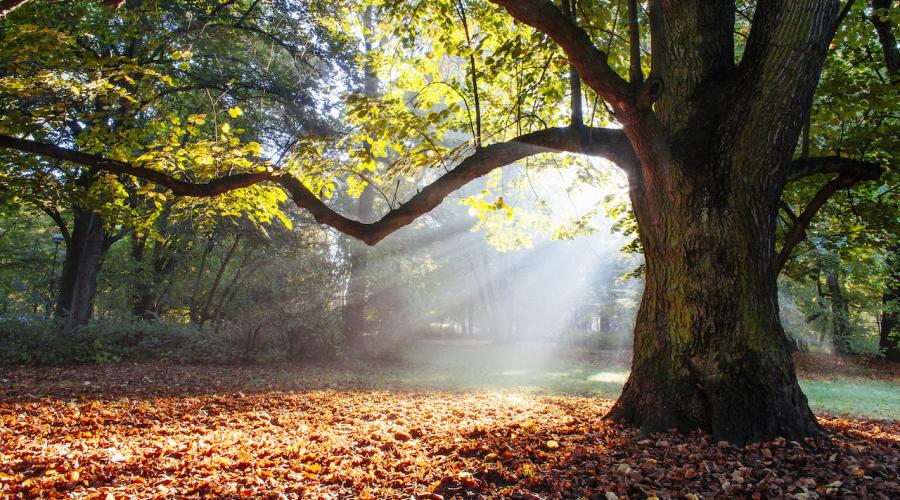
Genetic Scorecard Indicator - Oak
Oak (Quercus robur/Quercus petraea complex)

IUCN Category:
- Great Britain: Least Concern (indicated above)
- Europe: Least Concern
- Global: Least Concern

Genetic Health Status:
- Scottish Risk: Negligible (indicated above)
- UK Risk: Negligible
- Scottish Mitigation status: Partially Effective
- UK Mitigation status: Partially Effective
Background
Hermaphrodite, wind-pollinated and bird-dispersed (jay, Garrulus glandarius), widely distributed trees. Present in both natural populations and in current and former plantations, the latter often established historically for charcoal and bark production under coppice management. Recent work suggests establishment of parkland populations predominantly from local genetic resources (Nocchi et al., 2021), although there is historical evidence for considerable volumes of seed import from continental Europe. In the west of Scotland, the oaks are keystone species within the Atlantic rainforests. The two species hybridise freely (Gerber et al., 2014). Genetic marker studies show original postglacial colonisation exclusively from an Iberian refugium (Cottrell et al., 2002), and that populations retain large amounts of neutral genetic diversity at nuclear loci. There is evidence of adaptive differentiation in the UK on a north-south axis (Wilkinson et al., 2017), and trials of pan-European provenances conducted in the UK showed generally average or poor performance of provenances from outside the UK (Hubert, 2005). In trials, Quercus petraea showed significant local adaptation to past climate but also substantial phenotypic plasticity indicating a capacity to adapt to future climate shifts, especially in the north of its range (Saenz-Romero et al., 2016).
Hundreds of other species have obligate interactions with oaks (Mitchell et al. 2019), and in the west of Scotland, the oaks are keystone species within the Atlantic rainforests.
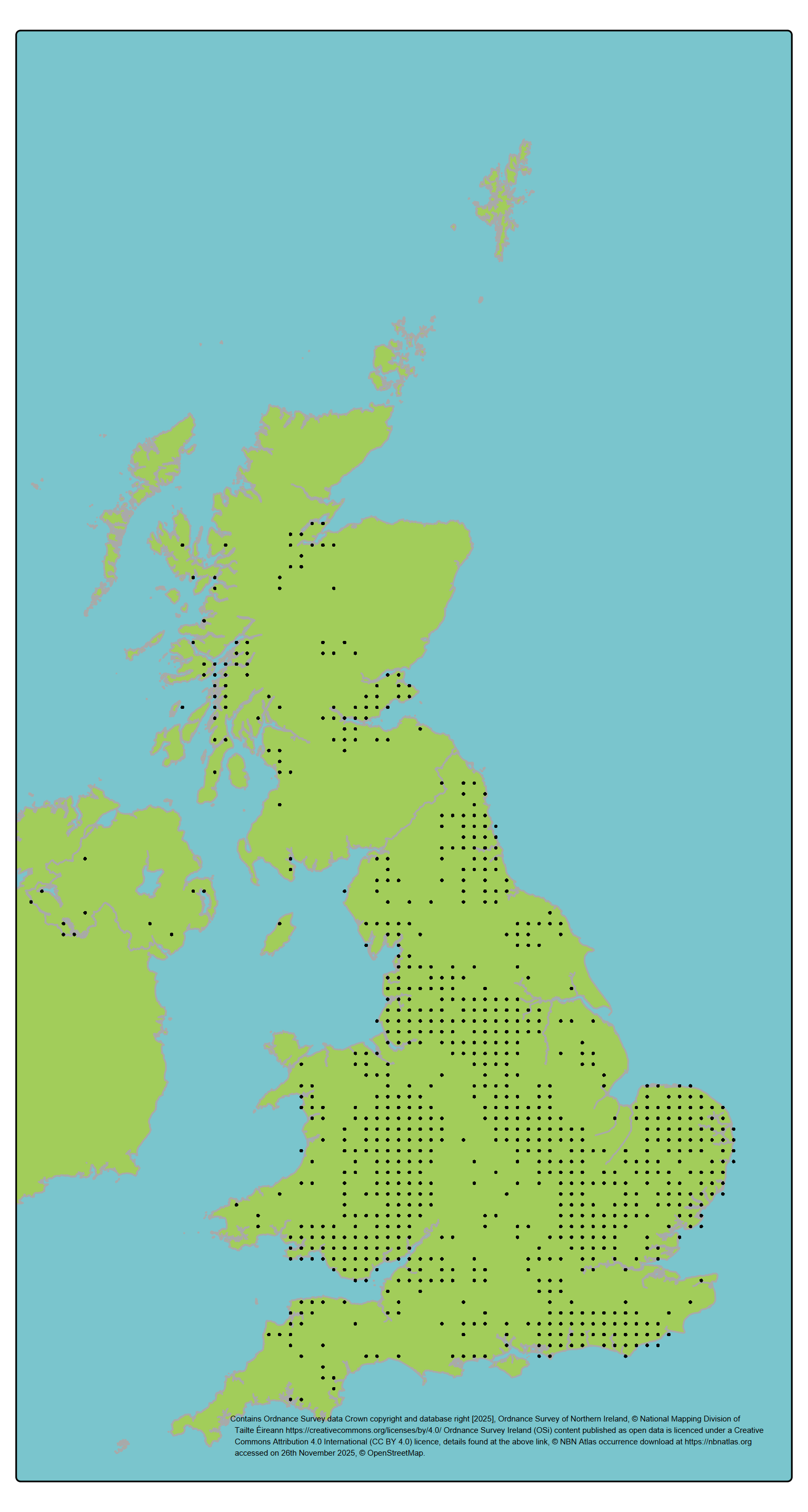
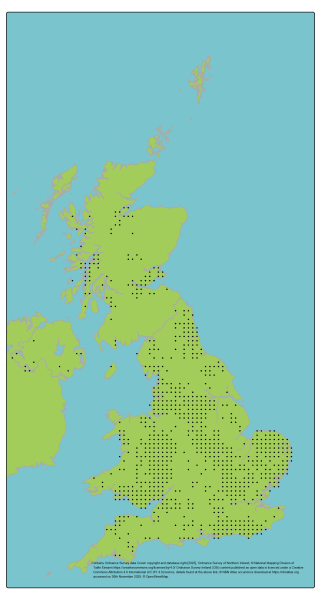
View a larger version of the distribution map for Oak.
Current Threats
A syndrome of ill health in principally older oak populations in the UK has been dubbed ‘oak decline’, which appears to be a problem associated with ageing trees located in inappropriate habitats. It is a complex disorder with multiple interacting stressors (Gosling et al., 2024). Other pests and pathogens including processionary moth and powdery mildew, may pose future threats (Mitchell et al., 2019). Many woodlands throughout the UK lack regeneration due to high browsing pressure.
Contribution of Scottish/UK population to total species diversity
Great British populations share their postglacial origins with oaks in Spain and France and show little differentiation at neutral markers (Cottrell et al., 2002). Scottish populations show evidence of adaptation to shorter growing seasons compared to populations from elsewhere in the distribution.
Genetic risks
Diversity loss: population declines
There is limited risk of imminent genetic diversity loss due to high levels of standing variation in adult trees. However, if the problem of lack of natural regeneration is not solved long-term losses due to inability to adapt to future environments are likely.
Global Biodiversity Framework Indicators
Population definitions:
Populations are defined based on management units. This species is widely and continuously distributed across UK in large numbers (Stroh et al., 2023; NBN, 2025). The four Great British Regions of Provenance (Herbert et al., 1999) were selected here to represent the major population groupings / management units (treating Northern Ireland as an additional region) as they broadly reflect the environmental variation across which the species is distributed and are likely to capture major patterns of genetic structure.
Ne500: Demographic (using the ratio Nc 5000 = Ne 500)
- Proportion of populations with Ne > 500 in Scotland = 2/2
- Proportion of populations with Ne > 500 in UK = 5/5
PM: Proportion of populations that existed in 2000 that still exist in 2025.
- Proportion of populations maintained in Scotland = 2/2
- Proportion of populations maintained in UK = 5/5
Diversity loss: functional variation
Functional variation
The general persistence of the species complex across its range in the UK is not threatened, which minimises likely loss of adaptive variation.
Divergent lineages
Limited divergence from European populations in Spain and France precludes loss of major divergent lineages.
Hybridisation/Introgression
Hybridisation between the two oak species is a natural and common phenomenon. Despite high levels of hybridisation, the integrity of the individual species is maintained and appears to be an evolutionarily stable state (Cannon & Petit, 2019). Introgression of genes from UK non-native oaks into Q. robur & petraea could occur, especially where species are grown in close proximity.
Low turnover - constraints on adaptive opportunities
Lack of regeneration in existing oakwoods has long been a problem. Overgrazing by deer and livestock is an important contributor. However, lack of recognition of the role of jays in facilitating regeneration in other areas of the landscape e.g. birchwoods means that grazing protection measures have often not been well targeted (Worrell et al., 2014).
Cumulative Risk Summary
Overall Genetic Health Status
Scotland
- Risk: Negligible
- Mitigation: Partially Effective
Great Britain/UK
- Risk: Negligible
- Mitigation: Partially Effective
Overall Genetic Health status explanation
Longevity of individual trees minimises imminent loss of genetic diversity. Management to promote regeneration supports some ongoing evolutionary processes. Proactive work to understand potential impact from pathogens also underway.
In situ genetic threat level
In situ genetic threat level
- In situ Risk for Scotland: Negligible
- In situ Risk for UK: Negligible
Major limitations to regeneration pose no immediate threat but will lead to loss of diversity in the long term if not addressed.
Confidence in in situ threat level
- Confidence score for Scotland: High
- Confidence score for UK: High
Detailed genetic and demographic data available.
Ex situ representation
Oak is not currently represented in seed banks, as it is ‘recalcitrant’. Acorns are sensitive to desiccation, so they cannot be stored in conventional seed bank conditions of low humidity and temperature. A project at RBG Kew is working to develop cryopreservation techniques and storage protocols to bank recalcitrant seeds. Through its Seed Sourcing Grant, the UK government has tried to encourage establishment of seed stands or orchards to support supply of UK native trees including oaks. Native oaks are represented in many botanic gardens and arboreta, including the Royal Botanic Garden Edinburgh and RBG Kew.
Current conservation actions
Key actions required are:
- Grazing control to promote natural regeneration within extant stands and their expansion through natural colonisation.
- Declaration of further Gene Conservation Units within the EUFORGEN system to add to the existing nine Q. petraea and four Q. robur GCUs (Action 21.4 SBS Delivery Plan).
- Establish seed stands / orchards for sustainable ex situ conservation.
- Assess extent of introgression from non-native oaks into UK natives.
| Ex situ | Translocation | Habitat management | Legal protection of habitat or species | Regulation of exploitation | Control of INNS/pests/pathogens |
|---|---|---|---|---|---|
| X | - | X | - | - | X |
Population assessment/monitoring
Population
Demographic
N pops assessed/monitored in Scotland = 2/2
N pops assessed/monitored in UK = 5/5
Genetic
N pops assessed/monitored in Scotland = 2/2
N pops assessed/monitored in UK = 5/5
Further Research
Research to develop effective methods of ex situ conservation via cryopreservation.
References
Cannon, C.H. and Petit, R.J. (2020). The oak syngameon: more than the sum of its parts. Molecular Ecology
Gosling, R.H., Jackson, R.W., Elliot, M. and Nichols, C.P. (2024) Oak declines: Reviewing the evidence for causes, management implications and research gaps. Ecological Solutions and Evidence
Herbert, R., Samuel, S., & Patterson, G. (1999). Using Local Stock for Planting Native Trees and Shrubs. Forestry Commission Practice Note.
Hubert J (2005) Selecting the Right Provenance of Oak for Planting in Britain
Mitchell, R.J., Bellamy, P.E., Ellis, C.J., Hewison, R.L., Hodgetts, N.G., Iason, G.R., Littlewood, N.A., Newey, S., Stockan, J.A. and Taylor, A.F.S., (2019) Collapsing foundations: The ecology of the British oak, implications of its decline and mitigation options. Biological Conservation, 233: 316-327.
Nocchi, G., Brown, N., Coker, T.L., Plumb, W.J., Stocks, J.J., Denman, S. and Buggs, R.J. (2022). Genomic structure and diversity of oak populations in British parklands. Plants, People, Planet
Sáenz‐Romero, C., Lamy, J.B., Ducousso, A., Musch, B., Ehrenmann, F., Delzon, S., Cavers, S., Chałupka, W., Dağdaş, S., Hansen, J.K. and Lee, S.J. (2017). Adaptive and plastic responses of Quercus petraea populations to climate across Europe. Global Change Biology
Stroh, P.A., Walker, K.J., Humphrey, T.A., Pescott, O.L. and Burkmar, R.J. (2023). Plant atlas 2020: mapping changes in the distribution of the British and Irish Flora. Princeton University Press.
Websites:
Assessors:
- Richard Ennos, University of Edinburgh
- Stephen Cavers, UKCEH
Reviewer: Pete Hollingsworth, Royal Botanic Garden Edinburgh