Genetic Scorecard Indicator - Native Oyster
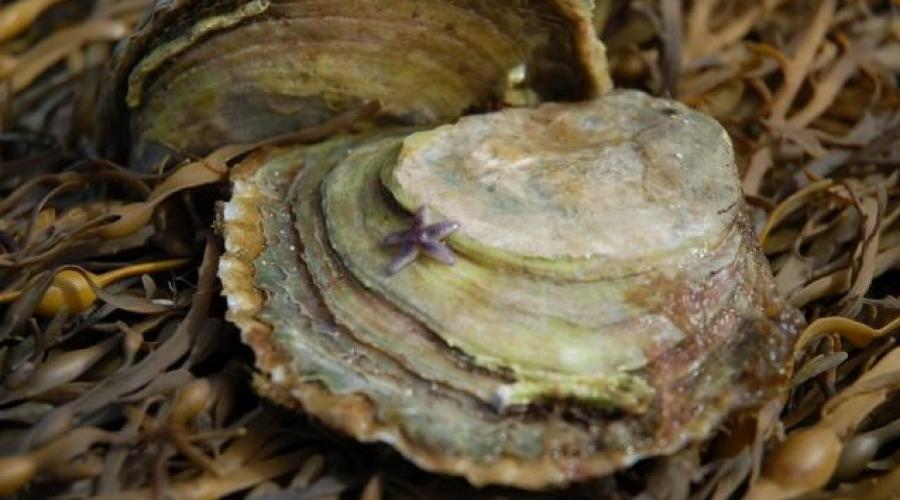
Native Oyster (Ostrea edulis)

IUCN Category:
- Great Britain: Not Assessed (indicated above)
- Europe: Not Assessed
- Global: Not Assessed
- UK Red List of Ecosystems: Critical

Genetic Health Status:
- Scottish Risk: Serious (indicated above)
- UK Risk: Serious
- Scottish Mitigation status: Effectiveness unknown
- UK Mitigation status: Effectiveness unknown
Background
Native Oysters have been an important source of food throughout human history, and they remain a commercially important species, wild caught through licenced fisheries and also cultivated (Pinn, 2021). Native oysters were historically widespread in UK waters (Olsen, 1883), with billions of oysters forming dense beds over wide areas of the seabed. Significant overexploitation has, however, led to expiration throughout much of their range, resulting in the small, fragmented populations seen today (zu Ermgassen et al., 2025). In Scotland small populations remain around the west coast and islands whilst the east coast populations have been extirpated (Donnan et al., 2024). Native Oysters are ecosystem engineers, creating complex reef structures that provide important habitats, improving water quality and playing a role in protecting seagrass beds and other coastal features from smothering and erosion (Beck et al., 2011; Allen, 2019; Pinn, 2021). Native Oysters are protandrous alternating hermaphrodites (Laing et al., 2005). Successful breeding in Native Oysters requires close proximity and high densities of mature individuals (Perry et al., 2023; Hedgecock et al., 2007).
Whole genome sequencing has demonstrated that there are seven broad genetic clusters in the European Atlantic, with some underlying structure (Beaumont et al. 2006; Vera et al., 2016; Lapègue et al., 2022; Alves Monteiro et al., 2024). In the UK, limited sampling has shown differentiation of populations in Scotland and England (Alves Monteiro et al., 2024), and in populations up the west coast of Scotland (Beaumont et al. 2006). At the local level, O. edulis can develop ectomorphs adapted to the local environmental conditions (Donnan et al., 2024).
Current Threats
The unsustainable exploitation of the Native Oysters has been an issue throughout its entire geographical range since the mid-1700 s (Laing et al., 2005; Allen, 2019). Key threats today include illegal harvesting, environmental degradation and disease (e.g. Bonamia ostreae) (Flannery et al., 2014; Pogoda et al., 2019; Smyth et al., 2023). Climate change is a significant threat with rising sea temperatures and ocean acidification expected to affect oyster survival and increase disease prevalence (Parker et al., 2024), though modelling has also suggested some potential benefits of climate warming to O. edulis in the UK (Couce et al., 2025).
Contribution of Scottish/UK population to total species diversity
Existing populations of Native Oysters on the west coast and islands of Scotland are of critical value for the survival of the species and are a resource of fundamental importance for future enhancement and restoration efforts due to their genetic distinctiveness (Beaumont et al. 2006; Vera et al., 2016; Alves Monteiro et al., 2024; Donnan et al., 2024).
Genetic risks
Diversity loss: population declines
Historical exploitation has led to significant expiration and subsequent fragmentation of Native Oyster beds in UK waters, reducing the genetic pool and increasing susceptibility to inbreeding depression.
Global Biodiversity Framework Indicators
Population definitions:
Populations defined by genetic clusters. All Native Oysters in UK waters are suggested to belong to the same broad genetic cluster, with some indication of differentiation between Scotland and England (Beaumont et al. 2006; Vera et al., 2016; Lapègue et al., 2022; Alves Monteiro et al., 2024). It is not well understood how UK Native Oyster fit within the seven European Atlantic clusters because of limited overlap between sampling locations in the various genetic studies incorporating UK samples. Therefore, UK populations were treated as two populations.
Ne500: The proportion of populations that have an effective population size of more than 500.
- Proportion of populations with Ne > 500 in Scotland = 0/1
- Proportion of populations with Ne > 500 in UK = 0/2
PM: Proportion of populations that existed in 2000 that still exist in 2025.
- Proportion of populations maintained in Scotland = 1/1
- Proportion of populations maintained in UK = 2/2
Diversity loss: functional variation
Functional variation
Ostrea edulis show phenotypic plasticity, and adaptation to their specific local environmental conditions. There is a high risk of losing adaptive traits, particularly in relation to disease resistance and thermal tolerance, if genetic diversity is reduced.
Divergent lineages
Translocations of millions of O. edulis over the past 200 years were originally thought to have resulted in homogenized genetic populations (Beaumont et al., 2006; Bromley et al., 2016). However relatively little introgression and admixture have been detected suggesting that many of the translocations may not have successfully bred or survived (Lapègue et al., 2022; Alves Monteiro et al., 2024).
Hybridisation/Introgression
No evidence for hybridisation has been recorded. Although not observed in UK waters, there is evidence for introgression between genetic clusters in Scandinavia (Alves Monteiro et al., 2024).
Low turnover - constraints on adaptive opportunities
Native Oysters can live for up to 15 years, although 5 to 10 years is more usual (Perry et al., 2023). Oyster settlement is highly sporadic, and mortality of the spat can be up to 90% (Perry et al., 2023). This restricts adaptive potential. The settlement of Native Oyster usually occurs close to the adults. Chemical cues from conspecifics are an important aspect of settlement, which is often greater in high density beds than degraded ones (Perry et al., 2023). Consequently, the recovery of natural populations can be slow.
Cumulative Risk Summary
Overall Genetic Health Status
Scotland
- Risk: Serious
- Mitigation: Effectiveness unknown
Great Britain/UK
- Risk: Serious
- Mitigation: Effectiveness unknown
Overall Genetic Health status explanation
Severe population declines and limits natural recovery of Native Oyster populations suggests low genetic diversity and low effective population sizes. Restoration efforts are ongoing but remain small-scale, and no long-term genetic monitoring framework is in place. Mitigation efforts (hatcheries, reef restoration, site protection) are improving, but illegal harvesting, disease risks and climate change continue to threaten recovery.
In situ genetic threat level
In situ genetic threat level
- In situ Risk for Scotland: Serious
- In situ Risk for UK: Serious
Extensive historical declines, high genetic erosion risk, limited natural recruitment and slow recovery rate.
Confidence in in situ threat level
- Confidence score for Scotland: Medium
- Confidence score for UK: Medium
Extensive historical declines known but limited genetic studies on UK populations.
Ex situ representation
No comprehensive ex situ genetic conservation program for wild populations. Hatchery reared broodstock is being used for restoration, but information on the provenance of broodstocks remains patchy.
Current conservation actions
The aim for the conservation for Ostrea edulis is to protect and enhance the existing natural populations and to restore the species to its natural range and function, where appropriate (Allen, 2019; Bromley & Donnan, 2022; Hughes et al., 2023; Donnan et al., 2024).
Native Oysters are a priority marine feature (PMF) in Scotland’s seas, which means that National Marine Plan General Policy GEN 9b provides protection through a requirement to ensure that development and use of the marine environment does not have a significant effect on their national status. Native Oysters are also protected as part of the Scottish Marine Protected Area (MPA) network, for example as a designated feature of the Loch Sween Nature Conservation MPA. It is expected that additional inshore fisheries measures linked to MPA and PMF management areas for fishing gear to which native oyster beds are sensitive to will be consulted upon in 2025/26.
Native Oysters are the only marine species listed in Scotland as ‘Sensitive’. This term refers to species that are vulnerable to persecution or over-exploitation, with the designation aiming to safeguard them from deliberate or reckless harm. The Scottish Biodiversity Strategy to 2045, the Scottish Biodiversity Duty and UK Marine Strategy Good Environmental Status provide further drivers to ensure biological diversity is restored, and ecosystems are safeguarded.
Ostrea edulis remains a commercially important species, both through wild caught fisheries (e.g. River Fal in Cornwall and Loch Ryan in Dumfries and Galloway) and through aquaculture production (e.g. Cleddau Estuary, Pembrokeshire). Many of the fisheries are governed by ancient laws; e.g. participants in the Truro Oyster Fishery must use sail or oar vessels and haul their catch aboard by hand or hand winch. No motor or mechanical power is permitted. Part-grown or ‘half-ware’ oysters may also be fished from the wild under licence. This stock is then relayed to submerged on-growing beds and reared to harvest size.
Guidelines are in place for restoration projects to apply recommendations associated with genetic sourcing and movements which should help alleviate any further reductions in genetic diversity. Successful reproduction and recruitment at restoration sites is fundamental to conserving the species (Bromley et al., 2016). Conservation in Scotland and the wider UK has two main aims: To protect and enhance the remaining populations and to restore the species to its natural range and densities where possible. For example, in Loch Ryan work is underway to reinforce and enhance the extant population whilst in the Dornoch Firth, oysters and reef substrate have been introduced where there is evidence of previous populations and the environment remains capable of supporting reintroduced oysters (Bromley and Donnan, 2022). As newly restored populations become established, rising market prices will place them under increased harvesting pressure. The use of closed fishery zones or MPAs may be required to protect these emergent populations (Smyth et al., 2023).
| Ex situ | Translocation | Habitat management | Legal protection of habitat or species | Regulation of exploitation | Control of INNS/pests/pathogens |
|---|---|---|---|---|---|
| - | X | X | X | X | X |
Population assessment/monitoring
Population
Demographic
N pops assessed/monitored in Scotland = 1/1
N pops assessed/monitored in UK = 2/2
In Scotland, routine monitoring of Loch Sween MPA is undertaken at irregular intervals depending on the prioritisation and risks identified by NatureScot and Marine Directorate. Additional monitoring by community groups has also been undertaken in Scotland (e.g. Highlands Rewilding, 2024) and across the UK at restoration sites.
Genetic
N pops assessed/monitored in Scotland = 0/1
N pops assessed/monitored in UK = 0/2
Specific data on the number of populations genetically monitored in Scotland is scarce and likely to be limited and ad hoc. Across the UK genetic monitoring occurs as part of various conservation and research initiatives, though detailed numbers of populations monitored are not always specified and likely to be limited and ad hoc.
Further research
- Implement baseline population genetic surveying of Native Oyster populations in Scotland/UK and improve understanding of local adaptation and ectomorphs and underlying drivers and genetics
- Improve mapping of surviving historic Native Oyster populations
- Implement genetic and biosecurity protocols for Native Oyster restoration projects to ensure genetic diversity is maintained.
- Monitor translocations and parentage of released oysters, as well as the genetic components of survival and success in restoration projects.
References
Allen, H. (2019). Towards an Economic Value of Native Oyster Restoration in Scotland: Provisioning, Regulating and Cultural Ecosystem Services. CREW report
Alves Monteiro, H.J., Bekkevold, D., Pacheco, G., Mortensen, S., Lou, R.N., Therkildsen, N.O., Tanguy, A., Robert, C., De Wit, P., Meldrup, D., Laugen, A.T., zu Ermgassen, P.S.E., Strand, Å., Saurel, C. & Hemmer-Hansen, J. (2024), Genome-Wide Population Structure in a Marine Keystone Species, the European Flat Oyster (Ostrea edulis). Molecular Ecology, e17573
Beaumont, A., Garcia, M.T., Hönig , S. and Low, P. (2006). Genetics of Scottish populations of the native oyster, Ostrea edulis: gene flow, human intervention and conservation. Aquatic Living Resources, 19(4), 389-402.
Beck, M.W. et al. (2011). Oyster Reefs at Risk and Recommendations for Conservation, Restoration, and Management. BioScience, 61(2), 107 - 116.
Bromley, C. & Donnan, D. (2022). The European Native Oyster and the Challenges for Conservation Translocations: The Scottish Experience. In Gaywood, M.J. et al. (eds.) Conservation Translocations. Cambridge: Cambridge University Press (Ecology, Biodiversity and Conservation), pp 462 – 468.
Bromley, C., McGonigle, C., Ashton, E.C., & Roberts, D. (2016). Bad moves: Pros and cons of moving oysters – A case study of global translocations of Ostrea edulis Linnaeus, 1758 (Mollusca: Bivalvia). Ocean & Coastal Management, 122, 103-115.
Couce, E., Pinnegar, J.K. and Townhill, B.L., 2025. Climate change resilience of vulnerable marine species in northwest Europe. Marine Biology, 172(7), 116.
Donnan, D., Bromley, C. and Kent, F. (2024). Guidance and recommendations for native oyster enhancement projects in Scotland. NatureScot Research Report 1316
Flannery, G., Lynch, S.A., Carlsson, J., Cross, T.F., Culloty, S.C. (2014). Assessment of the impact of a pathogen, Bonamia ostreae, on Ostrea edulis oyster stocks with different histories of exposure to the parasite in Ireland. Aquaculture, 432, 243-251.
Hedgecock, D., Launey, S., Pudovkin, A.I., Naciri, Y., Lapegue, S. and Bonhomme, F. (2007). Small effective number of parents (Nb) inferred for a naturally spawned cohort of juvenile European flat oysters Ostrea edulis. Marine Biology, 150, 1173–1182.
Hughes, D., Roberts, J., Cunningham, A. & Bell, J. (2023). Site selection for European native oyster (Ostrea edulis) habitat restoration projects: An expert-derived consensus. Aquatic Conservation: Marine and Freshwater Ecosystems, 33, 721–736.
Laing, I., Walker, P. and Areal, F. (2005). A feasibility study of native oyster (Ostrea edulis) stock regeneration in the United Kingdom. CARD Project FC1016. Report for Defra and Seafish
Lapègue, S., Reisser, C., Harrang, E., Heurtebise, S., & Bierne, N. (2022). Genetic parallelism between European flat oyster populations at the edge of their natural range. Evolutionary Applications, 16, 393–407.
Parker, L.M., Scanes, E., O'Connor, W.A., Dove, M., Elizur, A., Pörtner, H.-O., Ross, P.M. (2024). Resilience against the impacts of climate change in an ecologically and economically significant native oyster. Marine Pollution Bulletin, 198, 115788
Perry, F., Jackson, A., Garrard, S.L., Williams, E. & Tyler-Walters, H. (2023). Ostrea edulis Native oyster. In Tyler-Walters H. Marine Life Information Network: Biology and Sensitivity Key Information Reviews. Plymouth: Marine Biological Association of the United Kingdom
Pinn, E.H. (2021). Ecosystem Services, Goods and Benefits Derived From UK Commercially Important Shellfish
Pogoda, B., Brown, J., Hancock, B., Preston, J., Pouvreau, S., Kamermans, P., et al (2019). The Native Oyster Restoration Alliance (NORA) and the Berlin Oyster Recommendation: bringing back a key ecosystem engineer by developing and supporting best practice in Europe. Aquatic Living Resources, 32, 13
Smyth D, Millar R, Clements A, McIvenny H, Hayden-Hughes M. (2023). Population dynamics of the European native oyster in a Marine Conservation Zone exposed to unregulated harvesting. Aquatic Living Resources, 36: 3
Vera, M., Carlsson, J., Carlsson, J.E. et al. (2016). Current genetic status, temporal stability and structure of the remnant wild European flat oyster populations: conservation and restoring implications. Marine Biology, 163, 239
zu Ermgassen, P.S.E., McCormick, H., Debney, A., Fariñas-Franco, J.M., Gamble, C., Gillies, C., Hancock, B., Laugen, A.T., Pouvreau, S., Preston, J., Sanderson, W.G., Strand, Å. and Thurstan, R.H. (2025). European Native Oyster Reef Ecosystems Are Universally Collapsed. Conservation Letters., 18: e13068
Assessor: Emma-Louise Smith (University of Edinburgh) and Eunice Pinn (NatureScot)
Reviewer: Alex Thomson (Seawilding) and Tim Bean (University of Edinburgh)