Genetic Scorecard Indicator - Manx shearwater
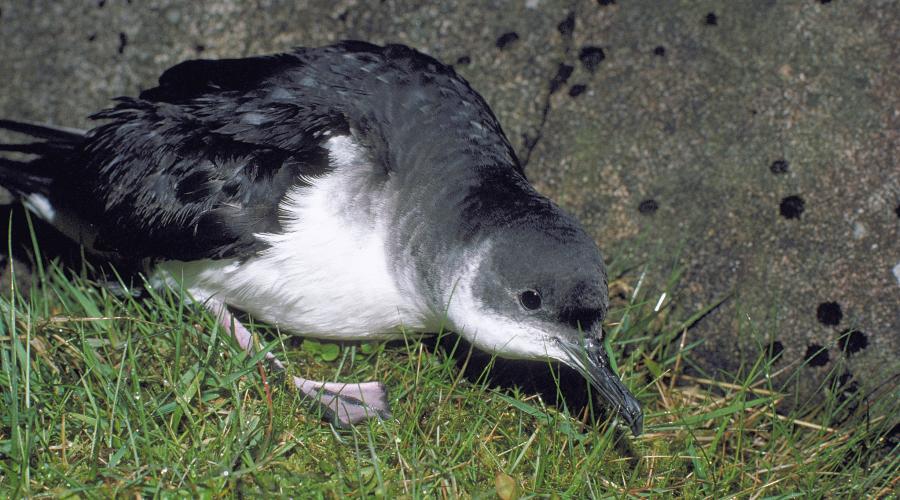
Manx shearwater (Puffinus puffinus)

IUCN Category:
- Great Britain: Amber listed (indicated above)
- Europe: Least concern
- Global: Least concern

Genetic Health Status:
- Scottish Risk: Moderate (indicated above)
- UK Risk: Moderate
- Scottish Mitigation status: Partially effective
- UK Mitigation status: Partially effective
Background
The Manx shearwater is a long-lived pelagic colonial breeder, highly philopatric to islands and some coastal sites in the North Atlantic, mainly in Europe, migrating trans-equatorially to winter off South America’s east coast (BirdLife International, 2018; Lee et al., 2023). 90–95% of the global population breed in the UK and Ireland (Bolton & Thompson, 2023). The UK breeding distribution is patchy, with 28 colonies, some of which are close to each other in clusters, but some colonies are widely separated, almost all along the west coast (Bolton & Thompson, 2023). Former 18th–20th century colonies in Orkney and Shetland (all but possibly one), as well as some colonies in the Outer Hebrides and Argyll, are extinct (Zonfrillo, 2007). Despite improved but non-comparable monitoring methods, it is clear that UK breeding numbers have increased in the early 21st century (Bolton & Thompson, 2023). While showing strong philopatry (Harris, 1966; Harris, 1972) and some degree of genetic differentiation between a Scottish and a Welsh colony (Rodríguez et al., 2020), the species is highly mobile, with documented between-colony dispersal (Harris, 1972; Brooke, 1978).
Current Threats
The main threat to island colonies is predation/trampling by native mammals (Zonfrillo, 2007; Ratcliffe et al., 2009; BirdLife International, 2018; Furness et al., 2024). The predators have heavily impacted smaller colonies, with more complex effects on larger ones (Ratcliffe et al., 2009; Furness et al., 2024). Ocean warming could reduce the abundance of sandeel (Arnott & Ruxton, 2002; Wright et al. 2017), a key prey (Siddiqi-Davies et al., 2025). European sprat, another commercially harvested species, is the dominant prey. Attraction to artificial light also threatens fledglings (Mitchell et al., 2004). 68% of adults and 75% of fledglings from Skomer had at least one piece of plastic in their stomach contents, the impact of which remains unknown (Alley et al., 2022).
Contribution of Scottish/UK population to total species diversity
The Scottish/UK population is part of the widespread nominate subspecies (Lee et al., 2023), with Scottish breeders comprising ~30% (29.9–33.7%) of the world population (Bolton & Thompson 2023). Genetic analysis found the Rum colony significantly differentiated from the Welsh colony on Skomer (FST = 0.081) but neither from a Faroese colony (Rodríguez et al., 2020). However, limited sample sizes, poor UK colony coverage, and restricted genetic data (319 bp of mitochondrial control region) mean further studies are needed to assess whether Scottish colonies hold unique genetic diversity.
Genetic risks
Diversity loss: population declines
Although some (mainly small) colonies have been extirpated historically and more recently, new small colonies have been established, and large ones have grown. In the absence of direct genetic evidence, high-quality demographic data indicate population growth, with no sign of diversity loss.
Global Biodiversity Framework Indicators
Population definitions:
The Manx shearwater is a highly mobile migratory seabird species breeding across 28 colonies in the UK, ranging from a single pair to around half a million. Despite strong philopatry (Harris, 1966; Harris, 1972; Brooke, 1990) and indications of moderate structure (Rodríguez et al., 2020), the dispersal capacity is vast, and UK colonies are here treated as a single population.
Ne500: The proportion of populations that have an effective population size of more than 500.
- Proportion of populations with Ne > 500 in Scotland = 1/1
(point estimate 590,418 breeding individuals, range 462,630–823,404 breeding individuals)
- Proportion of populations with Ne > 500 in UK = 1/1
(point estimate 1,639,516 breeding individuals, range 1,214,662–2,037,624 breeding individuals)
PM: Proportion of populations that existed in 2000 that still exist in 2025.
- Proportion of populations maintained in Scotland = 1/1
- Proportion of populations maintained in UK = 1/1
Diversity loss: functional variation
Functional variation
No phenotypic or ecotypic differentiation is reported in the UK population, hence there is no indication of loss of functional variation.
Divergent lineages
While some genetic differentiation between colonies has been detected (Rodríguez et al., 2020), no appropriate larger-scale genetic evaluation has been carried out. Given colony distribution, high dispersal capacity, limited between-colony dispersal (Harris, 1972; Brooke, 1978), and lack of phenotypic differentiation, distinct divergent genetic lineages are unlikely.
Hybridisation/Introgression
There are no known cases of hybridisation.
Low turnover - constraints on adaptive opportunities
Annual juvenile survival to breeding is low (33%; Brooke, 1990), with near-annual breeding starting at 5–6 years (range 3–9; Perrins et al., 1973; Brooke, 1990). One egg is laid, averaging 0.697 fledglings (Horswill & Robinson, 2015). Breeding adults are long-lived (92.5% annual survival), with a generation time of 19.8 years (Bird et al., 2020), constraining adaptive potential.
Cumulative Risk Summary
Overall Genetic Health Status
Scotland
- Risk: Moderate
- Mitigation: Partially effective
Great Britain/UK
- Risk: Moderate
- Mitigation: Partially effective
Overall Genetic Health status explanation
Although no direct genetic assessments exist, the very large population suggests current good genetic health; however, adaptive constraint through long generation time and restriction to relatively undisturbed islands make the species sensitive to rapid change. Brown rats can devastate colonies, and commercial fishing of prey species creates competition, with both prey availability and rat density interacting with temperature to heighten sensitivity to global warming.
In situ genetic threat level
In situ genetic threat level
- In situ Risk for Scotland: Moderate
- In situ Risk for UK: Moderate
Very large and increasing population size for a vagile species breeding on islands with various levels of protection; however, generation time is long, breeding is confined to a small number of colonies, and several potential threats can have swift negative impacts and require close monitoring of population changes.
Confidence in in situ threat level
- Confidence score for Scotland: High
- Confidence score for UK: High
High-quality demographic data; more extensive direct genetic data desirable.
Ex situ representation
Majority of Manx shearwater colonies within Important Bird Areas (IBAs) overlapping with Special Protection Areas (SPAs). The species is strictly associated with the coast, and particularly islands, identified as a key focus by the Scottish Biodiversity Strategy (SBS). Rat radication campaigns on several breeding islands (Ratcliffe et al., 2009; Stanbury et al., 2017; Burnell et al., 2024). The fishing of sandeels has been banned in Scottish waters and the English waters of the North Sea since 2021.
Current conservation actions
The vast majority of Manx shearwater colonies, and thus breeding adults, occur within Important Bird Areas (IBAs) overlapping with Special Protection Areas (SPAs). The species is strictly associated with the coast, and particularly islands, identified as a key focus by the Scottish Biodiversity Strategy (SBS), and is on track to meet the SBS 2045 goal “Scotland’s internationally important species will have increased in numbers and have healthy resilient populations.” Probably the main threat is predation by native and non-native mammals, particularly brown rats. Eradication campaigns on several breeding islands have led to rapid recoveries on some, continued abandonment on others, and further campaigns and priority areas have been identified (Ratcliffe et al., 2009; Stanbury et al., 2017; Burnell et al., 2024), but must be paired with biosecurity, as rats re-established on Canna after eradication (Furness et al., 2024). Another potentially large threat is food scarcity due to fishing. The fishing of sandeels has been banned in Scottish waters and the English waters of the North Sea since 2021 (with International Arbitration Panel ruling against challenges by the EU in 2025), although harvesting of other prey species continues.
| Ex situ | Translocation | Habitat management | Legal protection of habitat or species | Regulation of exploitation | Control of INNS/pests/pathogens |
|---|---|---|---|---|---|
| - | - | - | X | - | X |
Population assessment/monitoring
Population
Demographic
High-effort detailed monitoring carried out 2015–2021 with >99% of the population covered by counts of occupied nest sites and <1% of the total population assessed without detailed monitoring (Bolton & Thompson 2023).
N pops assessed/monitored in Scotland = 1/1
11 colonies in 6 geographic clusters.
N pops assessed/monitored in UK = 1/1
Genetic
N pops assessed/monitored in Scotland = 0/1
N pops assessed/monitored in UK = 0/1
Further research
Population monitoring would benefit from broader sampling of most or all colony clusters combined with a deeper genetic sampling (multi-locus or single nucleotide polymorphism-based).
References
Alley, C.L., Arkless, S., Ames, E., Abrahams, M., Gentle, L.K. & Wood, M.J. 2022. Plastic ingestion in adult and fledgling Manx Shearwaters Puffinus puffinus on Skomer Island, Wales. Seabird Journal 34 : 33—44.
Arnott, S.A. & Ruxton, G.D., 2002. Sandeel recruitment in the North Sea: demographic, climatic and trophic effects. Marine Ecology Progress Series 238: 199–210.
Bird, J., Martin, R., Akcakaya, H.R., Gilroy, J., Burfield, I., Garnett, S., Symes, A., Taylor, J., Sekercioglu, C., & Butchart, S. (2020) Generation lengths of the world's birds and their implications for extinction risk. Conservation Biology 34(5): 1252–1261
BirdLife International (2018). Species factsheet: Manx Shearwater Puffinus puffinus.
Bolton, M. & Thompson, K. (2023) Manx Shearwater Puffinus puffinus. Pp 59–76 in Burnell, D., Perkins, A.J., Newton, S.F., Bolton, M., Tierney, T.D. & Dunn, T.D. (eds). Seabirds Count, A Census of Breeding Seabirds in Britain and Ireland (2015–2021). Lynx Nature Books, Barcelona.
Brooke, M. de L. (1978) The dispersal of female Manx Shearwaters Puffinus puffinus. Ibis 120: 545–551
Brooke, M. de L. (1990) The Manx Shearwater. T. and A. D. Poyser, London, United Kingdom.
Burnell, D., Kober, K., Murphy, M., Lawrence, S., Berridge, R., Hart, J. & Macnamara, C. (2024). Invasive mammal presence on island seabird colonies. UK Marine Online Assessment Tool
Carroll, M.J., Bolton, M., Owen, E., Anderson, G.Q., Mackley, E.K., Dunn, E.K. & Furness, R.W. (2017) Kittiwake breeding success in the southern North Sea correlates with prior sandeel fishing mortality. Aquatic Conservation: Marine and Freshwater Ecosystems 27(6): 1164–1175
Esmonde, N.P.G., Hanna, R.E.B., Patel, J.G., Smyth, V.J., Caplat, P., Smyth, W., Jaggers, P., Padget, O., Guilford, T., Perrins, C. & Reid, N. (2022) Case report of puffinosis in a Manx shearwater (Puffinus puffinus) suggesting environmental aetiology. Animals 12: 3457
Evans, L.G., Harris, S.M., Thompson, P.M., Ellison, A. & Cordes, L.S. (2025) Advancing seabird diet studies through buccal swabbing for DNA metabarcoding. Ecology and Evolution 15(7): e71606.
Falchieri, M., Reid, S.M., Ross, C.S., James. J., Byrne, A.M.P., Zamfir, M., Brown, I.H., Banyard, A.C., Tyler, G., Philip, E. & Miles, W. (2022) Shift in HPAI infection dynamics causes significant losses in seabird populations across Great Britain. Vet Record 8/15 October 2022: 294–296
Furness, R.W., Goodship, N., Raveh, S. & Philip, E. 2024. Potential actions to support recovery of seabird populations in Scotland. NatureScot Research Report 1370.
Harris, M.P. (1966) Age of return to the colony, age of breeding and adult survival of Manx Shearwaters. Bird study 13(1): 84–95.
Harris, M.P. (1972) Inter-Island Movements of Manx Shearwaters. Bird Study 19(3): 167–171
Horswill, C. & Robinson R.A. (2015) Review of seabird demographic rates and density dependence. JNCC Report No. 552. Joint Nature Conservation Committee, Peterborough.
Lee, D.S., Haney, J.C., Carboneras, C., Jutglar, F. & Kirwan, G.M. (2023). Manx Shearwater (Puffinus puffinus), version 1.1. In Sly, N.D. (ed). Birds of the World. Cornell Lab of Ornithology, Ithaca, NY, USA
Mitchell, P.I., Newton, S.F., Ratcliffe, N. & Dunn, T.E. (2004) Seabird Populations of Britain and Ireland. T & AD Poyser, London.
Perrins, C.M., Harris, M.P. and Britton, C.K., 1973. Survival of Manx shearwaters Puffinus puffinus. Ibis 115(4): 535–548
Ratcliffe, N., Mitchell, I., Varnham, K., Verboven, N. & Higson, P. 2009. How to prioritize rat management for the benefit of petrels: a case study of the UK, Channel Islands and Isle of Man. Ibis 151: 699–708
Rodríguez, A., Rodríguez, B., Montelongo, T., Garcia‐Porta, J., Pipa, T., Carty, M., Danielsen, J., Nunes, J., Silva, C., Geraldes, P. & Medina, F.M. (2020) Cryptic differentiation in the Manx shearwater hinders the identification of a new endemic subspecies. Journal of Avian Biology 51: e02633
Siddiqi-Davies, K., Fisher-Reeves, L., Morford, J., Clucas, G. & Guilford, T. (2025) First description of Manx Shearwater Puffinus puffinus diet using DNA metabarcoding. Seabird Journal 37: 22–34
Stanbury, A., Thomas, S., Aegerter, J., Brown, A., Bullock, D., Eaton, M., Lock, L., Luxmoore, R., Roy, S., Whitaker, S. & Oppel, S. 2017. Prioritising islands in the United Kingdom and crown dependencies for the eradication of invasive alien vertebrates and rodent biosecurity. European Journal of Wildlife Research 63: 31
Syposz, M., Gonçalves, F., Carty, M., Hoppitt, W. & Manco, F. (2018) Factors influencing Manx Shearwater grounding on the west coast of Scotland. Ibis 160(4): 846–854.
Wright, P.J., Orpwood, J.E. & Scott, B.E. (2017) Impact of rising temperature on reproductive investment in a capital breeder: The lesser sandeel. Journal of Experimental Marine Biology and Ecology 486: 52–58
Zonfrillo, B. (2007) Manx Shearwater Puffinus puffinus (Brünnich). Pp. 377–380 in: Forrester, R.W., Andrews, I.J., McInerny, C.J., Murray, R.D., McGowan, R.Y., Zonfrillo, B., Betts, M.W., Jardine, D.C. and Grundy, D.S. (eds). The Birds of Scotland. The Scottish Ornithologists' Club, Aberlady.
Assessor: Martin Stervander, National Museums Scotland and Natural History Museum
Reviewer: Eunice Pinn, NatureScot