Genetic Scorecard Indicator - Lesser Horseshoe Bat
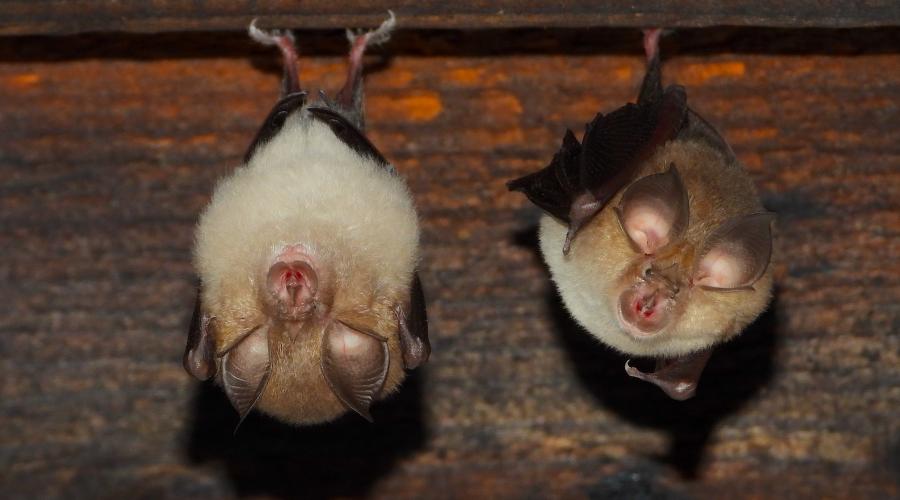
Lesser Horseshoe Bat (Rhinolophus hipposideros)

IUCN Category:
- Great Britain: Least Concern (indicated above)
- Europe: Not Assessed
- Global: Not Assessed

Genetic Health Status:
- Scottish Risk: Negligible (indicated above)
- UK Risk: Negligible
- Scottish Mitigation status: Not Required
- UK Mitigation status: Not Required
Background
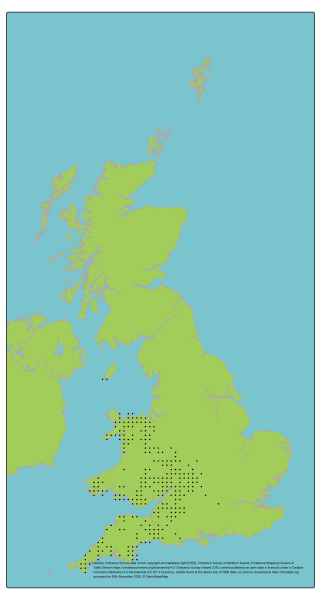
The Lesser Horseshoe Bat is the most northerly distributed species of Horseshoe Bat, found mainly in broadleaf deciduous woodlands along with other open woodland, parkland, farmland, pasture, and scrub habitats in northern portions of its distribution. Its UK distribution is largely restricted to Wales and southwest England, with occasional sightings across England. It is also present in western Ireland and widely distributed in central/southern Europe, the Middle East, Red Sea coast and parts of central Asia. It is rare in the British Isles and has previously shown a marked decline in numbers and distribution in the UK, although there is evidence of recent increases in England and Wales. The decline of the Lesser Horseshoe Bat is attributable to several factors, including disturbance to roosts and intensive agricultural practices.
It has a whole genome reference sequence generated under the DToL project (Wellcome Sanger Institute). A range-wide mitochondrial phylogeography study published shows that bats from Great Britain and Ireland belong to the western European clade without unique haplotypes (Dool et al., 2013). The same data also revealed limited nuclear DNA differentiation of Great Britain samples (n=2) from continental samples.
View a larger version of the distribution map for the Lesser Horseshoe Bat.
Current Threats
Historic issues of loss of roosting sites, remedial timber treatment, loss of feeding habitat, and persecution resulted in a dramatic population decline of the species during the 20th Century. Subsequent legal protection and milder weather (allowing earlier births, high juvenile survival over winter) have led to populations increasing since the 1980s in Britain (Barlow et al., 2015). Subsequent conservation management has also helped boost numbers (Wright et al., 2022). Ongoing threats include light pollution and changes in agricultural practices reducing prey availability.
Contribution of Scottish/UK population to total species diversity
Given the lack of distinct Great British evolutionary lineages and a wide geographic distribution, the contribution of the UK population is not considered very important to species genetic diversity, but some range edge adaptations may be present.
Genetic risks
Diversity loss: population declines
Significant population declines throughout the 20th Century likely led to bottlenecking of genetic diversity, although bottleneck severity was probably mitigated by relative rapid recovery in populations size to around 20,000.
Global Biodiversity Framework Indicators
Population definitions:
Populations are defined by geographic boundaries. The species is considered a continuously distributed population in the UK based on distribution and dispersal ability; therefore, it is considered a single population.
Ne500: The proportion of populations that have an effective population size of more than 500.
- Proportion of populations with Ne > 500 in Scotland = 0/0
- Proportion of populations with Ne > 500 in UK = 1/1
PM: Proportion of populations that existed in 2000 that still exist in 2025.
- Proportion of populations maintained in Scotland = 0/0
- Proportion of populations maintained in UK = 1/1
Diversity loss: functional variation
Functional variation
Large and presumed well-connected population mitigates risk of loss of functional variation across UK range.
Divergent lineages
A recent mitochondrial DNA assessment revealed two haplotypes (lineages) in England and Wales from only two samples; therefore, more work is required to understand lineage diversity and distribution. In the absence of molecular data, there is no obvious risk to current lineage diversity, however historic (20th Century) losses may have occurred.
Hybridisation/Introgression
No risk of hybridisation/introgression with other species.
Low turnover - constraints on adaptive opportunities
Species reproduces annually with sufficient fecundity for rapid mammalian population growth.
Cumulative Risk Summary
Overall Genetic Health Status
Scotland
- Risk: Negligible
- Mitigation: Negligible
Great Britain/UK
- Risk: Not Required
- Mitigation: Not Required
Overall Genetic Health status explanation
Health status based on current population size, trajectory, contiguity and level of data supporting these estimates.
In situ genetic threat level
In situ genetic threat level
- In situ Risk for Scotland: Not Present
- In situ Risk for UK: Negligible
Healthy, stable or growing population above 20,000 individuals sufficient to prevent genetic loss through drift. No small isolated sub-populations known.
Confidence in in situ threat level
- Confidence score for Scotland: Not Present
- Confidence score for UK: High
Good monitoring and population size estimates but no population genetic study conducted specifically on the UK population.
Ex situ representation
There are no known ex situ populations.
Current conservation actions
Along with other bats, this species, and its breeding and resting sites are all protected by law. Bats are routinely surveyed for prior to new development and mitigation is carried out where they are considered to be at risk.
| Ex situ | Translocation | Habitat management | Legal protection of habitat or species | Regulation of exploitation | Control of INNS/pests/pathogens |
|---|---|---|---|---|---|
| - | - | - | X | - | - |
Population assessment/monitoring
Population
Demographic
N pops assessed/monitored in Scotland = 0/0
N pops assessed/monitored in UK = 1/1
Genetic
N pops assessed/monitored in Scotland = 0/0
N pops assessed/monitored in UK = 0/1
References
Barlow, K, Briggs, P, Haysom, K, Hutson, A, Lechiara, N, Racey, P, Walsh, A , Langton, S (2015) Citizen science reveals trends in bat populations: the National Bat Monitoring Programme in Great Britain. Biological Conservation 182, 14-26
Dool S. et al. (2013) Phylogeography and postglacial recolonization of Europe by Rhinolophus hipposideros: evidence from multiple genetic markers Molecular Ecology, 22, 4055–4070
Wright PGR et al. (2022) Effect of roost management on populations trends of Rhinolophus hipposideros and Rhinolophus ferrumequinum in Britain and Ireland. Conservation Evidence Journal, 19:21-26
European Community Directive on the Conservation of Natural Habitats and of Wild Fauna and Flora (92/43/EEC). Fourth Report by the United Kingdom under Article 17 on the implementation of the Directive from January 2013 to December 2018. Supporting documentation for the conservation status assessment for the species: S1303 ‐ Lesser Horseshoe Bat (Rhinolophus hipposideros) in England.
Assessor: Rob Ogden, University of Edinburgh
Reviewer: Isa-Rita Russo, University of Cardiff