Genetic Scorecard Indicator - Freshwater Pearl Mussel
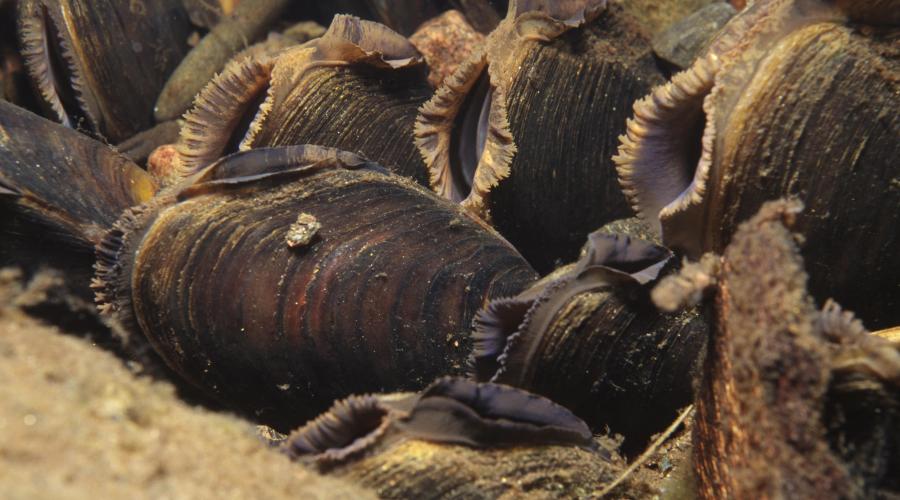
Freshwater Pearl Mussel (Margaritifera margaritifera)

IUCN Category:
- Great Britain: Not assessed (indicated above)
- Europe: Critically endangered
- Global: Endangered

Genetic Health Status:
- Scottish Risk: Serious (indicated above)
- UK Risk: Serious
- Scottish Mitigation status: Not effective
- UK Mitigation status: Not effective
Background
The Freshwater Pearl Mussel (FPM) is a unioid bivalve mollusc that occurs in clean, nutrient-poor running freshwaters with stable boulder/pebble/sand substrates across Europe (Russia - Iberia) and eastern North America.
Likely once widespread at high densities, it is a filter feeder and considered an ecosystem engineer for its role in maintaining water quality, nutrient cycling and substrate modelling. Widespread recruitment failure means that many populations are on a path towards extinction.
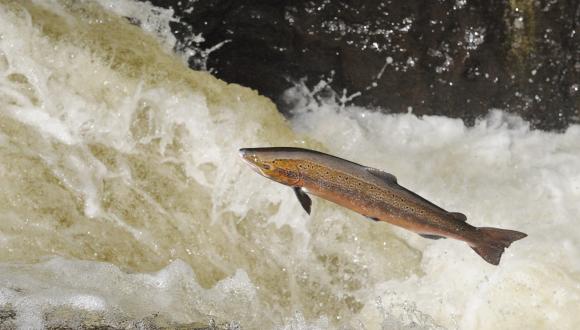
Small numbers of FPM have recently been found in Scottish lochs suggesting that habitat distribution could be broader than thought, however it is unknown whether these are self-sustaining populations. The life cycle of FPM includes an obligate parasite stage. In northern Europe Atlantic salmon (Salmo salar) and brown trout (Salmo trutta) are the hosts, with different FPM populations specializing on different hosts. FPM may also be co-adapted to their specific local salmon or trout population.
Genetic studies suggest two phylogenetic lineages in UK/Ireland based on both nuclear (Cauwelier et al., 2009) and mitochondrial DNA (Machordom et al., 2003). There is a strong correlation between host and genetic structure across northern Europe, including Scotland (e.g. Pritchard et al., 2025): salmon specialists show high diversity and very low inter-population differentiation, while trout specialists show the opposite trend. This pattern may be related to migratory traits of hosts, or larger population sizes of salmon-specialists in larger rivers.
Current Threats
FPM face multiple threats that cause high adult mortality or limit recruitment, including illegal pearl harvesting, which is ongoing and can kill a high proportion of adults in smaller populations, changes in water quality (siltation, nutrient inputs, chemical pollution), and water system engineering such as hydropower construction which changes flow regimens and substrate composition.
High water temperatures, drought and storm spates which are increasing in frequency with climate change are expected to negatively impact on FPM.
Other threats include ongoing decline and changes in the genetic composition of host salmonid populations, and invasive species, including water crowfoot (in Scotland) and non-native mussels.
Additionally, there have been large-scale die-offs of pearl mussels in parts of northern Europe for reasons which are poorly understood but which may involve emerging diseases.
Over 1/3 of extant UK populations are currently failing to recruit for reasons that are unclear but appear to involve lack of juvenile survival rather than absence of spawning.
Contribution of Scottish/UK population to total species diversity
Scotland, Norway, Sweden, Finland and Russia are considered the remaining strongholds of European FPM. Within the UK, most extant recruiting populations are in northern Scotland.
Genetic risks
Diversity loss: population declines
There is a high risk of loss of genetic diversity due to the consistent and significant population declines recorded globally, with the species close to extinction in many European countries (Lopes-Lima et al., 2017).
In the UK, small, genetically distinct, resident trout-adapted populations in small streams are most at risk of complete loss, but this may not represent a consequential loss of genetic diversity as a whole. Recent catastrophic declines of very large, genetically diverse populations due to storm-associated spate flooding potentially have much larger impact.
Global Biodiversity Framework Indicators
Population definitions:
Populations were defined by watercourse boundary, as used in available survey reports. Where mainstem and tributary populations were reported separately this distinction was maintained. Mainstem and tributary populations may not be connected by substantial gene flow, and some are known to specialize on different glochidial hosts. In a few cases data where available that showed no genetic differentiation between mainstem/tributary or small neighbouring streams - these were combined and treated as single populations.
Ne500: The proportion of populations that have an effective population size of more than 500.
Total Nc estimates were available for 22 populations. Fifty-square-meter transect counts were available for most other populations. Total Nc was inferred from mussel density in transects by estimating total available substrate from river size and assuming that 10-25% of this was suitable for FPM. Populations not currently recruiting are considered extant but with Ne < 500.
- Proportion of populations with Ne > 500 in Scotland = 35/111
- Proportion of populations with Ne > 500 in UK = 38/140
PM: Proportion of populations that existed in 2000 that still exist in 2025.
- Proportion of populations maintained (Scotland, including 40 currently non-recruiting populations) 111/155
- Proportion of populations maintained (UK) unknown, likely < 0.7
Diversity loss: functional variation
Functional variation
Some evidence that FPM populations are adapted to local conditions, including host/ host population and local environment (e.g. Gillman et al., 2025, Taskinen & Salonen, 2022), however the extent to which population loss impacts overall functional diversity is unknown. Some populations are able to exploit both salmonid hosts, suggesting that, especially in large, genetically diverse salmon-using populations, there may be genetic capacity for host switching.
Divergent lineages
No described divergent lineages in the UK although at least one small geographically isolated population appears adapted to a distinct habitat. Small trout-adapted populations are genetically distinct but this likely reflects small effective populations size or population bottlenecks rather than evolutionarily significant distinct lineages.
Hybridisation/Introgression
No known current risk. As populations may be locally adapted to their salmonid host populations or local environmental conditions, hybridization due to conservation translocations may disrupt this adaptation.
Low turnover - constraints on adaptive opportunities
FMP live >100 years with a generation time ≈15 years. Relatively long lifespan, and low genetic diversity/ effective population sizes in many extant small populations are expected to limit evolvability. Currently >1/3 of existing natural populations are failing to recruit.
Cumulative Risk Summary
Overall Genetic Health Status
Scotland
- Risk: Serious
- Mitigation: Not effective
Great Britain/UK
- Risk: Serious
- Mitigation: Not effective
Overall Genetic Health status explanation
Many small populations with lower genetic diversity at high risk of extinction, but also several very large, genetically diverse and apparently healthy populations. Substantial conservation efforts but continued recruitment failures for reasons that are not fully understood. Remote locations and dependence on larval host species complication conservation efforts. Potential to deteriorate towards Serious Risk status.
In situ genetic threat level
In situ genetic threat level
- In situ Risk for Scotland: Moderate
- In situ Risk for UK: Moderate
Many smaller populations with lower genetic diversity are at high risk of extinction, but Scotland also has several very large and genetically diverse extant populations that appear to be recruiting.
Confidence in in situ threat level
- Confidence score for Scotland: Medium
- Confidence score for UK: Medium
Populations are relatively well-monitored, but not all threats are well understood; FPM threats interact with threats to host fish.
Ex situ representation
Ongoing captive breeding efforts for several populations in England, Wales and Northern Ireland.
Current conservation actions
FPM is a fully protected species under Schedule 5 of the Wildlife and Countryside Act 1981 and the Nature Conservation Act 2004. It is also listed in Annexes II and V of the EC Habitats Directive and Appendix II of the Bern Convention. FPM is classified by the UK Biodiversity Steering Group as a ‘Priority Species’ requiring the implementation of a Species Action Plan dedicated to its survival (Biodiversity Steering Group, 1995). FPM populations are qualifying features for several UK Special Areas of Conservation.
Known populations are monitored and in Scotland there are continuing efforts to discover undescribed extant populations using traditional surveys and eDNA approaches. However, monitoring is limited by the remote location of many extant Scottish FPM populations, and the difficulties of population quantification particularly in deep rivers. A subset of populations has been the target of more focused habitat improvement and pollution reduction efforts. Where possible, detailed site locations are not released into the public domain to reduce pearl fishing risk. Public education initiatives are in place to raise awareness of FPM.
Targeted supportive breeding programmes are in place to mitigate low or no recruitment in some populations. These involve either artificial infection of local wild salmonids with locally spawning pearl mussels, or ex-situ rearing of juveniles collected from wild adults. Several dedicated pearl mussel rearing facilities have been established in the UK, but none of these are in Scotland.
| Ex situ | Translocation | Habitat management | Legal protection of habitat or species | Regulation of exploitation | Control of INNS/pests/pathogens |
|---|---|---|---|---|---|
| X | X | X | X | X | X |
Population assessment/monitoring
Population
Demographic
Standardized population surveys, at 5-10 year intervals
N pops assessed/monitored in Scotland = 111/111
N pops assessed/monitored in UK = 140/140
Genetic
Two genetic studies, 2006 & 2025
N pops assessed/monitored in Scotland = 36/111
N pops assessed/monitored in UK = 36/111
Further Research
A better understanding of local adaptation, salmonid host use and Ne/Nc ratios would guide population management efforts.
References
Cauwelier E, Verspoor E, Tarr EC, Thomson C, Young M (2009). Genetic diversity and differentiation of the Freshwater Pearl Mussel (Margaritifera margaritifera) populations in the UK. Scottish Natural Heritage Commissioned Report No. 344 (ROAME No. FO5AC701). Battleby, Perth, UK.
Cosgrove P, Shields D, Massey K 2024. Site Condition Monitoring of Freshwater Pearl Mussel on the River Spey SSSI/SAC and River South Esk SAC 2024. NatureScot Research Report.
Cosgrove PJ, Young MR, Hastie LC, Gaywood M. Boon PJ (2000), The status of the Freshwater Pearl Mussel Margaritifera margaritifera Linn. in Scotland. Aquatic Conserv: Mar. Freshw. Ecosyst., 10: 197-208.
Dr Louise LaVictoire, Freshwater Biological Association (personal communication).
Gillman V, Cosgrove P, Morrissey B, Lancaster LT, Pritchard VL, Layton K. Genomic evidence of local adaptation in Scottish Margaritifera margaritifera. Cons. Gen. submitted.
Horton M, Bell D, Keys A, Mitchell F (2018) Freshwater Pearl Mussel survey of Northern Ireland 2017. Report prepared by Ballinderry Rivers Trust for the Northern Ireland Environment Agency. Northern Ireland Environment Agency Research and Development.
Lopes-Lima M, Sousa R, Geist J, et al. (2017), Conservation status of freshwater mussels in Europe: state of the art and future challenges. Biol Rev, 92: 572-607.
Machordom A, Araujo R Erpenbeck D, Ramos M-A (2003). Phylogeography and conservation genetics of endangered European Margaritiferidae (Bivalvia: Unionoidea). Biol. J. Linn. Soc. 78, 235-252.
Pritchard VL, Cosgrove P, Gillman V, Layton K, McGill L, Morrissey B (2025) Genetic correlates of host use in Scotland’s pearl mussels. BioRxiv.
Taskinen J, Salonen JK (2022). The endangered Freshwater Pearl Mussel Margaritifera margaritifera shows adaptation to a local salmonid host in Finland. Freshwater Biology 67: 801–811.
Waples RS (2016) Tiny estimates of the Ne/N ratio in marine fishes: Are they real? J. Fish Biol 89: 2479.
Watt J, Cosgrove PJ, Hastie LC (2015) A national Freshwater Pearl Mussel (Margaritifera margaritifera, L.) survey of Scotland. Scottish Natural Heritage Commissioned Report No. 901.
Young M, Williams J (1983) The status and conservation of the Freshwater Pearl Mussel Margaritifera margaritifera Linn. in Great Britain, Biol. Conserv. 25: 35-52.
Cauwelier et al. (2008) and Pritchard et al. (2025) provide genetic estimates of Ne using the LD approach. However, for known large populations these are orders of magnitude smaller than Nc. This is not believed to indicate the true Ne/Nc ratio and instead represents the combination of small sample size and large Ne as discussed in Waples (2016). High diversity and low differentiation between large salmon-adapted populations (Pritchard et al., 2025) indicates large Ne, at least in recent historical times. This assessment therefore used a rule-of-thumb estimate of Ne = 0.1Nc.
Assessor: Victoria Pritchard, UHI Inverness
Reviewers:
- Linda Neaves, Murdoch University
- Rob Ogden, University of Edinburgh
Last updated: