Genetic Scorecard Indicator - Flapper Skate
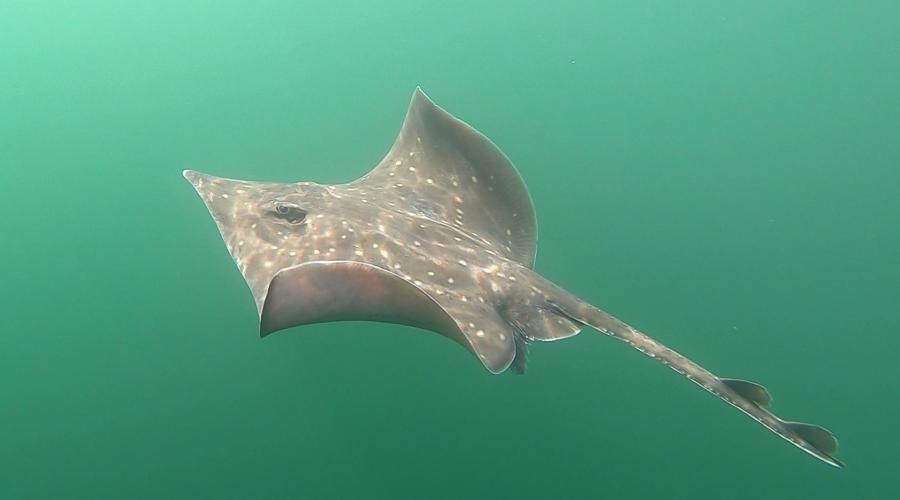
Flapper Skate (Dipturus intermedius)

IUCN Category:
- Great Britain: Critically Endangered (indicated above)
- Europe: Critically Endangered
- Global: Critically Endangered

Genetic Health Status:
- Scottish Risk: Serious (indicated above)
- UK Risk: Serious
- Scottish Mitigation status: Unknown if effective
- UK Mitigation status: Unknown if effective
Background
Due to taxonomic confusion the exact distribution of the Flapper Skate (Dipturus intermedius) is uncertain but historically was considered widespread across the continental shelf and upper slope from the Bay of Biscay to Norway, including the North Sea, Irish Sea, and Celtic Sea. Its current distribution is much reduced, restricted to the North-east Atlantic, having disappeared from the Irish Sea and much of the North Sea (Brander, 1981; Sguotti et al., 2016). Present day strongholds are along the Scottish west coast, Sea of the Hebrides, Orkney and Shetland, and in low numbers in parts of the Irish west coast (Frost et al., 2020; Bache-Jeffreys et al., 2021; Garbett et al., 2023). Records elsewhere are sparse and fragmented (NatureScot, 2020), occurring in Scandinavia and as far north as Iceland.
Historically the species (formerly treated as the ‘common skate complex’) was once widespread and locally abundant across much of the NE Atlantic shelf, but large declines followed from intensive directed fisheries and high incidental bycatch through the 19th and 20th centuries. Following the taxonomic split of the complex into two species (Flapper Skate, D. intermedius and Blue Skate, D. batis; Iglésias et al., 2010). Flapper Skate were recognised as Critically Endangered (IUCN; Ellis et al., 2024a). The species is locally extirpated from parts of its former range and remains severely depleted and fragmented, with remnant populations persisting mainly in western Scotland. Some sites such as MPAs such as Loch Sunart to the Sound of Jura (LStSJ) have provided some refuges, showing signs of recovery or stable local populations, but overall occupancy and abundance remain much reduced relative to historical levels.
Flapper Skate are demersal, primarily found within 200 m depth. They are the largest species of skate, reaching >2.5 m total length and slow growing with late maturity (males ~ 165-185 cm TL; females ~197-203 cm TL; Last et al., 2016; Thorburn et al., 2023), long lifespan (>40 years), and very low fecundity. As an oviparous species females lay pairs of large eggs throughout a winter egg-laying season (Thorburn et al., 2023), with extended incubation periods such as 18 months recorded in captivity (Benjamins et al., 2021). Nursery grounds occur in sheltered, coarse-substrate habitats, vulnerable to disturbance (Dodd et al., 2022). One egg-case nursery has been identified on a shallow cobble/boulder reef off the west coast of Scotland (Dodd et al., 2022). There are also substantial egg-case sightings around the Orkney Islands and off the west coast of Ireland (Ellis et al., 2024b; Phillips et al., 2021).
Molecular studies have resolved the ‘common skate complex’ into two cryptic species, Flapper Skate (D. intermedius) and Blue Skate (D. batis), reshaping conservation priorities (Griffiths et al., 2010; Iglésias et al., 2010). Further molecular analyses are refining the distribution of the two species (Frost et al., 2020; Bache-Jeffreys et al., 2021; Garbett et al., 2023). Complete mitochondrial genomes for D. intermedius have provided reference data for species identification (Schwanck et al., 2022), revealed low diversity in the Loch Sunart to Sound of Jura MPA (LStSJ MPA) and limited connectivity with other regions in the NE Atlantic. Schwanck et al. (2023). Nuclear genomic data remain scarce, though genome-wide SNP analyses and non-lethal sampling methods are under development.
Current Threats
Flapper Skate was historically targeted both for food and as bycatch, causing drastic declines. Today, threats still include bycatch in mixed demersal trawl and longline fisheries, disturbance or destruction of egg-laying habitats, habitat degradation, and climate-driven changes in distribution. Population recovery is constrained by life-history traits and limited connectivity between remaining populations (ICES, 2022; NatureScot, 2020).
Contribution of Scottish/UK population to total species diversity
Scottish waters host the largest remaining populations of Flapper Skate, including critical habitats such as the Loch Sunart to Sound of Jura MPA for adults (Neat et al., 2015) and egg nursery grounds of Red Rocks and Longay MPA) (Dodd et al., 2022). These sites are essential for maintaining global diversity and may represent the best chance for recovery of the species. Recognised as a Priority Marine Feature the Scottish populations are globally important.
Genetic risks
Diversity loss: population declines
Severe historical declines have left fragmented populations at risk of genetic drift and inbreeding. Schwanck et al. (2023) documented low mitochondrial diversity in the Loch Sunart to Sound of Jura MPA and restricted connectivity to external populations, raising concerns about further erosion of genetic variation if local populations decline. Rather than entirely isolated units those populations are part of a broader Scottish meta-population.
Global Biodiversity Framework Indicators
Population definitions:
The populations are defined using geographic boundaries. Regional, fragmented demes across NE Atlantic; likely discrete subpopulations are associated with shelf/stock units around the British Isles. The slow life-history traits, restricted adult movements, and evidence of localized aggregations support regional structuring.
Ne500: The proportion of populations that have an effective population size of more than 500.
- Proportion of populations with Ne > 500 in Scotland = 4/4
- Proportion of populations with Ne > 500 in UK = 4/5
PM: Proportion of populations that existed in 2000 that still exist in 2025.
- Proportion of populations maintained in Scotland = 4/4
- Proportion of populations maintained in UK = 4/5
Diversity loss: functional variation
Functional variation
Functional genetic diversity is largely unknown, yet a genetic study by Schwanck et al. (2023) demonstrated low mtDNA haplotype richness in the Loch Sunart to Sound of Jura MPA. As the relevant regional MPA this area hosts only a small subset of the species’ local haplotypic diversity, insufficient to guarantee the maintenance of local populations or to supply surplus individuals to other locations through spill-over. This narrow genetic base is likely to provide only limited adaptive potential to environmental change. SNP and microsatellite outliers could be associated with environmental parameters, suggesting that the loss of specific populations may accelerate loss of functional diversity.
Divergent lineages
No evidence of major divergent lineages exists within D. intermedius, but unique/rarer haplotypes in some regions (such as LStSJ MPA) may be lost if local populations collapse.
Hybridisation/Introgression
No evidence of hybridisation with other skate species.
Low turnover - constraints on adaptive opportunities
Long generation times, low fecundity, and strong residency and site fidelity by some demographic sections of the populations (Neat et al., 2015; Thorburn et al., 2022; Lavender et al., 2022) result in slow genetic turnover, constraining adaptive capacity.
The narrow genetic base of key locations combined with slow reproduction; this situation raises concerns about the Flapper Skate´s vulnerability in a rapidly changing ocean environment. However, some refugia may be available in deeper troughs close to inshore environments (Frost et al., 2020).
Cumulative Risk Summary
Overall Genetic Health Status
Scotland
- Risk: Serious
- Mitigation: Unknown if effective
GB/UK
- Risk: Serious
- Mitigation: Unknown if effective
Overall Genetic Health status explanation
Relatively high Ne estimates based on census estimates and conservation measures (legal protection, MPAs, release of bycatch) are in place, but a recent history of severe population declines, and recovery is constrained by life-history traits, habitat vulnerability, and low genetic diversity in protected populations (Schwanck et al., 2023). Spatial fishery closures promise to enhance Flapper Skate populations exhibiting high site fidelity (as in the LStSJ MPA; Regnier et al., 2024), yet their restricted spill-over potential suggests that MPAs may have predominantly local effects. Broader conservation benefits may necessitate a network of MPAs spanning the species’ distribution. Overall, current actions do not yet secure the long-term genetic viability of the species.
In situ genetic threat level
In situ genetic threat level
- In situ Risk for Scotland: Serious
- In situ Risk for UK: Serious
Assessment based upon low mtDNA haplotype diversity in some isolated populations (Schwanck et al., 2023), site fidelity, and life-history constraints.
Confidence in in situ threat level
- Confidence score for Scotland: Medium
- Confidence score for UK: Medium
Assessment based upon mark-recapture, population differentiation and genetic studies (strong mtDNA data (Schwanck et al., 2023), but nuclear and genome-wide data lacking/ unpublished in grey literature (e.g. Schwanck, 2023).
Ex situ representation
There are no ex-situ conservation programmes.
Current conservation actions
Flapper Skate is listed as Critically Endangered (IUCN, 2024; Ellis et al., 2024), banned from landing/retention under UK and EU regulations, and protected under the Wildlife and Countryside Act 1981 in Scotland. It is listed as a Threatened and Declining Species under Annex V of OSPAR (OSPAR Convention; OSPAR Commission, 2008) and as a high priority species under the UK Biodiversity Action Plan (BAP, UK Biodiversity Group, 1999) and the Helsinki Commission Priority list (HELCOM, 2006; HELCOM refers to species in the Baltic Sea, and species within the ‘common skate complex’ are reported as extremely rare; Zidowitz et al., 2008).
Spatial management of Flapper Skate is limited. Loch Sunart to Sound of Jura (LStSJ) MPA was designated specifically for the species (Neat et al., 2015). The first egg-case nursery was identified on a shallow cobble/boulder reef off the west coast of Scotland (Dodd et al., 2022) in the Sea of the Hebrides and subsequently designated an MPA with protective measures (Red Rocks and Longay MPA).
Since 2009 directed fisheries are prohibited; all bycatch must be released. ICES (2022) continue to advise zero catch.
The ongoing tagging, telemetry (Thorburn et al., 2021, 2022, 2025; Lavender et al., 2022), and egg case surveys (Dodd et al. 2022) and the development of genetic tools (Schwanck et al., 2022, 2023; Schwanck, 2023 unpublished thesis) promise legacy data which may inform future legislative tools.
| Ex situ | Translocation | Habitat management | Legal protection of habitat or species | Regulation of exploitation | Control of INNS/pests/pathogens |
|---|---|---|---|---|---|
| - | - | X | X | X | - |
Population assessment/monitoring
Population
Demographic
N pops assessed/monitored in Scotland = 1/4
N pops assessed/monitored in UK = 1/5
No robust abundance estimates exist. Monitoring relies on tagging, telemetry, egg case surveys, and incidental fishery records. Monitoring is fragmented and patchy; many records are historic and refer to the common skate complex. One population monitored where local site fidelity is evident in the Scottish MPA (LStSJ), but broad-scale population trends remain unknown.
Genetic
N pops assessed/monitored in Scotland = 1/4
N pops assessed/monitored in UK = 1/5
Genetic research is progressing but remains limited. Mitochondrial haplotype studies confirm low diversity and restricted connectivity (Schwanck et al., 2023). SNP panels and non-lethal sampling protocols are in development (Schwanck, 2023; Wood, 2025). Only short-term genetic monitoring programmes and estimates of effective population size estimates exist mainly for the Scottish MPA (LStSJ) (Schwanck, 2023; Wood, 2025, unpublished theses).
Further Research
References
Bache-Jeffreys, M., de Moraes B.L.C., Ball, R.E., Menezes, G., Pálsson, J., Pampoulie, C., Steven, J.R. & Griffiths, A.M. (2021) Resolving the spatial distributions of Dipturus intermedius and Dipturus batis—the two taxa formerly known as the ‘common skate - Environmental Biology of Fishes 104, 923-936.
Benjamins, S., Cole, G., Naylor, A., Thorburn, J.A. & Dodd, J. (2021). First confirmed complete incubation of a Flapper Skate (Dipturus intermedius) egg in captivity. Journal of Fish Biology, 99(3), 1150-1154.
Brander, K. (1981). Disappearance of Common skate Raia batis from Irish Sea. Nature 290, 48–49.
Dodd, J., Baxter, J.M., Donnan, D.W., James, B.D., Lavender, E., McSorley, C.A., Mogg, A.O. & Thorburn, J.A. (2022). First report of an egg nursery for the critically endangered Flapper Skate Dipturus intermedius (Rajiformes: Rajidae). Aquatic Conservation: Marine and Freshwater Ecosystems, 32(10), 1647–1659.
Ellis, J.R., Gordon, C.A., Allen, H.L., Silva, J.F., Bird, C., Johnston, G., O’Connor, B., McCully Phillips, S.R. & Hood, A. (2024). The distribution of the juvenile stages and eggcases of skates (rajidae) around the British Isles. Aquatic Conservation: Marine and Freshwater Ecosystems 34(4) e4149.
Ellis, J.R., McCully-Phillips, S.R., Sims, D., Walls, R.H.L., Cheok, J., Derrick, D. & Dulvy, N.K. (2024). Dipturus intermedius (amended version of 2021 assessment). The IUCN Red List of Threatened Species 2024: e.T18903491A256581177.
Frost, M., Neat, F.C., Stirling, D., Bendall, V., Noble, L.R. & Jones, C.S. (2020). Distribution and thermal niche of the common skate species complex in the north-east Atlantic. Marine Ecology Progress Series 656, 65–74.
Garbett, A., Loca, S.L., Barreau, T., Biscoito, M., Bradley, C., Breen, J., Clarke, M., Ellis, J.R., Griffiths, A.M., Hannon, G., Jakobsdóttir, K., Junge, C., Lynghammar, A., McCloskey, M., Minos, G., Phillips, N.D., Prodöhl, P.A., Roche, W., Iglésias, S.P., Thorburn, J. & Collins, P.C. (2023). A holistic and comprehensive data approach validates the distribution of the critically endangered Flapper Skate (Dipturus intermedius) - Journal of Fish Biology, 103(3), 516–528.
Griffiths, A.M., Sims, D.W., Cotterell, S.P., El Nagar, A., Ellis, J.R., Lynghammar, A., McHugh, M., Neat, F.C., Pade, N.G., Queiroz, N., Serra-Pereira, B., Rapp, T., Wearmouth, V.J. & Genner, M.J. (2010) Molecular markers reveal spatially segregated cryptic species in a critically endangered fish, the common skate (Dipturus batis) - Proceeding of the Royal Society B: Biological Sciences 277, 1497–1503.
HELCOM. (2006). Helcom Red List of Threatened and Declining Species of Lampreys and Fish of the Baltic Sea. Baltic Sea Environmental Proceedings, 9, 40.
ICES (2022). Common skate complex (Blue Skate [Dipturus batis] and Flapper Skate [Dipturus intermedius]) in Subarea 6 and divisions 7.a–c and 7.e–k (Celtic Seas and western English Channel). ICES Advice: Recurrent Advice. Report.
Iglésias, S.P., Toulhoat. L. & Sellos, D.Y. (2010). Taxonomic confusion and market mislabelling of threatened skates: Important consequences for their conservation status - Aquatic Conservation, 20,319–333.
Last, P.R., Weigmann, S. & Yang, L. (2016). Changes to the Nomenclature of the Skates (Chondrichthyes: Rajiformes). In: Last, P.R. & Yearsley, G.K. (Eds.) Rays of the world: supplementary information. Australia: CSIRO Publishing.
NatureScot. (2020). The Scottish Biodiversity List.
Lavender, E., Aleynik, D., Dodd, J., Illian, J., James, M., Wright, P.J. Smout, S., & Thorburn, J. (2022). Movement patterns of a Critically Endangered elasmobranch (Dipturus intermedius) in a Marine Protected Area. Aquatic Conservation: Marine and Freshwater Ecosystems, 32(2), 348-365.
Neat, F.C., Pinto, C., Burrett, I., Cowie, L., Travis, J.K., Thorburn, J., Gibb, F. & Wright, P.J. (2015). Site fidelity, survival and conservation options for the threatened Flapper Skate (Dipturus cf. intermedia). Aquatic Conservation: Marine and Freshwater Ecosystems, 25(1), 6–20.
OSPAR Commission. (2008). Case Reports for the OSPAR List of Threatened and/or Declining Species and Habitats. OSPAR Commission.
Phillips, N.D., Garbett, A., Wise, D., Loca, S.L., Daly, O., Eagling, L.E., Houghton, J.D.R., Verhoog, P., Thorburn, J. & Collins, P.C. (2021). Evidence of Egg-Laying Grounds for Critically Endangered Flapper Skate (Dipturus intermedius) Off Orkney, UK. Journal of Fish Biology 99, (4), 1492–1496.
Regnier, T., Dodd, J., Benjamins, S., Gibb, F.M. & Wright P.J. (2024). Spatial management measures benefit the critically endangered Flapper Skate, Dipturus intermedius. Aquatic Conservation: Marine and Freshwater Ecosystems, 34(4), e4150.
Schwanck, T.N. (2023). Assessing genetic diversity and connectivity for conservation of the critically endangered Flapper Skate, Dipturus intermedius (Parnell, 1837). University of Aberdeen PhD.
Schwanck, T.N., Delaval, A.N., Noble, L.R., Wright, P.J., Donnan, D.W., & Jones, C.S. (2022). The complete mitochondrial genomes of the Flapper Skate Dipturus intermedius and the longnose skate Dipturus oxyrinchus. Mitochondrial DNA Part B Resources, 7(5), 897–899.
Schwanck, T.N., Vizer, L.F., Thorburn, J., Dodd, J., Wright, P.J., Donnan, D.W. Noble L.R. & Jones, C.S. (2024). Mitochondrial haplotypes reveal low diversity and restricted connectivity in the critically endangered batoid population of a Marine Protected Area - Marine Ecology Progress Series, 731, 279–291.
Sguotti, C., Lynam, C.P., Garcia-Carreras, B., Ellis, J.R. & Engelhard, G.H. (2016). Distribution of skates and sharks in the North Sea: 112 years of change. Global Change Biology 22, 2729-2743.
Thorburn, J., Wright, P.J., Lavender, E., Dodd, J., Neat, F., Martin, J.C.A. Lynam, C. & James, M. (2021). Seasonal and ontogenetic variation in depth use by a Critically Endangered benthic elasmobranch and its implications for spatial management. Frontiers in Marine Science, 8, 656368.
Thorburn, J., Lavender, E., Cole, G., Smout, S. & James, M. (2022). Movement Ecology of the Flapper Skate. Marine Alliance for Science and Technology for Scotland (MASTS). Movement Ecology of the Flapper Skate
Thorburn, J., Cole. G., Naylor. A., Garbett. A., Wilson. K., James. M., Dodd. J., Houghton. J.D.R. & Collins. P.C (2023). Preliminary insight into the reproductive traits of the Flapper Skate Dipturus intermedius using in-field ultrasonography and circulating hormone concentrations - Endangered Species Research, 52, 97-111
Thorburn, J., Gagnon, É., Martin, J., Henry, L.-A., Wright, P.J., Dodd, J., James, M. & Neat F. (2025) Fine-scale residency and temperature-driven habitat selection in a migratory shark species. Environmental Biology of Fishes. 108, 483–500.
Wood, F.R. (2025). Genetic monitoring of two endangered Northeast Atlantic Chondrichthyans. University of Aberdeen PhD.
Zidowitz, H., George, M., Forham, S., Kullander, S. O., & Pelczarski, W. (2008). Sharks in the Baltic. The Shark Alliance, 3–15.
Assessors:
- Catherine S. Jones (University of Aberdeen)
- Leslie Noble (Nord University, Norway)
Reviewer: Rob Ogden (University of Edinburgh)